
Reviewed · GION GEISHA QUARTER WALKS
Simple Plan with Maiko
A Maiko lesson that you can actually ask questions about. This 90-minute program in Honshu, Japan is built around close interaction, including a tea ceremony demonstration and a Q&A session where you can talk straight to Maiko. My favorite part is how much access you get for the price, though the room layout can make the view trickier if you end up in the back.
I like that it is not just watching. You also get a photo right beside Maiko, two dance performances, and an interactive game that turns the whole thing from a show into a shared moment. One thing to keep in mind, it is held in a regular building, not a traditional ochaya-style house, so it feels more casual than the most theatrical venues.
Logistics are straightforward: you meet near Gojo Station on the Karasuma Line, and the visit runs about 90 minutes. You will take stairs because there is no elevator, and English support is provided as much as possible. If you want making your own tea, note that the standard simple plan is a demonstration only, with a separate premium option for hands-on tea.
In This Review
- Key things to know before you go
- A 90-minute Maiko encounter near Gojo Station
- Tea ceremony demonstration: watching grace, not learning recipes
- Q&A with Maiko: the moment that makes the whole thing worth it
- Photo time, plus the Senjyafuda lucky charm
- Two dance performances: seasons, stories, and everyday elegance
- Interactive game with Maiko: fun, light, and slightly competitive
- When it might be Geiko instead of Maiko
- Price, seat choices, and what you might want to plan for
- Who this Kyoto Maiko experience fits best
- Book it or skip it: my practical recommendation
- FAQ
- Where is the meeting point?
- How long is the program?
- What happens during the 90 minutes?
- Is matcha making included?
- Will there be English translation?
- Are snacks and drinks included?
- Is the venue wheelchair accessible?
- Is there free cancellation?
Key things to know before you go
- Ask Maiko questions directly during the Q&A, not just at arm’s length with a translator.
- Close-up tea ceremony etiquette through an on-stage style demonstration, with clear pacing for first-timers.
- Photo time right beside Maiko, plus a Senjyafuda lucky charm as a gift.
- Two dance performances that connect traditional movement to seasons, love stories, and everyday life.
- An interactive game with Maiko where cheering is part of the fun, and participation may be invited.
- If seating matters to you, consider upgrades, since the back row can mean a less clear view.
A 90-minute Maiko encounter near Gojo Station
This is a compact Kyoto experience that fits neatly into a day without swallowing your afternoon. The total time is 90 minutes, with the core activities running for about 75 minutes, then a short chatting window at the end. The price is listed as $38 per person, which is why this works so well for people who want the real thing without paying the premium prices of longer, more hands-on programs.
You meet at a spot that is easy to find: one minute walk from Exit 1 of Subway Karasuma Line Gojo Station. The venue faces Gojo-dori, so you are not hunting down a hidden alley. The area is central, which matters because nothing kills the vibe faster than arriving stressed and late.
One practical note: the experience is in a building, not an ochaya. The atmosphere is relaxed, and staff are friendly, so you do not need special preparation to feel comfortable. Still, be ready for stairs, because the building has no elevator and you will take steps to reach the different areas.
Tea ceremony demonstration: watching grace, not learning recipes
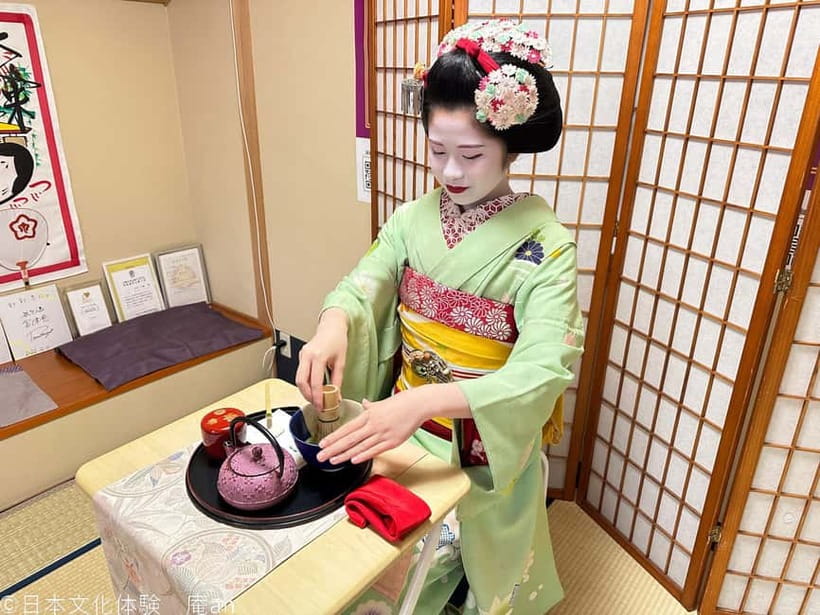
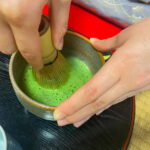
The visit starts with Maiko greeting you, then moves into a tea ceremony demonstration. Even if you have seen a tea ceremony elsewhere, this is worth your time because you are watching it through the lens of Maiko culture: formal etiquette, precise movements, and a calm rhythm. The tea ceremony here is not framed as a class, it is framed as a performance of tradition.
If you are hoping to make tea yourself, the simple plan does not include that. There is a separate option labeled Tea Ceremony with Maiko Premium if you want the hands-on version. So come with the right expectations: this is about watching and understanding, not pulling out tools and learning the full process.
After the demonstration, you transition quickly into conversation time. That pacing is smart for first-timers, because you get context first, then ask questions while the details are still fresh.
Lantern-lit streets of the geisha quarter
- Kyoto Geisha Walking Tour: Gion District & Hidden Gems
★ 4.7 · 3,273 reviews - Kyoto: Gion Magical Night Walking Tour with Geisha Trivia
★ 4.9 · 2,393 reviews - Kyoto: Gion Geisha District Walking Tour – Stories of Geisha
★ 4.7 · 2,187 reviews - Best of Kyoto: Gion, Geisha, Pagodas & Cobblestones
★ 4.9 · 2,058 reviews
Q&A with Maiko: the moment that makes the whole thing worth it
The most praised part is also the most practical one: you get to ask questions directly. The program is designed so you are not just sitting there wondering how life as a Maiko actually works. Instead, you get real insight into her world, with a translator/host providing English support as much as possible.
This is the difference between a cultural show and a cultural exchange. In a typical performance, you watch. Here, you get to clarify things like daily routines, the meaning behind etiquette, and what the role feels like beyond the costumes. If your goal is understanding, not just photos, the Q&A is where you will feel the value.
There is also a hosted energy that helps people feel included. If you are shy, you still benefit from the interaction because questions tend to cover common beginner topics. And if English is not your strongest, do not worry, there is support available, and the structure keeps the conversation moving.
Photo time, plus the Senjyafuda lucky charm
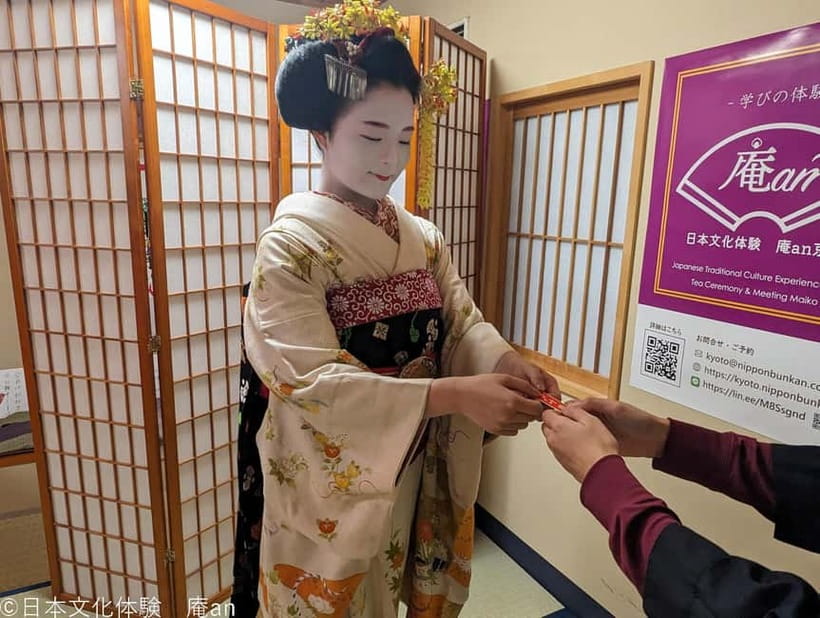
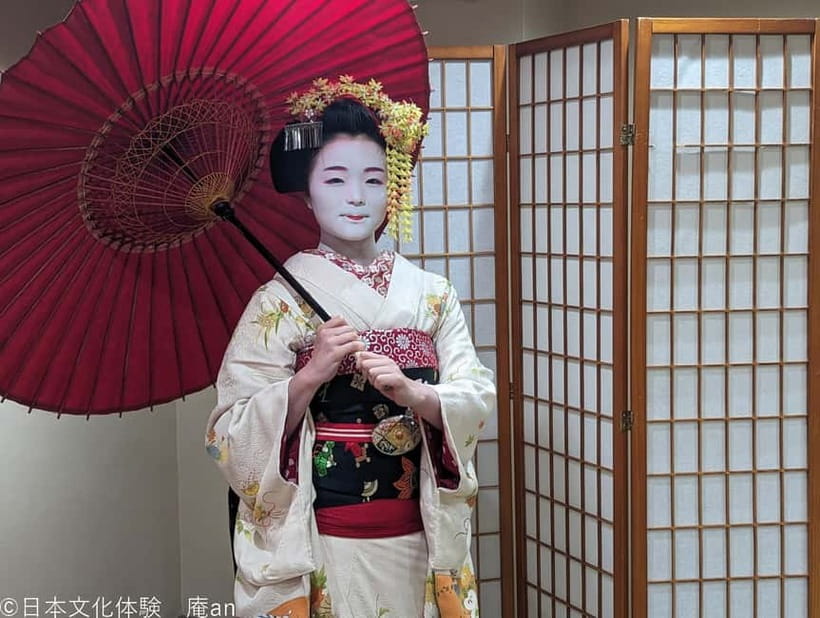
Next comes one of the most fun, straightforward parts: a photo opportunity right beside Maiko. This is not just a quick snapshot from far away, you get close enough for the moment to feel personal. The timing is built into the flow after the Q&A, so you already have a sense of who you are meeting.
Then Maiko presents a gift: a lucky charm called Senjyafuda. It is a small item, but the symbolism makes it feel like a real souvenir, not a generic token. If you like collecting meaningful things from Japan, this is a nice touch.
One thing to remember for photos and viewing: room arrangement can affect how well you see dance performances later. The same issue that can blur the view for some people can also make photos less comfortable if you are seated farther back.
Two dance performances: seasons, stories, and everyday elegance
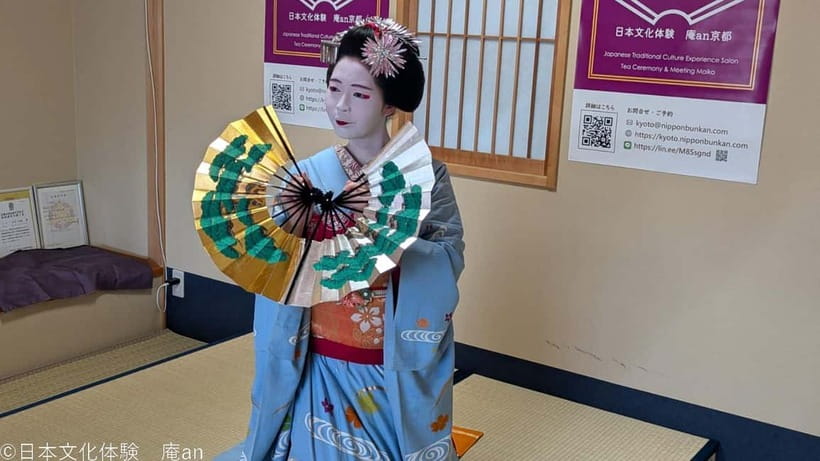
You will then enjoy Maiko dance performance. The program includes two traditional dances, with themes such as Japan’s seasons, love stories, or everyday life. The idea is not just beauty for its own sake, it is movement with meaning, built to show how tradition expresses emotion and routine.
Dance is where etiquette becomes visible. If you have ever wondered how kimono and hairstyle choices relate to performance, watching the choreography helps you connect costume to technique. Even if you do not know the cultural references, you can still appreciate control, timing, and the careful way gestures land.
There is also a real-world consideration: the room setup can make it harder for people in the back to see the full action. If dance is your main reason for booking, it is worth considering a better seat option, even if it costs a bit more.
Interactive game with Maiko: fun, light, and slightly competitive
After the dances, the program includes an interactive game with Maiko. The idea is simple but memorable, and it fits the “hospitality” side of Maiko culture. You may be invited to participate, and volunteers can join, but watching is also enjoyable.
I like this part because it breaks the script. You are not only observing tradition, you are part of a shared moment with clapping and cheering. If you are the type who dislikes forced entertainment, note that your role may be optional, depending on how the session unfolds.
There is also a social comfort angle. If you are traveling with friends, this can feel easier because you can encourage each other. If you are traveling solo, it still tends to work because the host keeps things organized and welcoming.
A day of temples goes further with something to break it up.

When it might be Geiko instead of Maiko
One detail that can affect your expectations: depending on the situation, the venue may invite Geiko instead of Maiko. That does not mean the experience changes in a bad way, but it does mean you should not assume the performer will always be Maiko for sure.
If your goal is specifically Maiko culture, this is a key point. If your goal is learning about traditional performance etiquette in Kyoto, then either way, you should still get the structured tea ceremony demonstration, Q&A, dance, and interactive portion.
Price, seat choices, and what you might want to plan for
At $38, this is priced as a “simple plan,” which usually means you pay for the core cultural program, not extra comfort add-ons. The listing also offers optional upgrades for seating clarity: SS seat (first row) is 3,300 JPY, S2 seat is 2,200 JPY, and S3 seat is 1,100 JPY. If you care about seeing dances clearly, upgrading can be worth it.
There is also an important food and drink reality check. A snack and drink option exists for 500 JPY, which suggests that the base price does not automatically include refreshments. Some visitors have felt that a small tea or sweet would have made the value feel more complete, especially if they did not have a paid add-on. So if you tend to get hungry, consider grabbing a snack before you go, then add something during if you want.
If you are traveling at a time when you are also doing lunch or dinner plans, factor in that the program does not replace a meal on its own. The pacing is fun and social, but it is still 90 minutes of structured activities, and your energy will affect how much you enjoy the interactions.
Who this Kyoto Maiko experience fits best
This program is ideal if you want close access without committing to a longer, pricier cultural immersion. It works especially well for first-timers in Kyoto who want the essentials: a tea ceremony demonstration, a chance to ask questions, dance performances, and a souvenir moment with the Senjyafuda.
It is also a good fit for families, with one exception to plan around. Children under 2 years old are free if they sit on their parents’ laps, but the program likely still expects active participation from those attending. Also, there is no elevator, so families with strollers or mobility needs will want to consider the stairs.
If you are sensitive to seating and you want a front-row view of choreography, the seat upgrade options can be a smart move. If you are more focused on conversation and Q&A, even a less perfect view may still feel worthwhile.
Finally, if you prefer your cultural experiences to feel friendly and informal, this fits. It is not set in a distant, overly formal space. Instead, it feels like a hosted introduction, with staff keeping the session relaxed.
Book it or skip it: my practical recommendation
Book it if you want the best value way to meet a Kyoto Maiko or Geiko and talk with her, not just watch a show. The Q&A and the chance to ask questions directly are the core strengths, and the photo plus Senjyafuda gift make it feel like a complete experience.
Skip or upgrade your expectations if you are very particular about seating and viewing. The room layout can make back rows less satisfying for dance, and this is the kind of event where visibility changes how much you enjoy the choreography. If dance performance is your top priority, consider choosing a better seat option.
Also, come with the right tea expectations. The simple plan is a tea ceremony demonstration, not making your own matcha or tea.
If you want a focused, friendly, central Kyoto activity that gives you real access to tradition for a reasonable price, this is a strong pick.
FAQ
Where is the meeting point?
You meet one minute walk from Exit 1 of Subway Karasuma Line Gojo Station. The venue entrance faces Gojo-dori.
How long is the program?
The program duration is 90 minutes, with availability for starting times to check.
What happens during the 90 minutes?
You’ll greet Maiko, watch a tea ceremony demonstration, join a Q&A session, take a photo with Maiko, receive a Senjyafuda charm, enjoy two dance performances, and participate in a game. There is also a short chatting time at the end.
Is matcha making included?
No. The simple plan includes a tea ceremony demonstration. If you want to make your own tea, you need the Tea Ceremony with Maiko Premium option.
Will there be English translation?
English translation is provided as much as possible. If you want to add English translation, you should contact the provider.
Are snacks and drinks included?
Snacks and drinks are not included in the base price. There is an optional snack and drink option for 500 JPY.
Is the venue wheelchair accessible?
The activity is listed as wheelchair accessible, but there is no elevator, so you will need to take stairs to reach each venue area.
Is there free cancellation?
Yes. Free cancellation is offered up to 8 days in advance for a full refund.
New This Season
- Koyasan Day Trip by Private Car from Kyoto
- Old Port Town and Ultimate Sake Tasting Private Tour From Kyoto
- Kyoto’s Timeless Charm: 3hr Exploration of History and Peace
- Kyoto: 5 Types of Sushi Making
- Sacred Peak & Ancient Paths: Kurama-Kibune Hiking Experience
- Kyoto: Exclusive ZEN practice at Manpukuji temple in Uji
- Kyoto: Private Seasonal Aroma Yoga Class
- Traversing Kyoto’s Scenic West – Arashiyama to Kinkakuji
Gion Geisha Quarter Walks, compared.
Kyoto Geisha Walking Tour: Gion District & Hidden Gems
Read our review →
Gion Magical Night Walking Tour with Geisha Trivia
Read our review →
Gion Geisha District Walking Tour – Stories of Geisha
Read our review →
Best of Kyoto: Gion, Geisha, Pagodas & Cobblestones
Read our review →

Kyoto Night Foodie Tour in Gion (9+ dishes + 6 Sake tastings)
Read our review →
Kyoto Gion Geisha District Walking Tour – The Stories of Geisha
Read our review →
Kyoto Gion: 2-Hour Geisha Culture & History Walking Tour
Read our review →Also filed under