
Reviewed · COOKING CLASSES
Strengthen the immunity!! Making miso in Japanese old house.
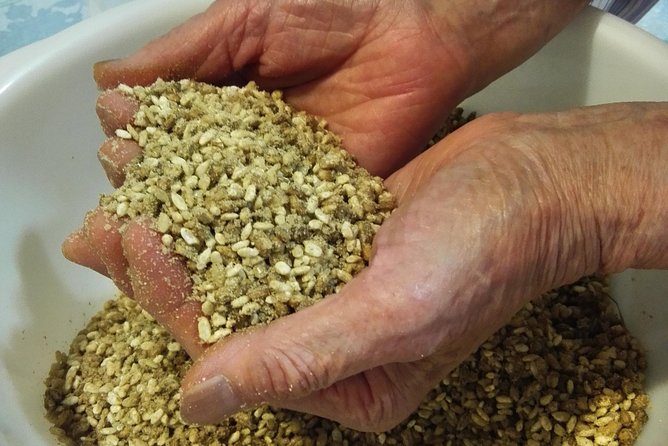
Your dinner starts with fermentation lessons. This Kyoto workshop teaches you okara miso in a Japanese old residence, with a wellness angle on gut health and immunity.
I really like two things here. First, it is a hands-on class where you mix your own batch under Naomi guidance, then get to taste what you made. Second, the ingredient story matters, they use tofu refuse okara instead of traditional whole soybeans.
One thing to consider is timing. You will start the fermentation process in class, but miso needs more than 3 months to ferment, so the best flavor comes later.
In This Review
- Key Points You’ll Care About
- Kyoto Okara Miso in a Japanese Old House
- What You Make and Take Home (500 g of Okara Miso)
- Why Okara Changes Everything (Eco-Friendly Food You Can Feel Good About)
- The Wellness Angle: Intestines, Immunity, and Mind-Body Habits
- Inside the Class: How Your 1-Hour Session Flows
- Ingredients and Dietary Notes You Can Plan Around
- Price and Logistics: Is $46.15 a Good Deal?
- Good Weather Matters, and So Does Your Patience
- Who Should Book This Miso Class (and Who Might Skip It)
- Should You Book This Kyoto Miso-Making Class?
- FAQ
- Where is the meeting point for the Kyoto miso class?
- How long does the experience take?
- What is the price per person?
- What will I make and take home?
- Is the class gluten-free or MSG-free?
- What food or tastings are included during the session?
- How many people are in each class?
- What happens if the weather is poor?
- Can I cancel and get a refund?
Key Points You’ll Care About
- Kyoto old-house atmosphere: you make miso inside a Japanese residence, not in a food lab
- Okara miso method: tofu skin instead of whole beans, easier and quicker
- Koji-based, traditional seasoning: includes natural Japanese koji seasoning for fermentation
- Tasting built in: miso soup, miso paste, and okara mochi
- You take home your miso: about 500 g of the paste you helped make
- Wellness talk included: guidance on intestinal environment and body-and-mind habits
Kyoto Okara Miso in a Japanese Old House
If you like food that does more than taste good, this class hits the sweet spot. Miso is a traditional Japanese fermented seasoning, and the workshop frames it as part of a wellness routine, especially for your gut.
The setting is part of the appeal. You are in a Japanese old residence, which keeps the whole thing calm and focused. The vibe is also practical, you learn what miso is, why it is used, and how to handle it like a real kitchen ingredient.
Price-wise, this is positioned as a hands-on experience, not just a lecture. Around $46.15 for about an hour, plus food you take home, is a fair deal when you factor in the ingredients, teaching, and tasting.
What You Make and Take Home (500 g of Okara Miso)
The main payoff is straightforward: you make handmade okara miso and take it home in a container, about 500 g.
In Japan, traditional miso often starts with whole soybeans. That means soaking, boiling, mashing, and a longer labor chain. Here, the workshop uses okara, the soybean skin from tofu production, which they describe as healthy and nutrient-rich but commonly discarded as industrial waste.
That changes the whole class experience. You still get real fermentation, but you skip the heavy prep of soaking and mashing dried beans. You get a quicker path to a miso batch you can actually start using on your own timeline.
And yes, you will taste during class. That matters, because you learn the flavor basics right away, instead of waiting months in the dark.
A quieter way to spend a day in Kyoto
- Ramen Cooking Class at Ramen Factory in Kyoto
★ 5.0 · 1,937 reviews - Kyoto: Ramen Cooking Class at a Ramen Factory with Souvenir
★ 4.9 · 532 reviews - Kyoto: Ramen, Gyoza, and Onigiri Cooking Class
★ 5.0 · 445 reviews - Kyoto: Japanese Washoku Bento Small Group Cooking Class
★ 5.0 · 380 reviews
Why Okara Changes Everything (Eco-Friendly Food You Can Feel Good About)
Okara is the secret that makes this class feel both modern and Japanese at the same time. The workshop’s message is clear: okara can be turned into something useful, instead of being thrown away.
From a traveler’s point of view, that is more than a feel-good story. It is the practical reason the class is faster. It also means you leave with a seasoning that reflects everyday Japanese food culture, where nothing is wasted if people can help it.
They also connect this to wellness, saying the soy pulp is healthy and rich in nutrients. The framing is that improving your food choices is part of improving your body’s rhythm, not just adding one more item to your fridge.
If you are the type who likes to understand what you are eating, this class gives you a clean, usable explanation you can repeat at home.
The Wellness Angle: Intestines, Immunity, and Mind-Body Habits
The class title leans into immunity, and the teaching stays close to that theme. You will hear how miso supports wellness habits, and you will also get a specific discussion about improving your intestinal environment.
This is not presented like a medical promise. It is more like a lifestyle approach: fermentation foods can be part of how you treat your digestion, and a consistent routine is part of body-and-mind health.
The mind-body angle is reinforced by the structure of the session. You do an actual process step by step, you taste, and you leave with something you can continue to use at home. That is the difference between a one-time food stop and a skill you keep.
If you like gentle “health education” without the hard selling, this is likely your kind of workshop.
Inside the Class: How Your 1-Hour Session Flows
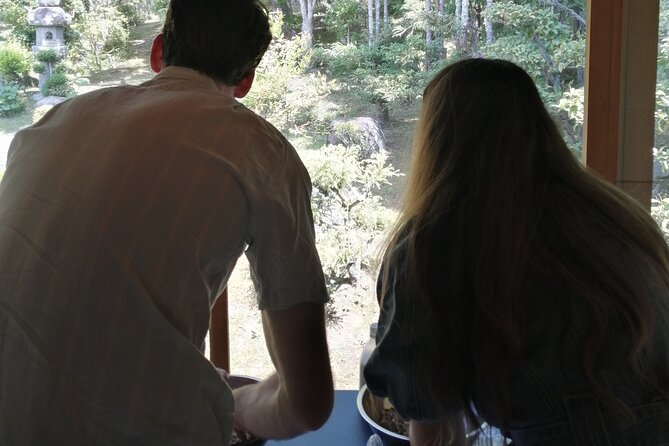
This is about one hour, so the flow is tight and focused. You are asked to arrive at the reserved time. After that, the session moves in a logical sequence.
First, there is an explanation of the benefits of miso and how to make it. You get the why, not just the what. That helps when you are later deciding how to use your miso paste.
Next, you get the intestinal environment talk. It sets the wellness context for what you are about to do, and it makes tasting feel purposeful.
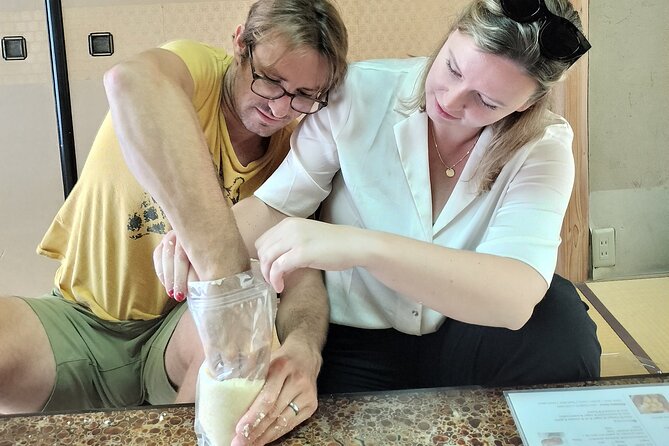
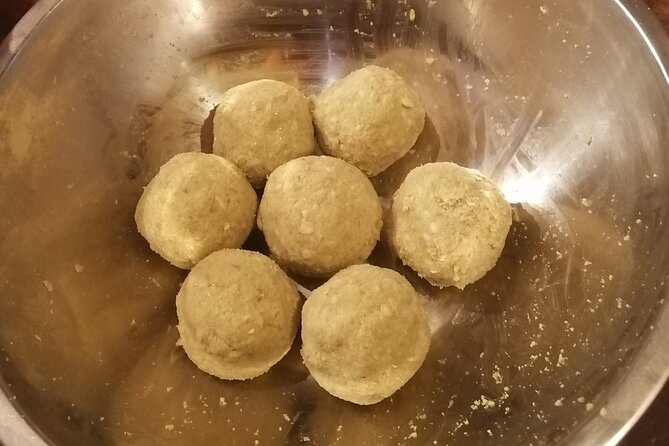
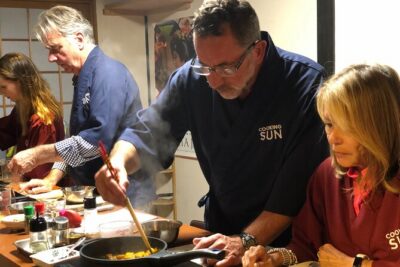
Then comes the hands-on part. You actually make okara miso together, using the workshop’s special method. They emphasize that it is easy and fast. The big reason is the ingredient choice, okara, which avoids the long preparation needed for a traditional whole-soybean approach.
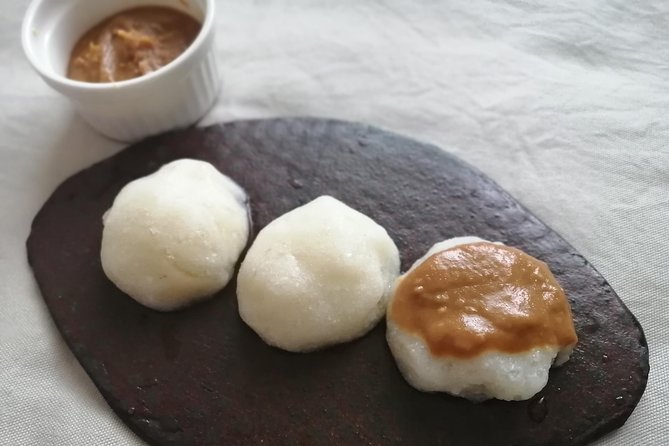
After mixing and forming your batch, you move into tasting. They include miso soup, miso paste, and okara mochi. Even if you do not become a miso expert overnight, you now have a flavor reference point.
Finally, you take home your miso, about 500 g, which is the real reason this class is worth your time.
Ingredients and Dietary Notes You Can Plan Around
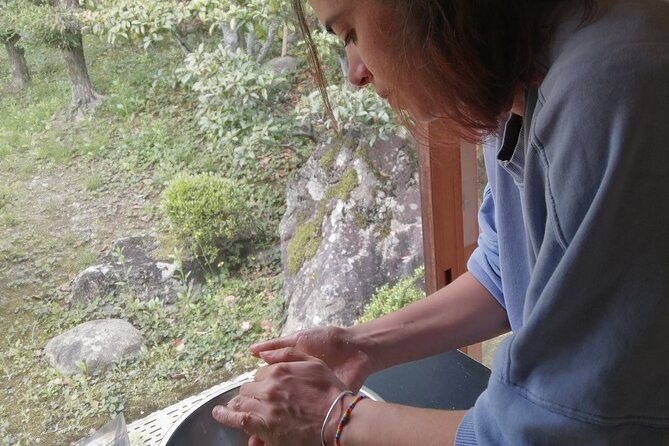
This workshop is set up with dietary flexibility in mind.
They describe their dishes as gluten-free and MSG-free, and they note that vegan options are available. That matters in Kyoto, where many cooking experiences assume you eat standard Japanese staples without modification.
They also mention they use koji seasoning and traditional natural seasoning. Koji is the fermentation backbone of many Japanese foods, so it is a key part of why miso tastes like miso.
When a class clearly names ingredient styles like gluten-free and MSG-free, you can relax. You know you are not going to be surprised by a hidden ingredient when you sit down to taste.
A day of temples goes further with something to break it up.


Price and Logistics: Is $46.15 a Good Deal?
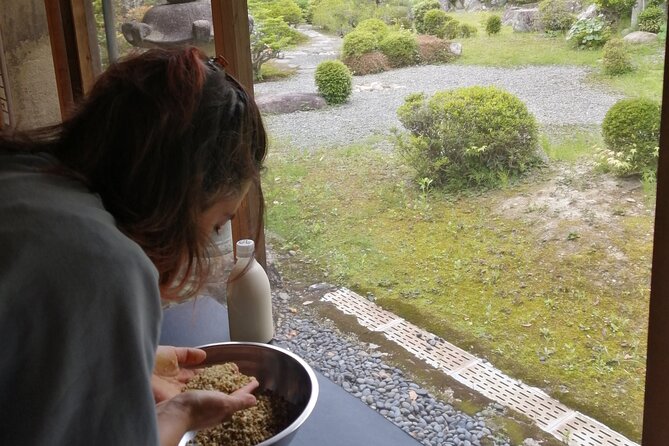
At $46.15 per person, this is not one of the ultra-budget activities in Kyoto. But it also is not a pricey, upscale chef spectacle.
You are paying for four concrete things:
- a hands-on teaching moment (you mix your own batch)
- a wellness and ingredient explanation (benefits plus gut-health discussion)
- guided tasting (miso soup, miso paste, okara mochi)
- and a real take-home portion (about 500 g of miso)
That take-home piece is the biggest value lever. Buying miso at home is easy, but bringing home miso you made yourself is something else. It turns the class into an ingredient plan, not just a memory.
You also get a small group size. Maximum is 6 travelers, which usually means more attention and less waiting around.
One practical note: the tour uses a mobile ticket, and it is near public transportation. That helps you slot it into a Kyoto day without major hassle.
Good Weather Matters, and So Does Your Patience
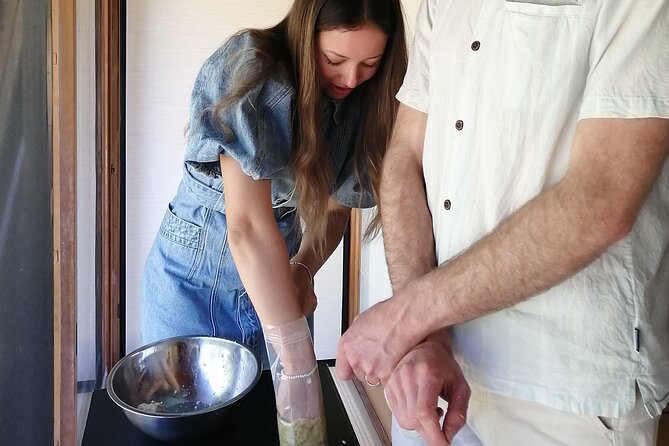
The experience requires good weather. If poor weather cancels it, you are offered either a different date or a full refund.
This matters because the session is short and timed. If you are building your Kyoto schedule like a machine, keep a flexible buffer on the day you book.
Also, remember the fermentation timeline. You will start the process in class, but miso takes more than 3 months to ferment fully. So think of this as making the beginning of a pantry staple, not tasting your final aged flavor the same day.
Who Should Book This Miso Class (and Who Might Skip It)
This class is a great fit if:
- you want a hands-on Kyoto food experience that stays calm and focused
- you care about sustainable use of ingredients, especially turning okara into something tasty
- you want a wellness-minded cooking activity that connects food to gut health
- you appreciate dietary notes like gluten-free and MSG-free, and want vegan availability
You might consider skipping if you want a long, meal-style cooking class with a full-course dinner. This is about one batch of miso, tasting, and a take-home result in about an hour.
Should You Book This Kyoto Miso-Making Class?
I think you should book it if you like learning practical food skills and leaving with something useful, not just photos. The small-group setup, the hands-on mixing, and the take-home 500 g make it feel like real value.
It is also a strong choice if you are interested in Japanese fermentation beyond tasting a bowl of miso soup. You get the ingredient story, including why okara is used and how it fits a more eco-minded approach.
If your schedule is tight, keep in mind it is weather-dependent and it requires arriving at the reserved time. And if you do not like waiting, plan your expectations, the best miso taste is a few months away.
If you can handle that patience, this is the kind of experience that turns Kyoto into something you can use back home.
FAQ
Where is the meeting point for the Kyoto miso class?
The start location is Kaze no Waon 14 Utanokitanoinchō, Ukyo Ward, Kyoto 616-8201, Japan. The activity ends back at the meeting point.
How long does the experience take?
It runs for about 1 hour.
What is the price per person?
The price is $46.15 per person.
What will I make and take home?
You will make handmade miso and bring it home, about 500 g.
Is the class gluten-free or MSG-free?
The dishes are described as gluten-free and MSG-free. Vegan availability is also mentioned.
What food or tastings are included during the session?
You can try miso tasting, including miso soup, miso paste, and okara mochi.
How many people are in each class?
The maximum group size is 6 travelers.
What happens if the weather is poor?
This experience requires good weather. If it is canceled due to poor weather, you will be offered a different date or a full refund.
Can I cancel and get a refund?
This experience is non-refundable and cannot be changed for any reason. If you cancel or request an amendment, the amount paid will not be refunded.
New This Season
- Koyasan Day Trip by Private Car from Kyoto
- Old Port Town and Ultimate Sake Tasting Private Tour From Kyoto
- Kyoto’s Timeless Charm: 3hr Exploration of History and Peace
- Kyoto: 5 Types of Sushi Making
- Sacred Peak & Ancient Paths: Kurama-Kibune Hiking Experience
- Kyoto: Exclusive ZEN practice at Manpukuji temple in Uji
- Kyoto: Private Seasonal Aroma Yoga Class
- Traversing Kyoto’s Scenic West – Arashiyama to Kinkakuji
Cooking Classes, compared.
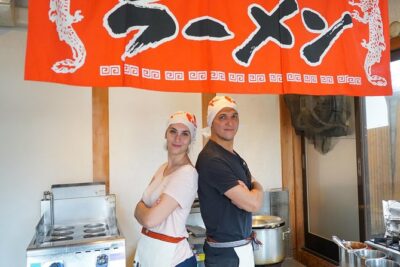
Ramen Cooking Class at Ramen Factory in Kyoto
Read our review →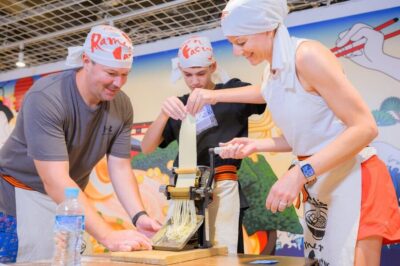
Ramen Cooking Class at a Ramen Factory with Souvenir
Read our review →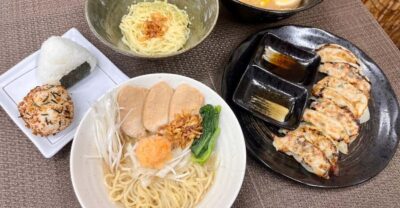
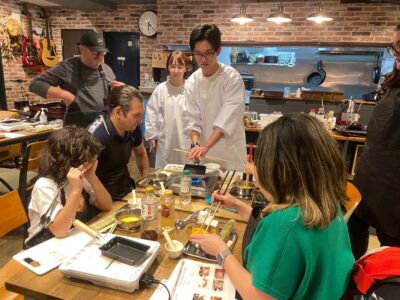
Japanese Washoku Bento Small Group Cooking Class
Read our review →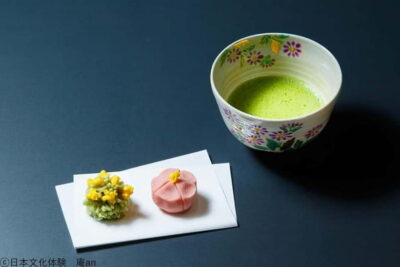
Japanese Traditional Sweets Making and Tea Ceremony
Read our review →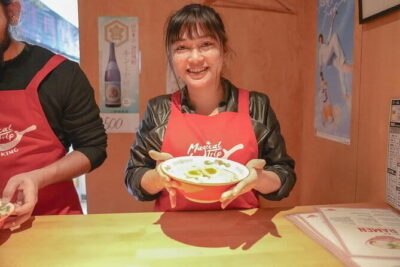
Kyoto Ramen and Gyoza Cooking Class with Professional Chefs
Read our review →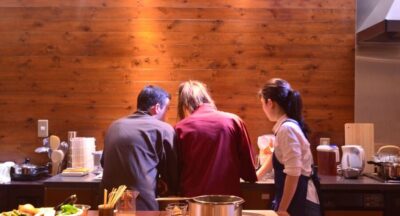
Also filed under