
Reviewed · SAMURAI TRAINING EXPERIENCES
Train Katana with Real Dojo Students in Kyoto
Real dojo training, not a tourist show. This 3-hour katana session in Kyoto is built around real students and a two-katana display you usually never see in casual demonstrations. I like that it is hands-on training with a headmaster with 20+ years of experience, and I also like the clear structure from dressing up to technique and cutting. One consideration: there is no test cutting with a real katana, so this is not a try-it-and-smash-a-target kind of experience.
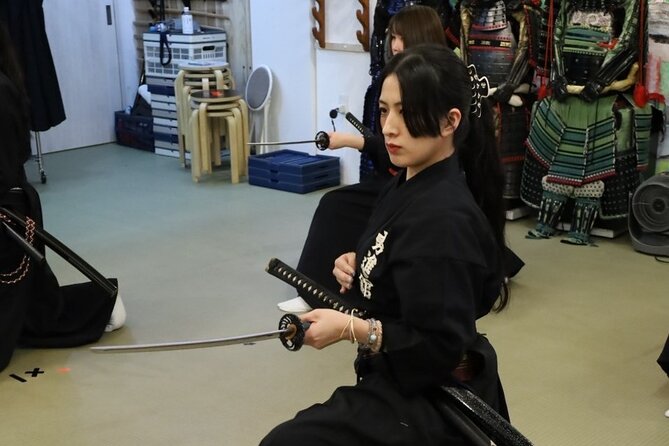
This is small too, max 3 travelers, so you get time to follow directions without the chaos of a big group. At Yushinkan Kyoto, you’ll wear proper training gear like dōgi, obi, and hakama, then learn how the dojo approaches iai (drawing) and kenjutsu (fighting). If you want a glossy samurai photo op, you might feel the difference, but if you want to understand how disciplined practice actually works, this fits.
In This Review
- Key points before you go
- First step: the meeting point and dojo-ready mindset
- Getting dressed in dōgi, obi, and hakama
- Learning iai drawing techniques (the controlled start)
- Kenjutsu practice: how fighting is taught in a dojo
- Watching the tatami cut and the two-katana master performance
- Important expectation check: no real katana test cutting
- Price in context: what $195.09 gets you in Kyoto
- Planning your day: timing, ticket, and how to show up
- Who this katana dojo session is best for
- Should you book this Kyoto katana training?
- FAQ
- How long is the train Katana with Real Dojo Students in Kyoto experience?
- What is the price per person?
- How old do participants need to be?
- Is video recording allowed during the training?
- Do you offer test cutting with a real katana?
- How many travelers can join at once?
- Where is the meeting point?
- What is the cancellation policy?
Key points before you go
- A real dojo with real students at Yushinkan Kyoto, not a staged tourist performance
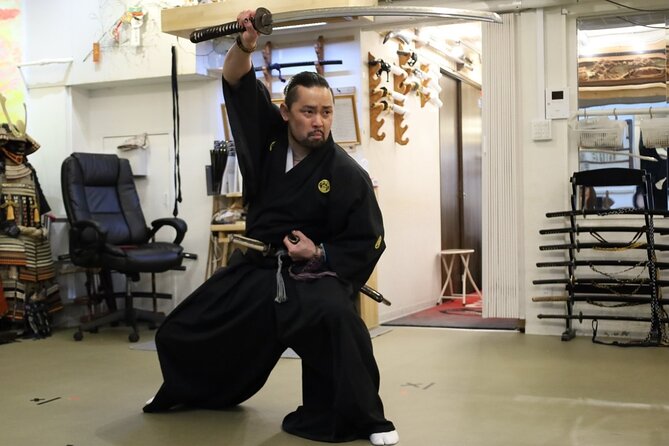
- Headmaster-led training with 20+ years of experience
- Hands-on iai and kenjutsu practice, plus structured observation time
- Rolled tatami cutting and a two-katana master performance
- No test cutting with a real katana, so manage expectations
- Small group size (max 3 travelers) for a calmer, more focused session
First step: the meeting point and dojo-ready mindset
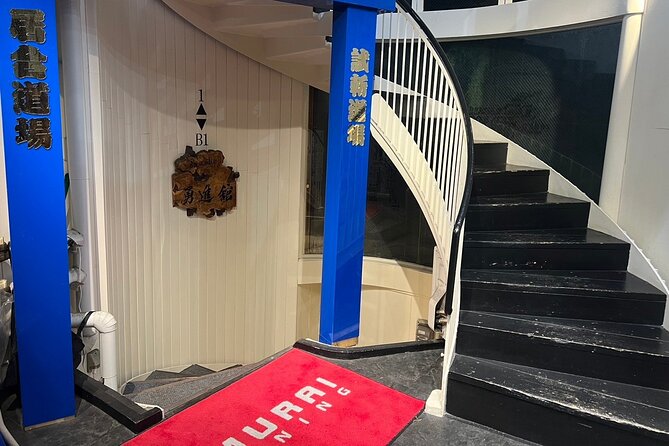
You’ll meet at 452-4 Matsugaechō, Nakagyo Ward, Kyoto, 604-8034. The session starts and ends back at the same place, which keeps your day simple, especially if you’re already juggling temples, buses, and snacks.
This is one of those activities where your attitude matters as much as your itinerary. The “tour” part is the training you get to participate in, but the tone is set by the dojo. You’re there to practice alongside local students, not to be entertained from the sidelines.
Before you head over, plan for basic physical readiness. The experience calls for moderate physical fitness, and you’ll be doing technique practice and movement while dressed for training. Comfortable socks or footwear for getting there are useful, since you will change into training gear once you arrive.
And yes, keep your expectations grounded. This is not a hands-on fantasy where you casually swing a sword. The focus is on kata-like technique, drawing and control, and understanding what the dojo is teaching and why.
Getting dressed in dōgi, obi, and hakama
At the start, you’ll get dressed in samurai training wear: dōgi, obi, and hakama. This matters more than it sounds. Clothing like this is part of how martial arts movement gets standardized. It helps you learn how to hold your body, how to move with less wasted motion, and how to transition through techniques with purpose.
There’s also a mental shift that happens when you put on the gear. You’re not in travel mode anymore. You’re in practice mode. Even if you’ve never trained in this style, the gear acts like a signal to your brain: pay attention, follow the rhythm, and do it the way they teach it.
The session is also run under dojo rules. Video recording is not allowed, and observing without paying isn’t permitted. Those rules are not there to be strict for strictness’ sake. They keep the class respectful and focused, like a real training environment.
If you’re sensitive about form and etiquette, this part is a win. You’ll feel how seriously the dojo takes the training setting.
Pick up a sword for an afternoon
- Kyoto Samurai Experience
★ 5.0 · 1,294 reviews - Kyoto: Kendo and Samurai Experience with Uniform and Gear
★ 4.9 · 815 reviews - Kyoto: Samurai Sword Class by Experts in Traditional Arts
★ 4.9 · 657 reviews - Skip the lines Basic Ticket at SAMURAI NINJA MUSEUM KYOTO
★ 4.5 · 632 reviews
Learning iai drawing techniques (the controlled start)
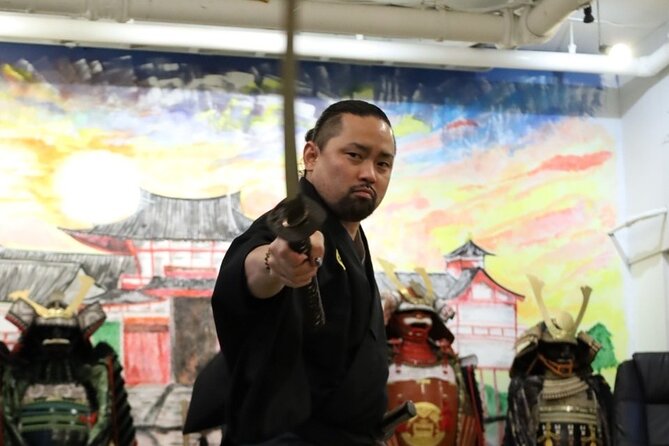
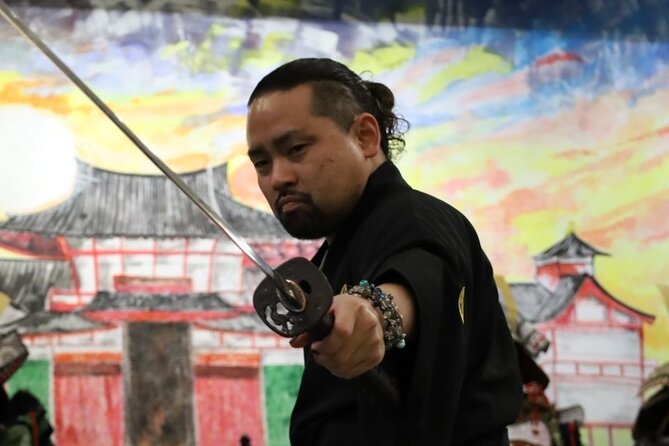
Next comes iai, the art of drawing the katana and executing technique with timing and posture. In many tourist demos, “iai” is shown as a flashy move. Here, it’s taught as disciplined movement: a sequence you practice, refine, and repeat with the instructor’s guidance.
What you can expect:
- learning iai technique fundamentals
- working through structured practice steps
- practicing in a way that matches the dojo’s approach and pace
For you, the value is not just the motion. It’s understanding what iai is trying to do. It’s about control, alignment, and timing, not just speed. Even if you’re only getting introductory-level instruction, the training teaches you to notice body positioning, the moment before the draw, and the follow-through.
If you have prior martial arts experience, this section usually feels easier to pick up. One of the strongest themes from the training feedback is that people with a martial arts background tend to get the most out of the instruction because they already understand how to listen and practice safely.
If you have limited katana experience, don’t worry, but come with patience. Iai is a technique you build in layers, not something you fully “get” in one session. You’ll leave knowing what to practice next, not pretending you mastered it overnight.
Kenjutsu practice: how fighting is taught in a dojo
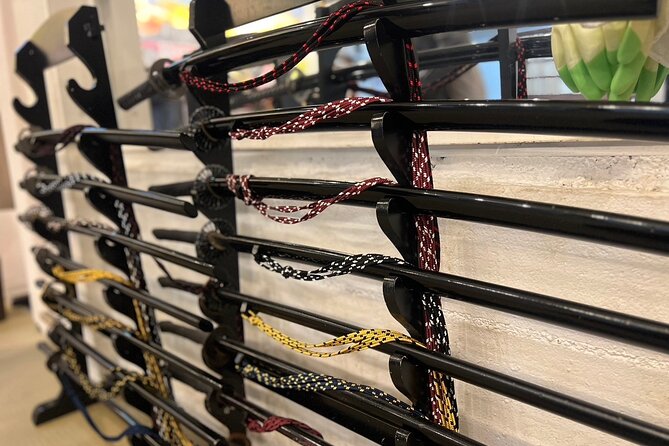
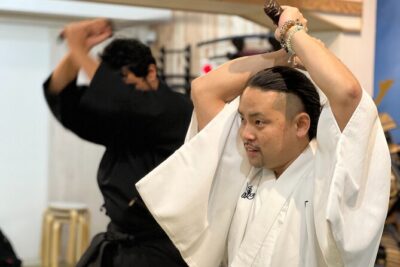
After iai, you’ll move into kenjutsu, katana-fighting techniques. This is where the session becomes more energetic, but it’s still dojo training, meaning technique first and ego last.
Your experience here is practice with a structured focus:
- learn kenjutsu techniques
- practice while following instruction
- watch how the dojo handles spacing, timing, and movement
The big thing I like about this setup is that it’s not just “do this move, then do that move.” Kenjutsu practice in a real dojo environment is usually about learning the logic behind each action. You start to see how footwork and distance support the technique, and how the body mechanics affect your control.
Also, the group size helps. With a maximum of 3 travelers, the instructor can adjust what you’re doing and help correct basic posture or movement. In a crowded workshop, you’d lose time waiting for attention.
One more thing to keep in mind: the session is designed as a training experience, not a combat movie. Even if you’re enthusiastic and want to go faster, the dojo will set the pace for safety and clarity.
Watching the tatami cut and the two-katana master performance
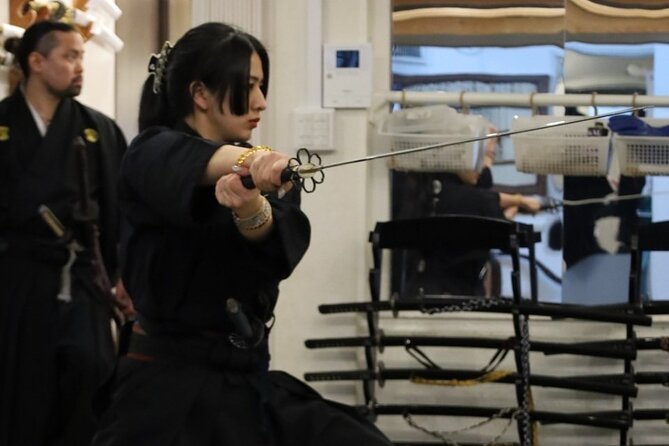
Then comes the part many people are most curious about: cutting and the master’s display.
Here’s what you can expect:
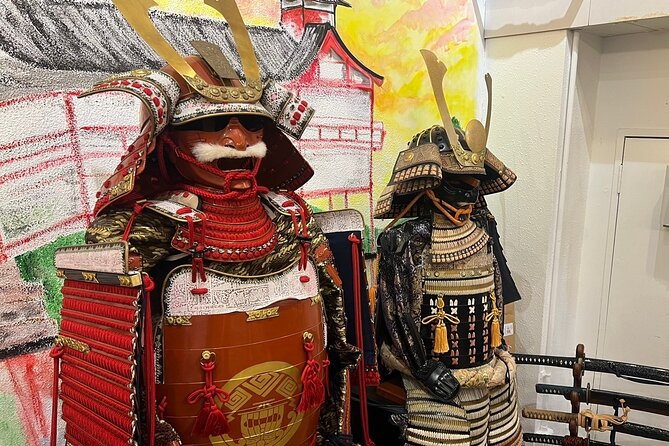
- watching students and the master cut rolled tatami mats with a real katana
- watching the headmaster perform with a katana
- a demonstration that goes beyond what most casual shows offer
This is where the experience earns its reputation. There are plenty of “samurai” activities in Kyoto, but they often stay on the surface. A dojo cutting demonstration tells you something real: how technique shows up as decisive action. Watching the rolled tatami is not just spectacle. It’s proof of control, alignment, and timing in action.
The two-katana performance is especially unique. The listing highlights that this is a powerful display you won’t see anywhere else. I can’t verify where you’ve been before, but in general, two-katana demonstrations are rarer and take more skill to execute cleanly, so the odds of getting a generic show are lower here.
The takeaway for you is simple: you’ll see the end result of training discipline. Even if you only practiced a few basics, watching a higher level performance helps connect the dots between theory, movement, and outcome.
Important expectation check: no real katana test cutting
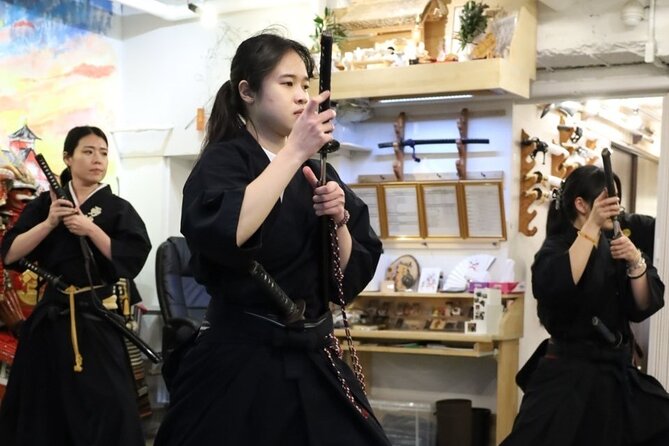
Let’s talk about the biggest expectation trap.
The experience does not offer test cutting with a real katana. That means you are not going to step up and try to cut something yourself.
This might sound disappointing if you’re expecting a hands-on “slice a target” moment. But for many people, it’s also part of why the training feels authentic. A real dojo approach is careful. It prioritizes instruction and safety over letting visitors swing steel.
What you do get is:
- iai drawing technique learning
- kenjutsu technique practice
- and real cutting demonstrations by students and the headmaster
So come for learning and observation. If your goal is purely action and cutting, you’ll likely want a different style of activity.
A quieter way to spend a day in Kyoto


Price in context: what $195.09 gets you in Kyoto
At $195.09 per person for about 3 hours, the price can feel steep until you compare it to what you actually get.
You’re paying for:
- a real dojo setting (Yushinkan Kyoto)
- instruction connected to local students and a headmaster with 20+ years of experience
- hands-on practice time
- and a serious demonstration including rolled tatami cutting plus a two-katana performance
- plus a small group size of up to 3 travelers
The value is in the ratio of attention to time. In big classes, you get a lot of watching and not much correction. Here, the setup is designed so you can actually work on technique, then see it applied at a higher level.
You’re also booking in advance fairly often, with an average booking window of about 29 days. That’s a hint the schedule isn’t infinite, and the dojo likely keeps slots controlled to keep the training quality high.
If you want to feel more like a participant and less like a spectator, this pricing structure makes sense. If you only want casual entertainment, it won’t.
Planning your day: timing, ticket, and how to show up
This is a 3-hour experience with a mobile ticket. You should also expect confirmation within 48 hours of booking, subject to availability.
It runs near public transportation, which is helpful in Kyoto. You don’t want to lose half your day figuring out the last street to the dojo.
Bring a practical mindset:
- plan to move while dressed for training
- follow the staff guidance on etiquette and where to stand
- keep phones away, since video recording is not allowed
One more detail that matters in Kyoto: rules like no video recording and no free observing are not just about convenience. They support the dojo training environment. If you’re the type who hates being told what not to do, this may frustrate you. If you respect training culture, it helps.
Who this katana dojo session is best for
This experience is best for people who want substance.
You’ll likely enjoy it if:
- you have martial arts experience, even if it’s not katana
- you like structured learning and follow instruction well
- you want to see how techniques look in real practice, including rolled tatami cutting
- you’re interested in iai and kenjutsu as disciplines, not just sword props
You might want to think twice if:
- your main goal is test cutting with real blades
- you want a photo heavy, casual samurai show
- you’re not comfortable with moderate physical activity while in training gear
- you expect a large group spectacle, since max travelers is 3
Age-wise, it’s 12+. That makes it an option for older teens who are genuinely curious about technique and training culture.
Should you book this Kyoto katana training?
Book it if you want a real dojo-style katana lesson and a chance to participate, then learn by watching disciplined technique. I think it’s a great fit for anyone who enjoys training culture, respects rules, and wants something more meaningful than a performance.
Skip it if you’re mainly after test cutting or you want a typical tourist-friendly samurai photo moment. This is training first, performance second, and the two-katana display plus rolled tatami cutting are there to show what practice can produce.
If you like the idea of dressing in dōgi, obi, and hakama, learning iai basics, practicing kenjutsu techniques, and then seeing the dojo’s real cutting ability demonstrated, Yushinkan Kyoto is exactly the kind of experience that makes Kyoto feel less touristy and more real.
FAQ
How long is the train Katana with Real Dojo Students in Kyoto experience?
It lasts about 3 hours.
What is the price per person?
The price is $195.09 per person.
How old do participants need to be?
Participants must be 12 years old or older.
Is video recording allowed during the training?
No. Video recording is not allowed.
Do you offer test cutting with a real katana?
No. Test cutting with a real katana is not offered.
How many travelers can join at once?
There is a maximum of 3 travelers.
Where is the meeting point?
The meeting point is 452-4 Matsugaechō, Nakagyo Ward, Kyoto, 604-8034, Japan.
What is the cancellation policy?
You can cancel for free up to 24 hours in advance for a full refund. Canceling less than 24 hours before the start time will not be refunded.
New This Season
- Koyasan Day Trip by Private Car from Kyoto
- Old Port Town and Ultimate Sake Tasting Private Tour From Kyoto
- Kyoto’s Timeless Charm: 3hr Exploration of History and Peace
- Kyoto: 5 Types of Sushi Making
- Sacred Peak & Ancient Paths: Kurama-Kibune Hiking Experience
- Kyoto: Exclusive ZEN practice at Manpukuji temple in Uji
- Traversing Kyoto’s Scenic West – Arashiyama to Kinkakuji
- Kyoto: Private Seasonal Aroma Yoga Class
Samurai Training Experiences, compared.
Kendo and Samurai Experience with Uniform and Gear
Read our review →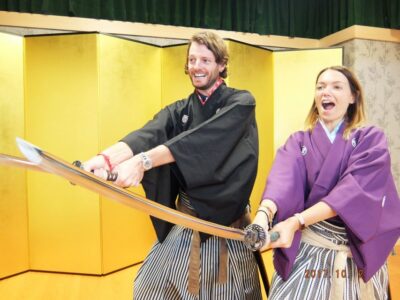
Samurai Sword Class by Experts in Traditional Arts
Read our review →
Skip the lines Basic Ticket at SAMURAI NINJA MUSEUM KYOTO
Read our review →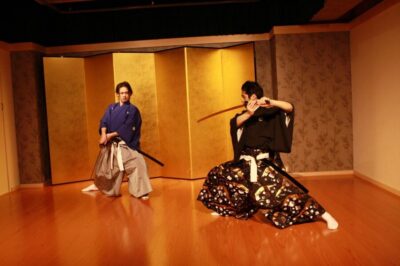
Samurai Training with Modern day Musashi in Kyoto
Read our review →
Private Tea Ceremony and Sake Tasting in Kyoto Samurai House
Read our review →Also filed under