
Reviewed · TEA CEREMONIES
Elegant Tea Ceremony While Wearing Kimono Experience in Kyoto
A kimono tea ritual feels oddly personal. At Nishiki Orizuruya in Kyoto, you get dressed, learn matcha basics in a calm tea room, then choose an art add-on.
What I like most is the kimono rental experience with free hair styling for women, plus the day is guided in English by staff who clearly care about comfort and details.
The one possible drawback: depending on the session, you may wish for more background on the history behind each step, and weekends can get crowded near Nishiki Market.
In This Review
- Key things to know before you go
- Nishiki Orizuruya: Kyoto tea that starts near Nishiki Market
- Kimono rental and styling: the best part for first-timers
- The tea ceremony itself: matcha, matcha whisk work, and wagashi
- After tea, choose your art: calligraphy for a personal keepsake
- Gold leaf workshop: make a take-home Kyoto souvenir
- Nishiki Market walking tour: Kyoto’s kitchen with an English guide
- Timing, meeting point, and how to make it feel smooth
- Price and value: what $50.58 covers in real terms
- Who should book this Kyoto kimono tea ceremony?
- Should you book this Nishiki Orizuruya experience?
- FAQ
- How long does the experience take?
- Where do I meet for the tour?
- Is kimono rental included?
- Is the tour guided in English?
- What can I do after the tea ceremony?
- What will I take home?
- Is this experience refundable if I cancel?
Key things to know before you go
- Kimono + hair styling are included, so you’re not hunting down extras after you land in Kyoto
- Matcha is hands-on, not just something you watch from the sidelines
- Wagashi comes with the tea, including sweets from a 100-year-old confectionery
- You choose what happens after tea: calligraphy, gold leaf, or a Nishiki Market walking tour
- Group size is capped at 10, which keeps the experience more manageable
- Arrive 10 minutes early, since dressing and set-up take time
Nishiki Orizuruya: Kyoto tea that starts near Nishiki Market
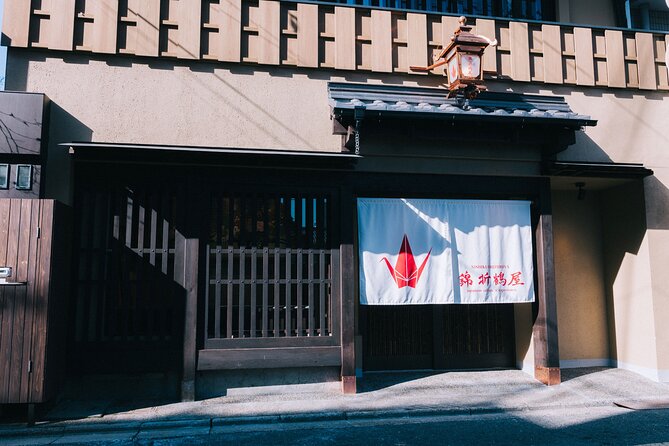
This is a Kyoto experience built around a simple idea: slow down, dress up, and learn a traditional ritual you can actually repeat at home. You’re in Nishiki Orizuruya, a tea house a minute’s walk from Nishiki Market, so the whole setting feels anchored in real daily Kyoto life, not staged tourist theater.
The address is clear and easy to find, and the tour ends back at the meeting point. That matters in Kyoto, where walking is fun but long days can add up. With a mobile ticket, you can also reduce stress on the day you go. The format stays tight: tea first, then one of three culture activities.
One note I’d plan around is crowding. If you go on a weekend, holiday, or during a special event, the Nishiki Market area can be busy. Your tea time will still be the calm part, but getting there and transitioning between rooms can feel more hectic.
Kimono rental and styling: the best part for first-timers
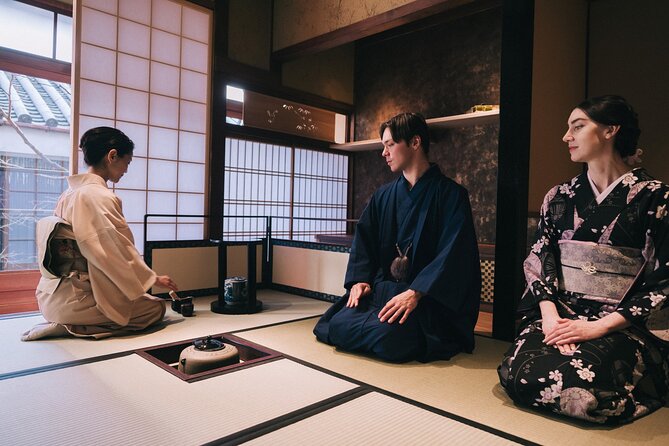
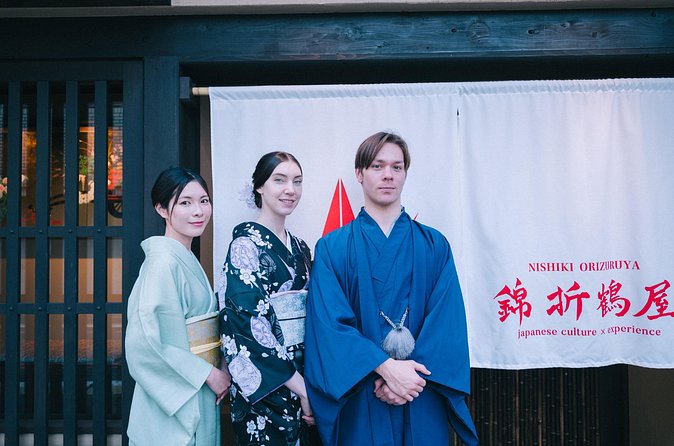
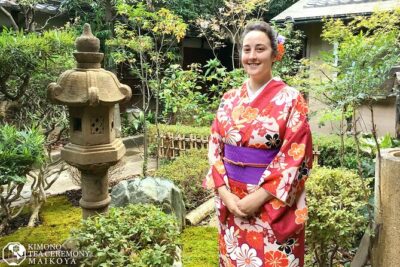
If you want the full Kyoto “I can’t believe I’m wearing this” moment, this is where you get it. Plans include kimono rental, and for women, you get free hair styling. Multiple reviews highlight how the staff take attention to fit and presentation seriously, including patience with different sizes.
There’s also real value in the way they handle the practical parts. People reported being helped into the kimono smoothly, and one review mentioned that if you can’t sit on the floor, a chair may be provided. That’s a big deal in a tea setting, where the seating style can be a barrier for some travelers.
Photo-friendly design is part of the experience. You’ll have time for pictures while dressed, and the staff are ready to help with photos too. If you’re the type who wants the memories but also wants to enjoy the moment, this strikes a good balance.
Potential snag: kimono look glamorous, but they come with restrictions. Plan on taking it easy after dressing. You’ll be walking in a different kind of clothing, so comfortable shoes for your trip to and from the tea house help a lot. You can also ask staff what to do about getting in and out of doorways and stepping onto uneven pavement in the market streets.
Walk the old streets in kimono
- Kimono Tea Ceremony at Kyoto Maikoya, NISHIKI
★ 5.0 · 911 reviews - Kyoto: Kimono Rental with Hairstyling and Accessories
★ 4.8 · 653 reviews - Kyoto: Kimono Tea Ceremony at Orizuruya Gion
★ 4.9 · 618 reviews - KYOTO Tea Ceremony with kimono near by Imamiya Jinjya Shrine
★ 5.0 · 343 reviews
The tea ceremony itself: matcha, matcha whisk work, and wagashi
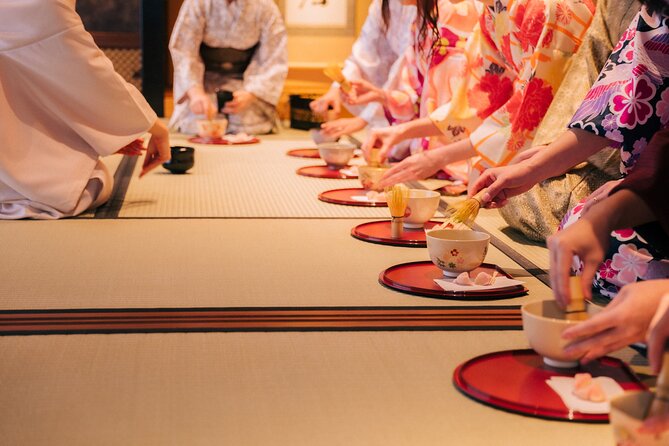
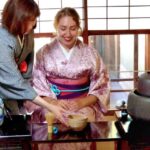
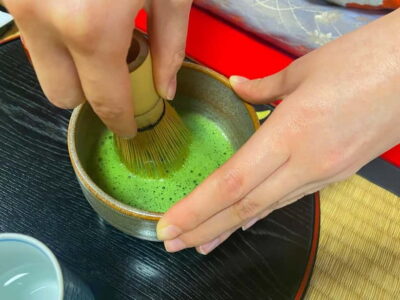
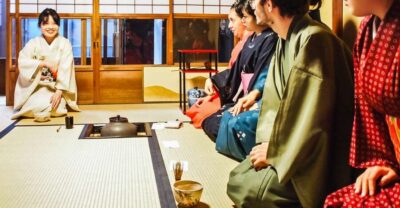
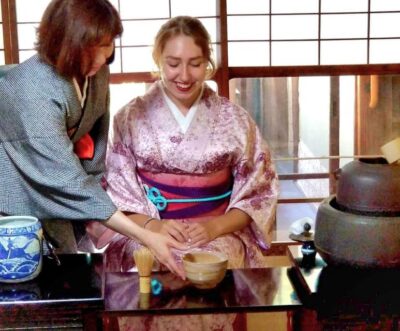
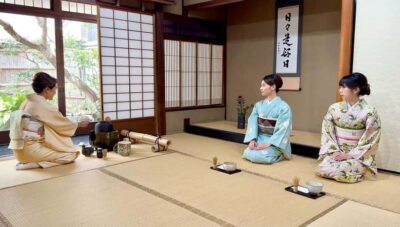
The core of the experience is a formal Japanese tea ceremony led by a professional tea master. The pacing is structured: you watch a demonstration, then you prepare your own matcha using a bamboo whisk. That hands-on step is what makes the tea feel like a skill, not a performance.
You’ll also get traditional sweets, specifically seasonal wagashi paired with your matcha. The sweets come from a 100-year-old confectionery, which helps explain why the dessert feels intentional and not like a random add-on.
In reviews, the host Ruriko gets high praise for explaining the meaning behind the tea ceremony. Lina is also mentioned as an excellent guide later for the market-style option. That tells me the staff aren’t just reciting steps. They’re trying to connect the ritual to why each movement matters.
Here’s the one consideration I’d flag: one review said there wasn’t much history or significance explained during the process. So if you’re the kind of traveler who wants deep cultural context for every step, you might need to ask questions during the session. The good news is that many participants found the host engaging and English explanations were solid.
Bottom line: the tea ceremony is relaxing, but it’s not just sitting quietly. You’ll do the whisking, taste the matcha, and follow the ceremony flow in a real setting.
After tea, choose your art: calligraphy for a personal keepsake
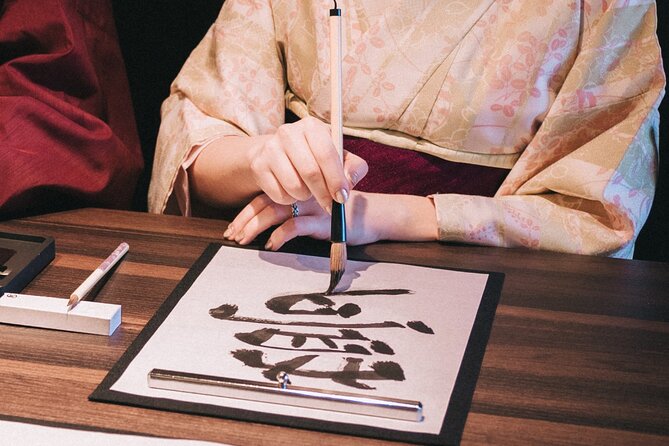
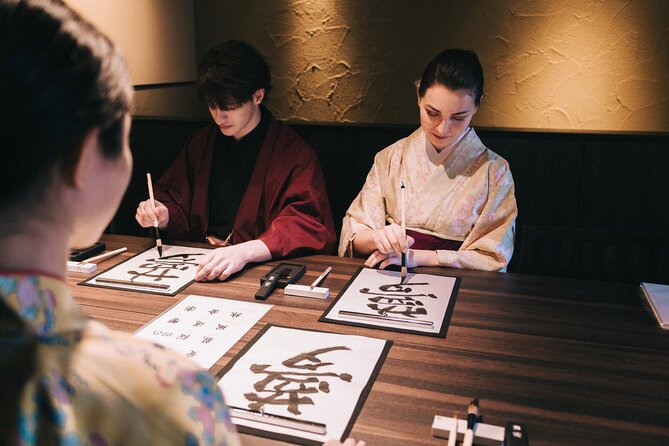
One option turns the tea experience into a creative souvenir hunt, without turning it into a craft factory. In the tea ceremony and calligraphy plan, after matcha and sweets, you learn to write your favorite kanji using a brush and ink.
The experience centers on practical skill plus a personal result. You create your own washi paper masterpiece, which gives you something meaningful to take home. This is also a great choice if you want a calmer activity after tea, since calligraphy is focused and quiet compared with a hands-on workshop that involves delicate materials.
Why this works well for most people: you don’t need any artistic background. The staff teach you how to handle the tools, where to place your strokes, and how to work with ink and brush movement. Reviews also mention that families loved the learning part and felt they gained a new appreciation for matcha through the whole flow.
If you’re traveling with teens or adults who usually skip “activity crafts,” calligraphy can be a smart middle ground. It feels cultural, but the outcome is satisfying, and you walk away with an item that looks like you did something real.
One small planning thought: choose your kanji carefully before you arrive if you know what you want. If you’re deciding on the spot, expect the staff to help, but bringing an idea helps you use your time well.
Gold leaf workshop: make a take-home Kyoto souvenir
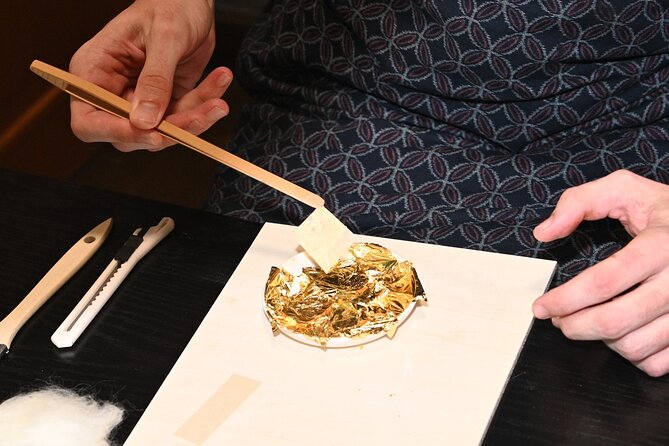
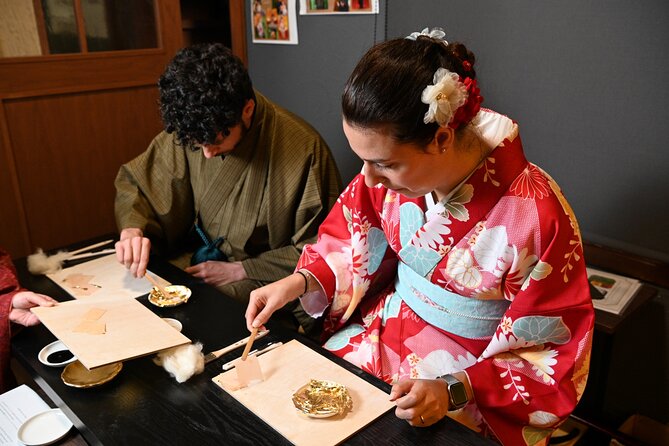
If you like visual wow factor, the tea ceremony and gold leaf plan is the one to pick. After the tea portion, you join a hands-on gold leaf workshop and decorate a small plate with high-purity gold leaf.
Gold leaf sounds fancy, but the value here is in the process. You aren’t just watching someone demonstrate. You’re applying delicate leaf material and creating your own design. That’s the difference between a souvenir you buy and a souvenir you make.
The workshop ends with you taking home a handmade item, which means you get a tangible reminder that isn’t just a postcard or a snack bag. For shoppers, this is also a relief. You can limit how much you carry because you’re making something that’s meant to be kept.
Reviews emphasize patience and attention to detail from the staff, which matters in gold leaf work. The technique needs careful handling, and it helps if the instructors explain step-by-step in clear English.
If you’re deciding between calligraphy and gold leaf, pick based on what you want your “memory object” to be. Calligraphy is personal and symbolic. Gold leaf is decorative and radiant.
Nishiki Market walking tour: Kyoto’s kitchen with an English guide
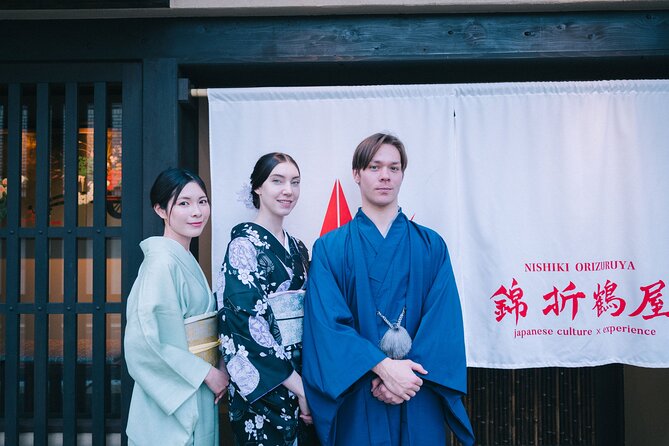
Not everyone wants another craft after tea, and that’s where the tea ceremony and Nishiki tour option shines. After matcha and sweets, you explore Nishiki Market, often described as Kyoto’s Kitchen, with an English-speaking guide.
This route adds context to what you see. Nishiki Market isn’t only about tasting snacks. You also pass shrines and historic shops, so you get a broader sense of how the market fits into Kyoto’s daily rhythm and old storefront culture.
Lina is named as a fantastic tour guide in reviews, which suggests the guiding style is friendly and engaging, not stiff or rushed. That matters when you’re blending food culture with shrine and street exploration. If you’ve spent time in Kyoto before and want something more “local pattern” than “big temple hits,” this is a smart way to do it.
A practical note: kimono plus market walking can be a lot of steps. The good side is you’ll already be dressed for photos, and the staff typically help you transition smoothly from the tea room to the streets. The challenging side is that streets can be uneven, crowded, and crowded again near popular food stalls.
If you’re traveling with kids, this walking option can also work well because you can keep the pace snack-focused and interest-based. Children aged 5 and above can join, and there’s no child discount listed, so plan your budget accordingly.
More bowls, poured the traditional way
Timing, meeting point, and how to make it feel smooth
The meeting point is Nishiki Orizuruya at 452 Jūmonjichō, Nakagyo Ward, Kyoto, 604-8121. The activity ends back at the meeting point, so you don’t need a second transit plan.
Plan to arrive at least 10 minutes early. That buffer gives time for check-in, fitting, and getting everyone ready before the tea ceremony begins. With groups limited to a maximum of 10 travelers, the schedule can move efficiently, but it still depends on everyone being on time.
Because the tour includes kimono dressing, think about comfort in your whole day plan. Eat something light beforehand if you get hungry, but don’t arrive so full that the wagashi and matcha feel like a chore. If you have dietary needs, a review mentioned the team can accommodate allergies for sweets and tea, which is a comforting sign. If you have allergies, bring details and let them know during your booking or at check-in.
Also consider weather. The experience can be canceled and fully refunded in case of severe weather or natural disasters. In Kyoto summers and rainy seasons, this safety net matters because walking to and from Nishiki Market can get rough quickly.
Price and value: what $50.58 covers in real terms
At $50.58 per person, you’re paying for more than a tea tasting. You’re getting the package effect: kimono rental, guidance in English, and a guided tea ceremony that includes your own matcha making plus traditional sweets.
That value is strongest if you’d otherwise have to spend time and money piecing together separate activities. You would likely need kimono rental on its own, then a separate tea lesson, then maybe a craft or market walk. Here, those elements are combined into a single, time-efficient block.
The value also improves because the group size is capped at 10. Smaller groups usually mean the staff can adjust pacing and help with fit details. That’s one reason the reviews repeatedly mention kindness, patience, and accommodation for different needs.
What you should consider is what option you choose after tea. Calligraphy, gold leaf, and Nishiki Market walking are all different kinds of souvenirs and memories. Choose the add-on that matches your travel style so the price feels like it bought you a day you’ll remember, not just a checkbox experience.
Who should book this Kyoto kimono tea ceremony?
This experience is a great match for you if you want:
- A proper kimono experience with hair styling for women, without needing to figure out how to do it yourself
- A true tea-making moment, including whisking matcha and tasting it with wagashi
- A choice of cultural follow-up, so you can pick calligraphy, gold leaf, or market walking
It’s especially good for first-time Kyoto visitors who want elegance, structure, and cultural learning without cramming in a long temple circuit. It also works well for couples and families, since the staff have shown they can accommodate kids age 5 and up and keep the experience welcoming.
If you don’t like structured cultural formats, or you’re allergic to being dressed and handled in a kimono setting, you might find it less comfortable than a typical walk-and-taste day. Also, if you only care about deep historical background, ask questions during the tea ceremony since some sessions may not go heavy on history for every step.
Should you book this Nishiki Orizuruya experience?
If you want Kyoto at its most graceful, book it. The combination of kimono + hands-on matcha + guided cultural add-on is a strong value for a short stay in the city.
I’d book this specifically if you want a memorable keepsake, either calligraphy or gold leaf. If you’re more food-and-street focused, the Nishiki Market walk after tea is the best fit. Go in with open curiosity, and you’ll get a day that feels both elegant and practical.
FAQ
How long does the experience take?
The experience is about 2 hours 30 minutes (approx.). The tea ceremony itself is listed as 90 minutes, with longer options that include calligraphy, gold leaf, or a Nishiki Market walking tour.
Where do I meet for the tour?
You meet at Nishiki Orizuruya, 452 Jūmonjichō, Nakagyo Ward, Kyoto, 604-8121, Japan. The activity ends back at the meeting point.
Is kimono rental included?
Yes. All plans include kimono rental, and for women, there is free hair styling.
Is the tour guided in English?
Yes, the plans are guided in English.
What can I do after the tea ceremony?
After the tea ceremony, you can choose one option: calligraphy, gold leaf art, or a Nishiki Market walking tour.
What will I take home?
For gold leaf, you decorate a small plate and take home your handmade souvenir. For calligraphy, you write your chosen kanji using brush and ink on washi paper as a personal keepsake.
Is this experience refundable if I cancel?
No. This experience is non-refundable and cannot be changed for any reason. If you cancel or request an amendment, the amount paid will not be refunded.
New This Season
- Koyasan Day Trip by Private Car from Kyoto
- Old Port Town and Ultimate Sake Tasting Private Tour From Kyoto
- Kyoto’s Timeless Charm: 3hr Exploration of History and Peace
- Kyoto: 5 Types of Sushi Making
- Sacred Peak & Ancient Paths: Kurama-Kibune Hiking Experience
- Kyoto: Exclusive ZEN practice at Manpukuji temple in Uji
- Kyoto: Private Seasonal Aroma Yoga Class
- Traversing Kyoto’s Scenic West – Arashiyama to Kinkakuji
Tea Ceremonies, compared.
Tea Ceremony in a Traditional Tea House in Kiyomizu
Read our review →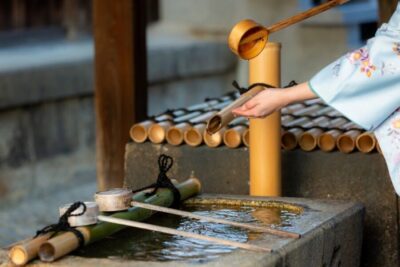
Kimono Tea Ceremony at Kyoto Maikoya, NISHIKI
Read our review →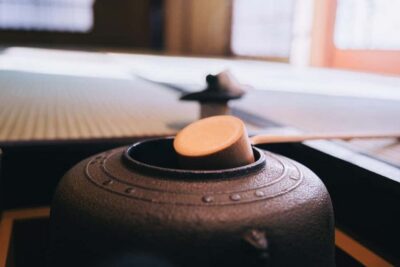
Tea Ceremony in 100-year-old Kyo-Machiya Townhouse
Read our review →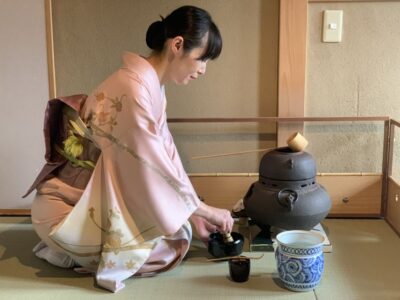
Also filed under