Reviewed · GION GEISHA QUARTER WALKS
Experience Kyoto Gion at Night E-Bike Tour
Night Kyoto looks different when you ride. This 2-hour night e-bike tour turns Kyoto’s famous neighborhoods into a calmer, after-sunset show, with illuminated stops from Gion to Higashiyama. I like that you cover a lot of ground without tiring out, thanks to an electric bike and a guided pace.
What I especially like is the storytelling. On this ride, guide Ben is the kind of person who keeps the mood fun while sharing context that makes each street feel less like a postcard. One thing to consider: most stops are short and focused on outside views, so it is not the tour for long, inside temple time.
In This Review
- Key things to know before you go
- Kyoto at night feels easier on wheels
- Start at Kyoto Tourist Lounge Gion, then roll into the old streets
- Miyagawachō Kaburenjō: a quiet taste of geisha-district Kyoto
- Toyokuni Shrine: a quieter place tied to Toyotomi Hideyoshi
- Outside views at Kyoto National Museum: red-brick Meiji-era framing
- Kiyomizuzaka and Sannenzaka Ninenzaka: lantern-lit slopes and old-town stairs
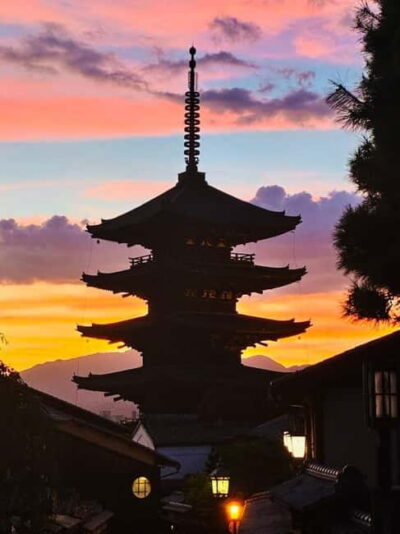
- Hōkan-ji Temple and Yasaka Pagoda: your biggest silhouette moment
- Maruyama Park: a breather between iconic districts
- Furukawachō Shopping Arcade: local Kyoto under a covered roof
- Price, timing, and what you really get for $70
- Who should book this night e-bike tour?
- A quick call: should you book this tour or not?
Key things to know before you go
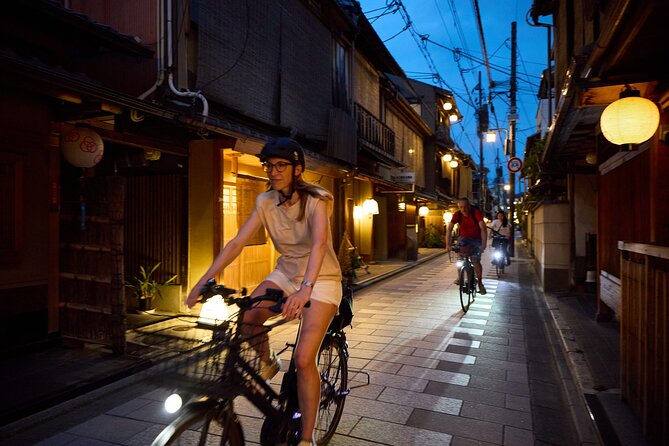
- Small group, up to 6 people, so you are not fighting a crowd through narrow lanes.
- Electric bikes for all skill levels, which helps if you are nervous about riding in busy areas.
- A night route through Gion and Higashiyama, built for glowing lanterns, lit landmarks, and quieter streets.
- Free admission listed at multiple stops, so your money goes to the experience, not ticket math.
- About 2 to 2.5 hours total, which is long enough for variety, not so long that you feel dragged around.
- No snacks included, so plan a light meal before 7:00 pm.
Kyoto at night feels easier on wheels
Kyoto after sunset has a different rhythm. Daytime crowds can make even the most famous lanes feel chaotic, but at night the lighting does something magical: it turns busy streets into slower hallways and turns temples into silhouettes.
This is exactly where an e-bike helps. You still get the Kyoto atmosphere, but you also get to move efficiently between areas like Gion, Kiyomizuzaka (the Kiyomizu slope), and the Higashiyama streets. The result is a night walk that can actually stay fun instead of becoming a shuffle.
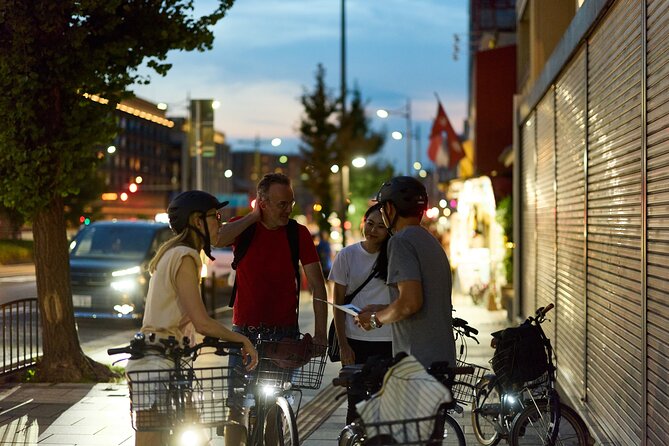
The other big advantage is the guided flow. With a guide leading the way, you can focus on what you see instead of constantly stopping to figure out routing. That matters in Kyoto, where you can go from a main street to a side lane in a few turns.
Start at Kyoto Tourist Lounge Gion, then roll into the old streets
Your tour meets at the Kyoto Tourist Lounge Gion at 557-4 Komatsu Cho, Pare Gion 101, 小松町 東山区 京都市 京都府 605-0811, Japan. The start time is 7:00 pm, and the tour ends back at the meeting point.
The meeting place matters because the night route starts in the right neighborhood. Gion is already your main stage, so you are not burning energy commuting across town before the fun begins.
You’ll also be using a mobile ticket, which is handy if you want to keep your day simple. And since the group max is 6 travelers, you should feel like you are riding with a small crew instead of a big tour bus line.
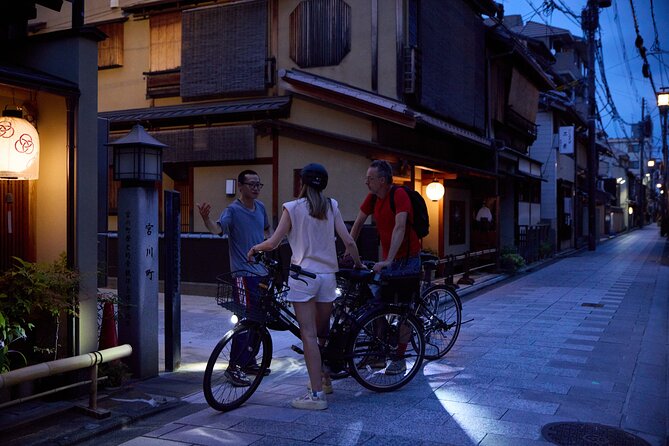
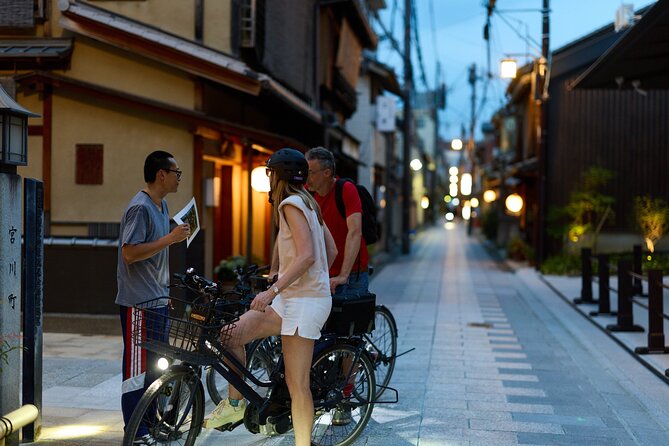
Lantern-lit streets of the geisha quarter
- Kyoto Geisha Walking Tour: Gion District & Hidden Gems
★ 4.7 · 3,273 reviews - Kyoto: Gion Magical Night Walking Tour with Geisha Trivia
★ 4.9 · 2,393 reviews - Kyoto: Gion Geisha District Walking Tour – Stories of Geisha
★ 4.7 · 2,187 reviews - Best of Kyoto: Gion, Geisha, Pagodas & Cobblestones
★ 4.9 · 2,058 reviews
Miyagawachō Kaburenjō: a quiet taste of geisha-district Kyoto
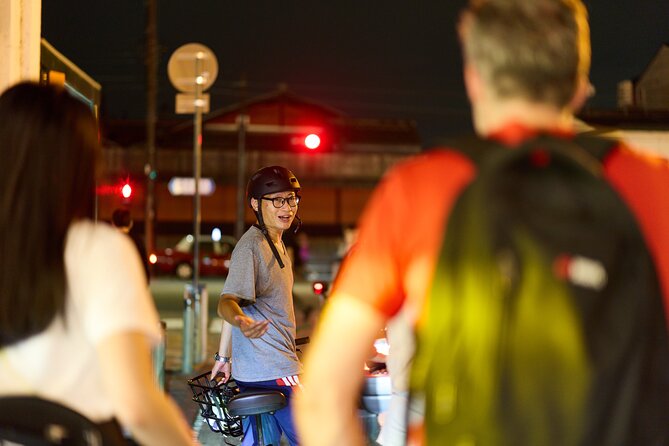
One of the first stops is Miyagawachō Kaburenjō. Miyagawachō sits just south of Gion and is known for its quieter feel, with beautifully preserved wooden townhouses. At night, that calm is even more noticeable.
What you get here is atmosphere. Instead of trying to take in every detail like you would in daylight, you can let the lighting and the street rhythm set the pace. It is a good opener because it shifts you from tourist energy into “watch Kyoto breathe” mode.
Drawback to keep in mind: this kind of neighborhood viewing is about the streetscape. Even though the district is fascinating, it is not a stop built for long lingering or big on-site activities. If you like quick, high-impact experiences, this works well.
Toyokuni Shrine: a quieter place tied to Toyotomi Hideyoshi
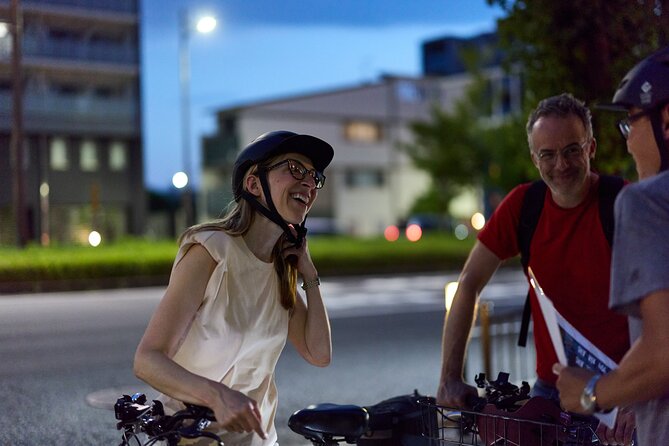
Next up is Toyokuni Shrine, described as a quieter Kyoto stop behind a large stone torii gate. The shrine is dedicated to Toyotomi Hideyoshi, the warlord who helped unify Japan in the 16th century.
This is a meaningful contrast to the geisha-district atmosphere. You move from preserved townhouses to a more spiritual, history-linked space, and you do it at a time of day when many places feel less crowded. The shrine’s setting behind the torii gate is also a good example of how night lighting can make even familiar architecture feel fresh.
Time is short here, so treat it as a chance to notice the gate approach and the overall setting, not as a checklist stop. If you like history details but you also like moving, this is a solid pairing.
Outside views at Kyoto National Museum: red-brick Meiji-era framing
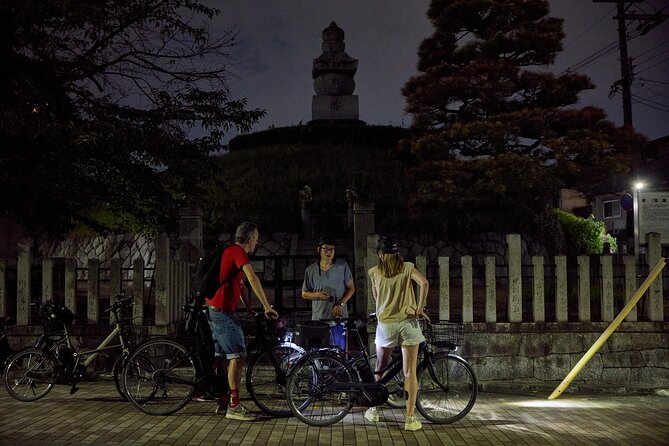
Your route also includes an exterior view of Kyoto National Museum. The tour highlights the Meiji-era red-brick arcaded building, which is one of the museum’s most striking visual features.
Even if you do not go inside, this exterior moment can be useful. It gives you a different kind of Kyoto texture, one that mixes culture and architecture in a way that feels removed from the temple lanes. It also breaks up the night route so you do not stay stuck in one aesthetic.
If you are hoping for full museum time, this is not that tour. But if you want the look of the building and then the ride continues, it is a good fit.
Kiyomizuzaka and Sannenzaka Ninenzaka: lantern-lit slopes and old-town stairs
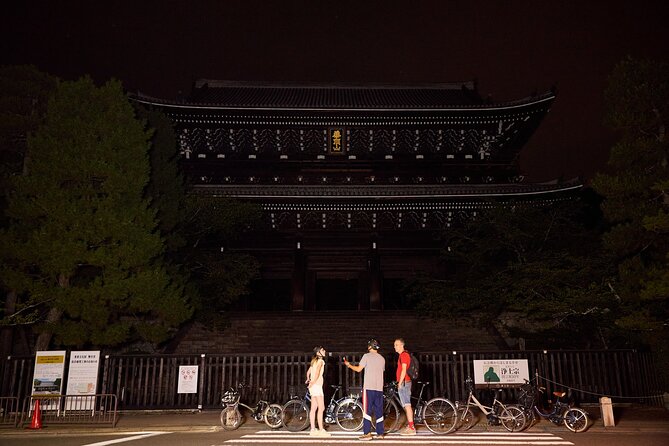
Then you hit Kiyomizuzaka Street, the historic slope that leads toward Kiyomizu-dera Temple. It is lined with traditional shops, teahouses, and lanterns, and the street’s curve gives you a steady stream of views as you move along.
In daytime, Kiyomizuzaka can feel like a full-on corridor of people. At night, the lanterns and the slower pace make it easier to actually see the street design. Even if you only spend a short time here, the slope is the kind of place where light and architecture do most of the work.
After that, the tour includes Sannenzaka and Ninenzaka, the stone staircase streets in Higashiyama. These lanes are known for preserved townhouses and souvenir-lined storefronts, but at night they feel more like walking through an old set than shopping street.
Practical note: these streets are part slope and part stairs, so your feet and your balance matter. An e-bike can get you close, but you will still be on foot for segments. Go slow with your steps and give yourself time to enjoy the views.
A quieter way to spend a day in Kyoto

Hōkan-ji Temple and Yasaka Pagoda: your biggest silhouette moment
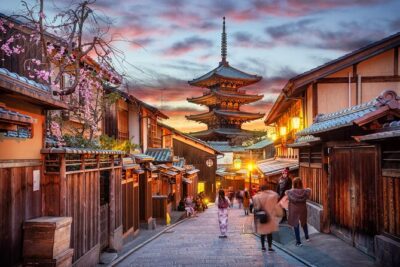
A highlight stop is Hōkan-ji Temple, also known for Yasaka Pagoda. This is one of the most recognizable Kyoto landmarks, and the tour is built around seeing it illuminated at night.
For many people, this is the “turn your head without meaning to” stop. A five-story pagoda under lights has a strong silhouette effect, and it is exactly the kind of landmark you remember when you leave Kyoto.
The time here is brief, so plan your photo strategy: look first, take a couple photos, and then switch back into enjoying the scene. If you get stuck shooting for too long, you start feeling rushed as the tour moves on.
Maruyama Park: a breather between iconic districts
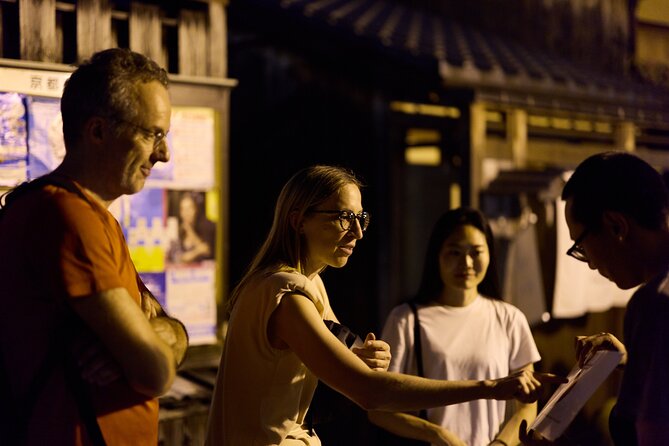
Next is Maruyama Park, Kyoto’s oldest public park, positioned between Gion and Higashiyama. It is known for seasonal beauty, especially cherry blossoms in spring, but at night you still get that park calm.
This stop works because it is not another narrow shopping street. You get a little open-space feeling and a different soundscape. Even if you are only there briefly, it resets your eyes before the final stretch.
If you like variety on a tour, this is a smart inclusion. The route takes you from shrines to slopes to steps, and Maruyama Park adds a breather.
Furukawachō Shopping Arcade: local Kyoto under a covered roof
To end, the tour stops at Furukawachō Shopping Arcade, a small covered street tucked east of Gion. The point here is contrast. Instead of the more famous and crowded shopping areas, this arcade keeps a more nostalgic, mom-and-pop vibe.
At night, covered arcades feel cozy and practical. It is a good last stop because it gives you a sense of everyday Kyoto, not just landmark Kyoto. You see how people move through the city when the tour lights are off.
This is also a nice place to notice details you might miss elsewhere, like shopfront design and how the space shapes foot traffic.
Price, timing, and what you really get for $70
The price is $70 per person for about 2 hours (the experience notes 2.0 to 2.5 hours), and it includes use of bicycle. Admission is listed as free for the stops shown in the itinerary, so you are not paying extra ticket fees for every single stop.
Here’s how I think about value: you are paying for three things at once. First, the electric bike saves energy and helps you cover multiple districts in a short window. Second, you get the guide’s job, which is timing and context. Third, you get the night-only advantage of illuminated landmarks and calmer lanes.
If you were to build this on your own, you might still end up spending extra time figuring routes and figuring out which streets are worth your attention after dark. On this tour, the route does that thinking for you.
Timing wise, starting at 7:00 pm is a practical sweet spot. You get night atmosphere but you are not dealing with super late fatigue. The tour is short enough that it works even if you have other plans the next day.
Who should book this night e-bike tour?
Book it if you want a Kyoto night with structure. This is ideal if you like streetscapes and architecture, and you want to see big-name spots like Gion areas and the Yasaka Pagoda without spending your entire evening in transit or in crowds.
It also suits you if you are not an experienced rider. The tour notes suitable for all skill levels with electric bikes provided. And since the group max is 6 travelers, it should feel more manageable than larger tours.
Skip it if you want long museum time or long inside temple visits. The itinerary leans toward quick stops and outside viewing, including the Kyoto National Museum exterior. If your heart is set on deeper, slower, inside-only experiences, you might prefer a different style of Kyoto tour.
A quick call: should you book this tour or not?
I think this is a strong choice when your goal is atmosphere plus efficiency. For $70, you get an easy way to see multiple Kyoto districts at night, plus a guide who can connect the dots in a way that makes streets feel more than scenery.
If you are flexible and you like night lighting, slopes, and pagoda silhouettes, this tour fits your evening well. If you want lots of indoor time, bring that expectation and choose accordingly.
More Cycling Tours in Kyoto



More Evening Experiences in Kyoto
New This Season
- Koyasan Day Trip by Private Car from Kyoto
- Old Port Town and Ultimate Sake Tasting Private Tour From Kyoto
- Kyoto’s Timeless Charm: 3hr Exploration of History and Peace
- Kyoto: 5 Types of Sushi Making
- Sacred Peak & Ancient Paths: Kurama-Kibune Hiking Experience
- Kyoto: Exclusive ZEN practice at Manpukuji temple in Uji
- Kyoto: Private Seasonal Aroma Yoga Class
- Traversing Kyoto’s Scenic West – Arashiyama to Kinkakuji
Gion Geisha Quarter Walks, compared.
Kyoto Geisha Walking Tour: Gion District & Hidden Gems
Read our review →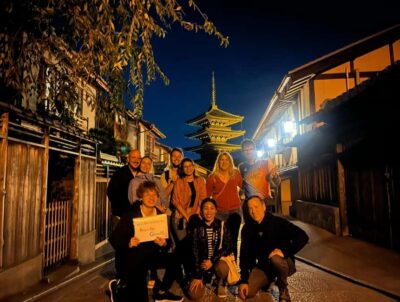
Gion Magical Night Walking Tour with Geisha Trivia
Read our review →
Gion Geisha District Walking Tour – Stories of Geisha
Read our review →
Best of Kyoto: Gion, Geisha, Pagodas & Cobblestones
Read our review →
Kyoto Night Foodie Tour in Gion (9+ dishes + 6 Sake tastings)
Read our review →
Kyoto Gion Geisha District Walking Tour – The Stories of Geisha
Read our review →