
Reviewed · KIMONO & YUKATA RENTALS
Kyoto 6hr Private Guided Tour & Kimono Experience
Six hours in Kyoto, with less stress. This experience pairs a Wargo kimono rental with a guide-led route that helps you understand what you are looking at, not just where to stand for photos. I also really like that Fushimi Inari is more than the red torii tunnel, the guide points out meaning and local context that most people miss.
One thing to plan for: not all temple and attraction entry fees are included, so your total can creep up once you choose your 2 to 3 stops. Also, because it is only a 6-hour day, you will want to pick sites that match your pace, not your bucket list panic.
In This Review
- Key things I think you will care about
- First Stop: Wargo Kimono in Kyoto Gion (What Your Hour Is For)
- How the 2 to 3 Site Choice Makes or Breaks Your 6-Hour Day
- Zen Temples You Can Read Like a Story (Kinkaku-ji to Honen-in)
- Nanzen-ji, Tofuku-ji, and Taizo-in, When You Want Calm That Still Feels Important
- Ryoan-ji Rock Garden Plus Daitoku-ji, The Zen Stops Where a Guide Pays Off
- Fushimi Inari-taisha With Stories Beyond the Torii Tunnel
- Kyoto Imperial Palace and Nijo Castle, For When You Want Power History
- Nishiki Market, Pontocho, and Gion Streets for Kyoto Flavor and Easy Wandering
- Arashiyama Bamboo and Togetsukyo Bridge, plus Kennin-ji Quick Hits
- Uji Travel for Byodoin Temple and Phoenix Hall
- Price and Logistics: Where Your $162.52 Goes (and Where It Does Not)
- Should You Book This Kyoto Private Guided Tour With Kimono?
- FAQ
- What is included in the kimono experience?
- How many places do we visit during the 6 hours?
- Are temple and attraction entrance fees included?
- Do I need to pay for transportation between stops?
- Where does the kimono rental happen and how long does it take?
- What if I do not fit the standard kimono sizes?
- Can I cancel for a full refund?
Key things I think you will care about
- Wearing a kimono first, using Wargo’s standard plan as an easy introduction to the look and feel
- Pick 2 to 3 stops from a long Kyoto list, so the day stays focused instead of rushed
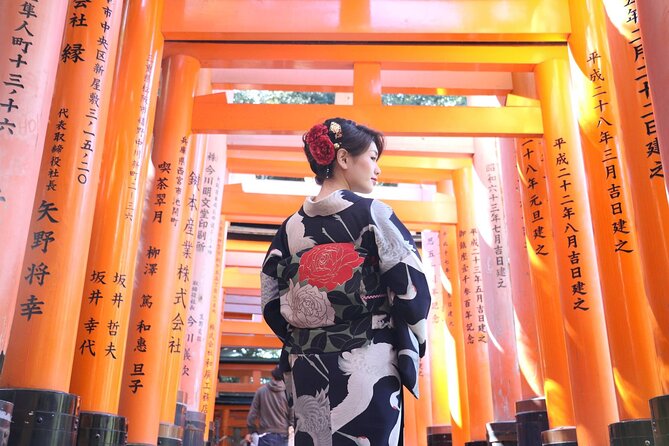
- Fushimi Inari with deeper context, not just a quick photo run through torii gates
- Crowd-smart guidance, with guides praised for keeping people moving smoothly
- A licensed local English-speaking guide for history, symbols, and practical route help
- Value in pairing a kimono session with guided temple time, rather than doing it all separately
First Stop: Wargo Kimono in Kyoto Gion (What Your Hour Is For)
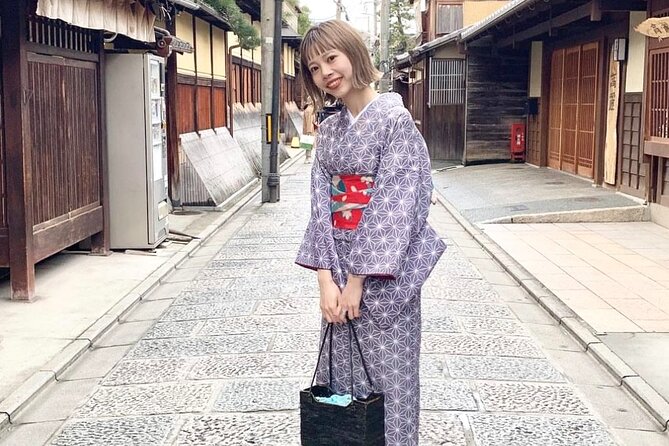
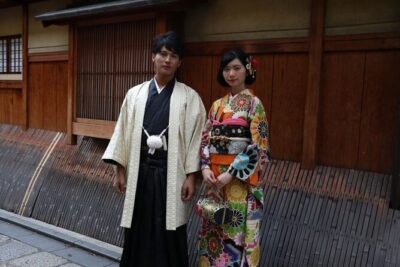
Your day usually starts with kimono, at Wargo’s Kyoto Gion store. The plan here is the Wargo Standard Kimono Plan, positioned as an easy, first-timer option, with designs that mix cute and elegant vibes. You should budget about 1 hour from the tour start for the kimono experience, since that is the typical runway before you head to temples or viewpoints.
Practical tip: comfortable shoes matter even if you are wearing a kimono. Kimono sleeves can snag a bit, and temple paths can be uneven, so keep your hands free when you can. If you are worried about fit, the size range is listed as women 150 to 170 cm and men 165 to 200 cm, and the staff will dress you as best as they can if you do not find a perfect match.
Also think about timing and photos. One review specifically recommended going early because popular temple areas fill fast, making photos harder at midday. A guide-led start helps you get control of your schedule early, instead of spending the first hour simply trying to find the right entrance and the least crowded route.
How the 2 to 3 Site Choice Makes or Breaks Your 6-Hour Day
Here is the big deal: this is not a marathon where you are dragged across Kyoto. The experience is designed as a private guided tour where you choose 2 to 3 sites from the set list. That is the difference between feeling like you survived Kyoto and feeling like you actually understood what you saw.
Most of the listed stops are shown in shorter time blocks in the schedule. But with only 2 to 3 picks, the pace usually feels manageable, because your guide can slow down where you care and speed up where you do not. It also means you can match your mood: do you want cinematic Zen gardens, political-era history, or a shrine day with photos and stories?
If you want a smoother day, choose sites that are in a similar zone. For example, if you pick multiple Northern Kyoto Zen temples, you minimize transit stress. If you pick something far like Uji, you should expect extra travel time and plan for that trade-off, since Byodoin Temple in Uji is noted as having extra travel time expected.
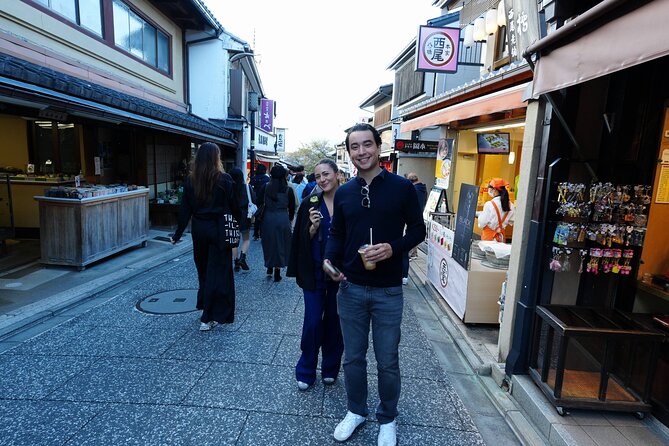
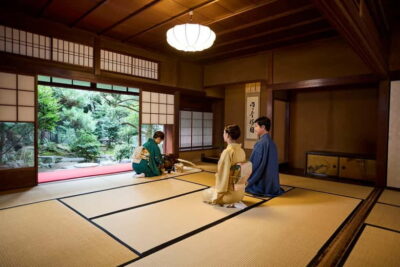
Walk the old streets in kimono
- Kimono Tea Ceremony at Kyoto Maikoya, NISHIKI
★ 5.0 · 911 reviews - Kyoto: Kimono Rental with Hairstyling and Accessories
★ 4.8 · 653 reviews - Kyoto: Kimono Tea Ceremony at Orizuruya Gion
★ 4.9 · 618 reviews - KYOTO Tea Ceremony with kimono near by Imamiya Jinjya Shrine
★ 5.0 · 343 reviews
Zen Temples You Can Read Like a Story (Kinkaku-ji to Honen-in)
Kyoto’s Zen temples are the kind of place where a guide can turn a quick visit into something memorable. Kinkaku-ji, the Golden Pavilion, is one of those stops where the visual is famous for a reason: the top floors are covered in gold leaf. If you only know it as a postcard, a guide can help you understand why this style matters, and how it fits into the temple’s role over time.
Ginkaku-ji, the Silver Pavilion, works differently. Instead of the obvious gold, you get a more understated feel and a setting that supports contemplation. The temple is tied to shogun Ashikaga Yoshimasa and his retirement villa story, and the guide can connect that personal history to the way people experience the grounds.
Then there is Honen-in, which many people walk past mentally until they actually see it. The approach is described as scenic, ending at a moss-covered gate, and inside you pass by sand mounds that are part of the garden’s symbolism. One review described the temple as having a very special atmosphere in a forest setting, and the advice was to go early, because the day crowds can make it harder to pause and take photos.
Time reality check: these are often short stops when grouped in a longer route. That is why your 2 to 3 site selection matters. If you want breathing room, put one of these Zen locations on your list and keep the rest of your choices simple.
Nanzen-ji, Tofuku-ji, and Taizo-in, When You Want Calm That Still Feels Important
Nanzen-ji is a big name in Zen, and this stop is framed as one of Japan’s important Zen temples. The grounds sit at the base of Kyoto’s forested Higashiyama mountains, so even a short visit can feel like it changes your tempo. If you like big temple complexes with space to walk and reset, this is a good choice for your middle-of-the-day slot.
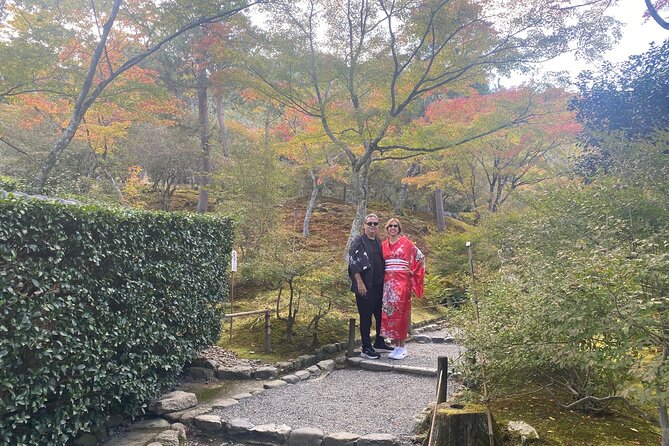
Tofuku-ji is the pick when you like architecture with seasonal payoff. It is especially famous for autumn colors, but even outside fall, it is still listed as a major Zen temple founded in 1236. If you are traveling in peak foliage season, a guide can help you decide what to see first so you are not stuck in a slow-moving crowd line at the wrong moment.
Taizo-in is a shorter garden-style stop tied to Myoshin-ji. The garden at Taizo-in is specifically called out as highly recommended in any season. That makes it a smart choice if you want something calmer than a shrine rush, but you still want a visual payoff, like a garden moment you can actually slow down for.
Ryoan-ji Rock Garden Plus Daitoku-ji, The Zen Stops Where a Guide Pays Off
Ryoan-ji is famous for its rock garden, the one that makes people tilt their heads and then start counting the stones. The key thing here is that the guide can help you see beyond the layout. One of the biggest benefits of a guided visit is getting the interpretive layer, so you are not standing there thinking, okay, what am I supposed to notice.
Daitoku-ji is a different kind of Zen experience. It is described as temples within temples, and the focus is on meditative gardens and their significance. If you prefer places that feel deeper and more layered, Daitoku-ji can deliver that, especially when your day is otherwise dominated by sightseeing crowds.
One practical note: if your group includes people who want photos more than explanations, ask your guide to prioritize both. The best versions of this tour are the ones where you get enough context to make photos feel meaningful, not just busy.
Fushimi Inari-taisha With Stories Beyond the Torii Tunnel
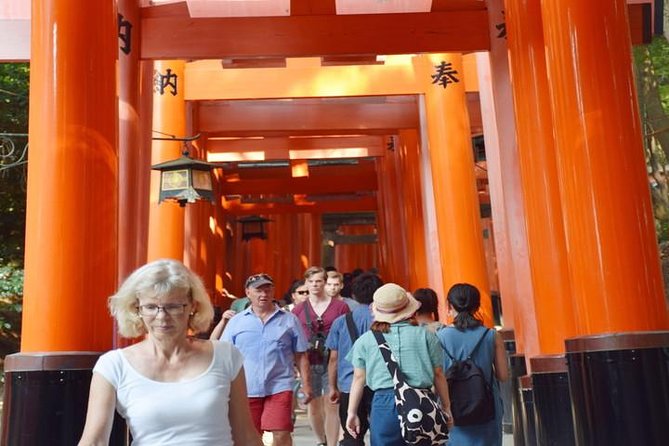
Fushimi Inari-taisha is the stop most people know for the torii gates. But the experience is built around the idea that this shrine is more than its photo moment. Your guide is expected to show deeper connections to local culture and history, plus details that help you see how the shrine fits into community life.
This is also where timing matters. A review advice was simple: go early, because it fills up around midday and photos become harder. If your tour start time is flexible, treat it like strategy. Morning usually gives you better movement, better sightlines, and less time spent trying to thread through groups.
You can also use the guide time to decide what version of Fushimi Inari you want. Some people want the iconic tunnel view and then out. Others want more of the shrine story and symbolism. With a guided day, you can choose a direction that matches your attention span.
A quieter way to spend a day in Kyoto


Kyoto Imperial Palace and Nijo Castle, For When You Want Power History
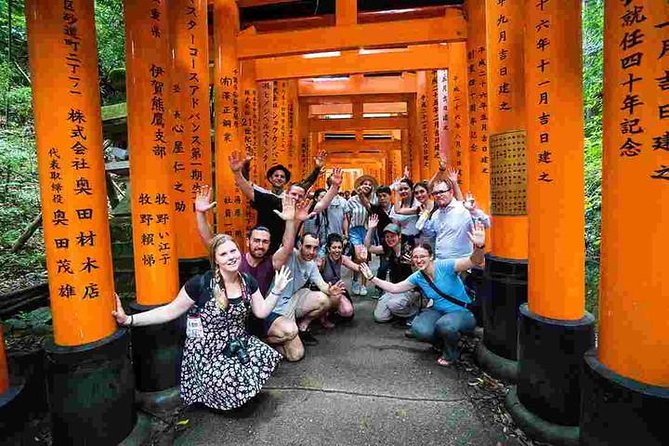
If shrines and gardens are your main course, adding one history stop can make the day feel fuller. Kyoto Imperial Palace is included as a stop tied to Japan’s Imperial family residence until 1868, when the emperor and capital moved to Tokyo. That context helps you see the site as part of a national shift, not just a pretty location.
Nijo Castle is another history heavyweight. Built in 1603 as the Kyoto residence of Tokugawa Ieyasu, it is tied to the Edo period and why this era shaped what came next. If you like reading places as political statements, these are good anchors for the day.
The practical advantage of picking one history stop: it balances your schedule. After temple texture and shrine symbolism, a palace or castle gives you a different kind of story. It can also be a nice reset if someone in your group wants fewer steps and more structured viewing.
Nishiki Market, Pontocho, and Gion Streets for Kyoto Flavor and Easy Wandering
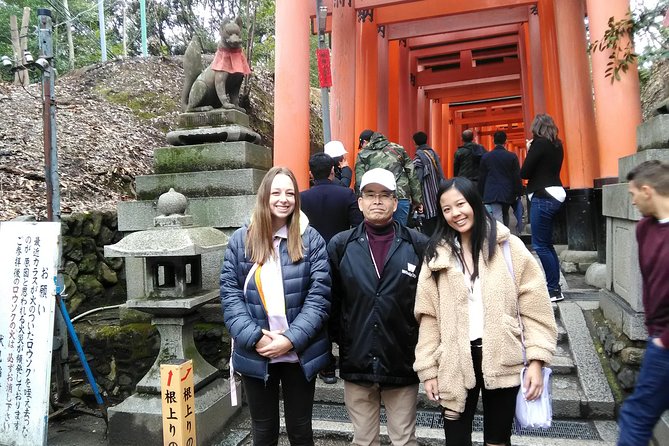
Food streets and atmospheric alleyways are where Kyoto can feel like Kyoto. Nishiki Market is described as a narrow five-block shopping street lined with over one hundred shops and restaurants, nicknamed Kyoto’s Kitchen. If you want to sample small bites or just browse ingredients and snacks, this stop gives you that fast-hit Kyoto feeling without major ticket planning.
Then you have Pontocho, an atmospheric dining area along a narrow alley from Shijo-dori to Sanjo-dori, one block west of the Kamogawa River. If your day ends in the evening, this is a great place to wander and decide what to eat based on what looks good right then.
Gion is also offered as a guided way to handle the complexity of the geisha district streets. The note here is practical: navigating on your own can be daunting for first-time visitors. With a guide, you can focus on the atmosphere and landmarks without feeling lost.
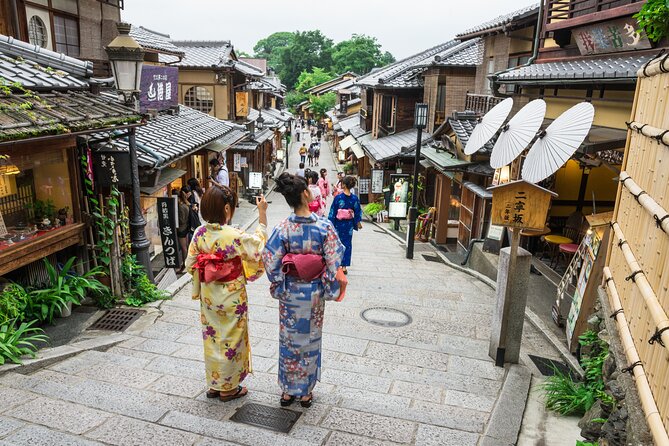
Tip: if you are wearing a kimono, these neighborhood stops are where your photos usually look most authentic. The alley light, the street texture, and the crowd flow all tend to make kimono photos look more like a memory than a souvenir snapshot.
Arashiyama Bamboo and Togetsukyo Bridge, plus Kennin-ji Quick Hits
Some Kyoto days need one big visual set piece, and Arashiyama often plays that role. Togetsukyo Bridge, also described as Moon Crossing Bridge, is Kyoto’s iconic landmark in Arashiyama. It was built during the Heian period and reconstructed in the 1930s. Even a short walk around the bridge area can feel like a scene, especially if you like river-adjacent views.
The bamboo groves are included as walk paths cutting through the bamboo. The description emphasizes how the groves sway gently when there is light wind, which is the kind of detail that turns bamboo from a checklist item into a calm sensory moment.
Kennin-ji is offered as a quick stop close to Hanamikoji and Shijo streets, with expansive grounds and dry landscape gardens. It is listed as a very short time slot, but the value of a short slot is that you can add it without sacrificing your whole afternoon.
If you are planning bamboo and bridge, choose one other nearby stop and keep it simple. Bamboo days get crowded, and the guide helps you avoid the worst bottlenecks while you are trying to enjoy the setting.
Uji Travel for Byodoin Temple and Phoenix Hall
Byodoin Temple in Uji is included, but with a major note: extra travel time is expected because it is in Uji city in Kyoto prefecture. The site is known for the Phoenix Hall, a National Treasure of Japan and a UNESCO World Heritage site.
If you are excited about UNESCO sites and want one destination outside central Kyoto, this can be a great add-on. Just be realistic about how much of your 6-hour window it can consume. In practice, you may want to choose Byodoin as one of your 2 stops, not one of three, unless you are comfortable with a tight schedule.
Price and Logistics: Where Your $162.52 Goes (and Where It Does Not)
At $162.52 per person for an approximately 6-hour guided experience with a licensed local English-speaking guide, plus a kimono rental on the standard plan, this can be good value if you want both hands-on guidance and the kimono experience in one day. The biggest cost you are protecting yourself from is confusion, wasted time, and the frustration of trying to interpret temples without context.
But do not ignore what is not included. Transportation fees, entrance fees, lunch, and personal expenses are not included. The itinerary also marks some sights as admission ticket free and others as not included, so your final total will depend on what you choose.
Another logistics point: private vehicle is not included. That means you are relying on walking and public transport between stops. The tour notes pickup may be offered, and you will meet the guide in Kyoto on foot, so plan to be ready for some city navigation.
Should You Book This Kyoto Private Guided Tour With Kimono?
Book it if you want a Kyoto day with structure, stories, and photos that mean something. The kimono start at Wargo, paired with a guide who can explain symbols and history, is a solid combo. You also get practical crowd help, which matters a lot at places like Fushimi Inari, where early timing can make the difference between stress and smooth sightseeing.
Skip it, or at least rethink your site choices, if you dislike added costs from entrance tickets. Also, because you only choose 2 to 3 stops, you should prioritize meaning over ticking every landmark. Pick fewer places that match your interests, and you will get the better version of this day.
FAQ
What is included in the kimono experience?
The tour includes a kimono-wearing experience using the Wargo Standard Kimono Plan.
How many places do we visit during the 6 hours?
You choose a customizable tour of 2 to 3 sites from the listed options.
Are temple and attraction entrance fees included?
Entrance fees are not included. Some listed stops show admission ticket free, while others are marked as admission not included.
Do I need to pay for transportation between stops?
Transportation fees are not included, and a private vehicle is not included.
Where does the kimono rental happen and how long does it take?
You start at Kyoto Kimono Rental wargo Kyoto Gion Store. The estimated kimono time is about 1 hour from the tour start.
What if I do not fit the standard kimono sizes?
For woman sizes, 150 cm to 170 cm is listed, and for men, 165 cm to 200 cm is listed. If you cannot find a perfect fit, the professional staff will dress you as best as they can.
Can I cancel for a full refund?
Free cancellation is available. You can cancel up to 24 hours in advance for a full refund.
New This Season
- Koyasan Day Trip by Private Car from Kyoto
- Old Port Town and Ultimate Sake Tasting Private Tour From Kyoto
- Kyoto’s Timeless Charm: 3hr Exploration of History and Peace
- Kyoto: 5 Types of Sushi Making
- Sacred Peak & Ancient Paths: Kurama-Kibune Hiking Experience
- Kyoto: Exclusive ZEN practice at Manpukuji temple in Uji
- Kyoto: Private Seasonal Aroma Yoga Class
- Traversing Kyoto’s Scenic West – Arashiyama to Kinkakuji
Kimono & Yukata Rentals, compared.
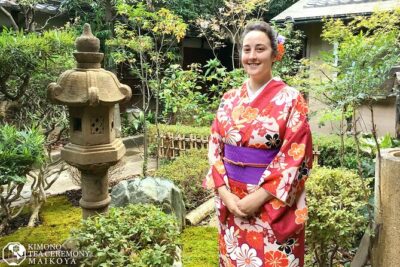
Kimono Tea Ceremony at Kyoto Maikoya, NISHIKI
Read our review →
KYOTO Tea Ceremony with kimono near by Imamiya Jinjya Shrine
Read our review →
Kimono and Tea Ceremony Experience at Cultural Asset
Read our review →
Family-Friendly Kimono & Yukata Experience at WARGO
Read our review →Also filed under