

Reviewed · GION GEISHA QUARTER WALKS
Kyoto Early Bird English Tour: Gion & Higashiyama(Private opt)
Kyoto in the morning feels like a secret. This early-bird Gion and Higashiyama route is built for first-timers who want clear context without map stress, with a live guide shaping what you see as you go. I especially like the guide commentary (and the way it makes landmarks feel understandable fast) and the chance to experience these streets before the worst crowds. One thing to plan for, Kiyomizu-dera costs extra, and this is a walking tour, so comfy shoes matter.
You get a true guided flow through classic Kyoto scenery, from traditional lanes in Gion to temple viewpoints in Higashiyama. If you choose the private option, it is only your group, which makes the pacing feel calmer, and it helps if your walking speed is slower.
A standout perk is that professional photos are taken during the tour, and the guide can act like a photo helper too, which is handy if you want shots that look like you knew where to stand.
In This Review
- Key things I’d highlight before you book
- Kyoto early bird Gion and Higashiyama, the practical reason it works
- Meeting point to finish line: what the flow feels like
- Gion first: machiya streets and the geisha district vibe
- Hanamikoji Street: where you might spot maiko or geisha
- Yasui-Konpiragu: praying for better relationships
- Yasakanoto Pagoda at Hokanji: scale, wood, and the nail-less claim
- Sannenzaka and Ninenzaka: stone lanes made for slow walking
- Kiyomizu-dera: the UNESCO view stop and what to plan for
- Yasaka Koshin-Do: colorful decorations in a temple that looks different
- Yasaka Shrine: a strong finish with prosperity and protection
- Guide style and photos: why this can beat DIY for a first Kyoto visit
- Is the price fair for what you get?
- Who this tour is best for (and who should skip it)
- Quick itinerary recap so you know what you are buying
- Should you book this Kyoto early-bird Gion and Higashiyama tour?
Key things I’d highlight before you book
- Early timing for calmer streets, including the option to go out at very early hours
- Gion plus Higashiyama together, so you connect the old-teahouse atmosphere to the big temple views
- UNESCO World Heritage Site stop at Kiyomizu-dera, with guided context along the way
- Most admissions are free, with only Kiyomizu-dera requiring a ticket
- Private option means only your group participates
- Professional photos taken during the walk, so you are not juggling your camera the whole time
Kyoto early bird Gion and Higashiyama, the practical reason it works
Kyoto can be gorgeous and exhausting at the same time, mainly because the biggest sights pull in everyone at once. This tour is designed to solve that problem with an early start and a tight walking route that keeps you from wandering in circles.
You do not have to solve Kyoto’s “where do I go next” puzzle. A guide sets the order, fills in meaning as you pass shrines and stone streets, and keeps the pace realistic for a roughly 3-hour experience. That matters because the Gion and Higashiyama area is made for strolling, but it is still easy to overdo it if you are doing everything on your own.
The other practical win is that the itinerary is packed with payoff stops. You get the old-street mood of Gion, a major temple viewpoint at Kiyomizu-dera, and a final classic shrine finish at Yasaka Shrine. In other words, you cover the “greatest hits” without turning it into a sprint.
Finally, the pricing is set up for value. At $64.01 per person (about a half-day day-tour price in Kyoto), you are paying for an English-speaking guide and the photo support, not just a list of addresses. Also, tours like this often sell out, and booking can average around 43 days in advance, so grabbing your slot earlier is smart.
Meeting point to finish line: what the flow feels like
The tour meets at the Statue of Izumo-no-Okuni, Kawabatacho, Higashiyama Ward, Kyoto and it ends back at the same meeting spot. That sounds small, but it’s a big deal in practice. You do not have to figure out transport from a far-off endpoint, and you can relax once you start.
You should expect a walking experience with a moderate physical fitness level requirement. The stop times are not huge on paper, but the streets add up. You are looking at around 3 hours total, plus a bit of movement between stops, so I’d plan for steady walking and brief pauses.
Also, make a note of the timing rule: if you are late, you cannot join and you will not receive a refund. That policy is common for guided tours, but it affects your planning. If you are catching public transit or using a map app, leave a buffer.
The tour uses a mobile ticket, which usually makes check-in smoother, especially if you are carrying less paper while sightseeing.
Lantern-lit streets of the geisha quarter
- Kyoto Geisha Walking Tour: Gion District & Hidden Gems
★ 4.7 · 3,273 reviews - Kyoto: Gion Magical Night Walking Tour with Geisha Trivia
★ 4.9 · 2,393 reviews - Kyoto: Gion Geisha District Walking Tour – Stories of Geisha
★ 4.7 · 2,187 reviews - Best of Kyoto: Gion, Geisha, Pagodas & Cobblestones
★ 4.9 · 2,058 reviews
Gion first: machiya streets and the geisha district vibe
Stop 1 is Gion, Kyoto’s famous geisha district, known for its traditional wooden machiya houses, teahouses, and preserved historic streets. This is the part of Kyoto that makes you slow down. Even if you only get a short window, the guide helps you look at details instead of just taking photos.
What you will notice here, if you go in with the right mindset:
- Wooden facades and old street rhythm, not the modern grid you may be used to
- Teahouse-style buildings that look like sets, but are real parts of the neighborhood
- A sense of “Kyoto as it used to be,” without pretending it is frozen in time
If you enjoy atmosphere-based sightseeing, this opener sets the tone for the whole morning. It also helps you understand why people love Gion beyond the name.
Hanamikoji Street: where you might spot maiko or geisha
Next is Hanamikoji Street, a classic lane in Gion with traditional teahouses and the wooden machiya look. The most important detail here is that this is a street where you may encounter geisha or maiko, depending on timing and circumstances.
Even when you do not see performers, Hanamikoji is still worth it because it teaches you how Kyoto’s entertainment heritage is built into everyday streets. The guide’s commentary helps you read the scene, which is the difference between seeing a pretty street and actually understanding what you are looking at.
This stop is only listed as about 15 minutes, so treat it like a focused walk-through. If you want lingering shopping time, you will want to schedule that separately, after the tour.
Yasui-Konpiragu: praying for better relationships
Stop 3 is Yasui-Konpiragu, known as a powerful shrine tied to severing bad relationships and shifting toward positive connections. People come here with very specific intentions, which can feel surprisingly personal in a place that still looks serene.
This is one of those stops where a guide helps more than you expect. Shrine visits in Kyoto can be visually similar, but the purpose differs, and that changes what you notice. You might find yourself paying attention to the small cues that reflect the shrine’s focus, rather than treating it as just another pretty building.
Expect this to be short, about 15 minutes, so it is a “meaning stop” more than a long meditation break.
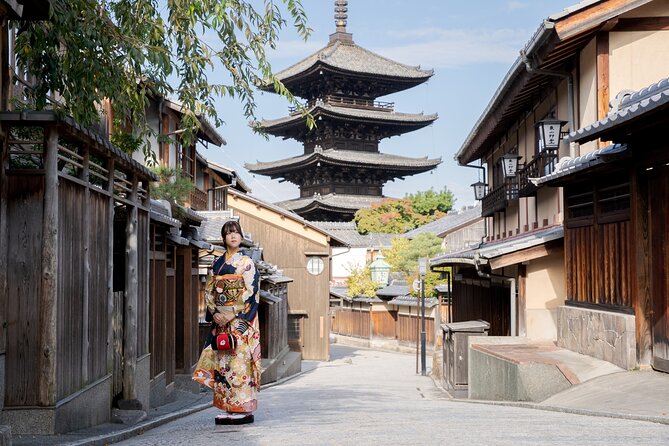
Yasakanoto Pagoda at Hokanji: scale, wood, and the nail-less claim
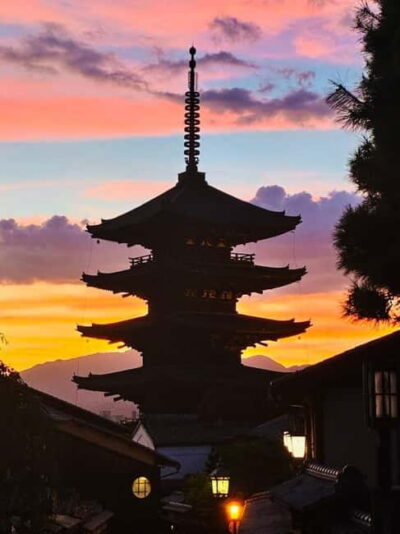
Stop 4 is Yasaka Pagoda (Hokanji Temple), described as one of the oldest wooden structures in Japan. The listing also notes it was built without using nails, which is a fascinating detail that makes the structure feel almost impossible.
This is a great stop for architecture-minded travelers. Even if you are not chasing engineering facts, the guide’s framing helps you appreciate why this pagoda is such a Kyoto symbol.
The time is about 15 minutes, so you are not stuck in a long line. It’s a quick hit, then you move on to the stone-street strolls that lead into the big temple area.
A quieter way to spend a day in Kyoto


Sannenzaka and Ninenzaka: stone lanes made for slow walking
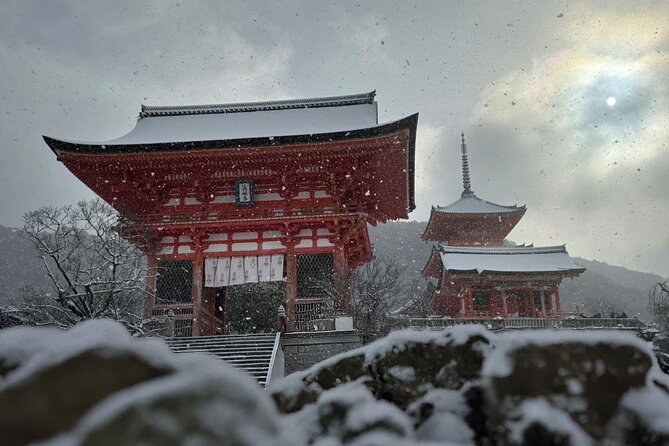
Stop 5 is Sannenzaka and Ninenzaka, two charming stone-paved streets lined with souvenir shops and restaurants in historic wooden buildings. This is the “walk it like you’re in a movie” part of the route.
These streets can be crowded later in the day, so earlier timing helps. If you enjoy atmospheric shopping, you can glance in shop windows and grab a snack on your own later, but during the tour you are mostly getting the setting.
I like this stop because it gives you a break from temple intensity. You get texture, small storefront scenes, and a very Kyoto look without it feeling like museum time.
The stop is about 15 minutes. Use that time to get your bearings for the temple climb ahead.
Kiyomizu-dera: the UNESCO view stop and what to plan for
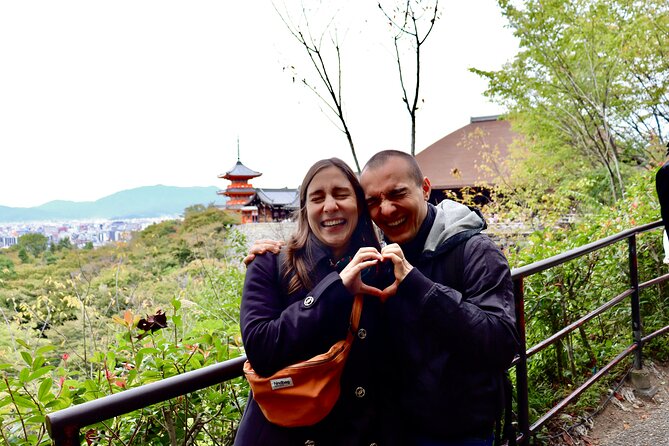
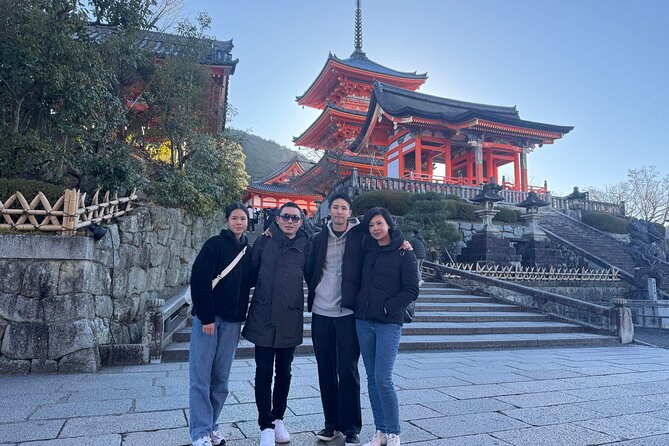
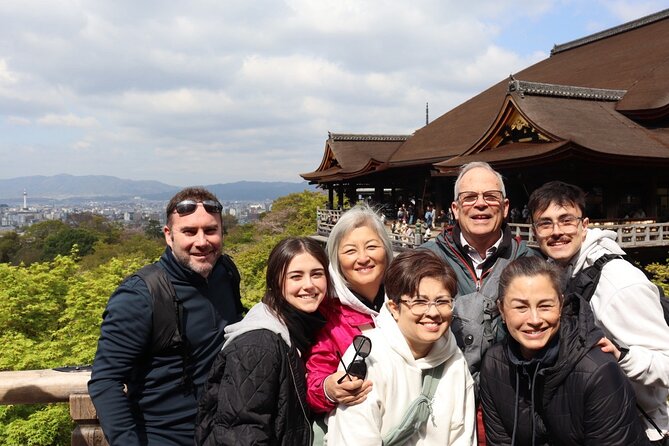
Stop 6 is Kiyomizu-dera Temple, the big headline sight. The tour notes it is located on top of a mountain and offers panoramic views of Kyoto City. It is also the one stop with an admission fee: ¥500 per person, not included in the tour price.
This is also the UNESCO World Heritage Site portion of the route. That matters because it changes what you are looking for. You are not just visiting a famous temple, you are visiting part of a larger preserved heritage area.
Kiyomizu-dera gets crowds, so an early start helps. Still, even early, you will likely see foot traffic. The guide helps you navigate without wasting time figuring out routes around the site.
Time on this stop is listed as about 1 hour, which is a solid amount. Long enough to see key viewpoints and main temple areas, without feeling like you are stuck for half the day.
Practical note: since admission is not included, bring cash for the ticket unless you know you can pay digitally where you are. The tour duration includes the visit time, so you do not want to run late on payment.
Yasaka Koshin-Do: colorful decorations in a temple that looks different
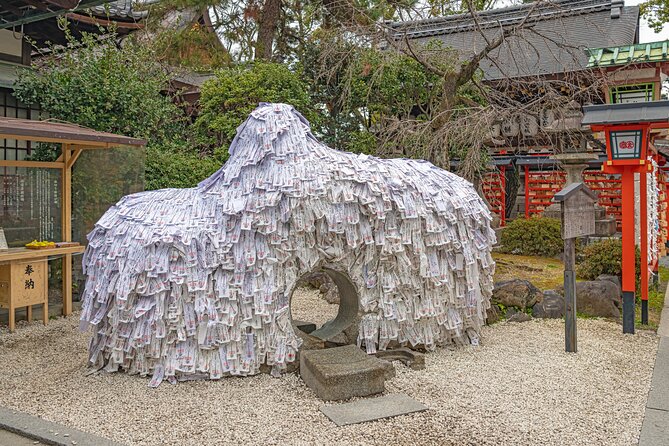
Stop 7 is Yasaka Koshin-Do, described as a temple of unknown construction date with colorful decorations that can look astonishing compared with other, more subdued temples.
This is a nice contrast stop. If you have been looking at classic wooden architecture, vivid colors can reset your attention. It also gives you variety before the final shrine.
The stop is about 15 minutes, which makes it ideal if you want variety but do not want to commit to another big site.
Yasaka Shrine: a strong finish with prosperity and protection
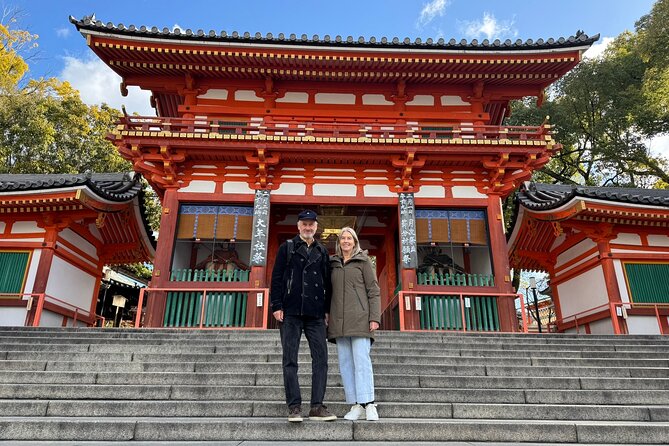
Stop 8 is Yasaka Shrine, the headquarters of related shrines throughout Japan, with dedication to gods of prosperity and protection. It is a historic Kyoto anchor and the tour ends here, returning back to the meeting point.
This is a good finale because it feels like a complete cultural loop: old neighborhood streets, classic temple viewpoint, then the broad shrine atmosphere tied to daily life.
The time is about 30 minutes, which is enough to take photos, observe the grounds, and reflect on what you saw earlier without feeling rushed.
Guide style and photos: why this can beat DIY for a first Kyoto visit
The most praised element in feedback is the guide experience, including English clarity and patience. One guide name you may see associated with this tour is Ikki Kataoka. People have highlighted that Ikki explains things in detail, speaks very good English, and is patient with older travelers.
That matters because Kyoto is full of things that look obvious to locals but not to first-timers. A good guide turns confusion into understanding quickly. You get to walk the streets and not feel like you are missing the point.
Then there is the photo piece. The experience includes professional photos taken during the tour, which is a huge convenience. Instead of trying to get the timing right while you also watch where you are stepping, you get help with angles and timing.
If you are traveling with older family members, or if you simply hate coordinating selfies all day, this is the kind of built-in support that raises the value.
Is the price fair for what you get?
At $64.01 per person for a roughly 3-hour guided walking tour, you are paying for:
- A passionate local English-speaking guide
- Guided stops across major Gion and Higashiyama landmarks
- Professional photos
- A route where most sites have free admission, with only Kiyomizu-dera adding cost
The big “math” in your favor is this: you are not paying separate entrance fees for every stop, and you are not paying for transport or a full-day tour model just to see the core highlights. The main additional cost is Kiyomizu-dera at ¥500, which is a straightforward add-on.
So yes, it is priced for value if you want a guide and photos, and if you are not trying to stretch the day into a longer DIY itinerary. If you are the type who hates guided walking and wants total freedom to linger, you might feel slightly boxed by the schedule. But if you like structure, this is a very reasonable deal.
Who this tour is best for (and who should skip it)
This is best for you if:
- You are visiting Kyoto for the first time and want an efficient Gion plus Higashiyama loop
- You prefer guided landmarks over trying to piece together a route on your own
- You want to go early to avoid the worst crowds
- You’d like professional photos without turning your trip into a camera project
It might be less ideal if:
- You want to spend long periods shopping or lingering at each stop, since the itinerary times are fairly compact
- You have limited walking tolerance, since it is a walking experience and you have a set route and meeting time
Quick itinerary recap so you know what you are buying
- Gion (about 10 minutes), historic streets and old Kyoto atmosphere
- Hanamikoji Street (about 15 minutes), traditional lane with possible geisha or maiko sightings
- Yasui-Konpiragu (about 15 minutes), shrine tied to breaking bad relationship ties
- Yasaka Pagoda, Hokanji (about 15 minutes), iconic wooden pagoda with the nail-less building claim
- Sannenzaka and Ninenzaka (about 15 minutes), stone streets for the classic Kyoto look
- Kiyomizu-dera (about 1 hour), UNESCO stop, temple views, ¥500 ticket not included
- Yasaka Koshin-Do (about 15 minutes), colorful decoration-focused temple
- Yasaka Shrine (about 30 minutes), prosperity and protection, tour finale
Should you book this Kyoto early-bird Gion and Higashiyama tour?
If you want Kyoto highlights with less stress, this is a strong yes. The early timing, the smart mix of streets and sacred stops, and the fact that it includes both English guidance and professional photos make it feel like more than just a basic sightseeing walk.
Book it if:
- You want a guided route that covers Gion and Higashiyama in about half a day
- You prefer calm mornings and are happy with a walking itinerary
- You want photos handled for you, especially if you are not an expert at navigating crowd-filled spots
Skip or adjust your plan if:
- You cannot comfortably handle walking for a 3-hour route
- You want lots of free time to roam without any schedule structure
If your goal is a smooth first Kyoto morning with meaningful context and strong photo results, this tour fits that mission well.
New This Season
- Koyasan Day Trip by Private Car from Kyoto
- Old Port Town and Ultimate Sake Tasting Private Tour From Kyoto
- Kyoto’s Timeless Charm: 3hr Exploration of History and Peace
- Kyoto: 5 Types of Sushi Making
- Sacred Peak & Ancient Paths: Kurama-Kibune Hiking Experience
- Kyoto: Exclusive ZEN practice at Manpukuji temple in Uji
- Kyoto: Private Seasonal Aroma Yoga Class
- Traversing Kyoto’s Scenic West – Arashiyama to Kinkakuji
Gion Geisha Quarter Walks, compared.
Kyoto Geisha Walking Tour: Gion District & Hidden Gems
Read our review →
Gion Magical Night Walking Tour with Geisha Trivia
Read our review →
Gion Geisha District Walking Tour – Stories of Geisha
Read our review →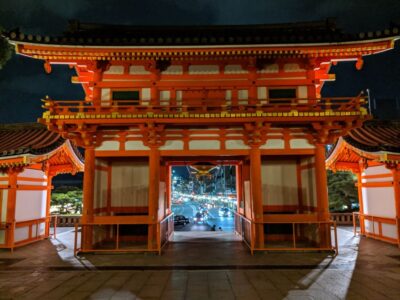
Best of Kyoto: Gion, Geisha, Pagodas & Cobblestones
Read our review →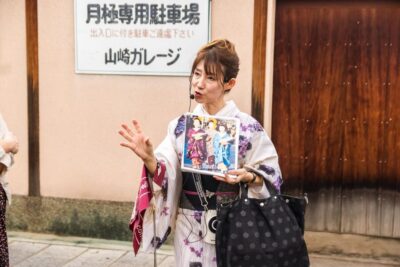
Kyoto Night Foodie Tour in Gion (9+ dishes + 6 Sake tastings)
Read our review →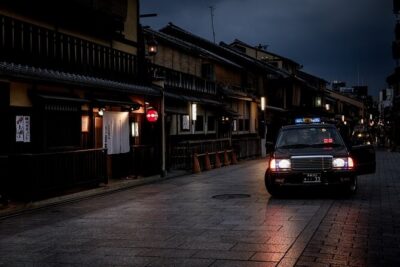
Kyoto Gion Geisha District Walking Tour – The Stories of Geisha
Read our review →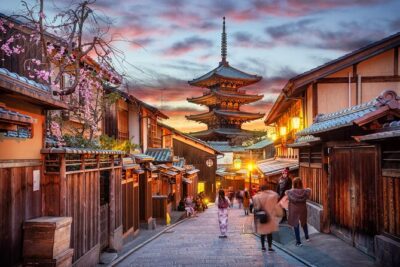
Kyoto Gion: 2-Hour Geisha Culture & History Walking Tour
Read our review →Also filed under