
Reviewed · WALKING TOURS
Kyoto Early Riser Platinum One-Day Walking Tour
Kyoto at dawn hits different, in a good way. This one-day walking tour strings together Kyoto’s biggest cultural picture points, starting early to beat crowds and heat while you move efficiently on foot. I like that it’s private with a real guide, and I like that the route mixes iconic stops with some local neighborhood texture.
Two things stood out for me: the guide’s personal attention and the way the early start helps you get photos and viewpoints with less friction. One thing to plan for is that entry fees and public transit are extra, and the day includes a fair amount of walking plus transit hops that can feel like a lot in an 8-hour window.
If you want to pack major Kyoto highlights into a single day without feeling lost, this tour is a strong candidate. Just know it’s not the kind of slow, stay-and-chat day where you linger forever in one place.
In This Review
- Key things worth knowing before you go
- Why Start Early in Kyoto (and What You Gain)
- Meeting at Kyoto Station, Your Day Pace, and What It Costs
- Stop 1: Fushimi Inari-taisha, Torii Gates Without the Crush
- Stop 2: Bamboo Forest Street, When Light Actually Helps
- Stop 3: Kinkakuji Temple and the Golden Pavilion Reality Check
- Stop 4: Kitano Tenmangu Shrine, Students and Old Ritual
- Stop 5: Kamishichiken Area and the Geisha District Context
- Stop 6: Nishiki Market Shopping Hour, How to Spend Smart
- Private Guide Perks: How the Best Moments Often Happen
- Price and Logistics: Transit, Tickets, and the IC Card Trick
- Walking Amount, Comfort Tips, and Weather Reality
- Who This Tour Best Fits (and Who Might Rethink It)
- Should You Book Kyoto Early Riser Platinum One-Day?
- FAQ
- What does the tour price include?
- How long is the Kyoto Early Riser Platinum One-Day Walking Tour?
- Is Kinkakuji Temple admission included?
- Where does the tour start and end?
- Is this tour private?
- What is the cancellation window?
Key things worth knowing before you go
- Start early to reduce crowds and heat, especially at the famous torii gates and bamboo area
- Private, small-group feel with your guide shaping the pace around your interests
- Major Kyoto highlights in one loop, including Fushimi Inari, Kinkakuji, and Nishiki Market
- Extra costs to budget for, since admission and transit are not fully included
- Real walking day with some steps and uneven city surfaces, plus transit segments
Why Start Early in Kyoto (and What You Gain)
Kyoto’s top sights have a simple rule: the later you go, the more you fight for space. This tour leans into that reality by starting in the early morning, then moving through a lineup of places that normally get jammed later.
The payoff is practical. At Fushimi Inari, you’re walking under thousands of torii gates, and the early timing helps you avoid the “shoulder-to-shoulder” vibe that turns photos into scavenger hunts. In the bamboo area, early hours can mean calmer air, softer light through the stalks, and a more peaceful feel on the path.
Also, an early start helps your energy. Kyoto can be hot and humid, and an 8-hour plan works better when you’re not burning daylight and stamina in the afternoon rush.
Meeting at Kyoto Station, Your Day Pace, and What It Costs
The tour meets at Kyoto Station Building 901 and ends back at the meeting point. That’s convenient because Kyoto Station is one of the easiest hubs to reach from anywhere in the city.
Price-wise, the tour is listed at $130.79 per person. What matters more than the headline price is the add-ons:
- Admission fee: ¥500 per person
- Public transportation: ¥1,700 per person
- Some key sites (like Kinkakuji) have separate admission needs
For me, the value math looks like this: you’re paying for a guide, a planned route, and the advantage of not spending your morning figuring out which train you need and where to walk once you get off. If you’re the type who enjoys “easy logistics” while still getting real sights, that’s where the money goes.
If you dislike transit days, you’ll want to mentally brace for it. One comment I saw praised the guide but flagged that public transport segments can feel like a time tax. In a perfect world, you’d walk everywhere, but Kyoto’s geography forces some ride time.
A quieter way to spend a day in Kyoto
- Kyoto Geisha Walking Tour: Gion District & Hidden Gems
★ 4.7 · 3,273 reviews - Kyoto: Gion Magical Night Walking Tour with Geisha Trivia
★ 4.9 · 2,393 reviews - Kyoto: Gion Geisha District Walking Tour – Stories of Geisha
★ 4.7 · 2,187 reviews - Night Walk in Gion: Kyoto’s Geisha District
★ 4.5 · 2,003 reviews
Stop 1: Fushimi Inari-taisha, Torii Gates Without the Crush
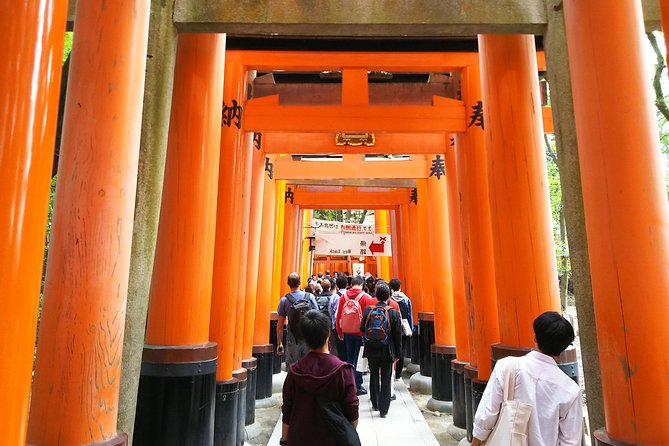
Your first big wow is Fushimi Inari-taisha Shrine. You’ll start with the iconic tunnel of thousands of vermilion torii gates, arranged in long, repeating lines that feel almost theatrical.
The gates are tied to worship and gratitude traditions, and your guide will explain what the deity enshrined there represents. That context matters, because otherwise it’s easy to treat Inari as just a photo stop. With the story, it becomes more than a backdrop for a few pictures.
What to expect on the ground: you’ll walk through crowded-in-later-hours territory, so early timing helps. You’ll also see that the walk has its own rhythm. Even if you don’t go all the way up, you can still get the tunnel effect and the sense of scale.
Photo note: Inari torii look best from a slightly lower angle, and the repeating geometry makes it easy to get satisfying shots without needing a complicated setup.
Stop 2: Bamboo Forest Street, When Light Actually Helps
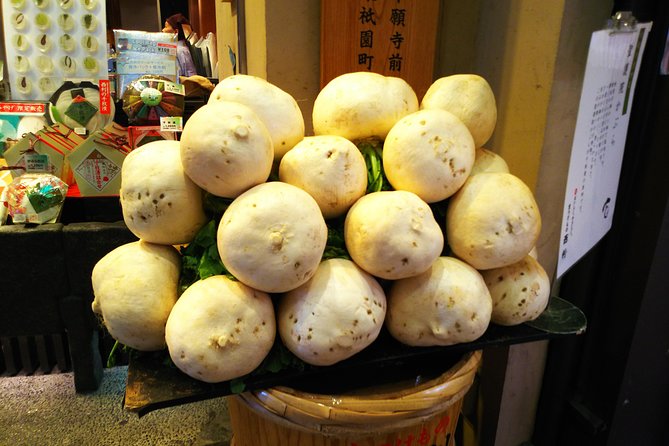
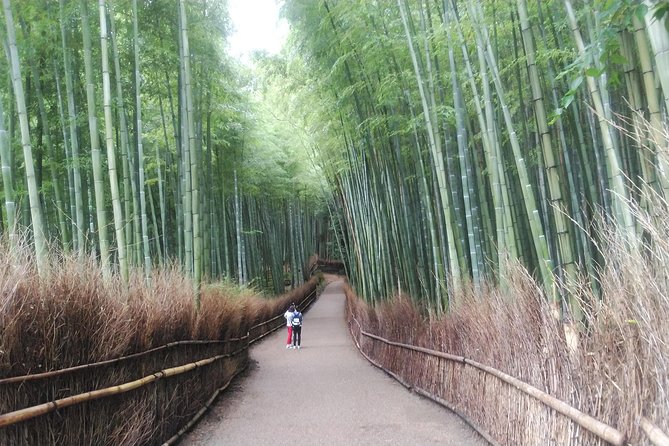
Next up is Bamboo Forest Street. This is the famous stretch where the bamboo stalks form a green rhythm, and sun filtering through the culms gives the scene that soft, patterned glow.
The tour gives you about an hour here. That’s enough time to walk the main path, pause for pictures, and enjoy the soundscape. Bamboo isn’t just visual, it’s audible, too. When you stand still, you can hear the breeze moving through the stalks.
A fair consideration: if you love bamboo and want to linger, Kyoto’s timing and transit plan may keep you from spending forever here. One practical piece of advice for you: treat the bamboo hour as a chance to slow down and notice. Don’t rush your walking pace, even if the crowd would normally tempt you to speed up.
Stop 3: Kinkakuji Temple and the Golden Pavilion Reality Check
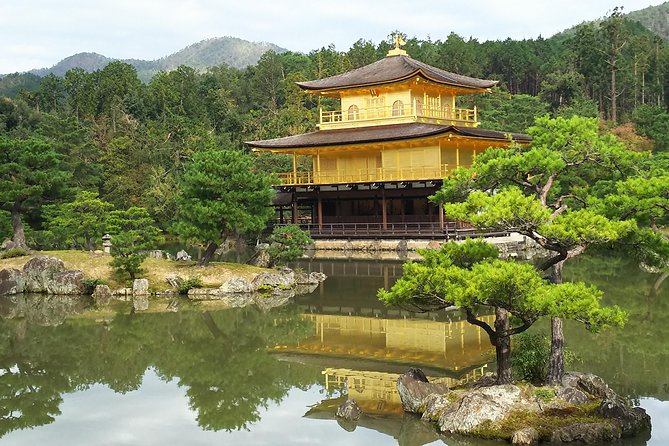
Then you hit Kinkakuji Temple, famous for the Golden Pavilion. Even when a place is busy, this one holds up because the structure and materials create a distinct visual impact.
The tour allots about 50 minutes for this stop, and Kinkakuji admission is not included. So yes, you should budget for the ticket at the site.
What you’re really buying with the short time is access and orientation. A guide helps you choose good viewpoints quickly, rather than wasting minutes standing in the wrong spot while you wait for the light or angles to line up.
Also, remember the “popular doesn’t mean bad” rule. This is one of those Kyoto icons that can feel touristy, but the actual sight can still hit hard because it’s so specific to Japan’s history and aesthetics.
If you’re serious about photos, this is the stop where you’ll want to move with a plan: check where you’ll stand, take a couple angles, then enjoy the pavilion without constantly refreshing your camera app.
Stop 4: Kitano Tenmangu Shrine, Students and Old Ritual
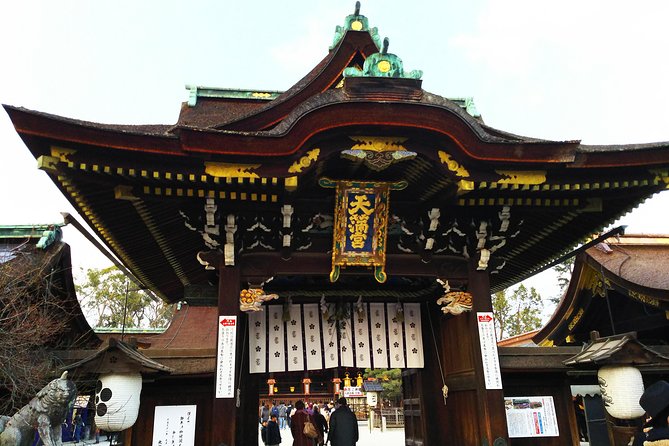
After Kinkakuji, you’ll go to Kitano Tenmangu Shrine. This shrine is connected to Sugawara no Michizane, often associated with education and academic success, which is why students come here with prayers.
The key vibe change is that you’re shifting from sightseeing spectacle to something more ritual and day-to-day meaningful for people. It’s still picturesque, but it’s also a living place of worship.
You get around 30 minutes here. That’s enough to understand the shrine’s role, see what’s visually important, and then move on without rushing.
If you’re traveling at a time when exam season energy is visible, you may notice more of that student focus. Even if not, the shrine’s academic theme gives you a deeper lens for what you’re seeing.
A day of temples goes further with something to break it up.

Stop 5: Kamishichiken Area and the Geisha District Context
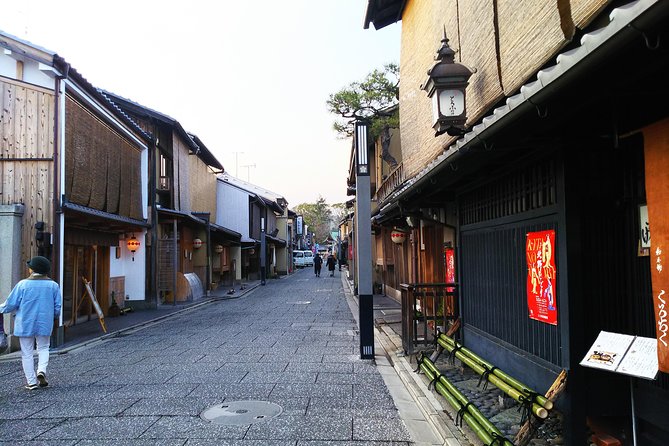
Next is the Kamishichiken Kaburenjo Theatre area, tied to Kyoto’s geisha districts. The tour notes that Kyoto has several hanamachi, and Kamishichiken is one of them. This district is described as having fewer geisha houses and geiko and maiko compared with the busiest areas.
What’s useful here is not just the building name. It’s the framing. Your guide can help you understand the difference between districts and why Kyoto’s traditional performing arts are tied to neighborhood history, not just random showtimes.
The stop is short, about 25 minutes. So think of it as context-building, a chance to connect what you see later in the day, and a way to avoid the common mistake of treating Kyoto’s culture as a checklist of landmarks.
Stop 6: Nishiki Market Shopping Hour, How to Spend Smart
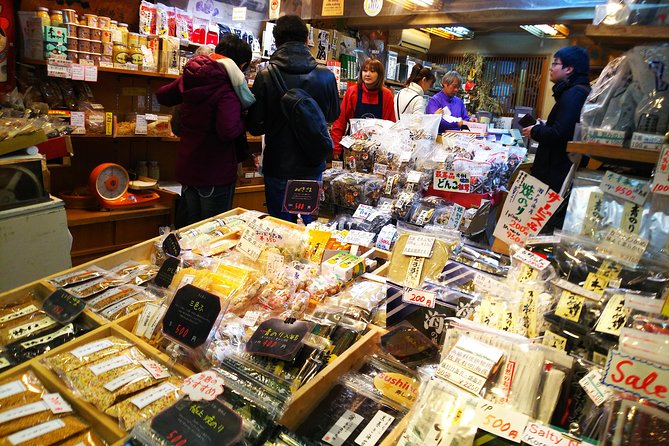
Finally, you’ll end at Nishiki Market Shopping District. This is a long, packed street of shops known for food, ingredients, and small snacks. The tour time here is about 40 minutes, which is enough for browsing and a couple purchases if you stay focused.
The market is described as being popular for centuries, and it’s full of Kyoto-specific items like vegetables and pickles. You’ll also find places where tasting is part of the experience.
My practical advice for you: don’t try to do everything in one sweep. Nishiki is wide enough to overwhelm your brain in 40 minutes. Pick a theme:
- Something salty to eat on the go
- One take-home snack that won’t melt or explode in your bag
- One souvenir item that uses Kyoto ingredients
Also, build in a little time for cashless surprises. Some markets and small stalls can be flexible, but Kyoto transit sometimes pushes you toward having an IC card ready.
Private Guide Perks: How the Best Moments Often Happen
This is a private tour, and the best part of a private day is the way it adapts. In the feedback for this tour, guides are repeatedly praised for sharing the right details and adjusting to the group’s pace.
I saw examples of guides doing things that aren’t listed in any itinerary line. For instance, Gigi was praised for spotting what guests were interested in, setting up a lunch plan, and taking great photos. Fuji-san was praised for being detail-rich and for knowing the scenic angles and less obvious moments. Seiyan San got credit for making transit feel like part of the sightseeing by moving through neighborhoods, and for choosing a delicious lunch stop. Meg was praised for a thoughtful start too, bringing hand warmers because she worried the group might be cold.
That kind of care changes the day. You stop feeling like you’re rushing from point A to point B and start feeling like you have someone in your corner who knows how to translate the city into something you can actually enjoy.
Price and Logistics: Transit, Tickets, and the IC Card Trick
Here’s the real-world part. The day is built for movement, not for staying put. You’ll combine walking with public transport segments, and that’s where the tour can either feel efficient or feel tedious depending on your tolerance.
One note that came up: if you don’t have an IC card like Suica, you can lose momentum counting change on the go. You don’t need to be stressed about this, but having an IC card makes the day smoother, especially when transit crowds are tight.
Also, because Kinkakuji admission is not included, you’ll want to keep money or payment ready on-site. The tour does include a guide, and that’s the big reason it feels easier than doing everything alone.
If you hate adding up small costs during a trip, then set aside a quick budget before the tour. Total up admission plus transit so you’re not scrambling later.
Walking Amount, Comfort Tips, and Weather Reality
The tour description is clear: there’s quite a bit of walking, and it’s not stroller accessible. At the same time, it’s described as accessible for people with limited eye sight and limited mobility, and it’s near public transportation.
So you’ll want to plan smart even if you’re able-bodied. Wear shoes you can walk in for hours. Keep water handy. Kyoto mornings can feel cool, then warm up fast, so dress in layers.
For comfort, consider a small pack with:
- Water
- A light snack
- A layer for morning chill
- Your transit payment method
Weather matters, too. The experience requires good weather, and if it’s canceled due to poor conditions, you’ll be offered another date or a refund. That’s normal in Kyoto for outdoor-heavy days.
Who This Tour Best Fits (and Who Might Rethink It)
This tour is ideal if you’re:
- A first-time visitor to Kyoto and want a wide cultural overview in one day
- Interested in a guided walk that connects major landmarks with explanations
- The type who wants to start early to improve your day’s quality, not just your schedule
It’s also a good fit for couples or small groups who would rather have one guide tailor pace and priorities than follow a generic big-group itinerary.
Who might rethink it:
- If you want a slower day where you can linger for hours at one site, the 8-hour structure may feel tight
- If you dislike transit hops and prefer fully walkable sightseeing only, the public transport segments may frustrate you
Should You Book Kyoto Early Riser Platinum One-Day?
Book it if you want the best shot at Kyoto’s biggest icons with less crowd friction, and you value having a guide manage the flow so you can focus on what you see.
Skip it, or consider a different style of tour, if you hate walking days, or if you want to spend more time slowly at fewer places. This is a “many stops, guided route” experience, not a “rest and wander” plan.
One last decision tip: if you’re the kind of traveler who likes structure and would rather pay for convenience, this route makes sense. The early start and the private guide are the two pillars that justify the day, even with the extra tickets and transit added on.
FAQ
What does the tour price include?
The tour includes a professional guide. Admission fees and public transportation are listed as not included, with an estimated admission fee of ¥500 per person and public transportation of ¥1,700 per person.
How long is the Kyoto Early Riser Platinum One-Day Walking Tour?
The tour runs about 8 hours.
Is Kinkakuji Temple admission included?
Kinkakuji Temple is listed as an admission not included stop, so you should plan to pay the entry fee on-site.
Where does the tour start and end?
The tour starts at Kyoto Station Building 901 and ends back at the same meeting point.
Is this tour private?
Yes. It’s described as a private tour/activity, so only your group participates.
What is the cancellation window?
Free cancellation is available up to 24 hours in advance of the experience’s start time for a full refund. If you cancel less than 24 hours before, the amount paid will not be refunded.
New This Season
- Koyasan Day Trip by Private Car from Kyoto
- Old Port Town and Ultimate Sake Tasting Private Tour From Kyoto
- Kyoto’s Timeless Charm: 3hr Exploration of History and Peace
- Kyoto: 5 Types of Sushi Making
- Sacred Peak & Ancient Paths: Kurama-Kibune Hiking Experience
- Kyoto: Exclusive ZEN practice at Manpukuji temple in Uji
- Kyoto: Private Seasonal Aroma Yoga Class
- Traversing Kyoto’s Scenic West – Arashiyama to Kinkakuji
Walking Tours, compared.
Kyoto Geisha Walking Tour: Gion District & Hidden Gems
Read our review →
Gion Magical Night Walking Tour with Geisha Trivia
Read our review →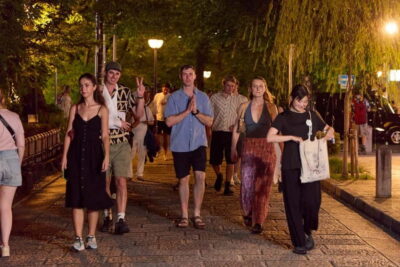
Gion Geisha District Walking Tour – Stories of Geisha
Read our review →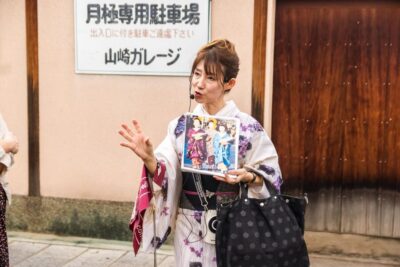
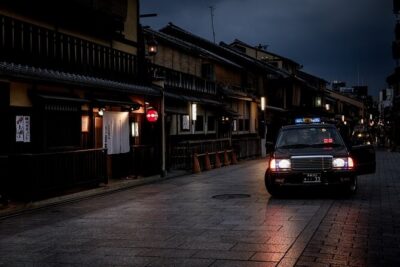
Kyoto Gion Geisha District Walking Tour – The Stories of Geisha
Read our review →
Nishiki Market Brunch Walking Tour (7 Tastings + Brunch)
Read our review →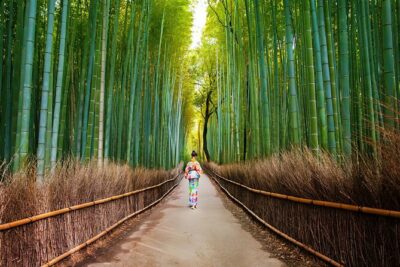
Kyoto Arashiyama Walking Tour: Bamboo, Monkeys, Gardens & Secrets
Read our review →
Kyoto Gion: 2-Hour Geisha Culture & History Walking Tour
Read our review →Also filed under