Reviewed · GION GEISHA QUARTER WALKS
Kyoto: Gion Magical Night Walking Tour
Gion gets quieter after dark. This Kyoto Gion Magical Night Walking Tour is built for people who want the district before the daytime surge, with a guide explaining geisha culture and etiquette as you stroll. I especially like the small group size and the chance to learn what to do when you spot a Maiko or Geiko. One consideration: the route includes slopes and stairs, so it is not a great match if you do not enjoy uphill walking.
I also like that the itinerary mixes the famous streets with quieter pockets most groups miss, so the evening feels less like sightseeing and more like getting your bearings fast. If you care about photos, the stops are spaced with enough time to pause, look, and shoot without feeling rushed. Because several sights are listed as free admission, your money goes mainly to the guide and pacing, not entrances.
A final practical note: the tour uses a mobile ticket, and it ends in Gion after about 1 hour 40 minutes. Start and end points are different, so plan your next stop nearby so you are not scrambling when you finish.
In This Review
- Key points before you go
- Gion after dark: what the early start changes
- Price and value: why $29.60 is not just a stroll
- Where you meet, where you end, and how to plan your evening
- Stop 1: Gionmachi Minamigawa and the Maiko or Geiko etiquette moment
- Stop 2: Yasui-Konpiragu and the shrine side of relationships
- Stop 3: Sannenzaka Ninenzaka, Kiyomizu-dera area townscape, and lantern photos
- The WWII memorial with a large Kannon statue built in 1955
- A shogun widow garden: bamboo grove and a 400-year-old tea ceremony house
- Stop 4: Yasaka Shrine, Gion-san blessings, and good luck focused worship
- How the guide makes the whole walk click
- Who this tour suits best (and who should skip it)
- Should you book the Kyoto Gion Magical Night Walking Tour?
- FAQ
- How long is the Kyoto Gion Magical Night Walking Tour?
- How much does it cost?
- What group size should I expect?
- Where does the tour start and end?
- Do I need to print anything, or is there a mobile ticket?
- Does the tour run at a time that avoids daytime crowds?
- Are service animals allowed?
- Is the tour suitable if I do not handle slopes and stairs well?
- What happens if the weather is bad or I need to cancel?
Key points before you go
Early start in Gion so streets are calmer and streetlights do the work
Small group cap (up to 8 in the concept, with a max of 10 listed) for easier questions
Geisha etiquette lessons including what to say if you see a Maiko or Geiko
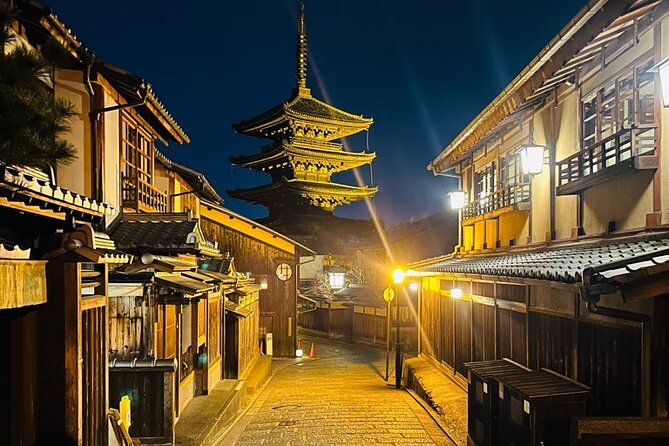
Lantern-lit shrine and pagoda vibes plus practical photo time
A route that blends romance, faith, and memory across multiple sacred sites
Gion after dark: what the early start changes
Gion is one of those places that feels simple to visit, until you try it in the middle of the day. Then you realize most of your time is spent moving around people, not noticing architecture or atmosphere. This tour is designed to help you do the fun part first, by arriving before the big crowds fully take over.
Night in Kyoto is special for one very practical reason: streetlights soften edges and reduce the sense of hurry. That matters in Gion because the district is all narrow lanes, old facades, and small sightlines. The later it gets, the easier it is to look up and notice details you would miss while weaving through tour groups.
You are also walking with a guide, which changes the whole experience. Instead of just seeing signs and buildings, you get a framework for what you are looking at. That is where the geisha culture context comes in.
Price and value: why $29.60 is not just a stroll
At $29.60 per person for about 1 hour 40 minutes, this is priced like a focused walking tour, not a big-day tour. What makes it feel fair is the combination of: multiple stops, time at each place, and a guide who talks you through geisha history, culture, and etiquette.
Another value factor is that several of the stops are listed as free admission. You still get guided context at places where many visitors only glance and move on. The tour is basically paying for interpretation and pacing, plus the small group advantage that keeps questions easy.
If you are doing Kyoto for the first time, you can burn money on tours that cover the same highlights you could do alone. This one aims to cover Gion in a way that is harder to self-navigate, especially around etiquette and the difference between geisha-related appearances like Maiko and Geiko.
Lantern-lit streets of the geisha quarter
- Kyoto Geisha Walking Tour: Gion District & Hidden Gems
★ 4.7 · 3,273 reviews - Kyoto: Gion Magical Night Walking Tour with Geisha Trivia
★ 4.9 · 2,393 reviews - Kyoto: Gion Geisha District Walking Tour – Stories of Geisha
★ 4.7 · 2,187 reviews - Best of Kyoto: Gion, Geisha, Pagodas & Cobblestones
★ 4.9 · 2,058 reviews
Where you meet, where you end, and how to plan your evening
The meeting point is at Minamiza Theater, in Higashiyama Ward near the Nakanochō area. The tour ends at Gionmachi Kitagawa, also in Higashiyama Ward.
That matters because you should treat this as a true walking circuit through the district, not a quick photo walk you tack on at the last minute. If you want dinner afterward, pick something within easy reach of Gionmachi Kitagawa so you can keep your evening calm instead of rushing across Kyoto.
You also want to plan your footwear. Even though the tour is under two hours, the additional info flags slopes and stairs. One of the most common tour takeaways is exactly this: wear comfortable shoes and expect some uphill effort. If your legs are fine but your pace is slow, you can still enjoy it, but if you dislike stairs, choose a different style of tour.
Finally, bring a small umbrella if rain threatens. One of the nicer things about evening walking is that even light weather can keep crowds down, and lantern light still looks good.
Stop 1: Gionmachi Minamigawa and the Maiko or Geiko etiquette moment
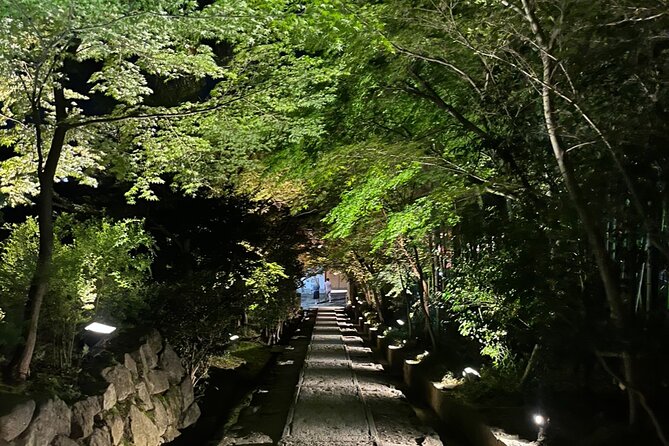
You start on one of the best-known streets in Gion: Gionmachi Minamigawa. This is where your eyes learn to read the district. Traditional storefronts, old streetscapes, and the general rhythm of Gion show up fast once the tour begins.
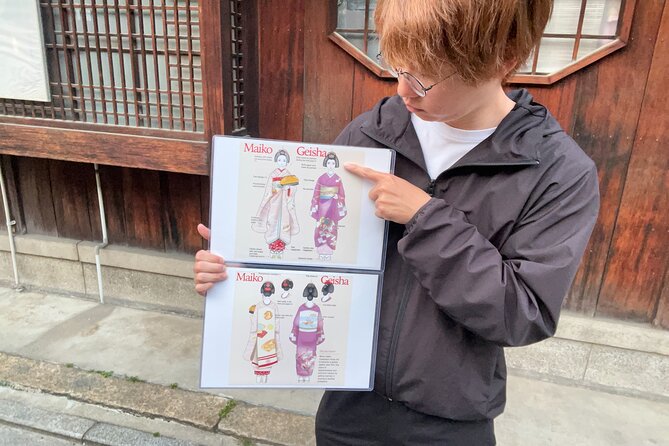
The big payoff here is the possibility of spotting a Maiko or Geiko. The tour guidance is very clear and respectful: if you see them, greet with a smile and say Konnichiwa.
This is more than a cute detail. It is a real etiquette skill. When people do not know what to do, they get awkward or intrusive. A small, polite greeting keeps you on the right side of the line, and it helps you feel confident if you spot someone in passing.
If you do not see one, you still win at this stop. The guide’s job is to help you understand what you are seeing in Gion streets, why certain areas feel more formal or traditional, and what the geisha world looks like beyond the clichés.
Stop 2: Yasui-Konpiragu and the shrine side of relationships
Next up is Yasui-Konpiragu. This is a shrine with a very specific theme: it is linked to how men and women meet, how relationships improve, and how bad relationship patterns can be cut off.
The tour framing is practical and direct. For example, if you are with a partner, the shrine is described as helping bonds become stronger for married couples and couples. Even if you do not come here for romance, the message is still useful: a lot of Japanese shrine culture is about asking for help with specific parts of daily life.
At this stop, I like that the tone is respectful and grounded. You are not just walking for photos. You are learning that the sacred sites in Gion relate to ordinary hopes and concerns. That makes the district feel more human and less like a stage set.
Stop 3: Sannenzaka Ninenzaka, Kiyomizu-dera area townscape, and lantern photos
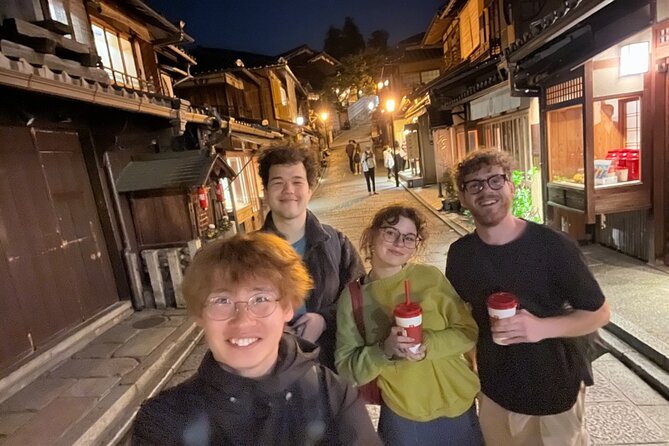
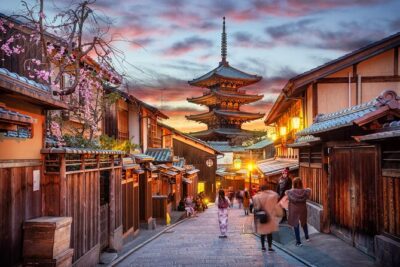
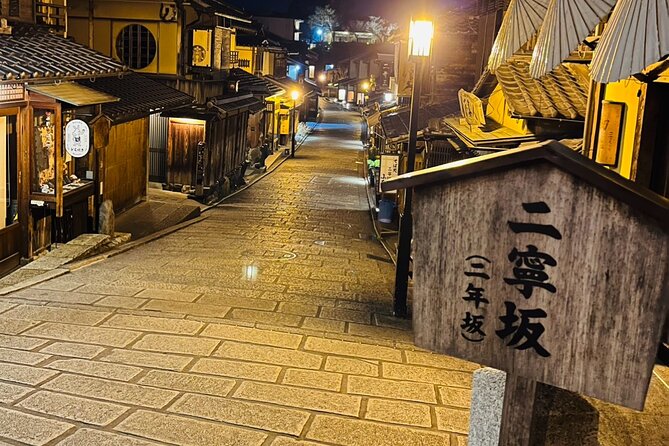
After the shrine, you head to Sannenzaka Ninenzaka. This road leads near Kiyomizu-dera, and it is famous for its traditional Kyoto townscape. At night, the streets are especially photogenic because you get light bouncing off older surfaces and you can slow down without day crowds.
This is where the tour really helps your eyes. The buildings and lane widths are easier to understand when you are not constantly fighting foot traffic. You can also watch how people move through the area. The rhythm of the street becomes part of the experience.
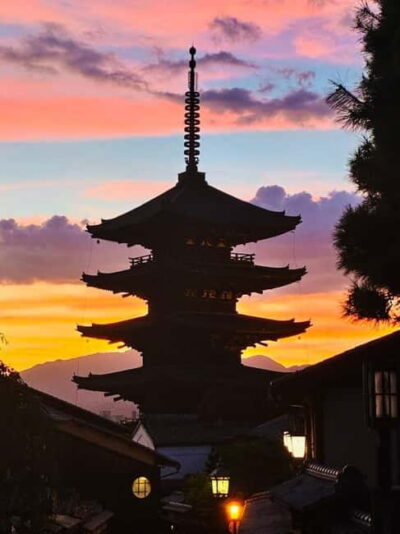
One highlight called out is Yasaka-no-to, the pagoda associated with this neighborhood. It is one of those landmarks that gives you a sense of place. If you like night photography, this is a good section for it. People consistently praise the tour for photo opportunities at evening stops, and this area is exactly the kind of setting that benefits from a calm pace.
Just remember: even with breaks, this is still walking. Some parts feel like a slow climb, so do not rely on the idea that it will be flat.
A quieter way to spend a day in Kyoto



The WWII memorial with a large Kannon statue built in 1955
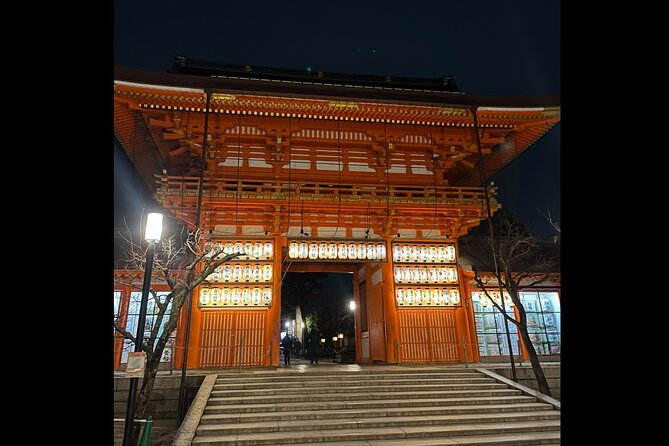
Between the older townscape streets and the final big shrine stop, the tour includes a reflective memorial site connected to World War II. It was built in 1955 to pray for the repose of the souls of the victims, and it features a very large statue of Kannon.
This stop may surprise you at first. Gion is often associated with geisha, street scenes, and nightlife. Then you suddenly hit a place built for remembrance. That contrast is part of the value.
It also changes how you experience the whole walk. Once you have seen a site like this, you can look at the rest of the evening with a different kind of attention. Kyoto is a layered city, and this tour does not pretend it is only one mood.
If you are traveling with kids, this is also the kind of stop where a guide can explain why temples and memorials exist in the same world as daily culture. That tends to make the walk feel meaningful instead of just pretty.
A shogun widow garden: bamboo grove and a 400-year-old tea ceremony house
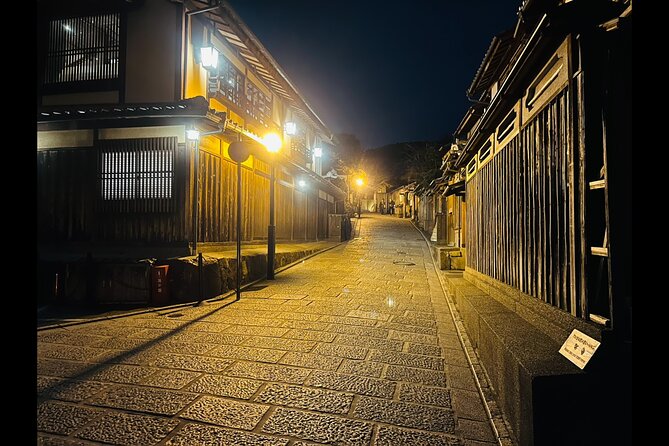
Another memorable stop is a garden area tied to a personal story: it was built about 400 years ago by the wife of a shogun to mourn the death of her husband. Here, you can enjoy the garden, a 400-year-old tea ceremony house, and a bamboo grove.
This is one of those moments where the tour earns its keep. On your own, you might walk past and miss why the place matters. With a guide, you understand that the beauty is not decorative only. It connects to grief, memory, and how people historically marked loss.
The bamboo grove is the kind of setting that makes you slow down without being told. Even if you are not a garden person, it helps you reset during the walk. And because you are in a small group, it is easier to pause, look around, and not feel like you are constantly being tugged forward.
The tea ceremony house adds another layer. You get a reminder that Japanese culture includes rituals of calm, not just landmarks for photos.
Stop 4: Yasaka Shrine, Gion-san blessings, and good luck focused worship
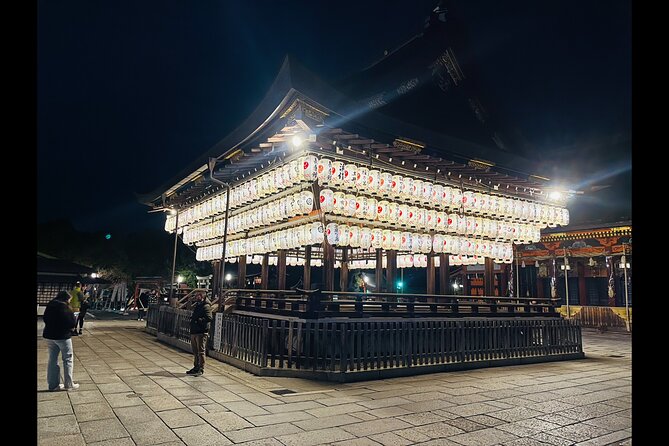
You finish at Yasaka Shrine, known as the head shrine of about 2,300 related shrines throughout Japan. The tour also notes its Gion-san identity, tied to blessings that ward off bad luck, bring good luck, and promote beauty.
This is a smart last stop. Yasaka Shrine is a major name, but arriving in the evening changes how it feels. The lights and nighttime calm let you experience it as a place of devotion, not just a sight.
And because the tour has already given you context on etiquette and shrine meanings, you are ready to interpret what you see rather than just passing by. The shrine focus is also thematically consistent with the earlier stops. First you learn about romance prayers, then you see remembrance, then you land on blessings and beauty. It makes the route feel intentional.
One small practical tip for this final stretch: keep your pace steady and listen for what the guide points out, because shrine areas can be busy in moments even when it feels quieter than daytime.
How the guide makes the whole walk click
The most praised part of this tour is the guide experience. Names that come up include Karen, Ricky, Hina, Sho, Pam, and Sho Hamada. What these guides have in common in the way people describe the tours is clarity, pacing that allows photos, and stories at each stop.
Even if your guide’s English level varies, the best part of the tour is still what you get from the structure. You walk to a landmark, you learn what it represents, and you get a chance to ask questions.
I especially like the way the guide ties in geisha culture and etiquette. The tour does not treat geisha as a costume drama. It talks about history, culture, and the social rules of the district. That makes you walk through Gion with better understanding, not just better photos.
The small group size also matters. When you have fewer people, the guide can adjust the pace and answer real questions without repeating everything five different times. It is simply less intrusive, more personal, and easier to stay engaged.
Who this tour suits best (and who should skip it)
This is a great fit if you want:
A calmer Gion evening before the full crowd hits
A guided explanation of geisha culture and shrine meaning
Photo time without a constant rush
A route that blends well-known landmarks with less obvious stops
You might want to skip it if:
You strongly dislike stairs and uphill walking, since slopes and stairs are called out as part of the route
- You only want one or two major landmarks, since this tour is about multiple stops and context
Families can also do it, as long as everyone can handle the walking and stays with the group. The timing is short enough to keep attention up, and the guide-driven stories help.
Should you book the Kyoto Gion Magical Night Walking Tour?
I think this is a strong booking if you care about understanding Gion, not just photographing it. The price feels right for what you get: a guided evening route, free admission at several stops, and the benefit of a small group with enough time to look and ask questions.
If your top priority is geisha etiquette and seeing Gion when it is calmer, this tour matches that goal. If you are sensitive to stairs and hills, pick a different activity for the evening. Otherwise, bring comfortable shoes, keep your eyes up for Maiko or Geiko, and use the tour to turn a famous neighborhood into something you actually understand.
FAQ
How long is the Kyoto Gion Magical Night Walking Tour?
It is about 1 hour 40 minutes (approx.).
How much does it cost?
The price is $29.60 per person.
What group size should I expect?
The experience is described as a small group with a maximum of eight, and the additional info lists a maximum of 10 travelers.
Where does the tour start and end?
It starts at Minamiza Theater (605-0075 Kyoto, Higashiyama Ward) and ends at 625 Gionmachi Kitagawa, Higashiyama Ward, Kyoto 605-0073.
Do I need to print anything, or is there a mobile ticket?
You’ll have a mobile ticket.
Does the tour run at a time that avoids daytime crowds?
Yes. It is designed to explore Gion before the big crowds arrive.
Are service animals allowed?
Yes, service animals are allowed.
Is the tour suitable if I do not handle slopes and stairs well?
It is not recommended if you are not comfortable with walking due to slopes and stairs.
What happens if the weather is bad or I need to cancel?
The tour requires good weather. If canceled due to poor weather, you’ll be offered a different date or a full refund. Free cancellation is available up to 24 hours in advance for a full refund.
More Walking Tours in Kyoto
New This Season
- Koyasan Day Trip by Private Car from Kyoto
- Old Port Town and Ultimate Sake Tasting Private Tour From Kyoto
- Kyoto’s Timeless Charm: 3hr Exploration of History and Peace
- Kyoto: 5 Types of Sushi Making
- Sacred Peak & Ancient Paths: Kurama-Kibune Hiking Experience
- Kyoto: Exclusive ZEN practice at Manpukuji temple in Uji
- Kyoto: Private Seasonal Aroma Yoga Class
- Traversing Kyoto’s Scenic West – Arashiyama to Kinkakuji
Gion Geisha Quarter Walks, compared.
Kyoto Geisha Walking Tour: Gion District & Hidden Gems
Read our review →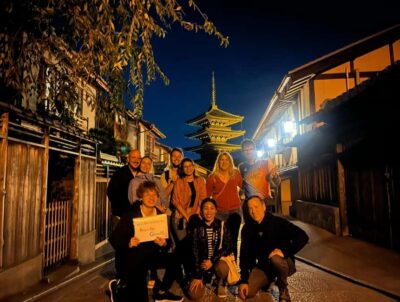
Gion Magical Night Walking Tour with Geisha Trivia
Read our review →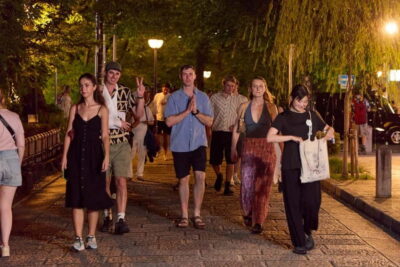
Gion Geisha District Walking Tour – Stories of Geisha
Read our review →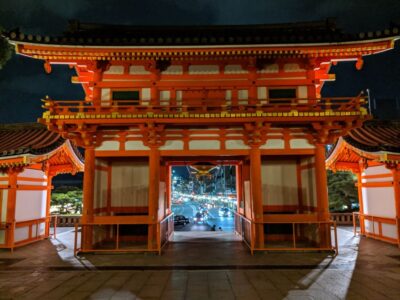
Best of Kyoto: Gion, Geisha, Pagodas & Cobblestones
Read our review →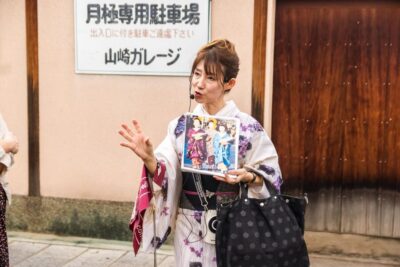

Kyoto Night Foodie Tour in Gion (9+ dishes + 6 Sake tastings)
Read our review →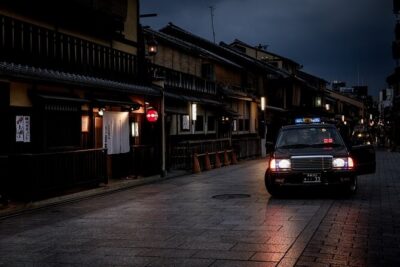
Kyoto Gion Geisha District Walking Tour – The Stories of Geisha
Read our review →