
Reviewed · GION GEISHA QUARTER WALKS
Kyoto Gion Walking Tour for First Time Visitors
Gion can feel like a maze. This small-group walking tour helps you orient fast, and I like that the guide turns the streets into an easy route with context as you go. I also love the way the tour pairs big names like Kennin-ji with quieter sidestreets you could easily miss on your own.
One thing to consider: it is a mostly outdoor walk, and the experience requires good weather. Also, snacks are not included, so plan to grab something before or after if you need fuel.
In This Review
- Key things to know before you go
- Why Gion needs a guide on your first Kyoto day
- Price and duration: what $20 gets you (and why it feels fair)
- From Kyoto Tourist Lounge Gion to Yasaka Shrine: the route in plain terms
- Stop-by-stop in Gion: what you will see and what it means
- Stop 1: Gion streets, machiya houses, and teahouse-lined lanes
- Stop 2: Kennin-ji, Zen quiet, and Eisai’s tea connection
- Stop 3: Yasui-Konpiragu Shrine and the enkiri/enmusubi stone tradition
- From Yasaka Pagoda to Ninenzaka: classic Higashiyama texture underfoot
- Stop 4: Hōkan-ji (Yasaka Pagoda), Kyoto’s iconic five-story view
- Stop 5: Ninenzaka slope and the old-street climb
- Closing at Yasaka Shrine: gates, lanterns, and the feeling of arrival
- The guide experience: why the small group and Q and A matter
- Who should book this Gion tour, and who might skip it
- FAQ
- FAQ
- How long is the Kyoto Gion walking tour?
- What is included in the $20 per person price?
- How many people are in the maximum group?
- Do I need a paper ticket?
- Where do I meet, and where does the tour end?
- Do I have to pay admission at the listed temples and shrines?
- Are snacks included, and what happens if the weather is bad?
Key things to know before you go
- Small group, no crowd crush with a maximum of 15 people
- Free admissions at all listed stops, so your money goes to the guide
- Mobile ticket makes check-in simple
- Stop-by-stop orientation so you stop getting lost mid-day
- Temple and shrine variety from Zen calm to Gion streets and big views at Yasaka Pagoda
Why Gion needs a guide on your first Kyoto day
Gion is Kyoto’s most famous geisha district, but that can also be the problem. The lanes are narrow, the turn-offs are easy to miss, and the landmarks you care about are scattered in a way that feels random if you are walking solo.
This tour is built to solve that. In about 2 hours, you get a guided path through Gion and the neighboring Higashiyama area, with enough time at each stop to understand what you are looking at. You also get that helpful framing, like what the buildings are and why certain places matter, so the whole neighborhood starts clicking instead of just looking pretty.
I especially like that the pace is designed for first-timers, not for marathon walkers. You can ask questions along the way, and the group stays small enough that you are not just following the back of someone else’s camera.
Price and duration: what $20 gets you (and why it feels fair)
The cost is $20 per person for an approximately 2-hour experience. For Kyoto, that is a solid deal because you are mostly paying for a person to navigate and explain, not for separate paid admissions.
All fees and taxes are included, and the guide is in-person. Each stop is listed as free admission, which keeps your expenses predictable. If you are trying to do a first-day highlights mix without blowing your budget, this works.
The tour does not include snacks, so budget a small extra amount for a drink or a quick bite nearby before you start. And since the experience requires good weather, you will want to be comfortable walking outside for the full route.
Lantern-lit streets of the geisha quarter
- Kyoto Geisha Walking Tour: Gion District & Hidden Gems
★ 4.7 · 3,273 reviews - Kyoto: Gion Magical Night Walking Tour with Geisha Trivia
★ 4.9 · 2,393 reviews - Kyoto: Gion Geisha District Walking Tour – Stories of Geisha
★ 4.7 · 2,187 reviews - Best of Kyoto: Gion, Geisha, Pagodas & Cobblestones
★ 4.9 · 2,058 reviews
From Kyoto Tourist Lounge Gion to Yasaka Shrine: the route in plain terms
You start at the Kyoto Tourist Lounge Gion at 557-4 Komatsu Cho (Pare Gion 101, 四丁目-557-4 小松町), Higashiyama Ward area of Kyoto. You end at Yasaka Shrine, 625 Gionmachi Kitagawa, Higashiyama Ward, Kyoto.
That start-to-finish setup matters. Ending at Yasaka Shrine means you are not forced to backtrack through Gion when you are ready to move on to your next stop. You also finish in a place that is easy to connect from, since it sits right in the heart of the neighborhood.
The meeting point being near public transportation is another practical win. You do not need to plan a complicated arrival strategy, which is a big deal on day one when you are still sorting out transit.
Stop-by-stop in Gion: what you will see and what it means
Stop 1: Gion streets, machiya houses, and teahouse-lined lanes
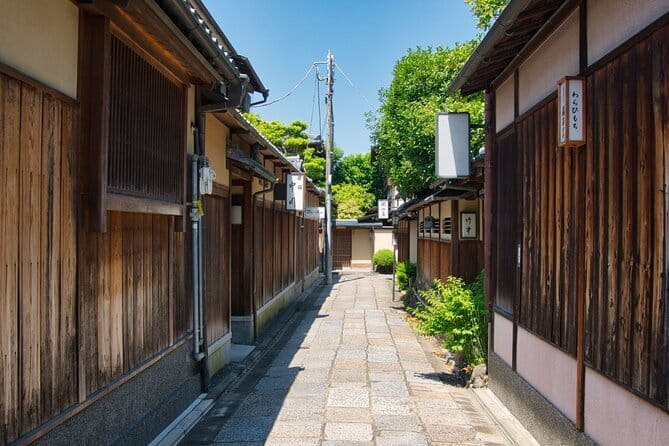
The tour kicks off in Gion, Kyoto’s signature preserved-town vibe. You will see the traditional wooden machiya townhouses and teahouse-lined streets, plus the cobblestone feel that gives this area its character.
What I like here is that you start with the neighborhood itself, not with a single monument. Once you understand how the streets are laid out and what kind of architecture you are looking at, the later temples and shrines feel less random. You also get a sense of where Yasaka Shrine fits into the bigger Gion picture.
A drawback to know: Gion is photogenic, which can tempt you to stop a lot on your own later. If you are prone to wandering, this tour helps you keep the focus without feeling rushed.
Stop 2: Kennin-ji, Zen quiet, and Eisai’s tea connection
Next is Kennin-ji Temple, one of Kyoto’s oldest Zen Buddhist temples. It was founded in 1202 by monk Eisai, who is also tied to introducing Zen Buddhism and tea culture to Japan.
Even if you are not a hardcore temple person, this stop is useful because it gives your tour a calmer counterpoint. After the street scenes of Gion, the temple grounds can feel like a reset button. You also learn why this place sits where it does, which helps you understand Kyoto beyond the postcard.
The main consideration here is time. You only get a short visit, so go in with the mindset of noticing a few key details, not trying to absorb everything.
A quieter way to spend a day in Kyoto



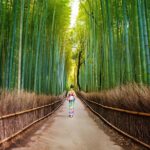
Stop 3: Yasui-Konpiragu Shrine and the enkiri/enmusubi stone tradition
The tour then slips to Yasui-Konpiragu Shrine, described as small but significant, tucked near Gion’s busier streets. It is especially known for its enkiri/enmusubi stone.
I like this stop because it adds a layer that many first-timers miss. Gion is often treated like a single kind of attraction, but shrines like this show that the area has everyday spiritual meaning too. The guide can help you understand the symbols you see, so you are not just walking past without context.
If you are sensitive to crowding, this stop can feel more manageable than the larger high-visibility sights, but it still depends on the day and time.
From Yasaka Pagoda to Ninenzaka: classic Higashiyama texture underfoot
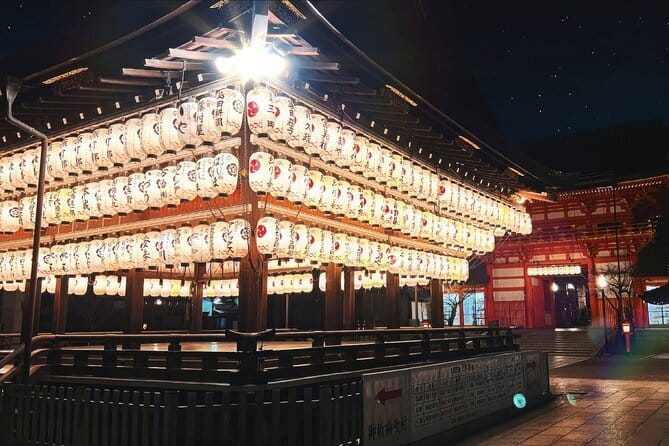
Stop 4: Hōkan-ji (Yasaka Pagoda), Kyoto’s iconic five-story view
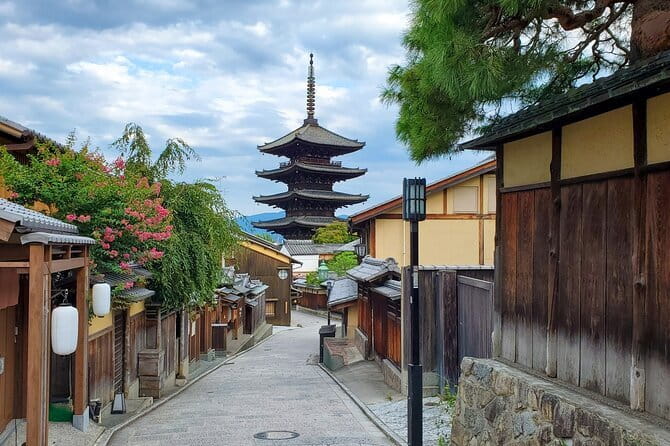
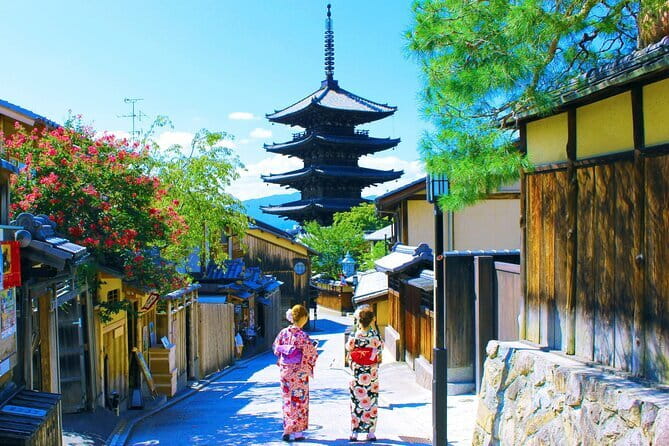
Stop four is Hōkan-ji Temple, also known as Yasaka Pagoda. This is one of Kyoto’s most iconic landmarks, a five-story pagoda rising above the surrounding traditional streets in the Higashiyama area.
This is the big-sight moment in the middle of the walk. Even in a short stop, you get that satisfying feeling of seeing a Kyoto icon in its real setting, not as a flat photo. And because you are moving through the neighborhood, the pagoda feels like part of the street rather than something isolated.
Practical note: pagodas and temple sights usually mean uneven ground and lots of people looking up. Wear shoes you feel good walking in, even if you think your feet are fine.
Stop 5: Ninenzaka slope and the old-street climb
Then you head to Ninenzaka, a historic stone-paved slope in Higashiyama. It is known for well-preserved traditional architecture and the kind of street atmosphere that makes Kyoto feel like Kyoto.
This is a fun stop because it changes the rhythm. You are no longer just peering at buildings, you are moving through the terrain that shaped how people traveled in older times. The slope connection to major Higashiyama sights also helps you picture where everything sits relative to everything else.
The one drawback is physical. Ten minutes sounds short, but slopes add up. If you have knee issues, take it slow and hold onto railings when offered.
Closing at Yasaka Shrine: gates, lanterns, and the feeling of arrival
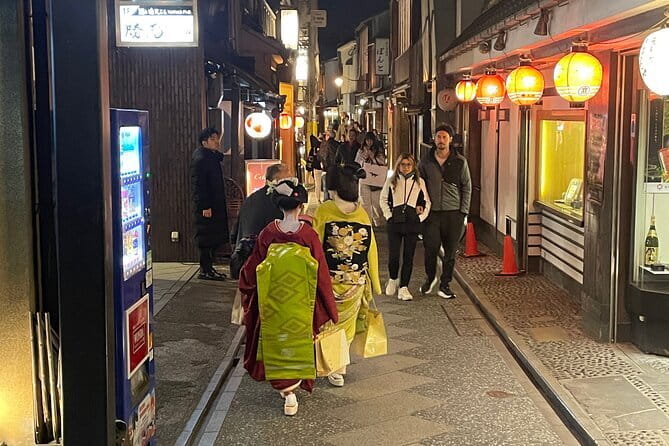
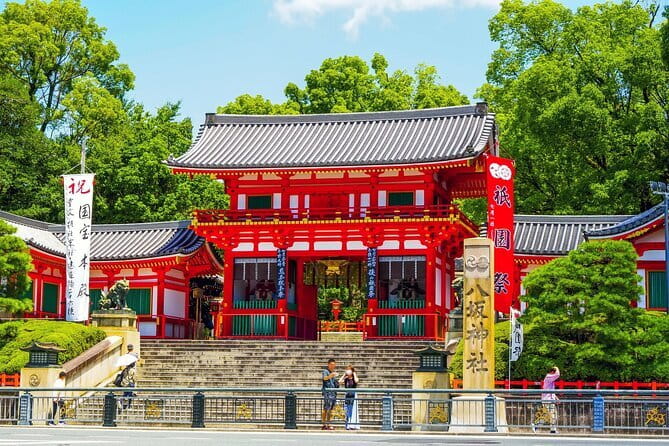
The final stop is Yasaka Shrine, also called Gion Shrine. It is one of Kyoto’s most important Shinto shrines, famous for its vermilion gates and lanterns that light up the area.
I like the ending here because it feels like a natural payoff. You start in Gion, you pass through Zen and shrine traditions, and then you finish where the neighborhood’s spiritual heartbeat is visible. Even if you do not fully read every detail, the guide’s context helps you see more than the scenery.
If you plan to keep walking after the tour, you are in a good position. Yasaka Shrine sits right where you can branch out to more Higashiyama streets without needing a new plan.
The guide experience: why the small group and Q and A matter
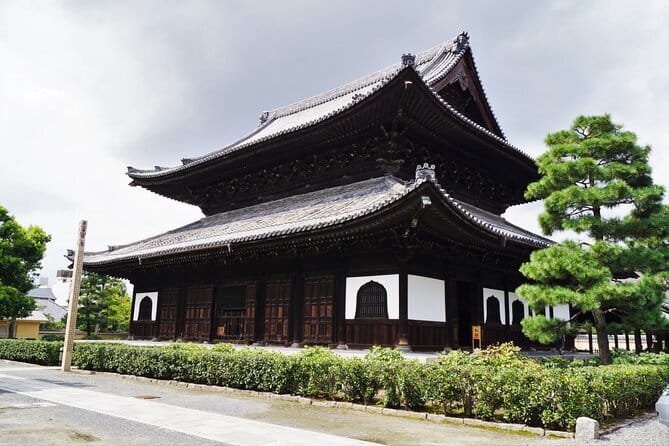
The best part of this tour for first-timers is how the guide manages your attention. In particular, the guide’s style tends to be heavy on explanation, with visual aids and clear storytelling as you walk. One highlight from earlier tour experience is how the guide uses pictures to support the talk, which makes the history and symbolism easier to track in real time.
I also like that the guide handles questions without rushing them. If you are the type who asks why that gate is there, or what that stone is about, you are likely to get a direct answer. That turns the tour from a route into a learning walk.
And yes, the map focus is real. If the guide seems extra attached to maps and orientation, that is actually a good sign for first-day visitors. You are not just being shown places, you are being taught how to understand the area so you can keep exploring after the tour ends.
Who should book this Gion tour, and who might skip it

Book it if you want a reliable way to get your bearings in Gion with minimal stress. It is especially good for first-time visitors who feel overwhelmed by Kyoto’s neighborhood layout.
You should also like it if you want a mix of iconic spots and smaller cultural stops, including Kennin-ji and Yasui-Konpiragu, without spending extra money on entry fees. The small group size also helps if you dislike feeling herded.
Consider skipping if you prefer totally unstructured wandering, or if you want to spend long stretches inside temples rather than seeing a short, focused slice of each place. With a tight 2-hour window, you will be inspired, not exhausted, but you will not have time for deep solo exploration at every stop.
FAQ
FAQ
How long is the Kyoto Gion walking tour?
The tour lasts about 2 hours.
What is included in the $20 per person price?
The price includes all fees and taxes and an in-person guide.
How many people are in the maximum group?
The tour has a maximum of 15 travelers.
Do I need a paper ticket?
No, it uses a mobile ticket.
Where do I meet, and where does the tour end?
You meet at Kyoto Tourist Lounge Gion, 557-4 Komatsu Cho (Pare Gion 101), and the tour ends at Yasaka Shrine, 625 Gionmachi Kitagawa.
Do I have to pay admission at the listed temples and shrines?
Admission is listed as free at all the stops included in the tour.
Are snacks included, and what happens if the weather is bad?
Snacks are not included. The experience requires good weather, and if it is canceled due to poor weather, you will be offered a different date or a full refund. You can also cancel for a full refund up to 24 hours in advance.
New This Season
- Koyasan Day Trip by Private Car from Kyoto
- Old Port Town and Ultimate Sake Tasting Private Tour From Kyoto
- Kyoto’s Timeless Charm: 3hr Exploration of History and Peace
- Kyoto: 5 Types of Sushi Making
- Sacred Peak & Ancient Paths: Kurama-Kibune Hiking Experience
- Kyoto: Exclusive ZEN practice at Manpukuji temple in Uji
- Kyoto: Private Seasonal Aroma Yoga Class
- Traversing Kyoto’s Scenic West – Arashiyama to Kinkakuji
Gion Geisha Quarter Walks, compared.
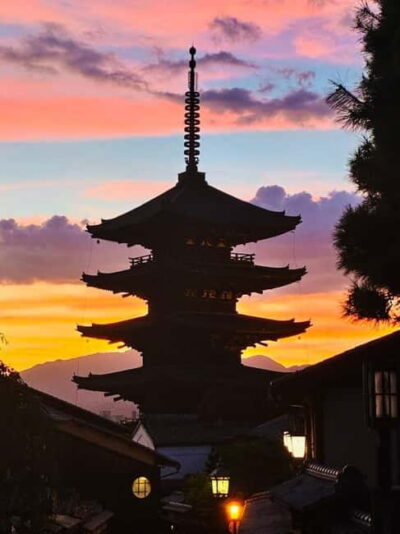
Kyoto Geisha Walking Tour: Gion District & Hidden Gems
Read our review →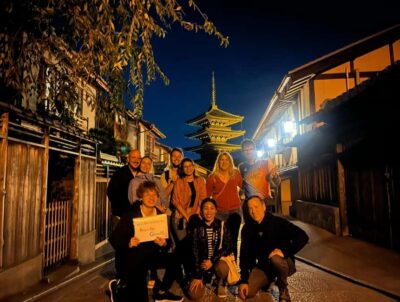
Gion Magical Night Walking Tour with Geisha Trivia
Read our review →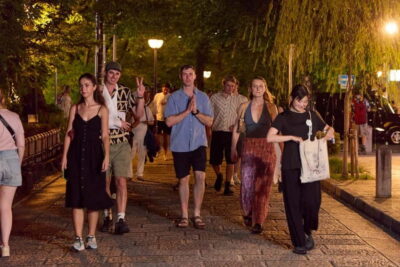
Gion Geisha District Walking Tour – Stories of Geisha
Read our review →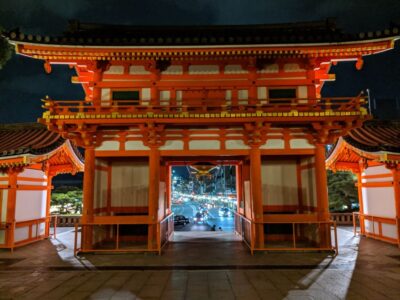
Best of Kyoto: Gion, Geisha, Pagodas & Cobblestones
Read our review →
Kyoto Night Foodie Tour in Gion (9+ dishes + 6 Sake tastings)
Read our review →
Kyoto Gion Geisha District Walking Tour – The Stories of Geisha
Read our review →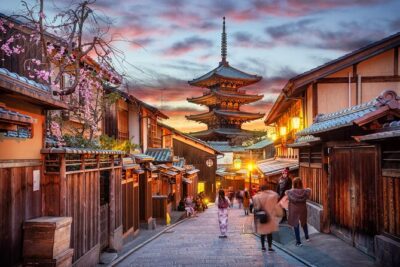
Kyoto Gion: 2-Hour Geisha Culture & History Walking Tour
Read our review →Also filed under