
Reviewed · GION GEISHA QUARTER WALKS
Kyoto: Half-Day Private Tour Gion Geisha Districts & Kiyomizu
Lantern streets in Gion can feel like magic. This half-day private tour strings together three geisha districts with a classic finishing stop at Kiyomizu-dera, so you get a clear sense of what people come to Kyoto for. I like that the pacing gives you short, satisfying looks at each area, while the final temple stop gives you real time to take in the views.
You’ll also appreciate the guide-led storytelling as you move through places like Pontocho Alley and Gion Hanamikoji. One drawback to consider: the schedule is timeboxed at each geisha district and shrine, so if you’re the type who wants long shopping loops or slow photo stops, you may want to plan extra time before or after.
If you get Teppei as your guide, that helps a lot. One reviewer praised how he went above and beyond, explained history as you walked, and even guided them through Gion shop streets so the time felt purposeful rather than rushed.
In This Review
- Key highlights worth your attention
- A Private Half-Day Route Through Pontocho, Gion, and Kiyomizu
- Meeting at Shijo Police Box, Ending at Kiyomizu-dera
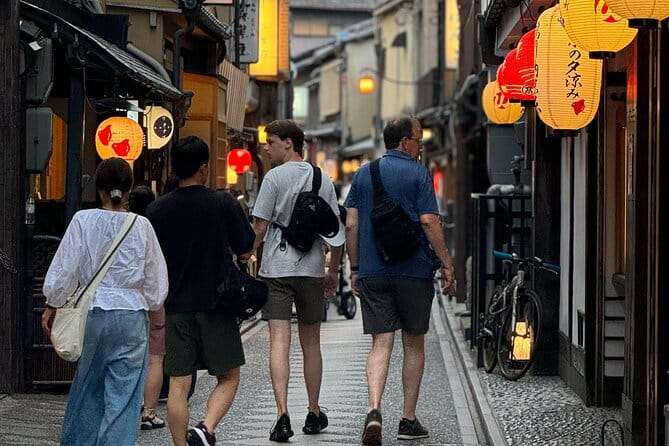
- Pontocho Alley: Lantern-Lit Atmosphere by the Kamo River
- Gion Shirakawa Stream Walk and Quiet Bridge Views
- Gion Hanamikoji: Machiya Streets and Respectful Geisha Spotting
- Yasaka Shrine and the Build Up to the Hill Streets
- Sannenzaka and Ninenzaka: Old Streets for Photos and Sweets
- Kiyomizu-dera: Included Ticket Time and Otowa Waterfall Luck
- Guide Impact: What Teppei Did That Made the Tour Stick
- Price and Value: Is $170.76 Worth It?
- Who This Tour Fits Best
- Should You Book This Kyoto Half-Day Private Tour?
- FAQ
- How long is the Kyoto Half-Day Private Tour of Gion and Kiyomizu?
- Is this tour private?
- What is the price per person?
- What are the main stops on the tour?
- Is Kiyomizu-dera admission included?
- Where do we meet and where does the tour end?
- Is transportation from the station included?
- Is there a cancellation option?
- Is the tour easy for most travelers to join?
Key highlights worth your attention
- Private, group-only experience in Kyoto, with your own schedule flow for about four hours
- Three geisha districts in one run: Pontocho, Gion Shirakawa, and Gion Hanamikoji
- Guided walks with local context, including time spent strolling Gion streets and listening to stories
- Yasaka Shrine plus the hillside streets (Sannenzaka and Ninenzaka) before you reach Kiyomizu-dera
- Kiyomizu-dera admission included, while many other stops are free to enter
- Mobile ticket for an easier start to the tour day
A Private Half-Day Route Through Pontocho, Gion, and Kiyomizu
Kyoto rewards people who slow down just a bit, and this tour is built for that sweet spot. It’s not trying to cram in every major sight. Instead, it focuses on a tight loop that helps you connect Kyoto’s entertainment district atmosphere with its temple landmark energy.
What I like most is the mix of street mood and spiritual landmark. You begin with lantern-lit lanes and river-side vibes, then you shift into shrine grounds, old shopping streets, and finally the big temple payoff at Kiyomizu-dera. If you want a Kyoto overview that still feels personal, the private format matters.
The tour is roughly four hours. That means you’re on the move, but the stops are short enough that you can stay curious without getting exhausted. You’ll spend about 20 minutes in each of the first three geisha areas, then about 20 minutes at Yasaka Shrine, and around 10 minutes on Sannenzaka and Ninenzaka before settling into Kiyomizu-dera.
Meeting at Shijo Police Box, Ending at Kiyomizu-dera
The tour starts at Shijo Police Box, no address number shown, Kashiwayachō, Nakagyo Ward. That’s a practical meeting point if you’re already planning to be around central Kyoto that day. The tour ends at Kiyomizu-dera, at Niomon Gate, which is a big help because Kiyomizu-dera sits on its own hillside area.
That end point is also your main logistics consideration. Since you finish at Kiyomizu-dera rather than near the starting area, you’ll want an onward plan ready. Pick a return route you’re comfortable with before you join, because your time window is limited.
Another small detail that can save stress: the tour uses a mobile ticket. That means you should still bring your phone charged and ready, since you’ll use it for check-in.
The wooden stage above the hillside
- Kyoto: Tea Ceremony in a Traditional Tea House in Kiyomizu
★ 4.9 · 3,519 reviews - Kyoto: Nijo Castle, Kiyomizu & Fushimi Inari Guided Tour
★ 4.7 · 700 reviews - Kyoto: Nijo, Kinkaku-ji, Arashiyama, Kiyomizu & Fushimi Inari
★ 5.0 · 699 reviews - Kyoto Tea Ceremony & Kiyomizu-dera Temple Walking Tour
★ 5.0 · 115 reviews
Pontocho Alley: Lantern-Lit Atmosphere by the Kamo River
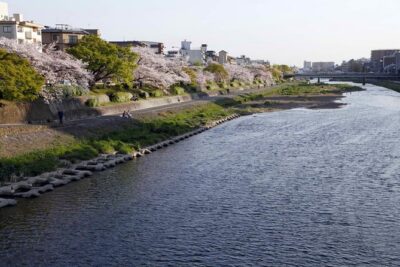
Pontocho Alley is one of those Kyoto places where you can feel the city’s theater in the architecture. The tour starts here, along the Kamo River, in a narrow lane known for traditional teahouses and restaurants. Even in a short visit, it’s the kind of street where you notice details fast: lantern glow, old facades, and the feeling that you’ve stepped into a different pace.
You’ll get about 20 minutes in Pontocho. That’s long enough to stroll, orient yourself, and take a few photos without feeling like you’re sprinting. It’s also a spot where you might spot geisha and see signs of traditional performances, as the tour description suggests.
Possible drawback: 20 minutes in one lane can still be short if you stop often to read menus or linger on street scenes. If you’re the type who wants to shop or eat in the moment, you may need to treat this stop as the atmosphere phase, then come back later for the full meal experience.
Gion Shirakawa Stream Walk and Quiet Bridge Views
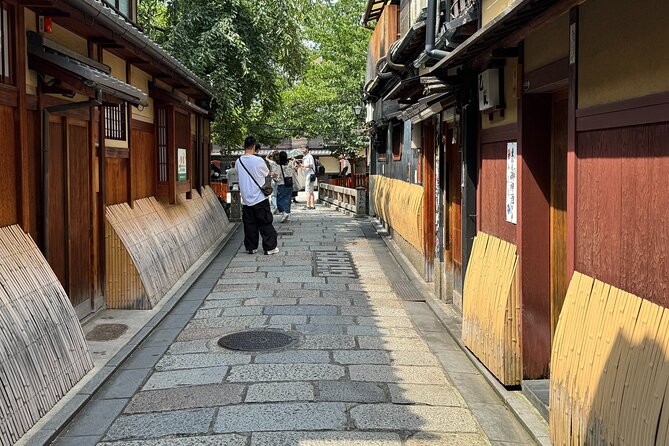
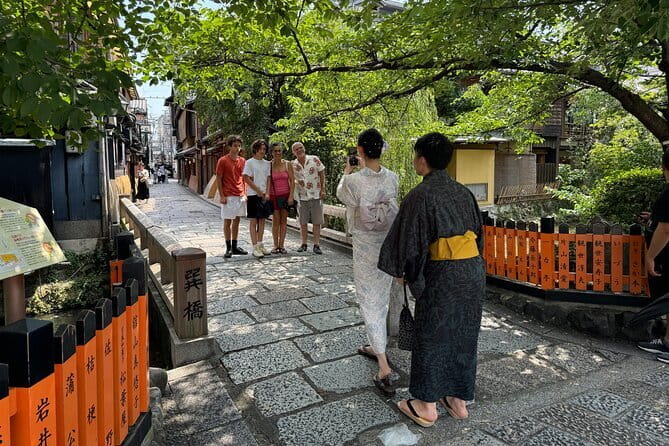
From Pontocho, you move to Gion Shirakawa, which is the calmer side of the geisha-district story. The star here is the stream running through the area, with small bridges and stone paths along the water. The description leans into the greenery and the tranquil mood, and that’s exactly why Gion Shirakawa works as a mid-tour reset.
You’ll get another 20 minutes. In that time, you can walk the river edges, check the bridges, and let the scenery slow you down. This is the stop I’d recommend for anyone who wants more than just street activity. It’s Kyoto at a gentler volume, where the setting does part of the work for you.
What to consider: because this stop is focused on the stream-side setting, your best experience comes from actually walking the paths and not just standing at one angle. If your priority is rapid photo taking, you’ll still be fine, but you might miss some of the small bends and crossing points along the way.
Gion Hanamikoji: Machiya Streets and Respectful Geisha Spotting
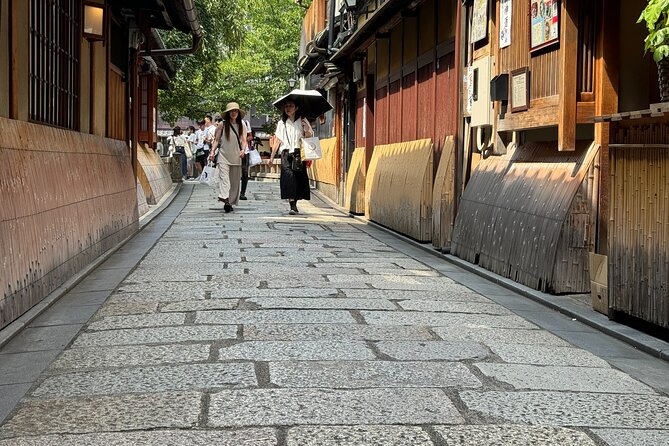
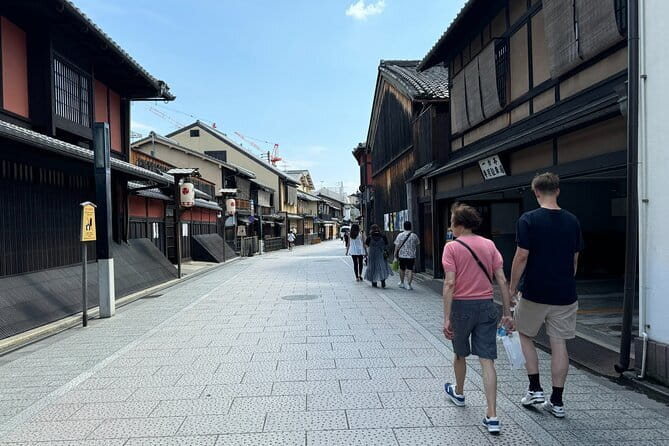
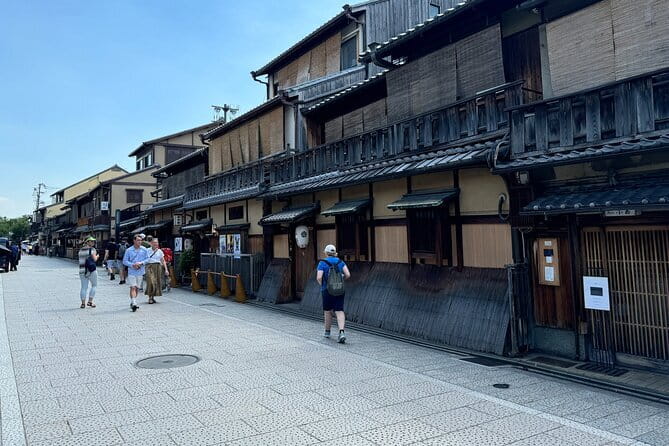
Gion Hanamikoji is the classic “flower street” feel, with traditional machiya houses and the kind of lanes where lanterns create a soft glow. The tour frames this area as a place you can walk and feel you’re in older Kyoto, with charming teahouses and preserved streetscapes.
You’ll spend about 20 minutes here too. That’s enough time to notice the wooden structures, slow down for street details, and look for the figures that visitors often hope to catch. The description specifically says you might see a geisha as you wander, which is part of why this street gets attention.
A practical tip: keep it respectful. If you do see anyone associated with geisha culture, stay out of the way and don’t block paths. The goal is to enjoy the scene, not turn it into a traffic jam. A good guide helps you pick where to stand and when to move along.
Yasaka Shrine and the Build Up to the Hill Streets
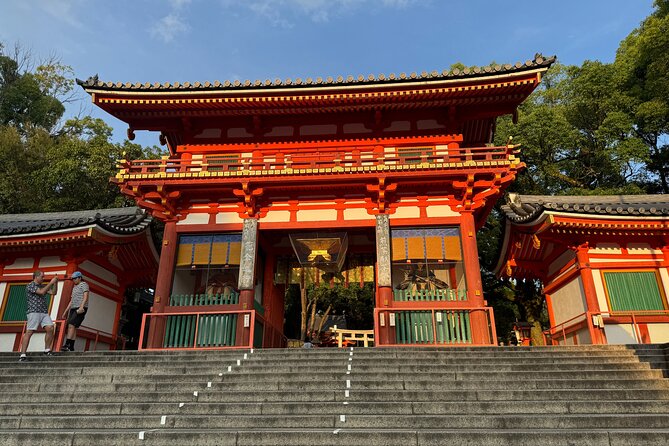
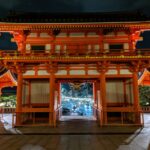
Next comes Yasaka Shrine, another strong Kyoto anchor. Here, the tour emphasizes torii gates, traditional wooden structures, and well-kept gardens. It also notes that festivals and ceremonies create energy, so even if you’re just there for the walk, you’re stepping into a place that can feel alive depending on the day.
You’ll have about 20 minutes. That’s enough for a focused loop through the grounds without feeling like you’re trying to cover every corner. It also works well for pacing. After the geisha-district streets, the shrine grounds reset your senses and give you a different kind of Kyoto atmosphere.
Possible drawback: if you want a longer, quieter prayer visit, 20 minutes may feel tight. This tour is designed as a route, not a slow shrine day. If you fall in love with the grounds, you can always plan a return later on another trip.
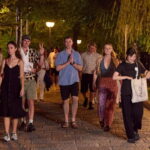
Lantern-lit streets of the geisha quarter
Sannenzaka and Ninenzaka: Old Streets for Photos and Sweets
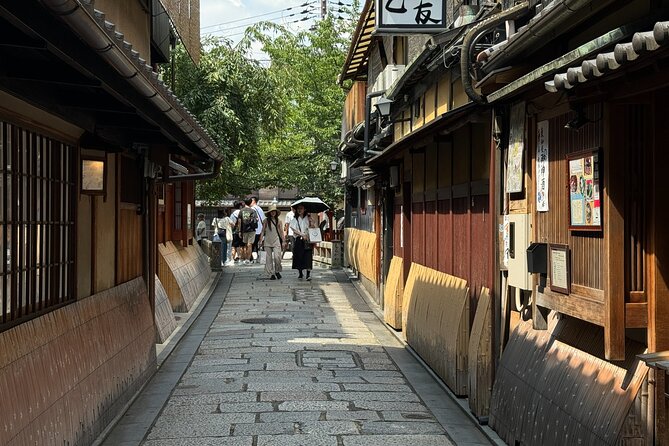
After Yasaka Shrine, the itinerary takes you to Sannenzaka and Ninenzaka, the hillside lanes that are known for traditional shops. The tour description highlights wooden shop fronts, tea houses, and souvenir stores. It’s also framed as a great place for photos and for trying Kyoto sweets.
You’ll have about 10 minutes here, which is short but useful. Think of it as a “taste the vibe” stop. In just a little time, you can pick a snack, browse a few storefronts, and get a feel for the old street design.
If shopping is your main goal, keep your expectations realistic. Ten minutes can be enough for one or two quick buys, but not a full market sweep. If you want more, treat this as the warmup and plan a longer wander on your own later.
Kiyomizu-dera: Included Ticket Time and Otowa Waterfall Luck
The finale is Kiyomizu-dera at the Niomon Gate, with about 1 hour on the grounds. This is the biggest timing block of the tour, and it’s where you’ll likely feel the most Kyoto “wow.”
The description calls out the iconic wooden stage, with especially stunning views in spring and autumn. You’ll also be able to explore historic halls and participate in the Otowa Waterfall tradition, described as sacred streams for luck. That gives the temple more than just scenery. It becomes interactive in a culturally meaningful way.
Because admission is included for Kiyomizu-dera, this part is easier to plan than many tours. You’re not doing extra ticket steps at the finish, and you can focus on the walk and the views.
Practical note: the tour ends here. So if you’re hoping to continue sightseeing after the temple, give yourself buffer time for photos and moving downhill.
Guide Impact: What Teppei Did That Made the Tour Stick
One of the best parts of this experience is the human element. In a standout review, the guide Teppei was praised for going above and beyond in how the group got the best experience. The review also specifically mentioned history stories while walking and time spent reaching shops in Gion.
That matters because Kyoto can be confusing when you’re just following signs. Streets look similar, lanes branch off, and it’s easy to miss what makes each area different. A good guide helps you connect the dots quickly. Even with short stop times, you can leave feeling like you understood what you saw instead of just collecting photos.
Also, because it’s a private tour, the guide can adjust the flow to your group’s energy. If your group wants more street time in Gion, they can likely prioritize it within the time window. If your group wants more shrine and temple focus, the route can lean that way.
Price and Value: Is $170.76 Worth It?
At $170.76 per person for a private tour, this is not a budget activity. But it doesn’t try to pretend it is. The value comes from a few concrete items that add up.
First, you get a tour guide plus all fees and taxes. That’s usually where “cheap” tours quietly fall apart, because ticket lines and hidden costs add friction. Second, Kiyomizu-dera admission is included, while the other stops listed are described as free to enter during your visit.
Then there’s the private format. You’re not sharing your guide with strangers, and your time is focused on the exact loop: Pontocho, Gion Shirakawa, Gion Hanamikoji, Yasaka Shrine, Sannenzaka and Ninenzaka, and Kiyomizu-dera. For many people, that reduction in stress and confusion is worth real money.
Who tends to get the best value? People who want structure for a short day, couples and families who want a guide to manage the route, and anyone who loves geisha-district street atmosphere but doesn’t want to wander with no plan.
Who This Tour Fits Best
This experience fits you if you want a Kyoto afternoon that feels focused but not heavy. It’s built for culture enthusiasts and history-minded travelers who enjoy architecture, street lanes, and meaningful landmarks.
It also helps if you like the idea of seeing multiple geisha districts in one shot. A self-guided day can do this too, but a guided route saves time and helps you understand what you’re looking at, especially in places like Pontocho Alley and the street lanes around Gion Hanamikoji.
You might want to choose something else if you have very specific must-see priorities that demand longer time, like spending half a day in one temple complex or doing deep shopping everywhere you pass. This tour keeps things moving by design.
Should You Book This Kyoto Half-Day Private Tour?
I’d book this if you want a smooth, guided route through Gion’s main street atmosphere and you care about finishing at Kiyomizu-dera with a full hour there. The pricing makes sense when you consider that you get a private guide, included fees and taxes, and Kiyomizu-dera admission.
I would think twice if you hate time limits. The geisha district stops are about 20 minutes each, and the hillside shopping streets are only about 10 minutes. If you’re planning to shop hard or linger for long at one spot, you’ll likely want to add extra time elsewhere.
If you’re trying to decide between self-guided and guided, the guide factor is the swing point. With a guide like Teppei, the tour can feel like more than walking between famous names. You get stories, direction, and help finding the shop streets in Gion without feeling lost.
FAQ
How long is the Kyoto Half-Day Private Tour of Gion and Kiyomizu?
It runs for about 4 hours.
Is this tour private?
Yes. It’s a private tour/activity, so only your group participates.
What is the price per person?
The price is $170.76 per person.
What are the main stops on the tour?
The stops are Pontocho District, Gion Shirakawa, Gion Hanamikoji, Yasaka Shrine, Sannenzaka and Ninenzaka, and Kiyomizu-dera.
Is Kiyomizu-dera admission included?
Yes. The tour includes admission for Kiyomizu-dera. The other listed stops are listed as free admission for your visit.
Where do we meet and where does the tour end?
The tour starts at Shijo Police Box無番地 Kashiwayachō, Nakagyo Ward, Kyoto, and ends at Kiyomizu-dera, Niomon Gate, in Higashiyama Ward.
Is transportation from the station included?
No. Transportation from the station is not included.
Is there a cancellation option?
Yes, you can cancel for a full refund up to 24 hours in advance of the experience start time.
Is the tour easy for most travelers to join?
Most travelers can participate, and it notes that service animals are allowed and the tour is near public transportation.
New This Season
- Koyasan Day Trip by Private Car from Kyoto
- Old Port Town and Ultimate Sake Tasting Private Tour From Kyoto
- Kyoto’s Timeless Charm: 3hr Exploration of History and Peace
- Kyoto: 5 Types of Sushi Making
- Sacred Peak & Ancient Paths: Kurama-Kibune Hiking Experience
- Kyoto: Exclusive ZEN practice at Manpukuji temple in Uji
- Kyoto: Private Seasonal Aroma Yoga Class
- Traversing Kyoto’s Scenic West – Arashiyama to Kinkakuji
Gion Geisha Quarter Walks, compared.
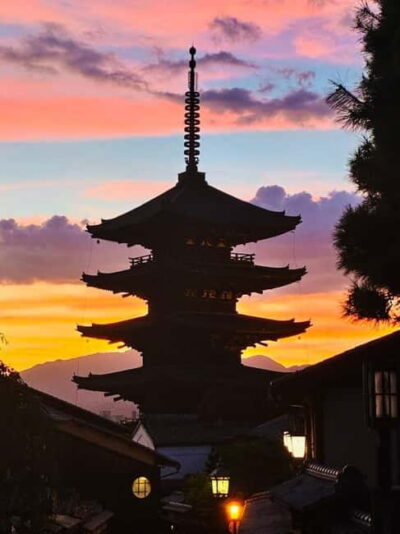
Kyoto Geisha Walking Tour: Gion District & Hidden Gems
Read our review →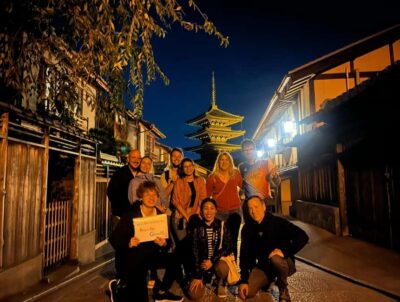
Gion Magical Night Walking Tour with Geisha Trivia
Read our review →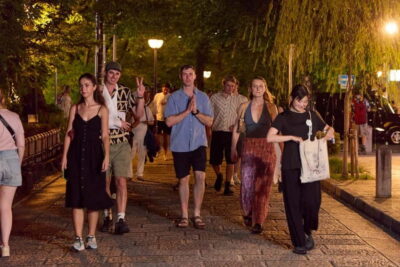
Gion Geisha District Walking Tour – Stories of Geisha
Read our review →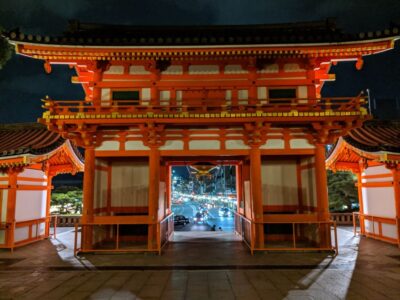
Best of Kyoto: Gion, Geisha, Pagodas & Cobblestones
Read our review →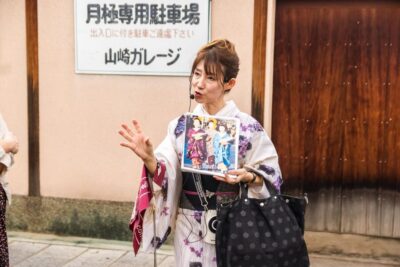
Kyoto Night Foodie Tour in Gion (9+ dishes + 6 Sake tastings)
Read our review →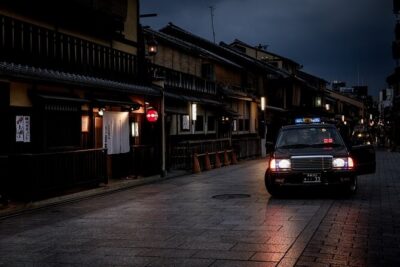
Kyoto Gion Geisha District Walking Tour – The Stories of Geisha
Read our review →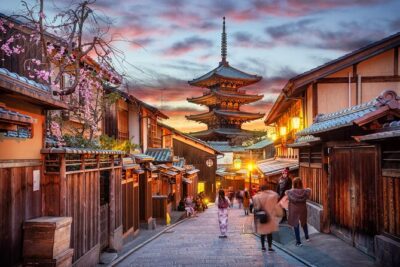
Kyoto Gion: 2-Hour Geisha Culture & History Walking Tour
Read our review →Also filed under