
Reviewed · WALKING TOURS
Kyoto Highlights Private Walking Tour
One day, Kyoto’s biggest hits, minus the stress. This private tour is built around an English-speaking guide who handles the planning and transport for you, using a smart mix of taxis and public transit so the day feels manageable. I like that the route keeps things efficient without turning the experience into a sprint, and I like that you get a natural rhythm between iconic stops, including Fushimi Inari and Arashiyama. One watch-out: temple/shrine admissions and food are not included, so you will still spend a bit more once you are on the ground, and you should be ready for moderate walking between points.
You start at Kyoto Station at 8:00 am, and you end back at the same area, which makes the day feel simple to organize. The highlight list is strong for first-timers, with major landmarks and three UNESCO World Heritage Sites included in the mix. If you prefer your sightseeing structured but not hectic, and you want a guide to help you pick lunch instead of guessing, this tour fits that style well.
In This Review
- Key Highlights You’ll Actually Care About
- A 7.5-Hour Plan Starting at Kyoto Station
- Price and What You Still Need to Budget For
- Stop 1: Fushimi Inari Taisha’s Torii Gate Trails
- Kiyomizu-dera Views, Ninen-zaka Steps, and the Yasaka Pagoda
- Kinkaku-ji and the Golden Pavilion Moment
- Arashiyama Kimono Forest at the Station
- Tenryu-ji Garden Calm and Its UNESCO Setting
- Arashiyama Bamboo Forest: The Dreamlike Walk
- Togetsu-kyo Bridge and the Moon-Crossing View
- Who This Tour Fits Best, and Who Might Want to Skip It
- Should You Book This Kyoto Highlights Private Walking Tour?
- FAQ
- Where is the meeting point for the Kyoto tour?
- What time does the tour start?
- How long is the tour?
- Is this tour private?
- What is included in the tour price?
- Are temple and shrine admission fees included?
- Are food and drink included?
- Is public transportation included?
- What happens if the weather is bad?
- What is the cancellation policy?
Key Highlights You’ll Actually Care About
- Taxi plus public transit keeps the pace comfortable while still hitting the core sights.
- Private, English-speaking guidance means you are not lost, and you do not wait around in a group.
- Three UNESCO World Heritage Sites are built into a one-day plan.
- Fushimi Inari and Arashiyama are both included, so you get Kyoto’s classic spiritual sites and its nature-famous scenery.
- Mobile ticket helps reduce last-minute fuss.
- Local lunch recommendations give you a better shot at authentic food without searching all day.
A 7.5-Hour Plan Starting at Kyoto Station
This is a full-day style tour without the full-day chaos. You get about 7 hours and 30 minutes of guided time, and travel time is included, which matters because Kyoto can eat hours fast when you are switching routes.
Meeting is at Kyoto Station (Higashishiokoji Kamadonocho, Shimogyo Ward). You start at 8:00 am, which is a big deal for temples and popular streets. The tour ends back at the meeting point, so you do not have to solve your return on tired legs.
It is also private, meaning it is only your group. That matters if you want a little more control over pacing, photos, and breaks without the pressure of a larger crowd schedule.
Price and What You Still Need to Budget For
At $65.48 per person, the price is aimed at covering the most valuable part, the guide. What you get included is the English guide, a private route, and the day’s planning, plus the tour framework that combines taxis and public transportation.
What is not included is where you need to budget extra:
- Temple and shrine admission fees
- Food and drink
- Public transportation
In practice, that means the tour is good value if you are planning to visit multiple paid sites anyway. If you are hoping for a true all-in one-price day, you might end up surprised at checkout. The good news is that several key stops are free, so you are not paying at every turn.
A quieter way to spend a day in Kyoto
- Kyoto Geisha Walking Tour: Gion District & Hidden Gems
★ 4.7 · 3,273 reviews - Kyoto: Gion Magical Night Walking Tour with Geisha Trivia
★ 4.9 · 2,393 reviews - Kyoto: Gion Geisha District Walking Tour – Stories of Geisha
★ 4.7 · 2,187 reviews - Night Walk in Gion: Kyoto’s Geisha District
★ 4.5 · 2,003 reviews
Stop 1: Fushimi Inari Taisha’s Torii Gate Trails
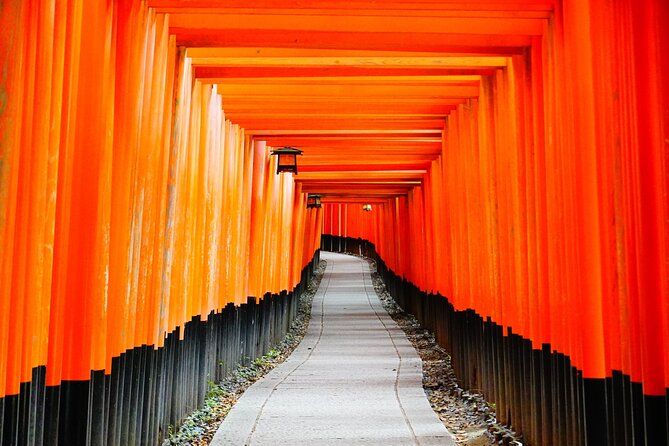
The day kicks off at Fushimi Inari-taisha Shrine, Kyoto’s most iconic shrine. You get about 45 minutes, and the big visual payoff is the thousands of red torii gates that line trails up a sacred mountain.
What I like about starting here is the vibe. Inari is dedicated to Inari, the god of harvest, and the space can feel calm even when you are surrounded by visitors. You do not need to treat this like a hike from start to finish. With a guide, you can focus on the core viewpoints and gate-lined paths without burning energy too early.
Practical tip: wear shoes you trust for steps. Even if the time is set to 45 minutes, the gate paths are uneven in places, and you will move more than you think. The shrine entry is free, so this is one of those high-impact stops that is easy on the wallet.
Kiyomizu-dera Views, Ninen-zaka Steps, and the Yasaka Pagoda
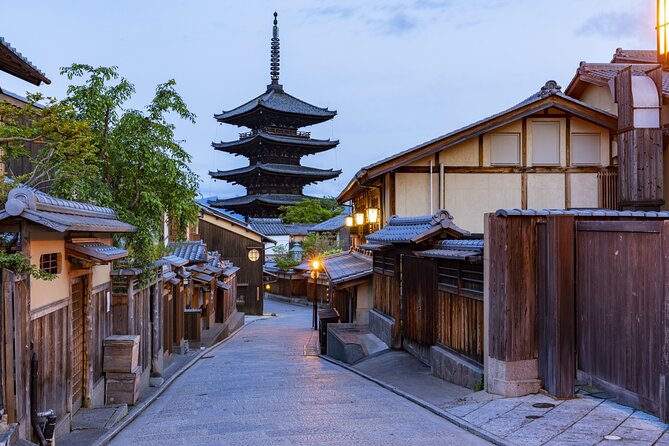
Next up is Kiyomizu-dera Temple. You get about 1 hour, but note that admission is not included, so budget for the ticket. The temple sits on a hillside, and the famous wooden stage extends out over a steep cliff with city views. The construction detail is part of the fascination too, it is described as built without nails.
After Kiyomizu-dera, the tour includes Ninen-zaka Path, a stone-paved slope that leads into the historic atmosphere near the temple. You spend about 10 minutes here, and this is the kind of Kyoto street that helps your brain switch from modern to old fast. Traditional wooden townhouses line the slope, and it is the classic approach route pilgrims and visitors have used for a long time.
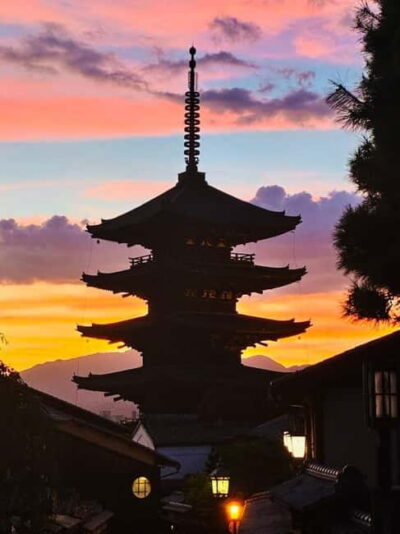
Then you move into the Higashiyama district for Hokan-ji Temple, also known as the Yasaka Pagoda. This stop is centered on its beautiful five-story pagoda. Even with limited time, it is worth it because it breaks up the day with a different feel than the big gates and main halls.
Consideration: this whole area can be crowded, especially closer to the main sights. The guide’s pacing helps, but you still want to expect lines or slower movement at peak times. If you want lots of quiet space, this is where starting at 8:00 am helps.
Kinkaku-ji and the Golden Pavilion Moment
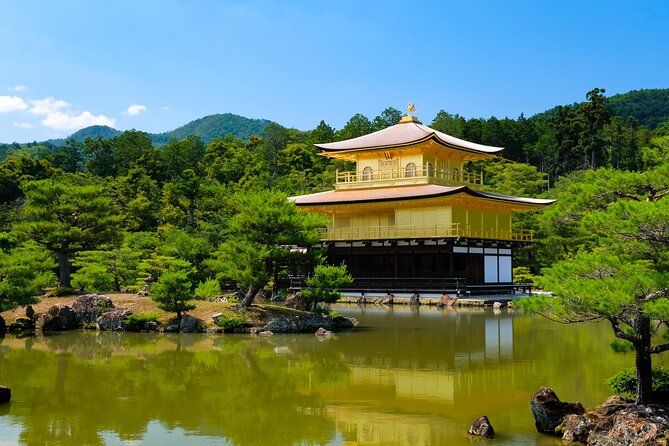
The tour then heads to Kinkaku-ji Temple, also known as the Golden Pavilion. You get about 45 minutes, and admission is not included.
Kinkaku-ji works as a “wow” stop because it looks like a postcard even when you are standing in normal weather. The temple started as a retirement villa in the 14th century and later became a Zen Buddhist temple, so it carries both architectural charm and spiritual purpose. The upper floors are decorated, giving the famous shimmering look that people travel for.
Why this stop is valuable on a one-day plan: it is a concentrated example of Kyoto’s mix of aesthetics and religious design. You are not just collecting sights, you are seeing a clear visual idea that ties to the rest of the day.
Practical consideration: since admission is extra, try not to treat this as a quick photo only stop. Use at least some of your time for the garden and reflective views, because that is what makes Kinkaku-ji feel special beyond the main facade.
Arashiyama Kimono Forest at the Station
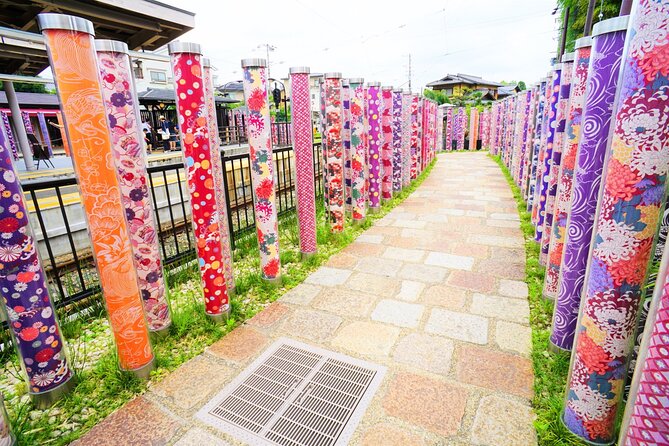
Before you go deep into Arashiyama, you hit Arashiyama Kimono Forest at Arashiyama Station. You spend 10 minutes, and it is free.
This is a modern, colorful installation made from around 600 colorful poles wrapped in Kyoto’s traditional kimono fabric. It is not the kind of cultural site that requires a long lecture, but it is a great visual break in the day. It also helps you shift gears from temple corridors to a more nature-and-scenery oriented route.
If you love photos, this is an easy win because you can get a lot of different angles quickly without spending on tickets.
A day of temples goes further with something to break it up.

Tenryu-ji Garden Calm and Its UNESCO Setting
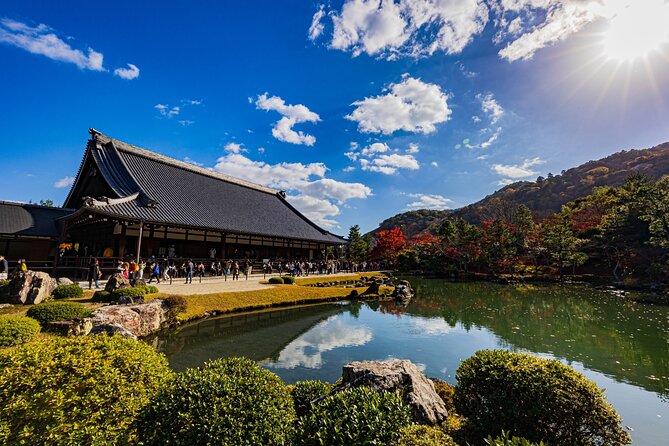
Next is Tenryu-ji Temple, where you get about 30 minutes. Admission is not included. Tenryu-ji is a Zen temple founded in 1339, and the standout is its pond garden using the Arashiyama mountains as a backdrop. It is also recognized as a UNESCO World Heritage Site.
This is a key stop for people who want more than just landmark buildings. The garden setting makes you slow down naturally. It is the kind of place where even a short visit can change how you feel after busier areas, because the scenery does the calming for you.
What to watch for: pond gardens are designed to be viewed from specific perspectives. If you rush, you might miss the point of the composition. Give yourself a few minutes to stand still, look, and then move.
Arashiyama Bamboo Forest: The Dreamlike Walk
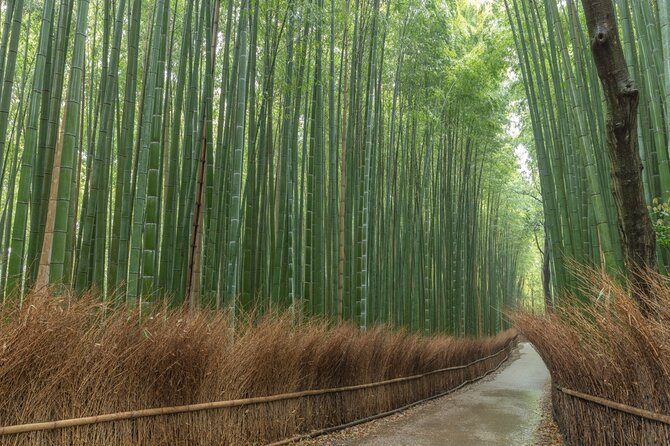
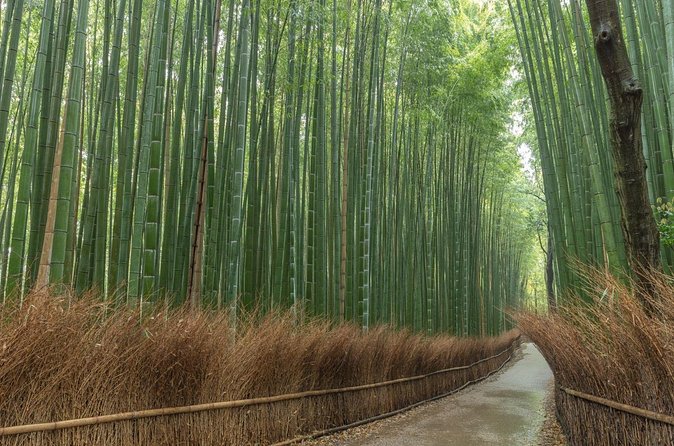
After Tenryu-ji, you go straight into the Arashiyama Bamboo Forest for about 30 minutes. Entry is free.
This is one of those Kyoto experiences that feels almost unreal because of the scale of the bamboo stalks. The description is accurate, walking through the towering green can make the world feel quieter and more dreamlike.
Practical tip: go easy on your pace here. People want to rush for the perfect photo, but the atmosphere is part of why the bamboo works. If you linger, you usually get better photos too, because you are letting the crowd flow around you instead of fighting it.
Togetsu-kyo Bridge and the Moon-Crossing View
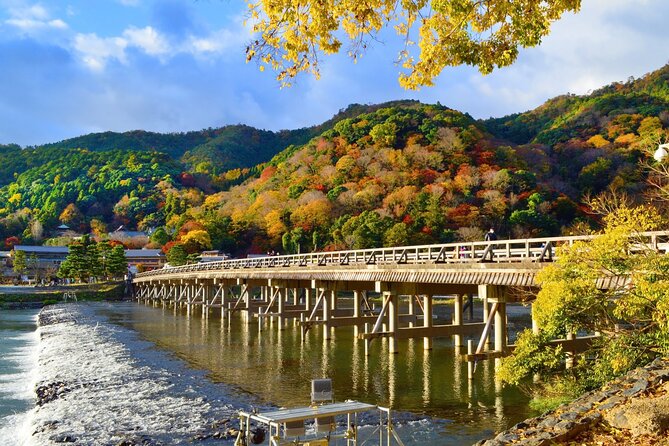
Your final stop is Togetsukyo Bridge (Moon Crossing Bridge). You get about 15 minutes, and it is free.
The name comes from the idea of moonlight appearing to cross the bridge. Even if you are not there at night, the bridge is an iconic Arashiyama photo point, and it is a satisfying end to the day because it ties together the river scenery with the bamboo area you just visited.
It also gives you a “reset” moment. After temples and gardens, stepping back to the river view helps the day feel complete rather than just chopped into separate attractions.
Who This Tour Fits Best, and Who Might Want to Skip It
This tour is a great match if you are:
- Seeing Kyoto for the first time and want the biggest hits in one day
- Short on time, but still want a guided, organized plan
- The type who gets annoyed by logistics and would rather let someone else handle the transport
It might not be ideal if you:
- Want a fully all-in budget, since admissions and food are not included
- Prefer to design your own route with no guide input
- Are not comfortable with moderate walking between different neighborhoods, even with taxis and public transit used to reduce distance
The weather note matters too. The experience requires good weather, and if it is canceled for poor conditions you will be offered a different date or a full refund.
Should You Book This Kyoto Highlights Private Walking Tour?
I think this is a smart booking for most first-timers because it solves the two biggest Kyoto problems in one go: route planning and energy management. You get a private English-speaking guide, a day packed with major sights like Fushimi Inari and Arashiyama’s bamboo, and a pace that uses taxis and public transit to keep you from spending your whole day just getting from place to place.
My main reason to book is value for time. At $65.48, you are paying for someone to stitch together temples, streets, and gardens into a workable one-day story, not just for a list of destinations. Just go in knowing you will pay for temple entry and meals separately, and you will still walk enough to notice it.
If that sounds like your kind of day, book it.
FAQ
Where is the meeting point for the Kyoto tour?
The meeting point is Kyoto Station, Higashishiokoji Kamadonocho, Shimogyo Ward, Kyoto, 600-8216, Japan.
What time does the tour start?
The tour starts at 8:00 am.
How long is the tour?
The duration is about 7 hours and 30 minutes, including travel time.
Is this tour private?
Yes. It is a private tour, so only your group participates.
What is included in the tour price?
An English guide is included, along with the tour planning and transportation routing. You also receive a mobile ticket.
Are temple and shrine admission fees included?
No. Admission fees for temples and shrines are not included.
Are food and drink included?
No. Food and drink are not included.
Is public transportation included?
No. Public transportation is not included, even though the tour uses a mix of taxis and public transport to reduce walking.
What happens if the weather is bad?
This experience requires good weather. If it is canceled due to poor weather, you will be offered a different date or a full refund.
What is the cancellation policy?
Free cancellation is available. You can cancel up to 24 hours in advance for a full refund, and refunds are not available if you cancel less than 24 hours before the start time.
New This Season
- Koyasan Day Trip by Private Car from Kyoto
- Old Port Town and Ultimate Sake Tasting Private Tour From Kyoto
- Kyoto’s Timeless Charm: 3hr Exploration of History and Peace
- Kyoto: 5 Types of Sushi Making
- Sacred Peak & Ancient Paths: Kurama-Kibune Hiking Experience
- Kyoto: Exclusive ZEN practice at Manpukuji temple in Uji
- Kyoto: Private Seasonal Aroma Yoga Class
- Traversing Kyoto’s Scenic West – Arashiyama to Kinkakuji
Walking Tours, compared.
Kyoto Geisha Walking Tour: Gion District & Hidden Gems
Read our review →
Gion Magical Night Walking Tour with Geisha Trivia
Read our review →
Gion Geisha District Walking Tour – Stories of Geisha
Read our review →
Kyoto Gion Geisha District Walking Tour – The Stories of Geisha
Read our review →
Nishiki Market Brunch Walking Tour (7 Tastings + Brunch)
Read our review →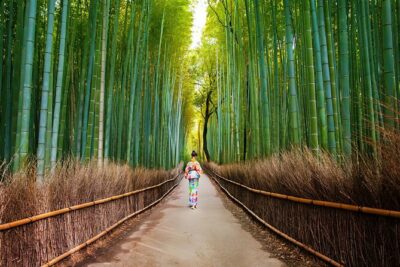
Kyoto Arashiyama Walking Tour: Bamboo, Monkeys, Gardens & Secrets
Read our review →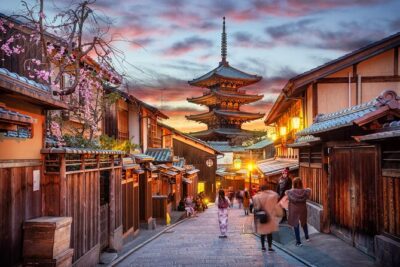
Kyoto Gion: 2-Hour Geisha Culture & History Walking Tour
Read our review →Also filed under