Reviewed · GOLDEN PAVILION VISITS
Kyoto: Kinkakuji and Ryoanji Walking Tour
Kyoto’s calm hits fast at Kinkaku-ji. This walking tour starts at Kinkaku-ji, the UNESCO Golden Pavilion, covered in shimmering gold leaf and framed by tidy gardens and a pond you cannot help but watch closely. I love that the guide focus keeps your eyes on what matters, not just where to stand.
Then you shift from gold to Zen at Ryoan-ji. I like the way the rock garden’s minimal stone arrangement pushes you toward slower looking and quiet thinking, especially if you take a moment right in front of the stones. One consideration: the tour price does not include the entrance fee or the public transport cost, so plan for those extra costs.
In This Review
- Key things to know before you go
- Finding the meeting point outside JR Kyoto Station
- Kinkaku-ji and the Golden Pavilion reflection you can plan for
- What to focus on at Kinkaku-ji
- Ryoan-ji Zen rock garden: how to look at the stones
- What you can do with the rock garden moment
- Small groups and a Travel Story Teller that adds meaning
- Price and value: what $81 covers, plus the Kyoto costs
- Rain, shine, and shoes: how to stay comfortable
- Who this Kyoto Kinkakuji and Ryoanji walking tour fits best
- Should you book this Kyoto Kinkakuji and Ryoanji walking tour?
- FAQ
- Which temples are included on the tour?
- Where do I meet the guide?
- Where does the tour end?
- Is the entrance fee included in the price?
- Is public transportation included?
- What languages is the tour offered in?
- Does the tour run in bad weather?
- Can I get a refund if I cancel?
Key things to know before you go
- Kinkaku-ji is UNESCO and gold-leaf famous, so you’ll start your day at one of Kyoto’s most recognizable sights
- Expect a pond reflection moment at the Golden Pavilion, a big part of the experience
- Ryoan-ji is the Zen rock garden stop, built for calm, minimal observation
- Small groups help you move at a manageable pace and actually hear the guide’s storytelling
- Rain, shine, or a bit of both means you should bring weather-ready shoes and a light rain layer
Finding the meeting point outside JR Kyoto Station
Your day begins outside JR Kyoto Station, at the Central Exit, in front of the 7-Eleven near the station entrance. That is useful, because Kyoto station is huge and easy to circle if you do not have a clear landmark. Aim to arrive a little early so you can get your bearings before the walk starts.
The tour ends back at the same meeting point. I like that symmetry. It reduces stress at the end of the day when you might be tired from temple walking and sightseeing hopping. You are also done near one of Kyoto’s main transit hubs, which makes it simpler to continue on your own after the tour.
This is a walking tour, so treat it like one. Even if you are not doing a long hike, your feet will do the work. I recommend bringing comfortable walking shoes you trust for wet sidewalks too, since the tour runs in rain.
Kinkaku-ji and the Golden Pavilion reflection you can plan for
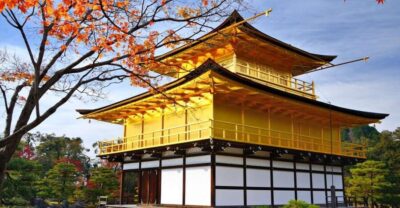
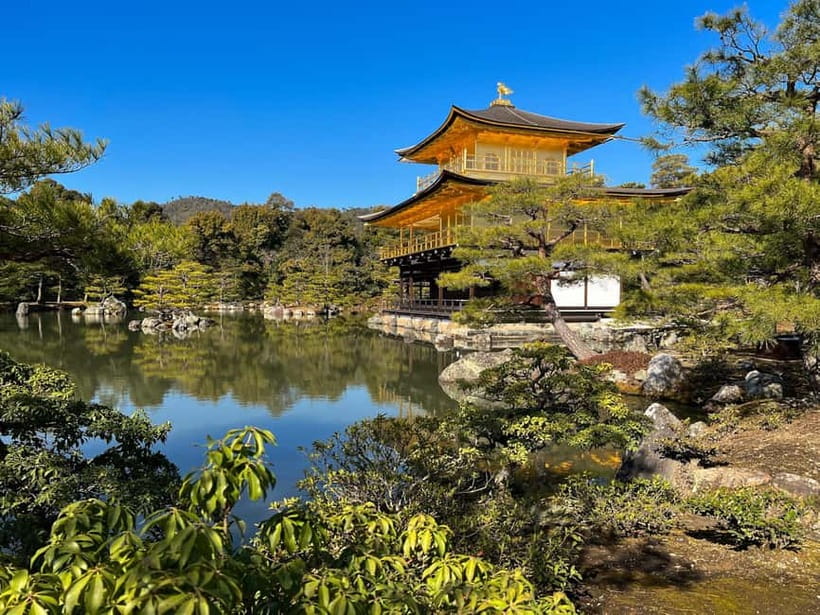
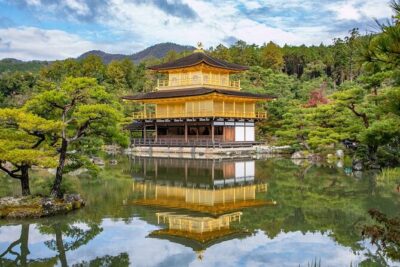
Kinkaku-ji, the Golden Pavilion, is the start for a reason. You are walking into one of the most iconic images Kyoto has, and the gold leaf is not a subtle effect. The temple complex sits with carefully landscaped gardens and a tranquil pond. The big payoff comes from how the pavilion and grounds reflect in the water, so you get a natural “look here” moment without needing to figure out complex directions.
Here is how I suggest you experience it. When you arrive, take a quick pass first, just to see the overall composition. Then slow down near the pond view. That reflection is the visual hook. You do not need a long routine, but you do want to give yourself a minute to notice how the scene changes as light and angles shift.
Kinkaku-ji is also listed as a UNESCO World Heritage site, which usually means the site is protected and managed, and visitor flow can be noticeable. You do not need to fight crowds, just work with them. If you are patient, you can still get your quiet moment.
If the weather is rainy, you will likely see a different version of the pavilion glow, more muted but still striking. The tour notes rain, shine, or a bit of both, so you should assume the outdoor views will be part of the experience regardless of conditions. A light rain jacket is practical, and a towel or small towel-sized cloth can help if you get misty.
Kinkaku-ji's gold roof over still water
- Kyoto: Fushimi Inari, Kinkakuji, Bamboo Grove 1 Day Bus Tour
★ 4.8 · 4,316 reviews - Osaka/Kyoto:Kinkakuji,Arashiyama,FushimiInariShrine,NaraPark
★ 4.1 · 1,596 reviews - Kyoto: Nijo, Kinkaku-ji, Arashiyama, Kiyomizu & Fushimi Inari
★ 5.0 · 699 reviews - Kyoto: Kinkakuji, Golden Pavilion Guided Tour
★ 4.7 · 71 reviews
What to focus on at Kinkaku-ji
- The pavilion’s gold leaf look from multiple angles, not only the first view
- The pond reflection, because that mirrored image is a big part of why people come
- The garden layout, which feels built for calm, slower looking
Ryoan-ji Zen rock garden: how to look at the stones
After Kinkaku-ji’s gold and water, you move to Ryoan-ji and its Zen rock garden, one of the most famous examples of minimalism in temple design. The highlight here is the enigmatic arrangement of stones and the calm it creates. The tour focuses on serenity and contemplation, and it works because the garden is intentionally spare. You are not chasing a million details.
A practical way to approach Ryoan-ji is to treat it like a short visual meditation. Stand still long enough for your eyes to stop trying to “find everything.” Then let your attention settle on the pattern of rocks and the surrounding simplicity. Even if you cannot explain what you are seeing in words, you will feel the effect: the garden encourages you to slow down and observe without rushing to a conclusion.
The tour description calls it a masterpiece of Zen minimalism, and that matters for first-time visitors. If you only expect a pretty garden photo spot, you might miss the point. The garden is designed to reward patience. So I suggest you give yourself a couple of minutes at the key viewing area and let your brain catch up to your eyes.
Ryoan-ji is also a powerful contrast stop. It pairs well with Kinkaku-ji because your mind shifts from opulence to restraint. That change is not just aesthetic, it is mental. A guided walk between the two keeps the day from feeling like separate tourist checklists.
What you can do with the rock garden moment
- Pause and watch without forcing an answer
- Use the stillness to reset before your next Kyoto adventure
- Let the simplicity guide your attention
Small groups and a Travel Story Teller that adds meaning
The tour is built around small groups, and that is more than a nice-to-have. Temple sightseeing can get noisy fast when everyone is trying to photograph the same spot. A smaller group usually means better pacing and fewer “stop, squeeze, shuffle” moments. It also helps you stay oriented without feeling like you are always catching up.
You also get an Italian speaking Travel Story Teller included with the experience. The tour languages are listed as English and Italian, so you can match your comfort level. I like this format because it turns the temples from static landmarks into places with context. Even when you are not studying temples deeply, a good storyteller helps you understand what you are seeing and why it is arranged the way it is.
This is also the kind of tour where questions help. If you care about architecture, symbolism, or just how to read a Zen garden without prior knowledge, a guide can point you toward the right way to look. You are not locked into one interpretation, but you are less likely to feel lost.
One practical tip: keep your schedule flexible enough to enjoy the calmer parts. Kinkaku-ji and Ryoan-ji both work best when you are not rushing to the next stop. Small group pacing supports that.
More rooftops worth a detour

Price and value: what $81 covers, plus the Kyoto costs
The listed price is $81 per person. That is a clear anchor, and it likely covers the guided experience and the included Travel Story Teller component.
What is not included is important for budgeting. You should plan for:
- Public transportation, about 700 JPY
- Entrance fee, about 1,100 JPY
So the real value question is not only what you pay up front, it is what you get for that money once you add local costs. Here, you are paying for two high-demand Kyoto temple experiences, guided in a walking format, plus added context through story telling. If you would otherwise go on your own and still pay entrance fees and figure out transit, the guided structure can save time and mental effort.
I would frame it like this: if you like guided pacing, prefer clarity on what to look for, and want the day to feel calmer, $81 plus local fees can be solid value. If you are comfortable navigating independently and do not care about commentary, you might weigh the added cost against self-guided freedom.
Either way, budget for the entrance and transit amounts, because those are not included and they will show up during the day.
Rain, shine, and shoes: how to stay comfortable
The tour clearly states rain, shine, or a bit of both, tours still go on. That tells you two things. First, expect outdoor walking and outdoor viewing. Second, you should dress for weather changes because Kyoto can shift conditions quickly, and your plans should not depend on a perfect forecast.
Your best tools are simple:
- Comfortable walking shoes with grip, especially if sidewalks look wet
- A light rain layer you can pack without it becoming a heavy hassle
- A small bag that keeps your phone and camera protected if it starts to drizzle
Since the tour includes two temple experiences that emphasize looking, reflections, and calm viewing, getting comfortable matters. If you are cold or slipping, you will rush past what makes these places special. If you are comfortable, you will naturally slow down at the pond at Kinkaku-ji and at the rock garden at Ryoan-ji.
Also consider the “walking tour” factor. Even if the day is not a long hike, your feet will be in motion from meeting point to both sites and back again. Plan to rest after. Kyoto evenings reward that kind of pacing.
Who this Kyoto Kinkakuji and Ryoanji walking tour fits best
This tour is a good match if you want two of Kyoto’s best-known temple moments without turning your day into a map-reading contest.
It fits especially well for:
- First-time Kyoto visitors who want the must-sees in one organized flow
- People who enjoy small group dynamics and calmer sightseeing
- Travelers who like Zen experiences that invite you to slow down, not just photograph
- Visitors who prefer story-telling guidance, with English or Italian available
It may be less ideal if you hate walking, dislike structured schedules, or want full independence with no guide. Because it includes entrances and transit costs not covered in the base price, you also need to be comfortable with adding those expenses.
Still, for most travelers, the combination of Kinkaku-ji’s gold and Ryoan-ji’s rock garden minimalism is a satisfying day arc. You get a visual and mental contrast, guided by someone who can help you look better, not just look longer.
Should you book this Kyoto Kinkakuji and Ryoanji walking tour?
I think it is worth booking if your priority is a focused temple day with small groups and guided help that keeps you oriented and helps you actually notice what you came for. The tour strings together Kinkaku-ji’s UNESCO Golden Pavilion and its reflective pond moment with Ryoan-ji’s famous Zen rock garden contemplation. That pairing makes sense, because it gives you two different kinds of “Kyoto calm” in one route.
Book it if you want a guided experience that includes story-telling, runs rain or shine, and ends back near JR Kyoto Station so you can continue your day easily.
Skip it, or at least compare options, if you are trying to minimize extra costs, dislike walking days, or prefer to set your own pace without commentary. Just remember the base price does not include entrance and transport, so your true budget is base price plus those additional fees.
FAQ
Which temples are included on the tour?
The tour focuses on Kinkaku-ji (the Golden Pavilion) and Ryoan-ji (the Zen rock garden). These are the two must-sees in Kyoto that the walk is built around.
Where do I meet the guide?
You meet outside JR Kyoto station, at the Central Exit, in front of the 7-Eleven near the station entrance.
Where does the tour end?
The tour ends back at the same meeting point, outside JR Kyoto station Central Exit by the 7-Eleven.
Is the entrance fee included in the price?
No. The entrance fee is not included and is listed at about 1,100 JPY.
Is public transportation included?
No. Public transportation is not included, and it is listed as about 700 JPY.
What languages is the tour offered in?
The tour is offered in English and Italian.
Does the tour run in bad weather?
Yes. The tour notes that it runs rain, shine, or a bit of both.
Can I get a refund if I cancel?
Cancellation is available up to 24 hours in advance for a full refund.
More Walking Tours in Kyoto
New This Season
- Koyasan Day Trip by Private Car from Kyoto
- Old Port Town and Ultimate Sake Tasting Private Tour From Kyoto
- Sacred Peak & Ancient Paths: Kurama-Kibune Hiking Experience
- Kyoto’s Timeless Charm: 3hr Exploration of History and Peace
- Kyoto: 5 Types of Sushi Making
- Kyoto: Exclusive ZEN practice at Manpukuji temple in Uji
- Kyoto: Private Seasonal Aroma Yoga Class
- Traversing Kyoto’s Scenic West – Arashiyama to Kinkakuji
Golden Pavilion Visits, compared.
Fushimi Inari, Kinkakuji, Bamboo Grove 1 Day Bus Tour
Read our review →
Kinkakuji,Arashiyama,FushimiInariShrine,NaraPark
Read our review →
Nijo, Kinkaku-ji, Arashiyama, Kiyomizu & Fushimi Inari
Read our review →
Kyoto top must-see Golden pavilion and Bamboo forest half-day Private tour
Read our review →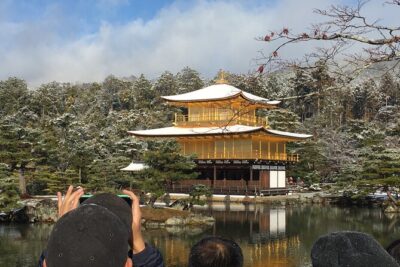
Kyoto Bamboo Forest & Golden Pavilion E-Bike Tour
Read our review →