
Reviewed · NARA & DEER PARK DAY TRIPS
Kyoto, Nara and Osaka private up to 9 pax picked up from Kyoto
Kyoto can be overwhelming, but this route is built for flow. I like that the guide tailors a three-city day idea into a tight plan, with quieter temple stops mixed in. I also like the private pickup from your Kyoto hotel, plus the option to choose a drop-off that makes it easier to keep your day going for dinner.
One thing to consider is pacing. The experience is listed as about 7 hours, but the sample three-city option is described as a longer day (around 12 hours), so confirm which option you booked before you promise yourself a relaxed evening.
In This Review
- Key highlights at a glance
- How a three-city private day keeps you from wasting time
- Pickup, drop-off, and the logistics that make or break the day
- Kyoto highlights, from gate views to moss and rock gardens
- Fushimi Inari-taisha, where the gates feel endless
- Rengeji Temple, the moss garden moment
- Myomanji Temple, where tiny rocks do big work
- Koryu-ji Temple, and a specific historical thread
- Kinkakuji, golden pavilion, and the reason it’s famous
- Koetsuji Temple, for artsy temple vibes
- Nakamuraken dessert stop, Kyoto-style sweets that actually fit the day
- Matsuo Shrine, koi pond feeding time
- The “secret temple” approach, why the quiet stops matter
- Nara on a single day: Todai-ji, deer crackers, and matcha tasting
- Osaka finale: Dotonbori street eats, then Abeno Harukas views
- Price and value: what you’re really paying for
- Who should book this private Kyoto, Nara, Osaka day
- Should you book it?
- FAQ
- Is this tour private?
- How many people can be in the group?
- Where does pickup happen?
- How long is the tour?
- Which Kyoto places are included in the route?
- Are entrance tickets included?
- Can I choose where the tour ends?
- Does the tour use a mobile ticket?
- What is the cancellation policy?
Key highlights at a glance
- Private group up to 9 with only your group participating
- Kyoto hotel pickup and flexible drop-off choices for the next part of your day
- Temple mix that includes popular icons and quieter gardens, picked by the guide
- Food stops built into the timing, including Kyoto-style sweets and matcha tasting
- Osaka finish with Dotonbori walking and Abeno Harukas views (for the three-city option)
- Mobile ticket for easier day-of check-in
How a three-city private day keeps you from wasting time
A one-day Kyoto plus Nara plus Osaka plan sounds like a lot, and it is. The key is that this tour is not a generic checklist. It is a guide-led route picked from special recommendations, so you get a smarter route through the places that matter most, without the “everybody line up, everybody shuffle” feel.
When I’m choosing this kind of day, I care about two things: avoiding time sinks and hitting the right mix of famous and calmer stops. This experience is set up to do both. You can start from your Kyoto hotel, go directly to sites, and then end in a location that works for the next meal, which matters more than people think when you have only one day.
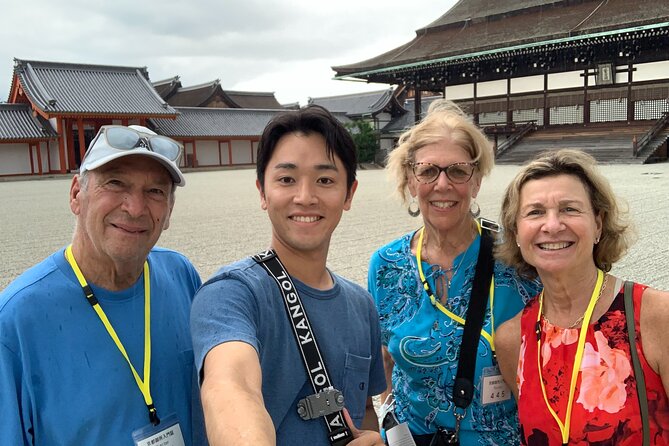
The other big plus is the human factor. In the reviews, the guide is named Takashi, and he gets praised for excellent English and strong communication. That translates into an easier day: you understand what you’re seeing, and you can ask simple questions without a language wall.
Pickup, drop-off, and the logistics that make or break the day
This is a private tour, so you are not stuck working around strangers’ pace. You are also capped at up to 9 people, which is a sweet spot for families and small groups who want comfort but do not want to split into multiple cars.
Here is what you should expect for logistics:
- Hotel pickup is available in Kyoto if you are staying there.
- You can choose your drop-off location, then head out for restaurants on your own.
- The tour is described as near public transportation, which can help if you need a simple backup plan.
Because it is private, the biggest practical win is flexibility. If someone needs an extra few minutes at a stop, or you want to adjust the order slightly within the day, a private setup is naturally better than fixed group tours.
One more practical point: many stops listed here are free admission. That lowers the “hidden cost” feeling you sometimes get with multi-city touring.
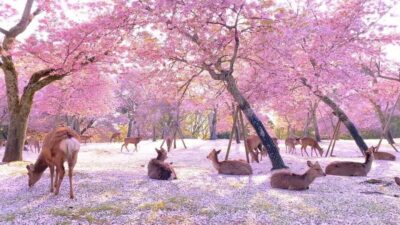
Deer that bow back, a short ride away
- Osaka/Kyoto:Kinkakuji,Arashiyama,FushimiInariShrine,NaraPark
★ 4.1 · 1,596 reviews - Kyoto/Osaka: Nara, Fushimi Inari Taisha, Arashiyama Bus Tour
★ 4.7 · 1,275 reviews - Osaka/Kyoto: Arashiyama, Nara & Fushimi Inari Shrine w/Lunch
★ 4.4 · 754 reviews - Kyoto and Nara Day Trip from Kyoto
★ 4.5 · 445 reviews
Kyoto highlights, from gate views to moss and rock gardens
If you are using this as a Kyoto-focused day, you get a strong mix of the classic sites and the quieter temple atmosphere. Even if your trip is part of a three-city day, the Kyoto portion is designed to be memorable and varied.
Fushimi Inari-taisha, where the gates feel endless
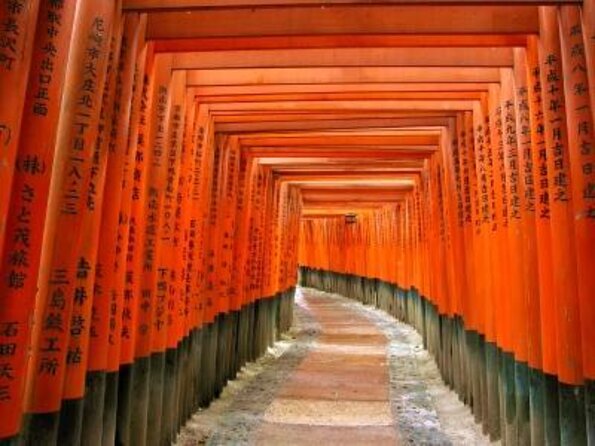
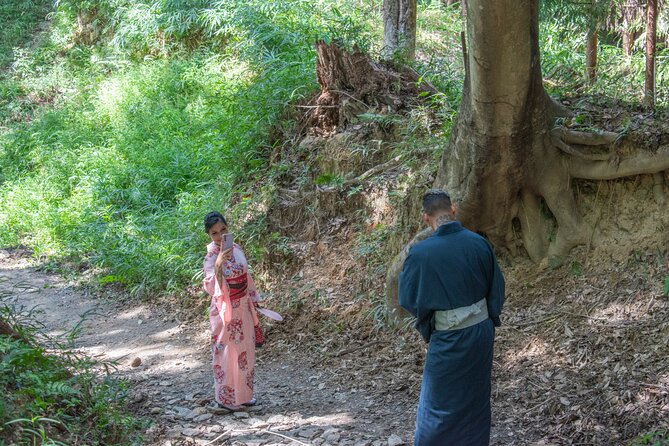
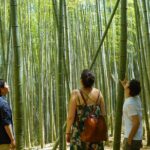
Fushimi Inari is the postcard shrine, yes. But the difference with this kind of guided visit is that you get a sense of how the site connects into the larger landscape. You’re guided through the view of thousands of tri-gates, then you also get time to experience the shrine area as a whole, including a bamboo forest trail and peaceful sounds like birds chirping.
Practical note: this is still popular, so wear comfortable shoes. Also, start with a calm mindset. The magic is not just a single photo angle, it’s the gradual feel of walking deeper into the grounds.
Rengeji Temple, the moss garden moment
Rengeji Temple is described as a gorgeous moss garden temple that is not visited by many people. That matters because moss gardens can look flat when you’re rushed. Here, the goal is a slower, visual experience.
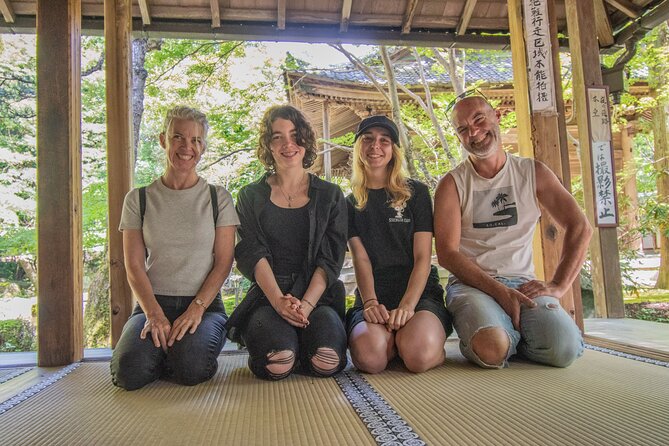
You also spend about an hour here. The description includes wide open tatami mat floor space, which gives you a different feeling than a standard temple courtyard.
If you like gardens, this is the kind of stop you’ll remember later, because it feels like a breather inside a busy day.
Myomanji Temple, where tiny rocks do big work
Myomanji is known for a garden formed by millions of tiny rocks arranged into a larger composition. The size is the point, but the feeling is what surprises people. From a distance, it looks simple. Up close, it’s carefully organized.
This is another stop where a guide helps. With the timing built in, you can focus on what you’re actually looking at instead of wasting minutes figuring out where to stand and what view is the intended one.
A quieter way to spend a day in Kyoto

Koryu-ji Temple, and a specific historical thread
Koryu-ji adds a different kind of interest. The site is connected to Hatashi, described as a Korean-rooted ethnic tribe dating to the 5th to 6th century, and the temple’s story includes a burned down event in the 8th century followed by the temple continuing to exist.
You get about 30 minutes here. That shorter time slot makes this the kind of stop that’s best when you’re open to details, but you still need energy for the rest of the day.
Kinkakuji, golden pavilion, and the reason it’s famous
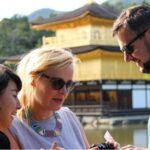
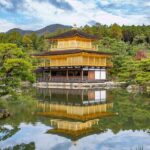
Kinkakuji is the “golden pavilion” everyone knows for a reason. The top floors are covered with gold leaf, and it is tied to Shogun Yoshimitsu Ashikaga as a villa before becoming a temple.
About one hour is scheduled. That’s enough time to see it from multiple angles and still catch the reflections many people look for.
If you’re price sensitive, this is a great moment to pause and use your camera. Since admission is listed as free for this stop, you get value without adding ticket costs.
Koetsuji Temple, for artsy temple vibes
Koetsuji is described as an art master’s property, connected to tea ceremony and calligraphy. The garden includes tea ceremony-related items, and the visit is about 30 minutes.
This is a good stop if you like small, quiet details rather than big crowds. It’s also a nice reset after the visual impact of Kinkakuji.
Nakamuraken dessert stop, Kyoto-style sweets that actually fit the day
A short 30-minute stop at a local dessert shop is included, with Kyoto-style sweets like mochifu and shaved ice flavored with yuzu or match.
This is practical, not just fun. In a long day, you want energy that doesn’t slow you down. Desserts here are timed so you can snack and still keep moving.
Matsuo Shrine, koi pond feeding time
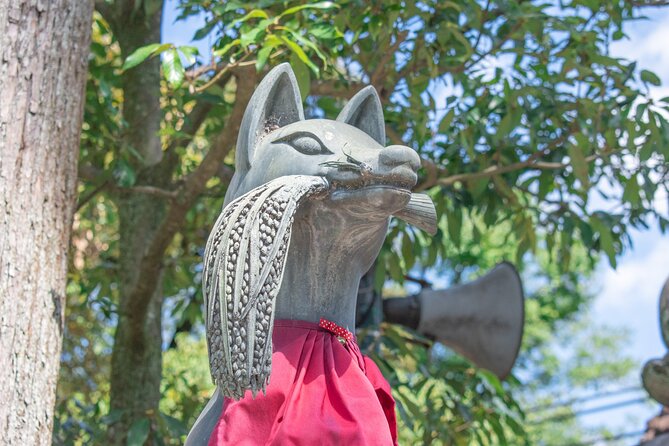
Matsuo Shrine is described as the biggest shrine erected by the Hatashi tribe, loved by local neighborhoods. The highlight for many people is the koi pond, where you are allowed to feed the koi fish with crackers.
This is also about 30 minutes, which is ideal. It’s long enough to enjoy it, short enough that it does not derail your day.
The “secret temple” approach, why the quiet stops matter
One theme in the experience description is a mystery-style temple feel, plus secluded places chosen by the guide. That’s not just marketing language. Quiet temple stops change the whole rhythm of a Kyoto day.
Famous sites like Fushimi Inari and Kinkakuji can be a wall of motion. Quiet stops like Rengeji or the “secret temple” options help you get the quieter Kyoto mood back. In the reviews, Takashi is praised for bringing people to secluded and tranquil places, and that kind of route planning makes photos better too, because you’re not fighting the crowd for a clear view.
Also, in the review responses, there’s a mention of pickle samples and buying from a stall. That tells me the day may include small local food moments, which is a nice bonus if you like tasting your way through neighborhoods.
Nara on a single day: Todai-ji, deer crackers, and matcha tasting

For the three-city option, Nara is the next major emotional anchor after Kyoto temples. The sample plan highlights:
- Todai-ji, with the massive Great Buddha Hall
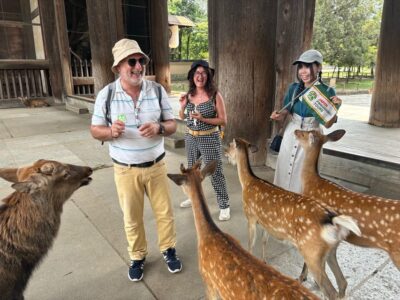
- Nara Park, where you feed deer with crackers
- A “secret temple” moment with matcha tasting in a serene place
Even if you are not a “temple person,” Todai-ji tends to land. The scale is hard to explain until you stand there. The trick is giving yourself enough time to feel it, not just pose and sprint.
Nara Park is where the day becomes playful. Deer feeding sounds simple, but it can be chaotic if you’re unprepared. A guide helps you time it so you can do it without getting swallowed by the chaos.
Then the matcha tasting is a smart reset. After the movement of deer, a calm break gives you a chance to slow down and actually enjoy the taste.
Osaka finale: Dotonbori street eats, then Abeno Harukas views
Osaka is the energy switch. The sample three-city plan finishes with:
- Dotonbori for walking and eating local dishes on the streets
- Abeno Harukas for high-rise views and an observatory
Dotonbori is built for walking, but you still need a plan. The benefit of doing it after Kyoto and Nara is that you are ready for the “food and lights” vibe, not still mentally stuck in temple mode.
Abeno Harukas is a good closing move because it turns your day into a final visual statement. You get a high view that helps you feel like the day ended somewhere big, not just at another line of buildings.
Price and value: what you’re really paying for
At $329.02 per person, this is not a budget group tour. It’s a private, multi-city day with hotel pickup and a guide who handles routing and timing.
So where is the value?
- Private transport and pickup from Kyoto saves you the mental load of figuring out transfers.
- A small group size up to 9 means you’re paying for comfort and control, not a crowd.
- Many temple stops listed here include free admission, so you are not layering costs on top.
- The day includes food moments like Kyoto sweets and Nara matcha tasting, plus Dotonbori street food time for the three-city option.
If you are traveling solo, the per-person cost may feel high compared to shared tours. But if you have a family, or a small group that wants a smoother day with less transit hassle, it can start to look like very fair value.
Also, the listing notes group discounts. If you are booking with others, ask how that applies, because it can make the math feel more comfortable quickly.
Who should book this private Kyoto, Nara, Osaka day
This experience fits best if you:
- Want three cities in one day without doing it the hard way yourself
- Prefer private routing over crowded group pacing
- Like a mix of famous sights and calmer temple gardens
- Want your day planned so you can focus on photos, food, and understanding what you’re seeing
It is also a good choice for groups up to 9. With kids or multi-generational travel, the private format usually wins because everyone can move at the group’s pace.
One heads-up: the plan can run long. Even though it’s listed as about 7 hours, the three-city example is described as around 12 hours. If you hate long days, check the exact option carefully before you commit.
Should you book it?
If your goal is a one-day hit list across Kyoto plus Nara plus Osaka, and you want it done with a guide who is known for great communication, it’s a smart book. The Kyoto portion especially has a balanced mix, with quiet garden temples and classic stops, plus timed food breaks like Kyoto-style sweets and koi pond feeding.
I would book it when you have one tight trip window and you want maximum “see it all” without the stress of planning every transfer and every timing detail.
I would think twice if you strongly dislike long days or you are only interested in one city. In that case, you might get a more relaxed experience by choosing a shorter single-city tour.
FAQ
Is this tour private?
Yes. It is a private tour/activity, and only your group participates.
How many people can be in the group?
The tour is available for groups of up to 9 people.
Where does pickup happen?
Pickup is offered from Kyoto, including hotel pickup if you are staying in Kyoto.
How long is the tour?
It is listed as about 7 hours. The sample three-city option is described as a longer day (around 12 hours), so confirm the exact option you book.
Which Kyoto places are included in the route?
Stops listed include Fushimi Inari-taisha, Rengeji Temple, Myomanji Temple, Koryu-ji Temple, Kinkakuji, Koetsuji Temple, a dessert stop at Nakamuraken, and Matsuo Shrine.
Are entrance tickets included?
For the listed stops in the Kyoto portion, admission is listed as free for each stop.
Can I choose where the tour ends?
Yes. You can choose the drop-off location, and then go to nearby restaurants after the tour.
Does the tour use a mobile ticket?
Yes. A mobile ticket is included.
What is the cancellation policy?
Cancellation is free up to 24 hours in advance for a full refund.
If you tell me your exact travel dates, how many people are in your group, and whether you want the 7-hour or the longer three-city style day, I can help you sanity-check the best fit.
New This Season
- Koyasan Day Trip by Private Car from Kyoto
- Old Port Town and Ultimate Sake Tasting Private Tour From Kyoto
- Kyoto’s Timeless Charm: 3hr Exploration of History and Peace
- Kyoto: 5 Types of Sushi Making
- Sacred Peak & Ancient Paths: Kurama-Kibune Hiking Experience
- Kyoto: Exclusive ZEN practice at Manpukuji temple in Uji
- Kyoto: Private Seasonal Aroma Yoga Class
- Traversing Kyoto’s Scenic West – Arashiyama to Kinkakuji
Nara & Deer Park Day Trips, compared.
Kinkakuji,Arashiyama,FushimiInariShrine,NaraPark
Read our review →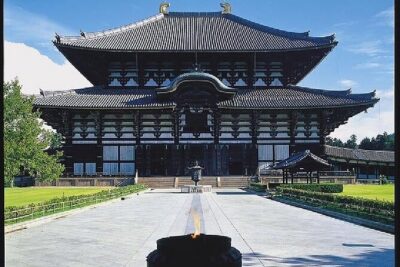
Nara, Fushimi Inari Taisha, Arashiyama Bus Tour
Read our review →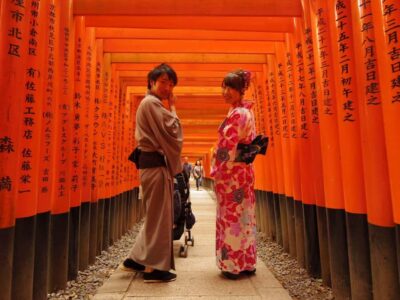
Arashiyama, Nara & Fushimi Inari Shrine w/Lunch
Read our review →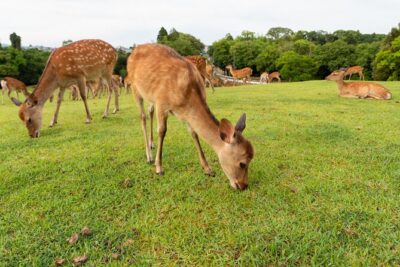
Full Day Guided Tour to Kyoto and Nara from Osaka by Van
Read our review →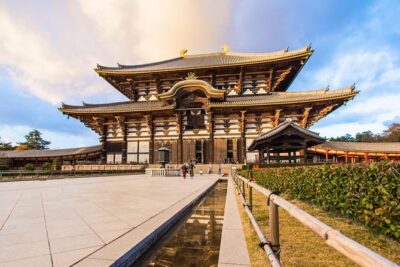
Also filed under