
Reviewed · WALKING TOURS
Kyoto Philosophy Walk with Philosopher (Private/6.5 hour)
Kyoto, but with questions in your pocket. This private 6.5 hour Kyoto tour is built for people who want more than photos, with philosophy guiding each step.
I like the way the tour turns famous spots into real ideas you can talk about, not just buildings you pass by. Two things I really love: the guide is a nationally licensed philosopher researcher, and the pace leaves room for thoughtful conversation as you walk.
One possible drawback is practical: some temples are not included, and you’ll want cash (¥1,600 per person) plus a transit allowance, so your budget needs to be ready before you go.
In This Review
- Key things that make this Kyoto philosophy walk different
- Why a philosophy walk beats temple hopping on autopilot
- Meet Hiroki and set your questions for the day
- Timing, meeting point, and what to budget
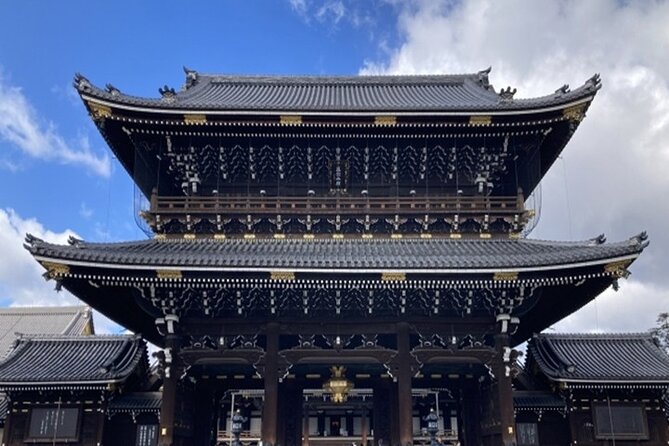
- Stop 1 Higashi Hongan-ji Temple and the Pure Land question
- Stop 2 Yoshida Shrine and Shintoism as something you can feel
- Stop 3 Ginkakuji and the Zen take on simple
- Stop 4 Philosopher’s Walk: Japanese thinkers vs the Western tradition
- Stop 5 Nanzenji Suirokaku aqueduct and thinking about preservation
- Stop 6 Sanmon Gate and enlightenment as three steps
- Stop 7 Konchi-in Zen garden and what authentic simplicity looks like
- How hard is it: one mile, stairs, and the lunch break reality
- Is it worth $230 per person for a private 6.5-hour Kyoto day?
- Who this Kyoto philosophy walk suits best
- Should you book this Kyoto Philosophy Walk with Philosopher?
- FAQ
- How long is the Kyoto Philosophy Walk with Philosopher?
- Is this tour private?
- What time does the tour start, and where do we meet?
- Is lunch included?
- Are temple entrance fees included in the price?
- Do I need to pay for public transportation?
- How much walking is involved?
- Is the tour easy for people with mobility concerns?
Key things that make this Kyoto philosophy walk different
- Dialogue-led touring, not a lecture, so you can ask questions and connect ideas to what you are seeing
- Hiroki as your guide, nationally licensed and trained as a philosophy researcher, with a friendly, flexible approach
- Philosophy tie-ins at each stop, from Pure Land Buddhism to modern questions about the West
- A route built for Kyoto walking, including about one mile on foot plus backstreet wandering
- Temple variety in one morning, Buddhist temples, a major shrine, and Zen garden viewing
- Mobile ticket included, so you are not scrambling at each turn
Why a philosophy walk beats temple hopping on autopilot
Kyoto has tons of temples. But most walking days turn into a checklist, see the gate, snap the picture, move on. This tour fights that pattern by giving you a question before each stop. You are not just looking at architecture and incense smoke. You are looking for meaning.
What I like is that the day connects spiritual traditions side by side. You start in Buddhist thought, then shift into Shinto ideas, then return to Zen and modern philosophy questions on the Philosopher’s Walk. That sequencing matters. It makes you notice how Japanese thinkers have blended, compared, and reinterpreted ideas across time.
Also, this is a private format. That changes the whole vibe. You can slow down when something sparks a conversation, and the guide can adjust. If you enjoy talking more than scrolling, this kind of day fits your style.
Meet Hiroki and set your questions for the day
Your guide, Hiroki, is not just a temple guide with a script. He is nationally licensed and also trained as a philosophy researcher. On a tour like this, that shows. The explanations are not vague. They are aimed at helping you form your own take, right there on the street.
In practice, what you’ll feel is a blend of calm and momentum. The day moves from one meaningful question to the next, but it does not feel rushed. And Hiroki’s approach is flexible, so if a topic grabs your attention, there’s space to talk.
If you are the type who likes asking why something exists, or how ideas evolve, you are in the right place. If you want silence, pure sightseeing, and minimal talking, it might feel a bit cerebral. Think of it as a walking seminar in the best possible setting.
A quieter way to spend a day in Kyoto
- Kyoto Geisha Walking Tour: Gion District & Hidden Gems
★ 4.7 · 3,273 reviews - Kyoto: Gion Magical Night Walking Tour with Geisha Trivia
★ 4.9 · 2,393 reviews - Kyoto: Gion Geisha District Walking Tour – Stories of Geisha
★ 4.7 · 2,187 reviews - Night Walk in Gion: Kyoto’s Geisha District
★ 4.5 · 2,003 reviews
Timing, meeting point, and what to budget
This is a 6 hours 30 minutes tour with a 9:00 am start. You meet at the Bus Ticket Centre / Information Centre at 902 Higashishiokōjichō, Shimogyo Ward, Kyoto (600-8216), and the tour ends back at that same meeting point.
You get a rough structure for your time. Besides the sightseeing blocks, there is a lunch break and extra time for getting between spots. The route includes public transportation, and there is also time for backstreet walking near the main sights.
Here is the key budgeting reality:
- Tour price is $230 per person
- What’s included: the guide fee
- Not included: lunch, temple entrance fees, and public transportation
- Temple entrances: plan for ¥1,600 per person in cash
- Public transport: ¥750 per person
The good news is that many stops in the itinerary note free admission, so you are not paying at every gate. Still, you should treat ¥1,600 and ¥750 as part of the true cost of a smooth day, especially if you prefer not to hunt for details while you are already walking.
You also get a mobile ticket, which can make the start of the day easier.
Stop 1 Higashi Hongan-ji Temple and the Pure Land question
Higashi Hongan-ji Temple is your first stop and a strong way to calibrate the day. You spend about 30 minutes here, with admission listed as free.
The conversation starter is the Pure Land idea, one of the major currents in Japanese Buddhism. This is a helpful opening because it gives you language for what you will see later. You start hearing how Buddhist thought can answer questions about salvation, practice, and what it means to live with hope and direction.
Practical tip: because this is the first stop, you’ll likely get oriented. Pay attention early. The questions asked at this point tend to make later temple symbolism feel less random.
Stop 2 Yoshida Shrine and Shintoism as something you can feel
Next is Yoshida Shrine, also about 30 minutes with free admission listed. The focus here is Shintoism.
This stop matters because Shinto is not just a separate topic. It changes the way you read the surroundings. Instead of thinking only in terms of doctrine and texts, you get nudged toward the idea of spiritual presence connected to place, rhythm, and nature.
The tour also frames Shinto as having a pantheism-like philosophy. Even if that language is new to you, it gives you a lens. You start noticing how shrines work as meeting points between the human world and something larger.
If you tend to overthink religions, this stop can still work for you, because it’s about perception as much as history.
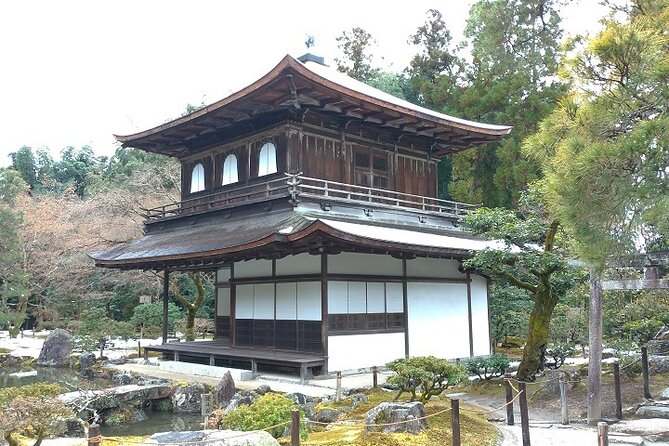
Stop 3 Ginkakuji and the Zen take on simple
Ginkakuji is next for about 45 minutes. Admission is not included, so it is one of the paid pieces you’ll need to budget for with cash.
This is where the tour turns toward Zen ideas, including the idea that simple can be best. Zen temples can look visually calm, but the meaning is not always simple to grasp unless someone gives you a key.
While you are walking around, watch for details that change the feeling of the space: the way structures frame what you look at, the sense of restraint in design, the careful attention to what is left out. The guide’s philosophy prompts help you avoid the common mistake of treating Zen as just “quiet and pretty.”
Practical note: temple time is limited. If you want extra time for photos, tell Hiroki. He’s shown a flexible approach to make the day feel right for the group.
A day of temples goes further with something to break it up.
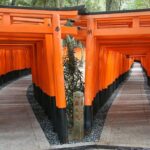
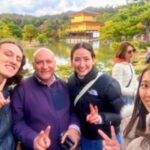
Stop 4 Philosopher’s Walk: Japanese thinkers vs the Western tradition
Now you hit the famous Philosopher’s Walk for about 1 hour, with free admission listed. This is the spine of the day, because it is where the tour explicitly tackles how Japanese philosophers handled the Western tradition of philosophy.
The point here is not to compare trivia. It is to show that translation is not only about words. It’s about adopting, resisting, reformulating, and rebalancing whole ways of thinking.
If you like modern ideas, this section can be the most fun because it turns Kyoto into a place where intellectual history is visible in daily life. You are walking a path that invites reflection, and the guide connects that reflection to questions about tradition and modernization.
If you prefer fewer discussions and more quiet, you can still enjoy this section. Think of it as optional conversation, not a forced performance.
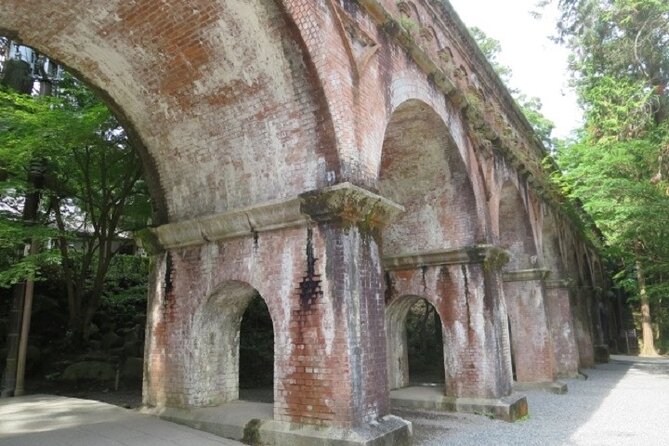
Stop 5 Nanzenji Suirokaku aqueduct and thinking about preservation
Next is Nanzenji Suirokaku, about 15 minutes, free admission listed. This stop is short, but it’s a smart contrast.
You are looking at a Western-style brick aqueduct inside a Buddhist temple complex. That blend is the point. The guide frames it as linked to philosophical thinking about protecting an ideal setting, meaning how humans shape environments and how communities decide what to maintain.
Even if you do not follow the historical background in detail, the presence of the structure makes a clear argument: Kyoto is not frozen in time. It has layers that keep showing up in surprising ways.
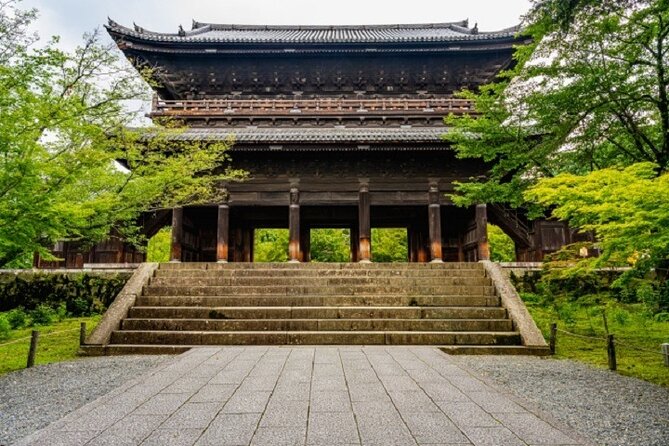
Stop 6 Sanmon Gate and enlightenment as three steps
Then you reach Sanmon Gate for about 15 minutes. Admission is listed as not included, so budget for it alongside the other paid temple entries.
Here the tour focuses on a theory of enlightenment framed as three steps to liberation, with the gate representing those stages. This type of symbolism can sound abstract, but on site it clicks faster. You can see how a gate is more than an entrance. It is a visual lesson about progress, not instant perfection.
The short time at this stop means you should slow down while you are there. Let the guide finish the explanation before you move on. Otherwise, you risk treating it like a photo stop.
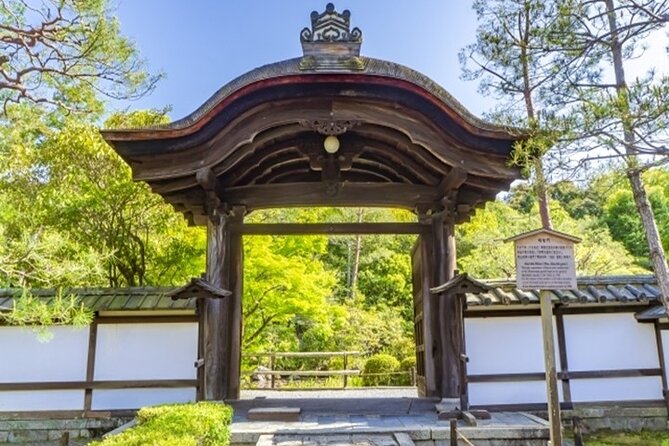
Stop 7 Konchi-in Zen garden and what authentic simplicity looks like
Your last major stop is Konchi-in, about 30 minutes with admission listed as not included.
This is where the tour goes back to Zen gardens and asks what an authentic Zen garden looks like. The value is that you stop looking for beauty alone and start looking for structure and intention.
Zen gardens reward attention. The rock placement, the empty space, the sense of controlled asymmetry. But you need a mental prompt to read it. With the guide’s philosophical framing, the garden becomes easier to interpret, even if you are not an expert.
If you are visiting Kyoto as a first timer, you might think gardens are just decoration. This section helps you see them as a kind of thinking made visible.
How hard is it: one mile, stairs, and the lunch break reality
The walk is about one mile total, plus time on public transportation and extra backstreet walking time. That sounds moderate, and most travelers can participate.
However, there is one clear consideration: the itinerary includes a two-story building with only stairs. If stairs are a problem for you, you should plan accordingly. You do not want a surprise obstacle late in the morning after you are already tired.
Lunch is not included. The tour sets aside about one hour for lunch, plus about one hour and 45 minutes for backstreet walking around the spots and getting around by public transportation. That means your morning is structured, but you do have room to eat and reset.
My practical advice: bring water, wear comfortable shoes, and give yourself permission to keep it simple at lunch. You are there for ideas and walking, not a culinary mission.
Also, since the tour requires cash for some temple fees, I suggest you keep a small amount separated from your main cards. Less stress, more walking.
Is it worth $230 per person for a private 6.5-hour Kyoto day?
Let’s talk value, because $230 is not small money, even in Kyoto.
You are paying for a private guide who is also trained in philosophy research. You are not just paying for someone to lead you through gates. You are paying for structured questions, conversation, and interpretation that you would not get from a self-guided audio app.
You also get a good distribution of major stops: Higashi Hongan-ji, Yoshida Shrine, Ginkakuji, the Philosopher’s Walk, Nanzenji Suirokaku, Sanmon Gate, and Konchi-in. That’s a lot of intellectual and visual variety packed into one day.
Where the price can feel fair:
- You enjoy questions and dialogue more than quick photo stops
- You travel with a partner or small group and prefer a paced day you can steer
- You want someone to connect Zen and Japanese spiritual thought to modern philosophical questions
Where it might not be the best fit:
- If you mainly want temples with minimal talking, a philosophy-first format could feel like too much
- If cash handling and unpaid temple fees add stress for you, plan ahead so you can enjoy the day
Add in the estimated additional costs (¥1,600 temple fees cash and ¥750 public transport), and you still have a day that feels more tailored than standard sightseeing. The private part is the core value.
Who this Kyoto philosophy walk suits best
This is a great match for:
- People who like thinking while they walk, and who enjoy asking why
- Travelers who want Zen, Shinto, and modern philosophical questions in one route
- Couples, friends, and small groups who want a guided day that can adapt
It’s also a good idea if you are a history buff. The day naturally asks you to connect older ideas to newer ways of thinking, including how Japanese thinkers interacted with Western philosophy.
If you are exhausted by lectures, you can still enjoy it, but set your expectations: this tour is built around dialogue. The guide’s job is to turn each stop into a conversation topic.
Should you book this Kyoto Philosophy Walk with Philosopher?
If you want Kyoto as pure scenery, you can find plenty of that on your own. But if you want Kyoto that makes you think, this tour is one of the more meaningful ways to spend a morning.
Book it if you:
- want a private guide and a guided day with conversation
- like Zen and Shinto when someone translates ideas into something you can feel and discuss
- appreciate a philosophy researcher approach, not just a temple guide checklist
Skip it if you:
- prefer silence and quick sighting photos over dialogue
- have difficulty with stairs, since a two-story stair-only building is part of the route
- do not want to handle extra cash for temple fees and transport
Overall, this is a thoughtful use of 6.5 hours, especially if you leave Japan wanting your day to follow you home, not just your camera roll.
FAQ
How long is the Kyoto Philosophy Walk with Philosopher?
It runs about 6 hours 30 minutes.
Is this tour private?
Yes. It is private, so only your group participates.
What time does the tour start, and where do we meet?
The tour starts at 9:00 am at the Bus Ticket Centre / Information Centre at 902 Higashishiokōjichō, Shimogyo Ward, Kyoto, 600-8216, Japan. It ends back at the same meeting point.
Is lunch included?
No. Lunch and drinks are at your expense, and the tour includes a lunch break of about one hour.
Are temple entrance fees included in the price?
No. Temple entrance fees are not included. You should prepare cash of ¥1,600 per person.
Do I need to pay for public transportation?
Yes. Public transportation is not included, and it is listed as ¥750 per person.
How much walking is involved?
The tour includes walking on the path for about one mile, plus additional backstreet walking time.
Is the tour easy for people with mobility concerns?
Most travelers can participate, but the itinerary includes a two-story building with only stairs, so that is the main thing to consider.
New This Season
- Koyasan Day Trip by Private Car from Kyoto
- Old Port Town and Ultimate Sake Tasting Private Tour From Kyoto
- Sacred Peak & Ancient Paths: Kurama-Kibune Hiking Experience
- Kyoto’s Timeless Charm: 3hr Exploration of History and Peace
- Kyoto: 5 Types of Sushi Making
- Kyoto: Exclusive ZEN practice at Manpukuji temple in Uji
- Kyoto: Private Seasonal Aroma Yoga Class
- Traversing Kyoto’s Scenic West – Arashiyama to Kinkakuji
Walking Tours, compared.
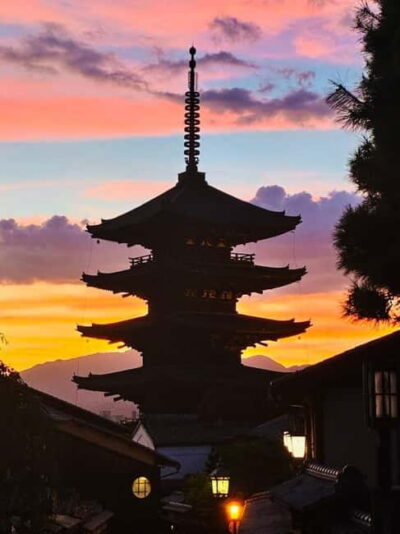
Kyoto Geisha Walking Tour: Gion District & Hidden Gems
Read our review →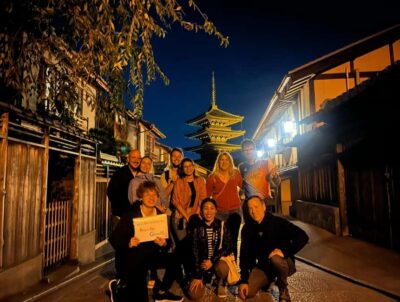
Gion Magical Night Walking Tour with Geisha Trivia
Read our review →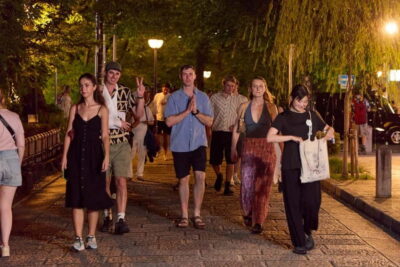
Gion Geisha District Walking Tour – Stories of Geisha
Read our review →
Kyoto Gion Geisha District Walking Tour – The Stories of Geisha
Read our review →
Nishiki Market Brunch Walking Tour (7 Tastings + Brunch)
Read our review →
Kyoto Arashiyama Walking Tour: Bamboo, Monkeys, Gardens & Secrets
Read our review →
Kyoto Gion: 2-Hour Geisha Culture & History Walking Tour
Read our review →Also filed under