
Reviewed · GION GEISHA QUARTER WALKS
Kyoto: Secrets of Gion – Geisha Culture Walking Tour
Gion feels like Kyoto after dark. This 2-hour walking tour is built around real places where geisha culture still makes sense, starting at Yasaka Shrine and ending near Gion-Shijo. I especially like how it connects festivals and superstition to what you see on the streets, and I also love the calm pause of Maruyama Park before you hit the photogenic lanes like Nene no Michi and Ninenzaka. One drawback to plan for, it is not suitable for wheelchair users, since it is a walking route with steps and uneven paths.
You will be guided in English, and the guides can really set the mood. On recent runs, names like Tim, Shin, Bell, and Majo have been praised for turning Gion into a clear, human story, not just a photo stop list.
In This Review
- Key Highlights You Can Look Forward To
- Why Gion Still Feels Like Kyoto’s Real Stage
- The 2-Hour Walking Pace, and How to Make It Work
- Yasaka Shrine: The Festival Connection You Get Without Guessing
- Maruyama Park: Old Trees, Weeping Cherry Energy, and a Breather
- Nene no Michi and Ninenzaka: Where the Streets Tell You How Old Kyoto Moves
- Yasui-Konpiragu Power Stone: A Symbolic Stop With Real Local Ritual
- Hanamikoji Street and the Art of Understanding Geiko and Maiko
- Photo Timing and the Maiko Sighting That Might Happen
- Price and Value: What $25 Buys You in Kyoto
- Who This Kyoto Gion Walking Tour Suits Best
- The Bottom Line: Should You Book This Gion Tour?
- FAQ
- How much does the Kyoto Secrets of Gion walking tour cost?
- How long is the tour?
- Where do I meet the guide?
- Is the guide available in English?
- What can I expect to see related to geiko and maiko?
- Is the tour wheelchair-friendly?
- Can I cancel and get a refund?
Key Highlights You Can Look Forward To
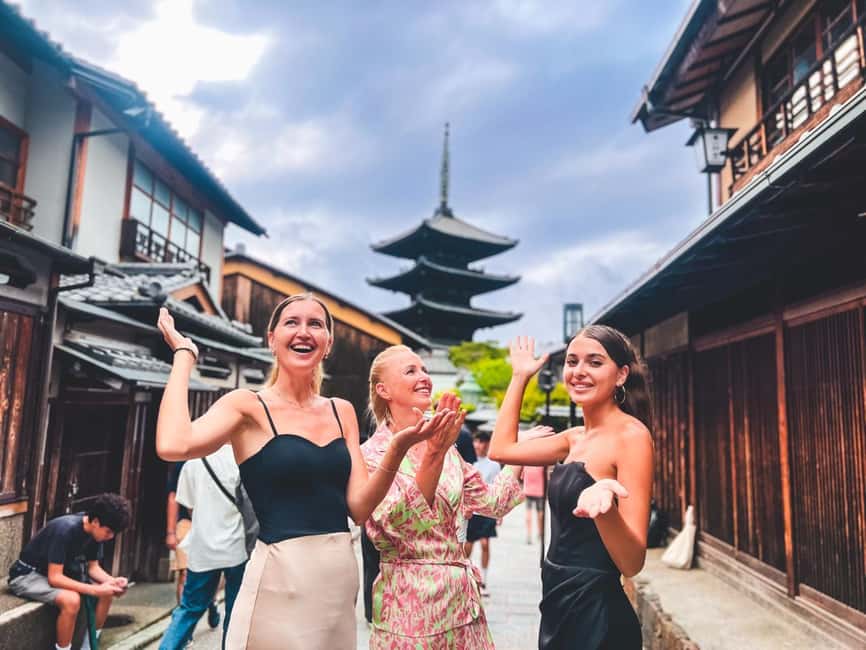
- Yasaka Shrine to open the story, with context on Kyoto’s festivals and how that links to geisha culture
- Maruyama Park reset, Kyoto’s oldest public park, including seasonal beauty tied to the famous weeping cherry trees
- Nene no Michi and Ninenzaka for atmosphere, preserved streets and stone-paved slopes that feel like old Kyoto
- Yasui-Konpiragu Power Stone archway, a local stop tied to relationships and symbolism, with a ritual you can watch people participate in
- Hanamikoji Street with real geiko, plus clear explanations of customs and daily life of maiko and geiko
- A possible maiko sighting near Gion-Shijo, if timing is right for your walk
Why Gion Still Feels Like Kyoto’s Real Stage
Gion is where Kyoto’s traditions are not just displayed, they are practiced. This tour helps you see that difference by pairing shrines and preserved lanes with everyday geiko and maiko culture, so the neighborhood feels like a system, not a random cluster of streets.
I also like that it treats the area as layered. You start with spirituality at Yasaka Shrine, take a breath in a park, then move into the Higashiyama-style lanes that photographers chase all over Japan. By the time you reach Hanamikoji, you have enough context to understand why people slow down and why the details matter.
And yes, Gion has a reputation for being private. The tour doesn’t promise you celebrity sightings on demand, but it does set you up to recognize what you are seeing and why it matters.
The 2-Hour Walking Pace, and How to Make It Work
This is a short, focused walk at 2 hours, which is the sweet spot for jet-lag days or evenings when you want culture without committing to a half-day. Since it is a walking tour, plan comfortable shoes and expect a steady pace through historic streets.
Timing matters here. One of the most practical takeaways from recent outings is that later starts can mean fewer people around, which helps with photos and gives you a little more breathing room while you listen. If your schedule allows it, pick a start time that feels comfortable, not one that forces you to rush through the stops.
Finally, this route is not wheelchair-friendly. If you need accessibility support, you will likely find the step-heavy, old-street layout too tough for a wheelchair.
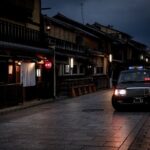
Lantern-lit streets of the geisha quarter
- Kyoto Geisha Walking Tour: Gion District & Hidden Gems
★ 4.7 · 3,273 reviews - Kyoto: Gion Magical Night Walking Tour with Geisha Trivia
★ 4.9 · 2,393 reviews - Kyoto: Gion Geisha District Walking Tour – Stories of Geisha
★ 4.7 · 2,187 reviews - Best of Kyoto: Gion, Geisha, Pagodas & Cobblestones
★ 4.9 · 2,058 reviews
Yasaka Shrine: The Festival Connection You Get Without Guessing
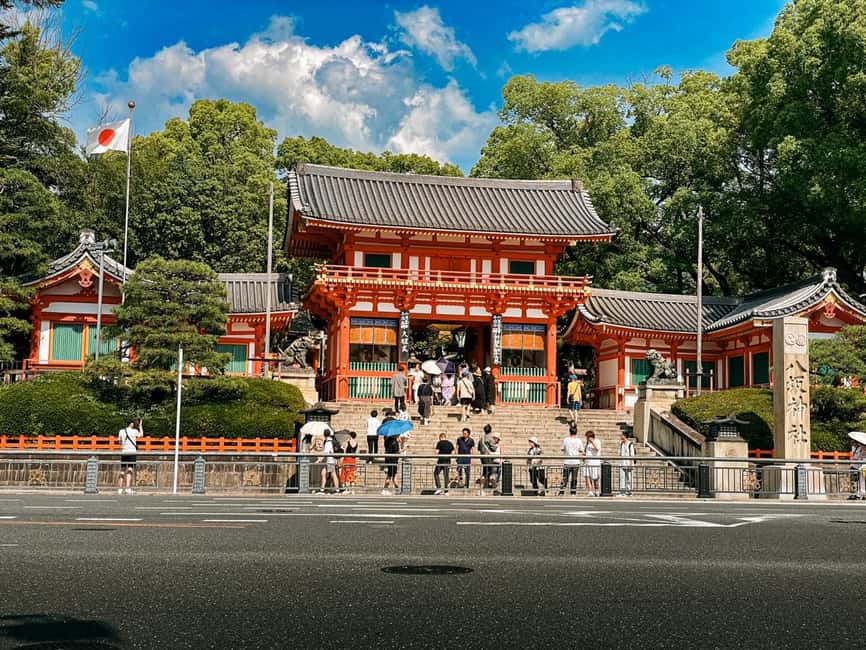
Your walk kicks off at Yasaka Shrine, one of Kyoto’s key spiritual sites. This is a smart first stop because it grounds the whole tour in Kyoto’s festival culture, not just geiko and maiko as a visual theme.
What I like is how the explanation helps you link the shrine environment to the social rhythms of Gion. You do not need to know Japanese rituals in advance, the guide frames what you are seeing and why it ties into the broader culture around the district.
You also get a quick photo stop moment, which is useful. Yasaka Shrine is busy, so having a guided cue for where to look and what to notice saves time.
Maruyama Park: Old Trees, Weeping Cherry Energy, and a Breather
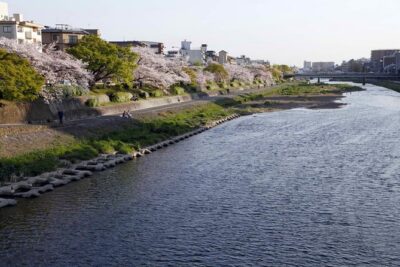
Next comes Maruyama Park, described as Kyoto’s oldest public park. It is known for seasonal beauty, especially the famous weeping cherry trees, but even outside peak bloom the park works as a calm pause near the shrine area.
I love this kind of pacing. Right after a shrine stop, you get a quieter pocket where you can actually hear the guide. It also helps you reset your eyes, because once you leave the park, the streets get dense with details, signs, and narrow architecture.
If you are traveling with limited time, this park stop is value for your brain. It prevents the tour from becoming nonstop “look and walk” and gives the cultural story a rhythm.
Nene no Michi and Ninenzaka: Where the Streets Tell You How Old Kyoto Moves
From there, you stroll into Nene no Michi, a picturesque lane named for Nene, the wife of Toyotomi Hideyoshi. The tour’s focus here is preservation and atmosphere: traditional architecture, small shops, and teahouses that make the lane feel like a living corridor rather than a staged set.
Then comes Ninenzaka, reached by descending a charming, stone-paved path with historic wooden buildings and artisan-style boutiques. This stretch is one of the best parts for photography because the slope and paving give you depth, not just flat storefront shots.
Here is the practical part: it is crowded in peak seasons, so walking slowly and watching for the guide’s cues matters. If you rush, you miss the texture of the street, the angles, and the small visual storytelling you came for.
Yasui-Konpiragu Power Stone: A Symbolic Stop With Real Local Ritual
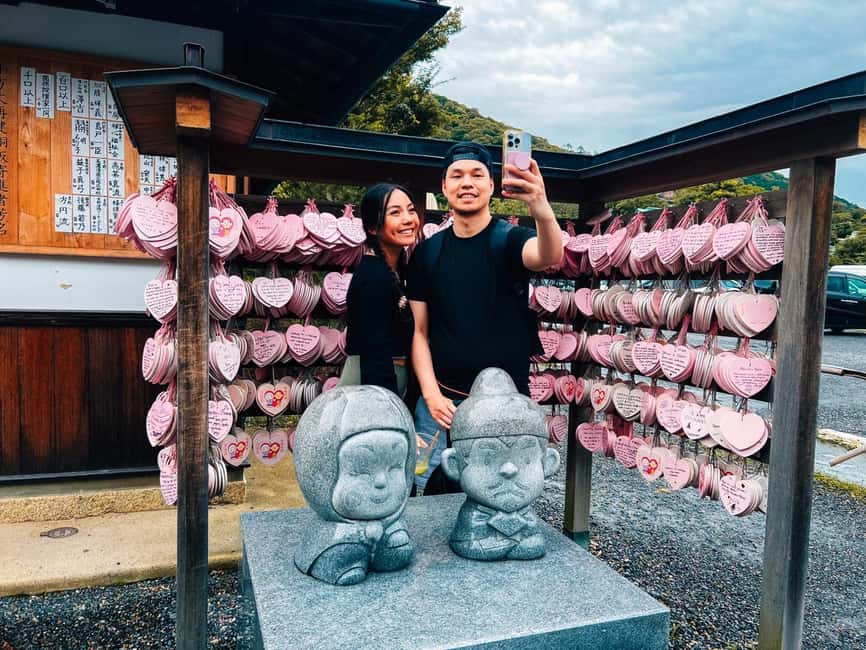
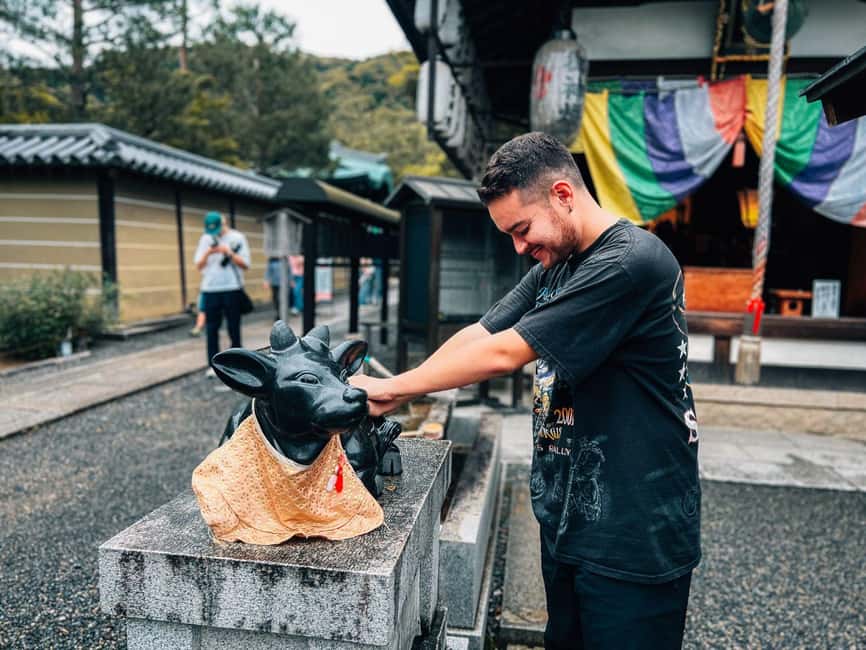
Then you reach Yasui-Konpiragu, another Higashiyama-area shrine described as a hidden gem. The standout feature is its Power Stone archway, and people crawl through it while making wishes tied to relationships, including good luck and breaking ties with the past.
This stop is memorable because it is symbolic, but not vague. You can actually watch what people do, and the guide explains the meaning behind the ritual so you do not feel like you are just observing a curiosity.
Also, it is peaceful in a different way than a park. You get a quiet pocket for reflection before Hanamikoji becomes a more social, busy corridor again.
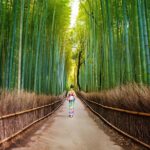
A quieter way to spend a day in Kyoto


Hanamikoji Street and the Art of Understanding Geiko and Maiko
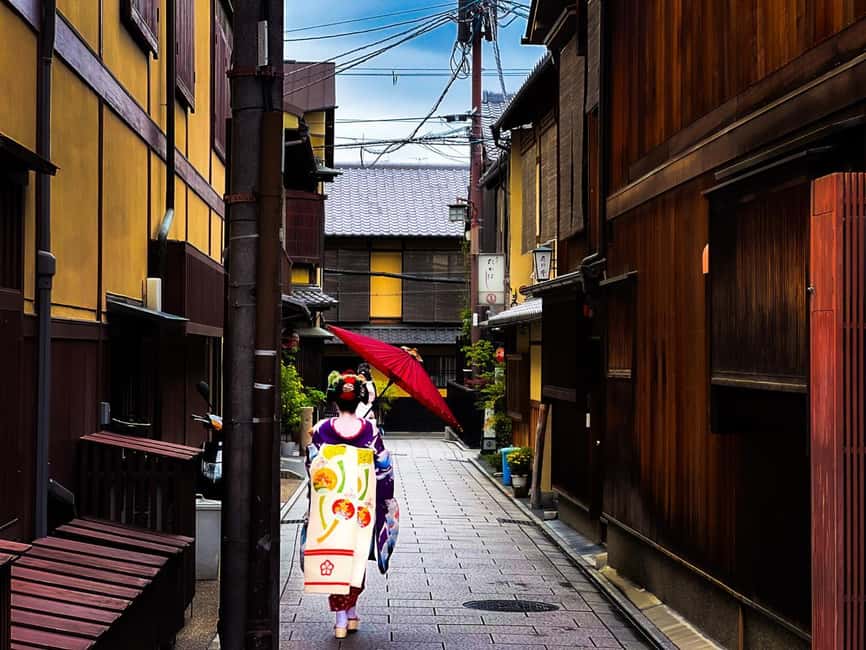
Now you step into the heart of Hanamikoji Street, lined with preserved wooden teahouses. This is the part of the tour where the geiko and maiko culture becomes concrete, not theoretical, since the tour focuses on the real world of Kyoto’s entertainers.
A big plus is that your guide explains customs and daily life of maiko and geiko in a way that helps you understand what you are seeing in the streets. You do not just get facts, you learn how the culture works: what you might notice, how roles differ, and why people treat this world with care.
One of the most praised aspects from recent experiences is the guide style. People have highlighted that their guides can make the atmosphere feel respectful and clear, even when the group is small and the weather shifts. If you end up with a guide like Bell, Majo, Tim, or Shin, you are likely to get a strong storytelling flow, plus help with photos so you do not feel awkward navigating alone.
You also walk down narrow backstreets and lesser-known alleys. That is where the tour becomes more than a single famous street, because you see places where maiko live and train, and you hear local stories passed down across generations.
Photo Timing and the Maiko Sighting That Might Happen
The tour ends near the Gion-Shijo area, and if timing is right, you may catch a glimpse of a maiko in full attire heading to an engagement. I like that this is framed as a possibility, not a promise, because it sets your expectations in a way that keeps the experience from feeling stressful.
If you do get a sighting, it feels special for the right reason. It is not about chasing someone like a trophy, it is about recognizing how the day’s schedule shapes what you see on the streets.
If you do not spot a maiko, you still leave with a better sense of where to look and what patterns mean. You will also understand why some street moments are brief, and why the neighborhood’s pace stays slow and intentional.
And if your main goal is nighttime photography, you can get a helpful advantage. One recent highlight was that a later hour meant fewer people around, so traditional architecture could fit into your frame without constant crowd interruptions.
Price and Value: What $25 Buys You in Kyoto
At $25 per person for a 2-hour guided walk, the value comes from focus and context. Gion is crowded, confusing, and full of cultural codes. A guide helps you notice what you would otherwise miss, which is hard to replicate with a self-walk unless you already know the story.
Here is what you are paying for, practically:
- A guided route through key sites like Yasaka Shrine, Maruyama Park, Nene no Michi, Ninenzaka, and Hanamikoji Street
- Explanations that connect shrines, festival culture, and the private world of geiko and maiko
- Time-saving direction, especially in the backstreets and alleys where it is easier to get lost than to explore with meaning
Could you do it alone? Sure. But in Gion, meaning comes from knowing what you are looking at. For many people, $25 feels fair once the tour translates the neighborhood into something you actually understand.
Who This Kyoto Gion Walking Tour Suits Best
This experience fits best if you want culture you can see, not just read about. It is ideal for first-timers who feel overwhelmed by Kyoto’s neighborhoods and want a structured path with clear storytelling.
I also think it works well for solo travelers. One highlighted benefit was that guides can help you feel safe and supported while you explore in the evenings, plus they can assist with photo-taking so you do not spend your whole walk trying to figure out your camera stance.
If you are traveling with family, this is still manageable because it is only 2 hours. Just keep in mind it is not wheelchair-friendly, and the route includes walking on older streets.
The Bottom Line: Should You Book This Gion Tour?
Book it if you want to understand Gion as a living cultural system, with shrines, preserved lanes, and geiko and maiko culture tied together in a real walking route. At $25 for 2 hours, you are mostly buying time, direction, and context, and that is exactly what Gion needs.
Skip or reconsider if mobility is a concern. Since the tour is not suitable for wheelchair users, you would be better off choosing a different format.
If you do book, pick the start time that makes sense for you. A later hour can mean fewer people around and better photo conditions, which makes the traditional architecture and quiet shrine moments more enjoyable.
FAQ
How much does the Kyoto Secrets of Gion walking tour cost?
It costs $25 per person.
How long is the tour?
The tour lasts 2 hours.
Where do I meet the guide?
You meet at Starbucks Coffee – Kyoto Gion Hotel.
Is the guide available in English?
Yes, the tour has a live guide in English.
What can I expect to see related to geiko and maiko?
The tour includes a guided walk through Hanamikoji Street, where real geiko still entertain, and the guide explains customs and daily life of maiko and geiko. If the timing is right near the end of the tour, you may also catch a glimpse of a maiko heading to an engagement.
Is the tour wheelchair-friendly?
No, it is not suitable for wheelchair users.
Can I cancel and get a refund?
Yes. You can cancel up to 24 hours in advance for a full refund.
New This Season
- Koyasan Day Trip by Private Car from Kyoto
- Old Port Town and Ultimate Sake Tasting Private Tour From Kyoto
- Kyoto’s Timeless Charm: 3hr Exploration of History and Peace
- Kyoto: 5 Types of Sushi Making
- Sacred Peak & Ancient Paths: Kurama-Kibune Hiking Experience
- Kyoto: Exclusive ZEN practice at Manpukuji temple in Uji
- Kyoto: Private Seasonal Aroma Yoga Class
- Traversing Kyoto’s Scenic West – Arashiyama to Kinkakuji
Gion Geisha Quarter Walks, compared.
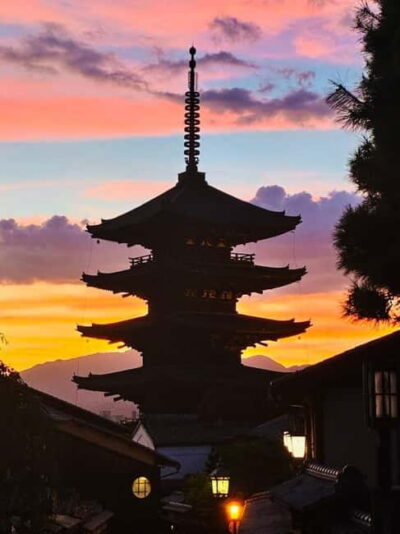
Kyoto Geisha Walking Tour: Gion District & Hidden Gems
Read our review →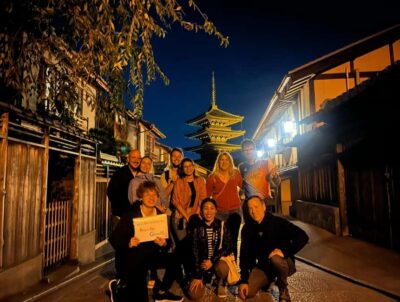
Gion Magical Night Walking Tour with Geisha Trivia
Read our review →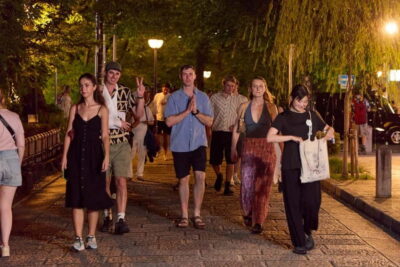
Gion Geisha District Walking Tour – Stories of Geisha
Read our review →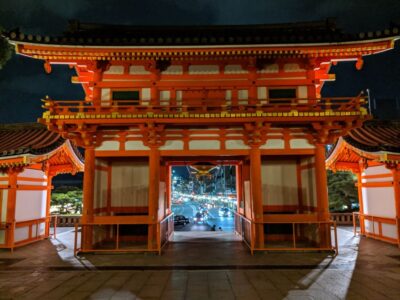
Best of Kyoto: Gion, Geisha, Pagodas & Cobblestones
Read our review →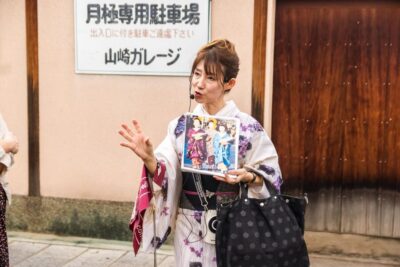
Kyoto Night Foodie Tour in Gion (9+ dishes + 6 Sake tastings)
Read our review →
Kyoto Gion Geisha District Walking Tour – The Stories of Geisha
Read our review →
Kyoto Gion: 2-Hour Geisha Culture & History Walking Tour
Read our review →Also filed under