
Reviewed · GION GEISHA QUARTER WALKS
Kyoto: The Geisha Districts of Kyoto Walking Tour
A geisha story starts at street level. This 2-hour walk through Gion and Higashiyama pairs a comfortable Miyagawacho lounge with real tea house spotting in Kyoto’s central districts. I like the setup because you learn the customs before you hit the crowds, and you get a guided chance at seeing women in full costume. The one drawback to plan for is weather, because the core experience is still a walk for close to 1 hour plus multiple stop-and-go visits.
You also get more than the usual sightseeing blur. The route hits Kenninji Temple, Yasui Kompira-Gu Shrine, Ninenzaka, and Yasaka Shrine, so the day feels grounded in Kyoto, not staged for geisha fans only. Price-wise at $38 per person for a guided experience, a welcome drink, and bilingual interpretation, it can be good value if geisha culture is the reason you’re here.
Before you go, decide what you want most. If you want a strict art-and-architecture tour, this may feel more about entertainment district culture than museum-style detail. If you want to understand how Kyoto’s geisha world fits into everyday neighborhoods, it’s a solid match.
In This Review
- Key highlights and why they matter
- Why Gion and Miyagawacho matter for geisha culture
- Traveler lounge warm-up: welcome drink, slideshow, and games
- Walking the narrow streets of Gion and Higashiyama
- Kenninji Temple: a calm break in the middle of the story
- Yasui Kompira-Gu Shrine: why shrines fit this neighborhood
- Ninenzaka and Yasaka Shrine: old-street Kyoto with a purpose
- The big takeaway: customs, etiquette, and how to look respectfully
- Tea houses: seeing hundreds without feeling lost
- Price and value for a $38, 2-hour experience
- Group size, guide style, and what reviews suggest
- Weather and comfort: how to prepare for a 2-hour walk
- Who should book this Kyoto geisha district walking tour
- Should you book this tour?
- FAQ
- How long is the Kyoto Geisha Districts walking tour?
- Where does the tour start?
- What areas will we explore?
- Which stops are included besides the geisha districts?
- Is the guide available in more than one language?
- What is included in the price?
- Is this tour suitable for people with mobility impairments?
Key highlights and why they matter
- Miyagawacho traveler lounge welcome drink to set context before you walk
- Interactive slideshow plus geisha-themed games to make customs easier to remember
- 4 out of 5 hanamachi geisha districts instead of just one crowded lane
- Tea house spotting across central Gion areas for a real sense of place
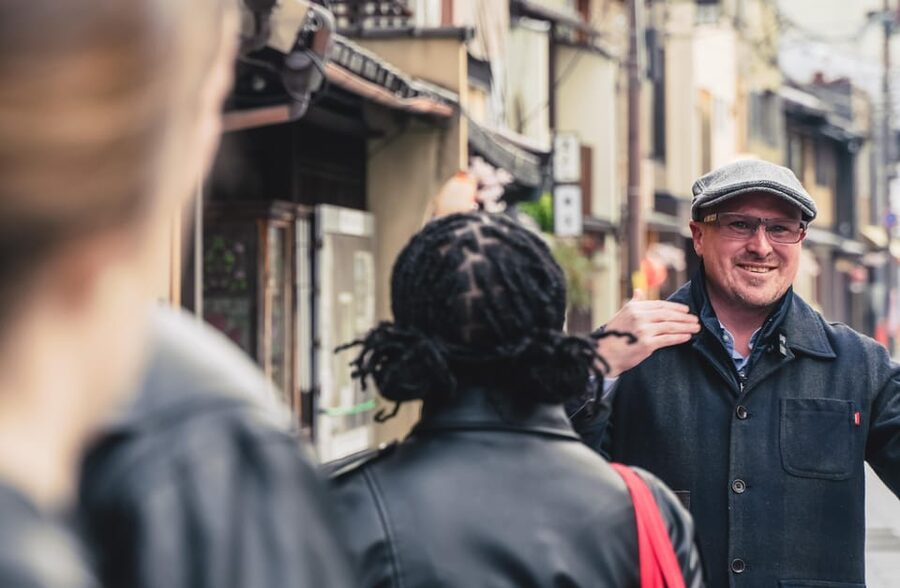
- Bilingual guide in English or French who keeps the story moving at your pace
Why Gion and Miyagawacho matter for geisha culture
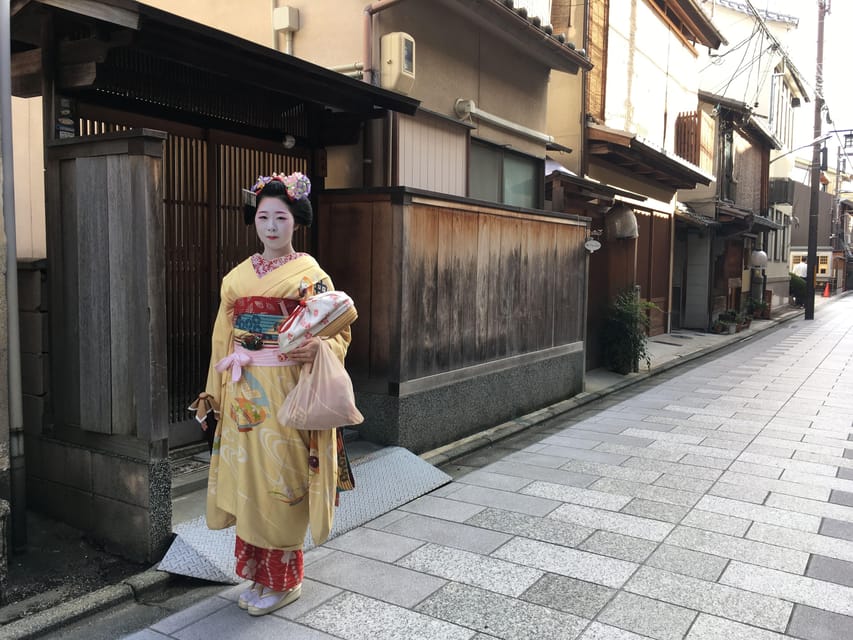
If Kyoto has a postcard face, Gion is often the one people imagine first. But the important thing is this, Gion is not only a set of pretty streets. It is an entertainment district tied to the lives and work of geisha and the hanamachi system that organizes that world.
This tour starts in Miyagawacho, which matters because it’s still part of the living geography of the geisha districts. You are not only walking past sights. You’re learning why certain streets, venues, and rhythms are connected to the culture you came to see.
And you get a guide who focuses on customs, not just costumes. That distinction matters, because geisha culture is full of details that can feel confusing if you only see it from the sidewalk. The tour is built to give you enough background to recognize what you are looking at when the moment appears.
Traveler lounge warm-up: welcome drink, slideshow, and games
The pre-walk portion is where this tour earns its repeat fans. You begin at a traveler lounge in Miyagawacho, right in the heart of the district. You get a welcome drink, then you get background on the world of the geisha.
What I really like here is the format. Instead of an uninterrupted lecture, the tour includes an interactive slideshow plus games tied to geisha traditions. The key point is that the activities help you process the culture quickly. You can absorb more in 15 to 30 minutes when you are doing something, not just listening.
There’s also a specific emphasis on how to imagine a tea house setting. Even if you never step inside one, the tour gives you an idea of what goes on behind the scenes. That means when you later see the tea houses from the street, they don’t feel like random wooden doors. They start to make sense as part of a system.
If you’re the kind of traveler who likes to understand the rules of a place before you photograph it in your mind, this lounge start will feel like a cheat code.
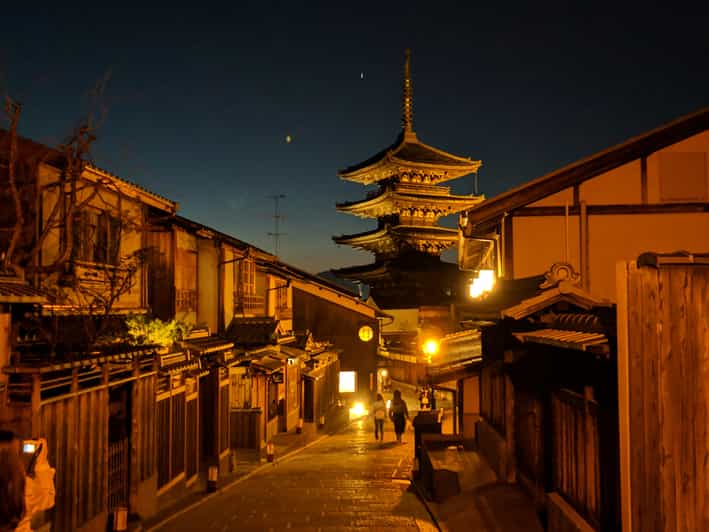
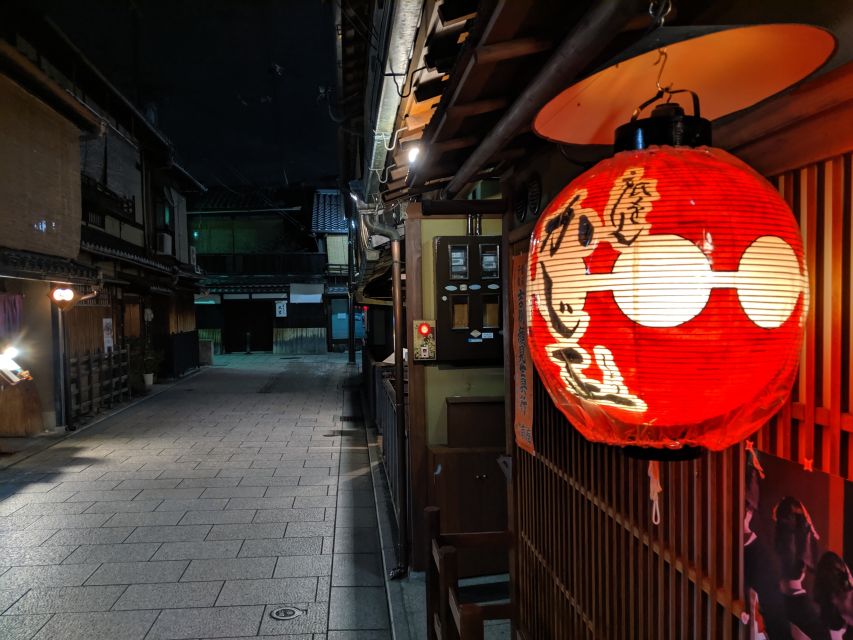
Lantern-lit streets of the geisha quarter
- Kyoto Geisha Walking Tour: Gion District & Hidden Gems
★ 4.7 · 3,273 reviews - Kyoto: Gion Magical Night Walking Tour with Geisha Trivia
★ 4.9 · 2,393 reviews - Kyoto: Gion Geisha District Walking Tour – Stories of Geisha
★ 4.7 · 2,187 reviews - Best of Kyoto: Gion, Geisha, Pagodas & Cobblestones
★ 4.9 · 2,058 reviews
Walking the narrow streets of Gion and Higashiyama

Once the warm-up ends, you hit the road for about an hour of walking through historic, narrow streets. This is the part that most travelers picture, the Kyoto lanes where you can feel the age of the neighborhood.
The tour also focuses on Gion’s hanamachi structure. You visit 4 out of 5 central geisha districts with your guide. That is a meaningful coverage choice. One district can satisfy a casual curiosity, but four districts lets you see how the same tradition can look and feel slightly different across areas.
During the walk, the guide shares history and customs, with a chance to catch a glimpse of women in full costume. Important note: you should treat that as a possibility, not a guarantee. Kyoto is active and layered, and the tour is built around being aware, not controlling outcomes.
This is where the small-group tone helps. Reviews highlight that the experience feels intimate, not like you’re being herded. That matters because the geisha districts are still lived-in neighborhoods. When your group moves smoothly, you notice more.
Kenninji Temple: a calm break in the middle of the story
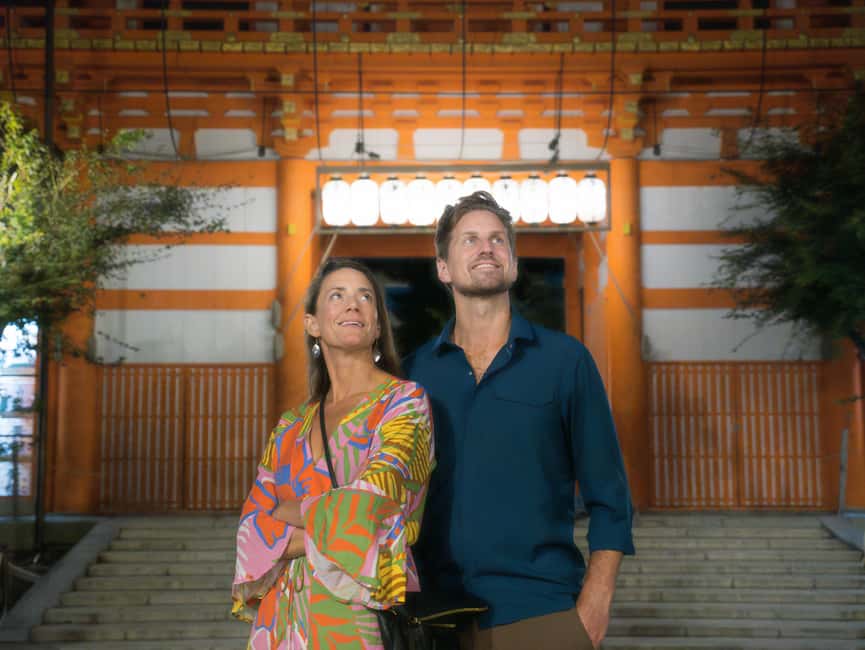
Midway through, you stop at Kenninji Temple for about 15 minutes. On paper, it looks like a simple add-on. In practice, it changes the feel of the tour.
Kyoto’s entertainment districts sit inside a much larger cultural landscape. A temple stop gives you a breather and a reminder that you’re in Higashiyama, not only in an entertainment bubble. It also helps you reset your attention after the geisha-focused storytelling.
At this kind of stop, I like to use the short time the best way possible. Listen for what your guide connects to the tour theme, then look around quietly. Even if you don’t know Japanese architecture terms, you can still see how religious spaces shape the tone of the area.
Yasui Kompira-Gu Shrine: why shrines fit this neighborhood
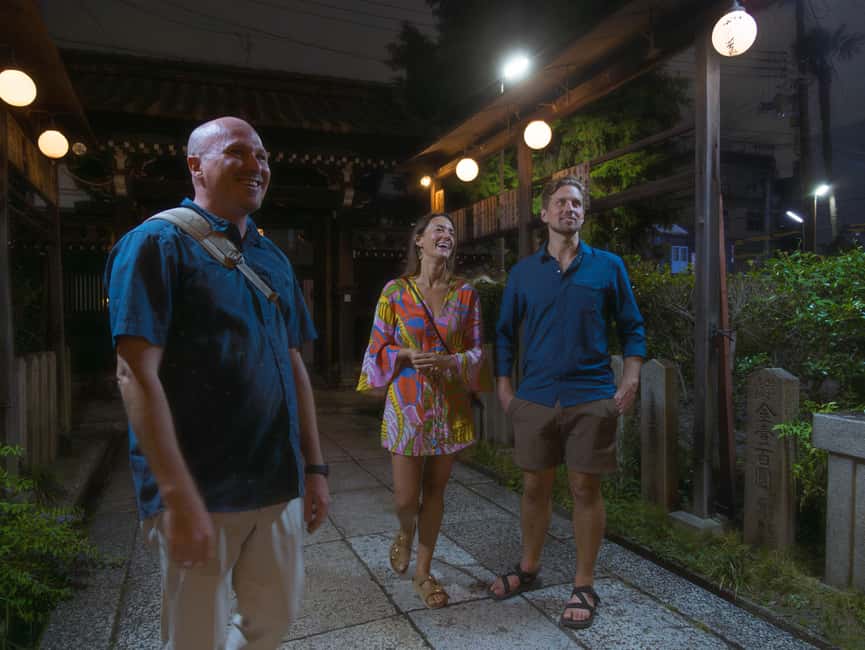
Next is Yasui Kompira-Gu Shrine, again for about 15 minutes. This is another short visit, but it’s the right rhythm. You get a shift from streets and tea houses to a sacred space that feels embedded in daily Kyoto life.
For many visitors, the easiest way to misunderstand geisha culture is to treat it as pure theater. But Kyoto’s districts are not separate from the city’s spiritual and community structures. A shrine stop nudges you toward a bigger picture, one where entertainment districts exist alongside long-established local practices.
This stop is also practical. A shrine pause gives your feet a moment to recover, and it keeps the tour from feeling like a nonstop sidewalk march.
Ninenzaka and Yasaka Shrine: old-street Kyoto with a purpose
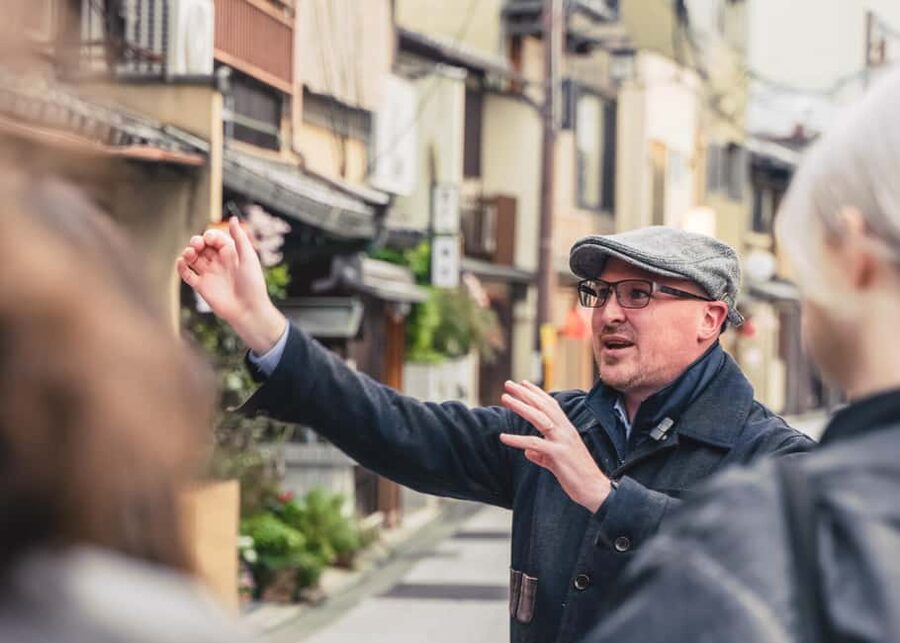
Ninenzaka is next, a guided portion of about 20 minutes. Then you continue to Yasaka Shrine for about 20 minutes.
Ninenzaka is famous for being photogenic, but the tour approach is what you should watch for. You’re not just walking downhill and collecting pictures. The guide brings the geisha district story into the broader Kyoto street scene, so you can connect what you see with where you are in the city.
After that, Yasaka Shrine acts like a natural anchor point. It’s a place where Kyoto visitors tend to gather, and that makes it useful for orientation. The shrine area gives you a final “you are really in Kyoto” moment before the tour wraps up.
One practical thing to keep in mind: Ninenzaka-style streets can involve uneven surfaces and lots of stepping. You don’t want this tour if mobility is an issue, and it’s smart to wear shoes you trust.
A quieter way to spend a day in Kyoto



The big takeaway: customs, etiquette, and how to look respectfully
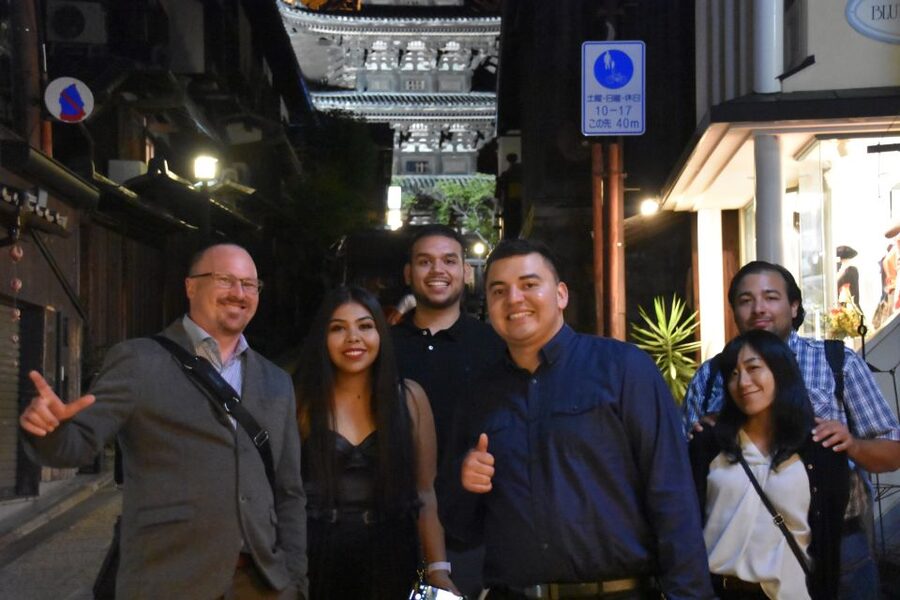
The tour promises more than views. It’s really about learning how to interpret what you’re seeing.
Geisha culture has layers, and costumes are only one layer. Your guide’s focus on history and customs helps you avoid the common mistake of treating the geisha world like a costume party. Instead, you start to understand it as a structured tradition with etiquette, timing, and community context.
You also get help from the lounge warm-up. When you later spot tea houses and you see the atmosphere of different corners of the district, you’re not trying to connect dots from scratch. The “why” is already in your head.
If you do catch a glimpse of women in full costume, the best move is simple. Be aware of your surroundings, keep your pace respectful, and follow whatever your guide tells you about how to behave. Even when it feels like a once-in-a-lifetime scene, the district still runs on real life.
Tea houses: seeing hundreds without feeling lost
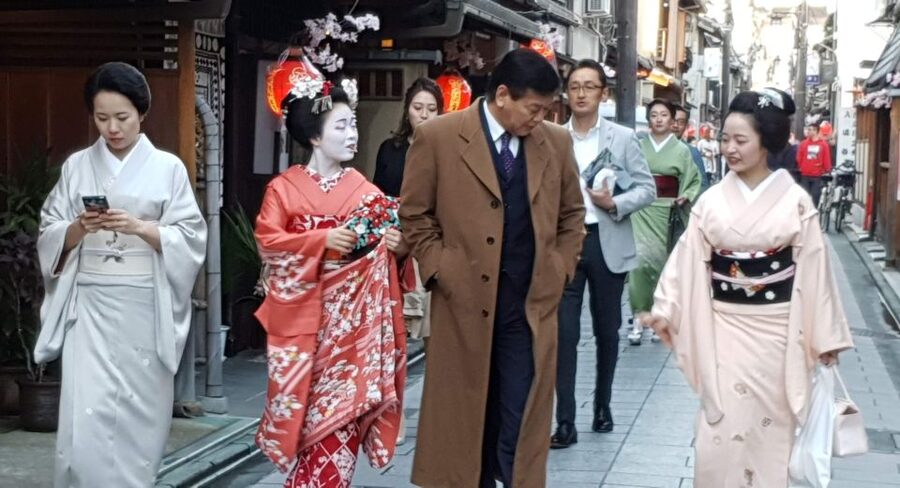
One of the most specific claims is that you visit all the central geisha districts and see hundreds of real tea houses as you go. That’s the kind of thing that could sound vague, like you’ll pass by lots of doors.
Here’s why it can be meaningful for you: tea houses are part of the geography of the entertainment districts. If you only walk without context, you might remember the atmosphere but miss the pattern. With a guide focused on customs and the hanamachi system, you can start to notice how these buildings and streets relate to each other.
I also like that this tour is structured around observation. You’re not just ticking off stops. You are learning where to look and what those sights represent.
Price and value for a $38, 2-hour experience
At $38 per person for 2 hours, the price is aiming squarely at guided storytelling, not transport or a long ticketed attraction.
Here’s where the value comes from:
- You get a bilingual guide (English and French available)
- You get a guided walk covering Gion and Higashiyama districts
- The lounge includes a welcome drink
- You get interactive elements, like the slideshow and geisha-themed games
- You cover multiple central geisha districts, not only one
- You also get temple and shrine stops that broaden the experience beyond a single neighborhood
If you’re traveling with someone who wants the culture angle and not just a photo run, this can feel like a fair deal. If you only want sightseeing views, you might find it too culture-heavy and not enough “big ticket” stops.
One more point: you finish with dinner help. That kind of practical local guidance can save you time when you’re ready to eat, especially if you want to stay near the geisha districts.
Group size, guide style, and what reviews suggest
This tour runs in private or small groups. That’s a real benefit for a subject like geisha culture, where questions matter. You’re more likely to get your guide’s attention, and you can move at a pace that lets you actually look, not just walk fast for photos.
The reviews you’ll find for this tour also emphasize guide quality. One review specifically mentions Kevin, praising his knowledge not only about geisha but also broader Japanese history and culture. Another review calls out that the guide was very knowledgeable and the group was small.
Even without knowing your guide in advance, the format suggests you’ll get someone who explains the context. The story is the product here, and the tour is designed so you can understand it quickly.
Weather and comfort: how to prepare for a 2-hour walk
There’s a practical reality to this type of tour. When it rains, walking for close to an hour plus multiple outdoor streets can be less fun, and you can end up wet by the time you finish.
You can’t control the forecast, but you can control your comfort. Bring a compact umbrella or a light rain layer, and plan for some street-level weather exposure. Wear shoes that handle slick pavement.
Also, keep expectations flexible. A geisha-focused walking tour is about being present and attentive, so if you’re miserable from the cold or wet, it can shrink your enjoyment.
Who should book this Kyoto geisha district walking tour
You should book if:
- Geisha culture is your main reason for visiting Kyoto
- You want more than crowded sidewalk wandering
- You like guided context that helps you understand what you’re seeing
- You’d rather learn in a lounge first, then apply that knowledge on the street
You should think twice if:
- You have mobility challenges. The tour isn’t suitable for people with mobility impairments.
- You dislike walking in older streets or uneven surfaces.
- You want an art-history museum plan rather than culture and customs.
This tour is best for first-time visitors who want a clear, focused introduction, and it also works for repeat visitors who want a more interpretive angle on Gion.
Should you book this tour?
If your heart says Gion, book it. The tour is built around understanding, not just sight-seeing. The lounge warm-up with a welcome drink and geisha-themed interactive activities is a smart way to make the walking portion feel intentional. Then the route gives you a mix of geisha district context plus temple and shrine stops, so you leave with a bigger picture of Kyoto, not only a narrow slice.
But if you’re looking for a fully weather-proof experience or you have mobility limitations, it may not fit. In that case, you’ll likely be happier choosing something more indoor or more accessible.
If geisha customs, hanamachi geography, and tea house streets are the reason you booked Kyoto, this is a very reasonable way to spend two hours.
FAQ
How long is the Kyoto Geisha Districts walking tour?
It lasts 2 hours.
Where does the tour start?
The meeting point can vary depending on the option booked. One listed starting option is Kyoto Fun, 河松マンション, and the tour also starts at a traveler lounge in Miyagawacho.
What areas will we explore?
You’ll explore Gion and Higashiyama, including central geisha districts. The route includes visits across 4 out of 5 hanamachi areas and several major stops along the way.
Which stops are included besides the geisha districts?
The tour includes Kenninji Temple, Yasui Kompira-Gu Shrine, Ninenzaka, and Yasaka Shrine.
Is the guide available in more than one language?
Yes. The live tour guide is available in English and French.
What is included in the price?
You get a guided walk of the Gion and Higashiyama districts and a bilingual guide. You also get a welcome drink, plus the tour includes an interactive slideshow and games as part of the lounge portion.
Is this tour suitable for people with mobility impairments?
No, it is not suitable for people with mobility impairments.
New This Season
- Koyasan Day Trip by Private Car from Kyoto
- Old Port Town and Ultimate Sake Tasting Private Tour From Kyoto
- Kyoto’s Timeless Charm: 3hr Exploration of History and Peace
- Kyoto: 5 Types of Sushi Making
- Sacred Peak & Ancient Paths: Kurama-Kibune Hiking Experience
- Kyoto: Exclusive ZEN practice at Manpukuji temple in Uji
- Kyoto: Private Seasonal Aroma Yoga Class
- Traversing Kyoto’s Scenic West – Arashiyama to Kinkakuji
Gion Geisha Quarter Walks, compared.
Kyoto Geisha Walking Tour: Gion District & Hidden Gems
Read our review →
Gion Magical Night Walking Tour with Geisha Trivia
Read our review →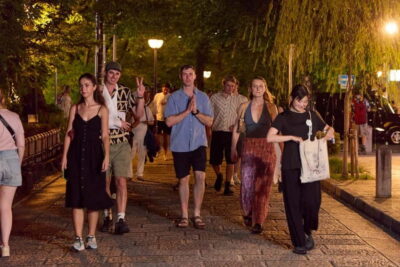
Gion Geisha District Walking Tour – Stories of Geisha
Read our review →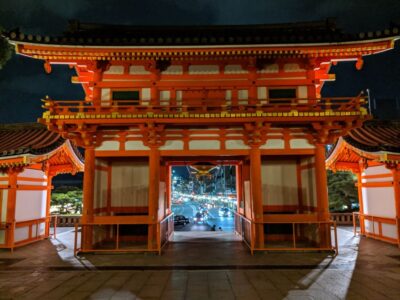
Best of Kyoto: Gion, Geisha, Pagodas & Cobblestones
Read our review →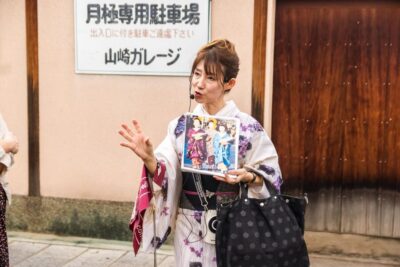
Kyoto Night Foodie Tour in Gion (9+ dishes + 6 Sake tastings)
Read our review →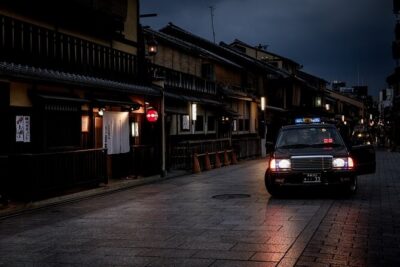
Kyoto Gion Geisha District Walking Tour – The Stories of Geisha
Read our review →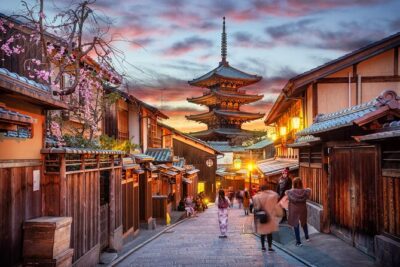
Kyoto Gion: 2-Hour Geisha Culture & History Walking Tour
Read our review →Also filed under