
Reviewed · WALKING TOURS
Private & Custom KYOTO Walking Tour – your Travel Companion
Kyoto can overwhelm you fast, even with a map. This private, tailor-made walking day gives you an English-speaking companion and handles navigation so you can focus on temples, shrines, and the city’s small details. If you like structure without rigidity, it is a solid way to build a Kyoto day around your interests, not somebody else’s checklist.
I especially like the custom itinerary angle, because it means you can steer the day toward what you care about most. I also like the practical help built into the experience, from managing the route to assisting with photos, ticketing, and even communicating with local vendors and booking meals. Those little things matter a lot in Kyoto, where the fastest route is not always the obvious one.
One possible drawback: it is a full walking day, and entrance fees are not included, so your total cost will depend on how many paid sites you choose to enter.
In This Review
- Key things I’d bookmark before you go
- How this private Kyoto walk actually feels
- Pickup, mobile ticket, and the day’s rhythm
- Kinkaku-ji Golden Pavilion: morning magic, but plan for paid entry
- Kiyomizu-dera Pure Water Temple and its 13-meter stage
- Sanneizaka and Ninenzaka lanes, then Yasaka Shrine to reset the pace
- Fushimi Inari-taisha: a short torii tunnel hit
- Arashiyama: bamboo forest and Tenryuji Temple in a focused hour
- Nishiki Market shopping street, plus a Gion snapshot
- Ginkaku-ji Silver Pavilion and Sanjusangendo’s 1001 Kannon statues
- Kyoto Imperial Palace and Nijo Castle: where the power story shows up
- Eikando Zenrinji Temple: a late-day temple that tends to reward patience
- Price and value: what $265.82 per group buys you
- Guide quality matters more than you think
- Who should book this Kyoto private walking companion
- Should you book this Kyoto walking tour?
- FAQ
- How long is the private Kyoto walking tour?
- How big is the group?
- Is pickup available?
- Is there a mobile ticket?
- Are entrance fees included for the temples and shrines?
- Where does the tour end?
- When does the tour operate each day?
- Is it only for people who need English help?
- Can I get a refund if I cancel?
Key things I’d bookmark before you go
- A private guide, not a group shuffle: Up to 5 people means the route can flex around your pace.
- Navigation support that saves time: You get help with getting oriented so you do not waste daylight finding your next turn.
- Paid sights add up: Several top stops list admission tickets as not included.
- Big Kyoto highlights, plus classic streets: Golden Pavilion, Pure Water Temple, torii gates, bamboo, and Gion all fit in one long day.
- Real-world assistance: Expect help with photos, communication, and ticket or itinerary planning.
How this private Kyoto walk actually feels
This tour is designed to remove the most stressful part of sightseeing: figuring out where to go next. Instead of you chasing trains, buses, and signage, your guide keeps the day moving with an order that makes sense on foot and by timing.
What makes it interesting is the balance between famous Kyoto stops and the “in-between” moments that make the day feel real. You do not just arrive, take a photo, and leave. You get time in places like the preserved street districts and you end up seeing neighborhoods that look like they belong to another century.
Pickup, mobile ticket, and the day’s rhythm
Pickup is offered, and the tour ends back at the meeting point. That matters because in Kyoto, you often lose time simply getting back to where you started. There is also a mobile ticket, which keeps things simpler when you are matching timing for temples and shrines.
The tour runs about 8 hours, and it fits inside a broad daily window (6:00 AM to 10:00 PM). In practice, that means you should expect a long day, with time split between sightseeing and walking time between areas.
Also, because it is private for your group only (up to 5), you are not dealing with the stop-start energy of bigger group tours. If your group wants to slow down for photos or pause to ask questions, you can usually do it.
A quieter way to spend a day in Kyoto
- Kyoto Geisha Walking Tour: Gion District & Hidden Gems
★ 4.7 · 3,273 reviews - Kyoto: Gion Magical Night Walking Tour with Geisha Trivia
★ 4.9 · 2,393 reviews - Kyoto: Gion Geisha District Walking Tour – Stories of Geisha
★ 4.7 · 2,187 reviews - Night Walk in Gion: Kyoto’s Geisha District
★ 4.5 · 2,003 reviews
Kinkaku-ji Golden Pavilion: morning magic, but plan for paid entry
Kinkaku-ji is the type of Kyoto site that looks unreal in photos, and somehow still lives up to the camera. It is a Zen temple connected to Ashikaga Yoshimitsu, and the background story gives the building extra weight beyond its shine.
You typically get about 30 minutes here. That is enough time to see it from the classic viewpoints and take a few photos without feeling rushed, but it is not enough for deep wandering in every corner.
One practical note: admission is not included for this stop. So if Kinkaku-ji is one of your top priorities, budget for the ticket and do it early, when lines and crowd intensity often feel more manageable.
Kiyomizu-dera Pure Water Temple and its 13-meter stage
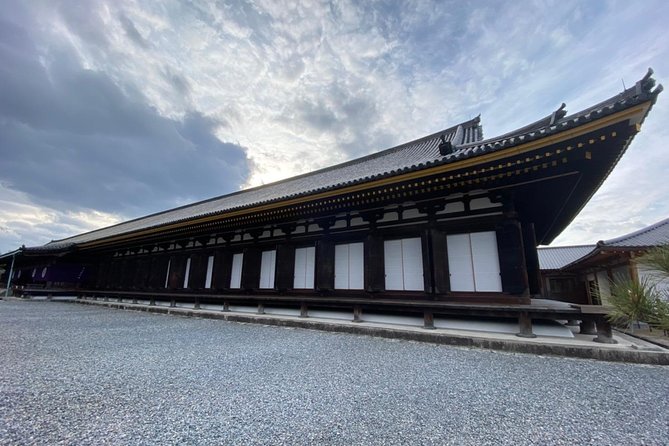
Kiyomizu-dera is one of Kyoto’s signature temple scenes, mainly because of its dramatic wooden stage. The stage juts out from the main hall, about 13 meters above the hillside, and that elevation makes the views feel like part of the experience.
You get around 45 minutes here. That feels right for walking the main areas, absorbing the architecture, and taking in the atmosphere around the temple. It also gives you time to notice the transition from temple space to the streets below, which is where the day starts to feel more like Kyoto than just tourism.
Again, admission is not included. Still, this stop is the kind that justifies paying for entry if it is on your must-see list.
Sanneizaka and Ninenzaka lanes, then Yasaka Shrine to reset the pace
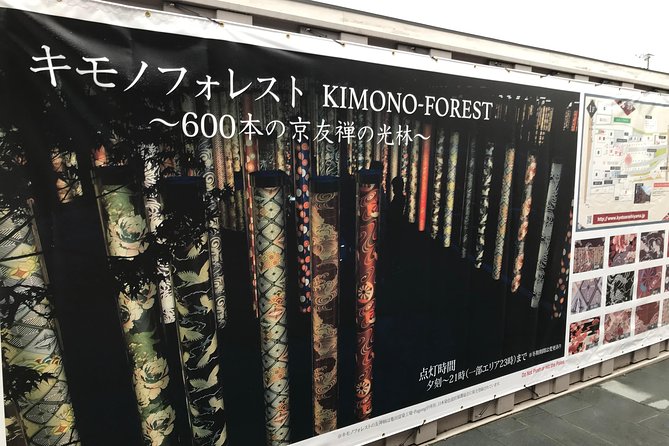
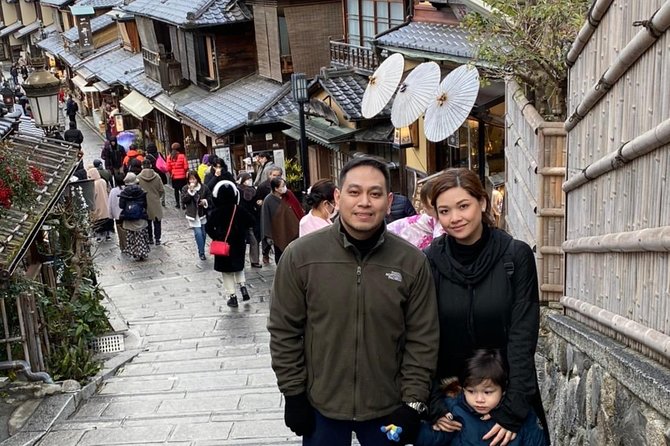
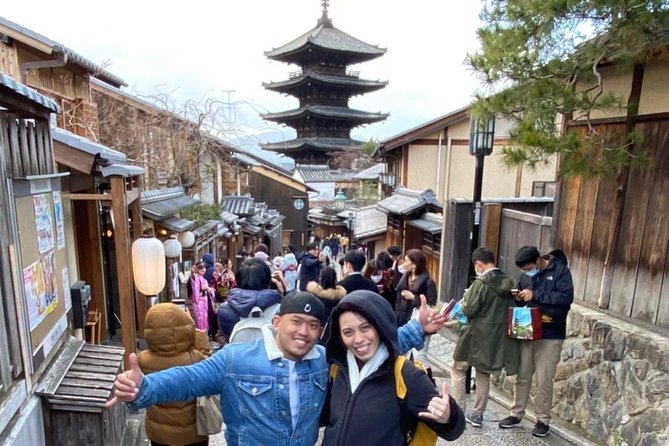
After Kiyomizu-dera, you shift into the preserved street districts of Sannenzaka and Ninenzaka. These lanes are where Kyoto feels textured, not scripted. You can slow down, look at traditional storefronts, and let the streets do some of the storytelling for you.
You get about 45 minutes for these lanes, and admission is free. That time is useful because you can browse, snack, and pause for photos without feeling like every minute costs money.
Then you move to Yasaka Shrine, also known as the Gion Shrine. It is tied to the Gion Matsuri, which happens every July and is the country’s best-known festival. You typically spend about 30 minutes here, which is long enough to see the key areas and then continue without getting stuck in one spot too long.
Admission is not included for Yasaka Shrine on this schedule, so expect a paid entry possibility depending on what you choose to access.
Fushimi Inari-taisha: a short torii tunnel hit
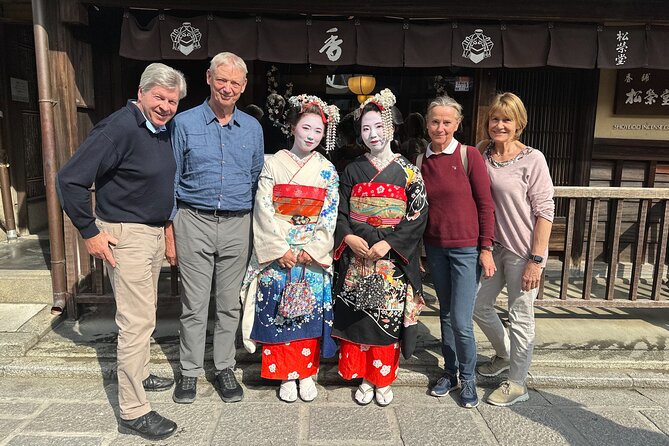
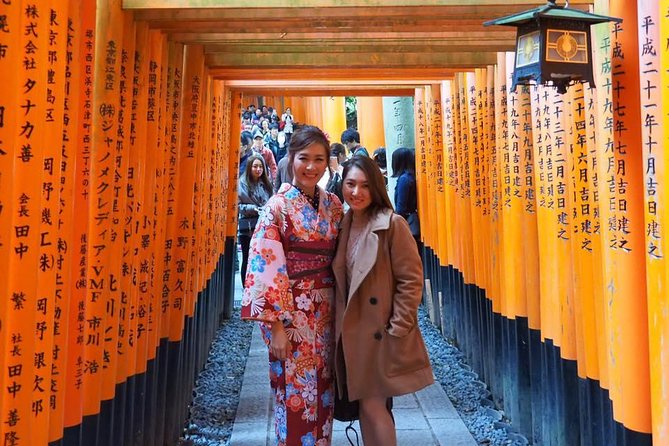
Fushimi Inari-taisha is the “thousand torii gates” experience, and even a quick visit feels dramatic. The torii straddle trails behind the main shrine, so you get that layered, tunnel effect people come for.
Here you only have about 15 minutes, and admission is free for this stop. That is a fast hit, not a full hike up and down every path. So if you want more of the back trails, you may want to ask your guide to adjust how you spend this window.
This is also where your guide’s navigation help really pays off. The best photo angle is not always the most obvious one from the gate you first enter.
A day of temples goes further with something to break it up.
Arashiyama: bamboo forest and Tenryuji Temple in a focused hour
Arashiyama is Kyoto’s famous western district, known for temples, shrines, and the bamboo scenery that pulls visitors in. If you want Kyoto’s postcard moments, this is usually the place they come from.
Your time here is about 1 hour, including the bamboo forest and Tenryuji Temple. The schedule highlights Tenryuji as one of Kyoto’s five Zen temples founded in 1339, which adds context once you are inside and paying attention to what you are seeing.
Admission is not included for this stop, so budget for tickets if your route includes paid access areas. Also, an hour in Arashiyama can feel both perfect and too short, depending on crowds and weather. The advantage of having a private guide is you can keep moving efficiently without abandoning the key sights.
Nishiki Market shopping street, plus a Gion snapshot
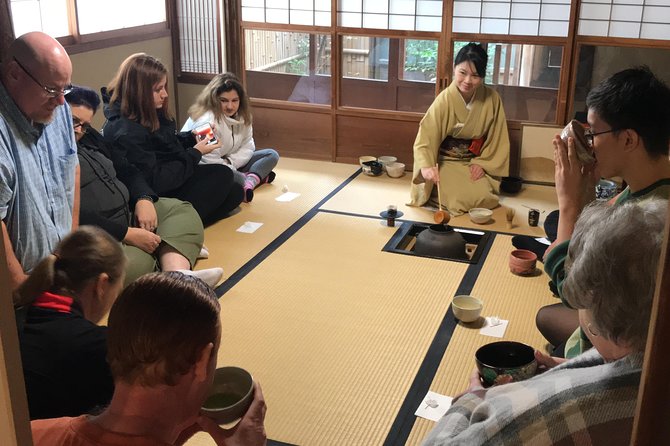
Nishiki Market is known as Kyoto’s kitchen, with more than one hundred shops and restaurants lined along a narrow stretch. This is where you can grab small bites, look at packaged goods, and get a sense of what locals pick up during the day.
You get about 40 minutes here, and it is free to explore. That makes Nishiki a great “reset stop” because it adds texture to the day and gives you a natural break between temple clusters.
Then you head to Gion for about 30 minutes. This is Kyoto’s famous geisha district area, and even if you do not catch a performance moment, the streets and atmosphere tell you why Gion became a symbol of old Kyoto.
Since this portion is free, it is an efficient use of time. Still, it is not a full deep-dive neighborhood visit, so keep expectations realistic and use the time to walk, people-watch, and photograph respectfully.
Ginkaku-ji Silver Pavilion and Sanjusangendo’s 1001 Kannon statues
After Gion, you move to Ginkaku-ji, the Silver Pavilion. It was built by Ashikaga Yoshima, the grandson of the same Ashikaga family figure tied to Kinkaku-ji. That connection is helpful because the day starts to feel like a timeline, not just a set of unrelated stops.
You get about 30 minutes here, and admission is not included. Ginkaku-ji often feels calmer than Kinkaku-ji. That makes it a good pairing later in the day, when you want beauty without feeling like you are in a photo stampede.
Then comes Sanjusangendo, famous for its 1001 statues of Kannon, the goddess of mercy. You spend around 30 minutes here. This stop is different from the flashier visual effect of torii gates or bamboo, but it hits emotionally because you see how many statues fill the space.
Admission is not included for this temple. If you are the type who likes spiritual sites that reward attention, this is one of the stops that can linger in your memory.
Kyoto Imperial Palace and Nijo Castle: where the power story shows up
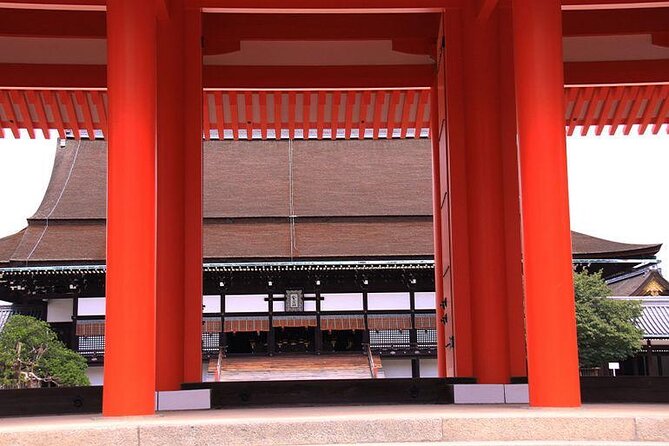
Kyoto Imperial Palace is one of the areas that helps you understand why Kyoto mattered beyond culture and scenery. The palace used to be the residence of Japan’s Imperial Family until 1868, when the emperor and capital moved to Tokyo.
You get about 30 minutes here, and it is listed as free. That free entry makes it an efficient stop, especially on a day when paid tickets can start stacking up.
Next is Nijo Castle, built in 1603 as Tokugawa Ieyasu’s Kyoto residence, with palace buildings completed by his grandson Iemitsu. You spend about 45 minutes here, and admission is not included.
This is a good contrast to the more devotional feeling of shrine and temple stops. Castle architecture gives you a different layer of Kyoto, one tied to governance and the political story of the Edo period.
Eikando Zenrinji Temple: a late-day temple that tends to reward patience
Eikando Zenrinji Temple, also called Eikando, is tied to the Jodo sect of Japanese Buddhism. The schedule points out it is especially famous in autumn, which hints at why people plan Kyoto visits around seasonal timing.
You get about 45 minutes here, with admission not included. Late in the day is often when you can appreciate details more calmly, since the lighting shifts and your feet start telling you when to slow down.
If your guide has flexibility in timing, Eikando can be a great spot to settle into a more reflective pace, rather than rushing.
Price and value: what $265.82 per group buys you
The price is $265.82 per group for up to 5 people, for roughly 8 hours. That pricing is not about covering admission fees, because entrance tickets are not included. It is about the guide, the private pacing, and the planning and navigation support.
So the value equation depends on your group size and your travel style:
- If you are traveling as 3 to 5 people, the per-person cost often feels more reasonable than solo tours, because you are splitting the private guide price.
- If you care about minimizing confusion and want help with tickets, vendor communication, and routing, you are paying for saved time and stress, not just walking company.
- If you want only the free areas and skip most paid temples, the cost may feel steep, because much of the day is built around big-name sites that often require tickets.
I think the biggest value is not the sightseeing alone. It is the fact that the day is built to keep you oriented so you spend energy looking at Kyoto, not figuring out Kyoto.
Guide quality matters more than you think
A tour like this lives or dies by the guide’s ability to explain what you are seeing and keep the day moving. Some companions are praised for patience and helpful answers, and you can feel the difference immediately when questions come up about shrines, daily etiquette, or how to order food.
One practical approach: decide your top priorities before you meet. If you walk in with a few “musts” and a few “nice-to-haves,” you make it easier for your guide to tailor the day well.
If you want the day to feel smooth, ask early how you will handle paid entrances and where you might need extra time. That way, you can avoid a last-minute scramble when crowds or ticket lines slow things down.
Who should book this Kyoto private walking companion
This is a good fit if you:
- Want a first-timer-friendly day that still feels personal.
- Prefer private routing over group tours with matching everyone’s pace.
- Appreciate support with logistics like navigating and handling tickets.
- Are traveling in a small group of up to 5 and can split the group price.
It may be less ideal if you want an itinerary you can fully control day-of-day without any guidance. Since the experience is structured around specific stops and timing blocks, you should be ready to follow a plan even if it is tailored.
Should you book this Kyoto walking tour?
Book it if you want Kyoto organized for you, with an English-speaking guide who can help you enjoy famous sites without losing time to confusion. It is also a strong pick for small groups who want the freedom of private time while still benefiting from local knowledge and practical support.
Skip it or reconsider if entrance fees are a big concern and you plan to avoid most paid sites, or if you dislike long walking stretches through multiple districts. In that case, you might prefer a shorter-focused tour built around fewer paid landmarks.
If you do book, your best move is simple: pick your top 3 sights before you arrive, wear comfortable shoes, and treat the guide as a problem solver, not just a walking companion.
FAQ
How long is the private Kyoto walking tour?
The tour duration is listed as about 8 hours.
How big is the group?
It is a private tour/activity, and your group is the only group participating. The tour is up to 5 people per group.
Is pickup available?
Pickup is offered.
Is there a mobile ticket?
Yes, a mobile ticket is included.
Are entrance fees included for the temples and shrines?
No. Entrance fees are not included. Some stops are marked as free, while others require admission tickets.
Where does the tour end?
The activity ends back at the meeting point.
When does the tour operate each day?
The hours listed are Monday through Sunday from 6:00 AM to 10:00 PM.
Is it only for people who need English help?
The tour is designed to reduce language barriers with an English-speaking guide.
Can I get a refund if I cancel?
No. The experience is non-refundable and cannot be changed for any reason. If you cancel or ask for an amendment, the amount paid will not be refunded.
New This Season
- Koyasan Day Trip by Private Car from Kyoto
- Old Port Town and Ultimate Sake Tasting Private Tour From Kyoto
- Kyoto’s Timeless Charm: 3hr Exploration of History and Peace
- Kyoto: 5 Types of Sushi Making
- Sacred Peak & Ancient Paths: Kurama-Kibune Hiking Experience
- Kyoto: Exclusive ZEN practice at Manpukuji temple in Uji
- Kyoto: Private Seasonal Aroma Yoga Class
- Traversing Kyoto’s Scenic West – Arashiyama to Kinkakuji
Walking Tours, compared.
Kyoto Geisha Walking Tour: Gion District & Hidden Gems
Read our review →
Gion Magical Night Walking Tour with Geisha Trivia
Read our review →
Gion Geisha District Walking Tour – Stories of Geisha
Read our review →
Kyoto Gion Geisha District Walking Tour – The Stories of Geisha
Read our review →
Nishiki Market Brunch Walking Tour (7 Tastings + Brunch)
Read our review →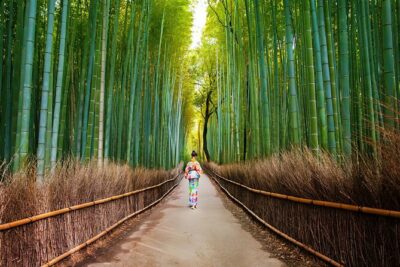
Kyoto Arashiyama Walking Tour: Bamboo, Monkeys, Gardens & Secrets
Read our review →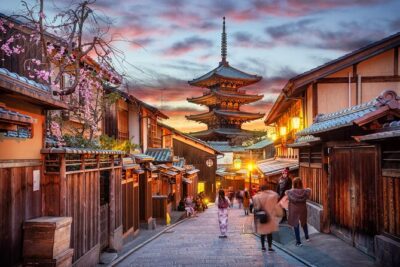
Kyoto Gion: 2-Hour Geisha Culture & History Walking Tour
Read our review →Also filed under