
Reviewed · GION GEISHA QUARTER WALKS
Private Kyoto Geisha Districts Walking Tour
Kyoto changes when you walk the geisha streets.
This private, English-guided half day pairs the quiet weight of Zen at Kennin-ji with the narrow lanes and old-street atmosphere of Pontocho, Miyagawacho, and Gion, so you experience the city at a human, walking pace. It is built for people who want more than photos, you also get the context for what you are looking at, even when you are just standing on a side street.
I love two things here. First, you get a real temple stop with admission fee included for one location, which matters when you want the visit to feel complete and not like an outside-only pass. Second, the tour is led by an English-speaking local guide, and the best part is how they help you notice the small signals around geisha districts, rather than leaving you to guess what is important.
One consideration: this tour does not guarantee you will see or meet a geisha or maiko. You might get that luck in Miyagawacho, but you should treat sightings as a bonus, not the main course of the outing.
In This Review
- Key highlights worth your attention
- The smart way to do Kyoto’s geisha districts on foot
- Kennin-ji Temple: Zen calm and the Rinzai connection
- Pontocho in a nutshell: a narrow lane between river and street
- Miyagawacho Koan: the geisha and maiko culture hotspot
- Gion’s two-hour walk: major lanes, big impressions
- Guides that make the street scenes click
- Price and value: is $234.11 a good deal for a private tour?
- What is not included, and how to plan around it
- Weather matters more than you think
- Should you book this Kyoto geisha districts walking tour?
- FAQ
- Is a geisha or maiko sighting guaranteed?
- How long is the walking tour?
- Which stop includes an entrance ticket?
- Are there any admission fees for the other districts?
- Where does the tour start and end?
- Is lunch or transportation included?
Key highlights worth your attention
- Kennin-ji Temple entry included: a focused stop at one of Kyoto’s oldest Zen temples
- Pontocho’s riverside alley feel: a short walk through a classic old Kyoto corridor
- Miyagawacho Koan timing and vibe: the district where geisha and maiko culture is most expected
- A longer Gion segment: about two hours to cover the major lanes at walking speed
- Private group experience: only your group participates, with an English-speaking guide
- Mobile ticket included: fewer hassles when you arrive near Gion-Shijo Station
The smart way to do Kyoto’s geisha districts on foot
This tour is about 4 hours and it moves at a pace that feels designed for seeing details, not just checking boxes. You start near Gion-Shijo Station, and the route loops back to the same meeting spot. That matters because Kyoto can be confusing on your own, and one wrong turn can turn a smooth walk into a late, stressed walk.
The private part is also a big quality-of-life upgrade. With only your group participating, you can ask questions and slow down when something catches your eye. You do not have to keep up with strangers who are racing for landmarks. If you are traveling with family, or you just like having your own rhythm, this structure tends to feel calmer.
You also get a mobile ticket, and you do not need to worry about printed vouchers. Just keep your phone handy, arrive on time, and you are set.
Kennin-ji Temple: Zen calm and the Rinzai connection
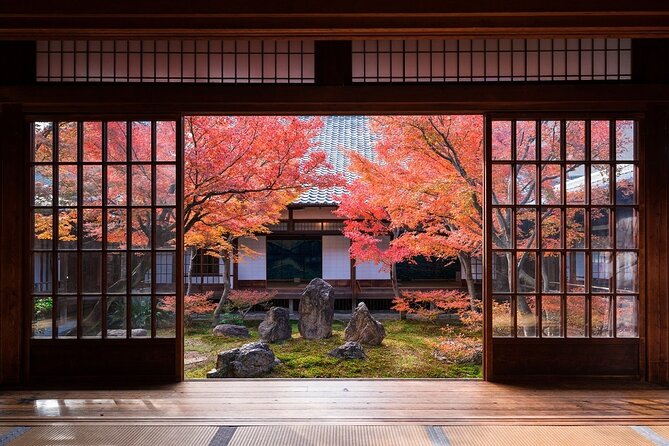
The first stop is Kennin-ji Temple, with about 45 minutes and admission included. Kennin-ji is one of Kyoto’s oldest Zen temples, founded in 1202 by the monk Eisai, who is credited with introducing the Rinzai sect of Zen Buddhism to Japan. That is the kind of origin detail that makes the grounds feel more than just pretty scenery.
What I like about this stop is the contrast it sets. Before you go hunting for geisha district atmosphere, you start with quiet. You get a sense of how Kyoto holds multiple moods at once: prayerful stillness next to nightlife lanes, old scholarship next to modern travel routes.
A possible drawback is simple: a temple stop takes focus. If you are looking for nonstop street scenes, you might wish the early part ran faster. Still, that is exactly why the rest of the walk lands better. After you have a bit of Zen calm in your body, the lantern-lit alley energy you are heading toward feels more vivid.
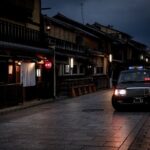
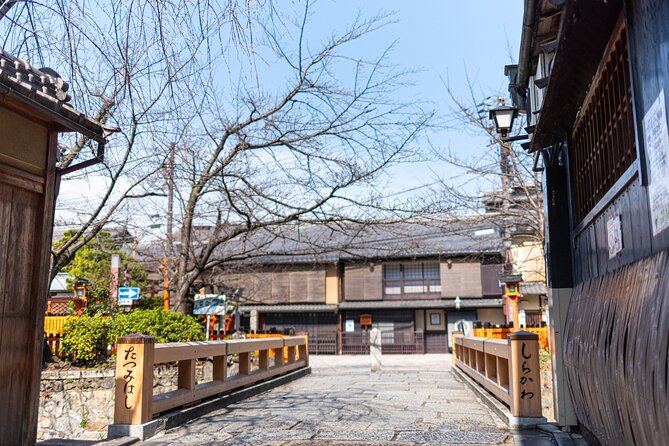
Lantern-lit streets of the geisha quarter
- Kyoto Geisha Walking Tour: Gion District & Hidden Gems
★ 4.7 · 3,273 reviews - Kyoto: Gion Magical Night Walking Tour with Geisha Trivia
★ 4.9 · 2,393 reviews - Kyoto: Gion Geisha District Walking Tour – Stories of Geisha
★ 4.7 · 2,187 reviews - Best of Kyoto: Gion, Geisha, Pagodas & Cobblestones
★ 4.9 · 2,058 reviews
Pontocho in a nutshell: a narrow lane between river and street
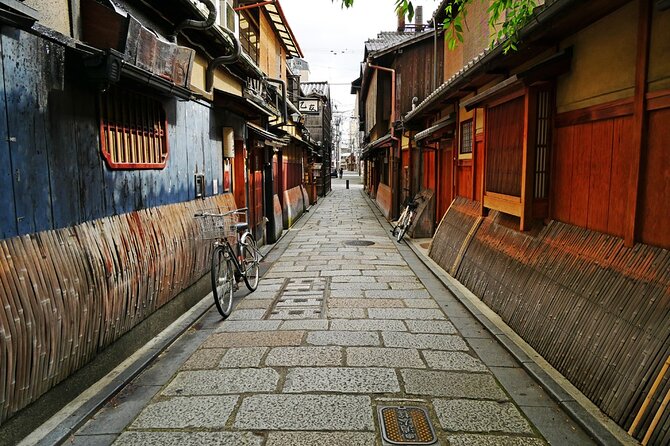
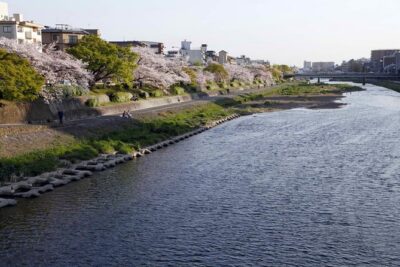
Next comes Pontocho District, about 30 minutes and free to enter. Pontocho sits between the Kamogawa River and Kiyamachi Street, and it is famous for traditional wooden buildings along a narrow alley.
This is a great moment in the tour because it is short. You get to experience the classic Pontocho look without getting stuck in a place too long. Think of it as a palate cleanser between major districts. You can slow your pace, look up at building lines, and watch how the alley frames movement.
Also, because it is only a brief stop, you can use it to orient yourself. Once you understand how Pontocho’s layout works, the rest of the walking feels less random, and the guide’s explanations make more sense.
Miyagawacho Koan: the geisha and maiko culture hotspot
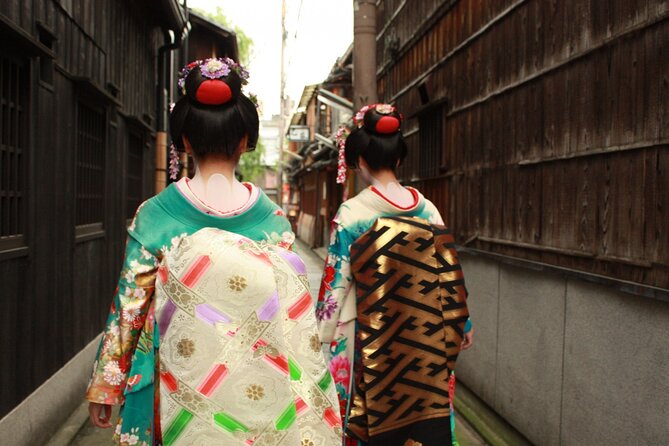
The third stop is Miyagawacho Koan, about 30 minutes, also free. This is where the tour really leans into geisha and maiko culture. The district is known for that world, and seasonal events and performances can be especially noticeable, including spring Miyako Odori.
Here is the practical truth: this is one of the best places on the route for the possibility of seeing a geisha or maiko. You are not guaranteed anything, but if your timing and luck line up, this is where you are most likely to notice signs that the area is active in the way visitors dream about.
A key point for managing expectations is that the district atmosphere is what you are paying for as much as any sighting. Even if you do not see anyone in motion, your guide can help you understand what to look for, like why certain lanes feel more formal and why some spots feel like they are used for respectful arrivals and departures.
Gion’s two-hour walk: major lanes, big impressions
The final and longest stop is Gion, about 2 hours and free to enter. This part is where the tour earns its keep, because two hours is long enough to actually walk the lanes, absorb the scale, and not feel like you are being rushed past the good parts.
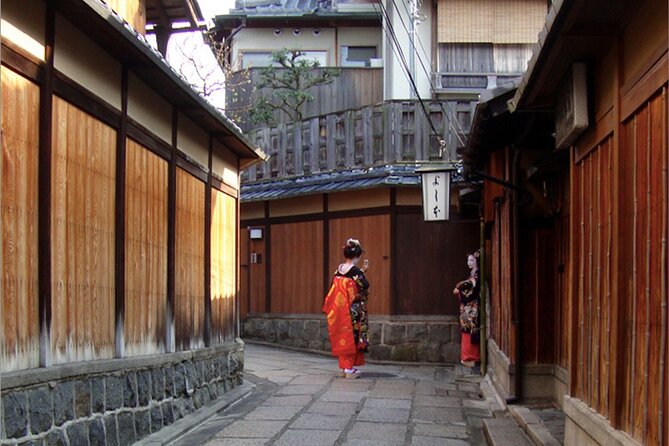
You will stroll through three of the most famous geisha districts in Kyoto. Along the way, the tour includes establishments significant to the city’s history. You also walk the pathways of Gojyorakuen, a place once known as one of the more notorious red light areas. That blend of art, tradition, and difficult history is part of why Gion matters.
One reason this section works well is that it is long enough for the guide to do more than point. A good guide here helps you see that geisha culture is not just costumes. It connects to training, performance schedules, and the way neighborhoods evolved. You start seeing how the street layout and building types serve that social world.
This is also the part of the day where weather and lighting matter most. If your timing lands you in good conditions, you will feel the Gion vibe more strongly. If it is rainy or too windy, you will still get the walk, but you may move a bit faster, and your ability to linger for atmosphere takes a small hit.
Guides that make the street scenes click
The tour lives or dies on the guide. The positive pattern in the experience is consistent: guides are punctual, friendly, and they steer you toward places you likely would not choose on your own. Names you may encounter include Koichiro, Mickey, and Yuko, and the common thread is how they share context so you do not just stare at buildings, you understand what the buildings represent.
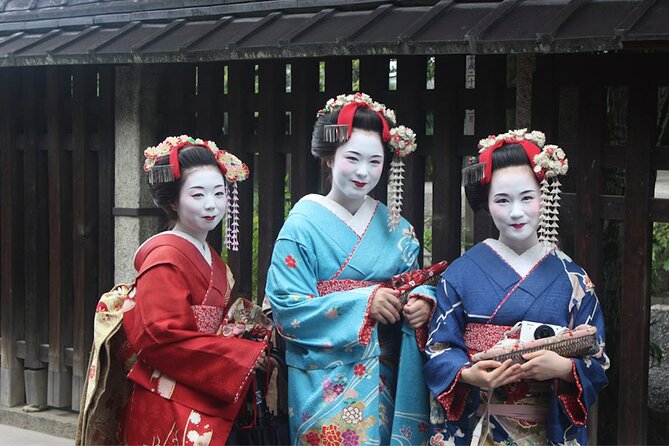
One more nice touch that can happen: some guides share a group photo afterward. If you want a simple souvenir that does not require awkward self-timer attempts, that is a genuinely thoughtful perk.
Even if you do not make a perfect geisha sighting, the guide role is still worth it. They can help you read the street in motion, understand what is polite to notice, and figure out where the most meaningful photo angles are without turning the walk into a constant selfie session.
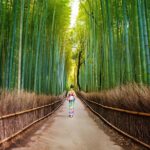
A quieter way to spend a day in Kyoto

Price and value: is $234.11 a good deal for a private tour?
At $234.11 per person, this is not a budget stroll. But it also is not overpriced for what you are getting. You are paying for a private format, an English-speaking local guide, and at least one paid entrance covered for Kennin-ji.
Here is how I think about value for this tour:
- You save time and confusion. Kyoto is easy to get lost in, especially around major sightseeing zones. Having the route planned and explained helps you get more from the hours you have.
- You get a real programmed stop. Many walking tours skip the admission pieces or only do exterior looks. Here, temple entry for one location is included, which keeps the temple visit from feeling half-finished.
- You buy context, not just movement. The biggest payoff is knowing what matters, like Kennin-ji’s Eisai and the Rinzai connection, and what the geisha districts are trying to communicate through street layout and cultural rhythm.
The cost is higher if you are traveling solo, and it tends to feel more reasonable when your group is small and you would otherwise pay for separate transport and multiple guided add-ons. The tour also mentions group discounts, which can help if you are coordinating with other people.
One practical note: this tour gets booked about 40 days in advance on average. That is usually a sign the date you want might not be available last minute.
What is not included, and how to plan around it
This experience does not include lunch, and it does not include food or drinks. It also does not include transportation fees.
So plan to eat before you meet or after you finish. Since the route focuses on walking between districts, you will feel better if you do not arrive hungry and start hunting for food immediately after temples and lanes. Bring water if it is warm, and if you think you might get delayed by weather, pack a small snack.
You should also plan your footwear. The tour is walking-heavy, and you will want comfortable shoes you can stand in for the longer Gion segment.
Weather matters more than you think
The experience is listed as requiring good weather. If poor weather cancels it, you can be offered a different date or a full refund. That is important in Kyoto, because rain can turn your enjoyment down fast, especially in narrow alleys and streets where it is hard to dry off and keep the vibe going.
If you are booking, aim for days that look steady. If you are flexible, being willing to shift by a day can make the difference between a memorable atmosphere and a rushed walk with umbrellas.
Should you book this Kyoto geisha districts walking tour?
Book it if you want a guided walk that connects temple culture with geisha district streets, and you like having an English-speaking local guide explain what you are seeing. The Kennin-ji start gives you grounding, Pontocho adds a classic alley moment, and the longer Gion time helps you actually absorb the neighborhood instead of sprinting past it.
Skip it or adjust expectations if your goal is purely to guarantee a geisha or maiko sighting. This tour does not promise that, and sightings can depend on factors outside anyone’s control. Treat them as a bonus, not the contract.
If you want a structured half day that feels authentic, this is a strong choice, especially if you value context as much as photos.
FAQ
Is a geisha or maiko sighting guaranteed?
No. The tour does not guarantee you will see or meet geisha during the experience.
How long is the walking tour?
The tour runs for about 4 hours.
Which stop includes an entrance ticket?
Temple and shrine entrance fees are included for one location, which is Kennin-ji Temple.
Are there any admission fees for the other districts?
Admission is listed as free for the Pontocho District, Miyagawacho Koan, and Gion stops.
Where does the tour start and end?
It starts at Gion-Shijo Station, at 1 Chome Miyagawasuji, Higashiyama Ward, Kyoto, and it ends back at the meeting point.
Is lunch or transportation included?
No. Lunch and food or drinks are not included, and transportation fees are not included.
New This Season
- Koyasan Day Trip by Private Car from Kyoto
- Old Port Town and Ultimate Sake Tasting Private Tour From Kyoto
- Kyoto’s Timeless Charm: 3hr Exploration of History and Peace
- Kyoto: 5 Types of Sushi Making
- Sacred Peak & Ancient Paths: Kurama-Kibune Hiking Experience
- Kyoto: Exclusive ZEN practice at Manpukuji temple in Uji
- Kyoto: Private Seasonal Aroma Yoga Class
- Traversing Kyoto’s Scenic West – Arashiyama to Kinkakuji
Gion Geisha Quarter Walks, compared.
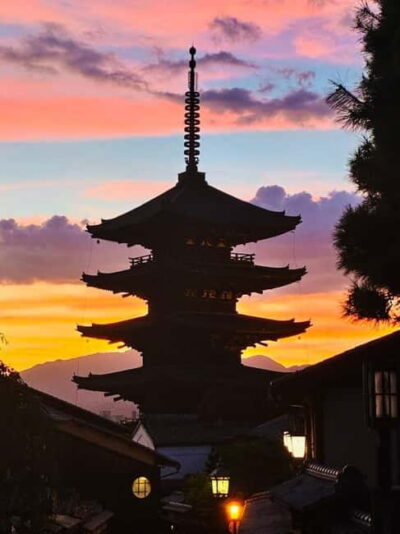
Kyoto Geisha Walking Tour: Gion District & Hidden Gems
Read our review →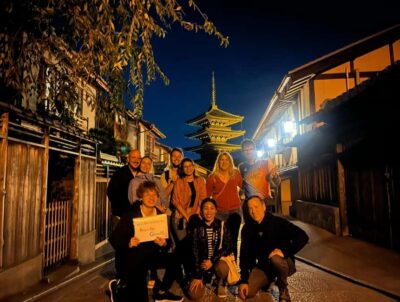
Gion Magical Night Walking Tour with Geisha Trivia
Read our review →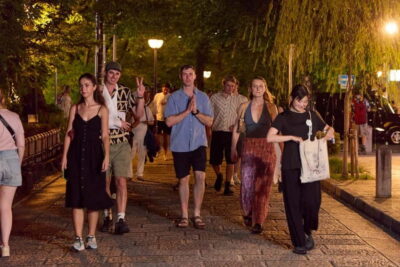
Gion Geisha District Walking Tour – Stories of Geisha
Read our review →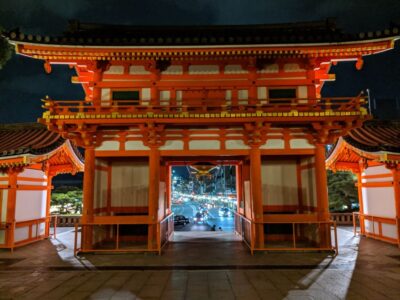
Best of Kyoto: Gion, Geisha, Pagodas & Cobblestones
Read our review →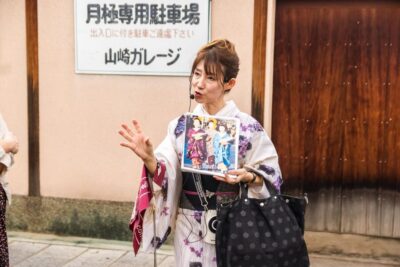
Kyoto Night Foodie Tour in Gion (9+ dishes + 6 Sake tastings)
Read our review →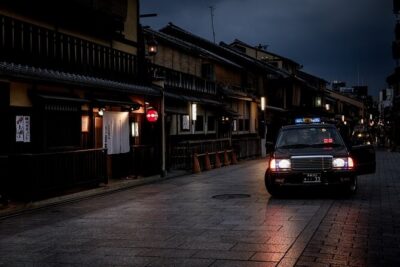
Kyoto Gion Geisha District Walking Tour – The Stories of Geisha
Read our review →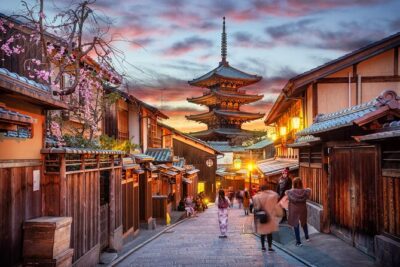
Kyoto Gion: 2-Hour Geisha Culture & History Walking Tour
Read our review →Also filed under