
Reviewed · NARA & DEER PARK DAY TRIPS
Private Nara Tour with Government Licensed Guide & Vehicle (Kyoto Departure)
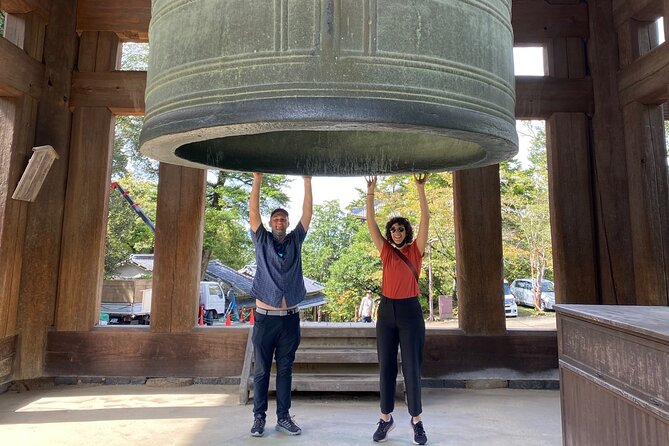
Nara hits fast, even if you start in Kyoto. This private 8-hour tour is built around major Nara sights with a government-licensed English guide and a private vehicle, so you spend less time figuring things out and more time seeing what matters.
I especially like that you can shape the day by choosing 3 to 4 stops from the classic Nara list, not just march through a fixed checklist. I also like the depth you get from guided temple and history commentary at each site. One possible drawback: entrance fees and lunch are not included, so your total day cost will rise depending on what you pick.
In This Review
- Key things to know before you go
- Why this Kyoto to Nara day feels easier than DIY
- Price and value for up to 4 people
- How the flexible stop list shapes your day
- Todai-ji and the Big Buddha Hall, what to focus on
- Nara Park deer and how to enjoy the chaos safely
- Kasuga Taisha shrine, the free parts versus the inner paid area
- Mt. Wakakusayama for grass slopes and city views
- Naramachi merchant district for old-town texture
- Yakushi-ji, symmetry, and the Yakushi trinity
- Shin-Yakushiji, guardian statues around Yakushi Buddha
- Heijo Palace Museum, where the capital actually worked
- Toshodaiji and Ganjin, Tang influence made tangible
- What the best licensed guide does for you
- Practical tips for an 8-hour Kyoto-to-Nara temple day
- Should you book this private Nara tour from Kyoto?
- FAQ
- How many people are included in the private tour?
- How long is the tour?
- What is included in the price?
- Are entrance fees and lunch included?
- Can I choose which temples or sites to visit?
- What happens if the weather is bad?
Key things to know before you go
- Licensed English guidance at major temple and shrine stops, with practical explanations as you walk
- Private Kyoto pickup and vehicle to cut transit stress and timing headaches
- Choose 3 to 4 sites from a strong set of Nara highlights, so the pacing stays comfortable
- A smart mix of worship sites and old-city areas, from Todai-ji to Naramachi merchant lanes
- Seasonal options like Mt. Wakakusa, with cherry trees in early April and a winter climbing limit
Why this Kyoto to Nara day feels easier than DIY
Nara is famous, which means crowds. The advantage of a private setup is simple: you get an organized flow between the places you actually want to see, without constantly checking trains, buses, and schedules. Pickup is offered, and the day is designed around a single guided circuit from Kyoto.
The second win is the guide. A licensed local English-speaking guide can explain what you are looking at while you are standing right there, not after the fact. That matters at temples where details are easy to miss, like architectural layout at Yakushi-ji or the significance behind Kasuga Taisha’s long rebuild tradition.
Price and value for up to 4 people
The tour price is $994.81 per group (up to 4), for about 8 hours. That is not budget pricing, but it can be good value if you split the cost with family or friends and you care about guided interpretation.
Here is the quick math: if you book for 4 people, you are roughly around $250 per person, before tickets and lunch. If you book for fewer people, the per-person value drops, so this option makes the most sense when you can fill the group and want comfort plus an English guide.
Also note what is included versus not included. You get the licensed guide, the private vehicle, and guided access for the stops you choose, but entrance fees and lunch are separate.
Deer that bow back, a short ride away
- Osaka/Kyoto:Kinkakuji,Arashiyama,FushimiInariShrine,NaraPark
★ 4.1 · 1,596 reviews - Kyoto/Osaka: Nara, Fushimi Inari Taisha, Arashiyama Bus Tour
★ 4.7 · 1,275 reviews - Osaka/Kyoto: Arashiyama, Nara & Fushimi Inari Shrine w/Lunch
★ 4.4 · 754 reviews - Kyoto and Nara Day Trip from Kyoto
★ 4.5 · 445 reviews
How the flexible stop list shapes your day
You are not locked into seeing every single Nara highlight. Instead, you choose 3 to 4 sites from the available options, which is perfect for a day trip because travel time and walking add up fast.
If you want the classic “first Nara” combo, you might pair a heavyweight temple with a shrine and an old-town moment. For example, Todai-ji plus Kasuga Taisha plus Naramachi gives you big-sight history and human-scale street atmosphere.
If your group leans more relaxed or family-friendly, Mt. Wakakusa for views and Nara Park for the deer can be easier add-ons than stacking too many temples. The key is that your guide can help you choose based on energy, interests, and time.
Todai-ji and the Big Buddha Hall, what to focus on
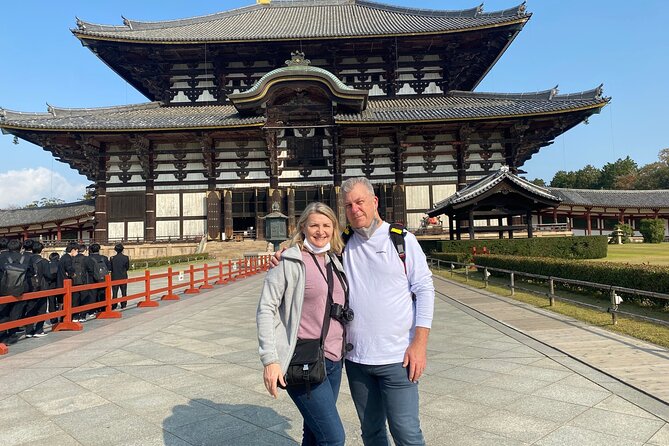
Todai-ji is one of Nara’s must-sees, and it anchors the whole story of early Japanese Buddhism. The main hall, Daibutsuden, houses the Daibutsu, a bronze Buddha associated with Vairocana. It is huge, with the seated Buddha reaching about 15 meters tall, and it is flanked by Bodhisattvas.
What I love about this stop is how much context a guide can give you. The temple began in 752, and later the capital shifted from Nara to Nagaoka in 784 in part because Todaiji had grown so powerful it affected government influence. That is a helpful lens for understanding why this site mattered far beyond religion.
Time-wise, plan about 1 hour here. Admission is not included, so check fees when you decide whether this is your top priority.
Nara Park deer and how to enjoy the chaos safely
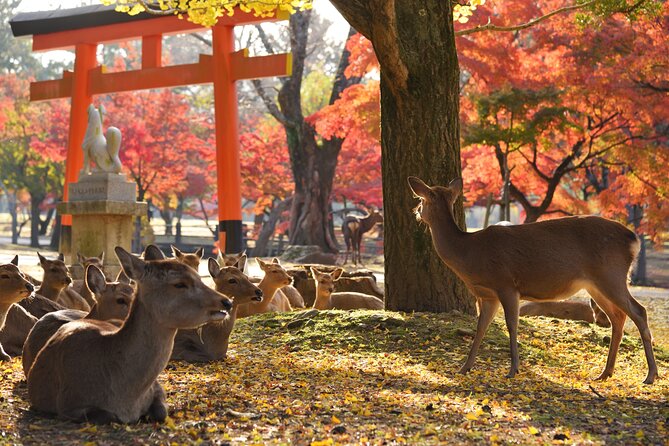
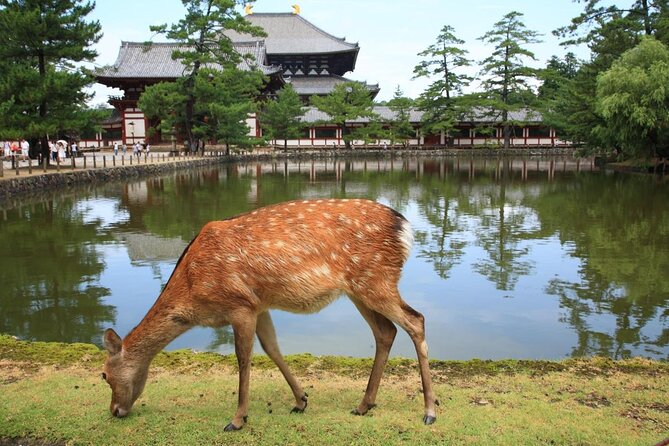
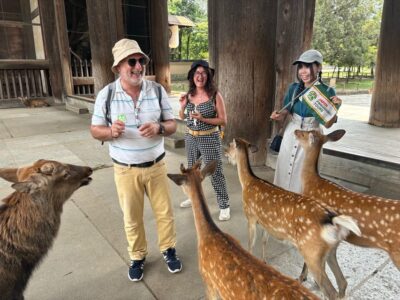
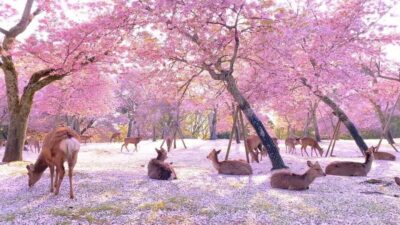
Nara Park is central, established in 1880, and it is surrounded by major attractions. It is also where you will see hundreds of freely roaming deer, which is a big part of the Nara experience for many people.
The practical value of a guide at this stop is timing and interpretation. You can treat it like a break between temples, but you also do not want to waste time wandering without a plan. Having the guide steer where to look helps you get the “deer meets old capital” vibe with less stress.
Nara Park is listed for about 1 hour, and admission is free. Since the deer are not fenced, keep a close eye on your footing and your personal space, especially if you are traveling with kids.
Kasuga Taisha shrine, the free parts versus the inner paid area
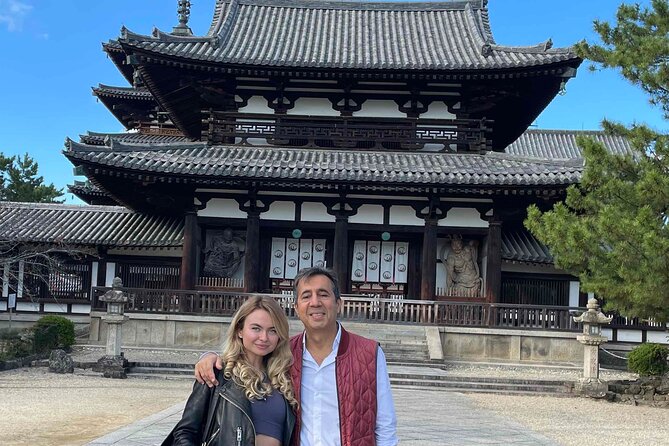
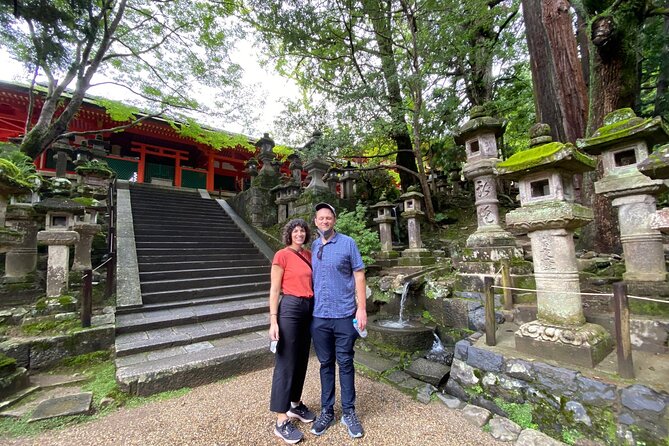
Kasuga Taisha is Nara’s most celebrated shrine, dedicated to a deity associated with protection of the city. It has deep ties to the Fujiwara clan, one of Japan’s most powerful families in the Nara and Heian periods.
A key detail here is access. The offering hall is free to visit, while the inner area has a paid component for a closer look at buildings. If your time is short, you can still get a strong impression from the free sections, then decide if the inner paid area is worth it for your group.
Architecturally, look for the Kasuga style, including the sloping roof that extends over the front. The shrine also has a rebuild tradition that ran for centuries, with the rebuild custom discontinued at the end of the Edo Period. This stop is about 30 minutes.
A quieter way to spend a day in Kyoto

Mt. Wakakusayama for grass slopes and city views
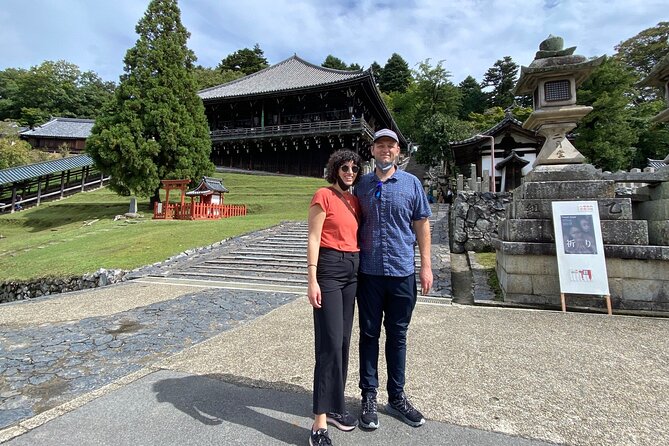
Mt. Wakakusayama rises behind Nara Park, roughly 350 meters tall, and it is one of the easiest ways to get wide views over Nara without doing a marathon hike. Tourists can climb all year round except winter, with a small entrance fee charged.
This is the kind of stop that can change the mood of the whole day. Instead of more temple details, you get open air and a chance to see how the city sits around the historic core.
In early April, cherry trees often bloom along the slope. For pacing, the steep trail to a plateau typically takes about 15 to 20 minutes, and many people do not go further. Going to the peak adds another 20 to 30 minutes. Your guide can help you choose how far based on weather and your group’s stamina.
Naramachi merchant district for old-town texture
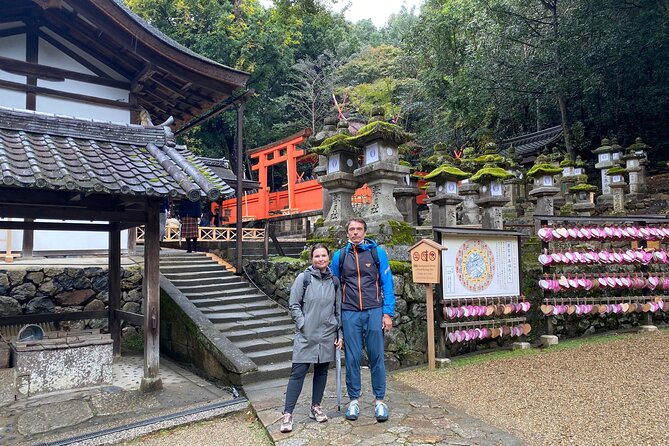
Naramachi is the former merchant district of Nara, with preserved traditional buildings and preserved lanes. It is where you can shift from monumental temples to everyday historic life, then take a slow breather with shops and cafes.
Many buildings are machiya, the long, narrow townhouses that served as both shops and living quarters. A specific historical detail that makes the area more interesting: shop fronts were often kept narrow to save on taxes, calculated based on street access rather than total property size.
This stop works well for photo lovers and anyone who likes the feel of the past rather than only learning dates and dates. It is listed for about 30 minutes, and admission is free.
Yakushi-ji, symmetry, and the Yakushi trinity
Yakushi-ji was founded in the late 7th century by Emperor Tenmu, linked to the recovery of the emperor’s sick wife. One standout here is the strict symmetric layout, with the main hall and lecture hall on a central axis and pagodas flanking the layout.
Inside the main hall, you are looking for the Yakushi trinity, described as a masterpiece of Japanese Buddhist art. Another strong attraction is the East Pagoda, dating from 730, which survived multiple fires and is the only structure at the temple to have that specific survival history. It looks like it has six stories, but it is actually only truly three-storied.
This is a good pick if your group likes architecture and precise design rather than only big statues. Time is around 30 minutes, and admission is not included.
Shin-Yakushiji, guardian statues around Yakushi Buddha
Shin-Yakushiji is smaller and calmer in feel, but still packed with visual detail. It was founded in the Nara Period by an empress for the sake of an ailing emperor. The temple’s focus is Yakushi Buddha, the patron of medicine in Japanese Buddhism.
The main draw here is inside the main hall: life size statues of 12 guardian deities surrounding a seated Yakushi Buddha about 2 meters tall. The Yakushi statue is wood, while the guardians are clay, and each guardian has different characteristics and even different weapon details. That makes this a stop where you might linger longer than planned, especially if you enjoy noticing craft and expression.
If you want something less crowded than the biggest headline sites, this pairs well with another temple stop in the same half of the day. Time is about 30 minutes, and admission is not included.
Heijo Palace Museum, where the capital actually worked
Heijo-kyo was the Nara Period capital, and the palace grounds are now UNESCO World Heritage listed. The palace extended about 1 kilometer wide and 1 kilometer long, serving as the emperor’s residence and government offices.
The museum stop is about 1 hour, and it is a smart choice if you want to connect temple Japan to political Japan. You get a clearer sense of why Nara was not only a spiritual center, but also the administrative heart of the country.
Admission is not included, so treat this as a “worth it if history is your thing” option. If your group wants mostly walking and sights, you might choose one palace-related stop and spend the extra time on a temple or shrine.
Toshodaiji and Ganjin, Tang influence made tangible
Toshodaiji was founded in 759 by Ganjin, a Chinese priest invited to Japan by the emperor to train priests and strengthen Buddhist practice. That Tang-China connection is the point: Toshodaiji is tied to a major stage in how Buddhism developed in Japan.
A recent touchpoint is the main hall (kondo), which reopened in late 2009 after nearly ten years of renovation. The building was dismantled and reconstructed, which is the kind of effort that can improve long-term preservation.
Also look for the lecture hall (kodo), originally an administrative building in the Nara Imperial Palace and later moved to Toshodaiji. It is described as the only surviving building from the former palace. This stop is about 30 minutes, with admission not included.
What the best licensed guide does for you
This kind of private tour is only as good as the person doing the interpretation. One reason this tour type gets strong satisfaction is the way guides plan ahead and adapt in real time.
You might encounter guides such as Emi and Junichi, both praised for careful planning and for tailoring the flow to the needs of their group. That kind of attention shows up in small ways, like adjusting pace for families and giving you enough context that deer in the park do not become an unexpected problem.
If you are the type who likes to ask questions, bring curiosity. A good guide will help you notice patterns, like why some temples are symmetric, why shrines have free and paid zones, and what a reform or rebuild tradition meant in its time.
Practical tips for an 8-hour Kyoto-to-Nara temple day
Plan for good weather, because the experience can be canceled or moved if conditions are poor. You will usually need to walk between stops, and some of the options involve uneven temple grounds.
Lunch is not included, so decide ahead of time whether you want to buy food near your stop choices or plan a simple snack. Entrance fees depend on what you select, so it helps to do a quick check once your stop count is set.
On transportation, pickup is offered and the tour is near public transportation, but it is still a private vehicle experience. If you need child seats, note that car seats and booster seats are limited, rear-facing car seats are not available, and you must contact the provider directly if you need them. Service animals are allowed.
Should you book this private Nara tour from Kyoto?
Book it if you want a guided, English-speaking day that hits the most important Nara places without making you juggle transit schedules. It is also a strong choice for first-timers because it pairs headline temples like Todaiji with shrine and old-town atmosphere like Kasuga Taisha and Naramachi, all within an easy-to-manage 8-hour window.
Skip it if you are traveling solo on a tight budget, because the per-person cost drops mainly when you can fill the group up to four. Also skip it if you want all-inclusive pricing, since entrance fees and lunch are separate.
If your group loves learning while walking and you want the day to feel organized from start to finish, this is the kind of private Nara tour that saves time and adds meaning.
FAQ
How many people are included in the private tour?
The tour is priced per group for up to 4 people, with your group being the only participants.
How long is the tour?
It lasts about 8 hours.
What is included in the price?
You get a licensed local English-speaking guide, a private vehicle, and a customizable choice of 3 to 4 sites from the available list. Pickup is offered and you receive a mobile ticket.
Are entrance fees and lunch included?
No. Entrance fees, lunch, and other personal expenses are not included.
Can I choose which temples or sites to visit?
Yes. The tour is customizable and you can select 3 to 4 sites from the available options.
What happens if the weather is bad?
The experience requires good weather. If it is canceled due to poor weather, you will be offered a different date or a full refund.
New This Season
- Koyasan Day Trip by Private Car from Kyoto
- Old Port Town and Ultimate Sake Tasting Private Tour From Kyoto
- Kyoto’s Timeless Charm: 3hr Exploration of History and Peace
- Kyoto: 5 Types of Sushi Making
- Sacred Peak & Ancient Paths: Kurama-Kibune Hiking Experience
- Kyoto: Exclusive ZEN practice at Manpukuji temple in Uji
- Kyoto: Private Seasonal Aroma Yoga Class
- Traversing Kyoto’s Scenic West – Arashiyama to Kinkakuji
Nara & Deer Park Day Trips, compared.
Kinkakuji,Arashiyama,FushimiInariShrine,NaraPark
Read our review →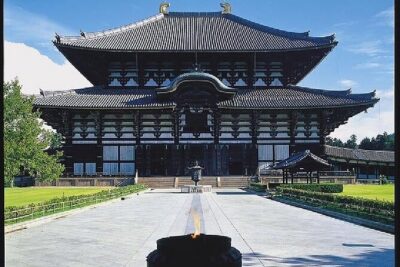
Nara, Fushimi Inari Taisha, Arashiyama Bus Tour
Read our review →
Arashiyama, Nara & Fushimi Inari Shrine w/Lunch
Read our review →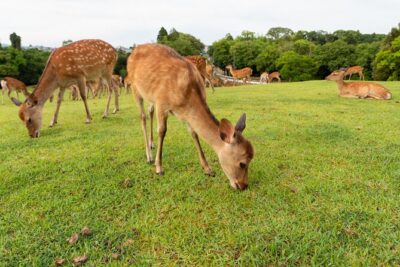
Full Day Guided Tour to Kyoto and Nara from Osaka by Van
Read our review →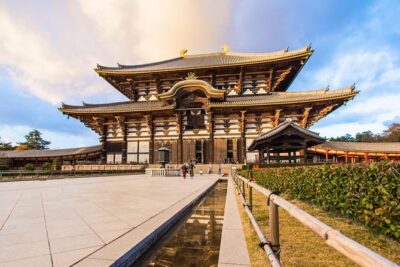
Also filed under