
Reviewed · NARA & DEER PARK DAY TRIPS
Private Tour Kyoto-Nara w/Hotel Pick Up & Drop off from Kyoto
A day trip that saves you hours. This private Kyoto-Nara route packs major sights into one smooth plan, starting at 8:30 am with hotel pickup and a comfortable, air-conditioned ride between temples and neighborhoods. You get a classic UNESCO moment in Nara, deer encounters in the park, and Kyoto highlights like Fushimi Inari and the Golden Pavilion.
What I like most is the simple convenience of door-to-door pickup and drop-off. It means you spend your energy on sightseeing, not figuring out transfers, station names, and the right bus at the right minute.
The second big win is the chance for real flexibility with the day’s pacing. In guides I saw called out by name, like Ben, Dan, Reo, Christine, and Yui, the tone often sounds friendly and practical, with time spent walking the places that matter most to your group. One consideration though: value depends on expectations, because temple admission and lunch cost extra, and the guide style can range from lighter context to deeper explanations.
In This Review
- Key points to know before you go
- Why this Kyoto-Nara plan feels efficient
- Timing and flow: how the day is built around walking
- Todai-ji Temple: UNESCO grandeur with a real time block
- Nara Park deer feeding: fun, quick, and slightly chaotic
- Fushimi Inari-taisha: a shrine stop designed for real wandering
- Kinkaku-ji Golden Pavilion: expect a ticket and a payoff
- Arashiyama Kimono Forest: the quick art stop worth the detour
- Arashiyama Bamboo Forest: classic scenery, planned timing
- Price and value: what $350.16 gets you, and what it does not
- The guide question that can make or break your day
- Practical tips to get the most out of each stop
- Who this tour fits best
- Should you book this Kyoto-Nara private tour?
- FAQ
- What time does the tour start?
- How long is the Kyoto-Nara private tour?
- What is included in the tour price?
- What is not included?
- Is lunch included anywhere in the schedule?
- Which stops require paid admission?
- Is the tour ticket digital?
- What happens if the weather is bad?
- Is this tour private or shared?
Key points to know before you go
- Hotel pickup at 8:30 and private air-conditioned transport: You skip the public transit shuffle and move efficiently between Nara and Kyoto.
- Todai-ji plus Nara Park deer time: You start with a major UNESCO-listed complex, then switch to relaxed deer feeding in the park.
- Fushimi Inari-taisha and Kinkaku-ji in one day: Two of the most iconic Kyoto religious sites, with set time blocks for each stop.
- Arashiyama Bamboo Forest plus Kimono Forest: You get both the famous bamboo scenery and a fun, photo-friendly modern art stop near the tram line.
- Guide style may vary: Some guides emphasize general direction, while others add deeper detail, so confirm what kind of guidance you want.
- Admission fees are separate: Todai-ji and Kinkaku-ji have ticket costs, while Nara Park and Fushimi Inari are free.
Why this Kyoto-Nara plan feels efficient
Kyoto and Nara are close on the map, but they can feel far in real life once you add trains, waiting time, and the “where do I go next?” factor. This tour tackles that head-on with private transportation and a scheduled start time of 8:30 am, so you can focus on the sights instead of the commute.
The route is designed to hit the biggest “I came all this way” moments without pretending they are quick in human terms. You’re looking at roughly 6 to 10 hours total, with multiple stops that each get a meaningful walk.
And yes, deer are involved. If you’re bringing your camera, you’re also bringing your patience for a park that mixes tourists, locals, and deer with very real confidence.
Timing and flow: how the day is built around walking
This is a private tour for your group only, so the schedule is tighter than a bus day but not as rushed as self-guided wandering. Your stops are spaced with set blocks of time, like about 1 hour 30 minutes at Todai-ji and Fushimi Inari, plus about an hour each at Kinkaku-ji and Arashiyama.
A helpful thing to expect: the tour is not just drive-by sightseeing. You’re guided through each location, then you get actual walking time inside the areas. That matters because Kyoto temples and shrine grounds don’t reward a quick “stand here, take photo, move on” rhythm.
If you want a day that feels like you can breathe, the private format makes that easier. Some groups also reported comfort-minded touches like waiting during sudden rain, which is exactly what you want from a door-to-door tour day.
Deer that bow back, a short ride away
- Osaka/Kyoto:Kinkakuji,Arashiyama,FushimiInariShrine,NaraPark
★ 4.1 · 1,596 reviews - Kyoto/Osaka: Nara, Fushimi Inari Taisha, Arashiyama Bus Tour
★ 4.7 · 1,275 reviews - Osaka/Kyoto: Arashiyama, Nara & Fushimi Inari Shrine w/Lunch
★ 4.4 · 754 reviews - Kyoto and Nara Day Trip from Kyoto
★ 4.5 · 445 reviews
Todai-ji Temple: UNESCO grandeur with a real time block
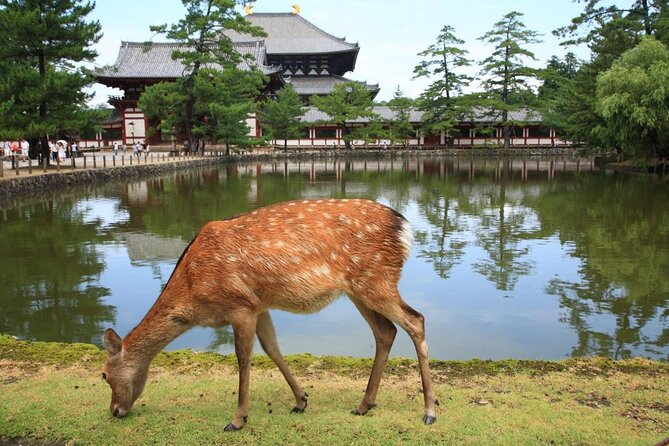
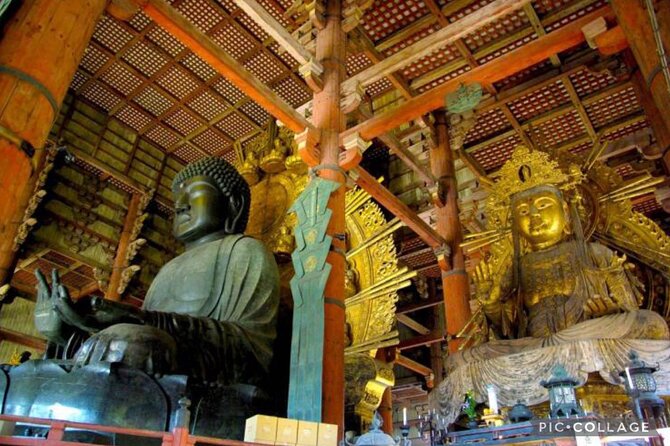
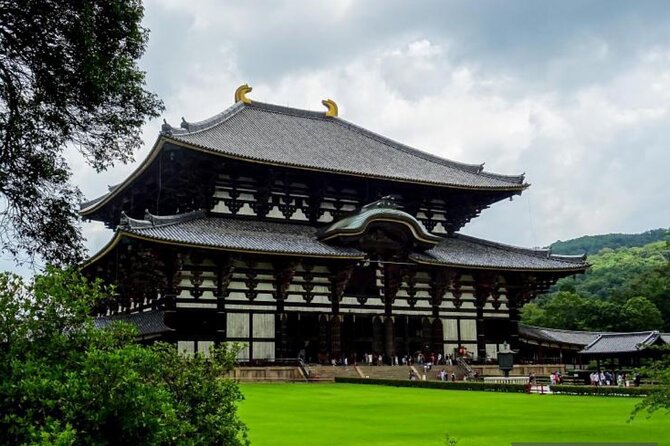
Your first major stop is Todai-ji, the “Eastern Great Temple” complex in Nara. It’s listed as UNESCO World Heritage within the Historic Monuments of Ancient Nara, alongside seven other sites in the city. The complex has deep roots too, originally founded in 738 C E, and it was once one of the powerful Seven Great Temples.
The plan gives you 1 hour 30 minutes here, and that’s enough to do more than just the first photo. It’s also a good moment in the day to go slow and actually look at scale. When you see a major temple complex, you want time to notice how buildings, courtyards, and approach paths connect.
Cost note you should plan for: Todai-ji admission is not included, listed at ¥600 per person for senior, adult, and youth categories. If you’re counting total trip cost, this ticket is part of the value equation.
Nara Park deer feeding: fun, quick, and slightly chaotic
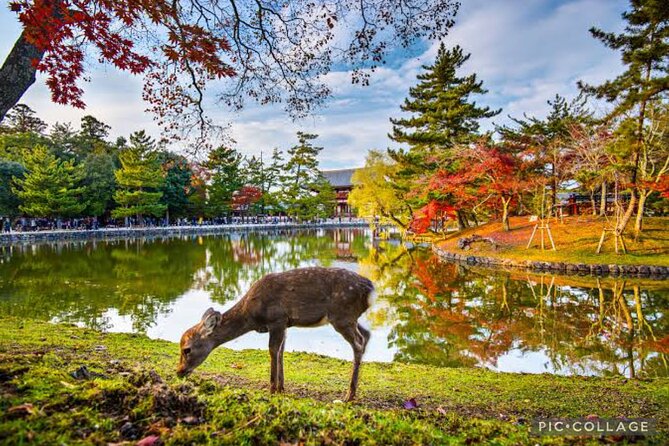
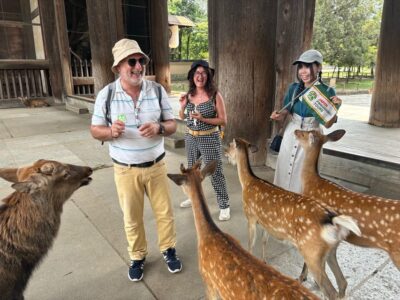
Next you’re in Nara Park, a huge area known for free-roaming deer. It’s described as covering 660 hectares, and it’s one of the must-see zones in Nara City. The stop time here is shorter, about 30 minutes, but it’s built around the main event: feeding the deer.
This is a “you’ll either love it or you’ll just tolerate it” kind of stop. If you like playful street-energy, it’s a highlight. If you don’t love getting close to animals with excellent manners (and their own opinions), you can still enjoy the temple area views around the park.
Because the time block is tight, I recommend you go in with a simple goal: get your deer moment done early, then use the remaining time to enjoy the space and surrounding temple atmosphere. Also, keep an eye on footing and don’t assume every path will feel calm.
Good news for budgets: Nara Park admission is free.
Fushimi Inari-taisha: a shrine stop designed for real wandering
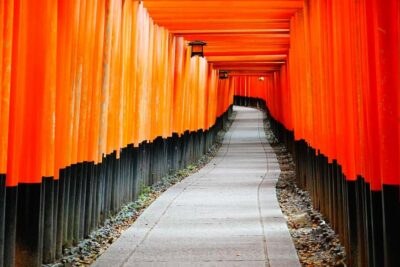
Fushimi Inari-taisha is next, with about 1 hour 30 minutes allotted. This is a shrine designated as an Important Cultural Property, and the main shrine building includes five shrines tied to the virtues of Inari Okami.
The practical value of this stop being private is simple: you don’t need to match your walk to anyone else’s pace. The shrine grounds are made to be explored by moving through them, pausing, and getting your bearings.
This is also where I think the guide quality can make a noticeable difference. Some hosts focus on general orientation, while others add more detail about what you’re looking at and why it matters. Either way, the time is enough for a satisfying “see it, understand it a bit, and take photos without stress” visit.
Cost note: Fushimi Inari-taisha admission is free on this tour.
Kinkaku-ji Golden Pavilion: expect a ticket and a payoff
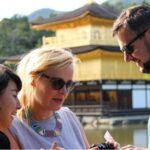
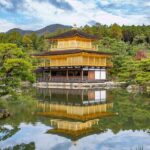
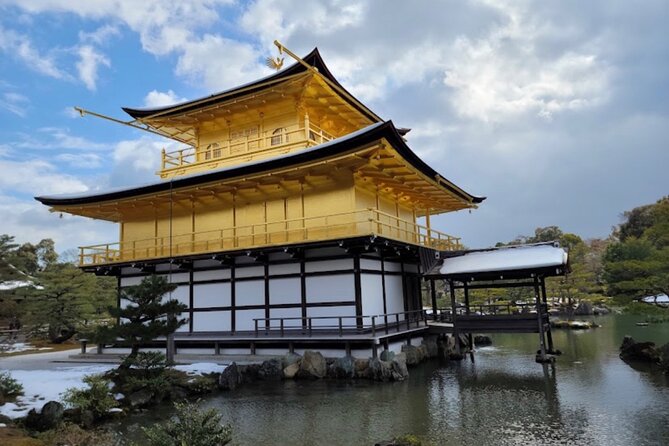
Kinkaku-ji is the Golden Pavilion stop, with about 1 hour at the temple. The description explains the name: the famous Kinkaku is actually a pagoda housing sacred relics of the Buddha, which is why it became known as the Golden Pavilion (Kinkaku-ji).
One thing I appreciate about including this in the day plan is that it forces Kyoto’s most famous “wow” sight into a controlled timeframe. You will not get stuck waiting for transit or losing time to crowd drift because your day is already scheduled.
Budget reality: Kinkaku-ji admission is not included, listed at ¥600 per person for senior and adult categories (same value shown for both categories). If you go into the day knowing this, the total price feels much less surprising.
A quieter way to spend a day in Kyoto

Arashiyama Kimono Forest: the quick art stop worth the detour
Before you go deep into bamboo scenery, you stop at the Arashiyama Kimono Forest installation near the Arashiyama terminal station of the Keifuku Randen Tram Line.
This one is very specific: the installation uses 600 clear acrylic cylinders, each about 2 meters tall, arranged around the station area. Admission is listed as free, and the stop time is about 30 minutes.
Why I like this stop inside a temple-heavy day: it gives your eyes a break. You move from old stone and sacred spaces into a modern, playful photo moment. It’s also the kind of stop that works well if your group’s energy is high and you want something fun without committing to a long walk.
Cost note: Kimono Forest admission is free.
Arashiyama Bamboo Forest: classic scenery, planned timing
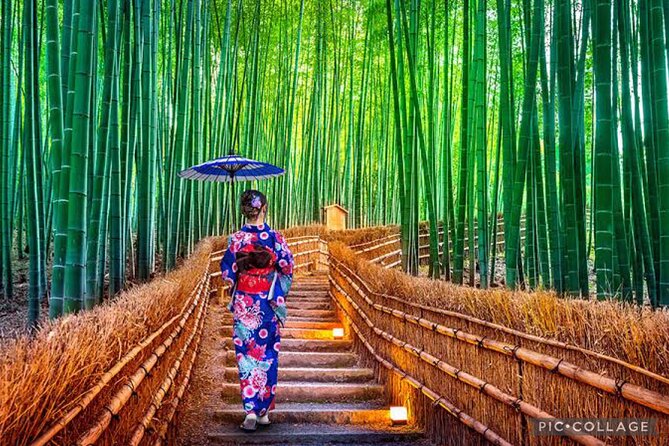
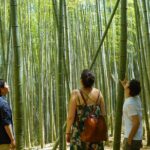
Finally you reach Arashiyama, with about 1 hour set aside. The bamboo forest is described as a popular attraction with gentle breezes and the rustling leaves as the wind moves through the stalks. It’s also described as a good escape from heat.
Here’s the real advice: bamboo areas can be crowded at peak times, and one-hour can feel both short and perfectly timed. Private guiding helps because you can focus on the best routes to walk within the time you have.
Admission is listed as free for Arashiyama in this plan, but do expect the cost of your time in calories and stamina. Wear comfortable shoes, and don’t treat bamboo forest time like shopping mall time. You’ll want to slow down, look around, and let the scenery do its thing.
Price and value: what $350.16 gets you, and what it does not
At $350.16 per person, you’re paying for the convenience of a private day: private transportation, an English speaking driver/host, and a properly planned route. Parking fees, fuel surcharge, and toll fees are listed as included, which is another way this price can feel less fuzzy.
But value depends on your style of travel because two big things are not included:
- Lunch
- Temple admissions, specifically Todai-ji and Kinkaku-ji at ¥600 per person each (with categories listed for senior, adult, and youth)
Also keep in mind the tour duration range. A day that runs closer to the shorter end can feel like excellent value if you stay on schedule. If it drifts longer, it can feel like you’re paying more time for the same set of sights.
I’d frame it this way: if you hate buses, hate transfers, and want a clear plan from door to door, this is the kind of price where private starts making sense. If you want a deep, lecture-style history tour, you may find the base experience host is not what you expected.
The guide question that can make or break your day
One theme that matters is the difference between an English speaking driver/host who explains in a general way versus a National licensed guide who can provide deeper detail. The operator distinguishes these styles, and some guests felt disappointed when they expected the higher-detail licensed-guide approach.
So here’s my practical takeaway for you: before you book, check what your confirmation includes. If your dream is tight, detailed storytelling at each stop, you’ll want to specifically request the licensed-guide level and understand the extra cost if offered.
On the positive side, many guides named in feedback are described as friendly, patient, and flexible. People praised guides who adjusted to preferences, waited during rain with umbrellas, helped with comfort needs like a cane, and also found local lunch options. That kind of “people care” is hard to quantify until you’re in the middle of it, which is exactly why I think the guide choice matters.
Practical tips to get the most out of each stop
Plan your day like a sightseeing athlete, not like a museum marathoner. You’ll be walking at temples and through shrine grounds, plus you’ll handle deer park movement. Bring comfortable shoes, and keep your schedule flexible in your head even though the tour has set blocks.
For meals, treat lunch as your own mission. Since lunch isn’t included, I recommend you decide your style ahead of time: sit-down soba or noodles is common for this kind of day, and a guide who has a favorite local place can be a huge win for both taste and speed.
For photos, do a simple approach: prioritize one “money shot” at each major sight, then take the rest as your time allows. With multiple stops, you’ll save energy and avoid burnout.
And for the deer stop, keep expectations grounded. The fun comes from the moment, not from controlling every detail.
Who this tour fits best
This private Kyoto-Nara day is a strong match if you:
- Want hotel pickup and drop-off and less time navigating transit
- Are prioritizing major highlights in a single day, not slow travel
- Like having a plan but still want some breathing room
- Travel with a small group or family and value 1-to-1 attention
It may be less ideal if you:
- Want fully detailed, licensed-guiding narration at every stop and do not want to pay extra for it
- Expect lunch and temple tickets to be included in the base price
- Have very tight mobility limitations, since the plan includes multiple walking-heavy sites and varied ground in temple areas and the park
Should you book this Kyoto-Nara private tour?
Book it if your top goals are efficiency, comfort, and hitting Todai-ji, Fushimi Inari, Kinkaku-ji, and Arashiyama in one day without the transit headache. The door-to-door private setup is where the value usually lands, especially if you’re short on time.
Before you pay, do two quick checks:
- Confirm what guide level you’re actually getting, and whether you want the National licensed guide option.
- Budget for the two temple tickets at ¥600 each for Todai-ji and Kinkaku-ji, plus lunch.
If you do that, this tour can feel like a smart way to spend a Kyoto week day, with just enough structure to save time and just enough flexibility to keep the day enjoyable.
FAQ
What time does the tour start?
The tour starts at 8:30 am.
How long is the Kyoto-Nara private tour?
The duration is listed as approximately 6 to 10 hours.
What is included in the tour price?
The tour includes private transportation, an English speaking driver/host, an air-conditioned vehicle, parking fees, fuel surcharge, and toll fees.
What is not included?
Lunch is not included. Admission fees are not included for Todai-ji Temple and Kinkakuji Temple (listed at ¥600.00 per person).
Is lunch included anywhere in the schedule?
No, lunch is not included.
Which stops require paid admission?
Todai-ji Temple and Kinkakuji Temple require admission tickets and are listed at ¥600.00 per person. Nara Park and Fushimi Inari-taisha are listed as free. Arashiyama Kimono Forest and Arashiyama are also listed as free.
Is the tour ticket digital?
Yes, it is listed as a mobile ticket.
What happens if the weather is bad?
This experience requires good weather. If it is canceled due to poor weather, you’ll be offered a different date or a full refund.
Is this tour private or shared?
This is a private tour/activity, so only your group will participate.
New This Season
- Koyasan Day Trip by Private Car from Kyoto
- Old Port Town and Ultimate Sake Tasting Private Tour From Kyoto
- Kyoto’s Timeless Charm: 3hr Exploration of History and Peace
- Kyoto: 5 Types of Sushi Making
- Sacred Peak & Ancient Paths: Kurama-Kibune Hiking Experience
- Kyoto: Exclusive ZEN practice at Manpukuji temple in Uji
- Kyoto: Private Seasonal Aroma Yoga Class
- Traversing Kyoto’s Scenic West – Arashiyama to Kinkakuji
Nara & Deer Park Day Trips, compared.
Kinkakuji,Arashiyama,FushimiInariShrine,NaraPark
Read our review →
Nara, Fushimi Inari Taisha, Arashiyama Bus Tour
Read our review →
Arashiyama, Nara & Fushimi Inari Shrine w/Lunch
Read our review →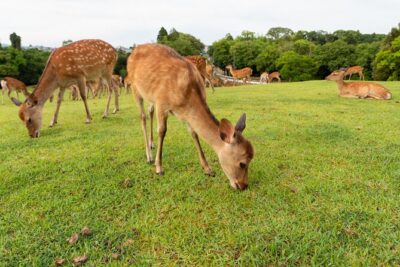
Full Day Guided Tour to Kyoto and Nara from Osaka by Van
Read our review →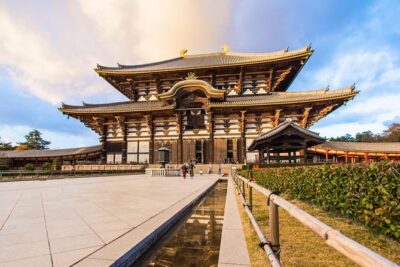
Also filed under