
Reviewed · SAMURAI TRAINING EXPERIENCES
Samurai Experience and Kenbu Show in Kyoto
Kyoto lets you play samurai, then watch the pros. This Kenbu experience mixes a hands-on workshop with a sword dance performance, all in a tight 1 hour 30 minute slot near public transport.
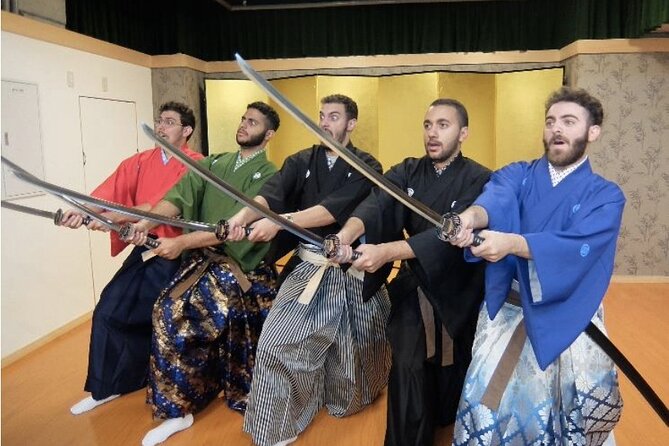
I like that you do more than watch. You get a real introduction to the katana and its presence, plus time to practice samurai etiquette before you step into formal costume and strike poses for a commemorative photo.
The one thing to consider is the format depends on which show option you pick. If you choose the shorter plan, the performance is condensed and you will have less time to sit with the full atmosphere.
In This Review
- Key Highlights Worth Your Attention
- Samurai Workshop at Samurai Kembu Theater, Higashiyama’s Speciality
- Step Into Role: Katana Etiquette and Samurai Presence
- Dressing the Part: Tabi Socks, Kimono or Hakama, and Photo Poses
- The Sensu Folding Fan Moment, When Time Allows
- Kenbu Showtime: Full 40 Minutes or Mini 10 Minutes
- What You Miss If You Go in With the Wrong Expectations
- Price and Value: Is $104.77 Worth It?
- Getting There: Find Samurai Kembu Theater in Sanjo
- Who This Samurai Experience Is Best For
- Should You Book This Samurai and Kenbu Experience?
- FAQ
- How long is the Samurai Experience and Kenbu show?
- What is included in the price?
- Is pickup or dropoff included?
- Where do I meet for the tour?
- How big is the group?
- Do I get a mobile ticket?
- Will I wear traditional samurai clothing and hold a katana?
- What are the Kenbu show options?
- Is this experience refundable or changeable?
Key Highlights Worth Your Attention
- Hold a katana and feel the weight as part of the workshop, not just a demo
- Small group size (max 10) for more personal guidance during practice
- Costume rental plus photo shoot so you leave with a keepsake, not just memories
- Kenbu show blends swordplay, dance, and poetry, with full or mini options
- Optional sensu fan focus if there is time, which adds a surprising layer to samurai culture
Samurai Workshop at Samurai Kembu Theater, Higashiyama’s Speciality
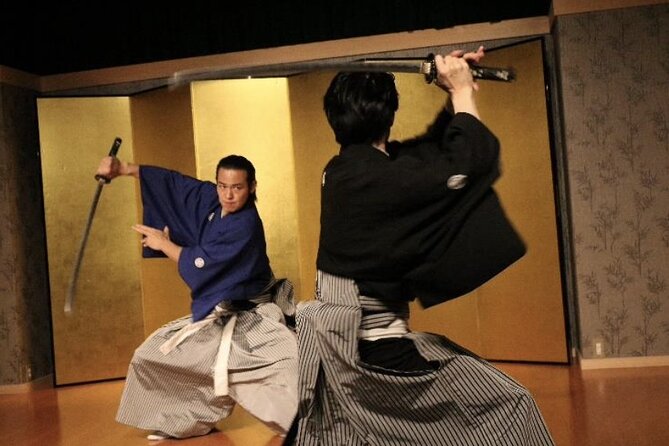
If you want Kyoto culture that is active, not passive, this is a good match. The whole experience is built around Kenbu, a traditional performing art where swordplay, dance, and poetry work together. You start by learning the basic etiquette and mindset tied to samurai training, then you watch the performance end result.
The setting is the Samurai Kembu Theater area in Higashiyama, near the Sanjo district. That matters because it keeps the experience focused. No long transfers. No split-day logistics. You show up, get into costume and instruction, and then enjoy the show in the same overall vibe.
One of the smartest parts is the pacing. You get a 75-minute workshop first, so you understand what you are about to see. Then the Kenbu performance happens after you have your hands on the basics, so you catch more meaning when the sword dances and fan gestures start flying.
Step Into Role: Katana Etiquette and Samurai Presence
The workshop is where you earn your place in the story. You start with an introduction to samurai culture, then you move into the hands-on portion. Expect an English-speaking guide leading you through the key ideas behind samurai composure and discipline, the kind of qualities you do not learn from a screen.
A few specific things you do in the workshop make it feel real:
- You put on tabi socks before dressing. It is a small step, but it sets the body-ready tone, and it helps you feel how traditional footwear and stance connect.
- You learn about the iconic katana as a central theme of the experience. This is not just trivia. You are guided toward understanding what matters in posture, movement control, and the overall role of the sword.
- You try on formal samurai attire, either a kimono or hakama. That change in clothing helps your movements look and feel different, and it affects how you hold yourself during practice.
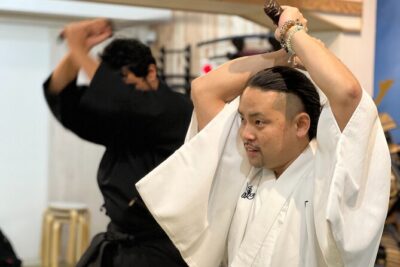
The star moment is the chance to hold a katana and experience the literal weight. That single detail is the difference between cosplay and craft. Swords look sleek in films. In your hands, you understand why proper handling and calm control were treated like serious business.
There is also the etiquette practice. Even if you are not trying to master sword choreography, you will be taught how to behave and move as if you are stepping into a disciplined tradition. That gives the later show more emotional weight, because you are not just watching shapes. You are watching intent.
Pick up a sword for an afternoon
- Kyoto Samurai Experience
★ 5.0 · 1,294 reviews - Kyoto: Kendo and Samurai Experience with Uniform and Gear
★ 4.9 · 815 reviews - Kyoto: Samurai Sword Class by Experts in Traditional Arts
★ 4.9 · 657 reviews - Skip the lines Basic Ticket at SAMURAI NINJA MUSEUM KYOTO
★ 4.5 · 632 reviews
Dressing the Part: Tabi Socks, Kimono or Hakama, and Photo Poses
Traditional costume rental is included, and that is a big value piece here. You do not have to hunt for the right rental shop, schedule anything separately, or figure out how to pose on your own.
During the workshop you will:
- Put on tabi socks
- Wear kimono or hakama, the formal attire used in samurai contexts
- Practice powerful poses while fully dressed
- Take a commemorative photo of the experience
I like the way the photo is tied to the training. It does not feel like an afterthought where you change clothes and quickly snap a picture. Instead, you are encouraged to strike poses that match what you have been practicing, so the photo looks connected to the activity.
Practical note: choose comfortable movement. Your legs and stance matter when you are posing and practicing. If you are the type who packs bulky shoes or hates anything that restricts movement, this is the part where you will feel it. Go in wearing layers that are easy to move in under the costume.
The Sensu Folding Fan Moment, When Time Allows
Kenbu is not only a sword story. The sensu folding fan plays a role too, and the experience may include time to learn about it and its significance to samurai culture. The plan specifically notes that this fan section depends on time.
Why it matters: fans are often treated like accessories in pop culture, but here the fan is presented as a meaningful tool within the overall performance language. Even if your time with it is shorter than a dedicated fan workshop, you will likely walk away with a better sense of why Kenbu blends sword and elegance instead of treating the art as pure combat.
If you are curious about how Japanese arts balance power with grace, this is a nice bonus. It also helps you look at the later performance with a more complete mental picture.
Kenbu Showtime: Full 40 Minutes or Mini 10 Minutes
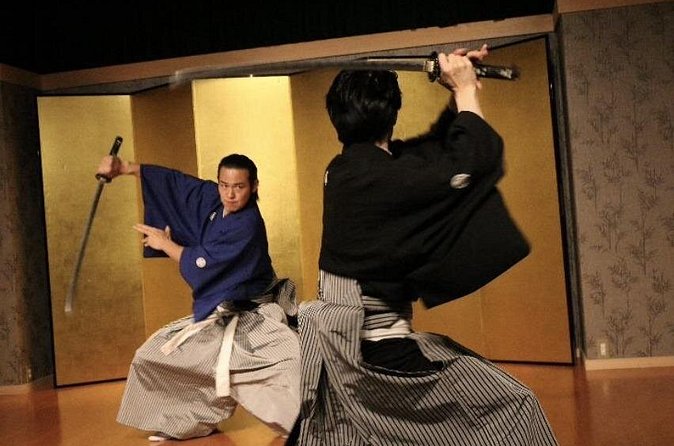
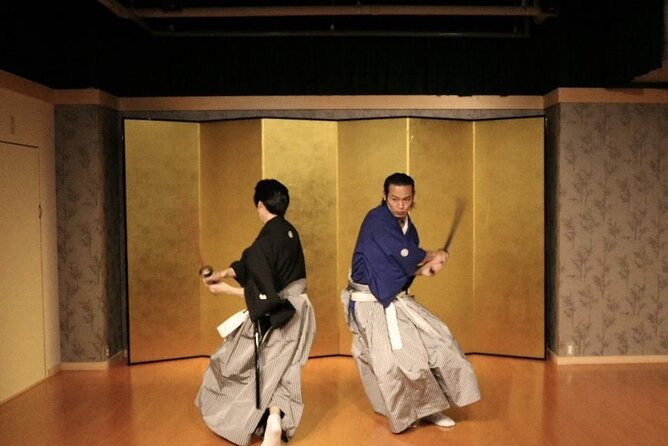
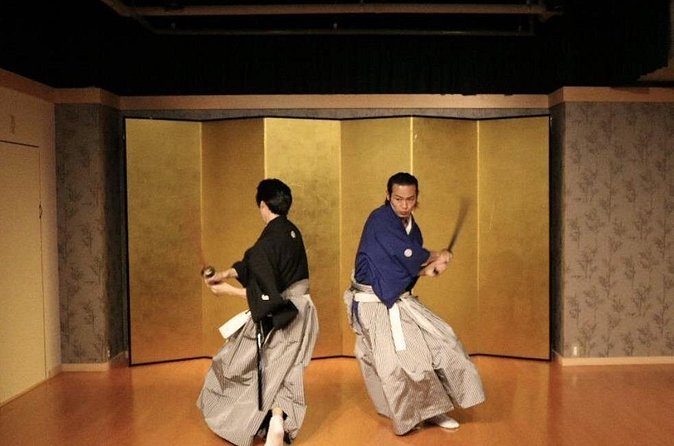
After your workshop, it is showtime. The Kenbu sword dance performance combines swordplay, dance, and poetry, with an emphasis on grace and poise. The experience is designed so you recognize what you have been practicing when the performers start moving.
Here is the key difference you should plan for: the length of the performance depends on which option you choose.
- Full Kenbu: about 40 minutes, performed by 2 to 3 master performers
- Mini-Kenbu: about 10 minutes, performed by a single instructor
What this means for your experience: if you want the performance atmosphere to sink in, choose the full 40-minute option. The longer format gives you more time to notice how swordplay and dance patterns flow together with the poetic elements.
If your schedule is tight and you want a fast, concentrated taste, the mini version can still be worthwhile. You will see the art form, but you may not get the same sense of time and rhythm that builds during the longer performance.
Either way, I think the most praised part of the overall experience is this pairing: practice first, then watch professionals. It turns the show from something you simply observe into something you actually understand.
What You Miss If You Go in With the Wrong Expectations
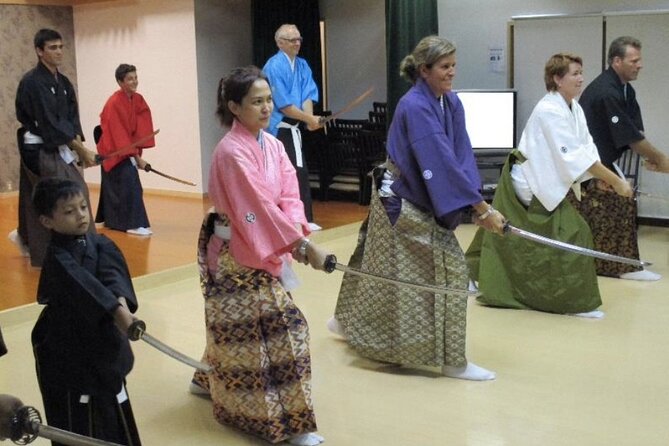
This is not a museum-style lecture tour. You are doing hands-on practice, wearing costume, and handling equipment. That is fantastic if you want an active souvenir and a real cultural activity.
But it might be less satisfying if you are hoping for long explanations about history, philosophy, or a deep dive into sword metallurgy. The focus here is performance art and etiquette practice. You are meant to leave feeling what Kenbu is, not only knowing about it.
Also, the experience is designed for a maximum group size of 10 travelers. That is a plus for personal attention. Just know it still means you will be sharing space and instruction time with others, so you cannot expect private coaching like a dedicated martial arts lesson.
Finally, the katana weight experience is a highlight, but it is still part of a timed workshop. If you want extensive time repeating movements, you may feel the session is structured and paced.
A quieter way to spend a day in Kyoto

Price and Value: Is $104.77 Worth It?
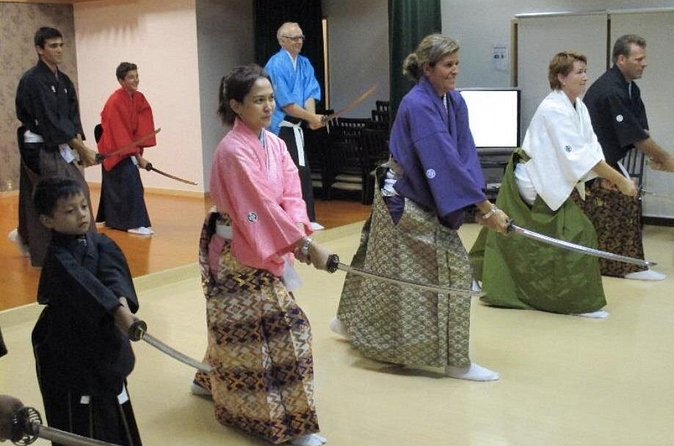
At $104.77 per person, this is not the cheapest Kyoto activity. But it is also not just an entry ticket to a show.
Your money covers several concrete things:
- A 75-minute workshop (instruction, etiquette practice, katana introduction and handling)
- Costume and equipment rental (including the formal attire and access to the gear used in the practice)
- An English-speaking guide
- The Kenbu show afterward
- A commemorative photo tied to the experience
The value is in the combination. You get both sides of Kenbu, the learning part and the performance part, in the same package. And because the group is capped at 10, instruction can be more personal than typical big-group tours.
When I judge value here, I weigh it against the alternatives. If you tried to DIY this with a costume rental plus a separate show ticket, you would spend more time coordinating, and you might not get the structured etiquette practice and hands-on katana moment that makes this experience special.
If you are visiting Kyoto and you only have time for one cultural activity that is active, this one makes a strong case.
Getting There: Find Samurai Kembu Theater in Sanjo

The meeting point is Samurai Kembu Theater Japan, located at:
605-0005 Kyoto, Higashiyama Ward, Sanchōme, 357 GOZANビル, 地下1階, 三条花見小路東入ル
You do not need pickup or dropoff, so plan to arrive on your own using public transport. The good news is it is listed as being near public transportation, which matters in Kyoto where walking can add up fast.
Practical tip: give yourself a little buffer. The meeting point includes a building and basement floor details, so it is worth arriving a bit early and scanning for the correct entrance.
Who This Samurai Experience Is Best For
I would book this if you fit one of these:
- You want a hands-on cultural activity in Kyoto, not just a passive sightseeing stop
- You are interested in Japanese performance arts and want to understand Kenbu beyond the performance itself
- You like small-group experiences, since max 10 travelers helps with individual supervision
- You want an unforgettable souvenir photo made from real practice and costume, not just a random pose in front of a backdrop
You might reconsider if you hate hands-on activities, are uncomfortable wearing traditional clothing, or prefer long, seated explanations over movement-based training.
This also works well as a companion activity to other Kyoto culture. It pairs nicely with temple and shrine visits because it adds an art-and-etiquette layer to the trip.
Should You Book This Samurai and Kenbu Experience?
I think this is a smart booking for most first-time Kyoto visitors who want something memorable that still feels authentic. The best part is the combo: you practice the basics yourself, then you watch the professionals do it with precision, grace, and poetry.
If you have the time, I would lean toward the full 40-minute Kenbu option. It pairs better with the workshop because you will recognize more details as the performance unfolds.
Book it if you want an active cultural moment, a small group vibe, and a real sense of what Kenbu looks like when it is performed well. Skip it only if you want a purely lecture-based cultural tour, or if your schedule requires the shortest possible show.
FAQ
How long is the Samurai Experience and Kenbu show?
The total experience runs about 1 hour 30 minutes. The workshop part is about 75 minutes, and the Kenbu performance length depends on the option you choose.
What is included in the price?
The price includes the workshop fee, costume and equipment rental, an English-speaking guide, and the Kenbu show.
Is pickup or dropoff included?
No. Pickup and dropoff are not included.
Where do I meet for the tour?
You meet at Samurai Kembu Theater Japan, 605-0005 Kyoto, Higashiyama Ward, Sanchōme, 357 GOZANビル, 地下1階 三条花見小路東入ル.
How big is the group?
The maximum group size is 10 travelers.
Do I get a mobile ticket?
Yes, the experience uses a mobile ticket.
Will I wear traditional samurai clothing and hold a katana?
Yes. You will put on tabi socks and wear a kimono or hakama, and you will get the opportunity to hold a katana as part of the workshop.
What are the Kenbu show options?
You can choose based on show length. The full Kenbu show is about 40 minutes with 2 to 3 master performers, and the Mini-Kenbu show is about 10 minutes with a single instructor.
Is this experience refundable or changeable?
No. It is non-refundable and cannot be changed for any reason.
New This Season
- Koyasan Day Trip by Private Car from Kyoto
- Old Port Town and Ultimate Sake Tasting Private Tour From Kyoto
- Kyoto’s Timeless Charm: 3hr Exploration of History and Peace
- Kyoto: 5 Types of Sushi Making
- Sacred Peak & Ancient Paths: Kurama-Kibune Hiking Experience
- Kyoto: Exclusive ZEN practice at Manpukuji temple in Uji
- Kyoto: Private Seasonal Aroma Yoga Class
- Traversing Kyoto’s Scenic West – Arashiyama to Kinkakuji
Samurai Training Experiences, compared.
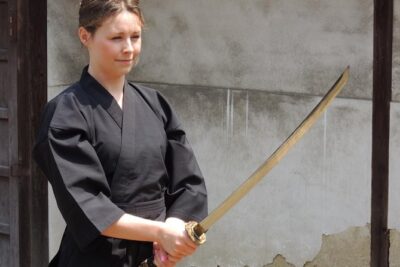
Kendo and Samurai Experience with Uniform and Gear
Read our review →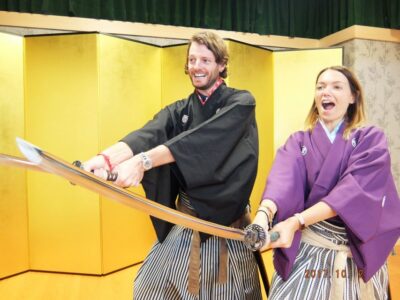
Samurai Sword Class by Experts in Traditional Arts
Read our review →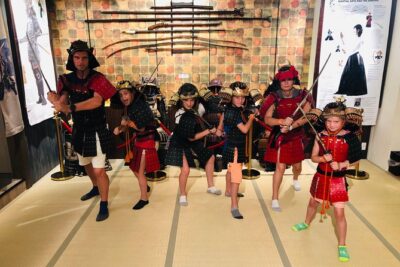
Skip the lines Basic Ticket at SAMURAI NINJA MUSEUM KYOTO
Read our review →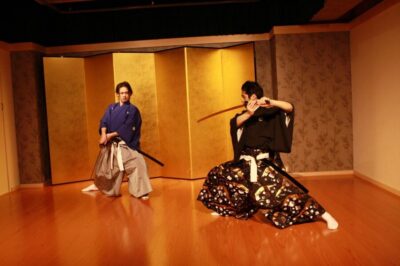
Samurai Training with Modern day Musashi in Kyoto
Read our review →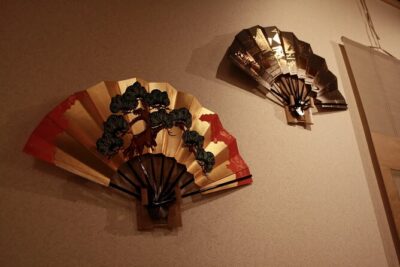
Private Tea Ceremony and Sake Tasting in Kyoto Samurai House
Read our review →Also filed under