
Reviewed · GION GEISHA QUARTER WALKS
Treasures of Kyoto: Geishas & Traditions Private Tour
Kyoto can feel overwhelming fast, especially in Gion. This private tour turns the area into a story you can follow, with a local host guiding you through backstreets and major cultural stops in just 2 hours 30 minutes. I like that it stays private for your party, so the pace feels yours instead of a bus schedule.
What I really liked is how much context you get in a short walk. You’ll connect geisha culture, Shinto and Buddhism, and Kyoto’s performance traditions through real places, not just general talk. One possible drawback to consider is the time limit: most stops are brief, so if you want long temple time or photos that take forever, plan extra time afterward.
In This Review
- Key Highlights You’ll Feel Right Away
- Geisha, Shrines, and Theater, All in One Walking Loop
- Price and Value: What $135.45 Buys You in Kyoto Time
- Getting Started in Higashiyama, Ending Near Yasaka
- How the Route Thinks: From Kabuki Origins to Gion Traditions
- Stop by Stop: What Each Place Adds to the Story
- Statue of Izumo no Okuni, Kabuki’s Origin Point
- Minamiza Theatre, Edo-Period Roots of Performance
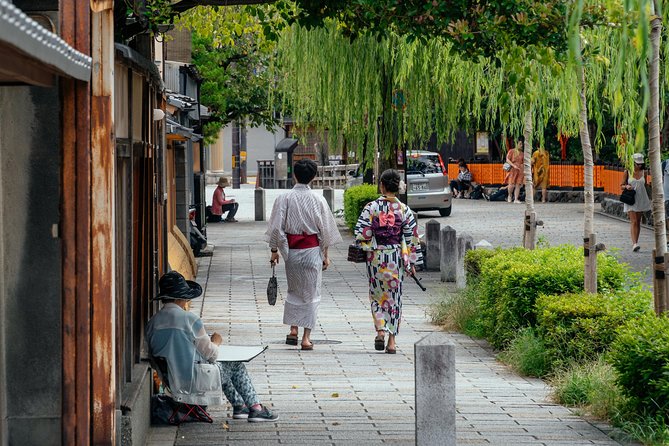
- Gion: Traditional Preservation and Historic Scenery
- Tatsumi Daimyojin Shrine, Where Shinto Meets Buddhism
- Shinbashi Dori, Banquet Buildings and Geisha Entertainment
- Chion-in Temple Steps and Garden Views
- Maruyama Park, A Stretch Toward the Leisure Side
- Yasaka Shrine, with a Legend Tied to Heian-Era Roots
- Shijo Dori, The Fourth Avenue of Heian-kyō
- Nene-no-Michi and Kodaiji Temple’s Connection
- Final Yasaka Shrine Stop, Pagoda Views and a Cafe Finish
- The Real Star: How the Guide Connects Culture to Places
- Pace, Walking Notes, and When This Tour Works Best
- Practical Tips Before You Go
- Should You Book Treasures of Kyoto? My Take
- FAQ
- Is this tour private?
- How long is the tour?
- What is included in the price?
- Are there admission tickets for the stops?
- Where does the tour start and end?
- Is hotel pickup provided?
- Can I cancel for a full refund?
Key Highlights You’ll Feel Right Away
- Private, exclusively for your party, so you can ask questions without holding up anyone else
- A backstreet route designed to help you navigate Gion and nearby areas without getting lost
- Shinto and Buddhism explained on the ground, using shrines and temple spaces you can actually see
- Theater connections with kabuki origins linked to Kyoto’s performance past
- Free admission listed at every stop, so you avoid surprise entry fees during the walk
- A relaxed, conversational pace that makes the walk feel like learning with a friend
Geisha, Shrines, and Theater, All in One Walking Loop
This tour is built for the practical traveler. You’re in Kyoto, you want the Gion area, and you do not want to spend half your day figuring out where to go next. Instead, you walk a connected route with a local host who can explain what you’re looking at and why it matters.
The itinerary is packed with culture, but it does not feel like a checklist. The stops are spread across Gion and its edges, plus nearby religious and theater-related places, so the story moves forward. If you like understanding the how and why behind what you see, you’ll get a lot out of this style of tour.
You’re also dealing with Kyoto’s biggest reality: distances can be short on a map and still feel long on foot. Since the tour is about 2.5 hours, you should expect a steady walking rhythm, with quick pauses for each site.
Price and Value: What $135.45 Buys You in Kyoto Time
At $135.45 per person for a 2 hours 30 minutes private tour, the value is really about focus. You’re paying for a local host who can guide the route, steer you through the right neighborhoods, and keep the cultural explanations tied to the places you stop at. If you were to do Gion on your own, you might cover similar ground, but you’d likely miss the connections between geiko traditions, religion, and Kyoto’s arts.
A small but important value point: the tour lists free admission for each stop. That means you are not juggling ticket lines or budgeting entry fees while you’re already spending your time walking between sites.
Two other value details matter because they affect the day’s friction. There’s no hotel pickup or drop-off, so you should be comfortable getting to the meeting point yourself. And meals are not included, so plan a snack or meal before or after the tour, especially if you’re traveling at a busy hour.
Lantern-lit streets of the geisha quarter
- Kyoto Geisha Walking Tour: Gion District & Hidden Gems
★ 4.7 · 3,273 reviews - Kyoto: Gion Magical Night Walking Tour with Geisha Trivia
★ 4.9 · 2,393 reviews - Kyoto: Gion Geisha District Walking Tour – Stories of Geisha
★ 4.7 · 2,187 reviews - Best of Kyoto: Gion, Geisha, Pagodas & Cobblestones
★ 4.9 · 2,058 reviews
Getting Started in Higashiyama, Ending Near Yasaka
The start point is in Kawabatacho, Higashiyama Ward, and the tour ends at Yasaka Kamimachi, Higashiyama Ward. That neighborhood pairing is ideal if you want to keep exploring after the walk, since you finish close to the Yasaka area and the kind of streets that invite wandering.
The meeting location is listed as near Yasaka no To temple, which helps you anchor where to be. You’ll also want to know that the tour is near public transportation, so you can usually route yourself in and out without needing a car.
One practical thing: because it’s a private tour for your group, you are not sharing time with strangers. That’s great for questions and pacing, but it also means you should show up ready to walk. Comfortable shoes matter here, since you’ll be moving through multiple stops and some include stairs.
How the Route Thinks: From Kabuki Origins to Gion Traditions
This walk connects three big themes that can feel separate in guidebooks: performance arts, religion, and geisha district culture.
Early on, you start with performance history. Then you shift into Gion’s traditional district streets and the religious spaces that shaped everyday life around it. By the end, you’re back at Yasaka Shrine, framed as both a spiritual site and a viewpoint, so you leave with a stronger sense of the area’s layers.
You should also expect a route that makes sense for orientation. Even if you don’t remember every street name, you’ll likely finish with a clearer mental map of where Gion begins, where it edges into shrine and temple areas, and how Kyoto’s cultural life overlaps.
Stop by Stop: What Each Place Adds to the Story
Statue of Izumo no Okuni, Kabuki’s Origin Point
You’ll first visit the Statue of Izumo no Okuni, tied to the originator of kabuki theater. This is a short stop, but it matters because it sets a tone: Kyoto’s traditions are not only about temples and rituals, they also include performance and public arts.
Even with a brief viewing time, this stop helps you connect what you’ll hear later about geisha and entertainment culture. It’s a reminder that the region’s arts have deep roots and evolved over centuries.
A quieter way to spend a day in Kyoto


Minamiza Theatre, Edo-Period Roots of Performance
Next is Minamiza Theatre, with roots reaching back to the early Edo period (1596 to 1615). The point here is less about attending a show and more about understanding why the theater world became part of Kyoto’s identity.
If you like theater history, this stop is satisfying because it gives you a specific timeframe. If you do not care about dates, you can still treat it like a landmark that anchors the performance theme you started with.
Gion: Traditional Preservation and Historic Scenery
Then you move into Gion, including the area around Gion Shinbashi and the section south of Shijo Street. The route uses the city’s own preservation labels as a storytelling tool: some areas are traditional business preservation zones, while others are historical scenery preservation areas.
This is one of the best stops for turning a vague idea of Gion into something concrete. When someone explains what the preservation means, you start seeing Gion as a lived neighborhood shaped by rules and history, not just a pretty postcard district.
Tatsumi Daimyojin Shrine, Where Shinto Meets Buddhism
At Tatsumi Daimyojin Shrine, you’ll hear how Japanese religion can overlap, described here as a mixture of Shinto and Buddhism. This is a big theme in Kyoto, and it’s hard to get it right if you’re self-guided, because people tend to treat shrines and temples as separate worlds.
This stop gives you a practical way to notice overlap. Even if your main focus is geisha culture, understanding why religious spaces can share influences makes the rest of the walk easier to interpret.
Shinbashi Dori, Banquet Buildings and Geisha Entertainment
In Shinbashi Dori, you’ll stand outside traditional banquet buildings where geisha would have entertained customers. This is where the tour shifts from background to social function.
You’re not just learning about geisha as a concept. You’re connecting the cultural role to specific places in the district where entertainment happened. That makes the neighborhood feel more real and less like a story you only see in books.
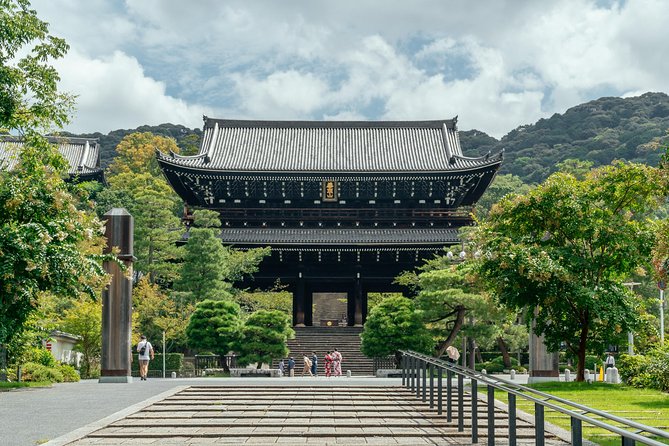
Chion-in Temple Steps and Garden Views
At Chion-in Temple, you walk up the steps for a better view and to see the garden area. Short stops at temples can feel like photo breaks, but this one is positioned to reward movement: you get elevation and sightlines.
If you time it well in your day, this can also be a mental reset. The walk from one street to another can feel busy, and Chion-in gives you a calmer space to take in details.
Maruyama Park, A Stretch Toward the Leisure Side
Maruyama Park is next, reached by walking from the temple toward the park area. This stop keeps the pace balanced, so you’re not only inside shrine and temple spaces.
Park time is useful in Kyoto because it helps you breathe between concentrated cultural sites. It can also help you shake off the feeling that you’re rushing, since this part is more open and about strolling.
Yasaka Shrine, with a Legend Tied to Heian-Era Roots
At Yasaka Shrine, the tour shares a legend suggesting history may go back far before the Heian era, with a reference point around AC 656, in the reign of Emperor Seimei. Even when it’s a legend, stories like this are the reason Kyoto feels layered rather than linear.
You’ll likely notice that the shrine experience is both spiritual and visual. In a short stop, the guide’s job is to help you orient yourself so you see more than just a single angle.
Shijo Dori, The Fourth Avenue of Heian-kyō
Then it’s Shijo Dori, explained as the Fourth Avenue of Heian-kyō, Kyoto’s ancient capital. This stop gives you a street-level time machine.
If you’ve ever felt lost in Kyoto’s street grid, this is the kind of context that helps. You start recognizing that streets have histories, not just names.
Nene-no-Michi and Kodaiji Temple’s Connection
Nene-no-Michi follows, tied to Kodaiji Temple and the fact that Kodaiji was built in 1605 at the behest of Nene. This is another stop where a name becomes more meaningful because you get the reason behind it.
If you enjoy learning how power, patronage, and religious spaces connect, this part will land. Even without long lingering, you’re given a specific story anchor.
Final Yasaka Shrine Stop, Pagoda Views and a Cafe Finish
The tour returns to Yasaka Shrine for a final segment described as a picturesque 5-story pagoda temple and sweeping views from the top. After the shrine time, you finish in a local cafe nearby.
This ending is smart. You get your last viewpoint push, then you sit down without having to immediately figure out where to go for a rest. Since food is not included, the cafe finish is a practical bridge to your next plan.
The Real Star: How the Guide Connects Culture to Places
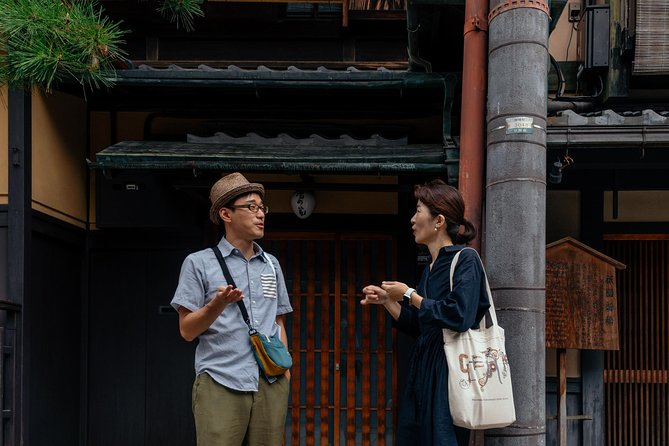
What makes tours like this work is not just where you go, it’s how someone connects it to daily life. The local hosts described in past groups have a strong focus on respect and context, and they’re able to explain the differences and connections between Shinto and Buddhism in plain language.
You may also find that your guide adapts the conversation style to your group. Some guides named in past groups include Ted, Maha, Kako, Shohei, and Ahmed, and the common thread is making the area understandable without turning it into a lecture.
If you’re traveling with kids, this matters even more. Short stops and guided explanations are easier for younger questions, and the route includes plenty of points where curiosity naturally kicks in, like theater origins, shrine beliefs, and the role of geisha in entertainment spaces.
Pace, Walking Notes, and When This Tour Works Best
The tour runs about 2 hours 30 minutes and includes multiple stops in 10 to 20 minute segments. That means you’ll see a lot, but you will not do deep, slow temple study at each place. Think of it as a fast, guided orientation plus culture-building.
A moderate physical fitness level is listed. Some locations involve steps, and you’ll be walking between points in Higashiyama. You do not need to be an athlete, but you should be comfortable with frequent short walking bursts.
This is also the kind of tour that works especially well if you only have one afternoon or limited daylight. Kyoto’s light changes quickly, and having a focused plan helps you avoid wasted time. It’s also a smart choice if you’re trying to fit Gion into a packed schedule alongside other neighborhoods.
Practical Tips Before You Go
Here are a few things that will make the experience smoother.
First, arrive on time and plan your route to the meeting point in Kawabatacho near Yasaka no To temple. Since hotel pickup is not included, you’re responsible for getting there.
Second, bring water and a snack plan. Food and beverages are not listed as included, though the tour ends near a cafe. If your timing puts you between meals, you’ll feel it.
Third, wear shoes you don’t mind getting a little tired in. Even with short stops, you’re walking a lot of Kyoto footpath and steps.
Finally, treat the cafe stop at the end as part of the design. It’s the moment to slow down, reset, and decide what you want to explore next around Yasaka Kamimachi.
Should You Book Treasures of Kyoto? My Take
Book it if you want a private, time-efficient way to understand Gion and the surrounding religious and performance world. The combination of theater roots, geisha entertainment context, and Shinto and Buddhism explanations gives you a fuller picture than just wandering.
Also book it if you’re the kind of traveler who hates getting lost. The tour is explicitly built to help you navigate backstreets and not feel like you’re guessing your way through the district.
Skip it or add extra time if you know you want long stays at temples or you want to spend lots of time at a single site. With multiple brief stops, you may feel ready to keep going afterward, not fully satisfied if you planned to linger.
FAQ
Is this tour private?
Yes. It is a private tour/activity, exclusively for your party.
How long is the tour?
The duration is about 2 hours 30 minutes.
What is included in the price?
Included are a private tour, a local guide, and the tour is listed as carbon neutral.
Are there admission tickets for the stops?
The stops listed in the itinerary show admission ticket free for each location.
Where does the tour start and end?
It starts in Kawabatacho, Higashiyama Ward, Kyoto, and ends at Yasaka Kamimachi, Higashiyama Ward, Kyoto. The meeting area is also listed near Yasaka no To temple.
Is hotel pickup provided?
No, hotel pick-up and drop-off are not included.
Can I cancel for a full refund?
Yes. Free cancellation is available up to 24 hours in advance for a full refund.
New This Season
- Koyasan Day Trip by Private Car from Kyoto
- Old Port Town and Ultimate Sake Tasting Private Tour From Kyoto
- Kyoto’s Timeless Charm: 3hr Exploration of History and Peace
- Kyoto: 5 Types of Sushi Making
- Sacred Peak & Ancient Paths: Kurama-Kibune Hiking Experience
- Kyoto: Exclusive ZEN practice at Manpukuji temple in Uji
- Kyoto: Private Seasonal Aroma Yoga Class
- Traversing Kyoto’s Scenic West – Arashiyama to Kinkakuji
Gion Geisha Quarter Walks, compared.
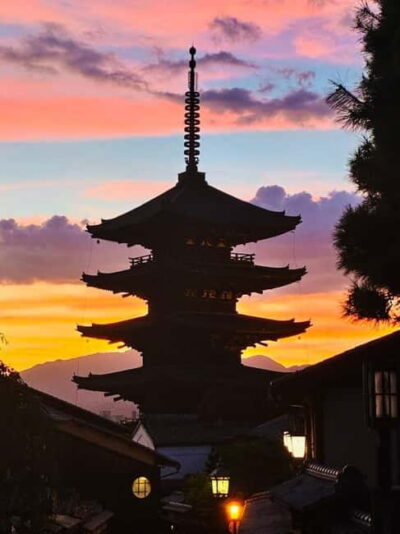
Kyoto Geisha Walking Tour: Gion District & Hidden Gems
Read our review →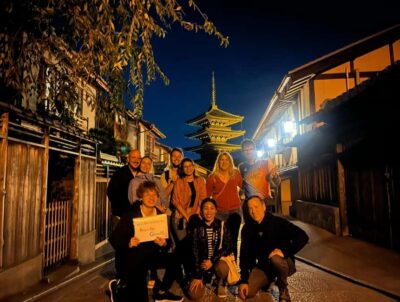
Gion Magical Night Walking Tour with Geisha Trivia
Read our review →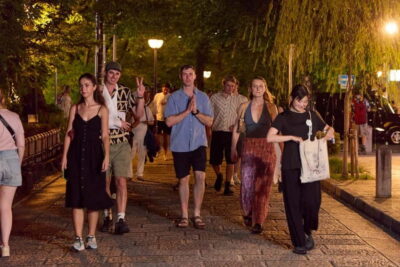
Gion Geisha District Walking Tour – Stories of Geisha
Read our review →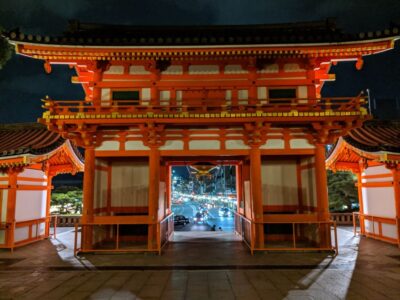
Best of Kyoto: Gion, Geisha, Pagodas & Cobblestones
Read our review →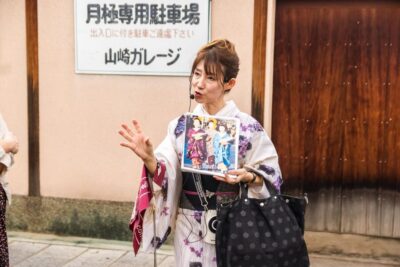
Kyoto Night Foodie Tour in Gion (9+ dishes + 6 Sake tastings)
Read our review →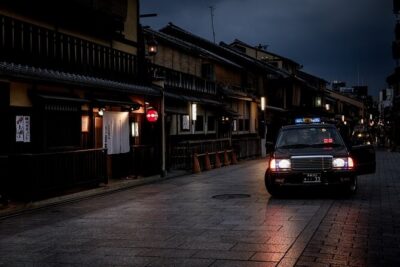
Kyoto Gion Geisha District Walking Tour – The Stories of Geisha
Read our review →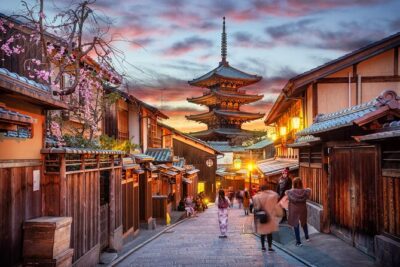
Kyoto Gion: 2-Hour Geisha Culture & History Walking Tour
Read our review →Also filed under