
Reviewed · SUSHI-MAKING WORKSHOPS
Art Sushi Class At Local Home With Professional Instructor
Sushi rolls can look like flowers. In a one-hour private class in a real Kyoto home near Nijo Castle, you learn the story of sushi rolls and then shape a flower-like roll pattern that you typically will not see in everyday restaurants. I also love that the instructor keeps things practical, from rice seasoning to rolling technique, so you leave with a skill you can actually repeat.
One thing to plan for up front: video recording is not allowed, so rely on the recipe booklet and the class photos you can take part in during instruction.
In This Review
- Key Highlights You Should Not Miss
- First: Find the Sakura Experience House by Nijo Castle
- A One-Hour Sushi Lesson in a Real Kyoto Home (Not a Demo Show)
- Why Sushi Rolls Look Like They Do: The Vinegar and Pattern Story
- Making the Flower-Shaped Roll: Where Technique Meets Art
- The Tools, Tea, and Komono Details That Make It Feel Worth $82
- Who This Kyoto Sushi Class Fits Best (And Who Might Want to Skip)
- Tips to Make Your Hour Go Smoothly
- Is It Worth Booking This Sushi Class in Kyoto?
- FAQ
- How long is the Art Sushi Class?
- What is the price per person?
- What will I make during the class?
- What is included in the class?
- What languages and group size is the class?
- Can I record video during the class?
- Is the building wheelchair accessible?
- Is it suitable for young children, and what is the cancellation window?
Key Highlights You Should Not Miss
Flower-inspired sushi rolling pattern you can recreate at home
Sushi roll history made understandable, from Edo period origins to later pattern changes
Natural edible pigments for decorative rice, which explains how those ornate colors get created
Komono, Japanese tea or water, and rental tools, all included so you can focus on learning
Private-group pace with an English and Japanese instructor, including patient guidance
First: Find the Sakura Experience House by Nijo Castle
This class is held in a Japanese-style house very close to Nijo Castle, which is great because you can roll it into an already-planned day of sightseeing. The helpful part is that it is not tucked away in some confusing maze. It is about 200 meters east of Nijo Castle, with a small wooden gate at the front and a noren curtain by the entrance.
Your best move is to use your map app and search for さくら日本文化体験 Sakura Experience Japanese Culture. The provider notes that some map versions have been wrong in Kyoto after COVID-19 changes, so updating your app can save you time and stress.
To orient yourself quickly:
Around 3 minutes on foot from Nijo Castle
About 3 minutes walk from Kyoto city bus Fuchomae
Roughly 3 minutes walk from Kyoto subway Nijojomae
About 15 minutes on foot from Hankyu Shijo
If you are coming by taxi from Kyoto Station, it is about 10 minutes
Also, you can park your bike, which is a small detail that makes a difference if you are doing Kyoto by bicycle.
A One-Hour Sushi Lesson in a Real Kyoto Home (Not a Demo Show)
This is a private group experience, which means you are not competing with a crowd for attention. That matters in sushi rolling because small timing and technique choices can be the difference between a neat roll and a sad, lopsided situation.
You will spend one hour in the house learning with a professional instructor who speaks English and Japanese. You wear a komono, and you get Japanese tea or water during the class. Those touches might seem ornamental, but they set the tone. The experience is meant to feel like you are being hosted, not processed.
The house itself is part of the appeal. When you arrive at that small gate and noren curtain, you get a sense of place right away. It is the kind of setting that makes the hands-on part feel more meaningful, because sushi here is treated as a craft you learn from a person, not an attraction you watch.
Learn to roll your own sushi
- Sushi Making in Kyoto! Same-day bookings welcome!
★ 5.0 · 713 reviews - The Original Small-Group Sushi Making Class in Kyoto
★ 5.0 · 436 reviews - Kyoto: Small-Group Authentic Sushi Making Workshop
★ 5.0 · 137 reviews - Sushi – Authentic Japanese Cooking Class – the best souvenir from Kyoto!
★ 5.0 · 93 reviews
Why Sushi Rolls Look Like They Do: The Vinegar and Pattern Story
Before you start rolling, you get context that actually helps your hands. You will learn sushi roll history and trivia, including how the style developed over time.
Here is what you can expect to hear in a way that clicks:
Between 1750 and 1776, sushi rolls developed during the Edo period as popular culture blossomed
At that time, sushi made with sake and vinegar spread, and people experimented with lots of foods
In the early 1800s, vinegar-based sushi that could be made quickly became more mainstream
In the Showa period, sushi rolls started to be made with more complicated patterns
That timeline matters because the instructor is not just telling a story. They are giving you a reason for why precision and design are part of the craft today. If you understand that ornate patterns became a thing later, you will appreciate why this class focuses on detail work, not just eating.
You also get a clear look at the ingredients that power the roll:
rice vinegar
sugar
sesame
ginger
vegetables
nori (seaweed)
This is the kind of learning that helps when you try again later. You are not guessing what you are doing, because you understand the purpose behind the seasoning balance and the structure.
Making the Flower-Shaped Roll: Where Technique Meets Art
The main event is crafting sushi rolls that are shaped like a beautiful flower. The goal is not just to fill and roll. The goal is to make something that looks intentional.
Expect a guided, step-by-step lesson on how to:
prepare and season the rice using the class method (including sugar and rice vinegar)
handle the rice so it stays workable while you form the pattern
build the filling with vegetables, sesame, and ginger in the right way
use nori effectively so the roll holds together
assemble the pattern so it comes out neat and picture-worthy
One extra element that makes this more than a basic sushi tutorial is the color and pattern work. For the ornate designs, the class uses natural edible pigments to color the rice. That is a smart detail to learn, because it explains how those decorative sections are possible without turning the rice into something gimmicky.
If you are the type who has watched sushi videos online and thought, That looks cool but I do not know why mine never turns out, this class design helps. You are learning the “why” in addition to the “how,” and the instructor’s patience matters.
In my experience of this kind of workshop, the best part is when your hands finally get that rhythm, and the roll starts to look like the example. The class is built to get you there within a short time, and the result is something you can show people at home without apologizing.
The Tools, Tea, and Komono Details That Make It Feel Worth $82
Let’s talk value, because $82 per person for a one-hour class can sound either reasonable or steep depending on what you expect. Here is why it can feel fair.
You are not just getting instruction. You are getting:
rental tools for sushi making
an original recipe booklet you can use at home
Japanese tea or water
komono for the session
a professional instructor who can guide the exact technique needed for the pattern
Also, the class result is not merely edible. It is designed. You are aiming to make rolls that are visually distinctive, which you can treat as a souvenir of the skill, not just the meal.
One of the best signs this is a real craft lesson is how it is treated in the room. The instructor does things like taking time to help you get the look right, including capturing the moment with photos during the process. That matters because when you are learning a pattern you will recreate later, you want a clear reference for what “done right” looks like.
And when you leave, you are not just leaving with food. You are leaving with the instructions to do it again.
Who This Kyoto Sushi Class Fits Best (And Who Might Want to Skip)
This works especially well if you:
want a hands-on Kyoto activity that is close to major sights like Nijo Castle
like learning the story behind food, not just following steps
enjoy craftwork and detail, because the pattern and rice coloring are the point
want to return home able to impress with something more special than basic roll-making
It may be less ideal if:
you are relying on video for learning or for social posts, because video recording is not allowed
you are traveling with very young kids, since it is not suitable for children under 4
It is also listed as wheelchair accessible, and the building is accessible to wheelchairs and baby strollers, so you are not dealing with a typical “old building staircase problem” for this one.
The private-group format also helps if you want a calmer learning pace. If you are the kind of person who hates feeling rushed, this is the better setup than a crowded, all-at-once demo.
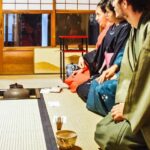
A quieter way to spend a day in Kyoto
Tips to Make Your Hour Go Smoothly
If you want the best chance of getting that flower pattern right, prep your expectations in a practical way.
First, arrive on time. The meeting point is very close to Nijo Castle, but there are some map issues that can cause delays if you are using an outdated app. Give yourself a little buffer so you can settle in, put on the komono comfortably, and start without stress.
Second, treat this as a skill session, not a show. One hour goes fast. Watch the instructor’s technique, then copy it. If you pause to think too hard, the rice can cool and rolling becomes harder. So let your hands learn quickly, then refine.
Third, plan to practice right after you get home. The reason the class gives you an original recipe booklet is not just for decoration. Use it. Your memory of the steps fades faster than you think, and the booklet helps you keep your version aligned with the method.
Finally, be ready for the sensory details. You will be working with vinegar, sesame, ginger, vegetables, and nori. That is part of the craft, and it is also part of what makes the class feel real.
Is It Worth Booking This Sushi Class in Kyoto?
My take: if you want a Kyoto experience that feels like learning a living craft, this is a strong choice.
It earns its price because you get more than a meal. You get:
a guided ability to make ornate, flower-like sushi rolls
a clear explanation of how sushi rolls evolved, from Edo period vinegar sushi to later pattern complexity
take-home support via an original recipe booklet
a setting that feels like a real Japanese home near Nijo Castle
Book it if you are excited to do the rolling yourself and you value the hands-on part. Skip it only if video recording is a deal-breaker for you or if your group includes a child under 4.
If you can do those two checks, you are likely to leave with something better than a photo. You will leave with a technique you can use again.
FAQ
How long is the Art Sushi Class?
The class lasts 1 hour.
What is the price per person?
The price is $82 per person.
What will I make during the class?
You will make sushi rolls designed to look like a flower, using rice vinegar, sugar, sesame, ginger, vegetables, and nori.
What is included in the class?
It includes Japanese tea or water, rental tools for sushi making, and an original recipe booklet.
What languages and group size is the class?
The instructor speaks English and Japanese, and it is a private group experience.
Can I record video during the class?
No, video recording is not allowed.
Is the building wheelchair accessible?
Yes. The building is accessible to wheelchairs and baby strollers, and the activity is listed as wheelchair accessible.
Is it suitable for young children, and what is the cancellation window?
It is not suitable for children under 4 years. You can cancel up to 24 hours in advance for a full refund.
New This Season
- Koyasan Day Trip by Private Car from Kyoto
- Old Port Town and Ultimate Sake Tasting Private Tour From Kyoto
- Kyoto’s Timeless Charm: 3hr Exploration of History and Peace
- Kyoto: 5 Types of Sushi Making
- Sacred Peak & Ancient Paths: Kurama-Kibune Hiking Experience
- Kyoto: Exclusive ZEN practice at Manpukuji temple in Uji
- Kyoto: Private Seasonal Aroma Yoga Class
- Traversing Kyoto’s Scenic West – Arashiyama to Kinkakuji
Sushi-Making Workshops, compared.
Sushi Making in Kyoto! Same-day bookings welcome!
Read our review →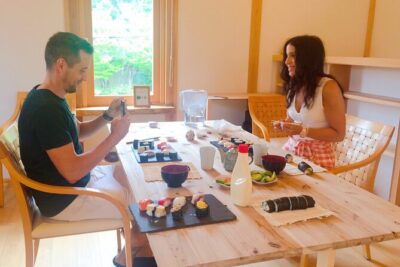
The Original Small-Group Sushi Making Class in Kyoto
Read our review →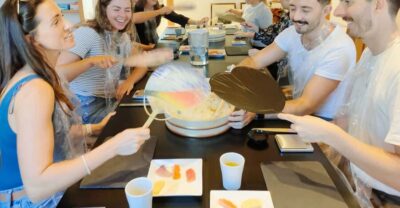
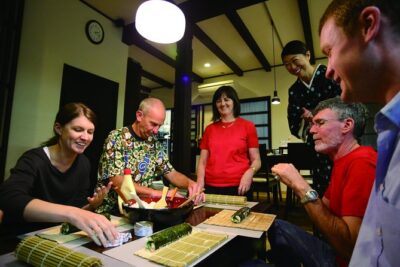
Sushi – Authentic Japanese Cooking Class – the best souvenir from Kyoto!
Read our review →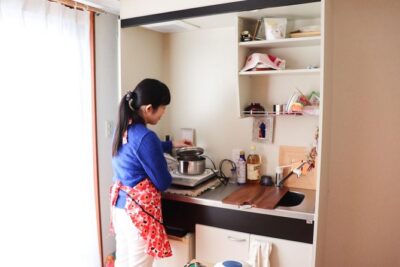
Private Kyoto Sushi Cooking Class & Tea Ceremony with Emika
Read our review →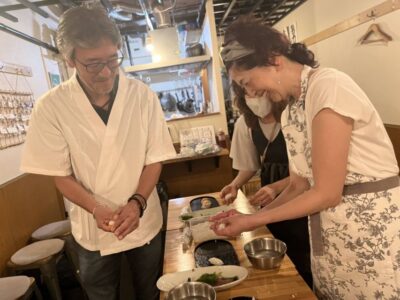
Enjoy Sushi & Market Tour! Best for Family & Couple!
Read our review →
Sushi or Traditional Japanese Cuisine in a Kyoto Home with Emika
Read our review →Also filed under