
Reviewed · ARTISAN CRAFT WORKSHOPS
Authentic Knife Making Experience at a Blacksmith in Kyoto
Hot steel plus calm instruction.
This hands-on workshop at Atelier NIN is built around making a handmade Japanese knife step by step, from dressing up to finishing the edge. I especially like that you get a lot of time at the bench instead of watching from the sidelines, and you stay in a small group so help is close.
The best part for me is the pace and feedback. You learn key skills in one go, including how forging works and how to get from ground steel to a sharp, usable blade, with an English guide you can actually ask questions to. In one class, the teacher named Diaki was noted as engaging and hands-on with quick corrections, which matches the vibe you want here.
One thing to consider is effort. Hammering hot steel and doing grinding work is physical, and the workshop calls for a moderate fitness level, so plan for a bit of soreness and take safety seriously.
In This Review
- Key things to know before you go
- A 3-hour Kyoto workshop where your hands do the learning
- Dressing up and first tool practice at Atelier NIN
- Forging the blade: hot steel, real shaping, and safety habits
- Grinding, sharpening, and polishing to a functional edge
- Rurikoin stop and the practical reality of getting there
- What you make: knife size, iron handle, and take-home reality
- English help and small-group coaching that actually corrects mistakes
- Price and value in Kyoto for a real craft souvenir
- Who this knife making workshop suits best
- Should you book Atelier NIN’s knife making workshop?
- FAQ
- How long is the knife making experience?
- What is the group size limit?
- What is included in the price?
- Do I need to bring protective clothes?
- What knife size will I make?
- Is the class okay for beginners?
- What is not included?
- Is it easy to reach from public transportation?
- What is the cancellation policy?
Key things to know before you go
- You make the knife yourself, not just watch it
- Small group size, max 6, means faster, clearer help
- Uniform provided, so you can show up without the usual gear hunt
- You learn the full chain: forging, sharpening, and polishing
- Knife size is around 13 to 15 cm, and it can vary since it is handmade
- The final knife can be sharp enough to affect travel plans
A 3-hour Kyoto workshop where your hands do the learning
This is the kind of experience that feels simple on paper and wildly satisfying in real life: you come to Kyoto, you sit at a workbench, and you leave with a real piece of craftsmanship you built with your own effort. The total time is about 3 hours, and the structure is tight enough that you do not waste half the day in “introduction mode.”
For value, I like that the workshop includes what you need to participate, not just the lesson. You get a uniform, an English guide, and a set of tools used to make knives. That means you can focus on the making part, and you are not stuck figuring out what to wear or where to buy basics.
Also, forging in this format is designed for normal human schedules. In the description, a larger, typical cooking knife can take more than 5 hours and cost more than $400 in longer, traditional setups. Here, you still learn the process, but you do it in a 2.5-hour forging experience, so you get the core skill without paying for a full multi-hour shop schedule.
Dressing up and first tool practice at Atelier NIN
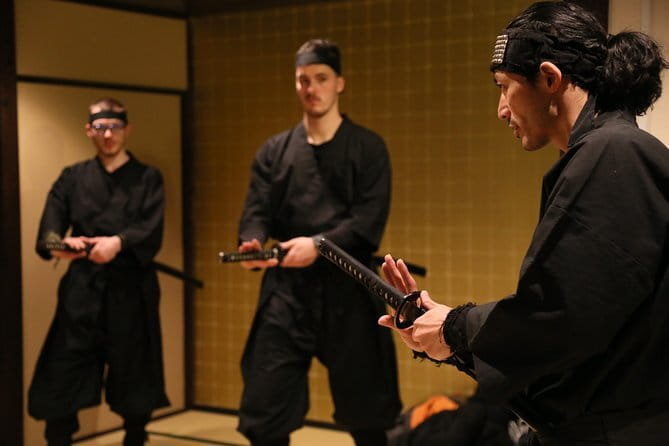
The experience starts with getting into traditional goldsmith-style clothing. It is not a gimmick. It signals that you are entering a working craft space, and it helps you settle into the right mindset fast.
Right after that, you get instruction on tool use. The workshop includes learning how to dress for safety, how to handle the tools, and how the workflow runs. This matters because knife making is one of those activities where small mistakes happen quickly, especially in the heat-and-hammer stage.
You should also know there are no “bring your own protective gear” headaches. The workshop provides a uniform, so you can travel light and still be prepared. And the group size is small, so if you feel uncertain, you can get a quick check before you move on.
One detail I think is especially helpful: the class emphasizes that even if you have never made knives, forging is the key skill you will learn. That makes it feel less like you are auditioning for a technical hobby, and more like you are being taught a craft step by step.
Make something with a Kyoto craftsman
- Authentic knife making experience at a blacksmith in Kyoto
★ 4.8 · 350 reviews - Kyoto: Calligraphy class at Buddhist temple in city center
★ 5.0 · 167 reviews - Roketsu dyeing experience: M course Roketsu Dyeing Experience
★ 5.0 · 163 reviews - Kyoto: Japanese Calligraphy Class
★ 4.8 · 89 reviews
Forging the blade: hot steel, real shaping, and safety habits
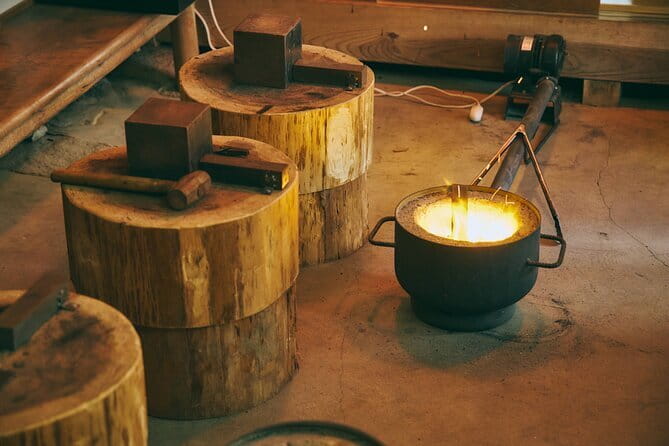
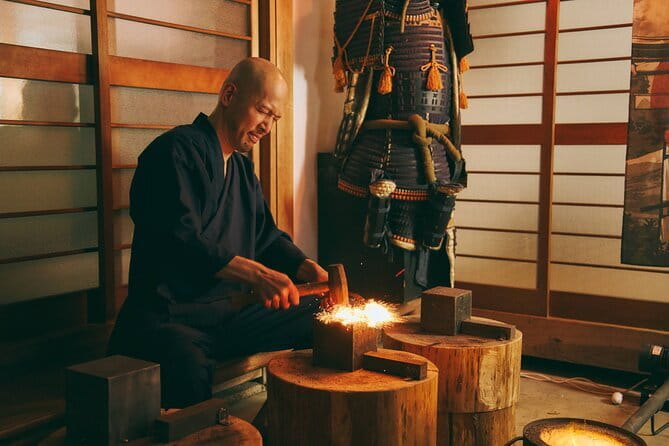
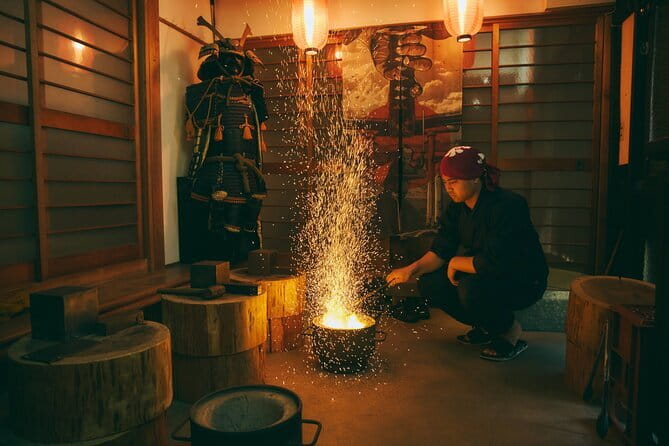
Forging is the heart of this experience, and it is also where you feel the workshop shift from “lesson” to “work.” You hammer and shape hot steel to create the blade body, and you do it using a traditional process associated with Japanese kitchen knives.
Expect the workload to be direct. Several reviews describe hammering as strenuous, basically a workout, and you should take that seriously. You are asked to have moderate physical fitness, and that is because your wrists, shoulders, and timing all matter when you are shaping metal by hand.
The upside is that forging teaches you something you cannot get from a video. You learn how the metal responds to heat, how repeated strikes change the shape, and how patience affects the final geometry. When the staff corrects your technique, it is usually about practical things like how to hold, how to strike, and how to avoid uneven shaping.
Grinding, sharpening, and polishing to a functional edge
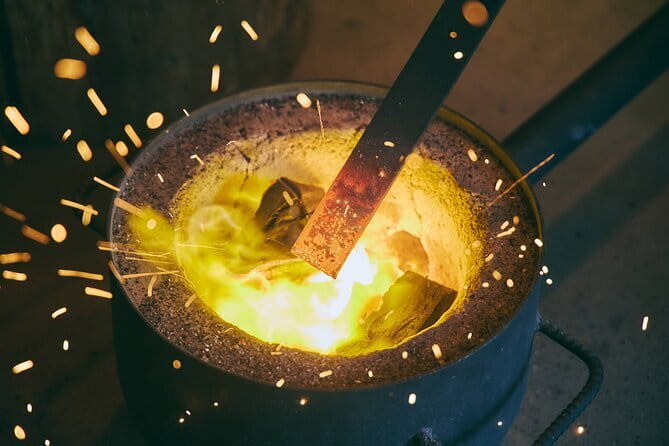
Once the forging step creates your blade shape, the class moves into finishing, and this is where your knife starts to look like the thing you will actually use. You will do grinding and sanding, then sharpen, then polish. The workshop makes sure you understand the sequence rather than treating it like a magical final stage.
In plain terms, you will spend a meaningful amount of time turning rough steel into a clean, smooth blade. One review also points out that after the forging initial work, staff guide you through grinding and finishing on belts, and the emphasis is on helping you end with something you are happy with.
If I were advising you based on what people noticed, I would say this: slow down during grinding. The edge shape and angle matter, and reviews that mentioned a less-than-perfect outcome often trace it back to finishing guidance and technique. You do not need to be perfect, but you do want to listen closely when the instructor shows you how the blade should sit and how the sanding belts behave.
Safety matters here too. Staff show you how to handle tools safely during the forging and finishing steps. One review wished safety shoes were provided instead of bare feet, and they also mention dropping the knife during belt work. I would come with the mindset that you will need to be careful and steady during the sanding phase, even if you feel comfortable after forging.
Rurikoin stop and the practical reality of getting there
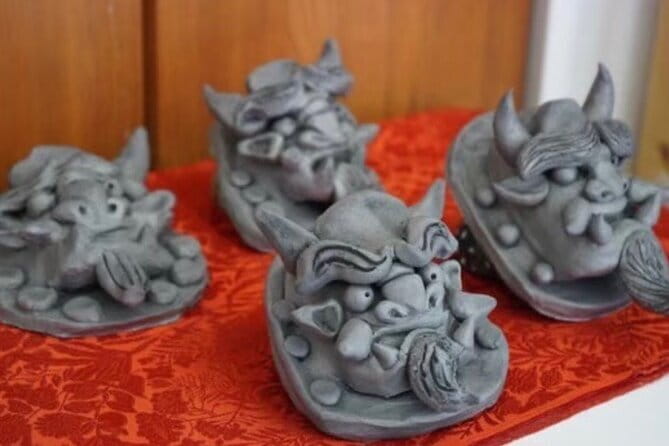
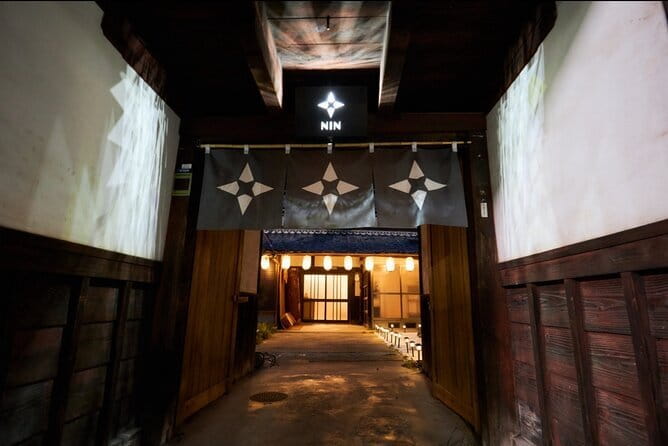
The activity includes a stop at Rurikoin. The experience is run from studio NIN, and you meet at studio NIN at 八瀬168-1 Yasenosechō, Sakyo Ward, Kyoto (Kyoto 601-1254). The session ends back at the meeting point.
Location-wise, the workshop is near public transportation, which is great. But do not assume it is right outside the station gates. One review called out that phone signal could be spotty around the starting area and that the place sits within a residential setting, so having a backup plan for directions helps.
Also, build in extra time. A review mentions a long walk to the location, and it is the kind of thing that can turn a good day into “where are we?” if you under-estimate it. If you want to be relaxed, treat it like a hike-walk from your transit stop, not a quick stroll.
Tip: go early enough that you can find your way without rushing. In a workshop where you are going to hammer and grind, you do not want your first minutes to be stressed.
What you make: knife size, iron handle, and take-home reality
You will make a knife about 13 to 15 cm. Because it is handmade, it may vary slightly by person, which is part of the charm. The workshop also explains the economics of size: bigger knives take more time and money. You are not paying for an overly long project here, and you should treat the output size as part of the value.
About the handle: the workshop description emphasizes no wooden handles, and the handle is made of iron using a traditional, simple method. That is a meaningful difference from many souvenir knife workshops, where you might get something that feels decorative more than practical.
Now, what about using it at home? One review says the knife is sharp and functional, and that you glue the handle into the blade after. That aligns with a class where you do most of the shaping and finishing on-site, then complete the final assembly when you are back home.
Travel note for flying: at least one review warns that blade length may exceed carry-on rules. The safest approach is to plan to check a bag if you are heading home by air. If you are driving or taking a train, you will still want careful wrapping, but the restriction risk is lower.
Finally, expect a finished presentation. Reviews mention gift wrapping and even a small photo provided as a keepsake. These little touches turn the knife into a story you can share, not just a metal object.
A day of temples goes further with something to break it up.



English help and small-group coaching that actually corrects mistakes
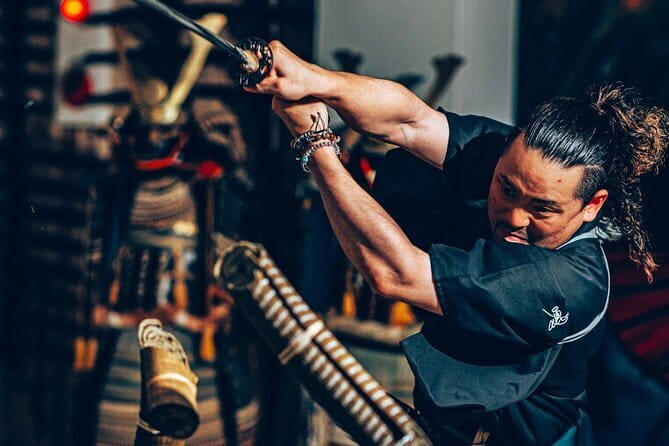
This is where you get the “why this is worth it” factor. With a maximum of 6 travelers, you are not stuck waiting for the instructor to reach your station. That matters in a craft where each person’s blade angle, hammering alignment, and sanding progress will differ.
In the class style you can expect, staff are described as friendly, patient, and very helpful. More than once, reviews stress that instructors corrected amateur attempts with the right blend of guidance and encouragement, so you do not feel left alone with hot steel and a belt sander.
If you want to maximize your result, do this:
- Ask questions early, not after you finish a step.
- Pay attention to how the instructor demonstrates safe tool handling.
- Keep your pace steady during grinding, then adjust based on feedback.
In at least one review, the teacher Diaki was specifically praised for being engaging and quietly stepping in when needed. That kind of “check-in coaching” is what you want from an English-guided workshop, especially if you are not fluent in tool vocabulary.
Price and value in Kyoto for a real craft souvenir

The price is $158.52 per person, for about 3 hours of instruction and hands-on making. On the surface, that can sound pricey compared with casual activities. But when you compare it to the time and materials involved, the value makes more sense.
You are paying for:
- A real craft workflow, including forging and finishing steps
- Staff time to keep you safe and prevent preventable mistakes
- Tools and materials provided so you do not have to source anything
- A finished, functional knife you take home
There is also a hidden value: the class compresses a traditionally long learning curve into a single session. The workshop itself notes that a regular cooking knife can take more than 5 hours in a longer process and can cost more than $400. You are not buying a career path, but you are buying direct access to core technique in a sane timeframe.
One practical downside to price value is that you still should budget for what is not included, like snacks. You may want to eat beforehand so you do not get hungry during grinding and sharpening.
Who this knife making workshop suits best
This is a great fit if you want an authentic Kyoto craft experience where you actively participate. It suits:
- Couples and friends who want to do something different from temples and shopping
- Adults who like hands-on skills, even if you are a beginner
- Families with teens, since one review mentions a 13-year-old enjoying the forging despite a tight space and needing guidance
It might be less ideal if:
- You expect a relaxed, mostly observational experience
- You are sensitive to manual labor or fatigue
- You want a hands-off souvenir, because this is truly you hammering and grinding
The good news is that the workshop is built for novices. The core forging lesson is explained as something you can learn even if you have never tried making knives.
Should you book Atelier NIN’s knife making workshop?
I think you should book this workshop if your travel style includes making something with your hands and learning a craft you can show off later. You are getting forging, sharpening, and polishing in one compact session, with enough English support to feel confident. The small group size helps, and the finished knife is the kind of souvenir that earns its place in your kitchen drawer.
You might skip it if you know you dislike physical work, or if you are only looking for a quick, low-effort activity. Also, if you are flying home, plan for how you will pack a sharp, blade-length item.
If you want a Kyoto memory that is more than a photo, this is one of those days that sticks.
FAQ
How long is the knife making experience?
It runs for about 3 hours.
What is the group size limit?
The workshop has a maximum of 6 travelers.
What is included in the price?
You get a uniform, an English guide, and a set of tools used to make knives.
Do I need to bring protective clothes?
No. A uniform is provided, so you do not need to source protective clothes.
What knife size will I make?
The knife is approximately 13 to 15 centimeters. Because it is handmade, it may vary.
Is the class okay for beginners?
Yes. The workshop notes that forging is the key focus and that you should not worry even if you have never tried making knives before.
What is not included?
Snacks and private transportation are not included.
Is it easy to reach from public transportation?
It is described as near public transportation, but the location is in a residential area, so having a backup plan for directions can help if phone signal is weak.
What is the cancellation policy?
You can cancel for a full refund up to 24 hours in advance of the experience start time. If you cancel less than 24 hours before, the amount paid is not refunded.
New This Season
- Koyasan Day Trip by Private Car from Kyoto
- Old Port Town and Ultimate Sake Tasting Private Tour From Kyoto
- Kyoto’s Timeless Charm: 3hr Exploration of History and Peace
- Kyoto: 5 Types of Sushi Making
- Sacred Peak & Ancient Paths: Kurama-Kibune Hiking Experience
- Kyoto: Exclusive ZEN practice at Manpukuji temple in Uji
- Kyoto: Private Seasonal Aroma Yoga Class
- Traversing Kyoto’s Scenic West – Arashiyama to Kinkakuji
Artisan Craft Workshops, compared.
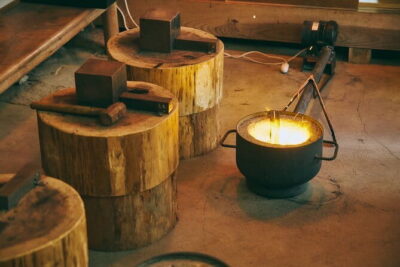
Authentic knife making experience at a blacksmith in Kyoto
Read our review →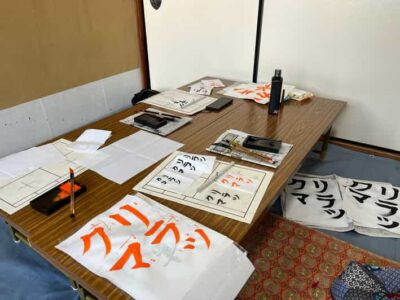
Calligraphy class at Buddhist temple in city center
Read our review →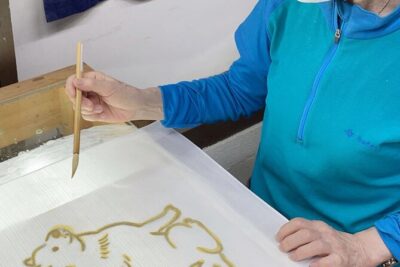
Roketsu dyeing experience: M course Roketsu Dyeing Experience
Read our review →

Traditional Japanese Washi Papermaking- Kyoto morning
Read our review →
Also filed under