
Reviewed · TEA CEREMONIES
Authentic Kyoto Tea Ceremony: Camellia Flower Teahouse
Matcha in Kyoto is quietly spellbinding. Camellia Flower Tea Ceremony keeps it small (max 8) and teacher-led, so you are not just watching. You practice the basics of matcha and get English guidance in a calm setting in Higashiyama.
I especially like that the instruction covers the full why, not only the how. Before you whisk, you learn the steps, utensils, and how the room layout and decorations affect the feeling of the ceremony. You also get to ask questions freely, which makes the whole thing feel personal instead of scripted.
One thing to plan for: it is not wheelchair accessible. Many sessions typically involve floor seating, though chairs and tables are available if you need them.
In This Review
- Key points worth knowing
- Getting to Tea Ceremony Camellia Flower in Higashiyama
- The 45-minute flow: from matcha basics to your own bowl
- What you learn before you whisk: the meaning behind the motions
- Utensils, whisking, and why precision is part of the fun
- The seasonal sweet and the calm pause in the middle
- Seating options, age limits, and group comfort (small is the point)
- Kimono rental: how to decide if it is worth the extra cost
- Price and value: is $36.48 for matcha worth it?
- Weather, photos, and practical tips to avoid awkward moments
- Should you book Camellia Flower tea ceremony?
- FAQ
- Where is the meeting point for the tea ceremony?
- How long does the ceremony last?
- What is the group size limit?
- Is kimono rental included?
- What is included in the tea ceremony?
- Can I take photos or short videos?
- Is the tea ceremony wheelchair accessible?
- Are children allowed, and what is the age limit?
- Is there free cancellation, and what happens with bad weather?
Key points worth knowing
- Max 8 per group means you get hands-on coaching, not just a quick demo
- English-fluent instructors explain the ceremony clearly and encourage questions
- Your own matcha bowl at the end, so you leave with a real skill
- Seasonal sweet included for a complete Kyoto tea moment
- Photos and short videos allowed so you can capture memories
Getting to Tea Ceremony Camellia Flower in Higashiyama
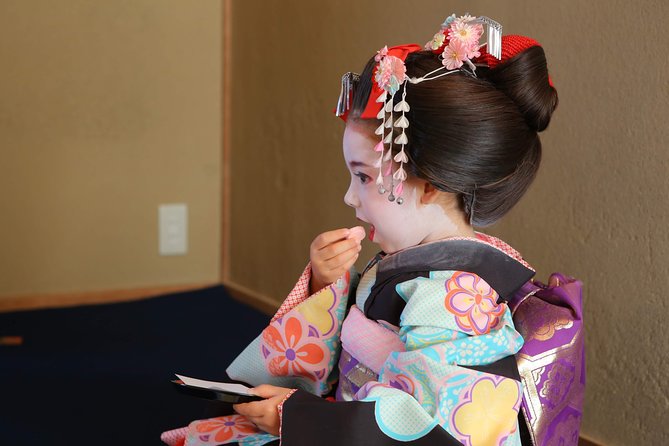
This ceremony takes place in Kyoto’s Higashiyama Ward, at Tea Ceremony Camellia Flower, 349-13 Masuyachō, Higashiyama Ward, Kyoto, 605-0826. The meeting point is easy to find on foot once you plug the address in, and it is near public transportation, so you should not need a taxi for most days.
This is also a good option when you want a “pause button” in a sightseeing-heavy Kyoto itinerary. Higashiyama is an area where you can spend hours walking temple streets, and a 45-minute tea ceremony fits well as a calm break between active stops.
A practical heads-up: pick a session time that matches your energy level. This is not a long event, but it is structured and focused, and you will do best if you are not rushing in already tired.
The 45-minute flow: from matcha basics to your own bowl
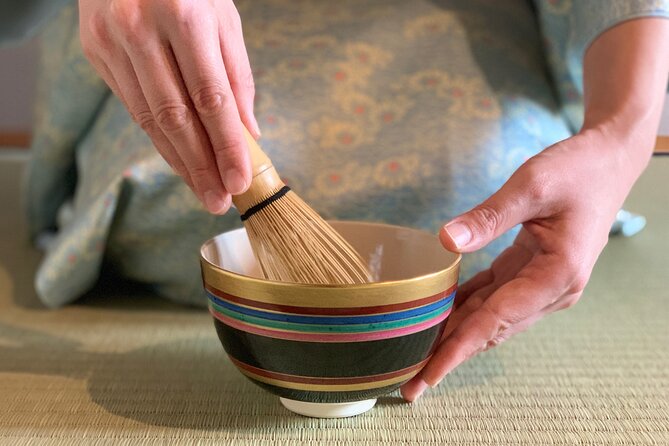
Think of the session as a guided sequence. First, your host starts with an introduction to matcha and the bigger cultural context. You get a sense of why tea ceremony matters in Japan, and how it connects to taste, manners, and the feel of Kyoto itself.
Next comes the teaching portion. Your instructor explains the steps involved, the tools you will use, and why details matter. You are also given context on room layout and decoration, which sounds small until you see how much it shapes your attention during the ritual.
Then you move into practice. You try the matcha and the seasonal sweet, and you get time to ask questions and chat. After that, you make your own bowl of matcha, with your instructor guiding you through the basics of whisking until it turns frothy and smooth.
The whole event runs about 45 minutes, and that tight timing is part of the value. You get a full ceremony experience without it swallowing your afternoon.
More bowls, poured the traditional way
- Kyoto: Tea Ceremony in a Traditional Tea House in Kiyomizu
★ 4.9 · 3,519 reviews - Kyoto: Tea Ceremony Ju-An at Jotokuji Temple
★ 4.9 · 3,207 reviews - Kyoto: 45-Minute Tea Ceremony Lesson Experience
★ 4.3 · 2,378 reviews - Kyoto: Table-Style Tea Ceremony at a Kyo-Machiya
★ 4.9 · 1,211 reviews
What you learn before you whisk: the meaning behind the motions
A tea ceremony is famous for being precise, but the best sessions also explain the reasons behind the movements. Here, the pacing is intentional: you get a beginner-friendly overview first, then you practice with support.
Before you handle anything, you learn about:
- The utensils and what each one is for
- The steps of preparing matcha
- The importance of the room setup and decoration
This matters because matcha is not only about mixing powder and water. It is also about respect, focus, and sensory details like texture and aroma. When you understand the logic, the ritual feels less like memorizing a script and more like learning a thoughtful craft.
You also get an English explanation from instructors who come from one of Kyoto’s three main tea ceremony schools. That gives you a clear, structured teaching approach rather than a loose “here is how you whisk” lesson.
Utensils, whisking, and why precision is part of the fun
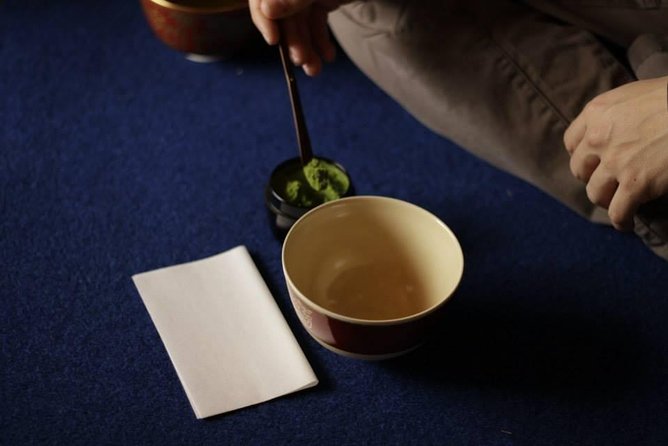
You will be provided with the key tools: tea bowl, tea scoops, and tea whisks. The nice part is that you do not need to bring equipment or guess how to use it. Everything you need is included.
What you are practicing is the basics of making matcha properly. The most important skill is whisking, because that is what creates the frothy texture matcha is known for. If you have ever tried whisking at home, you know it is harder than it looks. In this ceremony, you get real-time coaching, so you can feel the difference between “mixed” and “properly made.”
Precision can sound intimidating, but the instruction here is designed for all ages. The group size stays small, and the instructor’s job is to help you get through each step calmly and correctly.
If you are the kind of person who likes taking home a skill you can actually repeat later, this is where the experience really pays off. You leave with a method you can use again, not just photos.
The seasonal sweet and the calm pause in the middle
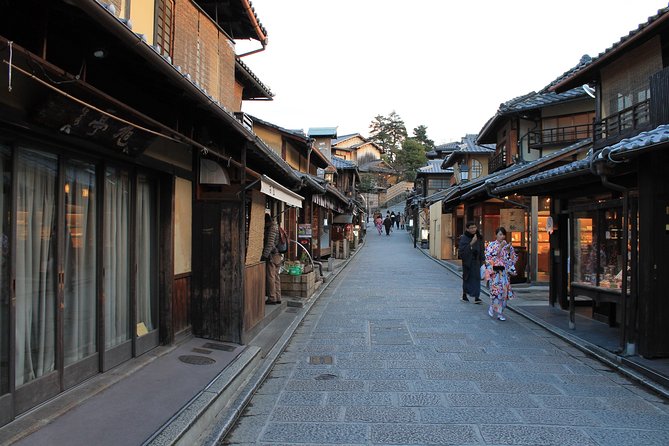
You get matcha plus a seasonal sweet during the ceremony. That combination is not random. Sweet pairs with matcha in a way that balances flavors and helps you slow down enough to notice what you are tasting.
This is also where the experience becomes more than a cultural activity. The ceremony is structured to create a quiet rhythm, and that can feel like a reset after busy Kyoto streets. People often think they will be thinking about what to eat next or where to go next, but the ritual naturally pulls your attention back to the present moment: water, powder, whisking, sipping.
You will also have time to ask questions and chat with the host. That social part is important because it turns the experience into a conversation about Japan, tea culture, and everyday details, instead of a one-way lecture.
Seating options, age limits, and group comfort (small is the point)
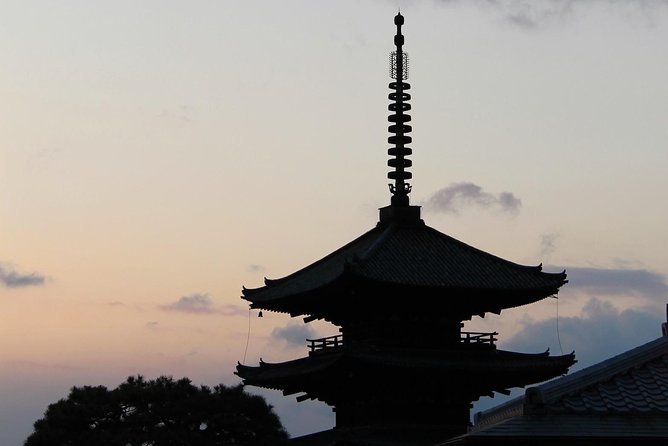
Camellia keeps groups small, capped at 8 people. That size matters because tea ceremony is hands-on. You get more individual attention than you would in a big group format.
Chairs and tables are available, which helps a lot if you do not want floor seating. Still, it helps to know that the ceremony often involves sitting on the floor in typical tea room style. So if you plan to attend with knees, hips, or back issues, consider using a chair option and arrive ready to settle in comfortably.
There are also age limits. Children under 6 cannot join this experience. On the other hand, it is described as suitable for all ages, meaning families with older kids should find it manageable, and adults get the full teaching moment.
One more practical item: service animals are allowed. If you need that accommodation, this format supports it.
A day of temples goes further with something to break it up.

Kimono rental: how to decide if it is worth the extra cost
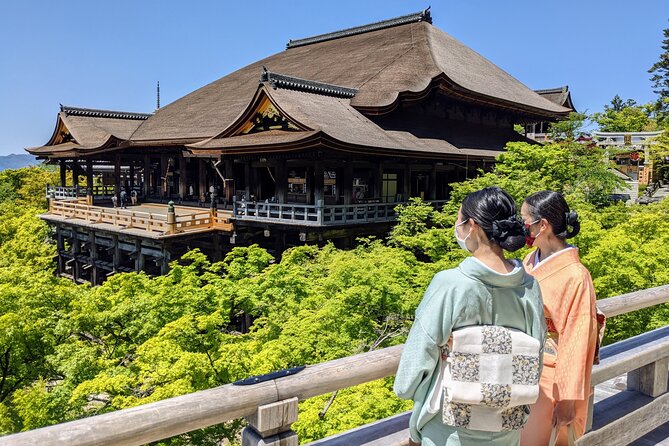
Kimono rental is not included, but you can request it by message for an additional charge. If you care about visual authenticity, it can add a lot. The ceremony has a traditional setting and ritual flow, and dressing the part often changes your mindset, too.
From a practical standpoint, a kimono can also mean you should plan a little extra for comfort and mobility. The ceremony is short, about 45 minutes, but you will still be seated and doing careful hand movements.
My rule of thumb: if you want your Kyoto day to feel like a full cultural moment and you do not mind paying extra for dressing, add it. If you would rather spend that money on another activity or you prefer casual clothes, skip it and focus on the matcha lesson itself, which is the core value.
Price and value: is $36.48 for matcha worth it?
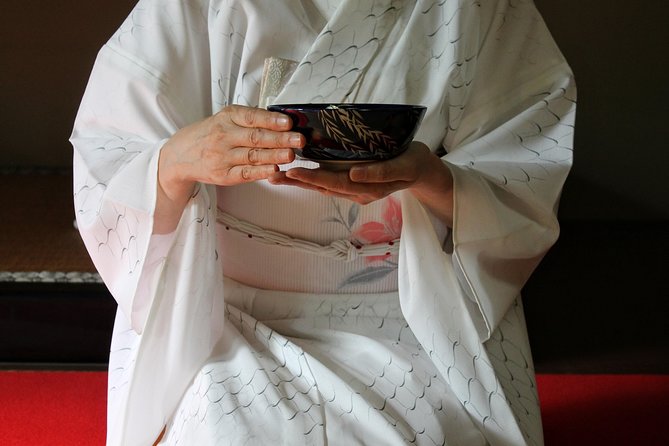
At $36.48 per person, this is priced for a short, instructor-led activity that includes hands-on materials. You get the tea bowls, scoops, and whisks, plus the matcha and seasonal sweet. Most important, you get to make your own bowl at the end and learn the basics of whisking.
That is where the value shows. If this were only a viewing experience, $36.48 would feel like a performance ticket. But the structure here is different: you actively participate, you get English instruction, and the session stays small, so the cost is buying time and coaching.
There are also group discounts. So if you are coming with friends or family, you may be able to improve the overall value. And since photos and short videos are permitted, you can capture the moment without feeling like you must choose between memories and manners.
Not included items are straightforward: no pick-up or drop-off, and kimono rental costs extra if you want it.
If you want a high-return, culturally meaningful activity that fits into a packed Kyoto plan, this one holds up.
Weather, photos, and practical tips to avoid awkward moments
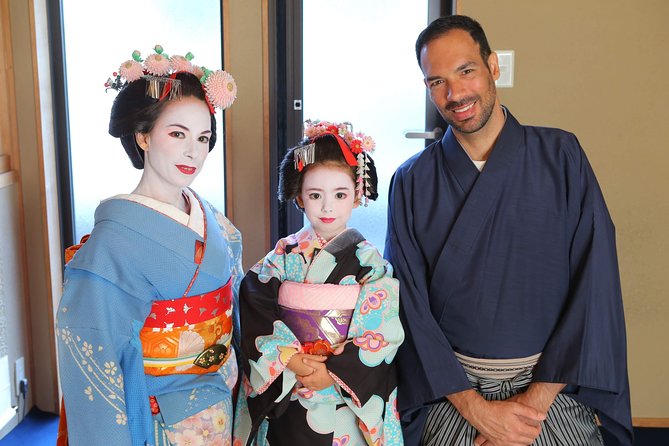
This experience requires good weather. If it is canceled due to poor weather, you will be offered a different date or a full refund. Since Kyoto weather can shift quickly, it helps to keep an eye on conditions the day of your booking.
Photos and short videos are permitted, which is a huge deal if you like documenting details like utensils and the tea room setting. Still, keep your phone use respectful. The point is to take part in the ritual, not turn it into a filming session.
Because the ceremony is about attention and cleanliness, come ready to focus. Dress comfortably, especially if you are planning to sit on the floor. Even with chair and table options available, you will do best if you can settle quickly and stay relaxed.
Also, plan your timing so you arrive before you feel rushed. Even a short event runs smoother when you are not carrying stress in with you.
Should you book Camellia Flower tea ceremony?
I think this is a strong booking if you want a genuine matcha experience that is structured, calm, and hands-on. The standout reasons are simple: small group size, English explanation, and the chance to make your own frothy bowl of matcha instead of only watching someone else do it.
Book it if:
- You want to learn matcha basics you can repeat at home
- You like calm cultural activities that break up a sightseeing day
- You prefer instruction you can ask questions about
Skip or plan carefully if:
- You need wheelchair access (it is not wheelchair accessible)
- You are traveling with very young kids under 6
If you are trying to pick just one Kyoto “ritual” type activity, this one makes sense. It is short enough to fit, focused enough to remember, and practical enough that you will leave with a real skill, not just a story.
FAQ
Where is the meeting point for the tea ceremony?
The meeting point is Tea Ceremony Camellia FLOWER349-13 Masuyachō, Higashiyama Ward, Kyoto, 605-0826, Japan. The activity ends back at the meeting point.
How long does the ceremony last?
Plan around 45 minutes for the ceremony.
What is the group size limit?
The experience has a maximum of 8 travelers per group.
Is kimono rental included?
Kimono rental is not included. You can request it by message for an additional charge.
What is included in the tea ceremony?
Tea bowls, tea scoops, and tea whisks are provided, and you will make your own bowl of matcha. You also try matcha and sweets.
Can I take photos or short videos?
Yes. Photos and short videos are permitted.
Is the tea ceremony wheelchair accessible?
No, this experience is not wheelchair accessible. Chairs and tables are available as an alternative.
Are children allowed, and what is the age limit?
This experience is for all ages, but children under 6 years old cannot join.
Is there free cancellation, and what happens with bad weather?
Free cancellation is available. You can cancel up to 24 hours in advance for a full refund. If canceled due to poor weather, you will be offered a different date or a full refund.
New This Season
- Koyasan Day Trip by Private Car from Kyoto
- Old Port Town and Ultimate Sake Tasting Private Tour From Kyoto
- Kyoto’s Timeless Charm: 3hr Exploration of History and Peace
- Kyoto: 5 Types of Sushi Making
- Sacred Peak & Ancient Paths: Kurama-Kibune Hiking Experience
- Kyoto: Exclusive ZEN practice at Manpukuji temple in Uji
- Kyoto: Private Seasonal Aroma Yoga Class
- Traversing Kyoto’s Scenic West – Arashiyama to Kinkakuji
Tea Ceremonies, compared.
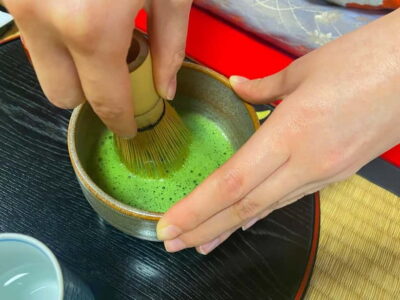
Tea Ceremony in a Traditional Tea House in Kiyomizu
Read our review →
Kimono Tea Ceremony at Kyoto Maikoya, NISHIKI
Read our review →
Tea Ceremony in 100-year-old Kyo-Machiya Townhouse
Read our review →
Also filed under