
Reviewed · FUSHIMI INARI SHRINE WALKS
Discover the Secrets of Fushimi Inari and Gion with a Local Guide
Red torii, quiet temples, no wasted steps. This half-day Kyoto walk pairs Fushimi Inari with the cultural streets of Gion, led by Sparrow Travel with a small group that keeps things moving at your speed.
I especially like the hit list quality. You get major landmarks like Kiyomizu-dera, plus quieter context stops that make the whole area feel connected instead of random.
One consideration: the day includes shrine and temple walking, and Fushimi Inari climbs. Bring comfortable shoes and expect some stairs as you work your way up the torii paths.
In This Review
- Key highlights to look for
- Why This Half-Day East Kyoto Route Works
- Start Smart at Minamiza Theater and the Gion Setup
- Gion Streets, Machiya Houses, and What to Notice
- Yasaka Shrine: A 1,350-Year-Old Starting Point
- Kodai-ji and Yasakanoto: Zen Temple Grounds and a Five-Story Pagoda
- Kiyomizu-dera: The Wooden Stage and the Mount Otowa Feel
- Fushimi Inari-taisha: Torii Gates, Mount Inari, and the Climb Strategy
- Price and Value: When $78.04 Makes Sense
- Pacing, Footwear, and Getting the Most from a Small Group
- Who This Tour Fits Best
- Should You Book This Sparrow Travel Kyoto Tour?
- FAQ
- How long is the tour?
- How much does it cost per person?
- What admission fees are included?
- How many people are in the group?
- Where do we meet and where does the tour end?
- Is transportation included in the price?
- Can I cancel for a full refund?
Key highlights to look for
- Small group size (max 8) keeps the pace flexible and the stops feel less rushed
- Admissions are partly covered, including Kōdaiji and Kiyomizu-dera
- A classic east Kyoto route links Gion, Yasaka Shrine, Hōkan-ji, and the torii lanes of Fushimi Inari
- Smart ending point at Fushimi-Inari Station makes the finish easy to continue exploring
- Local storytelling focus means you hear the why behind what you see, not just the what
Why This Half-Day East Kyoto Route Works
Kyoto’s best sightseeing days usually come from two things: smart walking order, and someone explaining what you are seeing. This tour is built around the historic east side, where Gion and Higashiyama lead naturally toward the shrine-dotted hills of Fushimi Inari.
The time is short enough to feel doable, about 4 hours, but long enough to hit several meaningful stops. The small group limit of 8 also matters. You are not stuck behind a sea of people, and the guide can adjust the pace when your group needs a breather.
Another thing I like about this style of tour is the balance. You are not only collecting photos. You are also learning the place names, the religious roots, and the human stories tied to each stop. Even better, the tour uses a mobile ticket, so you are not scrambling with paper confirmations.
Start Smart at Minamiza Theater and the Gion Setup
Your tour begins at Minamiza Theater in Higashiyama Ward, near Shijo Bridge. This is a good starting point because it puts you right where Gion’s streets begin to feel like an old Kyoto postcard, without needing complicated transfers just to start.
From there, you ease into the atmosphere rather than jumping straight into a long walk up a mountain. You get a gentle lead-in to the day’s themes: traditional neighborhood texture in Gion, major Shinto meaning at Yasaka Shrine, and then the temple cluster that leads toward Kiyomizu-dera and ultimately Fushimi Inari.
Also keep in mind the route ends at Fushimi-Inari Station. That is convenient, but it does mean your finish is on the Fushimi side, not downtown Kyoto. If you plan dinner, you may want to book something near that station area or at least plan your return route ahead.
Still climbing through the orange gates?
- Kyoto: Fushimi Inari, Kinkakuji, Bamboo Grove 1 Day Bus Tour
★ 4.8 · 4,316 reviews - Fushimi Inari Hidden Hiking Tour (Private Option Available)
★ 5.0 · 1,750 reviews - Osaka/Kyoto:Kinkakuji,Arashiyama,FushimiInariShrine,NaraPark
★ 4.1 · 1,596 reviews - Kyoto/Osaka: Nara, Fushimi Inari Taisha, Arashiyama Bus Tour
★ 4.7 · 1,275 reviews
Gion Streets, Machiya Houses, and What to Notice
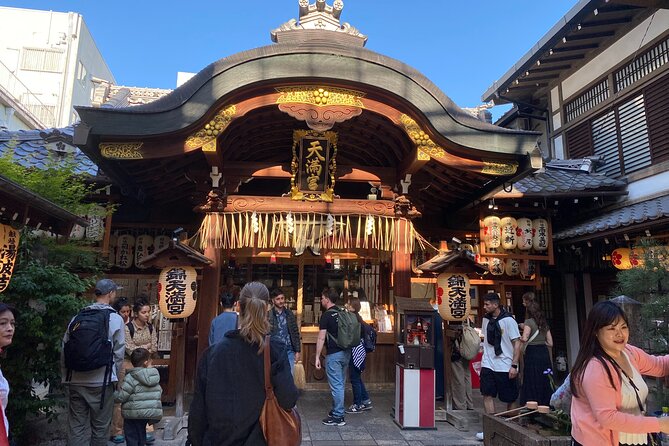
Stop 1 is Gion, one of Kyoto’s best-known historic districts. This is the place most people picture when they think of Kyoto’s old neighborhoods: traditional machiya houses, teahouses, and cobblestone lanes around Shijo Avenue.
What makes this stop work in a half-day tour is the purpose. Gion is not just scenery here. It sets your visual baseline for the rest of the route. Once you understand what the area looks and feels like at street level, later stops like Yasaka Shrine and the nearby temple district land differently. You start seeing how these places relate spatially and culturally.
A practical tip: go slow on the first streets. If you rush, you miss the small details that make Gion feel like a living neighborhood instead of a theme park.
Admission here is free, so you are not burning time at ticket gates. That helps the day stay smooth.
Yasaka Shrine: A 1,350-Year-Old Starting Point
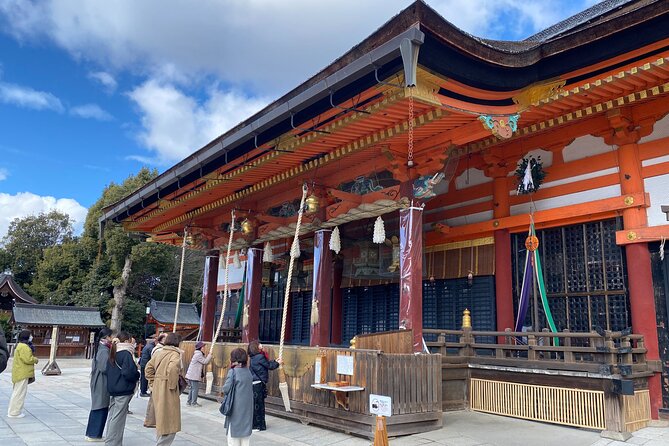
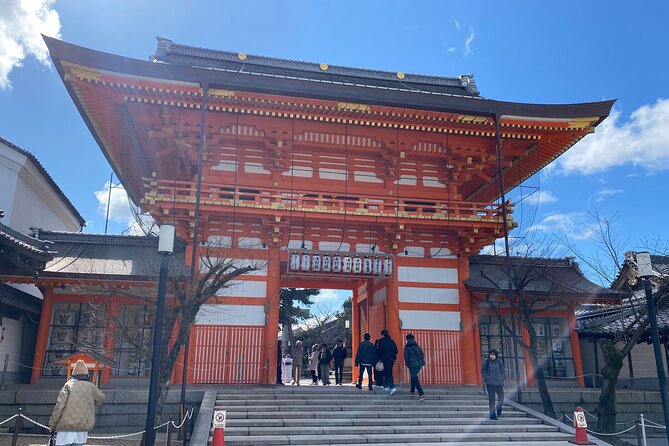
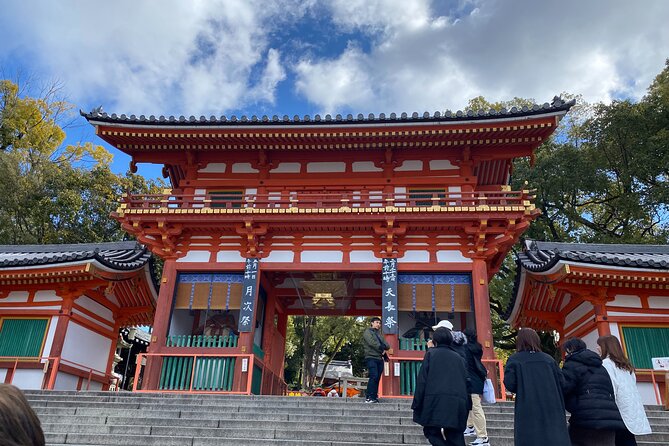
Stop 2 is Yasaka Shrine, located at the eastern end of Gion. It is one of Kyoto’s most historic Shinto shrines, founded more than 1,350 years ago, and dedicated to Susanoo-no-Mikoto.
This stop gives you a direct sense of Shinto presence in the city. You are also positioned well for what comes next. Yasaka Shrine sits like a hinge between the neighborhood lanes of Gion and the larger Higashiyama temple area.
The time here is about 30 minutes, with free admission. That feels about right. Enough time to absorb the atmosphere and take photos, but not so long that you lose momentum for Kōdaiji and the pagoda.
If you are sensitive to crowd pressure or want quieter moments, try to be aware of where the busiest edges are and step aside when you need a breather. Short shifts like that make the shrine experience more enjoyable.
Kodai-ji and Yasakanoto: Zen Temple Grounds and a Five-Story Pagoda
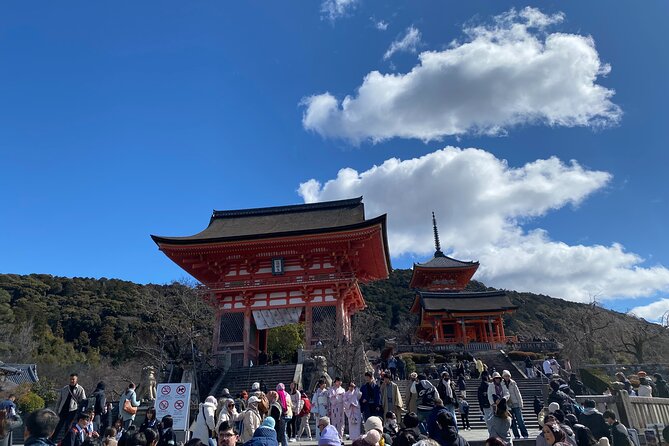
Stop 3 is Kōdaiji Temple, a Zen Buddhist temple near Gion. It was founded in 1606 by the wife of Toyotomi Hideyoshi. This matters because it ties the temple to a major power era in Japan, not just to religious tradition.
Here, admission is included, so you do not need to think about ticket costs during the tour. The time allocation is about 30 minutes, which is good for soaking in the basics, not for trying to absorb everything. If you only visit one Zen temple in Kyoto, this kind of guided pacing can help you leave with a clearer sense of what you are looking at.
Stop 4 is Yasaka Pagoda, also known by its temple name Hōkan-ji. This five-story pagoda is one of the landmark sights in the Higashiyama district area. It is said to have been originally built in the 6th century.
Admission is free for this stop, so the time is best used for the view and the framing. Pagodas work differently than shrines and temple gates. They feel like a vertical anchor point. In a short tour format, that anchoring is useful because it gives your eyes a landmark to return to as you move through the neighborhood streets.
Kiyomizu-dera: The Wooden Stage and the Mount Otowa Feel
Stop 5 is Kiyomizu-dera Temple. It sits on the slopes of Mount Otowa in eastern Kyoto and was founded in 778. It is famous for its impressive wooden structure, often discussed as a major stage-like feature, plus the way the temple location gives views over the city.
Admission is included here, so this is one of the best value moments in the day. You are paying the tour price, and you are not adding another temple ticket on top.
Time is about 30 minutes. Kiyomizu-dera can pull you into staying longer, but 30 minutes with a guide keeps things focused. You will learn what to prioritize so you do not get stuck doing a frantic, checklist-style visit.
Practical note: this area involves slope and stairs. Even if the guide keeps the pace comfortable, you will want shoes with grip. Your legs will thank you later when you reach Fushimi Inari’s climbing torii lanes.
Lantern-lit streets of the geisha quarter


Fushimi Inari-taisha: Torii Gates, Mount Inari, and the Climb Strategy
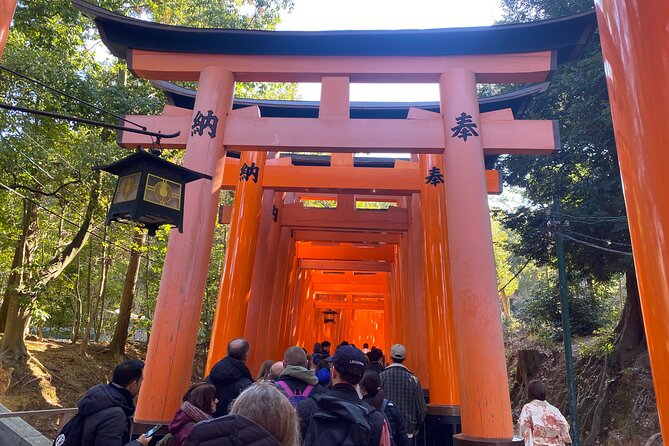
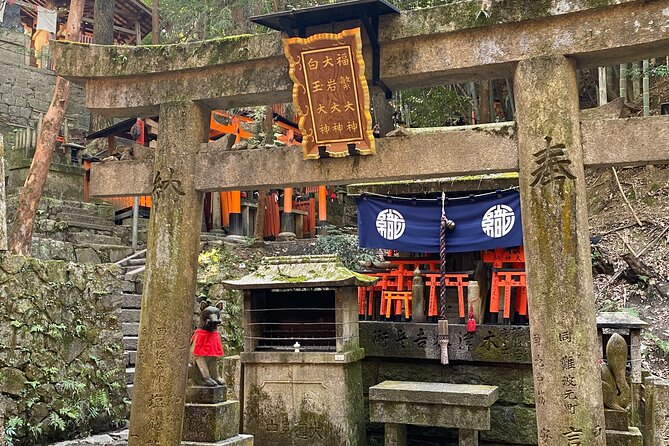
Stop 6 is the main event: Fushimi Inari-taisha Shrine. This is one of Kyoto’s most iconic sites, best known for thousands of red torii gates winding up Mount Inari. It was established in the early 8th century, so you are stepping into a very old tradition that still defines this spot today.
This stop lasts about 1 hour, and admission is free. That hour is your chance to do Fushimi Inari the right way for your energy level.
Here is the strategy I recommend when you have limited time: choose a turn-back point before you feel tired. The torii lanes can tempt you to keep going farther because every bend looks like it might lead to a perfect view. If you set your personal limit early, you can enjoy the climb without arriving at your end point feeling wrecked.
The tour finishes near Fushimi-Inari Station, which is a short walk from the shrine area. That makes the transition out of the tour easier than it is for many Kyoto sights, where you sometimes end in a more awkward location.
Price and Value: When $78.04 Makes Sense
The tour price is $78.04 per person, for an approx. 4-hour half-day experience. What makes the cost feel reasonable is what is included.
You get:
- all guide costs and a personal guide
- admission fees for Kōdaiji and Kiyomizu-dera
- the tour plan that links Gion and the east-side temple cluster to Fushimi Inari
Not included are:
- transportation by train, listed at ¥220 per person
- meals and drinks
So you are not paying extra entrance fees for two of the heavier stops. That alone can soften the financial hit if you are already planning to visit these sites.
Also, because the group max is 8 travelers, the guide attention tends to feel more human. In a city like Kyoto, where you often want help navigating and understanding, that kind of guiding can turn a good day into a clearer day.
If you are planning meals anyway, you will simply treat this tour as a strong sightseeing core, then add food on either end.
Pacing, Footwear, and Getting the Most from a Small Group
One of the best reasons to pick a small-group tour is pacing. On this route, the walking adds up, and the stops vary from shrine atmosphere to temple time. You need a guide who can slow down when someone is unsure where to look or wants a photo pause.
The tour is set up for that. I like that the experience is described as comfortable and paced to match your group. With up to 8 people, you avoid the standstill feeling that comes with larger crowds and strict timing.
Footwear is not optional advice here. You are mixing street walking in Gion with slope and stairs near Higashiyama and the climb in Fushimi Inari. Plan for tired calves. A lightweight daypack helps too, so you can carry water and a small snack for later even though meals are not included.
And if you want a more custom setup, the operator notes that you can message them about private tours or pickup. That can be useful if you are traveling as a group and want a less standardized schedule.
Who This Tour Fits Best
This is a smart match if you:
- want a first-timer-friendly Kyoto route focused on the east side
- like the idea of seeing big icons like Kiyomizu-dera and Fushimi Inari without planning every step yourself
- prefer a small-group day over a large bus-style experience
- enjoy learning the meaning behind shrine and temple sites, not only taking photos
It may be less ideal if you hate walking uphill, or if you need a very slow pace. The itinerary is built around classic Kyoto terrain, which includes climbs at Fushimi Inari and slopes around Kiyomizu-dera.
Should You Book This Sparrow Travel Kyoto Tour?
I would book this tour if you want a clean, efficient way to string together Kyoto’s east-side highlights into one coherent day. The pricing feels fair because admission is included for Kōdaiji and Kiyomizu-dera, and you get a guide to connect the dots between Gion, Yasaka Shrine, the pagoda area, and Fushimi Inari.
Skip it only if you are planning a slow, self-guided day and you do not want any fixed stop timing at all. Also, if you know you struggle with stairs and the torii climb, consider whether you can handle Fushimi Inari at your own pace within the roughly 1-hour window.
If you want a memorable Kyoto half-day without overthinking logistics, this route is a strong bet.
FAQ
How long is the tour?
The tour lasts about 4 hours.
How much does it cost per person?
The price is $78.04 per person.
What admission fees are included?
Admission fees are included for Kōdaiji Temple and Kiyomizu-dera Temple.
How many people are in the group?
The tour has a maximum of 8 travelers.
Where do we meet and where does the tour end?
You start at Minamiza Theater in Higashiyama Ward. You end at Fushimi-Inari Station, which is a short walk from Fushimi Inari Shrine.
Is transportation included in the price?
No. Transportation by train is listed as ¥220 per person and is not included.
Can I cancel for a full refund?
Yes, you can cancel up to 24 hours in advance for a full refund. If you cancel less than 24 hours before the start time, the amount paid is not refunded.
New This Season
- Koyasan Day Trip by Private Car from Kyoto
- Old Port Town and Ultimate Sake Tasting Private Tour From Kyoto
- Kyoto’s Timeless Charm: 3hr Exploration of History and Peace
- Kyoto: 5 Types of Sushi Making
- Sacred Peak & Ancient Paths: Kurama-Kibune Hiking Experience
- Kyoto: Exclusive ZEN practice at Manpukuji temple in Uji
- Kyoto: Private Seasonal Aroma Yoga Class
- Traversing Kyoto’s Scenic West – Arashiyama to Kinkakuji
Fushimi Inari Shrine Walks, compared.

Fushimi Inari, Kinkakuji, Bamboo Grove 1 Day Bus Tour
Read our review →
Fushimi Inari Hidden Hiking Tour (Private Option Available)
Read our review →
Kinkakuji,Arashiyama,FushimiInariShrine,NaraPark
Read our review →
Nara, Fushimi Inari Taisha, Arashiyama Bus Tour
Read our review →
Arashiyama, Nara & Fushimi Inari Shrine w/Lunch
Read our review →
Nijo Castle, Kiyomizu & Fushimi Inari Guided Tour
Read our review →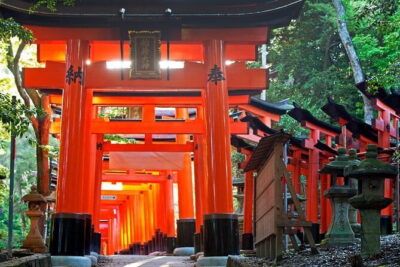
Nijo, Kinkaku-ji, Arashiyama, Kiyomizu & Fushimi Inari
Read our review →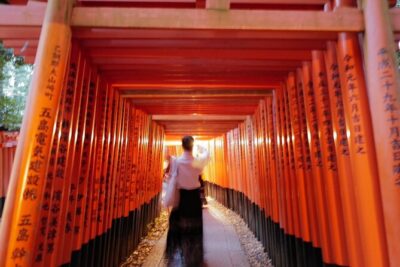
Also filed under