
Reviewed · ARTISAN CRAFT WORKSHOPS
Ikebana Traditional Japanese Art of Flower Arranging
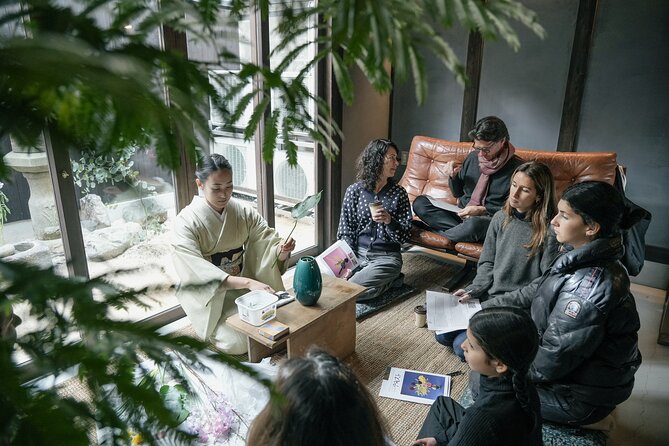
Ike is simple, but it feels deep. This hands-on ikebana class in Kyoto turns fresh flowers into a calm, balanced arrangement, with an English-speaking instructor guiding you through the meaning and the technique. I love that you work with seasonal flowers and leave with practical care tips, not just a pretty result.
Two things I especially like are the small group size and the way the lesson stays practical. In a group of up to 6, you get enough attention to adjust your stems, and the instructor’s guidance includes tips for keeping your flowers looking good for up to two weeks. One thing to consider is that the session is about 1 hour 30 minutes, so you may want to plan for extra self-study if you’re hoping for a longer overview of ikebana history and the full range of schools.
In This Review
- Key things to know before you arrange your first stems
- Why this Kyoto ikebana class feels different from a typical workshop
- The core lesson: harmony, balance, and the “living” mindset
- Nageire and Moribana: two beginner-friendly styles you actually practice
- Nageire: the looser, more free-standing feel
- Moribana: the structured, container-based composition
- What the 1 hour 30 minutes includes, step by step
- Getting oriented and watching demonstrations
- Hands-on arranging with guidance
- Finishing with care tips that matter after class
- The mindfulness piece: wabi-sabi you can practice with stems
- Price and value: what you get for about $72
- Meeting point in Kamigyo Ward: how logistics affect the experience
- Who this is best for (and who should think twice)
- What to pay attention to while you arrange
- What you can do after the class to keep the skill alive
- Should you book this ikebana class in Kyoto?
- FAQ
- How long is the ikebana class in Kyoto?
- What styles will I learn during the class?
- Is the tour taught in English?
- Where does the class take place, and do I return there?
- Is there a mobile ticket?
- Can I cancel for free if my plans change?
Key things to know before you arrange your first stems
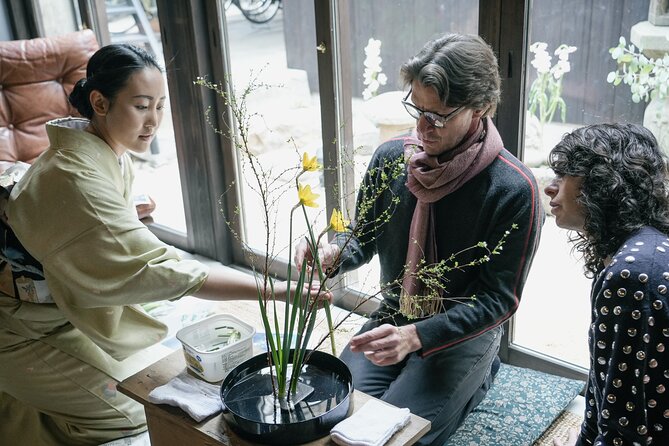
- Small group format (max 6), so your questions do not get lost
- Two classic styles shown for beginners, Nageire and Moribana
- Seasonal flowers used for your practice, so each class feels current
- Mindfulness + wabi-sabi mindset, not only how-to steps
- Care tips for freshness that can help flowers last up to two weeks
- Kyoto meeting point in a traditional setting (at the Symphony Kitano Higashi area), easy to return to
Why this Kyoto ikebana class feels different from a typical workshop
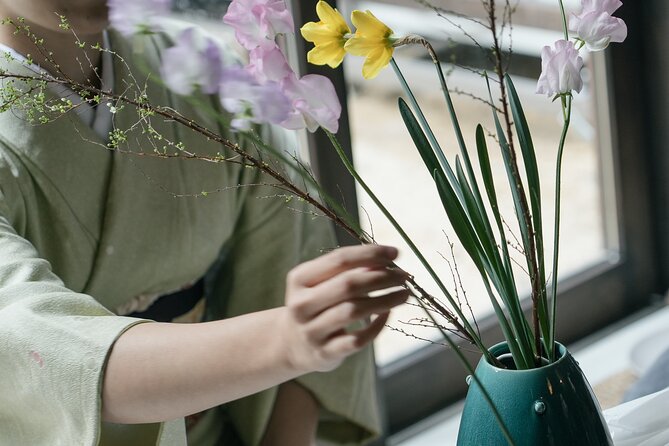
Ikebana translates loosely as living flowers. The idea is not just putting stems in a container. It is about treating each flower like a living thing with its own shape, timing, and personality, then arranging those natural traits into harmony.
What I like is that the class frames the work in a way that makes sense even if you have never touched a floral phone calligraphy tool in your life. You start by learning the basic principle, then you move into making. That rhythm matters because it turns wabi-sabi from a vague word into something you can practice with your hands.
The setting is also part of the value. You are in Kyoto, and you meet at a specific location in the Kamigyo Ward area, in the Tanbayacho neighborhood near Symphony Kitano Higashi. It is not just “somewhere central,” it is a defined meeting point that brings you back to the same spot when the class ends.
The core lesson: harmony, balance, and the “living” mindset
The class teaches that ikebana works by using each flower’s natural characteristics. You are not trying to force everything into the same look. Instead, you use the stems, angles, and textures to create balance and a calm sense of harmony inside the arrangement.
That matters because ikebana is often described as minimalist, and it can feel intimidating. Here, the approach is practical and beginner-friendly. You get a mindset for why the arrangement looks the way it does, so you are not simply copying a final product.
You also get a mindfulness angle that fits the time you have. In 1 hour 30 minutes, you cannot “learn everything,” but you can learn how to pay attention. The class is designed to do exactly that, with the focus on pondering, observing, and making small choices while you arrange.
Make something with a Kyoto craftsman
- Authentic knife making experience at a blacksmith in Kyoto
★ 4.8 · 350 reviews - Kyoto: Calligraphy class at Buddhist temple in city center
★ 5.0 · 167 reviews - Roketsu dyeing experience: M course Roketsu Dyeing Experience
★ 5.0 · 163 reviews - Kyoto: Japanese Calligraphy Class
★ 4.8 · 89 reviews
Nageire and Moribana: two beginner-friendly styles you actually practice
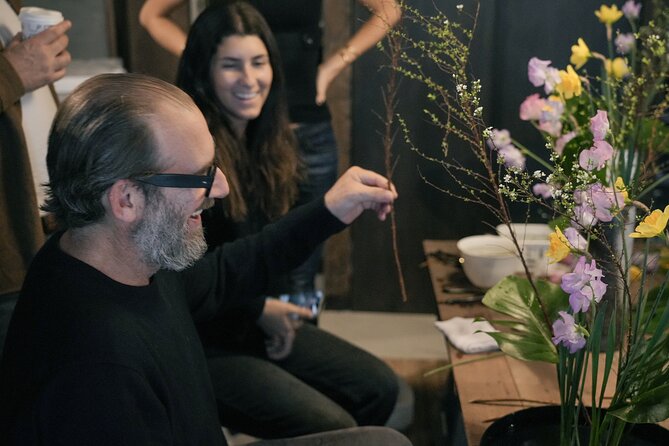
One of the best parts of this class is that it covers two traditional styles. The instructor explains and demonstrates both Nageire and Moribana, and then you get time to create your own arrangements.
Nageire: the looser, more free-standing feel
Nageire is the style many beginners find intuitive once they understand the basic idea. The look can feel natural and flowing, as if the arrangement is part of the plant rather than something constructed around it. If you like asymmetry, movement, and a slightly wild grace, this style is often a good match.
Moribana: the structured, container-based composition
Moribana tends to feel more structured because it uses a container setup. You get practice thinking in terms of placement and proportion, not just “where the flowers go.” If you like order and clear rules, or you just enjoy watching how a plan becomes a shape, Moribana is a great style to learn early.
Even if you only remember one thing later, learning both styles gives you context. You start to see that ikebana is not one rigid look. It is a method for building visual balance from real plant features.
What the 1 hour 30 minutes includes, step by step
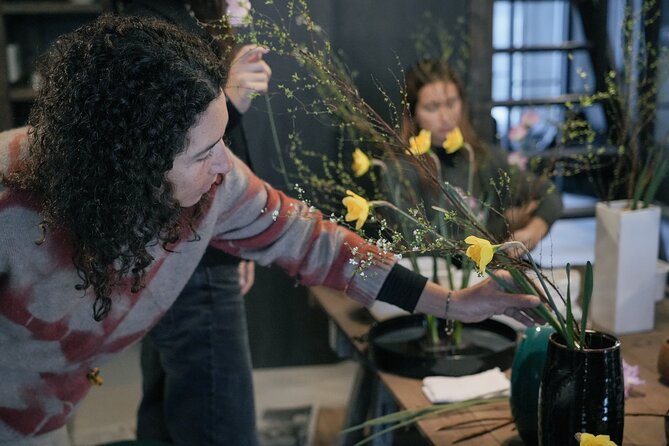
This is a short class by design. You should treat it like skill-building time, not a full cultural lecture.
A day of temples goes further with something to break it up.


Getting oriented and watching demonstrations
You start with an overview in English from the ikebana expert. You then watch the instructor demonstrate two arrangements. This is a key moment, because you see how the principle becomes a finished composition.
In the demos, you are not just watching stems go in. You’re observing how the instructor thinks about height, direction, and spacing. It is a fast way to understand what to look for when you begin arranging.
Hands-on arranging with guidance
After the demos, you get time to create your own arrangements. The group stays small, so you can adjust your approach when something looks “off” to your eye.
The guidance is practical and supportive. Many people enjoy this aspect because it removes the fear of doing it wrong. Ikebana is not about perfect symmetry. It is about getting the balance right for the materials you have.
Finishing with care tips that matter after class
You also receive tips to help keep your flowers fresh. The class highlights that your flowers can last up to two weeks with the right care.
That is a big value add, because a lot of workshops end when you walk out the door. Here, you learn how to extend the life of what you made, so your effort has a payoff at home in your own light and space.
The mindfulness piece: wabi-sabi you can practice with stems
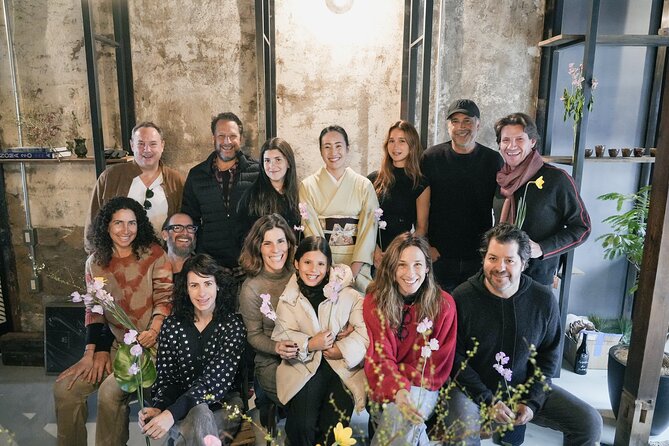
Wabi-sabi is often described in big, poetic terms. In this class, it becomes something you do. You are asked to tune into the flowers and ponder the arrangement, aiming for harmony and balance rather than a forced, showroom-perfect look.
You learn to slow down while you work. That is not a gimmick. With fresh flowers, you can see how shapes and angles matter, and you can feel how small adjustments change the whole mood of the arrangement.
If you enjoy calm, focused activities that still feel creative, this is a strong fit. It is also a nice change of pace when your Kyoto day has been heavy on temples and crowds. You get a skill that stays with you and a moment that is actually about attention.
Price and value: what you get for about $72

At $72.26 per person, this class is not cheap, but it also is not inflated by a huge, half-day tourist program. You are paying for an English-speaking instructor, traditional techniques, and hands-on time with two styles.
The value is strongest in three areas:
- Small group size (up to 6), so you are not arranging while being ignored
- Two arrangement styles covered, so you practice more than one approach
- Practical flower care tips, including the idea that flowers can last up to two weeks
If you are the kind of traveler who likes to bring home more than photos, you will feel this purchase right away. You leave with actual skill and a longer-lasting memory because your flowers can last into the following week.
If you are looking for a long lecture, this may feel short. But for most visitors who want a real hands-on experience in Kyoto, the duration and price line up pretty well.
Meeting point in Kamigyo Ward: how logistics affect the experience
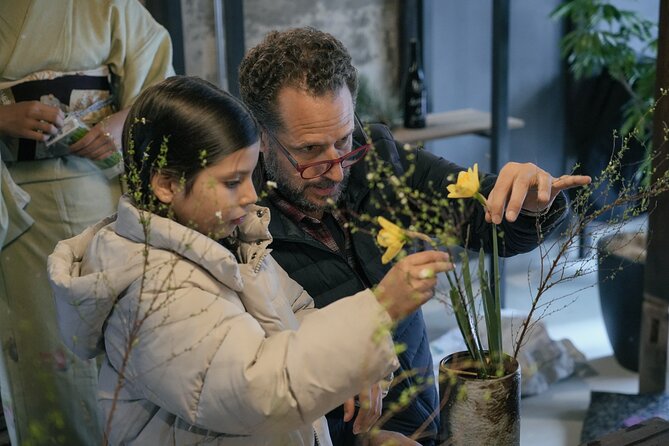
You meet at Japan, 602-8287 Kyoto, Kamigyo Ward, Tanbayacho, 3481 Symphony Kitano Higashi. The activity ends back at the meeting point, so you are not wandering off across town afterward.
You are also told it is near public transportation. That matters more than it sounds. A short class can still feel frustrating if the commute is complicated, so being close to transit makes it easier to slot into a day of sightseeing.
The class runs with a mobile ticket. That is simple, and it keeps your day low-friction.
And with a group size capped at 6, you are less likely to feel like you are in the way of a larger schedule. You can focus on the hands-on part.
Who this is best for (and who should think twice)

This is best for you if you:
- Want a beginner-friendly ikebana introduction
- Like mindfulness-style activities, but still want clear technique
- Prefer small groups rather than big, rushed workshops
- Enjoy learning a skill you can use again at home, with care tips to make it last
It might be less ideal if you:
- Want a deep dive into the history and many schools of ikebana
- Expect a long, multi-hour class that covers everything in detail
- Are sensitive to the fact that this is a short session, so the focus stays practical
One person noted that the class was nice but wished there was more discussion about ikebana itself, including history and different schools. That is a reasonable consideration. Plan to ask questions if anything sparks curiosity. You can also follow up after the class with your own reading if the deeper background is what you crave.
What to pay attention to while you arrange
I recommend going in with a few expectations that make the class easier to enjoy.
First, look at the plants you are given. The whole point is to use their natural characteristics. If a stem is curved, treat that curve as information, not a mistake.
Second, focus on proportion and balance. In ikebana, spacing and height matter as much as the flowers themselves. When your arrangement looks strange to you, it is often a proportion issue, not a flower choice issue.
Third, remember that the class includes care advice for freshness. When you finish, ask what you should do first at home. Fresh flower care starts immediately, and it can affect how your arrangement holds up for days.
What you can do after the class to keep the skill alive
You will likely get inspiration for how to look at plants differently. Try this at home: before arranging anything, take a minute and notice the shapes already present in each stem. That mindset is the real transfer from the workshop.
If your arrangement starts to wilt sooner than expected, use the care tips you were given as your guide. The class itself emphasizes that proper care can help your flowers last up to two weeks, so you are not just buying a fleeting craft.
And if you loved one style more than the other, stick with that one first. Practice is how you start to internalize what balance feels like.
Should you book this ikebana class in Kyoto?
Book it if you want a calm, hands-on introduction that combines traditional techniques with practical results. For about $72, the small group size, the fact you practice both Nageire and Moribana, and the freshness care tips make it a good value for many visitors.
Skip it or consider a different format if you want a long, history-heavy lesson about ikebana schools. This is built for skill and mindfulness in a limited time window.
If you’re doing a busy Kyoto itinerary and want one focused activity that feels distinctly Japanese without being complicated, this class is a strong match. You’ll walk away with a new way to look at flowers, and a real arrangement you can care for at home.
FAQ
How long is the ikebana class in Kyoto?
It runs for about 1 hour 30 minutes.
What styles will I learn during the class?
You will learn and practice traditional beginner ikebana styles including Nageire and Moribana.
Is the tour taught in English?
Yes, the class is led by an English-speaking ikebana expert.
Where does the class take place, and do I return there?
The class starts at the meeting point in Kamigyo Ward near Symphony Kitano Higashi and ends back at the same meeting point.
Is there a mobile ticket?
Yes, it uses a mobile ticket.
Can I cancel for free if my plans change?
Yes. You can cancel for a full refund up to 24 hours before the experience start time.
New This Season
- Koyasan Day Trip by Private Car from Kyoto
- Old Port Town and Ultimate Sake Tasting Private Tour From Kyoto
- Kyoto’s Timeless Charm: 3hr Exploration of History and Peace
- Kyoto: 5 Types of Sushi Making
- Sacred Peak & Ancient Paths: Kurama-Kibune Hiking Experience
- Kyoto: Exclusive ZEN practice at Manpukuji temple in Uji
- Kyoto: Private Seasonal Aroma Yoga Class
- Traversing Kyoto’s Scenic West – Arashiyama to Kinkakuji
Artisan Craft Workshops, compared.
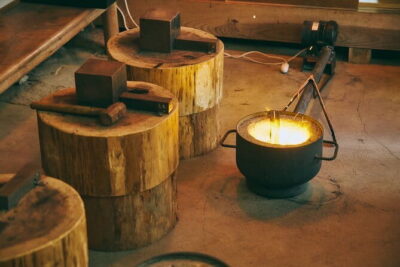
Authentic knife making experience at a blacksmith in Kyoto
Read our review →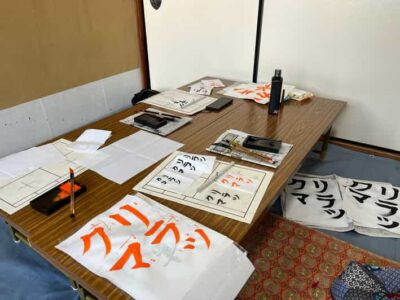
Calligraphy class at Buddhist temple in city center
Read our review →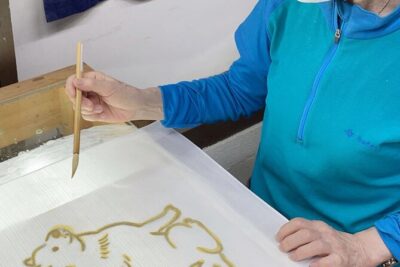
Roketsu dyeing experience: M course Roketsu Dyeing Experience
Read our review →

Traditional Japanese Washi Papermaking- Kyoto morning
Read our review →
Also filed under