
Reviewed · ARTISAN CRAFT WORKSHOPS
Kyoto Cultural IKEBANA Experience@SEKKA FLOWERS
Kyoto can feel like a stampede. This small ikebana workshop slows everything down fast, in a renovated traditional townhouse near major temple areas. I really like the wabi-sabi approach, where the goal is to show flowers in their natural state instead of forcing perfection, and I love that your final work gets shown in a tokonoma (a traditional alcove). One practical consideration: the session is about 40 minutes, so it is more of a focused starter lesson than a long, multi-arrangement deep course.
For me, the best part is the mix of calm structure and real permission to make it your own. Beginners are welcome, and the instruction style is welcoming and non-scary. If you want something very visual and fast only, this still works. If you are hoping for a big walking tour around Kyoto’s sites, this is not that kind of activity.
In This Review
- Key points to know before you go
- Kyoto’s quiet reset in a 100-year townhouse
- What you make: classical forms, wabi-sabi, and the tokonoma moment
- Inside SEKKA Flowers: how the 40 minutes actually feel
- 1) Arrival at the townhouse flower shop
- 2) A quick introduction to ikebana history and the seasonal angle
- 3) Learning the principles, with help that does not smother you
- 4) Building your composition while embracing wabi-sabi
- 5) Presentation in the tokonoma
- Instructors: Taro-san and Chiaki-san’s welcoming guidance
- Price and value: is $65.15 for 40 minutes worth it?
- Logistics that matter: meeting point, transport, and getting it home
- Who should book this ikebana workshop
- Should you book Kyoto Cultural IKEBANA Experience@SEKKA FLOWERS?
- FAQ
- How much does this Kyoto ikebana workshop cost?
- How long is the ikebana experience?
- Where is the meeting point?
- Is this class beginner-friendly?
- How big is the group?
- Do I receive confirmation after booking?
- Is the workshop near public transportation?
- Are service animals allowed?
- Can they deliver the arrangement to your accommodation?
Key points to know before you go
- Small group (max 6): more hands-on attention without feeling like a factory line
- Traditional townhouse setting: a historic-feeling room that matches what you are learning
- Wabi-sabi guided lesson: you learn principles tied to how Japanese aesthetics see imperfection
- Tokonoma presentation: your arrangement gets an actual place of honor
- Beginner-friendly tone: you are encouraged with no right or wrong pressure
- Take-home with delivery mentioned: some classes include delivering your arrangement to your accommodation
Kyoto’s quiet reset in a 100-year townhouse
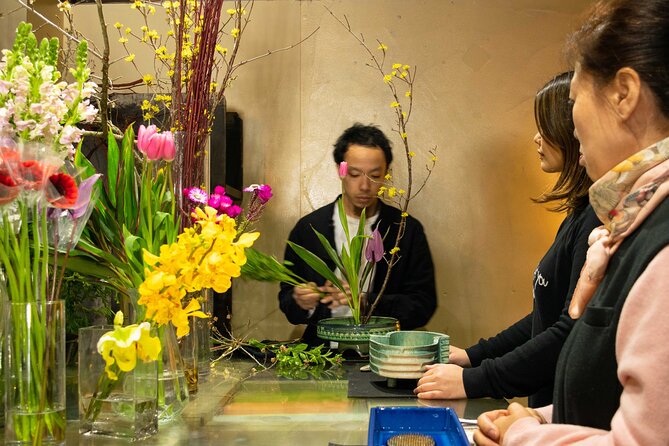
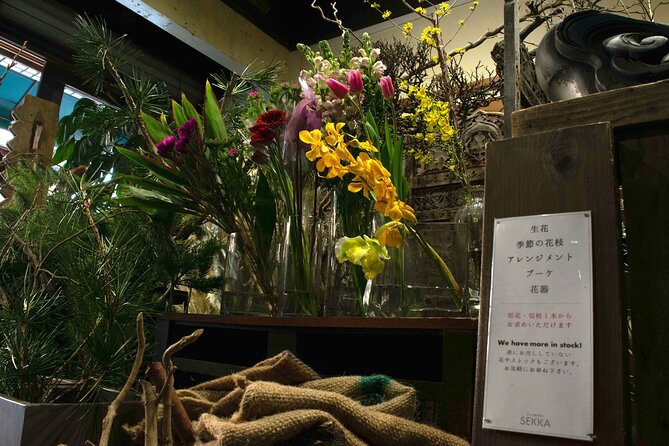
You start this experience in a working flower shop inside a renovated traditional townhouse. It is the kind of place that makes you lower your voice without being told. The setting matters here. Ikebana is not only about flowers, it is about attention, pace, and how you treat simple materials.
The location is also practical for your Kyoto days. You are not going to the far edges of the city for this. The shop sits in Kita Ward, and it is positioned near the Kinkaku-ji and Daitoku-ji temple areas. That makes it a nice option when you have temple plans already, but you still want a calmer moment that feels distinctly Japanese rather than just scenic.
And yes, Kyoto is busy. Taking time to make something by hand is one of the best ways to break the day’s rhythm. If you are feeling temple-weary, this can recharge you.
What you make: classical forms, wabi-sabi, and the tokonoma moment
Ikebana has rules, but good ikebana also has breath. This workshop is built around classical forms and a style that tries to reveal the beauty of the flowers and branches while respecting how they naturally are.
That is where wabi-sabi comes in. In simple terms, you are learning to accept the natural character of the materials. Instead of chasing a generic “perfect bouquet,” you are encouraged to notice line, texture, and the quiet presence of each element. That mindset is part of the art, not separate from it.
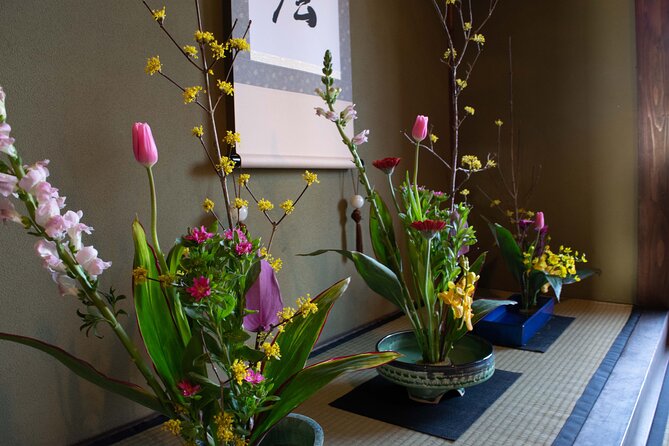
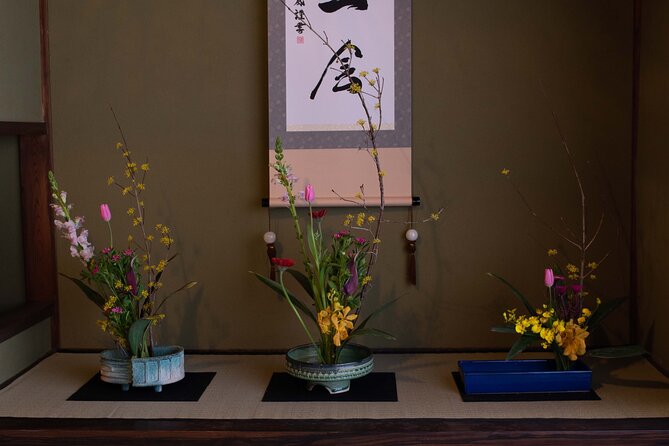
The final payoff is what happens after you finish. Your arrangement is displayed in a tokonoma. This alcove is a big deal in Japanese interior design, because it is meant for appreciating one carefully chosen thing. You are not just making a craft item. You are creating a piece with a role.
Make something with a Kyoto craftsman
- Authentic knife making experience at a blacksmith in Kyoto
★ 4.8 · 350 reviews - Kyoto: Calligraphy class at Buddhist temple in city center
★ 5.0 · 167 reviews - Roketsu dyeing experience: M course Roketsu Dyeing Experience
★ 5.0 · 163 reviews - Kyoto: Japanese Calligraphy Class
★ 4.8 · 89 reviews
Inside SEKKA Flowers: how the 40 minutes actually feel
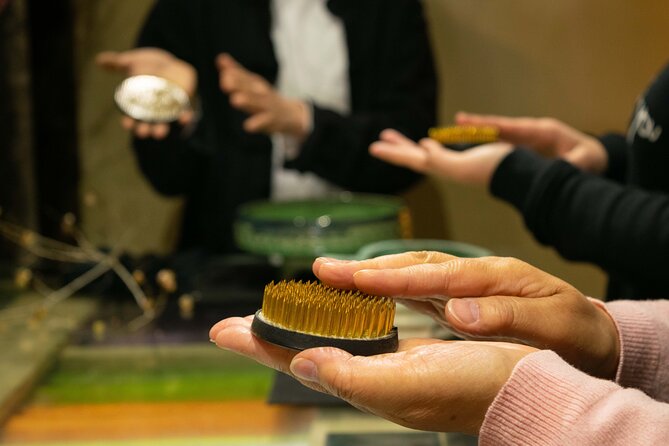
This is a short class, about 40 minutes, so it flows quickly. Think of it as a guided sequence rather than a “watch and copy” demo.
1) Arrival at the townhouse flower shop
You meet at the shop address: 44-4 Murasakino Kamimonzenchō, Kita Ward, Kyoto, 603-8217. It ends back at the same meeting point, so you can plan it as a clean, one-stop block in your day.
Because it is a shop setting, the lesson feels connected to real daily life. You are not in a classroom that could be anywhere. You are in the kind of place where flowers are handled and respected.
2) A quick introduction to ikebana history and the seasonal angle
You will get history and background on ikebana, plus a look at how it connects to Japan’s seasons. This matters because it gives you a lens. When you understand why seasons matter in ikebana, your arrangement choices stop being random.
Even if you are a total beginner, this piece helps you avoid the common trap of just copying a shape without meaning.
3) Learning the principles, with help that does not smother you
The instruction style is hands-on but not controlling. From the way instructors describe the process, the message is clear: there is no right or wrong answer.
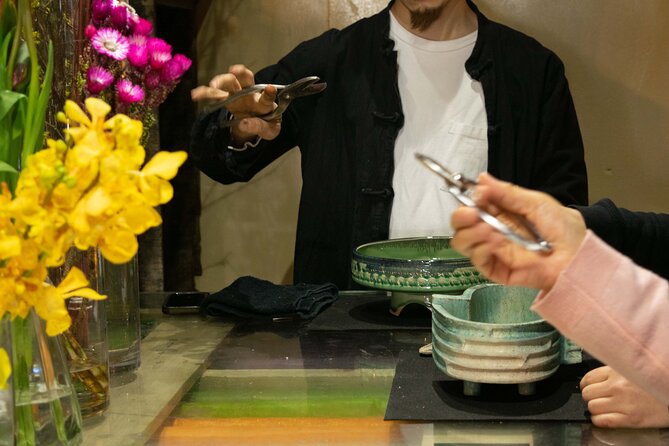
In practice, that means you get guidance on principles and structure, then you do the arranging. If you like being told what to think about but not exactly what to do with your hands, you will probably feel comfortable fast.
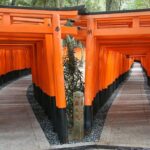
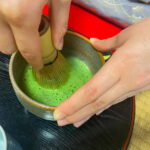
A day of temples goes further with something to break it up.


4) Building your composition while embracing wabi-sabi
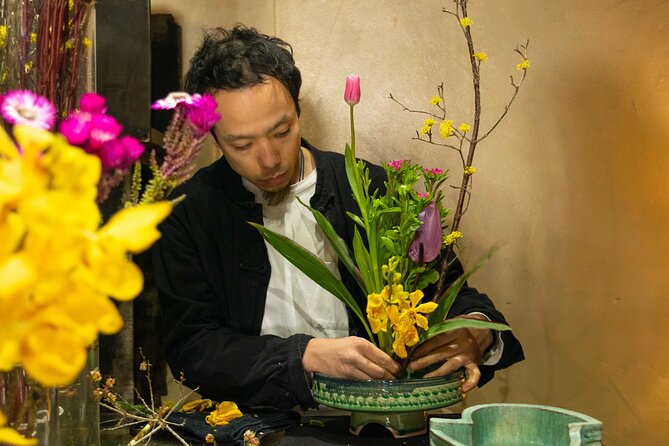
This is the heart of the class. You focus on the beauty of flowers and branches, using classical form thinking. You are also practicing a kind of quiet awareness. You are not trying to fight the natural shape of the stems. You work with them.
Expect the workshop to feel calm and sensory, especially in a traditional room. Kyoto can be loud outside. Inside, you are focused on much smaller details.
5) Presentation in the tokonoma
Once your arrangement is complete, it gets displayed in the tokonoma. This changes how you feel about the finished product. It turns your work from something you made into something you can appreciate properly.
It also gives you a reference point for future arrangements. Even if you never become an expert, you leave with a strong sense of what ikebana is trying to do.
Instructors: Taro-san and Chiaki-san’s welcoming guidance
The biggest reason this workshop earns such high praise is the tone. People mention instructors who are warm, knowledgeable, and encouraging. Names that come up are Taro-san and Chiaki-san.
The key detail is the reassurance. You are not graded. You are guided. That is a big deal if you are nervous about crafts or worried you will slow the group down.
This style also helps families. When parents and kids get included in the learning atmosphere, the class becomes a shared experience rather than a solo adult project.
Price and value: is $65.15 for 40 minutes worth it?
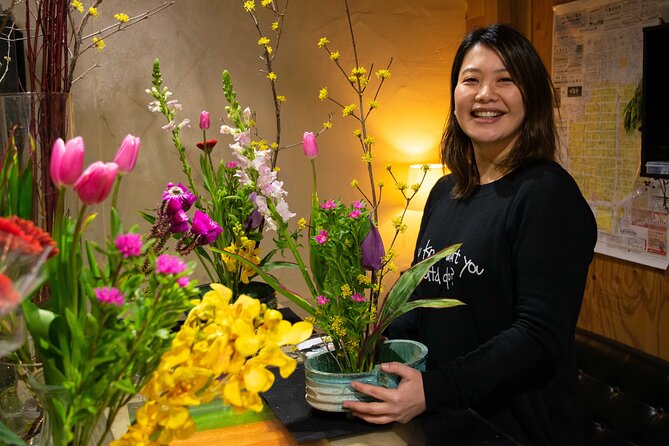
At $65.15 per person for about 40 minutes, you might wonder what you are really paying for. Here is the honest value breakdown.
You are paying for:
- A small group setting (up to 6), which usually means more attention and less waiting
- Real instruction, not just a photo opportunity
- A traditional space that actually fits the craft
- A finished result that gets presented in a tokonoma
- A take-home outcome, with delivery to accommodation mentioned in class experiences
For Kyoto, this is not cheap. But it is also not trying to replace a full day of touring. It is a concentrated cultural activity. If you treat it like a short, high-value skill moment, it makes sense.
If you are only in Kyoto to see streets and temples and you never make anything with your hands, you might find this less satisfying. But if you want a cultural souvenir that is yours, this is one of the better options you can choose.
Logistics that matter: meeting point, transport, and getting it home
The meeting point is specific: 44-4 Murasakino Kamimonzenchō, Kita Ward, Kyoto, 603-8217. It is near public transportation, which is helpful. Since the activity ends back where it starts, plan for it to be a self-contained block.
One more practical detail: take-home handling. Some participants report that the flowers were delivered to their accommodation afterward. That is a huge help if you do not want to carry a fresh arrangement around Kyoto streets and trains.
Still, do not assume delivery will work automatically. Before you go, be ready to share where you are staying and confirm how they handle delivery timing.
Who should book this ikebana workshop
I think this workshop is especially good for:
- Beginners who want a gentle entry into ikebana without feeling judged
- People who want a calm break from Kyoto crowds
- Couples looking for an indoor activity that still feels deeply cultural
- Families, since the class has been enjoyed by people with kids
- Travelers who prefer making something meaningful over buying another souvenir
You might want to skip it if you need a long, full-day itinerary. This is a short creative session. It is not a multi-stop sightseeing day.
Also, if you have a very tight schedule and cannot build time around getting to the meeting address, it may feel rushed. Give yourself breathing room so you can arrive calm and start focused.
Should you book Kyoto Cultural IKEBANA Experience@SEKKA FLOWERS?
Book it if you want a small, guided creative experience that connects you to Japanese aesthetics in a real setting. The combination of wabi-sabi principles and a tokonoma presentation gives your work a sense of place. The small group size and the instructor approach, including encouragement from Taro-san and Chiaki-san, make it a low-stress way to learn.
Skip it only if you are looking for a long walking tour or a fast sightseeing stop with minimal effort. This is a class where your hands do the talking. If that sounds like your kind of Kyoto, this is a smart use of your time.
FAQ
How much does this Kyoto ikebana workshop cost?
It costs $65.15 per person.
How long is the ikebana experience?
The workshop lasts about 40 minutes.
Where is the meeting point?
You start at 44-4 Murasakino Kamimonzenchō, Kita Ward, Kyoto, 603-8217, Japan. The activity ends back at the meeting point.
Is this class beginner-friendly?
Yes. Beginners are welcome.
How big is the group?
The workshop has a maximum of 6 travelers.
Do I receive confirmation after booking?
Yes. Confirmation will be received at the time of booking.
Is the workshop near public transportation?
Yes. The meeting location is near public transportation.
Are service animals allowed?
Yes. Service animals are allowed.
Can they deliver the arrangement to your accommodation?
Delivery has been mentioned in participants’ experiences, so it may be possible. You should plan to confirm the details with the shop.
New This Season
- Koyasan Day Trip by Private Car from Kyoto
- Old Port Town and Ultimate Sake Tasting Private Tour From Kyoto
- Kyoto’s Timeless Charm: 3hr Exploration of History and Peace
- Kyoto: 5 Types of Sushi Making
- Sacred Peak & Ancient Paths: Kurama-Kibune Hiking Experience
- Kyoto: Exclusive ZEN practice at Manpukuji temple in Uji
- Kyoto: Private Seasonal Aroma Yoga Class
- Traversing Kyoto’s Scenic West – Arashiyama to Kinkakuji
Artisan Craft Workshops, compared.
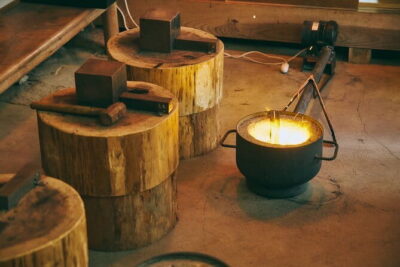
Authentic knife making experience at a blacksmith in Kyoto
Read our review →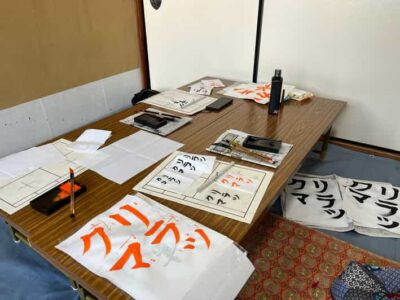
Calligraphy class at Buddhist temple in city center
Read our review →
Roketsu dyeing experience: M course Roketsu Dyeing Experience
Read our review →

Traditional Japanese Washi Papermaking- Kyoto morning
Read our review →
Also filed under