
Reviewed · FUSHIMI INARI SHRINE WALKS
Kyoto Early Bird English Tour: Fushimi Inari & Gion(Private opt)
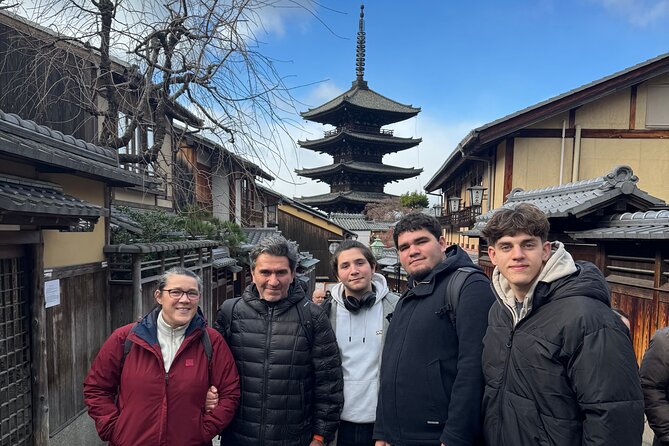
Wake up early, then let Kyoto unfold. This private, English-guided walk hits major shrines and temples before the biggest crowds, with photo help so you can actually enjoy the moment instead of wrestling with your camera. I love the chance to start at Fushimi Inari while the torii gates feel calmer, and I love that the guide role is part storytelling, part street-level photo support with Ikki often leading.
The main thing to consider is pacing and budgeting: the tour runs about 4 to 5 hours on paper, but some groups report it can feel closer to 2.5 hours, and you should plan on extra transit plus the paid ticket for Kiyomizu-dera.
If your goal is a first real taste of Kyoto highlights in one morning, this is a strong way to do it without spending your whole day in transit. It ends in the historic Gion area near Yasaka Shrine, which is handy when you want to keep exploring right after.
In This Review
- Key moments that make this tour work
- The early-bird strategy behind Fushimi Inari and Kiyomizu-dera
- Fushimi Inari-taisha: torii gates, Inari meaning, and photo help
- Kiyomizu-dera: the city-view payoff, plus the extra ticket
- Sannenzaka, Ninenzaka, and the “Kyoto details” you would miss alone
- Gion finish near Yasaka Shrine: geisha district vibes without the full-day grind
- Price and value math: what you pay and what you get
- Ikki and the photo-first guiding style (and how it helps you enjoy Kyoto)
- Should you book this Kyoto early-bird tour?
- FAQ
- How long is the Kyoto early bird English tour?
- Is this tour private or shared?
- What is included in the price?
- What extra costs should I expect?
- Is Kiyomizu-dera admission included?
- Are the other stops free to enter?
- What language will the guide speak?
- Where does the tour start and end?
- Is the tour mostly walking?
- Can I cancel and get a refund?
Key moments that make this tour work
- Fushimi Inari early start for calmer gate-walk vibes and better photo angles
- Ikki as guide (local, friendly, and consistently praised for clear English)
- Photo support included so you get more than random phone snapshots
- Kiyomizu-dera viewpoint time with context for what you are actually seeing
- Historic lanes and wooden-temple stops that feel distinctly Kyoto, not just checkboxes
- Finish in Gion near Yasaka Shrine so you can roll into more sightseeing easily
The early-bird strategy behind Fushimi Inari and Kiyomizu-dera

Kyoto is famous for lines. This tour’s whole idea is simple: get to the headline stops earlier, when the atmosphere is less packed and you can move at a human speed. You start at Kyoto Station, then work your way into the Higashiyama area, finishing near Gion.
Because it is a walking experience with public transportation between areas, you will get your legs working, but you will not be stuck navigating bus or train transfers while also trying to figure out where to go next. Moderate physical fitness is enough, as long as you can handle an active morning.
One more practical point I like: admission for many stops is free, so you spend your attention on the scenery and the stories, not constant ticket booths. The one place you must budget separately is Kiyomizu-dera.
Fushimi Inari-taisha: torii gates, Inari meaning, and photo help
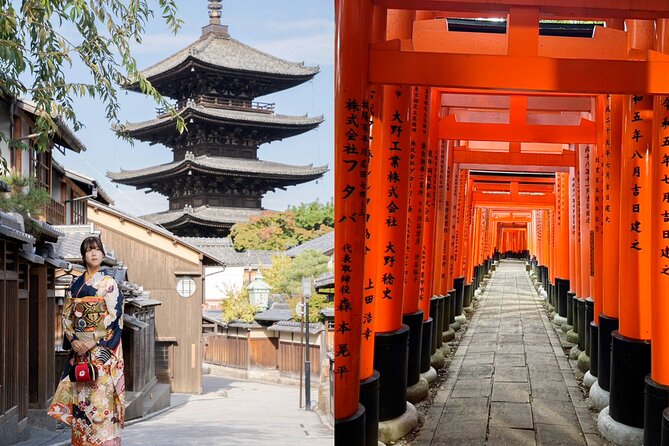
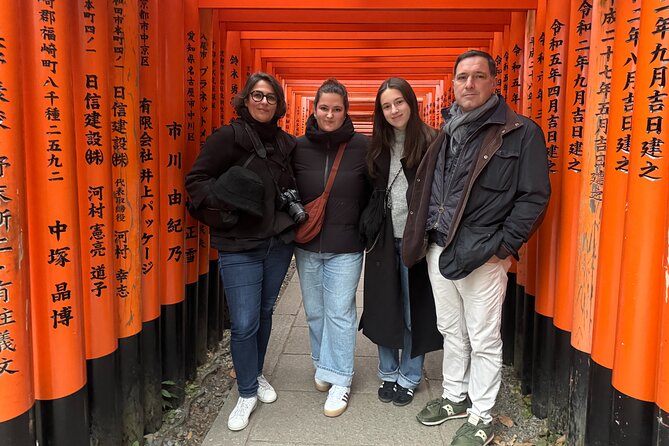
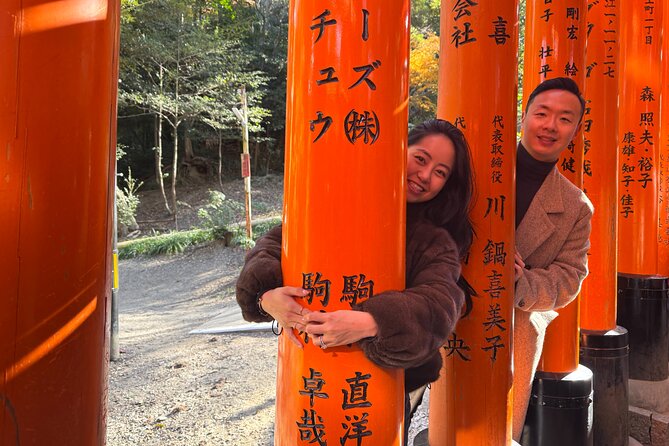
This is where the tour begins, at Fushimi Inari-taisha Shrine, known for thousands of red torii gates climbing Mount Inari. You get about an hour here, and the admission is free.
What makes this stop special is not just the look of the gates. It is the symbolism. Inari is associated with rice and prosperity, and the guide helps you connect the shrine details to the larger meaning, which makes the walk feel more purposeful.
If you care about photos, pay attention to how the guide works. Multiple guests specifically call out Ikki for taking lots of pictures and guiding people to spots where you can get clean compositions. You are also doing this early, which means fewer people in your background and a better chance to pause without feeling rushed.
Practical advice before you go: wear comfortable shoes with grip. The torii approach areas can be busy, and you will be walking between viewpoints and paths. Also, have your phone charged. Even with photo help, you will still want a few pictures you control yourself.
Still climbing through the orange gates?
- Kyoto: Fushimi Inari, Kinkakuji, Bamboo Grove 1 Day Bus Tour
★ 4.8 · 4,316 reviews - Fushimi Inari Hidden Hiking Tour (Private Option Available)
★ 5.0 · 1,750 reviews - Osaka/Kyoto:Kinkakuji,Arashiyama,FushimiInariShrine,NaraPark
★ 4.1 · 1,596 reviews - Kyoto/Osaka: Nara, Fushimi Inari Taisha, Arashiyama Bus Tour
★ 4.7 · 1,275 reviews
Kiyomizu-dera: the city-view payoff, plus the extra ticket
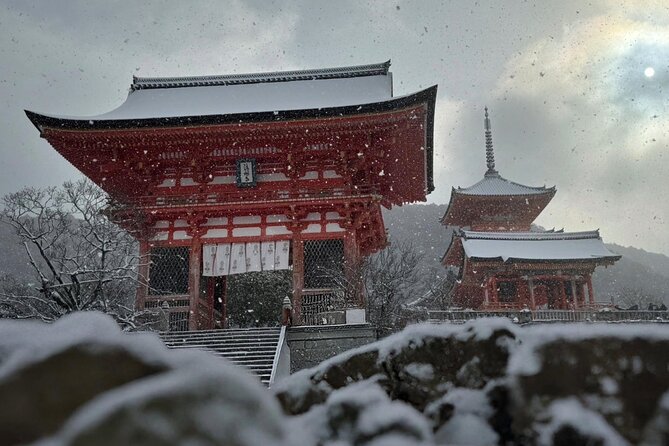
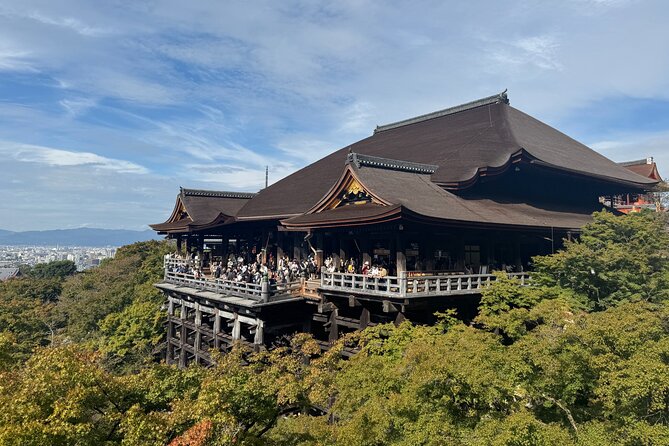
Next comes Kiyomizu-dera Temple, one of Kyoto’s most popular sights and a must for first-timers. You spend about an hour here, and admission is not included.
That means you should budget the temple fee in advance. The guide will still help you get the most out of your time, but the ticket is on you, listed at ¥500 per person. This is the main paid admission on the tour, so it is worth planning for it early so it does not feel like an end-of-trip surprise.
Why Kiyomizu-dera is worth the money and the time: it is not just buildings. The big draw is the panoramic view of Kyoto City from the temple area. If you have ever seen photos of Kiyomizu-dera terraces, you know the appeal is about perspective. With the guide explaining what you are looking at, the site feels more like a living part of Kyoto rather than a single photo moment.
You might also like the structure of the morning here. The tour keeps your stops timed, so you get the best viewpoints without turning this into a half-day you did not plan for.
Sannenzaka, Ninenzaka, and the “Kyoto details” you would miss alone
After Kiyomizu-dera, the route slows down into the kind of places that make Kyoto feel like Kyoto: old lanes, wooden structures, and temple symbols with stories behind them.
You first get a short walk through Sannenzaka and Ninenzaka, about 15 minutes. These stone-paved streets are lined with souvenir shops and restaurants in historic wooden buildings. The main value here is atmosphere. This is the part where you get to wander without thinking too hard about logistics, and you can buy small gifts or just watch daily life around the lanes.
Then you jump to Yasaka Pagoda (Hokanji temple) for another quick stop, also about 15 minutes. This pagoda is famous for being an old wooden structure built without using nails. That detail is exactly the kind of thing that makes you slow down and look closer, because it is hard to believe once you are standing in front of it.
Right after that, you visit Yasaka Koshindo for about 15 minutes. This temple is described as having an unknown construction date, and the decorations are colorful, which is notable because many temple spaces are more subdued. If you like religious art and symbolism, this stop is a good breather after the big-name shrines.
A small note on mindset: these stops are short, so you will not be settling into a long, quiet temple visit. The value is the sequence. The guide helps you understand what matters, so even a shorter stop feels meaningful.
Gion finish near Yasaka Shrine: geisha district vibes without the full-day grind
Next you enter Gion, Kyoto’s most famous geisha district. You get about 15 minutes here, which is enough to see the preserved historic streets and the traditional machiya houses and teahouses without getting stuck in a crowd for hours.
Gion is often photographed, but it can also feel confusing if you do not know where to look. With a guide, you are more likely to notice the street patterns and the traditional architecture details that make the neighborhood feel like old Kyoto, not a theme area.
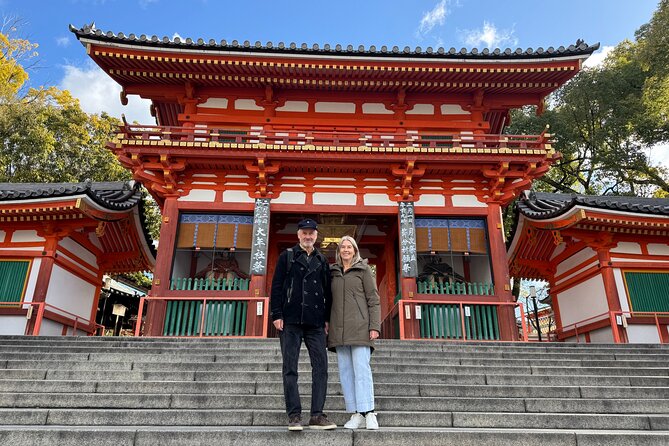
The tour ends at Yasaka Shrine for about 30 minutes. This is an anchor point for the area. Yasaka Shrine is the headquarters of 2,300 related shrines throughout Japan, dedicated to gods of prosperity and protection. If you want a closing moment that connects religion to daily life, this is a good final stop.
Because the tour finishes near Yasaka Shrine in Gion, you also get a built-in transition. You can keep sightseeing in the area, or ask the guide for a best route if you want to head back toward your hotel.
Price and value math: what you pay and what you get
The price is listed at $99.10 per person for a private experience. On the value side, you are paying for more than a list of stops. You are paying for a local English-speaking guide plus professional photos taken during the tour.
Here is the budget reality. Public transportation fare is listed at ¥390 per person, and Kiyomizu-dera admission is ¥500 per person. Food and drinks are not included, so plan on buying your own breakfast snacks or later meal after the tour.
So is it good value? For me, the case is strongest if you want two things at once: (1) context while you walk through shrines and temples, and (2) photos that look like you planned them. If you already have a strong appetite for self-guided wandering and you do not care about photos, then you might feel like some of the time is structured rather than free.
Also remember this is a private tour, meaning it is just your group. That usually helps with pace and attention, especially for families or if you want time for questions.
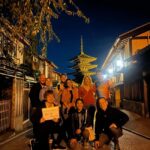
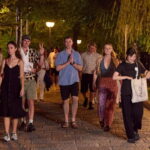
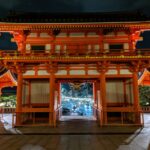
Lantern-lit streets of the geisha quarter
Ikki and the photo-first guiding style (and how it helps you enjoy Kyoto)
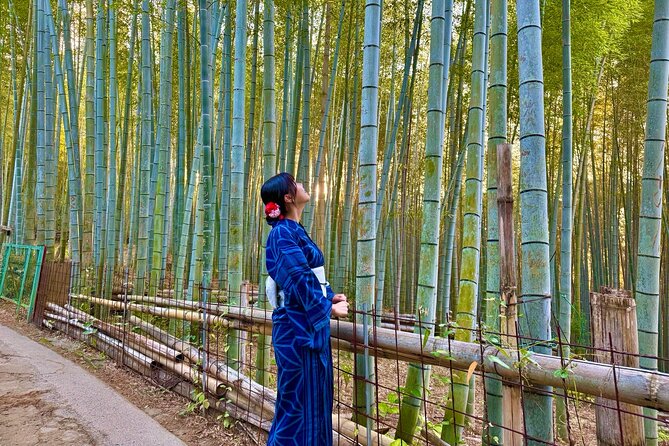
A standout theme from past guests is that the guide experience is more personal than typical. Ikki comes up again and again in feedback for being polite, friendly, and strong in English, and for caring about each step.
What I think is useful for you is the practical effect of that guide style. You get a plan, you understand why each stop matters, and you are not spending your morning constantly checking maps or guessing which direction is best for photos.
More than one guest also calls out that the guide takes many pictures and shares them afterward. If you are traveling with teenagers, parents, or anyone who does not want a slow, silent museum pace, that kind of interaction can make a big difference.
One added perk from guests: the guide tends to offer good local recommendations after the tour. Even though food is not included, these suggestions can help you avoid the usual tourist traps when you still have energy left for lunch.
Should you book this Kyoto early-bird tour?
Book this tour if you want a morning-focused hit list of Kyoto highlights with an English local guide and included photo support, and you are okay with extra costs for transit and Kiyomizu-dera. It is also a great match for first-timers, because the route gives you multiple types of Kyoto in one pass: shrines, temple views, historic lanes, and the Gion finish.
I would hesitate if you dislike walking, want extra time at each major site, or strongly prefer doing everything at your own speed with no structure. Also, if your schedule is tight, note that even though it is listed as about 4 to 5 hours, some groups report a shorter feel, so plan buffers.
FAQ
How long is the Kyoto early bird English tour?
It runs about 4 to 5 hours.
Is this tour private or shared?
It is a private tour, so only your group participates.
What is included in the price?
You get a local English-speaking guide and professional photos taken during the tour.
What extra costs should I expect?
You should budget for public transportation fare of ¥390 per person, plus Kiyomizu-dera admission at ¥500 per person. Food and drinks are not included.
Is Kiyomizu-dera admission included?
No. Kiyomizu-dera admission is not included, and the listed fee is ¥500 per person.
Are the other stops free to enter?
Fushimi Inari-taisha Shrine, Sannenzaka Ninenzaka, Yasaka Pagoda (Hokanji temple), Yasaka Koshin-Do, Gion stops, and Yasaka Shrine are listed as free admission.
What language will the guide speak?
The tour includes a local English-speaking guide.
Where does the tour start and end?
It starts at Kyoto Station, Higashishiokoji Kamadonocho, Shimogyo Ward, Kyoto, and ends at Yasaka Shrine in the Gion area, 625 Gionmachi Kitagawa, Higashiyama Ward, Kyoto.
Is the tour mostly walking?
Yes. It is designed as a walking experience with public transportation and plenty of time on foot, and it asks for moderate physical fitness.
Can I cancel and get a refund?
Yes, you can cancel for free up to 24 hours in advance of the experience start time for a full refund.
New This Season
- Koyasan Day Trip by Private Car from Kyoto
- Old Port Town and Ultimate Sake Tasting Private Tour From Kyoto
- Kyoto’s Timeless Charm: 3hr Exploration of History and Peace
- Kyoto: 5 Types of Sushi Making
- Sacred Peak & Ancient Paths: Kurama-Kibune Hiking Experience
- Kyoto: Exclusive ZEN practice at Manpukuji temple in Uji
- Kyoto: Private Seasonal Aroma Yoga Class
- Traversing Kyoto’s Scenic West – Arashiyama to Kinkakuji
Fushimi Inari Shrine Walks, compared.
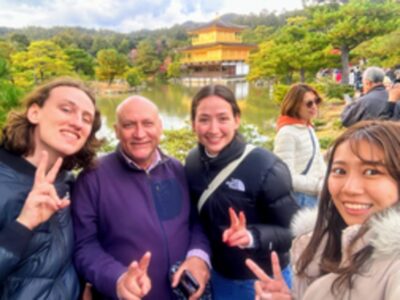
Fushimi Inari, Kinkakuji, Bamboo Grove 1 Day Bus Tour
Read our review →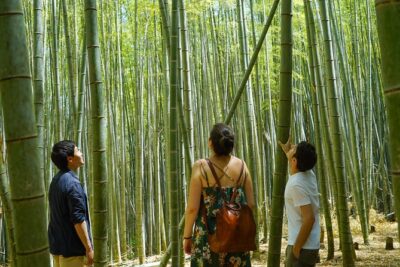
Fushimi Inari Hidden Hiking Tour (Private Option Available)
Read our review →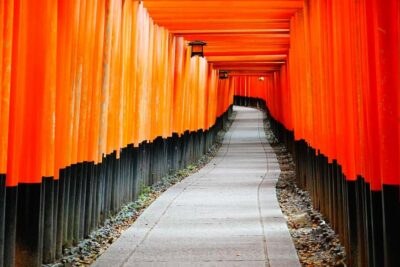
Kinkakuji,Arashiyama,FushimiInariShrine,NaraPark
Read our review →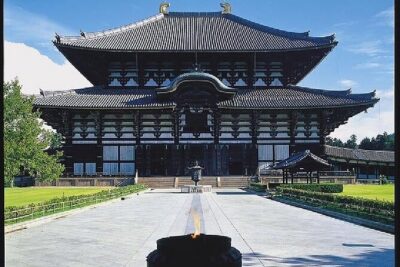
Nara, Fushimi Inari Taisha, Arashiyama Bus Tour
Read our review →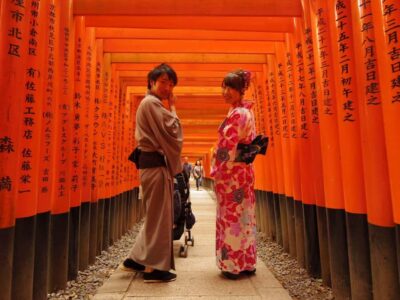
Arashiyama, Nara & Fushimi Inari Shrine w/Lunch
Read our review →
Nijo Castle, Kiyomizu & Fushimi Inari Guided Tour
Read our review →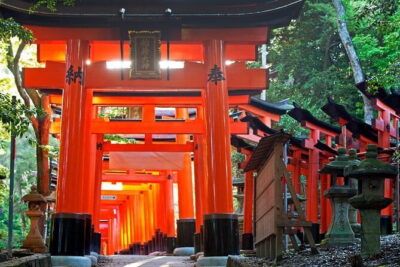
Nijo, Kinkaku-ji, Arashiyama, Kiyomizu & Fushimi Inari
Read our review →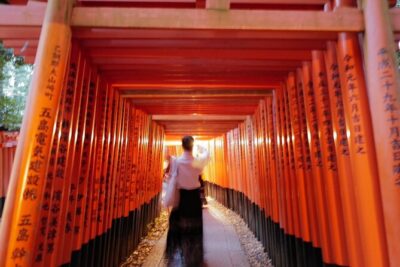
Also filed under