
Reviewed · ARTISAN CRAFT WORKSHOPS
Kyoto: Experience the UNESCO-protected art of gold leaf
Gold leaf in Kyoto feels unreal. This experience lets you try entsuke gold leaf, a UNESCO-protected craft, under direct guidance at Gomei Kinpaku Kogei, and you’ll also leave with a gold-leaf sake cup gift. The workshop is hands-on and short enough to fit into a busy Kyoto day. One thing to consider: it’s not suitable for wheelchair users or people with mobility impairments.
What I like most is the pace and clarity. In about 150 minutes total, you get a real craft moment, a close look at finished gold-leaf artworks, and plenty of time left over to see Kyoto after. If language is a concern, the live guide supports both English and Japanese, and in one recent booking the guide Seana made it easy to communicate with the master.
In This Review
- Key Points You Should Know Before You Go
- Kyoto Gold Leaf, the UNESCO-Protected Stuff
- Finding Gomei Kinpaku Kogei From Kyoto Station
- The 2-Hour Gold Leaf Workshop: Stamping, Applying, and Learning
- The Gallery of Masterworks (and Why You Should Use It Wisely)
- That Gold-Leaf Sake Cup Gift: A Small Item With Real Meaning
- Price and Value for a $200, 150-Minute Experience
- How This Fits Into Your Kyoto Day
- Who Should Book This Gold Leaf Experience, and Who Should Skip It
- Should You Book This Kyoto Gold Leaf Workshop?
Key Points You Should Know Before You Go
- UNESCO-protected entsuke gold leaf: A Japan-only gold leaf art, made with extremely thin foil.
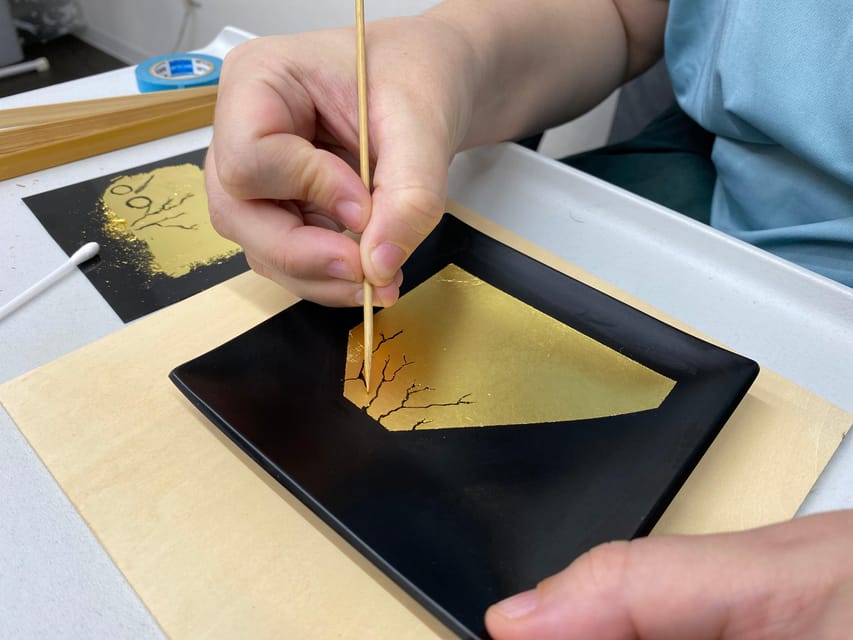
- Hands-on workshop time: You apply gold leaf to your own design while an artisan guides you.
- Gomei Kinpaku Kogei workshop: A craft shop passed down through four generations of makers.
- Gallery plus buying option: See completed pieces up close, and you can purchase artwork there.
- A take-home gift: A special gold-leaf sake cup is included.
- Private group, 150 minutes: Efficient half-day style timing that fits Kyoto plans.
Kyoto Gold Leaf, the UNESCO-Protected Stuff
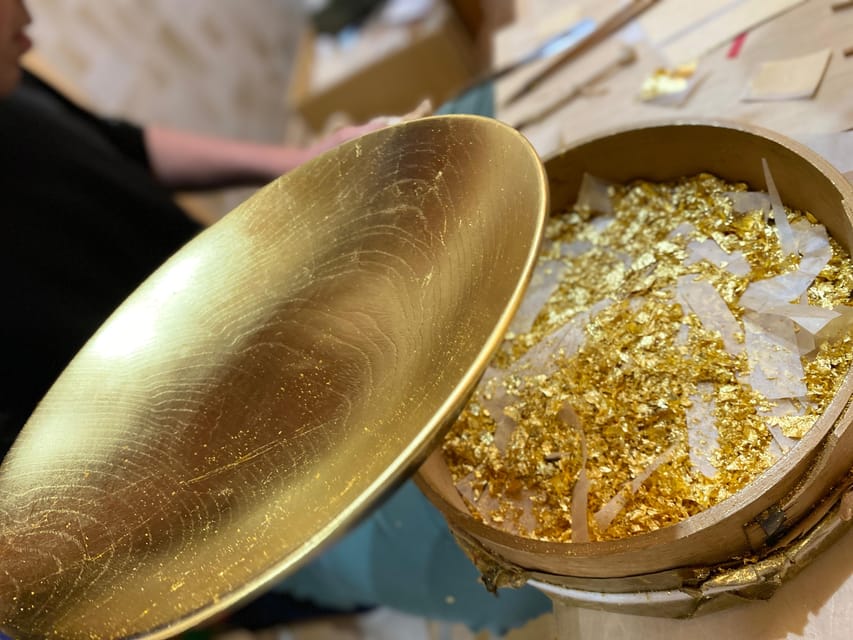
Kyoto gold leaf is famous, but this experience focuses on a specific type called entsuke. Entsuke is protected as a UNESCO-listed craft, and it’s only available in Japan. In practical terms, that matters because it’s not just a craft demo. You’re working with a material and tradition that have official cultural weight.
The foil is unbelievably thin, about 1/10,000th of a millimeter, which is roughly 0.1 micron. That thinness explains the look. Gold leaf doesn’t behave like thicker metal. It catches light at angles, so even small movements change how it glitters.
You also get the big cultural context for why gold leaf belongs in Kyoto. Gold has long been used with Buddhist statues and temple architecture as a symbol of constancy and eternity. Techniques came from China, then evolved alongside Japanese Buddhist culture, and the craft carried through eras like the Heian period into the Edo period through paintings, architecture, and wood-based building traditions. In the workshop, you’ll feel that continuity because you’re using the same kind of careful technique to create something you can point to and say, I made that.
Finding Gomei Kinpaku Kogei From Kyoto Station
The tour starts at Kyoto Station. Go to the central exit and look for the guide holding a yellow DeepExperience sign. Then you’ll walk on foot for about 15 minutes to reach the workshop.
That walk is short, but it’s also part of the charm. Gold-leaf craft shops are often tucked into side streets, so you’re not just transported from landmark to landmark. You’re moving through the everyday Kyoto setting that makes a small craft workshop feel plausible and real.
This is also why the timing works. You’re not stuck in a long commute. The total experience is about 150 minutes, so you’ll be back at Kyoto Station afterward, still ready to keep sightseeing.
Make something with a Kyoto craftsman
- Authentic knife making experience at a blacksmith in Kyoto
★ 4.8 · 350 reviews - Kyoto: Calligraphy class at Buddhist temple in city center
★ 5.0 · 167 reviews - Roketsu dyeing experience: M course Roketsu Dyeing Experience
★ 5.0 · 163 reviews - Kyoto: Japanese Calligraphy Class
★ 4.8 · 89 reviews
The 2-Hour Gold Leaf Workshop: Stamping, Applying, and Learning
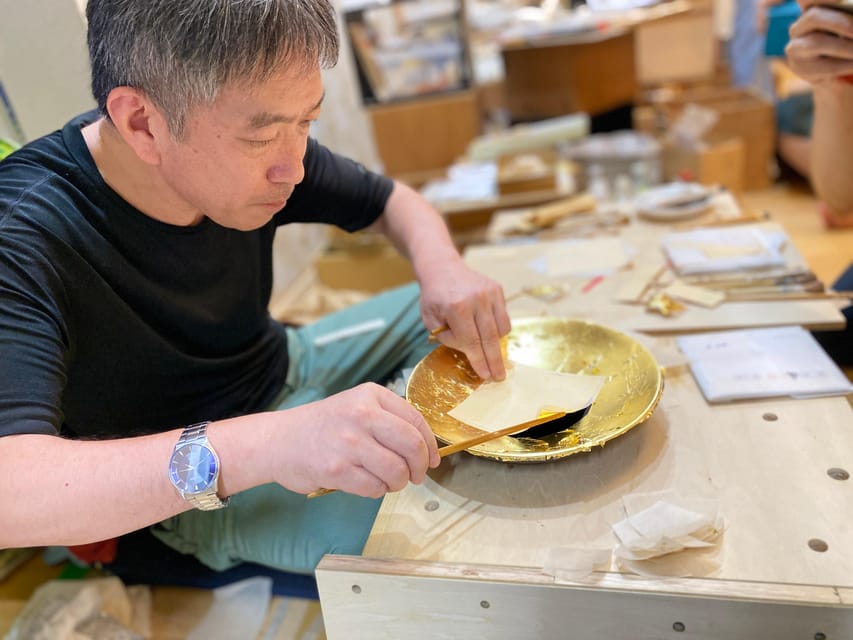
The heart of the experience happens inside 五明金箔工芸|世界唯一ユネスコ遺産の手作り金箔専門店 at Gomei Kinpaku Kogei. The guided portion lasts about two hours, and it’s structured around one simple goal: you make your own gold-leaf work.
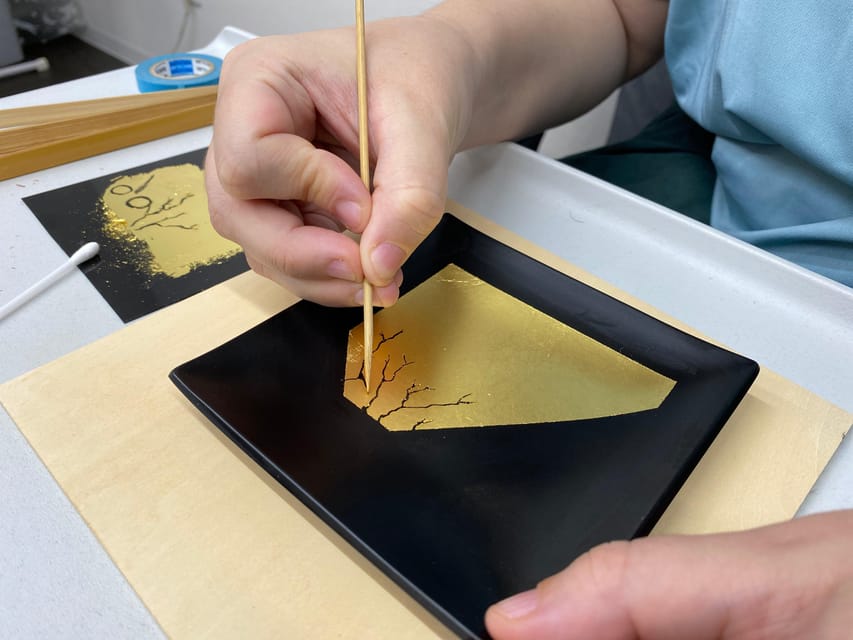
You’ll learn the technique of applying gold leaf under direct guidance from an experienced artisan. The key word here is guidance. Gold leaf is delicate, and the craft depends on careful handling and the right sequence of steps. The instruction is meant to get you from basic understanding to actual results, so you can finish a piece even if it’s your first time trying.
You’ll also spend time working on your unique design. That part is where this experience goes beyond watching. Instead of viewing gold leaf as something static behind glass, you’re actively placing it, seeing how it looks as it lands, and adjusting based on the artisan’s direction.
One detail I’d pay attention to is communication style. In a recent booking, the guide Seana helped make discussions with the master artisan easy, and it wasn’t limited to craft questions. You could also ask practical questions about Kyoto. That makes a difference, because you don’t leave with only a souvenir. You leave with context for how this craft fits into the city.
The Gallery of Masterworks (and Why You Should Use It Wisely)
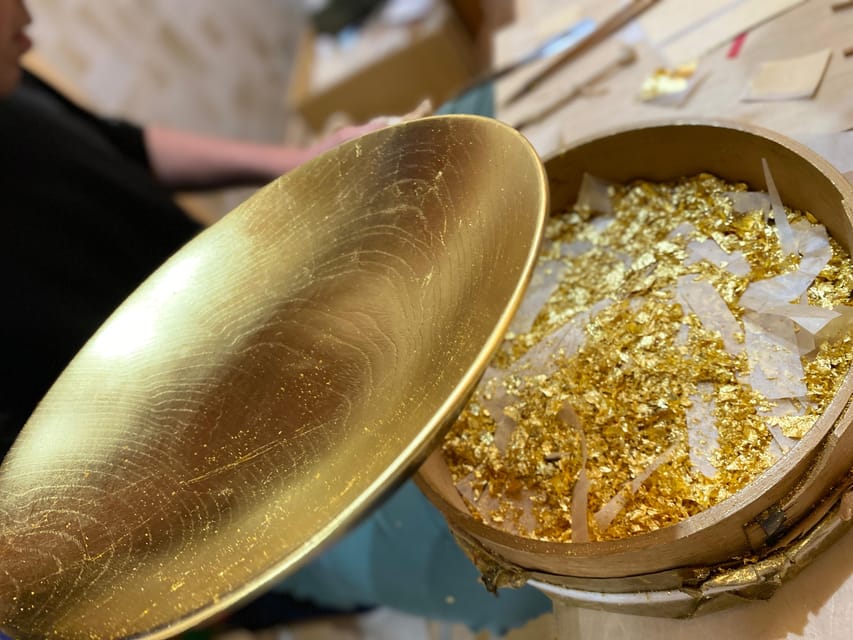
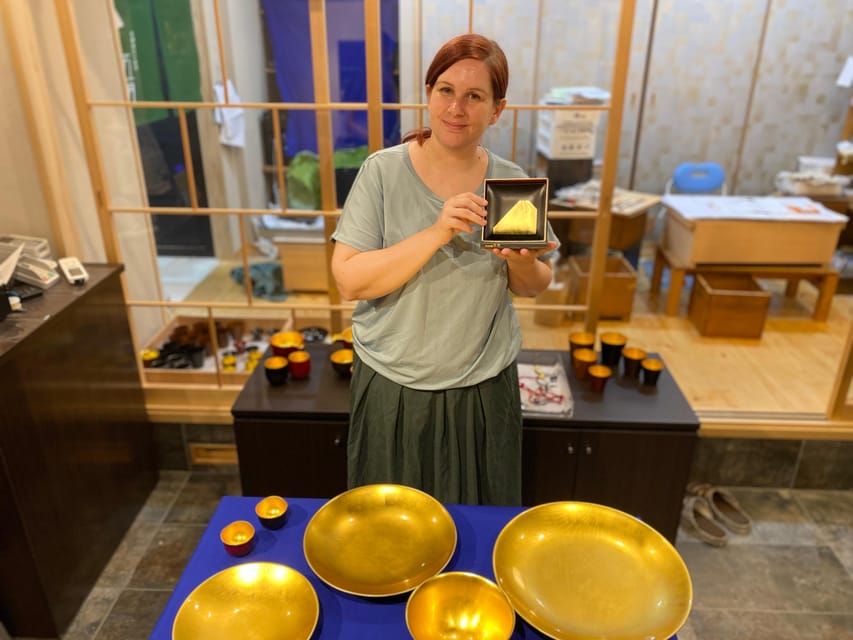
After the hands-on part, you’ll visit a gallery of finished artworks created by master artisans. This is where you get to see gold leaf up close and personal, not just in your memory of the workshop.
Use this time like you would a museum stop: look for texture and depth. Even when the design looks simple from a distance, gold leaf can shift how it reflects light across curves and edges. If you notice those differences, you’ll also understand why the foil has to be so thin and why the craft depends on precision.
You’ll also have the option to purchase artwork. I like that this is included in the flow. If you fall for a specific style, you can decide before you leave the workshop area, when you’re still in the mindset of creating and learning.
That Gold-Leaf Sake Cup Gift: A Small Item With Real Meaning
Included in the tour is a special gold-leaf sake cup. This is more than a generic token. Gold leaf is about interaction with light, and a cup is a daily-use object that keeps bringing you back to what you learned.
Also, the gift is a practical way to make the craft tangible. You can keep it for occasions, use it for display, or simply bring it out when you want to remember the workshop without digging through photos.
If you’re shopping in Kyoto anyway, this matters for value. You’re getting something made with the same sensibility you’re practicing, not just a mass-produced trinket.
Price and Value for a $200, 150-Minute Experience
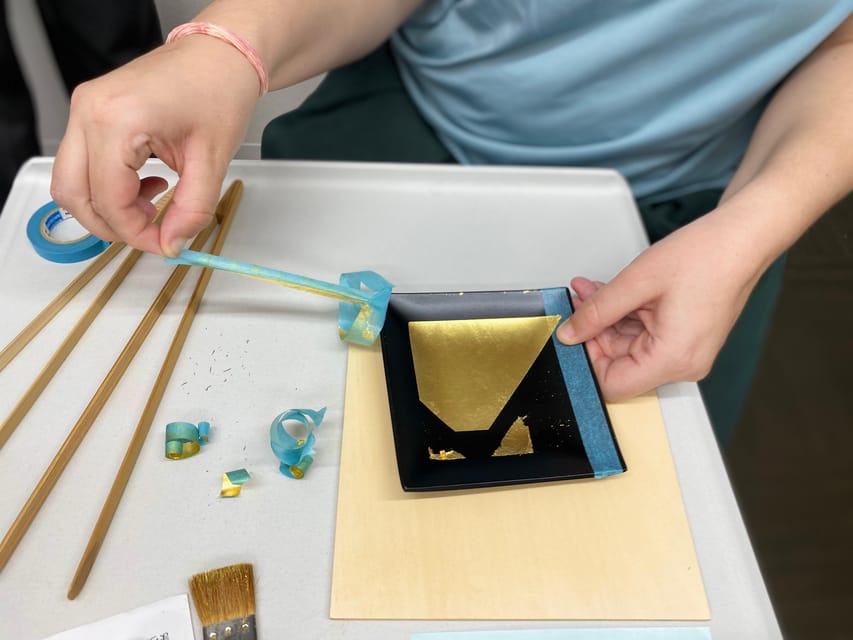
The price is $200 per person, for about 150 minutes total. That might sound steep if you compare it to a basic craft class. But here’s where the value actually comes from.
You’re paying for several things at once:
- A guided session in English or Japanese
- Trial fee included
- Hands-on instruction with gold leaf applied to your own design
- Access to a gallery of finished pieces
- A gold-leaf sake cup gift
- A private group format
That combination is hard to replicate with a simple ticket to a museum exhibit. It’s also why the short duration works. You’re not paying for a half-day of travel across multiple sites. You’re paying for concentrated craft time, plus context and a keepsake.
Now, the balanced caution: this is not a long cultural lecture or a full-day deep craft study. If you want hours and hours of craft history plus multiple workshops, you’ll likely want to pair this with other Kyoto sights afterward. The tour is designed as a focused craft experience that fits into your day.
A day of temples goes further with something to break it up.


How This Fits Into Your Kyoto Day
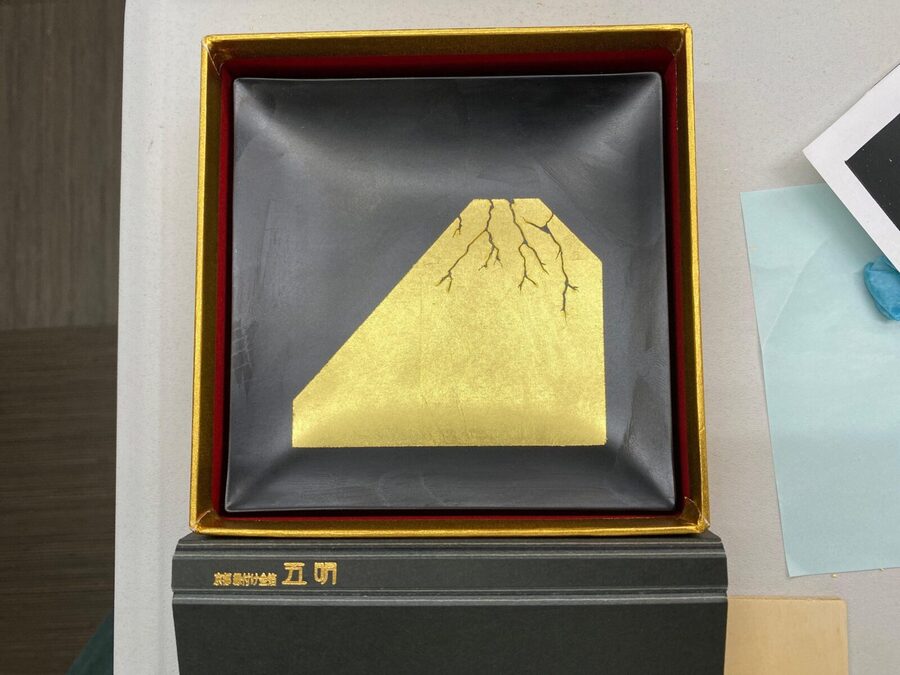
The tour leaves room to explore much more of Kyoto. You’ll start at Kyoto Station, walk to the workshop, do your two-hour craft session, then return to Kyoto Station. That makes planning easier.
I’d build your day around the idea that you’ll still feel fresh after gold leaf. This kind of workshop is detailed, but it’s not physically exhausting in the way some activities can be. Afterward, you’re free to shift to classic Kyoto neighborhoods, temples, or viewpoints.
If you’re the type who likes blending art with sightseeing, this is a great hinge activity. Morning or early afternoon craft sessions can make the rest of the day more meaningful, because you’ll have learned what goes into the materials you see in temples and traditional architecture.
Who Should Book This Gold Leaf Experience, and Who Should Skip It
This tour is a strong match if you:
- Want a hands-on craft with UNESCO-protected context
- Like learning from artisans, not just watching demos
- Appreciate small, high-detail arts like gold leaf and lacquer
- Prefer a structured experience that still leaves you time to explore
It’s not suitable for people with mobility impairments or wheelchair users, so if accessibility is a factor, plan to choose another Kyoto activity.
Also note the simple behavior rules: no smoking indoors and no littering. It’s a small, craft-focused environment, so you’ll get the best experience if you treat it like you would a gallery and a workshop at the same time.
Should You Book This Kyoto Gold Leaf Workshop?
I think you should book if you want a real craft moment in Kyoto, not just a photo stop. The biggest draw is the combination of UNESCO-protected entsuke gold leaf, direct artisan guidance, and the included gold-leaf sake cup. The private group format and English or Japanese support make it feel approachable, even if you’ve never tried gold leaf before.
Book it with care if you want a long, slow cultural immersion. This is about focused making in a short time window, then moving on. Also, factor in mobility needs early, since it’s not designed for wheelchair access.
If your ideal Kyoto day includes hands-on art, a compact schedule, and a souvenir you can actually connect to, this is a solid pick.
New This Season
- Koyasan Day Trip by Private Car from Kyoto
- Old Port Town and Ultimate Sake Tasting Private Tour From Kyoto
- Kyoto’s Timeless Charm: 3hr Exploration of History and Peace
- Kyoto: 5 Types of Sushi Making
- Sacred Peak & Ancient Paths: Kurama-Kibune Hiking Experience
- Kyoto: Exclusive ZEN practice at Manpukuji temple in Uji
- Kyoto: Private Seasonal Aroma Yoga Class
- Traversing Kyoto’s Scenic West – Arashiyama to Kinkakuji
Artisan Craft Workshops, compared.
Authentic knife making experience at a blacksmith in Kyoto
Read our review →
Calligraphy class at Buddhist temple in city center
Read our review →
Roketsu dyeing experience: M course Roketsu Dyeing Experience
Read our review →

Traditional Japanese Washi Papermaking- Kyoto morning
Read our review →
Also filed under