
Reviewed · GION GEISHA QUARTER WALKS
Kyoto: Gion Highlights & Hidden Treasures Guided Tour
Kyoto can feel like a maze, but this route is tidy. I especially love the Gion Shirakawa Street stroll among traditional teahouses and the guided way into the big-name sights like Kiyomizu-dera. One thing to plan for is that lunch is not included, so you will want to choose your own meal spot once the group stops in Gion.
You get a live guide in English or Japanese, plus entry tickets for key temples. The walking adds up over a 450 minute day, so wear comfortable shoes and bring a light layer, because temple areas and shrine courtyards can feel very different from the street.
If you want Kyoto’s classic streets and sacred spots, without spending your whole day guessing what to see next, this tour format helps you move with confidence.
In This Review
- Key highlights to look for
- A 7.5-hour Kyoto route that keeps the day moving
- Meeting at Izumo no Okuni, then stepping into Gion
- Yasaka Shrine and Kodaiji Temple: Shinto and temple culture in one arc
- Entoku-in: a calmer 25 minutes that changes the feel of the day
- Lunch in Gion: what to watch for since it’s not included
- Kiyomizu-dera for 90 minutes: where the views earn their reputation
- Yasaka Koushindo wishes balls: a colorful moment with meaning
- Yasui Kompira-gū: blessings for breaking bad habits and better relationships
- Price and value: what $102 buys you in real-world terms
- Group size, pacing, and how to get the most from the walk
- Who should book this tour
- Should you book Kyoto: Gion Highlights and Hidden Treasures?
- FAQ
- What is the meeting point for the tour?
- How long is the tour?
- What’s included in the price?
- Is lunch included?
- What languages are available for the guide?
- Do they accommodate dietary restrictions?
- Is cancellation flexible?
Key highlights to look for
- Gion Shirakawa Street and Hanamikoji Street passes, built for easy photos and good people-watching
- Yasaka Shrine in a focused stop, so you can understand what you’re seeing
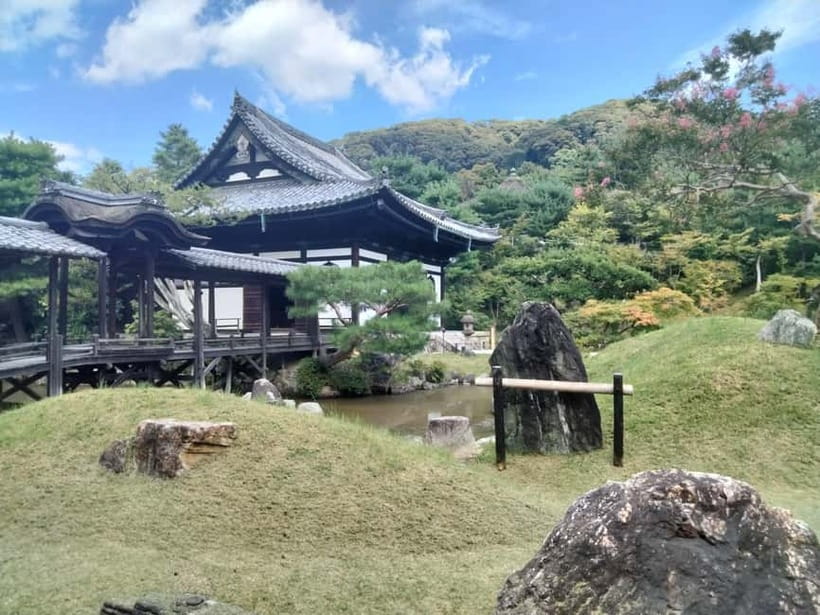
- Kodaiji Temple (1 hour) plus Entoku-in (25 minutes) for a quieter break from the crowds
- Kiyomizu-dera (1.5 hours) with UNESCO-level payoff and time to slow down
- Yasaka Koushindo wishes balls and Yasui Kompira-gū for a more personal, spiritual moment
A 7.5-hour Kyoto route that keeps the day moving
This tour is designed as a full historic-district loop, starting at Izumo no Okuni by Shijo Ohashi bridge and ending back at the same point. With 450 minutes on the clock, you are not doing token stops. You get enough time at major sights like Kiyomizu-dera and solid coverage in the Gion and Yasaka areas.
What I like about this pacing is that it mixes “I know this place” with “I did not expect this stop.” You spend time at iconic locations, then you shift into smaller temple and shrine experiences that make Kyoto feel lived-in, not like a checklist.
Meeting at Izumo no Okuni, then stepping into Gion
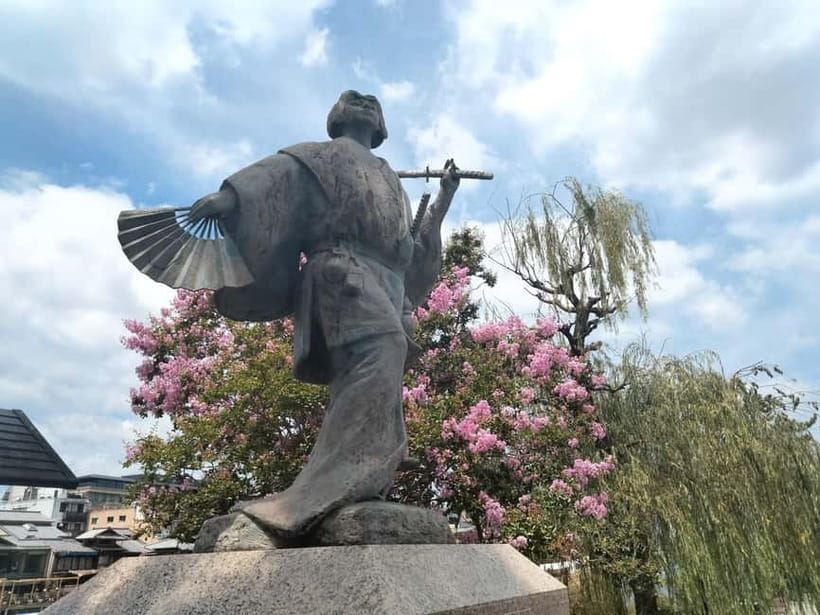
You meet your guide in front of the statue of Izumo no Okuni, at the east end of Shijo Ohashi bridge. It’s a useful landmark because it anchors the day in a part of Kyoto that’s easy to orient from, and it keeps everyone together before you start walking.
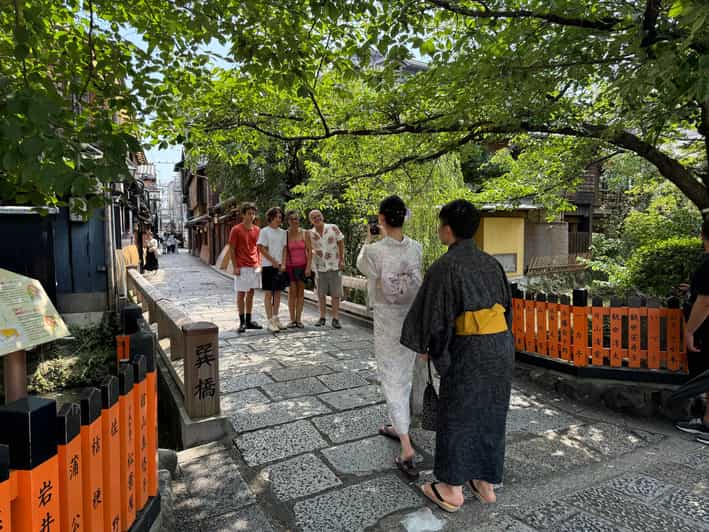
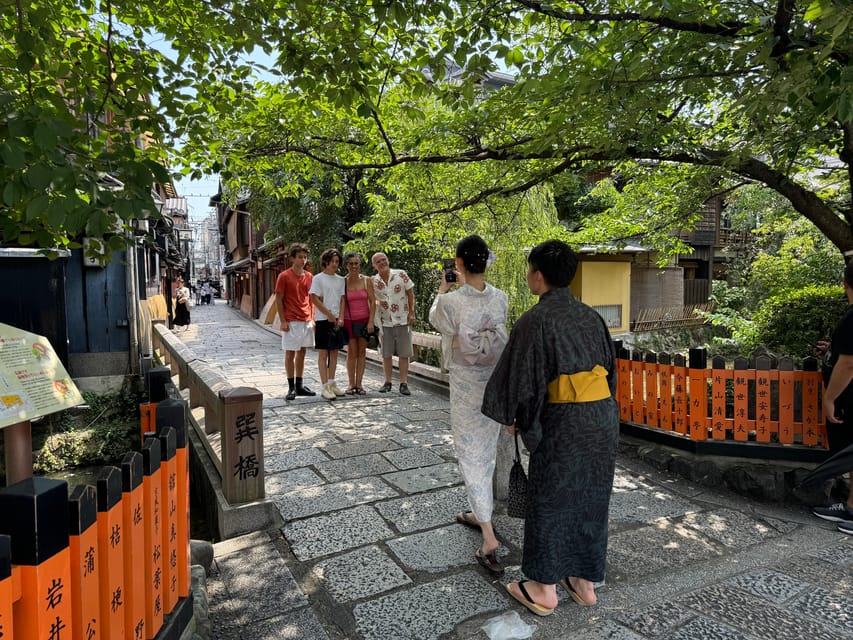
From there, the day centers on Gion’s street atmosphere. You begin with Gion Shirakawa Street, known for scenic walking among traditional teahouses, then you pass Hanamikoji Street, famous for historic architecture and occasional geisha sightings. Even if you do not catch a sighting, you still get what most people come for: a sense of how Kyoto looks when it’s not trying to shout.
Practical tip: this portion is great for photos, but also for slow observation. Look at the street layout, the way buildings face the lane, and how narrow the streets feel once you are actually standing in them.
Lantern-lit streets of the geisha quarter
- Kyoto Geisha Walking Tour: Gion District & Hidden Gems
★ 4.7 · 3,273 reviews - Kyoto: Gion Magical Night Walking Tour with Geisha Trivia
★ 4.9 · 2,393 reviews - Kyoto: Gion Geisha District Walking Tour – Stories of Geisha
★ 4.7 · 2,187 reviews - Best of Kyoto: Gion, Geisha, Pagodas & Cobblestones
★ 4.9 · 2,058 reviews
Yasaka Shrine and Kodaiji Temple: Shinto and temple culture in one arc
Next comes Yasaka Shrine, a strong introduction to Kyoto’s Shinto traditions. This is one of those stops where the “why” matters. A shrine is not just a photo spot, it is a place of ongoing practice, so your time here works best if you pay attention to the mood and purpose of the space rather than trying to rush through.
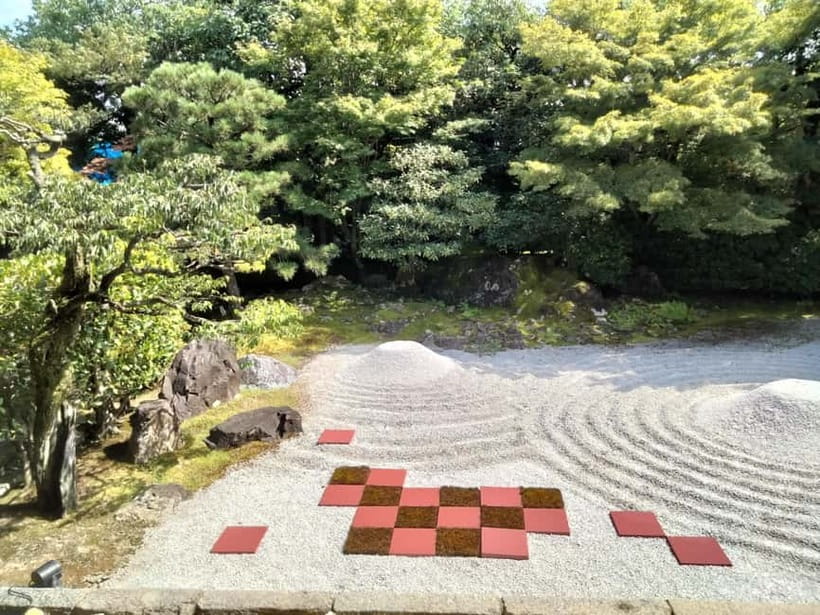
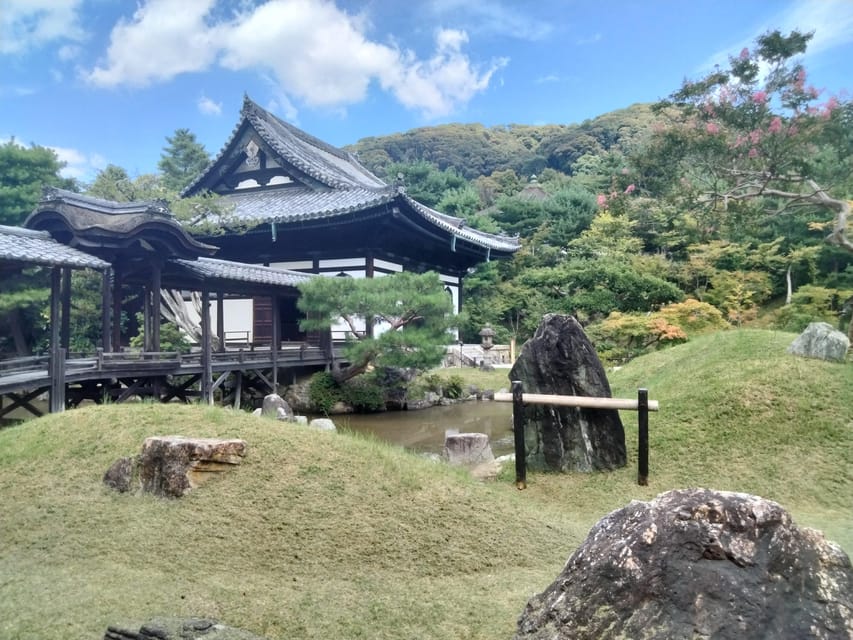
After that, you move on to Kōdaiji Temple for about an hour. This is where the tour gives you time to actually absorb temple details. An hour sounds like a lot, and it is, but Kyoto temples can reward patience, especially when you have a guide who can point out what you should notice.
A balanced approach helps here: enjoy the visuals, but also let your guide frame the cultural context. If you do not know what a feature is or why it exists, you miss half the experience. A good guide fixes that fast.
Entoku-in: a calmer 25 minutes that changes the feel of the day
Then you add Entoku-in for about 25 minutes. The value of this stop is pacing. After you’ve handled a shrine and a major temple, this shorter visit creates breathing room without derailing the flow of the day.
Think of Entoku-in as a chance to slow down and reset your eyes. When you are on a guided route, you can spend less energy figuring out where to go and more energy noticing subtler things like the atmosphere of a smaller compound and how it differs from the more famous surrounding areas.
If you tend to get temple-fatigue, this is a good spot. You get a meaningful visit without committing to another long block of time.
Lunch in Gion: what to watch for since it’s not included
Lunch is scheduled for about an hour in Gion, but it is not included in the tour price. That means you have freedom, but it also means you should think ahead about dietary needs, especially since the tour asks you to inform them of any dietary restrictions in advance.
Here’s the practical way to use that hour: pick a restaurant style that matches your energy level. If you want something quick and easy, go for a nearby option and keep walking after. If you want to sit and recharge, choose somewhere that lets you rest without rushing your meal.
Also, remember that you have another major temple stop later. If you are sensitive to spicy food or large meals, plan a lunch that won’t weigh you down.
Kiyomizu-dera for 90 minutes: where the views earn their reputation
Kiyomizu-dera is the big event on this route, with about 1.5 hours to explore. It’s a UNESCO World Heritage site, and the highlight is the combination of historic architecture with city views.
This is the part of the day where I would focus on your timing and your attention. City-view sights can be tempting to treat like a quick look and move on, but you get more from the experience when you give yourself time to see the place as a whole: the structures, the approach, and the way the complex opens out toward the city.
Because you are with a guide, you should also ask questions that help you interpret what you are seeing, not just what you are looking at. A guide can help you understand why certain spaces matter and what cultural cues to notice while you’re there.
What you might love most here is the payoff of having earlier stops that set the tone. By the time you reach Kiyomizu-dera, you have already walked Gion streets and visited shrines and temples, so it feels like Kyoto, not separate attractions.
A quieter way to spend a day in Kyoto

Yasaka Koushindo wishes balls: a colorful moment with meaning
After Kiyomizu-dera, the tour moves to Yasaka Koushindo, known for its colorful display of wishes balls. This is not a long stop, about 20 minutes, and it does not try to compete with the scale of Kiyomizu-dera. Instead, it gives you a more personal, hands-on cultural moment.
If you like experiences that feel specific to Kyoto, this is one of them. A wishing ritual turns sightseeing into participation, even if all you do is observe and follow along with what the space is for.
Keep your expectations realistic: you are there for a quick and focused visit. Use it to slow your brain down for a minute and do something small and meaningful before the final shrine stop.
Yasui Kompira-gū: blessings for breaking bad habits and better relationships
Your day ends at Yasui Kompira-gū, another shrine experience designed around a personal theme. The attraction here is that visitors can seek blessings for breaking bad habits and ensuring good relationships.
That focus matters, because it shifts the emotional tone of the tour. Instead of finishing with another “check the box” stop, you end with something that invites reflection. If you’ve had a long day of crowds and walking, this final moment can feel surprisingly grounding.
This stop is also about balance. You started with famous street scenes and shrine traditions, and you end with a different kind of Kyoto practice that feels intimate and goal-oriented.
Price and value: what $102 buys you in real-world terms
The price is listed at $102 per person for a 450 minute day. For that, you get a live guide and entry tickets for Kōdaiji Temple, Entoku-in, and Kiyomizu-dera. Lunch is not included, but that also means you can choose what fits your tastes and dietary needs.
Is it good value? In Kyoto, temple admissions and guided time add up quickly, especially when you want to cover multiple sites without turning your day into a transportation puzzle. This tour groups the major-ticket stops and keeps the schedule coherent, so you pay for convenience and interpretation, not just access.
The best value shows up if you:
- want help making sense of what you see at shrines and temples
- prefer a timed route over self-planning
- care about cultural context, not only photos
If you already know Kyoto deeply and enjoy designing your own route minute by minute, you might spend less by traveling independently. But you would also give up the structure that helps you see this concentrated historic area smoothly.
Group size, pacing, and how to get the most from the walk
This tour offers private or small groups, which is a big deal in a place like Kyoto. Smaller groups usually mean you can ask more questions, stay flexible when you need a pause, and avoid feeling like you’re being pulled along at someone else’s speed.
The schedule includes multiple short transitions, with the day built around a mix of passes and visits. You will spend time on foot and also make several short stops, which keeps you from waiting too long in any one place.
My advice is simple: plan for comfort over style. Your biggest risk is not missing a sight, it is arriving at a major place tired or distracted because you did not pace yourself earlier. Bring water, keep your phone charged for maps, and use the guide’s explanations to make each stop feel connected.
Who should book this tour
This tour fits best if you want a guided day in Kyoto’s historic district that covers both well-known and less-frequented spiritual stops. It is ideal for first-timers who want the classic Gion streets and the UNESCO highlight, plus travelers who enjoy learning what they are seeing while moving through real neighborhoods.
It is also a good choice if you like structure. The day has a clear arc, starting at Izumo no Okuni, moving through Gion and Yasaka, and ending at Yasui Kompira-gū. That rhythm keeps you from overthinking and helps you enjoy the day as it happens.
If you are traveling with a very tight schedule, a full-day format might feel long. But the 450 minute timing is still reasonable because you are not spending the entire time standing around. You have walking sections and multiple visit windows, including a full hour at Kōdaiji and a longer visit to Kiyomizu-dera.
Should you book Kyoto: Gion Highlights and Hidden Treasures?
I would book it if you want a Kyoto day that feels organized, culturally interpreted, and efficient without feeling rushed. The combination of Gion Shirakawa Street, Yasaka Shrine, Kōdaiji, Kiyomizu-dera, and the wish and blessing stops at Yasaka Koushindo and Yasui Kompira-gū gives you variety in mood and meaning.
Two quick checks before you decide:
- You need to handle lunch on your own, so make peace with that and plan around your dietary needs.
- You will be walking through several areas, so comfortable shoes are not optional.
If you want Kyoto with fewer logistics headaches and more “oh, that’s what this is for” moments, this tour is a strong pick.
FAQ
What is the meeting point for the tour?
Meet your guide in front of the statue of Izumo no Okuni, located at the east end of Shijo Ohashi bridge.
How long is the tour?
The tour duration is 450 minutes (about 7.5 hours).
What’s included in the price?
The tour includes a live guide and entry tickets to Kōdaiji Temple, Entoku-in Temple, and Kiyomizu-dera Temple.
Is lunch included?
No. Lunch is not included.
What languages are available for the guide?
The live tour guide is available in English and Japanese.
Do they accommodate dietary restrictions?
Yes. You should inform them of any dietary restrictions in advance.
Is cancellation flexible?
Yes, you can cancel up to 24 hours in advance for a full refund.
New This Season
- Koyasan Day Trip by Private Car from Kyoto
- Old Port Town and Ultimate Sake Tasting Private Tour From Kyoto
- Kyoto’s Timeless Charm: 3hr Exploration of History and Peace
- Kyoto: 5 Types of Sushi Making
- Sacred Peak & Ancient Paths: Kurama-Kibune Hiking Experience
- Kyoto: Exclusive ZEN practice at Manpukuji temple in Uji
- Kyoto: Private Seasonal Aroma Yoga Class
- Traversing Kyoto’s Scenic West – Arashiyama to Kinkakuji
Gion Geisha Quarter Walks, compared.
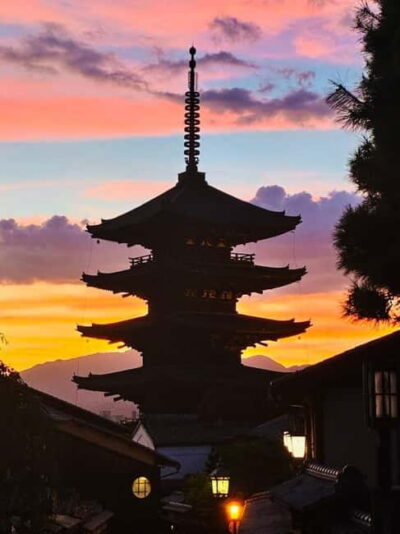
Kyoto Geisha Walking Tour: Gion District & Hidden Gems
Read our review →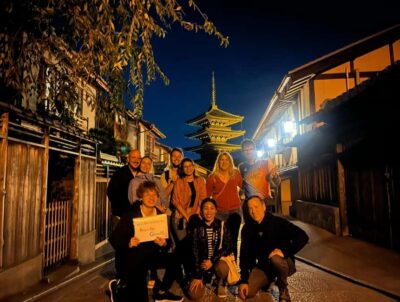
Gion Magical Night Walking Tour with Geisha Trivia
Read our review →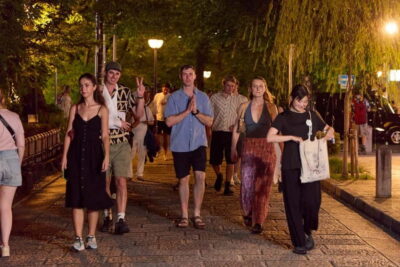
Gion Geisha District Walking Tour – Stories of Geisha
Read our review →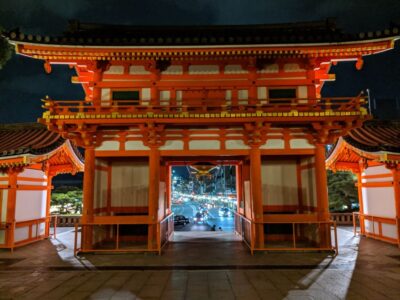
Best of Kyoto: Gion, Geisha, Pagodas & Cobblestones
Read our review →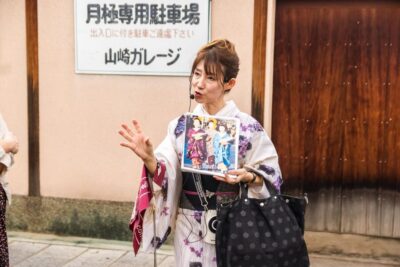
Kyoto Night Foodie Tour in Gion (9+ dishes + 6 Sake tastings)
Read our review →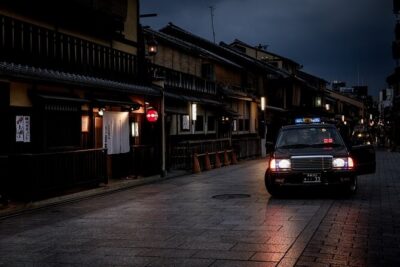
Kyoto Gion Geisha District Walking Tour – The Stories of Geisha
Read our review →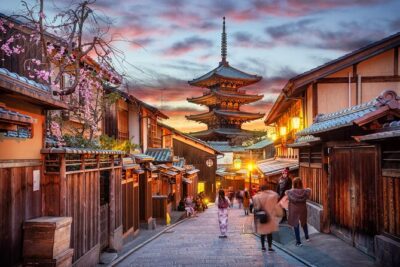
Kyoto Gion: 2-Hour Geisha Culture & History Walking Tour
Read our review →Also filed under