Reviewed · FUSHIMI INARI SHRINE WALKS
Kyoto Guided Walking Tour Highlight of Kiyomizu & Fushimi Inari
Kiyoto can be a lot in one day. This half-day walking tour strings together Kiyomizu-dera, Sanjūsangendō, and Fushimi Inari with a guide and just enough time to actually look. You get the famous Kiyomizu-dera views from a big wooden stage, then the striking Sanjūsangendō hall with 1,001 statues, and finally those red torii gates at Fushimi Inari.
I like two things most. First, the small group size (up to 8) makes it easy to ask questions and keep your footing on temple stairs and side streets. Second, you get a relaxed rhythm for hitting major sights fast without feeling like you are sprinting from one photo spot to the next.
One thing to plan for: there is a moderate amount of walking, and the schedule includes a short train leg. Train fare is not included (you need an IC card or coins for about ¥170 per person), so budget that extra bit and wear comfortable shoes.
In This Review
- Key highlights at a glance
- Why this Kyoto route works so well in 4 hours
- Price and value: what $78.18 really buys you
- Meeting at Kyoto Ceramic Center, then easing into the morning
- Kiyomizu-dera: the wooden stage views and what to notice
- Sanjūsangendō: the 1,001 Kannon statues and the feeling of scale
- Shichijō Station and the paid train hop you must plan for
- Fushimi Inari-taisha: torii gates, shrine meaning, and pacing deeper
- The best part is the guide energy, not just the stops
- What you should wear and how to handle the walking
- Who this tour is best for
- Should you book this Kyoto guided walk?
- FAQ
- How long is the Kyoto guided walking tour?
- What is the price per person?
- Where do I meet the group?
- What time does the tour start?
- Where does the tour end?
- Are temple or shrine admissions included?
- Is the train fee included?
- How many people are in the group?
- Does the tour run in the rain?
- What is the cancellation policy?
Key highlights at a glance
- Up to 8 people keeps the pace humane and the guide interaction real
- Kiyomizu-dera + Sanjūsangendō + Fushimi Inari in about 4 hours is efficient
- Tickets included for Kiyomizu-dera and Sanjūsangendō, and Fushimi Inari is free
- Rain or shine so you can keep your Kyoto plan intact
- A focused route that still leaves time to enjoy the views, not just pass through
- Fushimi Inari torii wandering with time to explore, including quieter gate areas
Why this Kyoto route works so well in 4 hours
Kyoto has a way of tempting you into overplanning. This tour dodges that problem by concentrating on three heavyweight stops in a half-day window, roughly 4 hours. You get a guided path through classic faith sites, plus the bonus stop at Sanjūsangendō, which many first-time visitors miss when they only chase the biggest name.
The mix is smart. Kiyomizu-dera gives you an iconic viewpoint and temple atmosphere. Sanjūsangendō shifts the mood with a hall packed with the Thousand Armed Kannon statues. Then Fushimi Inari brings you back outdoors with thousands of red torii gates and the energy of walking deeper into the shrine grounds.
What makes it feel worth the money is not just that you visit famous places. It is that you visit them in a structured way, with time set aside for looking closely and listening. And because the group is limited to 8, the tour does not turn into a moving crowd where you cannot ask questions or double back safely.
Price and value: what $78.18 really buys you
At $78.18 per person, this is not a budget tour. But it also is not just paying for a guide to point and say, look there. Admission tickets are included for Kiyomizu-dera and Sanjūsangendō, and Fushimi Inari is free. So a chunk of the typical expenses you would pay on your own is already handled.
The rest of the value is in time and coordination. You are combining a temple day with a train hop between areas, using a mobile ticket approach to keep things smoother. You also avoid the mental load of figuring out the best order to see Kiyomizu-dera, Sanjūsangendō, and then move toward Fushimi Inari without losing half your morning to navigation.
The one cost note you must plan for: the train fee is excluded. You will need an IC card or coins for about ¥170 per person for that segment. It is a small add-on, but it is the main item that can surprise people if they only look at the base price.
The wooden stage above the hillside
- Kyoto: Tea Ceremony in a Traditional Tea House in Kiyomizu
★ 4.9 · 3,519 reviews - Kyoto: Nijo Castle, Kiyomizu & Fushimi Inari Guided Tour
★ 4.7 · 700 reviews - Kyoto: Nijo, Kinkaku-ji, Arashiyama, Kiyomizu & Fushimi Inari
★ 5.0 · 699 reviews - Kyoto Tea Ceremony & Kiyomizu-dera Temple Walking Tour
★ 5.0 · 115 reviews
Meeting at Kyoto Ceramic Center, then easing into the morning
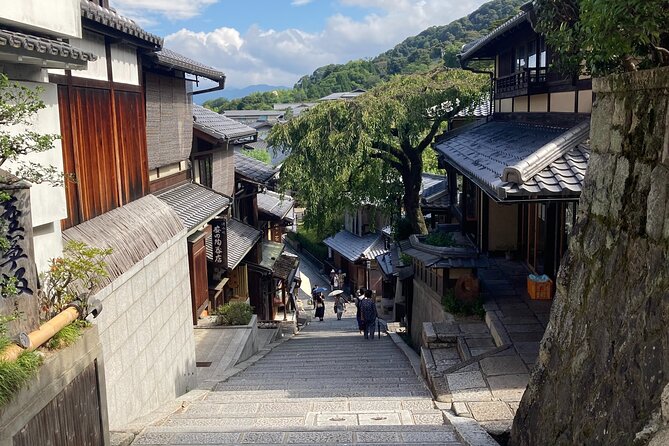
You start at Kyoto Ceramic Center, the Kyoto Ceramic Art Association Official Shop and Gallery, near Higashiyama (address listed in your booking). Starting there matters because it anchors the tour in an area that is convenient to begin your walk toward Kiyomizu-dera, before you later head toward Fushimi Inari.
You meet in the morning and the tour runs rain or shine. That is a practical detail in Kyoto, where weather can change quickly. If it rains, expect slippery stone and more careful footwork. Comfortable shoes become non-negotiable, especially with temple stairs and packed walkways.
The route ends at Fushimi Inari-taisha Honden Sanctuary. This is nice because it finishes at the heart of the shrine complex rather than far away. You can also continue at your own pace after the tour wraps up, since you are already in the main zone.
Kiyomizu-dera: the wooden stage views and what to notice
Kiyomizu-dera is one of Kyoto’s big names, founded in the late 8th century. Even if you have seen photos, it helps to have someone guide you on what to focus on when the crowds and details start piling up.
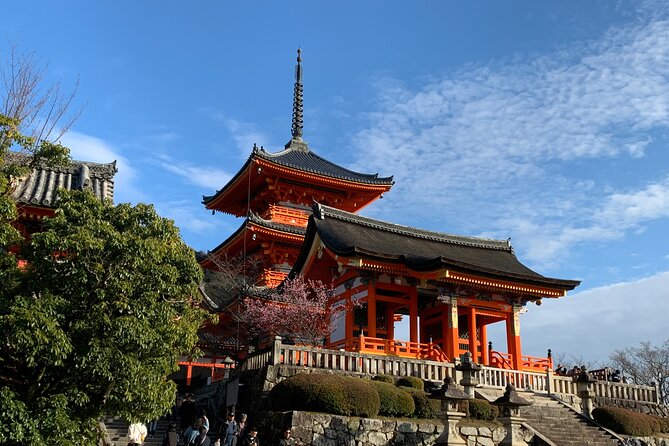
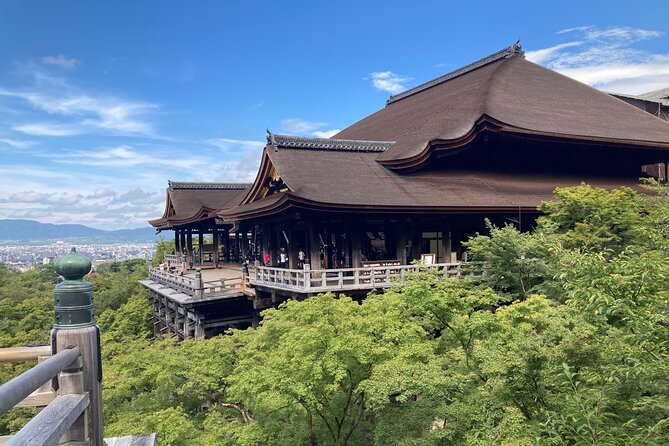
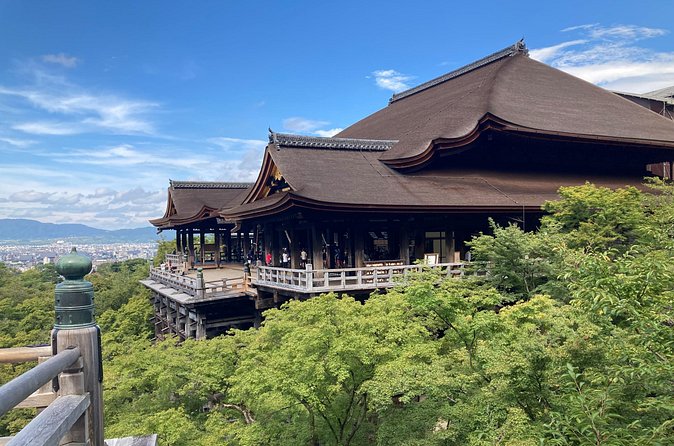
The highlight here is the large wooden stage, where visitors can enjoy views over the surrounding area, including cherry-tree scenery in season. Standing in the temple viewpoint zone is where Kiyomizu-dera earns its reputation. The experience feels like more than sightseeing because you get the temple setting in one sweep, from architecture to hillside views.
With a guide, you also get help reading what you see. Temples like this can feel like a blur if you only rely on signs. A good walking guide adds context on how and why these places developed and what elements mean to worshippers. You do not need to memorize anything. You just need to know what to look for, so the time spent there feels meaningful instead of rushed.
Practical note: this is where you will do the most careful walking. Plan to take your time. Look up, then look ahead, then look down for steps.
Sanjūsangendō: the 1,001 Kannon statues and the feeling of scale
Sanjūsangendō is short on time but long on impact. You spend about 30 minutes here, with admission included. The reason people come is simple: the hall houses 1,001 statues of the Thousand Armed Kannon, the Goddess of Mercy.
That number can sound like trivia until you are in the space. Once you are inside, the sheer repetition changes the mood. It is not one sculpture you admire for a few minutes. It is a whole field of figures, where you start noticing patterns, rows, and the way the hall’s design shapes your attention.
This stop is also a nice contrast to Kiyomizu-dera. Kiyomizu-dera gives you openness, views, and outdoor energy. Sanjūsangendō brings you into a controlled, contained environment where the atmosphere feels more quiet and focused. Even in a group, it is the kind of place where people naturally slow down.
The “bonus” value is real here. If you skip Sanjūsangendō, you often end up seeing mostly outdoor sites or one major temple per day. This tour gives you a different kind of Kyoto wow, the kind that comes from scale and devotion rather than just views.
Shichijō Station and the paid train hop you must plan for
Between the temples and shrines, you take a train to the Fushimi Inari area. The quick fact to know upfront: the train fee is NOT included. The tour asks you to prepare an IC card or coins for about ¥170 per person.
This is not a major complication, but it does matter. If you arrive without a way to pay, you will lose time and energy at the station. So if you are traveling from abroad, check that your IC card works locally or keep some yen coins ready.
The tour keeps the train segment short in the overall plan. The time on paper is brief, but the lesson is practical: use the transit time to reset your legs, drink some water if you need it, and keep an eye on where the group is gathering before you move.
Still climbing through the orange gates?

Fushimi Inari-taisha: torii gates, shrine meaning, and pacing deeper
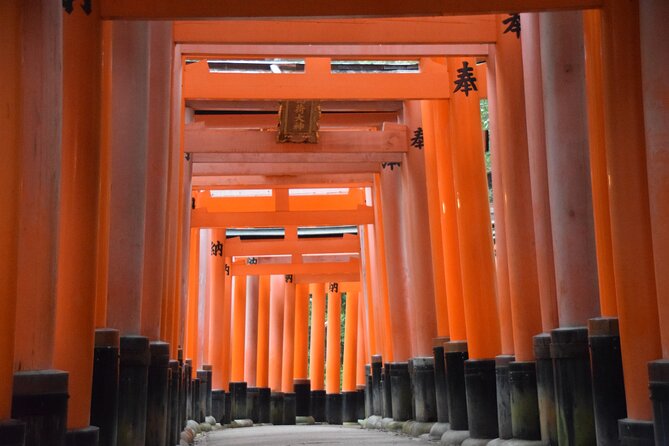
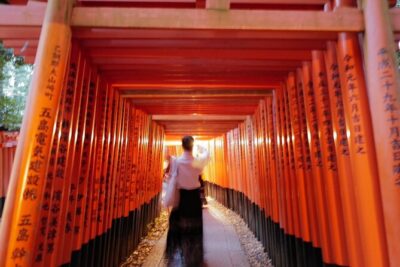
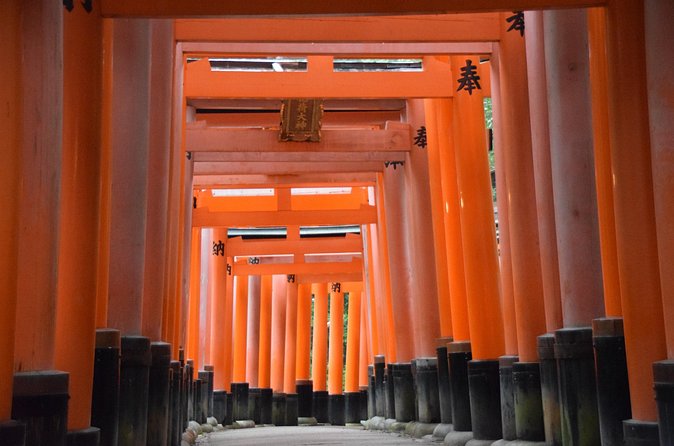
Fushimi Inari-taisha is dedicated to Inari, the Shinto god of rice, agriculture, and prosperity. You feel the shrine’s role immediately in the famous approach, lined with thousands of vibrant red torii gates.
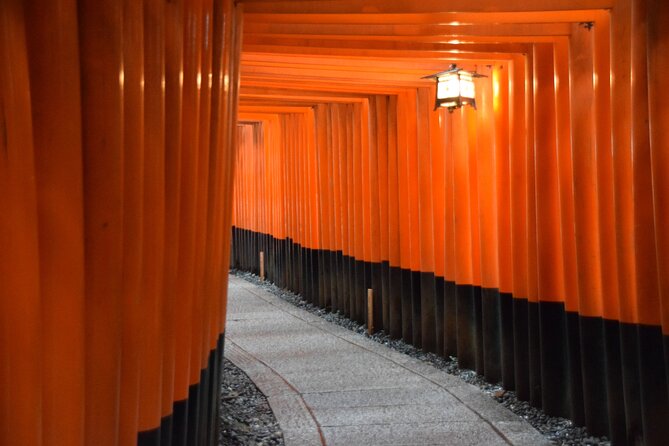
There is a reason this shrine shows up in films and travel photos. The torii create a visual tunnel effect as you move forward. It is dramatic, but it is also spiritual. As you walk, the gates start to feel like a journey, not just a background for pictures.
What I love about doing Fushimi Inari on a guided walk is how it prevents the experience from becoming purely mechanical. If you just rush through, you might miss the rhythm of the route and the small moments where the shrine grounds feel quieter. A focused guide can steer you toward gate paths where you can slow down, look around, and take photos without feeling lost.
This is also where you will want to manage your expectations around walking. The tour includes about 45 minutes for Fushimi Inari, and that is not enough time to see every corner of the complex. It is enough to experience the signature torii atmosphere and enjoy the spiritual feel of moving through the gates.
Photo tip that is grounded in reality: take a few minutes at each “anchor” view, then keep moving. Trying to take perfect photos while stopping every 30 seconds usually leads to a rushed finish and sore legs.
The best part is the guide energy, not just the stops
A good Kyoto tour is not about checking boxes. It is about how the day feels as it unfolds. This one tends to shine because the guide experience is active, friendly, and built for questions.
In particular, guides like Naomi-san are highlighted for being energetic and for adding fun history tidbits along the way. That matters more than you might think. Temples and shrines are already layered with meaning. When you get small context moments during the walk, the places start connecting in your head, rather than feeling like three separate tourist sites.
You also get plenty of opportunities to talk as you move between stops. That is partly because the group is small and partly because the walking naturally breaks the day into short segments. Ask where to look, ask what a feature means, ask how people traditionally approach the space. Even basic curiosity tends to get a better response on a small guided group than in a big multi-language crowd.
What you should wear and how to handle the walking
This tour calls for a moderate amount of walking, so it is not a couch-and-casual-stroll plan. You will be on stairs and uneven surfaces at temple sites, and you will do enough walking to feel it in your legs by the end if you do not prepare.
For comfort, wear shoes with grip. If it is wet, take extra care with temple steps and stone edges. Bring a small bottle of water if you like, especially since the tour runs about 4 hours and starts in the morning.
Also, keep in mind that the tour is designed to work rain or shine. If you plan to wear a poncho, bring one that does not flap into crowds. Kyoto walks can get tight near temple entries.
Who this tour is best for
This is a strong fit if you want Kyoto highlights in a half-day without stress. It works well for:
- First-time visitors who want the big names, Kiyomizu-dera and Fushimi Inari, plus a crucial bonus stop
- People who like history and spiritual context, and prefer explanations while walking
- Travelers who want a small-group experience (up to 8) instead of a bus-style crowd
- Anyone who wants a plan that stays together even in changing weather
It is less ideal if you want a totally self-paced wander with no structure. Because the tour is guided and time-boxed, you may not have the freedom to linger as long as you want at every single spot.
If you are someone who hates trains on vacation, note there is a short train ride with a separate fee. It is not long, but it is part of the overall design.
Should you book this Kyoto guided walk?
If your goal is to see Kiyomizu-dera, Sanjūsangendō, and Fushimi Inari in one smooth half-day, I think this is a smart booking. The value comes from the blend of included admissions, the small group size, and the guide-led context that makes famous sites feel more understandable.
Book it if:
- You want three major spiritual sites without planning them like a project
- You like a guide who keeps things energetic and answer-friendly
- You are okay with moderate walking and comfortable shoes
Skip it or consider a different format if:
- You want unlimited time at one place rather than a balanced route
- You dislike paying extra for the transit segment and prefer a fully included price
If you do book, show up ready to walk, keep cash or an IC card for the train fare, and treat each stop like a mini experience, not just a photo stop.
FAQ
How long is the Kyoto guided walking tour?
The tour is about 4 hours.
What is the price per person?
The price is listed as $78.18 per person.
Where do I meet the group?
You meet at Kyoto Ceramic Center (Kyoto Ceramic Art Association Official Shop and Gallery), 583-1 Yūgyōmaechō, Higashiyama Ward, Kyoto, 605-0864, Japan.
What time does the tour start?
The start time is 8:30 am.
Where does the tour end?
The tour ends in front of Fushimi Inari Taisha Honden (Sanctuary), 68 Fukakusa Yabunouchichō, Fushimi Ward, Kyoto, 612-0882, Japan.
Are temple or shrine admissions included?
Yes for Kiyomizu-dera and Sanjūsangendō. Fushimi Inari-taisha admission is free.
Is the train fee included?
No. The train fee is excluded, and you should prepare an IC card or coins for about ¥170 per person.
How many people are in the group?
The group maximum is 8 travelers.
Does the tour run in the rain?
Yes, the tour takes place rain or shine.
What is the cancellation policy?
Free cancellation is available. You can cancel up to 24 hours in advance for a full refund. Cancellation less than 24 hours before the start time is not refunded, and changes within 24 hours are not accepted.
More Walking Tours in Kyoto
New This Season
- Koyasan Day Trip by Private Car from Kyoto
- Old Port Town and Ultimate Sake Tasting Private Tour From Kyoto
- Kyoto’s Timeless Charm: 3hr Exploration of History and Peace
- Kyoto: 5 Types of Sushi Making
- Sacred Peak & Ancient Paths: Kurama-Kibune Hiking Experience
- Kyoto: Exclusive ZEN practice at Manpukuji temple in Uji
- Kyoto: Private Seasonal Aroma Yoga Class
- Traversing Kyoto’s Scenic West – Arashiyama to Kinkakuji
Fushimi Inari Shrine Walks, compared.
Fushimi Inari, Kinkakuji, Bamboo Grove 1 Day Bus Tour
Read our review →
Fushimi Inari Hidden Hiking Tour (Private Option Available)
Read our review →
Kinkakuji,Arashiyama,FushimiInariShrine,NaraPark
Read our review →
Nara, Fushimi Inari Taisha, Arashiyama Bus Tour
Read our review →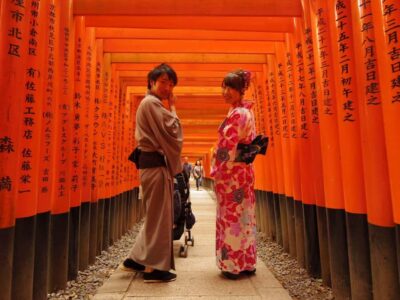
Arashiyama, Nara & Fushimi Inari Shrine w/Lunch
Read our review →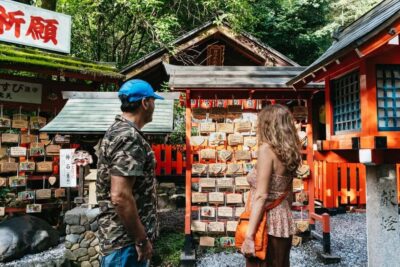
Nijo Castle, Kiyomizu & Fushimi Inari Guided Tour
Read our review →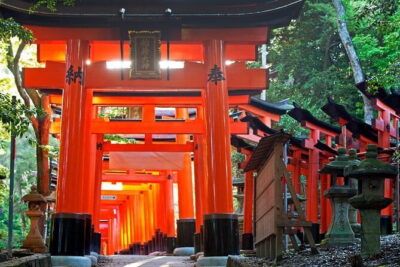
Nijo, Kinkaku-ji, Arashiyama, Kiyomizu & Fushimi Inari
Read our review →