
Reviewed · TEA CEREMONIES
Kyoto Japanese Tea Ceremony Experience in Ankoan
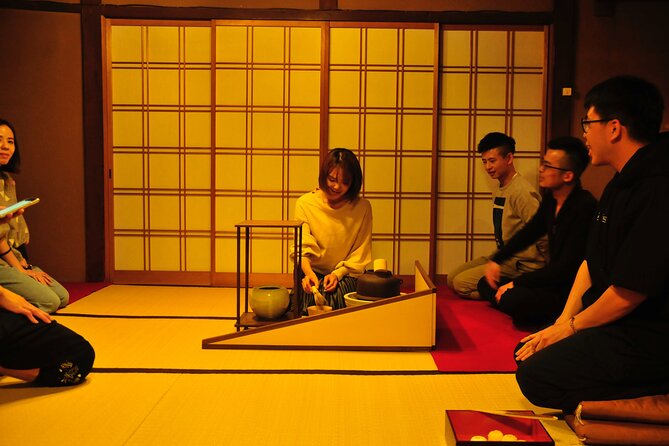
Matcha lessons in a quiet Kyoto studio. In Ankoan, I loved how the host Yuka greeted you with a cup of welcome tea, then talked through tea manners before you watch the tea master’s demonstration. After that, you do not just observe, you also make matcha yourself.
One thing to plan for: it is not recommended if you have knee pain, and you will need to get to the studio using public transportation since private transport is not included. The good part is the group stays small, up to 8 people, so you get real time to ask questions, and you can take photos indoors.
In This Review
- Key moments to know before you go
- Entering Ankoan: a calm Kyoto tea setting where you can take photos
- Welcome tea with Yuka: the conversation part that makes etiquette feel human
- Tea ceremony etiquette and manners, explained step by step
- Making matcha in practice mode, from whisking to tasting
- Wagashi and matcha tasting: how the flavors teach the lesson
- Time on the clock and group size, so you can plan your Kyoto day
- Price and value at $32.84 per person
- Getting to the meeting point in Kita Ward without private transport
- Weather check for a smooth tea experience
- Who this Kyoto tea ceremony experience is best for
- Should you book Kyoto Japanese Tea Ceremony Experience in Ankoan?
Key moments to know before you go
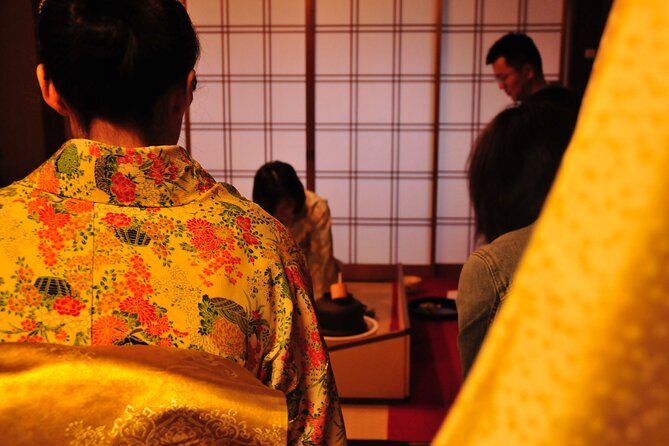
- Small-group setting (max 8 travelers) means more hands-on practice and quicker help when your technique is off.
- Welcome tea with Yuka kick-starts the experience with conversation and an easy intro to tea culture.
- Tea ceremony etiquette explained in plain English/Chinese-English so you understand the why, not just the steps.
- Hands-on matcha prep and tasting includes guided whisking and a shared tea moment at the end.
- Indoor photos are allowed, which is handy in Kyoto when the light and weather can be unpredictable.
Entering Ankoan: a calm Kyoto tea setting where you can take photos
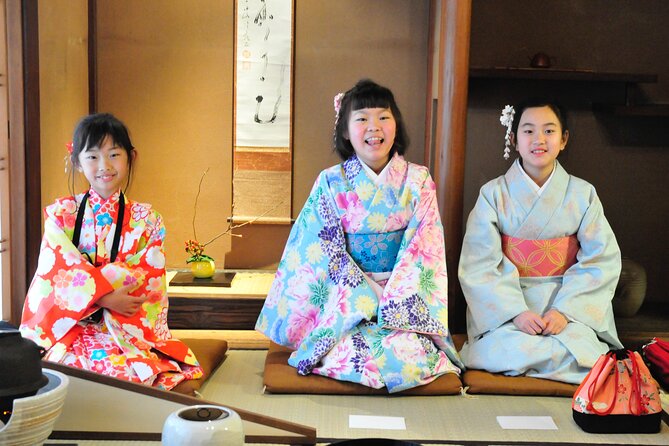
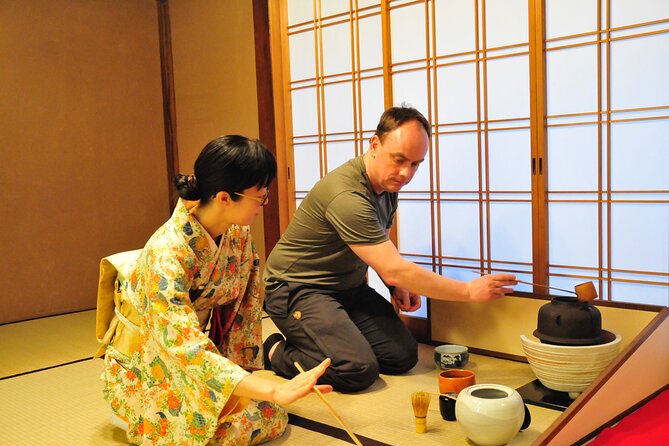
This Kyoto Japanese tea ceremony experience at Ankoan is designed to slow your day down. The studio setting feels made for focus, not for rushing between Instagram stops. You start with welcome tea and conversation, then the lesson grows more formal as the tea ceremony process unfolds.
One practical perk I really appreciate: you can take pictures indoors freely. Many cultural experiences in Japan can feel strict about phones, but here you have room to document the moment. Just remember this is still a ceremony space, so keep your phone use respectful and brief between steps.
Welcome tea with Yuka: the conversation part that makes etiquette feel human
Your first taste is not matcha yet. You begin with a welcome tea made by Yuka, and you have a chance to settle in. That matters in Kyoto, where your morning or afternoon may involve a lot of walking and transit.
Then the host shifts into the human side of the tea ceremony. You will learn the specific parts of the idea and the manners around the tea ceremony, with explanations that connect to everyday life. You are not only hearing definitions, you are getting context for why people treat this ritual with care.
A highlight from the experience details is that you can talk about tea and also ask bigger questions like how Japanese people live and how Japanese culture formed. This is one reason the experience works well for first-timers. You get to relax first, then the etiquette makes more sense.
More bowls, poured the traditional way
- Kyoto: Tea Ceremony in a Traditional Tea House in Kiyomizu
★ 4.9 · 3,519 reviews - Kyoto: Tea Ceremony Ju-An at Jotokuji Temple
★ 4.9 · 3,207 reviews - Kyoto: 45-Minute Tea Ceremony Lesson Experience
★ 4.3 · 2,378 reviews - Kyoto: Table-Style Tea Ceremony at a Kyo-Machiya
★ 4.9 · 1,211 reviews
Tea ceremony etiquette and manners, explained step by step
After the welcome tea and intro, you move into the core structure of a tea ceremony. You watch the tea master’s demonstration, and you get an explanation of how the ceremony is meant to flow.
The goal is not to overwhelm you with memorization. Instead, the format is designed to help you internalize the key concepts. You will practice the essential parts of the procedure by modeling the host’s actions, so the ceremony starts to feel like a sequence you can follow rather than a performance you only watch.
Expect lessons that include things like appropriate manners during the tea ritual, plus some of the symbols and set phrases used during a ceremony. Those details are not just trivia. When you know what people are doing and why, it changes the way you experience even a simple cup of tea.
Making matcha in practice mode, from whisking to tasting
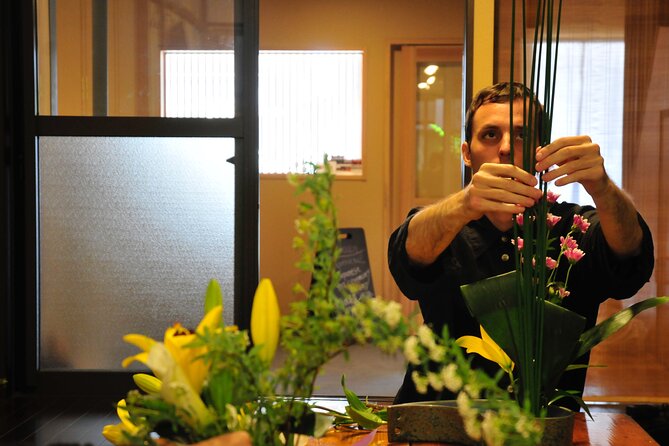
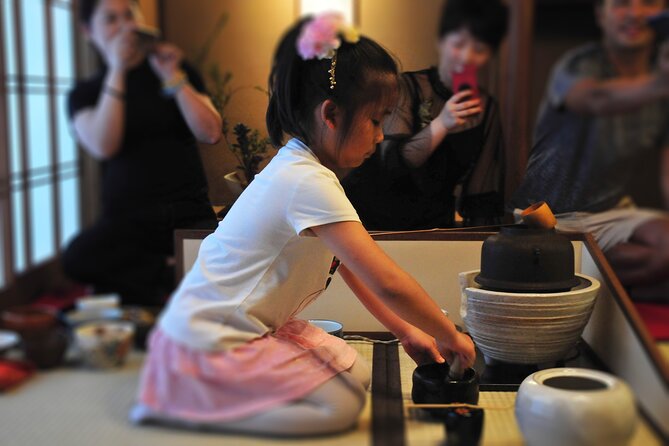
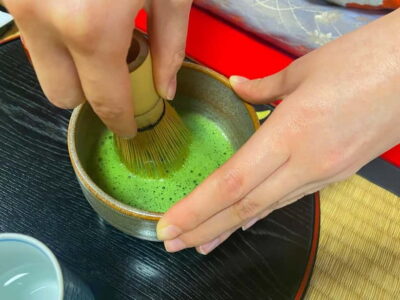
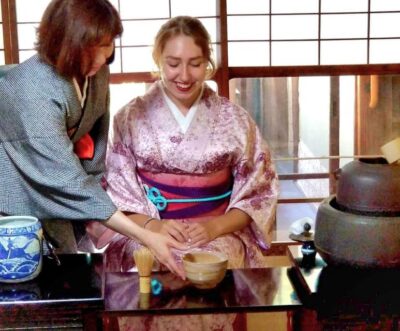
Here is where the experience earns its value. After watching the demonstration, you get your own chance to make matcha. The teacher stays close to instruct you, so you are not left flailing over a whisk and hoping for the best.
The instruction style is interactive, including a step-by-step flow that lets you learn in stages. In plain terms, it is like: watch what to do, try it, then get the correction you need. That teaching method is exactly what helps beginners succeed quickly.
You are also guided through preparing matcha, not just whisking blindly. You learn the process well enough to understand how it connects to the final taste and the tone of the tea moment. When you finish, your drink becomes part of the shared tea space, not something you make privately and then leave behind.
Wagashi and matcha tasting: how the flavors teach the lesson
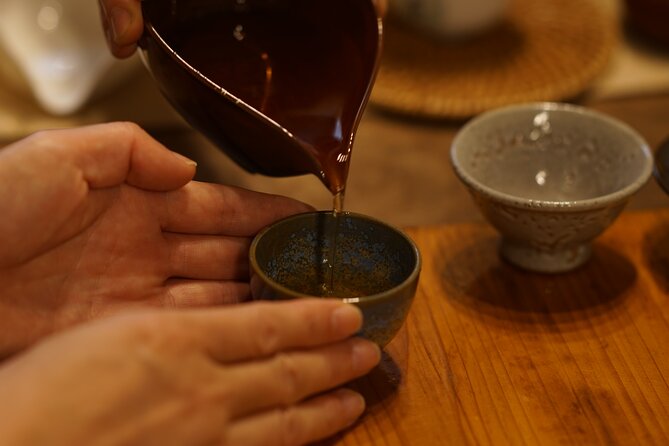
The tea ceremony is not only about matcha technique. It is also about what you taste and how you share that moment with others.
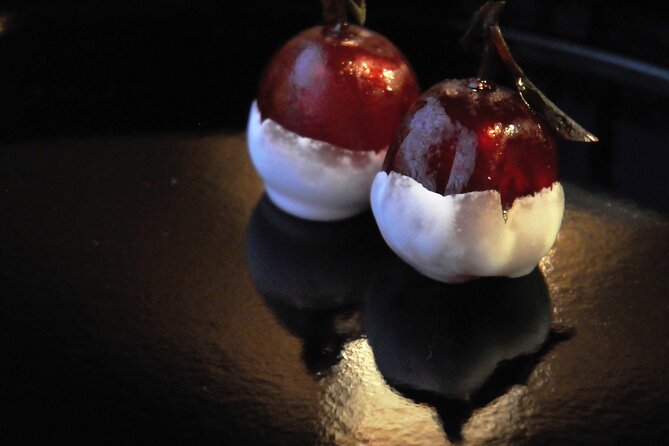
You get to taste matcha, and the experience also includes wagashi. That combination is important because matcha has a distinct character, and wagashi often acts as the balancing partner. Together, they help you feel how Japanese sweets and tea fit into the rhythm of the ceremony.
Another built-in advantage: you start with tea, then you watch, then you practice, then you taste again. That order helps you connect flavor to technique. By the time you reach your own matcha cup, you are not doing a random activity. You are tasting with understanding.
Time on the clock and group size, so you can plan your Kyoto day
The listing gives a duration of about 1 hour, but the experience itself is described as a 90-minute service, and the overall session can feel closer to a longer block depending on questions and pacing. In practice, plan for roughly 1 to 2 hours from start to finish.
The group size cap is 8 people max, which keeps things personal. It also helps with pacing, since everyone gets enough time for hands-on practice and Q&A. If you like structured activities but hate long lectures, this format usually hits the sweet spot.
Because it ends back at the meeting point, you can plan a nearby Kyoto stop afterward without too much stress. The experience is also close to public transportation, so you are not locked into a whole day of logistics.
A day of temples goes further with something to break it up.
Price and value at $32.84 per person
At $32.84 per person, the value comes from what you actually do. You are not paying just to watch a demonstration. You are paying for:
- a guided intro to tea ceremony manners and meaning
- a tea master demonstration
- guided matcha preparation that you do yourself
- matcha tasting, plus wagashi
The price also lines up with the fact that the group is small. In many Kyoto experiences, you are one face in a large group. Here, small group time matters because it affects how quickly the teacher can correct your whisking and help you understand what you are doing.
One detail to keep in mind: the included portion explicitly lists coffee and/or tea. The program details also clearly describe matcha tasting and wagashi as part of the experience flow, so expect tea and tasting as central parts of what you pay for.
Getting to the meeting point in Kita Ward without private transport
You meet at Tea ceremony Japan, 603-8216 Kyoto, Kita Ward, Murasakino Monzenchō, 63 暗香庵.
Private transportation is not included, but the experience is described as near public transportation. That is helpful, because Kyoto neighborhoods are walkable but can be slow if you rely on taxis for every step.
My practical advice: when you map it, build in a few minutes to find the studio entrance. Addresses in Japan can be precise, but your exact station exit can still make you wander a bit. Once you arrive, the experience itself is smooth and self-contained.
Weather check for a smooth tea experience
This activity requires good weather. If it gets canceled due to poor weather, you are offered a different date or a full refund. That is the kind of policy you want on a cultural experience, because the studio setup works best when conditions cooperate.
If you are visiting Kyoto in a season with frequent rain, I would book with buffer in your schedule. Keep that day flexible so you can take the alternate date if needed.
Who this Kyoto tea ceremony experience is best for
This is a strong choice if you want something calm and hands-on without needing prior tea knowledge. The host’s English skills are described as very good, and the experience is also listed as Chinese/English OK, which helps if your group has mixed language comfort.
It is also a good family-friendly option in the sense that the experience includes moments where kids can participate. If you have a child who can follow simple steps and stay seated comfortably for the flow, it can be a memorable Kyoto moment.
That said, it is not recommended for those with knee pain. If you know you cannot manage sitting comfortably for parts of the ritual, this is a key constraint. Tea ceremonies often involve posture and careful movements, so it is better to choose an alternative that fits your body.
Should you book Kyoto Japanese Tea Ceremony Experience in Ankoan?
Book it if:
- you want a real hands-on matcha lesson, not just a viewing experience
- you like the idea of learning tea manners and meaning with a conversation partner
- you appreciate small-group attention and a calm indoor setting with photos allowed
- you are okay with using public transportation to reach the studio
Skip or reconsider if:
- knee comfort is an issue for you
- you only have time for a quick stop and want less seated, step-by-step instruction
For many Kyoto trips, this is a reset button. It is not a long sightseeing sprint. It is a focused, small-group ritual where you learn, practice, and taste, all in a setting designed for calm. At $32.84, the biggest reason to feel good about the price is that you get to do the matcha, then share the result.
New This Season
- Koyasan Day Trip by Private Car from Kyoto
- Old Port Town and Ultimate Sake Tasting Private Tour From Kyoto
- Kyoto’s Timeless Charm: 3hr Exploration of History and Peace
- Kyoto: 5 Types of Sushi Making
- Sacred Peak & Ancient Paths: Kurama-Kibune Hiking Experience
- Kyoto: Exclusive ZEN practice at Manpukuji temple in Uji
- Kyoto: Private Seasonal Aroma Yoga Class
- Traversing Kyoto’s Scenic West – Arashiyama to Kinkakuji
Tea Ceremonies, compared.
Tea Ceremony in a Traditional Tea House in Kiyomizu
Read our review →
Kimono Tea Ceremony at Kyoto Maikoya, NISHIKI
Read our review →
Tea Ceremony in 100-year-old Kyo-Machiya Townhouse
Read our review →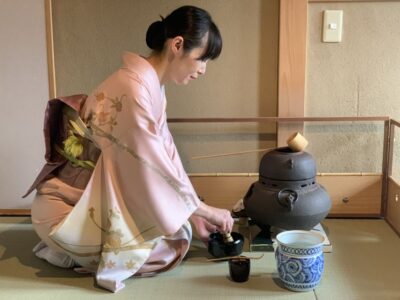
Also filed under