Reviewed · GION GEISHA QUARTER WALKS
Kyoto: Kiyomizudera, Sanjusangendo, Kodaiji, and Gion.
Kyoto on foot can feel like sensory overload. This day tour strings together the classics in one smooth route, from Sanjusangendo’s 1,001 Kannon statues to the calm hush of Kodaiji’s bamboo forest. I especially love the way it pairs huge, iconic temples with close-up neighborhood streets like Sannenzaka and Ninenzaka. The one thing to plan for is that it is a full 7 hours with some walking, so you will want comfortable shoes and you should expect to move steadily.
You also get a small-group feel, limited to 10 people, led by a Spanish-speaking live guide. That matters in Kyoto, where the difference between a great visit and a stressful one is often whether someone helps you read what you are seeing and where to go next. If you are hoping for a super slow day, or you cannot do stairs and uneven stone, this may feel a bit fast.
In This Review
- Key reasons this Kyoto day works
- A small-group Kyoto day, starting at Shichijo Station
- Sanjusangendo’s 1,001 Kannon statues in a hall that stretches
- Kiyomizudera’s wooden terrace views, then Sannenzaka and Ninenzaka
- Yasaka Pagoda (Hōkan-ji): the icon shot, with less stress
- Kodaiji Temple and the bamboo forest inside the gardens
- Yasaka Shrine and Gion: geisha culture in the real neighborhood
- Price and logistics: is 86 dollars good value?
- Who this Kyoto tour suits best
- Final call: should you book this Kyoto highlights tour?
- FAQ
- What time and where does the tour start?
- How long is the Kyoto experience?
- What language is the live tour guide?
- How big is the group?
- Will there be buses or only walking?
- What should I bring for the day?
- Is a baby carriage allowed?
Key reasons this Kyoto day works
- Sanjusangendo’s 120-meter hall feels bigger than the photos suggest, and the focus on Kannon makes it easier to appreciate.
- Kiyomizudera + Higashiyama lanes turn the temple visit into an actual neighborhood walk, not just a stop-and-snap.
- Yasaka Pagoda (Hōkan-ji) gives you that iconic postcard view without you needing to hunt for angles.
- Kodaiji’s bamboo forest adds a quieter, more reflective mood after the crowds of the main sights.
- Gion and Yasaka Shrine connect the dots between place, tradition, and geisha culture.
- Small group size (max 10) keeps the route manageable and the pacing more personal.
A small-group Kyoto day, starting at Shichijo Station
This tour is built for a first-time, classic Kyoto day with minimal planning. You meet at Shichijō Station, Exit 1 at 9:00 a.m., then spend about 7 hours moving between the main eastern highlights. The small group limit (10 people) is a big deal here, because it keeps you from getting swallowed by crowds at each stop.
You will also be guided in Spanish the whole day. That helps you get more meaning out of the temples than you would by reading on your phone between busy photo lines. The route uses buses between areas, and there is also some walking on foot.
Practical tip before you go: buses require a bit of money. The guidance is to bring 230 yen in cash or use a transit card like ICOCA, SUICA, or PASMO. If you forget, you can still manage, but it is the kind of small hassle you would rather not add to a packed day.
Sanjusangendo’s 1,001 Kannon statues in a hall that stretches
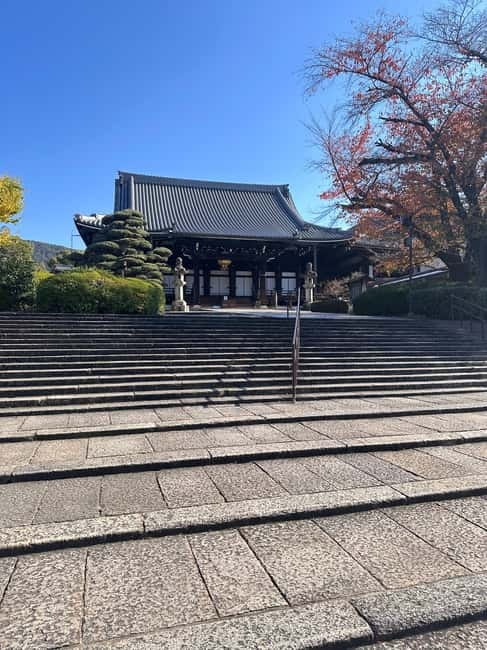
The day starts at Sanjusangendo (Sanjusangen-do), and that is a smart opening. You get a guided visit right away, so you build context before the other sites start blending together in your head later.
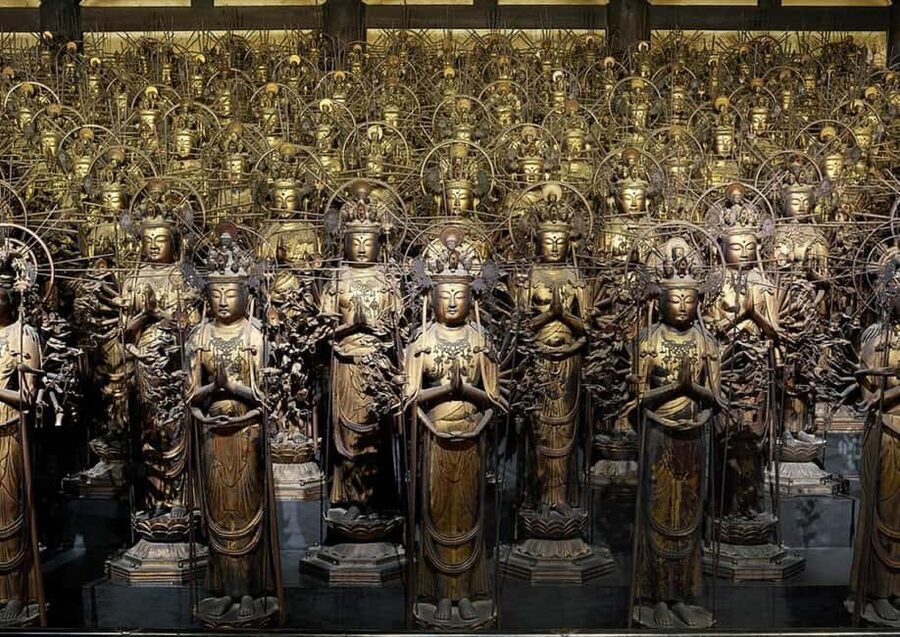
What makes Sanjusangendo special is the sheer scale of the space: a long hall (about 120 meters) where you will see 1,001 statues of Kannon, the goddess of mercy. Even if you have no background in Buddhist art, the hall format helps. You can see patterns, repetition, and variation. The experience becomes less about one single statue and more about how devotion is expressed through detail over distance.
This is also one of those places where a guide helps you slow down. Instead of rushing for the “main view,” you learn what to notice and how to look without feeling like you are taking too long. The guided time here is about 1 hour, which is enough to take in the hall and still keep momentum for the rest of the day.
Quick etiquette note, because Kyoto temples reward that: keep your voice down, and treat the viewing areas with the same respect you would in a museum.
The wooden stage above the hillside
- Kyoto: Tea Ceremony in a Traditional Tea House in Kiyomizu
★ 4.9 · 3,519 reviews - Kyoto: Nijo Castle, Kiyomizu & Fushimi Inari Guided Tour
★ 4.7 · 700 reviews - Kyoto: Nijo, Kinkaku-ji, Arashiyama, Kiyomizu & Fushimi Inari
★ 5.0 · 699 reviews - Kyoto Tea Ceremony & Kiyomizu-dera Temple Walking Tour
★ 5.0 · 115 reviews
Kiyomizudera’s wooden terrace views, then Sannenzaka and Ninenzaka
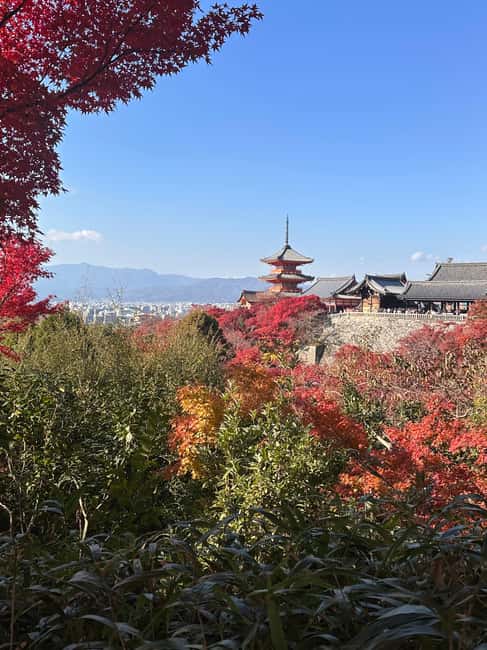
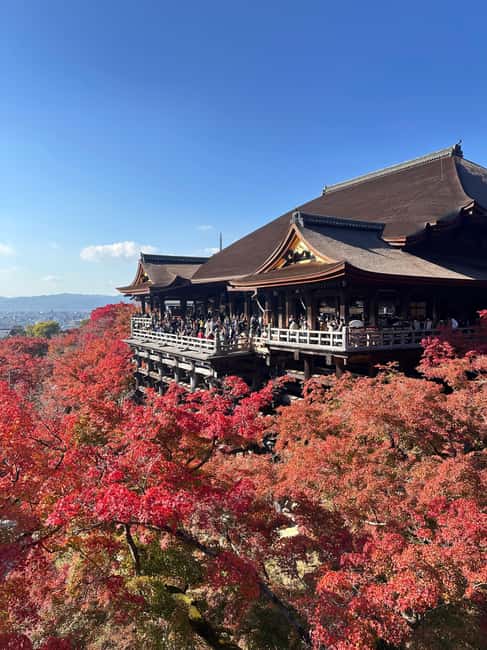
After Sanjusangendo, the day flows toward Kiyomizudera, one of Kyoto’s most famous temples. Expect a guided visit of about 1 hour here. The big visual hook is the wooden terrace suspended on the hillside, which gives you those layered Kyoto views.
The terrace is also a good place to understand why this area is famous. It is not just the temple building itself. It is the setting and the sightlines, where temple architecture meets the city’s historic fabric. When you look out, you are not seeing a single postcard. You are seeing a sense of place.
Then you head down and walk through the classic Higashiyama approach: Sannenzaka and Ninenzaka. These are cobbled streets with wooden houses, craft shops, and traditional corners that feel like they are holding onto older rhythms. On a day like this, I love this part because it turns a temple visit into an atmosphere visit. You are not just ticking boxes, you are actually moving through Kyoto’s historic mood.
There is about 1 hour set aside for sightseeing in the Higashiyama Ward area, which gives you time to wander, pause, and take photos without feeling glued to the guide’s shoulder.
One consideration: Sannenzaka and Ninenzaka can get busy, and since this tour is moving as a group, you will want to stay close to the meeting point and keep your walking pace steady. If you want long shopping breaks, build in a quick look rather than assuming you will browse slowly.
Yasaka Pagoda (Hōkan-ji): the icon shot, with less stress
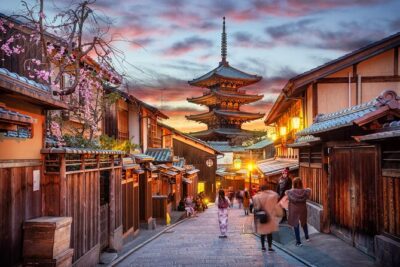
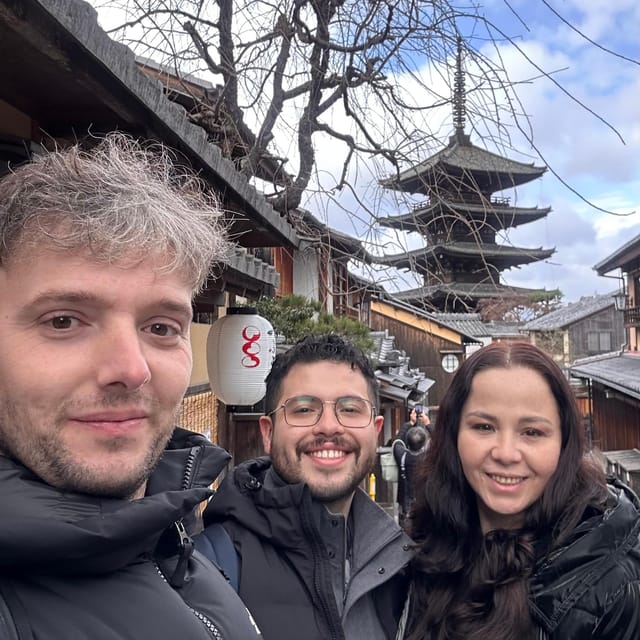
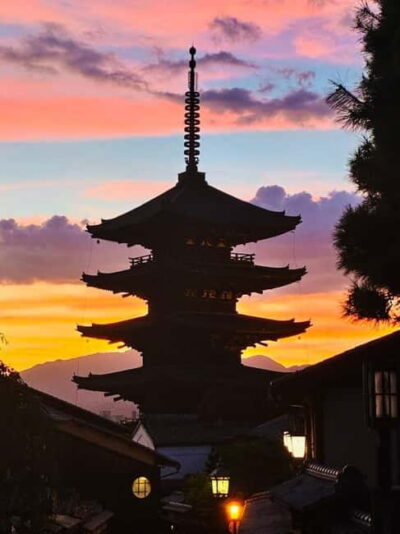
Next up is Hōkan-ji, commonly called Yasaka Pagoda. It is one of Kyoto’s most photographed icons, and the tour makes it practical by fitting it in at the right moment in the route.
You get about 30 minutes with a guided visit here. The emphasis is not just the pagoda itself, but the way it sits among traditional houses. That matters, because photos often feel more dramatic than the real thing. Here, you are shown where the viewpoint does the work for you. You can frame the pagoda with the surrounding streets and get that classic postcard feel without spending time wandering.
This is the kind of stop that works well even if you are temple-daptured by midday. The vibe is lighter and more “street Kyoto” than “museum-like temple interior.” It is also a good reset between larger sites.
Kodaiji Temple and the bamboo forest inside the gardens
Then comes one of the most soothing stops of the day: Kōdaiji Temple. The tour connects it to its historical roots, since Kodaiji is dedicated to the Toyotomi family, one of Japan’s major historical names. That adds meaning without turning the visit into a history lecture.
But what most visitors remember from Kodaiji is the bamboo forest. The tour specifically calls it a “secret bamboo forest,” and the feeling matches the reputation. Even on a day that includes big crowds and famous landmarks, this is the moment that slows your breathing.
You get about 1 hour here. I like that length because you are not forced to rush to the most famous view and leave immediately. Bamboo spaces reward lingering. Light shifts through the stalks, paths guide you forward, and it is easier to appreciate the atmosphere when you have time to walk at a calm pace.
In a day packed with high-demand sights, this is the emotional balancing act. After Sanjusangendo’s scale and Kiyomizudera’s big-horizon views, Kodaiji adds texture, shade, and quiet.
Yasaka Shrine and Gion: geisha culture in the real neighborhood
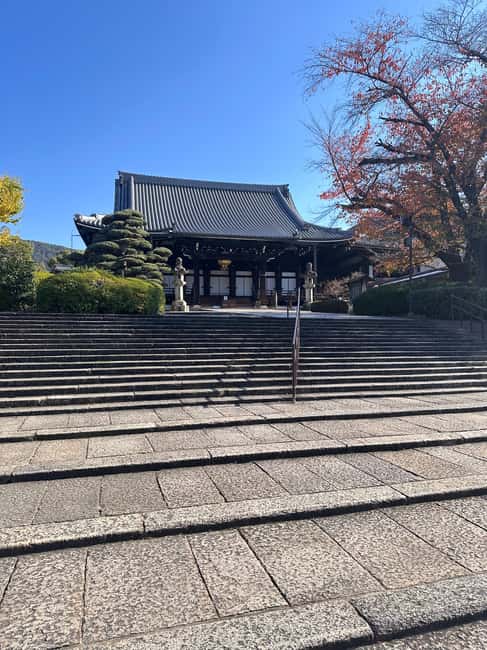
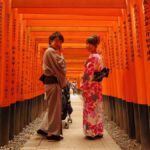
The final stretch leans into Kyoto’s living tradition with Yasaka Shrine and Gion. You visit Yasaka Shrine with guided time of about 30 minutes, then spend around 1 hour in Gion, including the chance to explore its streets and learn about the culture of geisha and their history.
Gion is one of those districts where the most important thing is respect. You will see traditional buildings and the atmosphere is part of the draw, but you do not need to treat it like a theme park. Keep your movements calm, avoid blocking sidewalks, and remember that this is a neighborhood, not a set.
The guide helps here by explaining context. If you understand where geisha culture fits historically, Gion stops being only a photo stop. It becomes a cultural walk where you notice details like street layout, shrine proximity, and the overall rhythm of the district.
This tour also ends in the Higashiyama Ward, which is convenient because it keeps you near the historic core. It is not guaranteed you are right next to your hotel, but it does give you a strong “finish line” area for continuing on your own.
More rooftops worth a detour

Price and logistics: is 86 dollars good value?
At $86 per person for about 7 hours, this tour is priced like a classic guided highlights day. What you are really paying for is not just temple access. You are paying for a guide, a structured route across multiple major sights, and bus transfers that keep your time from turning into transit math.
The small group size (max 10) also influences value. With fewer people, you get a smoother flow at crowded sites and you are less likely to get lost during transitions. That is the difference between “I saw Kyoto” and “I understood Kyoto enough to enjoy it.”
Logistics are also handled in a practical way. The tour includes bus travel, and the guidance to bring 230 yen cash or use ICOCA/SUICA/PASMO is the kind of detail that can save your morning if you are juggling multiple cards or forgetting to top up.
What this tour is best at:
- Getting you to the major eastern Kyoto highlights without decision fatigue
- Providing guided context so you are not just looking at buildings
- Mixing temple grandeur with street-level historic atmosphere
What could be a mismatch:
- If you have limited mobility or struggle with stairs and uneven walking surfaces
- If you need a stroller, since baby carriages are not allowed
Who this Kyoto tour suits best
This is ideal if you want a “greatest hits” Kyoto day without feeling rushed into five different neighborhoods with no plan. It is also a strong choice if you speak Spanish or want a Spanish-speaking guide to bring the sites to life.
It is a good fit for:
- First-timers who want Sanjusangendo, Kiyomizudera, Kodaiji, and Gion in one day
- People who prefer guided structure at major attractions
- Visitors who like a mix of landmark temples and atmospheric streets
If you are the type who loves planning every detail yourself, you might find you can build a similar route. But this tour’s value is the pacing and the guidance, especially when sites are crowded and directions are not always intuitive.
Final call: should you book this Kyoto highlights tour?
If your goal is a classic Kyoto day with big temples, calm bamboo, and Gion streets, this tour makes a lot of sense. The route is concentrated, the timing is built for a full day, and the small group size helps keep the experience enjoyable rather than hectic.
I would book it if you are ready to walk, bring cash or a transit card, and enjoy guided context at each site. I would skip it if you cannot handle a steady day of movement or if your needs require baby carriage access.
In short: for $86, you are buying a guided path through Kyoto’s most memorable corners, with just enough variety to keep the day from feeling repetitive.
FAQ
What time and where does the tour start?
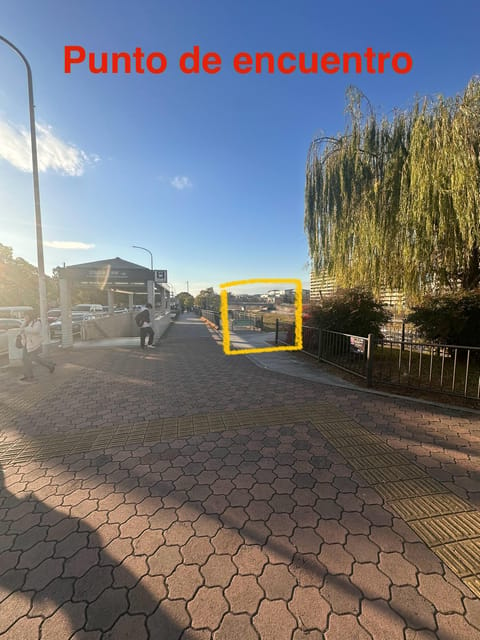
The meeting point is at Shichijō Station, Exit 1, at 9:00 a.m. (you can also use the provided coordinates: 34.98981475830078, 135.7678680419922).
How long is the Kyoto experience?
The duration is 7 hours.
What language is the live tour guide?
The live tour guide speaks Spanish.
How big is the group?
The group is a small group, limited to 10 participants.
Will there be buses or only walking?
There is some walking, plus buses taken between areas.
What should I bring for the day?
Bring comfortable shoes and comfortable clothes. It is also advised to have 230 yen in cash for buses or use a transit card like ICOCA, SUICA, or PASMO.
Is a baby carriage allowed?
Baby carriages are not allowed.
Gion Geisha Quarter Walks
New This Season
- Koyasan Day Trip by Private Car from Kyoto
- Old Port Town and Ultimate Sake Tasting Private Tour From Kyoto
- Sacred Peak & Ancient Paths: Kurama-Kibune Hiking Experience
- Kyoto’s Timeless Charm: 3hr Exploration of History and Peace
- Kyoto: 5 Types of Sushi Making
- Kyoto: Exclusive ZEN practice at Manpukuji temple in Uji
- Kyoto: Private Seasonal Aroma Yoga Class
- Traversing Kyoto’s Scenic West – Arashiyama to Kinkakuji
Gion Geisha Quarter Walks, compared.
Kyoto Geisha Walking Tour: Gion District & Hidden Gems
Read our review →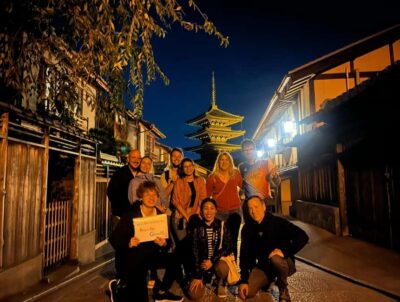
Gion Magical Night Walking Tour with Geisha Trivia
Read our review →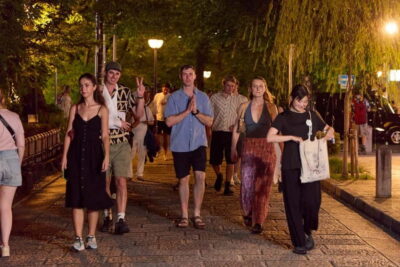
Gion Geisha District Walking Tour – Stories of Geisha
Read our review →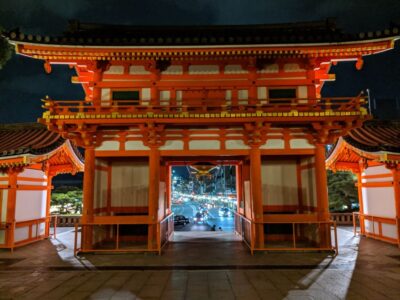
Best of Kyoto: Gion, Geisha, Pagodas & Cobblestones
Read our review →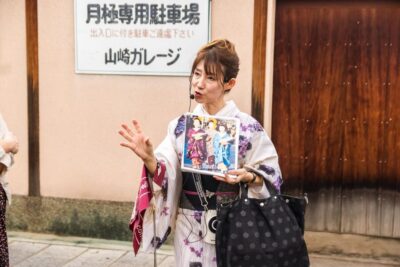
Kyoto Night Foodie Tour in Gion (9+ dishes + 6 Sake tastings)
Read our review →
Kyoto Gion Geisha District Walking Tour – The Stories of Geisha
Read our review →