
Reviewed · TEA CEREMONIES
Kyoto Newly Opened Private Tea Ceremony – Sanjo Chasuian
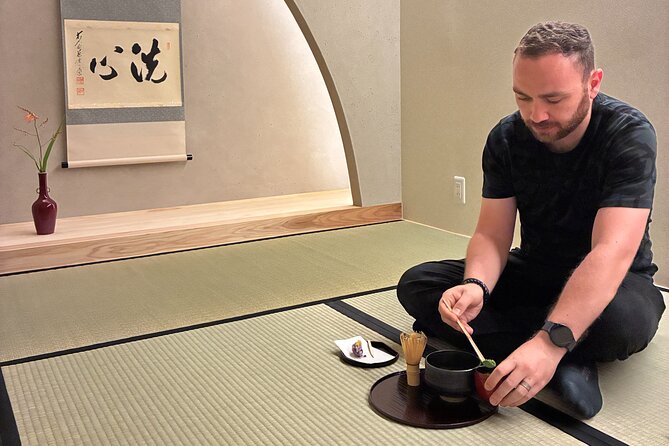
Matcha can quiet your whole brain. This newly opened private tea ceremony at Sanjo Chasuian turns the usual group format into your own calm pocket of Kyoto, with English guidance and a proper Nijiriguchi crawl-in so you can switch modes fast.
I love the hands-on format, you’ll see the host’s moves and then whisk your own matcha in a second bowl. I also like that you get traditional seasonal Japanese confectionary included, from a Kyoto sweet shop with over 100 years of history. The main thing to watch is timing, the door locks once the session begins, even one minute late means you cannot join and it is non-refundable.
In This Review
- Key highlights before you go
- Kyoto private tea ceremony and sake tasting at Sanjo Chasuian
- Where you’ll be and how the session is structured
- The quiet room, the Nijiriguchi, and why it changes everything
- Two bowls of matcha, one host, one you
- Seasonal Japanese confections you can actually taste in the moment
- Sake tasting is part of the same calm session
- Families welcome, and the private plan helps kids and adults
- Small rules that make a big difference: socks and punctual arrival
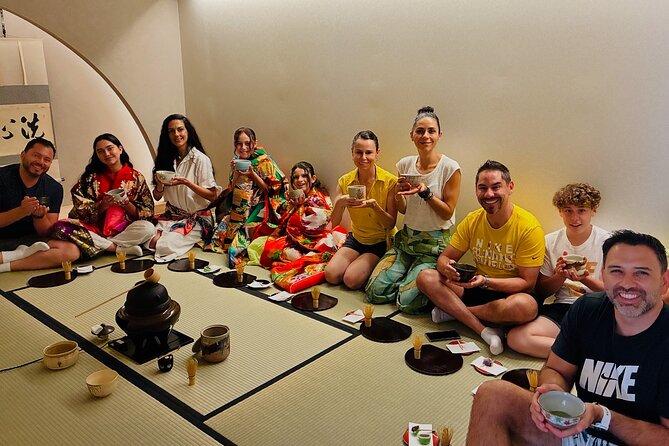
- Optional uchikake-style coat for photos and feel
- Value and price: is $137.44 per person worth it?
- How to time this in your Kyoto day
- Who should book this private tea ceremony
- Should you book Sanjo Chasuian for your Kyoto matcha day?
- FAQ
- What is included in the private tea ceremony plan?
- How long does the experience take?
- Is this session private?
- Where do I meet, and how does it end?
- How early can I enter the venue?
- What happens if I arrive late?
- Is there English guidance?
- Do I need socks?
- Can families book this experience?
- Is it refundable if I cancel?
Key highlights before you go
Private by design, no other guests in your session.
Nijiriguchi crawl-in entrance that sets the tone immediately.
Two servings of matcha, one made by the host and one you whisk.
Seasonal Kyoto sweets included, tied to a shop with 100+ years history.
English explanations plus a calm, quiet room.
Optional uchikake-style coat experience for a small extra fee.
Kyoto private tea ceremony and sake tasting at Sanjo Chasuian
If Kyoto feels like a highlight machine, this experience slows everything down on purpose. You’re doing tea the traditional way, with the space, the utensils, and the exact pacing all meant to encourage mindfulness and respect for the moment. And since this is a private plan, your group is not sharing the room with strangers, which matters more than it sounds when you’re trying to actually learn the flow instead of watching around other people.
The location helps too. Sanjo Chasuian is about a 5-minute walk from Karasuma Oike Station, so you’re not spending your whole morning fighting transfers. You’re in central Kyoto, close enough to other sights that you can build this into a day out, but the experience itself stays serene.
It’s also newly opened, with a grand opening discount until September 15, so timing can mean better value if you’re traveling around that window.
Where you’ll be and how the session is structured
The meeting point is Tea Ceremony & Sake Tasting Kyoto, Sanjo Chasuian, at 324-2 Sanjōchō, Nakagyo Ward, Kyoto (604-8205). The activity ends back at the meeting point, so you’re not ending your day in the far side of town.
The session is about 1 hour. That’s a sweet spot for most people. Tea ceremonies can feel intimidating if you think it’s going to be long and formal, but 60 minutes is enough to learn the basics, whisk your own matcha, and enjoy the sweets without your attention wandering.
The format is also built to be smooth:
- A private plan ensures your session is exclusively for your group, with no other guests present.
- You get explanations in English.
- Entry is allowed from 5 minutes before your start time.
- Once the session begins, the door is locked. If you arrive late, you cannot join and there is no refund.
That last point is practical, not dramatic. Kyoto streets move fast, and it’s easy to misjudge train exits or a side street. Treat this like a show with a strict door time, because that’s exactly how it operates.
More bowls, poured the traditional way
- Kyoto: Tea Ceremony in a Traditional Tea House in Kiyomizu
★ 4.9 · 3,519 reviews - Kyoto: Tea Ceremony Ju-An at Jotokuji Temple
★ 4.9 · 3,207 reviews - Kyoto: 45-Minute Tea Ceremony Lesson Experience
★ 4.3 · 2,378 reviews - Kyoto: Table-Style Tea Ceremony at a Kyo-Machiya
★ 4.9 · 1,211 reviews
The quiet room, the Nijiriguchi, and why it changes everything
You don’t start in “tour mode.” You start in ceremony mode.
A key feature here is the Nijiriguchi, the crawl-in entrance that invites you to leave the outside world behind and step into the heart of the tea ceremony. Even if you’ve read about it online, it hits differently in person because it makes you physically slow down. You’re not just entering a room, you’re entering a different mindset.
This is one of the most valuable parts of the experience because it handles the hardest part for visitors. People often worry they’ll be clumsy, loud, or clueless. The Nijiriguchi acts like a built-in reset button. Once you’re inside, the room itself encourages calm behavior and a respectful pace.
From there, the guidance and explanations are offered in English. That means you can focus on learning the meaning behind what you’re doing, not just memorizing steps.
Two bowls of matcha, one host, one you
The hands-on part is where the ceremony stops being a performance and becomes a skill. Here, you get two servings of matcha:
- A bowl prepared by the host.
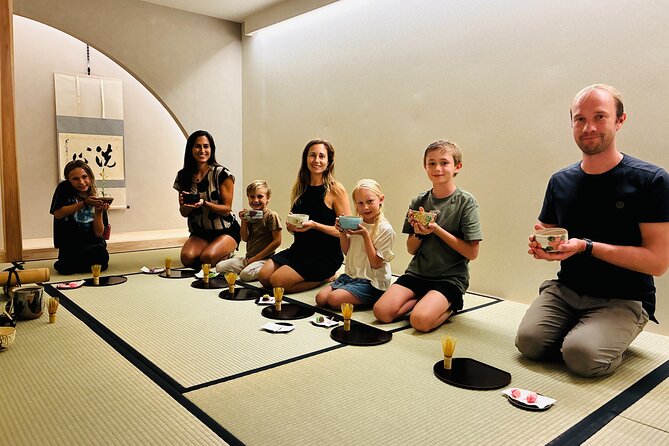
- A bowl you whisk yourself, either alone or with a companion in your group.
What I like about this setup is that it gives you a reference point. You can taste the host’s version and then learn how your own whisking changes texture and experience. You’re not thrown into the deep end without context.
During the ceremony, you’ll choose a tea bowl and whisk your matcha. Watching the host’s movements matters, because the whole point is that every action, utensil, and space supports mindfulness. When you then do it yourself, you’re not just copying movements, you’re learning what those movements feel like and why they’re done that way.
And you’ll do it inside a private setting. That’s a big deal. When people are sharing a room with others, it’s harder to slow down, ask small questions, or adjust your pace without feeling rushed.
Seasonal Japanese confections you can actually taste in the moment
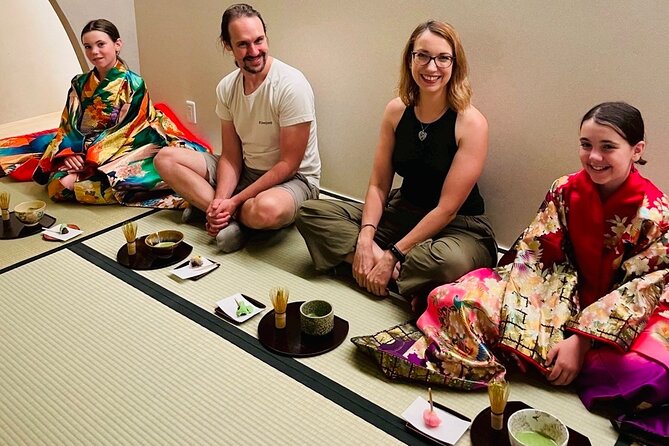
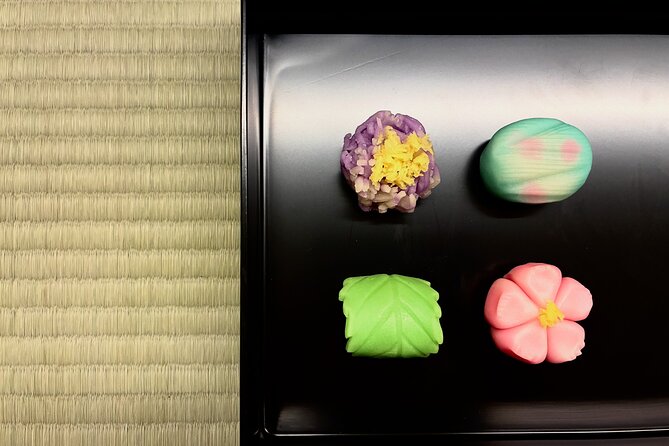
Tea ceremonies often include sweets, but the difference here is that you’re getting traditional seasonal Japanese confectionary included. It comes from a Kyoto sweet shop with over 100 years of history.
The practical value: sweets are not just a snack break. In tea culture, the confection helps balance flavor and mood, giving you something to experience alongside the matcha. The seasonal angle matters too. Even if you don’t know the names of every wagashi style, you’ll notice the ceremony is tied to the calendar, not mass production.
For people who love food details, this is a real plus. For people who only want the “tea part,” you still get an important part of the flow without having to add anything yourself.
Sake tasting is part of the same calm session
This experience also includes sake tasting along with the tea ceremony. The data doesn’t spell out the exact bottles or tasting steps, but it does confirm that sake tasting is bundled into the same hour.
That’s actually useful for planning. You get two classic Kyoto experiences in one controlled setting. You’re not bouncing between locations or trying to fit sake into a separate reservation. Instead, you keep the pacing consistent, staying in the quiet space and letting the tea ritual guide the rhythm of the tasting.
If you drink sake, this combination can feel especially satisfying because you’re exploring Kyoto’s beverage culture through two traditions that pair well with the same slow, attentive mindset.
A quieter way to spend a day in Kyoto

Families welcome, and the private plan helps kids and adults
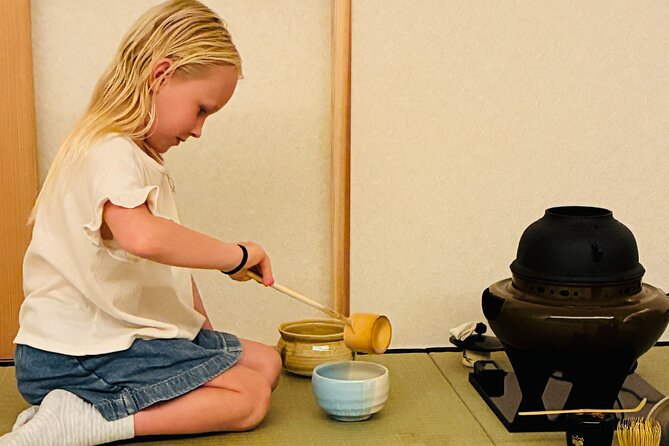
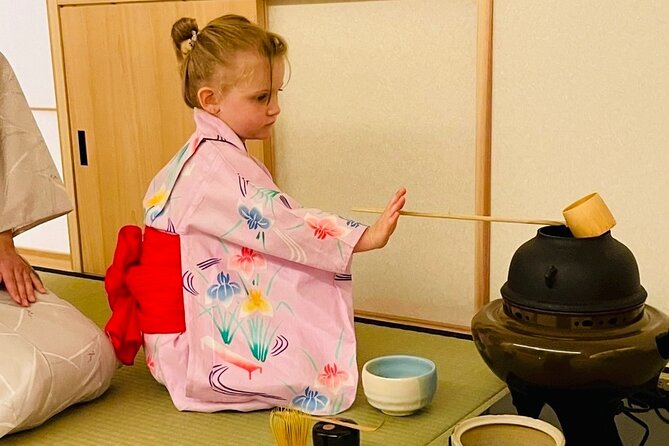
One of the review takeaways is that this works for families, not just couples. The experience is designed to be enjoyed in a completely private space at your own pace, which helps when you have kids who need a calmer environment.
There is a specific rule tied to age and planning: guests with children under 5 years old or those with an interpreter must book a Private Plan. If you book incorrectly under a Shared Plan, participation and refunds will not be possible.
So if you’re traveling with small kids, this is not a “maybe.” Plan carefully. A private setup can make the whole experience more relaxed, but you have to book the right option for it to work.
Also, you’ll want to be ready for the quiet expectations. The experience is conducted in a serene and quiet setting, and you should come prepared to follow instructions like wearing socks.
Small rules that make a big difference: socks and punctual arrival
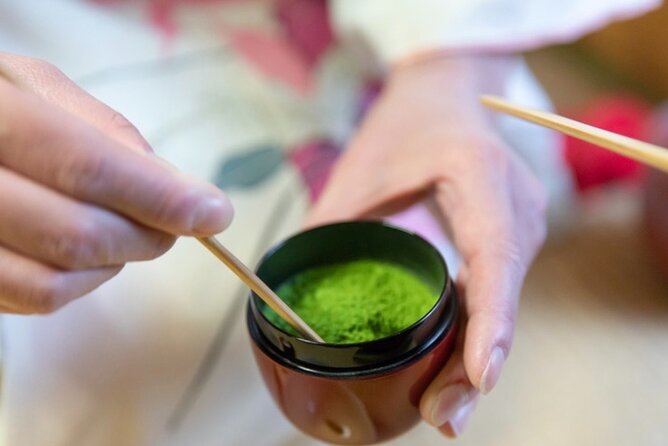
You might not think of socks as “culture,” but in this room they matter. You are asked to bring or wear socks during the experience.
Punctuality matters even more. Entry is allowed from 5 minutes before the start time. Once the session begins, the door is locked. Even being 1 minute late means you cannot join, and there is no refund.
Here’s how to handle this in real life:
- Build in buffer time from Karasuma Oike Station.
- Aim to arrive early rather than perfectly on time.
- If you’re combining this with other Kyoto stops, don’t stack anything too close.
The goal is simple: protect your reservation. The ceremony is designed to be calm, and they keep it that way by locking the door when it starts.
Optional uchikake-style coat for photos and feel
There’s an optional uchikake coat-like kimono experience available for an extra fee of ¥1,500 (tax included). If you want it, you should inform staff on the day.
I like having an optional costume layer because it lets you decide your vibe. If you want simple and focused, you skip it. If you want that extra visual and cultural touch, you can add it without changing your core plan.
Just remember it is optional, so it’s not part of the base price.
Value and price: is $137.44 per person worth it?
At $137.44 per person for a private plan, you are paying for three things that are hard to replicate on your own:
- A structured tea ceremony with English guidance.
- A private setting with your group only.
- Included matcha (two bowls) plus traditional seasonal sweets, with sake tasting also included.
If you were to book separate tea lessons, then add sweets and a sake tasting, you’d likely spend both time and money to stitch it together. Here, the price bundles the ritual learning and the tasting elements into one controlled hour.
Also consider you’ll likely book around 17 days in advance on average, which suggests many people plan early for this style of experience. If you’re flexible with dates, checking availability early can improve your odds of getting the time you want.
The best value angle is the private aspect. Shared experiences can be cheaper, but privacy is what makes it easier to learn, ask questions, and keep the ceremony atmosphere intact.
The only value downside is the non-refundable nature and strict start time. If your schedule is uncertain, that risk can be real. But if your plans are solid, this feels like a fair price for what you actually do.
How to time this in your Kyoto day
Because you’re near Karasuma Oike Station, you can treat this as an anchor stop. I’d place it where you want to slow down, not where you’re sprinting from one crowded attraction to another.
A good strategy:
- Go in with a little buffer, so you’re not arriving stressed.
- Treat the ceremony like a reset break, then continue your sightseeing after.
Since the session is about an hour, you can pair it with nearby neighborhoods without losing your whole day. It’s also ideal if you want something culturally meaningful that doesn’t require advanced planning beyond showing up correctly.
Who should book this private tea ceremony
This is a strong fit if you want:
- A private tea ceremony rather than a shared group class
- English explanations so you can understand meaning, not just motions
- A hands-on activity where you whisk your own matcha
- A calm, family-friendly setting where the group can move at its own pace
- A combined format with sake tasting and sweets included
It’s less ideal if:
- You can’t guarantee punctual arrival (the door locks when the session begins)
- Your travel plans are extremely fluid
- Your group needs a shared, social classroom vibe with other travelers
Should you book Sanjo Chasuian for your Kyoto matcha day?
My take: yes, if you want a private, guided matcha experience that feels thoughtful, not rushed. The Nijiriguchi entrance, the two-bowl matcha structure, and the included seasonal sweets make it more than a simple demonstration. Add sake tasting and English guidance, and you get a full, learn-and-taste session that fits into an hour.
Book it if your schedule is steady and you can arrive at least 5 minutes early. Skip it if strict timing would stress you out.
If you’re the type who likes Kyoto culture but doesn’t want to spend hours studying etiquette ahead of time, this is a practical way to get it right while staying calm.
FAQ
What is included in the private tea ceremony plan?
The plan includes a private tea ceremony, two cups of matcha from Kyoto (one made by the host and one you whisk), traditional seasonal Japanese confectionary, and it is also described as including sake tasting.
How long does the experience take?
It is listed as about 1 hour.
Is this session private?
Yes. The private plan ensures a session exclusively for your group, with no other guests present.
Where do I meet, and how does it end?
You meet at Tea Ceremony & Sake Tasting Kyoto – Sanjo Chasuian, and the activity ends back at the meeting point.
How early can I enter the venue?
Entry is allowed from 5 minutes before the start time.
What happens if I arrive late?
Once the session begins, the door will be locked. Even 1 minute late means you cannot join, and no refund is given.
Is there English guidance?
Yes. Guidance and explanations are offered in English.
Do I need socks?
Yes. Guests are asked to bring or wear socks during the experience.
Can families book this experience?
Families are welcome, and the setting is private. Note that guests with children under 5 years old must book a Private Plan.
Is it refundable if I cancel?
No. The experience is non-refundable and cannot be changed for any reason.
New This Season
- Koyasan Day Trip by Private Car from Kyoto
- Old Port Town and Ultimate Sake Tasting Private Tour From Kyoto
- Kyoto’s Timeless Charm: 3hr Exploration of History and Peace
- Kyoto: 5 Types of Sushi Making
- Sacred Peak & Ancient Paths: Kurama-Kibune Hiking Experience
- Kyoto: Exclusive ZEN practice at Manpukuji temple in Uji
- Kyoto: Private Seasonal Aroma Yoga Class
- Traversing Kyoto’s Scenic West – Arashiyama to Kinkakuji
Tea Ceremonies, compared.
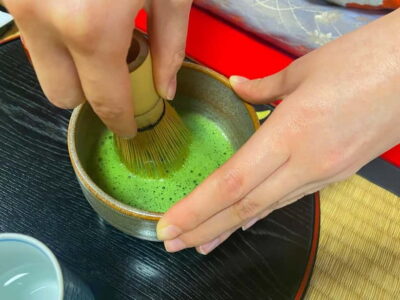
Tea Ceremony in a Traditional Tea House in Kiyomizu
Read our review →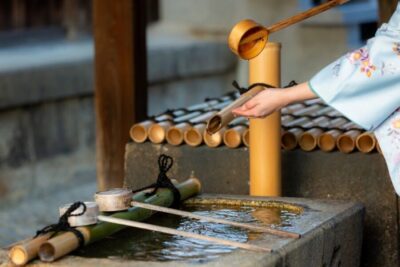
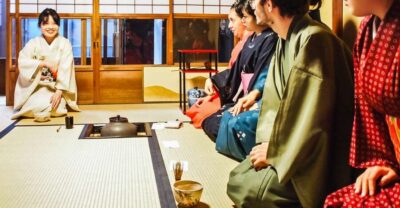
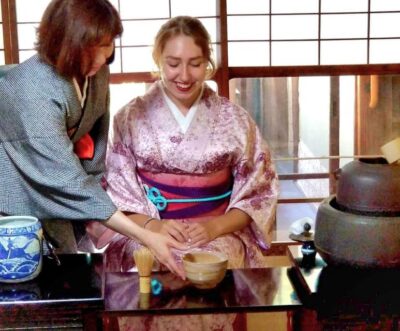
Kimono Tea Ceremony at Kyoto Maikoya, NISHIKI
Read our review →
Tea Ceremony in 100-year-old Kyo-Machiya Townhouse
Read our review →
Also filed under