
Reviewed · TEA CEREMONIES
Kyoto Newly Opened Tea Ceremony – Sanjo Chasuian
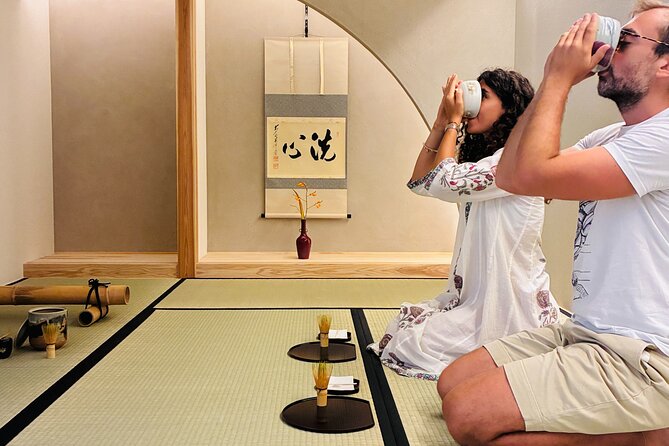
First thing first, tea rooms teach you how to slow down. This newly opened Kyoto session at Sanjo Chasuian is interesting because you watch the tea master do it right, then you whisk your own matcha, all inside a quiet room with a Nijiriguchi crawl-in entrance. I especially like the hands-on pace (you do more than just observe) and the intimate feel with a small group. One thing to plan for is the seating setup, since you may sit on the floor even though chairs are available.
In about an hour, the host explains the why behind the steps, then guides you through whisking your own bowl of matcha. You also get a pair of matcha servings, plus traditional seasonal Japanese sweets. And yes, there’s a real etiquette side to it, including a simple rule: bring or wear socks, and arrive on time because the door locks once the ceremony begins.
In This Review
- Key reasons this Kyoto tea ceremony is worth your time
- Inside Sanjo Chasuian, where the Nijiriguchi changes the mood
- The 1-hour flow: watch, learn, then whisk your own matcha
- Step 1: Watching the host, then copying the motions
- Step 2: Two servings of matcha, so you can compare
- Step 3: Questions happen, in a warm, low-pressure way
- What you actually taste: Kyoto matcha and traditional seasonal sweets
- Two cups of Kyoto matcha
- Traditional seasonal Japanese confectionary
- The real skill you take home: how to whisk and why it matters
- Etiquette basics that keep the experience smooth (and calm)
- Socks are required
- Timing is not flexible
- Seating and comfort: chairs exist, but floor time is possible
- Buying matcha and bowls
- Where it is in Kyoto, plus a real finding tip
- Price and value: is $32.77 a fair deal?
- Who should book this Sanjo Chasuian matcha workshop
- Should you book this Kyoto tea ceremony?
- FAQ
- How long is the Kyoto tea ceremony experience?
- What is included in the price?
- Do I get to make my own matcha?
- How many people are in the group?
- What should I wear or bring?
- What is the meeting point address?
- How close to the start time can I arrive?
- Is it near public transportation?
- What is the cancellation policy?
Key reasons this Kyoto tea ceremony is worth your time
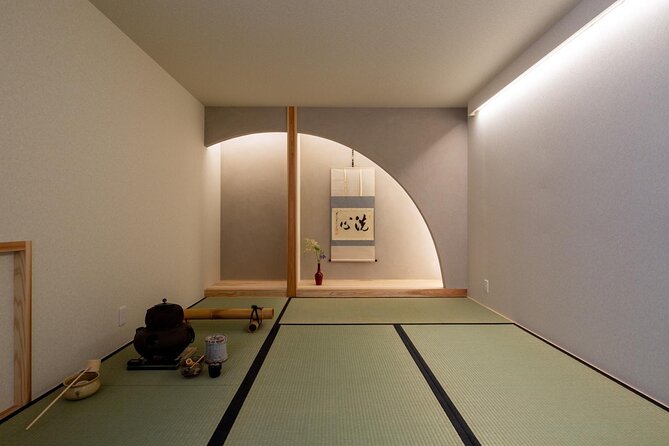
- Nijiriguchi tea room: a crawl-in entrance that helps you leave the outside world behind fast.
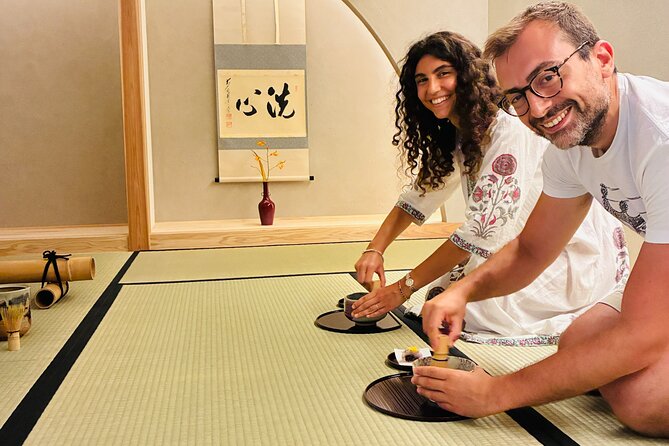
- Two bowls of matcha: one made by the host, and one you whisk yourself (so you compare and learn).
- Small group, max 10: more time for questions and watching details closely.
- Hands-on whisking: you choose a tea bowl and get real instruction on technique.
- Kyoto sweets included: traditional seasonal confections from a Kyoto shop with more than 100 years of history.
- Optional fancy coat: there’s a chance to wear an uchikake used for formal ceremonies, mentioned by past visitors.
Inside Sanjo Chasuian, where the Nijiriguchi changes the mood
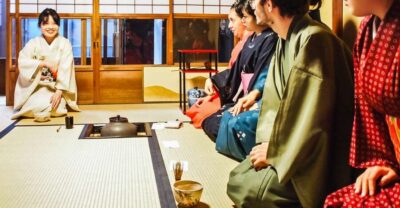
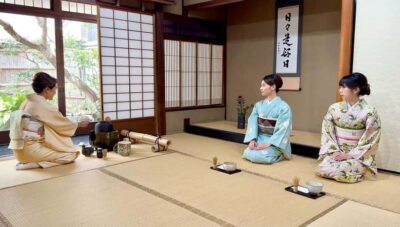
The experience starts with the tea room itself, and that matters more than most people expect. Sanjo Chasuian has a Nijiriguchi, a low, crawl-in entrance. It is practical as well as symbolic. Physically lowering your body for entry nudges you to slow down, stop rushing, and pay attention to what comes next.
The setting is described as serene and quiet, which makes the ceremony feel like a reset during a busy Kyoto day. It also helps with focus when the host talks through the meaning of each step. If you’ve ever tried matcha at a café and wondered why the ritual matters, this kind of quiet room does a lot of the explanation for you.
Chairs are available, which is great if you do not love floor seating. Still, be prepared that some part of the time may involve sitting close to the tatami-style setup. When you plan your day, build in a little patience for that part, and you will enjoy the calm even more.
The 1-hour flow: watch, learn, then whisk your own matcha
This workshop runs for about one hour. The structure is simple and it works: you first observe a professional-style preparation, then you do it yourself with guidance.
More bowls, poured the traditional way
- Kyoto: Tea Ceremony in a Traditional Tea House in Kiyomizu
★ 4.9 · 3,519 reviews - Kyoto: Tea Ceremony Ju-An at Jotokuji Temple
★ 4.9 · 3,207 reviews - Kyoto: 45-Minute Tea Ceremony Lesson Experience
★ 4.3 · 2,378 reviews - Kyoto: Table-Style Tea Ceremony at a Kyo-Machiya
★ 4.9 · 1,211 reviews
Step 1: Watching the host, then copying the motions
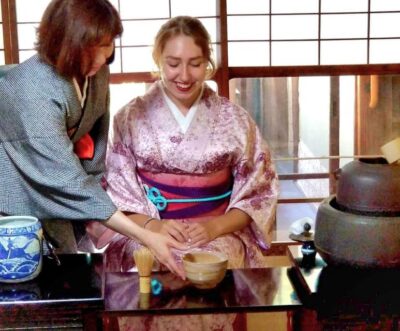
I like that you are not thrown into whisking immediately. You choose a tea bowl, watch the host’s movements, and pick up the rhythm. The instruction is step-by-step, with explanations tied to the ritual and the reasoning, not just the mechanics.
That order matters. If you start by whisking without context, matcha can turn into a fizzy mystery. Here, you learn what the host is aiming for before you try it. That makes your bowl taste better, and it also makes you more confident explaining the process later.
Step 2: Two servings of matcha, so you can compare
You enjoy two bowls of matcha:
- One prepared by the host.
- One you prepare yourself, either alone or with a companion.
This is a rare value point. Many casual tea experiences give you only one cup or you watch and then get something already made. Here, the two servings help you see what changes when you adjust your technique and timing.
Step 3: Questions happen, in a warm, low-pressure way
Past visitors highlight that the host speaks English well and makes time for Q&A. Some mention that the accent is a little noticeable, but still understandable. In practice, that means you can ask the practical questions most first-timers have: why the steps go in a certain order, what utensil roles are, and what to focus on when whisking at home.
What you actually taste: Kyoto matcha and traditional seasonal sweets
The included food and drink are straightforward, but they are not “filler.”
A day of temples goes further with something to break it up.


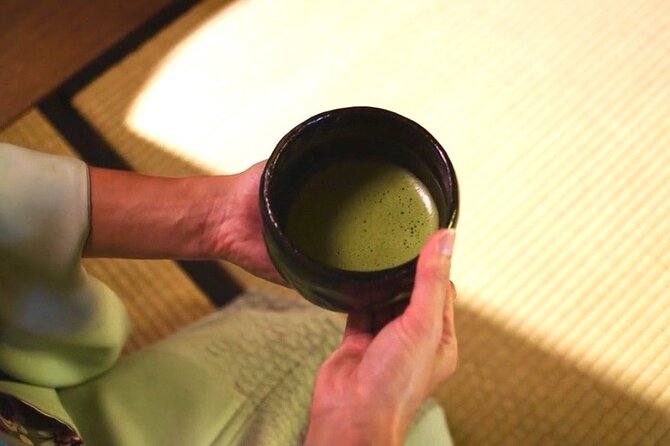
Two cups of Kyoto matcha
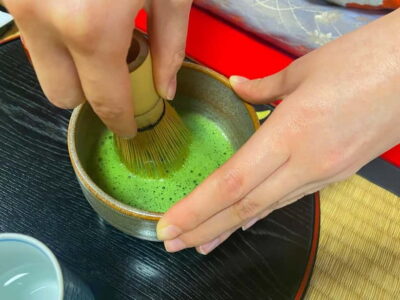
You get two cups of matcha from Kyoto. One is made by the host, and one is made by you. Matcha is not just a beverage here, it is the center of the lesson. The workshop treats it like a craft, with a focus on proper handling and technique.
If you are new to matcha, this is a smart way to start. Your first bowl sets the benchmark, and your second bowl becomes your hands-on practice. You can taste differences in texture and how the bowl comes together, then connect those differences back to what the host explained.
Traditional seasonal Japanese confectionary
You also receive Japanese sweets, described as seasonal and traditional. Past visitors specifically call out beautiful mochi and sweets that are both pretty and tasty after you eat them. The sweets come from a Kyoto sweet shop with over 100 years of history, which adds a nice local credibility beyond just generic snacks.
If you have food preferences, you will want to communicate in advance when booking, but from the information provided, the sweets are part of the standard inclusion.
The real skill you take home: how to whisk and why it matters
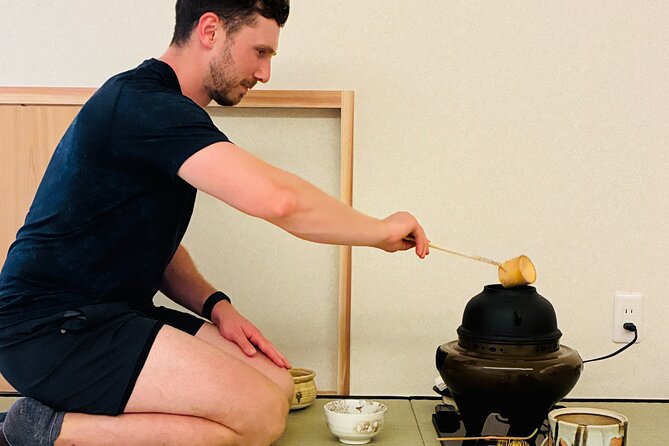
What I like about this workshop is that it teaches you more than a performance. It is built around the practical skill of matcha prep, plus the context that tells you why those steps exist.
You learn:
- How to choose and handle a tea bowl
- How to whisk matcha using the right motions
- How the host’s preparation differs from your own, bowl to bowl
The host walks you through it with step-by-step explanations, so you are not just mimicking hand movements. Many past visitors mention the host being patient and warm, with an emphasis on both the history and the “why” behind the ritual.
One review even specifically names the host as Yuko, and people credit her with clear teaching. Even if you are not chasing a name, that teaching style is the heart of the value: you leave with a process you can repeat, not just a memory of a pretty room.
Etiquette basics that keep the experience smooth (and calm)
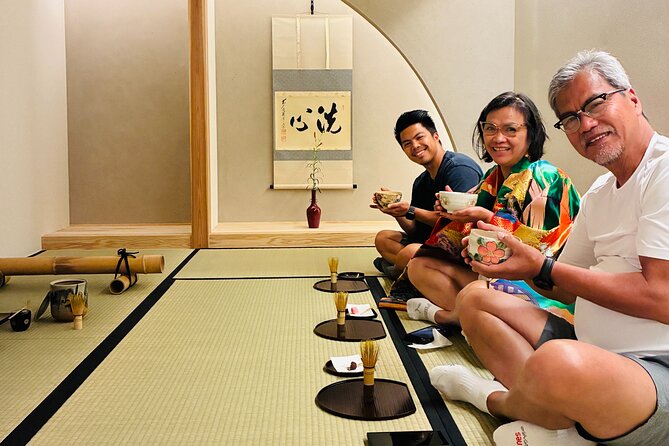
Tea ceremony is polite, and it is also gently strict in a good way. Here are the rules you should treat as important, because they directly affect whether you get to participate.
Socks are required
You are asked to bring or wear socks during the experience. This is not a minor detail. It keeps the room comfortable and helps with the traditional etiquette.
Timing is not flexible
Entry is allowed from 5 minutes before the start time. Once the session begins, the door is locked. Even being 1 minute late means you cannot join, and there is no refund. That’s the kind of rule that can ruin your day if you plan loosely.
So, when you book, treat it like an appointment, not a casual drop-in. Kyoto traffic and walking can surprise you, especially around busy areas.
Seating and comfort: chairs exist, but floor time is possible
Chairs are available, which helps a lot if you have knee or mobility concerns. Still, the ceremony is designed with traditional tea room posture in mind, so you may still spend time seated close to the floor area. I’d plan to wear comfortable clothes and keep your expectations realistic.
Buying matcha and bowls
Matcha, tea bowls, and select items are available for purchase. That’s useful if you want to recreate the ritual at home without guessing which tools to buy.
Where it is in Kyoto, plus a real finding tip
The meeting point is:
Tea Ceremony & Sake Tasting Kyoto – Sanjo Chasuian
324-2 Sanjōchō, Nakagyo Ward, Kyoto, 604-8205, Japan
It is near public transportation, which helps if you are pairing this with a broader Kyoto plan. One practical tip from past visitors: Google Maps may route you onto a smaller street on the corner. The guidance is to stay on the main street and look for a green matcha ice cream cone in front. That kind of visual cue saves time, especially if you are arriving near the start time window.
Once you arrive, you will still have to follow the entry timing rules, so plan to be there early enough to find the exact location without stress.
Price and value: is $32.77 a fair deal?
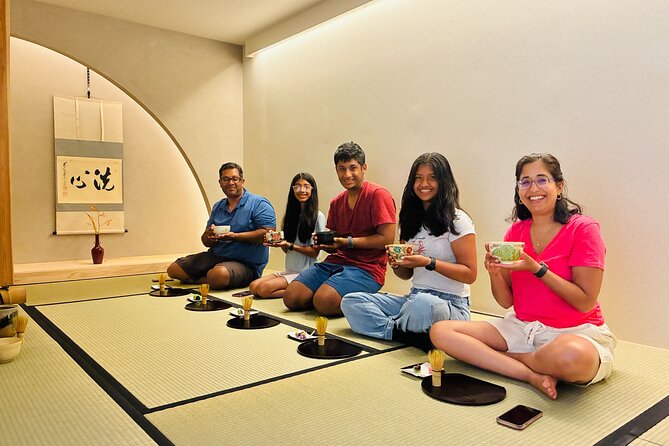
At $32.77 per person, this is priced like a focused, quality short experience, not a long day tour. The value comes from what you get in that hour:
- Two bowls of matcha, including a host-made cup and your own whisked cup
- Traditional seasonal sweets included
- A small group size (maximum 10 travelers), which supports better teaching and Q&A
- A proper tea room setting with Nijiriguchi, which you cannot replicate at home
If you compare it to typical “watch only” tastings, you are paying for practice time. If you compare it to DIY matcha classes that do not provide sweets or a formal tea room setting, this feels more complete.
My rule of thumb: if you want a Kyoto cultural experience that is calm, hands-on, and teaches a repeatable skill, this is good value for the time. If you only want background history and do not care about whisking, you may feel it is more hands-on than you expected.
Who should book this Sanjo Chasuian matcha workshop
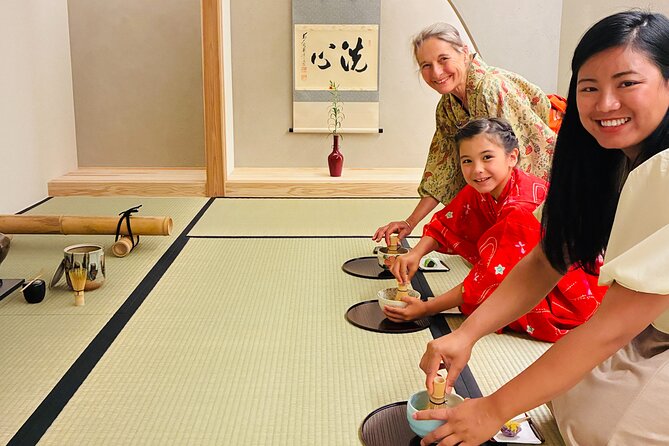
This workshop fits best if you:
- Want a true Kyoto cultural moment, not just a photo stop
- Like learning by doing, especially with a short time commitment
- Care about details like proper bowl handling and correct whisking rhythm
- Appreciate a quiet, mindful setting during a packed itinerary
It might be less ideal if:
- You hate floor seating and chairs are not enough for your comfort
- You dislike rules about exact arrival time
- You prefer long, open-ended tours over a tightly structured one-hour session
Should you book this Kyoto tea ceremony?
Yes, I think you should book it if you want the kind of Kyoto experience that feels calm, personal, and practical. This is not just about drinking matcha. It’s about learning a method you can repeat, plus tasting Kyoto sweets that match the season.
Book with confidence if you can arrive early, wear socks, and you are okay with a short, structured format. If that timing rule could stress you out, then consider a different activity window, because the door locks promptly when the ceremony begins.
If you want to pair it with other Kyoto plans, this one-hour format is easy to slot into your day, and it has enough variety (watching, teaching, whisking, sweets, questions) to feel like a real highlight.
FAQ
How long is the Kyoto tea ceremony experience?
It lasts about 1 hour (approx.).
What is included in the price?
You get two cups of matcha from Kyoto, one made by the host and one you make yourself, plus traditional seasonal Japanese confectionary.
Do I get to make my own matcha?
Yes. You’ll whisk matcha yourself for the second serving (and it can be alone or with a companion).
How many people are in the group?
The experience has a maximum of 10 travelers.
What should I wear or bring?
You should bring or wear socks during the experience.
What is the meeting point address?
Tea Ceremony & Sake Tasting Kyoto – Sanjo Chasuian, 324-2 Sanjōchō, Nakagyo Ward, Kyoto, 604-8205, Japan.
How close to the start time can I arrive?
Entry is allowed from 5 minutes before the start time. Once the session begins, the door is locked, and even 1 minute late means you cannot join.
Is it near public transportation?
Yes, it is near public transportation.
What is the cancellation policy?
Free cancellation is available. You can cancel up to 24 hours in advance for a full refund, and within 24 hours there is no refund.
New This Season
- Koyasan Day Trip by Private Car from Kyoto
- Old Port Town and Ultimate Sake Tasting Private Tour From Kyoto
- Kyoto’s Timeless Charm: 3hr Exploration of History and Peace
- Kyoto: 5 Types of Sushi Making
- Sacred Peak & Ancient Paths: Kurama-Kibune Hiking Experience
- Kyoto: Exclusive ZEN practice at Manpukuji temple in Uji
- Kyoto: Private Seasonal Aroma Yoga Class
- Traversing Kyoto’s Scenic West – Arashiyama to Kinkakuji
Tea Ceremonies, compared.
Tea Ceremony in a Traditional Tea House in Kiyomizu
Read our review →
Kimono Tea Ceremony at Kyoto Maikoya, NISHIKI
Read our review →
Tea Ceremony in 100-year-old Kyo-Machiya Townhouse
Read our review →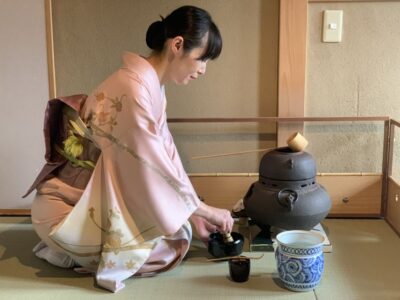
Also filed under