
Reviewed · TEA CEREMONIES
Kyoto Private Tea Ceremony at a Japanese Inns
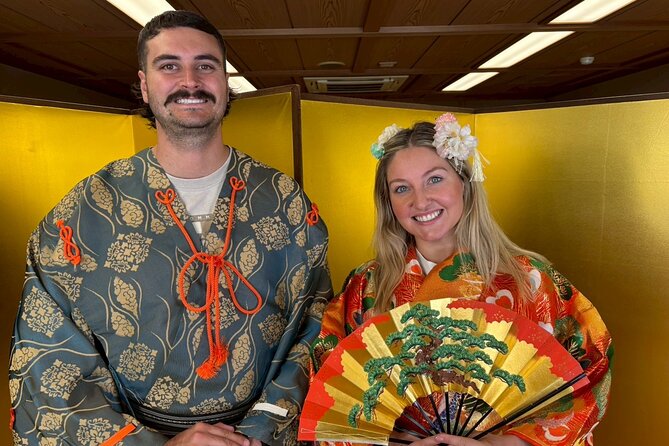
Tea by candlelight beats the nighttime crowds. This private Kyoto experience takes place in a traditional ryokan setting, using a quiet 20-tatami room lit for the ceremony, even when big temple sights shut down for the evening. I love the kimono dressing and photo shoot (including bridal uchikake or a men’s haori with props, plus professional lighting), and I also love that translator devices are provided so you can actually follow what’s happening and ask questions. The main thing to consider is that the whole experience is about 59 minutes, so it is calm and focused, but it is not a long, wandering evening, and the candlelit, very dark room setup can feel a little strange for the first few minutes.
If you want a Kyoto evening that feels personal instead of public-ticket style, this fits the bill. You and your group of 2 to 6 meet at the tea-ceremony studio, then head into the ryokan for a step-by-step flow: dressing, a short Zen moment, a tea demonstration, and then making your own matcha.
Value-wise, the price is about ¥15,000 per adult (around $98), and you are not just watching. You are getting hands-on matcha whisking, guided instruction, photo support, and a licensed guide, all inside a room that is usually closed to the public.
In This Review
- Key highlights
- Kyoto After Dark: Tea in a Ryokan That Feels Private
- Finding 茶道体験所 禅 and Getting Settled
- Dressing in Kimono: Uchikake or Haori, Plus Props and Pros
- Zen Meditation: A Quick Reset That Still Feels Real
- The Tea Ceremony Demonstration: What You Learn While You Watch
- Your Matcha Whisking Session: Hands-On, Not Just Theater
- Photography, Translation, and Small-Group Comfort
- Price and Value: What You Get for About ¥15,000
- Who Should Book This Kyoto Tea Ceremony in a Ryokan
- Should You Book This Kyoto Private Tea Ceremony at a Japanese Inn?
- FAQ
- How long is the Kyoto private tea ceremony?
- What happens during the ceremony?
- Do I need to speak Japanese?
- Is this a private experience?
- What is included in the price?
- What if the weather is poor?
Key highlights
- Private 20-tatami room at a traditional ryokan: A quiet, controlled setting after dark that focuses on the ritual.
- Kimono session plus photos with props: Bridal uchikake or men’s haori, folding fans, and katana-style props, shot with professional lighting.
- Zen meditation that lasts only a few minutes: Short and practical, more reset than performance.
- Tea demo includes matcha and sweets: You get a real taste of how a tea gathering is paced.
- Your own matcha whisking (20 minutes): You actively practice, not just observe.
- Translator devices provided: Language is handled, so you can understand details and ask questions.
Kyoto After Dark: Tea in a Ryokan That Feels Private
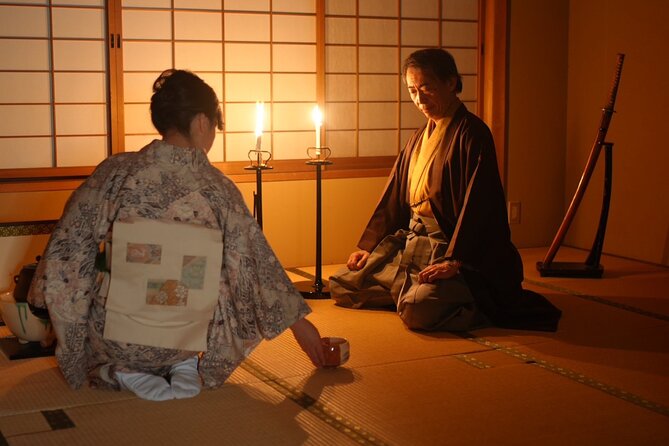
Kyoto is famous for its temples and night-time lanterns, but when those major sights close, you still need a reason to stay out. This experience answers that. Instead of taking the usual route of temples after dark, you go into a long-established inn (a ryokan) and use a 20-tatami banquet hall that is normally closed to the public. That one detail changes everything. It’s quieter, more contained, and it keeps your attention where it should be.
The room is lit for the ceremony, with candlelight described as flickering in a very dark space. You do not have fluorescent lighting, and you will feel that right away. If you like ceremonies that lean into mood and atmosphere, this will click. If you dislike dark rooms or you are sensitive to low light, give yourself a minute to adjust before the session starts.
This is also truly private. Your group size is small, typically 2 to 6 people, so you are not sharing the floor with strangers. In practice, that means the guide can slow down when you need context, and photography support feels easier because you are not constantly rotating positions with other groups.
Finding 茶道体験所 禅 and Getting Settled
Your start point is 茶道体験所 禅 (ZEN: Tea Ceremony Experience in Kyoto), located in Shimogyo Ward, Kanayachō, on the 4th floor of 緑風荘 (Ryokufusō). The experience ends back at the meeting point, so you are not stuck figuring out where to go after the ceremony.
One practical tip: since this is inside a studio meeting point before entering the ryokan space, arrive a bit early so you can check in calmly. These kinds of sessions move at a steady pace, and you want to be relaxed before your kimono dressing begins. The good news is that the meeting point is listed as near public transportation, so you are not locked into one specific taxi route.
You should also plan for the tone of the evening. This is not a quick cultural stop where you walk in, snap photos, and leave. The flow is guided and scheduled, with set segments for dressing, Zen, tea, and matcha whisking. If you arrive frazzled, the ceremony will feel shorter than it really is.
More bowls, poured the traditional way
- Kyoto: Tea Ceremony in a Traditional Tea House in Kiyomizu
★ 4.9 · 3,519 reviews - Kyoto: Tea Ceremony Ju-An at Jotokuji Temple
★ 4.9 · 3,207 reviews - Kyoto: 45-Minute Tea Ceremony Lesson Experience
★ 4.3 · 2,378 reviews - Kyoto: Table-Style Tea Ceremony at a Kyo-Machiya
★ 4.9 · 1,211 reviews
Dressing in Kimono: Uchikake or Haori, Plus Props and Pros
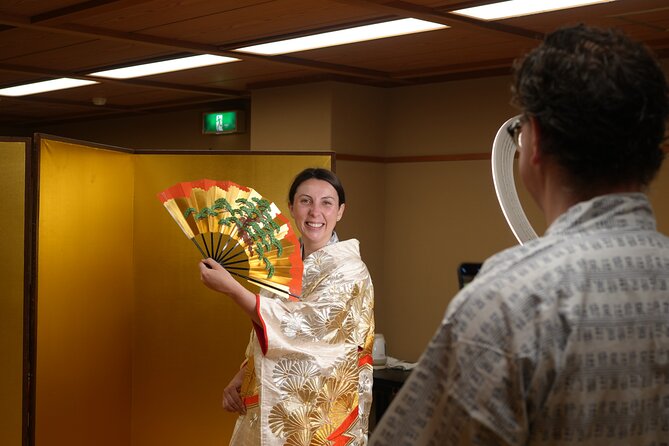
The most photogenic part comes first. You get kimono dressing with the session designed around looking and feeling right in a traditional style. For women, the option mentioned is a bridal uchikake. For men, the option mentioned is a men’s haori.
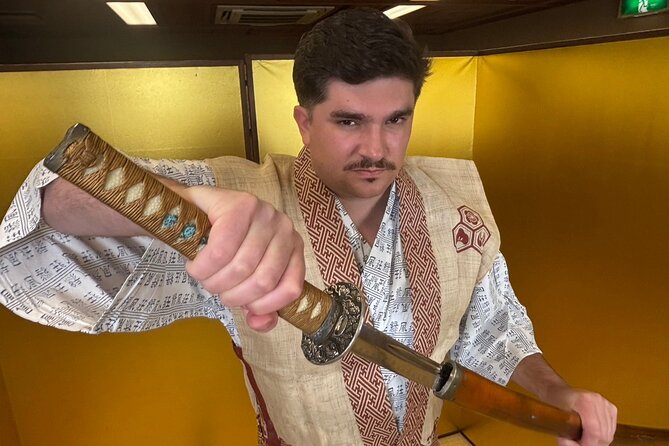
This section also includes a photo shoot with props like folding fans and swords, plus professional lighting. The staff assist with photography, so you are not left holding a phone and hoping your framing works in low light. You can get photos throughout, and the setup is clearly built to make portraits look intentional.
What I like about this part is that it is not just costume as decoration. You are dressing in garments tied to Japanese aesthetics, then moving into the ceremony space in that same mindset. That helps the tea part feel connected, not like two separate activities stitched together.
One consideration: the kimono session includes a short time block, and the overall experience is under an hour. That means you should avoid running late or trying to squeeze in extra photo time on your own. If you want the best results, follow the staff direction during dressing and the photo sequence.
Zen Meditation: A Quick Reset That Still Feels Real
Next comes Zen meditation for about 4 minutes. It’s short, but it is not random. The ceremony is designed to slow your body down before you start handling tea tools and tasting matcha.
In a lot of cultural activities, meditation gets treated like a checkbox. Here, it is part of the flow. You are placed in a serene space, then guided through the experience before the tea demonstration begins.
If you think you do not have time for meditation, remember this is only a few minutes. It is more like a mental gear shift than a full practice session. You might find that it improves your focus during the tea explanation, since you will actually be listening rather than waiting for the next step.
The Tea Ceremony Demonstration: What You Learn While You Watch
The heart of the evening is the tea ceremony demonstration, about 20 minutes. You are welcomed as a guest, and you receive a bowl of matcha and sweets. That matters because you are not just learning etiquette in theory. You get the sensory part right away.
The guide walks you through the flow of a traditional tea gathering, and you get to observe how each movement connects to the overall pacing. In a calm room like this, those pacing details become easier to notice. Even if you only understand part of the explanation, the rhythm helps you grasp the idea: tea is a sequence, not a single act.
This is also where the translator devices really help. Communication is supported regardless of language, so the ceremony is not reduced to silent watching. You can ask questions instead of smiling politely and nodding. That turns the tea part from “cool activity” into “I actually understand what I am seeing.”
Practical note: matcha has a distinct taste, and you are also given sweets. If you have dietary restrictions, you’ll want to ask before you book, because the details provided here only specify matcha green tea and sweets as part of the included experience. The good part is that the format is structured, so the staff can likely guide you based on your needs.
Your Matcha Whisking Session: Hands-On, Not Just Theater
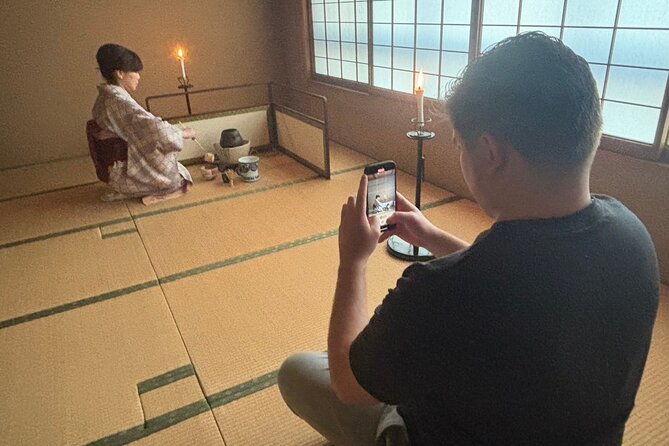
After you watch the demo, you get to do the real work: matcha whisking, for about 20 minutes. This is the segment that makes the experience feel worth the price, because it switches you from audience to participant.
You’ll learn how to whisk your own matcha as part of the ceremony flow. Even if you are not trying to master a perfect style, you get feedback and guidance during the practice. That is important because whisking technique influences how the matcha turns out.
What you’ll likely notice is that you have more control than you expect. Instead of just tasting, you experience the process behind the taste. It also gives you something to bring home mentally, even when you return to normal life. You now know what to do with the basics, and you understand why it is done that way.
And yes, photos are welcome throughout, so you can capture the moment you are whisking. Just keep in mind that the session includes a ceremony rhythm. Flashy camera behavior can make the moment feel rushed, so follow the guide’s timing for photos.
A quieter way to spend a day in Kyoto

Photography, Translation, and Small-Group Comfort
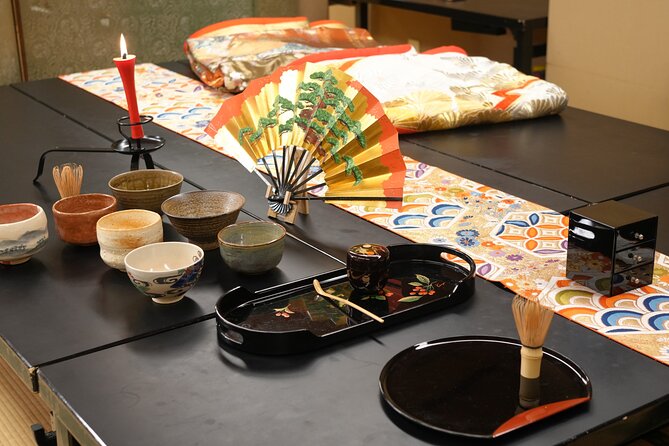
This experience is built around communication and comfort. Translator devices are available, so you do not need Japanese to participate. That means the tea explanation and ceremony steps are not lost. You can ask questions during the pacing of the ritual instead of waiting until the end.
In the same spirit, kids are specifically mentioned in the way questions can be asked in their own language. If you are traveling with children, this is a good sign that the staff can keep things interactive without leaving non-Japanese speakers behind.
On the photography side, staff assist with photos, and the kimono section includes professional lighting. You’re not just relying on your own camera in a dark room. The props also help you get “costume portrait” vibes without it turning into a cosplay vibe, because the session is framed as part of the cultural flow.
Small-group size is not just a marketing detail. It changes how the evening feels. With 2 to 6 people, you can settle into a calm pace, and the guide can correct small things without speaking over everyone.
Price and Value: What You Get for About ¥15,000
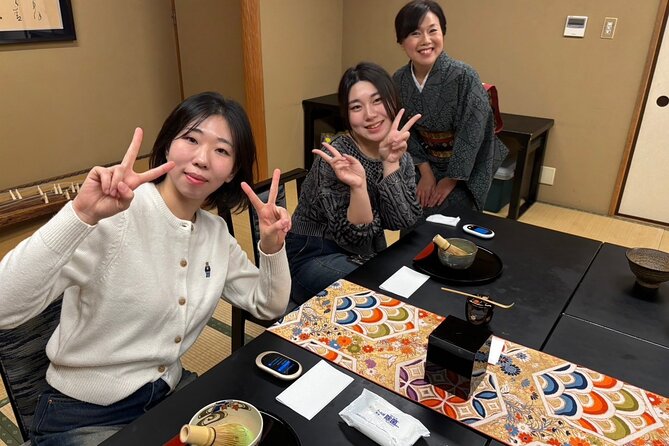
At ¥15,000 per adult (listed as $97.98 per person), you might wonder if this is expensive for tea. Here’s the honest way to look at it: tea ceremony pricing is often for instruction and tasting, but this package includes a lot more than that.
You get:
- Kimono dressing (uchikake or haori) plus a photo shoot with props
- Zen meditation and a guided tea ceremony demonstration
- Matcha and sweets
- Your own matcha whisking experience for 20 minutes
- Katana and tea utensils used as part of the experience
- A licensed guide and staff help with photography
- Translator devices so you can understand and participate
When you total the components, the value makes more sense. You are paying for a full guided evening with hands-on practice, plus the visual storytelling of dressing and photos. And you’re doing it in a ryokan room that is normally closed to the public, which helps explain why the experience feels more exclusive than the typical public tea demo.
If you are traveling on a tight budget, you could choose a cheaper public tea workshop. But if your goal is a Kyoto night that feels tailored and memorable, this price buys more than matcha. It buys participation, instruction, and a ready-made Kyoto photo moment that looks like it belongs in your trip album.
Who Should Book This Kyoto Tea Ceremony in a Ryokan
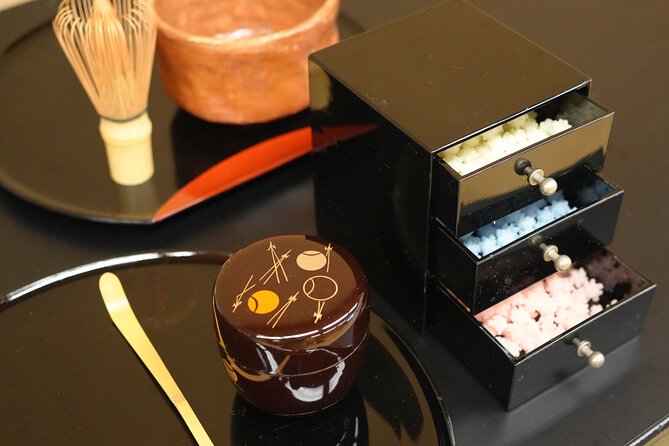
This experience suits you if you want:
- A Kyoto evening after dark when temples are not an option
- A private setting with a small group (2 to 6)
- A tea experience that includes hands-on matcha whisking, not just tasting
- The kimono/photo element but done with staff help and professional lighting
- Language support through translator devices
It might not be your best fit if you want a long, open-ended cultural evening with time to wander. The format is tight, about 59 minutes total, with set time segments. It is also guided, so if you prefer free-form exploration, this will feel structured.
Should You Book This Kyoto Private Tea Ceremony at a Japanese Inn?
I’d book it if you want a Kyoto night that is calm, guided, and actually hands-on. The best part is the combination: kimono photo session, Zen reset, then a real tea demonstration followed by your own matcha whisking. On top of that, translator devices remove the biggest risk of language barrier, so the experience stays meaningful instead of just decorative.
If you are sensitive to low light, or you dislike dark candlelit rooms, arrive with the mindset that you just need a minute to settle in. Also, because the ceremony is under an hour, keep your evening schedule clean so you do not rush out.
If you’re looking for a Kyoto experience that feels personal, thoughtfully paced, and built for understanding, this private tea ceremony in a ryokan hall is a strong choice.
FAQ
How long is the Kyoto private tea ceremony?
The experience is about 59 minutes.
What happens during the ceremony?
You start with kimono dressing and a photo shoot, then do a short Zen meditation, watch a tea ceremony demonstration with matcha and sweets, and finish with a matcha whisking experience where you make your own matcha.
Do I need to speak Japanese?
No. Translator devices are available, so communication is supported regardless of language.
Is this a private experience?
Yes. It is private, with only your group participating. Group size is listed as 2 to 6 people.
What is included in the price?
The experience includes matcha and sweets (and coffee and/or tea as listed), kimono costumes and props like folding fans and katana-style items, tea ceremony utensils, staff photo assistance, and a licensed guide.
What if the weather is poor?
The experience requires good weather. If it is canceled due to poor weather, you will be offered a different date or a full refund.
New This Season
- Koyasan Day Trip by Private Car from Kyoto
- Old Port Town and Ultimate Sake Tasting Private Tour From Kyoto
- Kyoto’s Timeless Charm: 3hr Exploration of History and Peace
- Kyoto: 5 Types of Sushi Making
- Sacred Peak & Ancient Paths: Kurama-Kibune Hiking Experience
- Kyoto: Exclusive ZEN practice at Manpukuji temple in Uji
- Kyoto: Private Seasonal Aroma Yoga Class
- Traversing Kyoto’s Scenic West – Arashiyama to Kinkakuji
Tea Ceremonies, compared.
Tea Ceremony in a Traditional Tea House in Kiyomizu
Read our review →
Kimono Tea Ceremony at Kyoto Maikoya, NISHIKI
Read our review →
Tea Ceremony in 100-year-old Kyo-Machiya Townhouse
Read our review →
Also filed under