

Reviewed · COOKING CLASSES
Kyoto Ramen Spoon Painting & Michelin Cooking Class
Your ramen starts with art. This Kyoto class pairs ramen spoon painting with hands-on cooking inside Musoshin Ramen Academy, run by Chef Shin and his team. I like the step-by-step teaching, and the fact that it is a small group format, so you are actually working with your hands.
I also like the in-house process, from noodles made each morning and rested overnight to a soup that simmers for 12 hours, with handmade soy sauce and roast pork. The only real consideration is that your spoon gets baked in a kiln overnight, so your finished souvenir is prepared after you paint it, not instantly.
In This Review
- Kyoto ramen spoon painting meets hands-on cooking at Musoshin Ramen Academy
- The hands-on format: paint a spoon, then cook your ramen
- What you learn from Chef Shin and instructors like Amiru
- In-house ramen ingredients and the “why” behind the taste
- Temple stops first: Kiyomizu-dera, Kennin-ji, Sanjusangendo
- Inside the ramen restaurant workshop: where your class happens
- Cooking your ramen with ingredients provided by the team
- Your meal at the end: no hunger games, just ramen you made
- The souvenir factor: a ceramic spoon you will actually want to keep
- Price and value: why $65.89 can make sense here
- Who should book this ramen class in Kyoto
- Quick practical tips before you go
- Should you book this Kyoto ramen spoon painting and cooking class?
- FAQ
- How long is the Kyoto Ramen Spoon Painting and Michelin cooking class?
- Where does the experience take place?
- What do I do during the class?
- Is the group size small?
- Is there food included?
- What makes Musoshin Ramen Academy different from other ramen activities?
- Are vegetarian or vegan options available?
- What happens to the painted spoon after I finish painting?
- How much does it cost?
- What is the cancellation policy?
- Is this tour near public transportation?
Kyoto ramen spoon painting meets hands-on cooking at Musoshin Ramen Academy
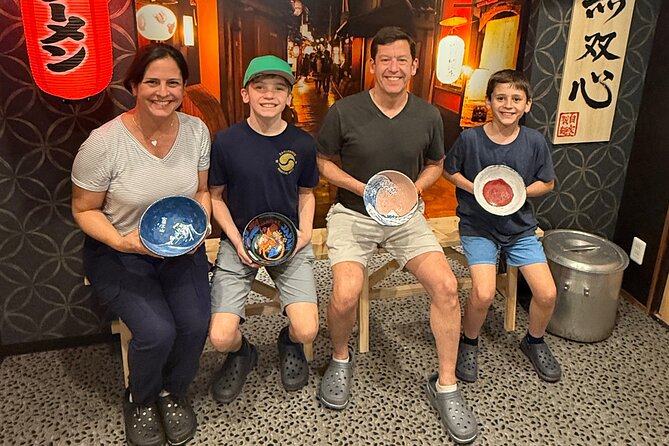
This is a two-part experience built around one idea: ramen is a craft, and you can feel that craft in every step. You start with a ceramic ramen spoon souvenir, decorated in class, then you move into a cooking lesson that walks you through ramen as a system, not just a recipe.
Musoshin Ramen Academy is run by 無双心ラーメンアカデミー (Musoshin Ramen). The company started in Kyoto in 2022 and now has six restaurants across Kyoto and Toronto. The Toronto Musoshin location has been nominated for Michelin for three consecutive years, and the recipe approach is the same across locations, including in the academy setting.
For $65.89, you get more than a quick taste. You are paying for instruction in a professional kitchen style setup, the souvenir itself, and a meal made from what you cook. The 1 hour 30 minutes length also matters, because ramen classes can drag on. This one is compact, and it ends with you eating what you made.
The hands-on format: paint a spoon, then cook your ramen
The biggest draw here is the pairing of ramen spoon painting and ramen making. That sounds like two separate activities, but the pairing makes sense. The spoon is a memory you can take home, while the cooking portion teaches you how ramen is built, component by component.
You will paint the spoon in the workshop area, and it is baked in a kiln overnight. That means the final look is a product of the kiln step, not just paint dried at your table. Then you head into cooking with the ingredients and structure laid out for you, including the pieces that make ramen taste like ramen.
You also get a sense of how serious Musoshin is about consistency. Their approach is ingredient-driven and time-driven. Noodles are made every morning, rested overnight, and then used the next day. Soup takes 12 hours. The ramen soy sauce and roast pork are handmade.
That is the kind of detail that helps you understand why some bowl shops taste deeper than others, even when the menu seems similar.
What you learn from Chef Shin and instructors like Amiru
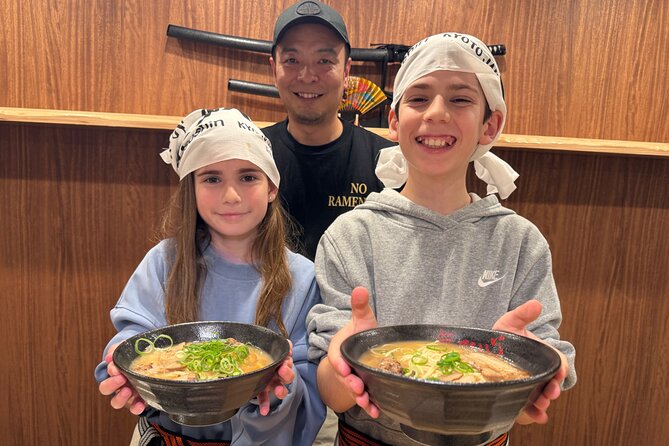
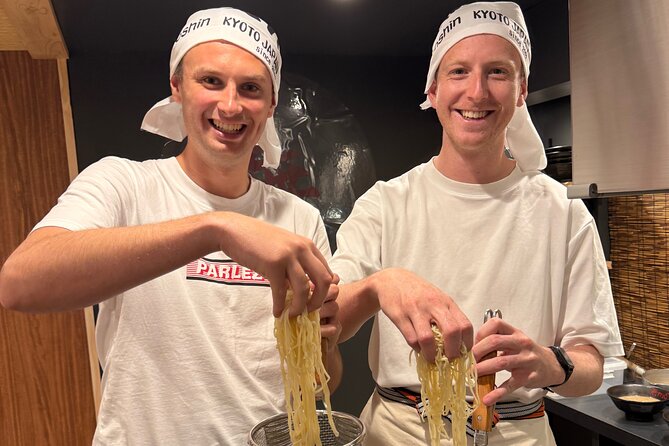
The teaching style here is practical. You get step-by-step guidance on ramen methodology, including how the components work together and why each one matters. A class like this is the fastest way to get past guesswork if you have only eaten ramen and never built one yourself.
You also get personality. In the class setup, Chef Shin is described as both hardworking and very hands-on, while instructors like Amiru are energetic and welcoming. If you are traveling with kids, this kind of patient, structured instruction is a big plus because the lesson has clear pacing.
This is not a lecture about ramen culture, even though you do pick up history and background. It is more like learning a craft. The goal is that you can recreate the logic at home, even if you cannot perfectly match every ingredient.
More bowls worth the wait
- Ramen Cooking Class at Ramen Factory in Kyoto
★ 5.0 · 1,937 reviews - Kyoto: Ramen Cooking Class at a Ramen Factory with Souvenir
★ 4.9 · 532 reviews - Kyoto: Ramen, Gyoza, and Onigiri Cooking Class
★ 5.0 · 445 reviews - Kyoto Ramen and Gyoza Cooking Class with Professional Chefs
★ 5.0 · 282 reviews
In-house ramen ingredients and the “why” behind the taste
A lot of ramen experiences say authentic, but this one talks process. Musoshin insists on making ramen ingredients in-house. That is a real value point for you because the cooking class is only as good as what you are actually cooking from.
Here is what they emphasize:
- Noodles made fresh each morning, rested overnight
- Soup simmered for 12 hours
- Handmade ramen soy sauce and roast pork
Those details are not just impressive. They explain the flavor layers. Long soup time supports a deeper base, and resting noodles helps with texture. Handmade soy sauce and roast pork contribute that savory backbone that makes ramen taste rounded, not one-note.
You do not need to become a fermentation scientist to benefit. You just need to know that ramen is built on time and proportion, and then you can apply that thinking when you cook later.
Temple stops first: Kiyomizu-dera, Kennin-ji, Sanjusangendo
The tour flow starts with classic Kyoto temple stops before you head into the ramen academy. Your schedule includes:
- Kiyomizu-dera Temple
- Kennin-ji Temple
- Sanjusangendo Temple
These stops are all major Kyoto names, so you should expect photogenic temple scenery and lots of visitors at peak times. The practical value is that it puts you in Kyoto’s eastern sightseeing corridor before your hands-on cooking session. That keeps the day feeling like a single story, not two separate activities stapled together.
A real consideration: temples involve walking. This class is 1 hour 30 minutes, but your day includes earlier temple time too, so wear comfortable shoes. Also, consider how you handle timing if you have a tight itinerary. This kind of class does better when you do not schedule a demanding second activity right afterward.
Inside the ramen restaurant workshop: where your class happens
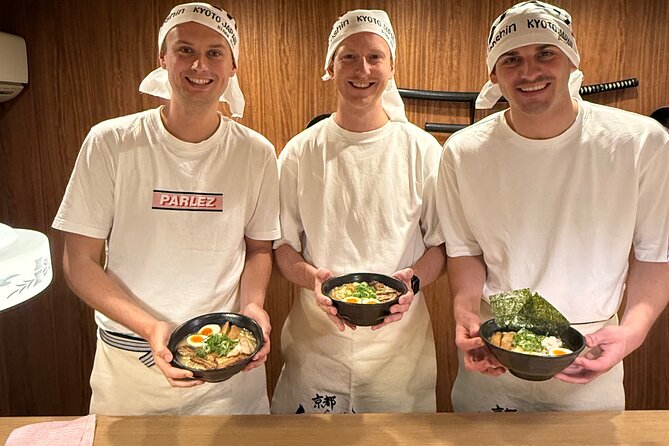
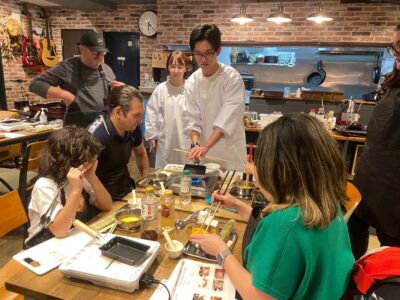
One of the most useful details is the setting. This academy is run inside an actual ramen restaurant, not a separate community room. That matters because the rhythm of cooking is real. You are working in a place designed for meals, not in a theatrical demo space.
You will get kit items that make it easier to participate:
- A ramen bowl
- A ramen spoon to paint as a souvenir
- An apron
- Part of the ramen components used for your meal
For value, this is important. You are not expected to bring your own tools or buy extra items to eat at the end. The experience is built as a “do it, then eat it” format.
The class stays small, with a maximum of 12 travelers. That size is ideal for hands-on cooking because instructors can check what you are doing and correct issues before you finish your batch.
Cooking your ramen with ingredients provided by the team
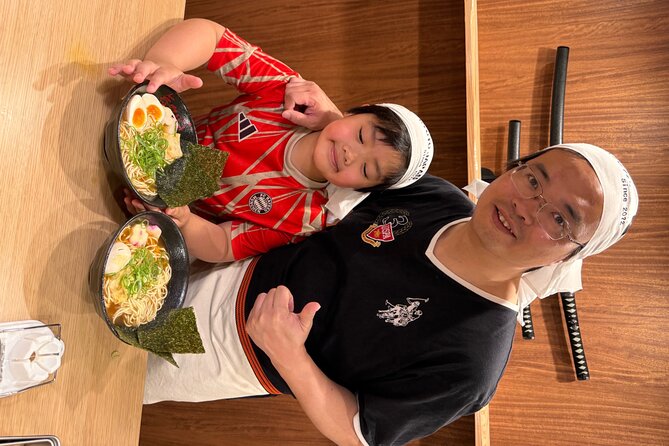
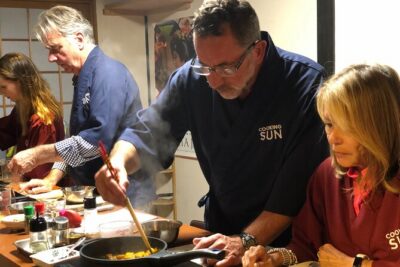
Once you are done with the spoon painting, you cook. The team brings the ingredients from the restaurant and has customers cook them. That is a big difference from many classes where you watch most steps, then assemble a bowl at the end.
In practice, this format helps you learn real technique. You understand what happens when ingredients are combined in the right way, and you see how the soup base and toppings influence flavor. It also means you can focus on your own work instead of guessing what the restaurant is doing behind the scenes.
If you care about dietary needs, this is one area where the experience shines. There is a vegetarian option, and the kitchen can accommodate vegan or vegetarian choices for at least some guests. Allergies also get attention in the class environment. If you have a specific allergy, your best move is to confirm details when booking and again with the hosts if possible, since the data only confirms accommodation capacity in general terms.
A quieter way to spend a day in Kyoto

Your meal at the end: no hunger games, just ramen you made
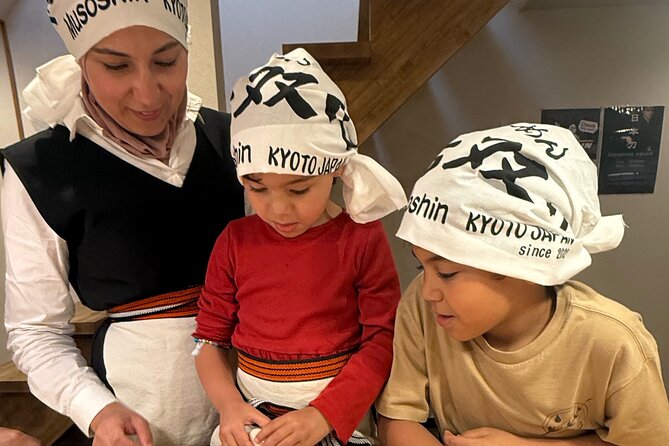
The tour is designed to avoid the usual problem with cooking classes. You get to eat your ramen at the end. That matters because cooking work creates appetite, and ramen is the kind of food where timing is everything.
And yes, the taste is a major reason people rate this so highly. The ramen is described as delicious, with some guests saying it was the best ramen they had in Japan. Even if you never try to compare meals on a ranking scale, you can still use that feedback as a signal that the class is not skimping on flavor quality.
Also, because you cooked the components yourself, the flavor feels earned. You are tasting your decisions: seasoning balance, texture, and how the bowl comes together.
The souvenir factor: a ceramic spoon you will actually want to keep
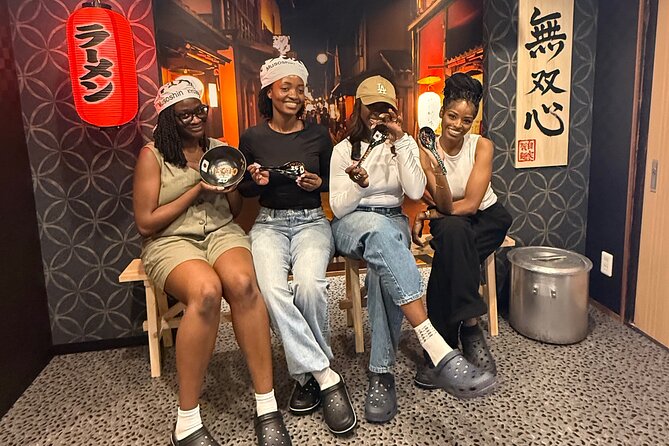
The spoon painting is not a throwaway craft. It is a ceramic ramen spoon souvenir that you keep. You get to make something visual that connects to the bowl you cooked, and the kiln step gives it that finished ceramic look.
One consideration: because the spoon is baked in a kiln overnight, it is not a paint-and-grab craft in the immediate sense. You should expect the final result to be prepared after the class, based on the kiln schedule.
If you love practical souvenirs, this one wins. It is not magnet art. It is an object linked to what you learned.
Price and value: why $65.89 can make sense here
Let’s talk value without hand-waving. At $65.89 per person, you are paying for four things that would each cost money on their own in Kyoto:
- Instruction from a ramen restaurant team, including Chef Shin
- Cooking materials and ramen ingredients brought in for you to use
- A real meal at the end, so you do not leave hungry
- A ceramic spoon souvenir with a kiln baking step
It is also good value compared with tours that bundle craft plus food but leave you doing mostly observing. Here, the core value is participation. A small group of up to 12 makes the teaching feel personal enough that you can ask questions and get help as you go.
Who should book this ramen class in Kyoto
This fits best if you are:
- A ramen fan who wants to learn what makes a bowl taste right
- Someone who enjoys hands-on instruction more than tasting-only experiences
- Traveling with a mixed group, including kids, since the teaching has a calm, supportive tone
- Dietary-conscious travelers who want vegetarian or vegan options
If your travel style is purely sightseeing from a checklist, the cooking portion may feel like a detour. But if you want a day that includes both Kyoto temple time and a professional ramen experience, this one is a strong match.
Quick practical tips before you go
To get the best outcome, plan around walking and schedule flow. Wear comfortable shoes for the temple portion. Expect to use your hands during cooking, so avoid overly complicated accessories you would not want to get messy.
Also, if you care about dietary needs or allergies, treat the class like a professional kitchen visit. Share details clearly ahead of time and double-check at the start. That is the fastest way to keep the experience smooth.
Finally, treat the spoon baking as part of the process. The overnight kiln step is not a flaw, it is what turns a painted craft into a finished ceramic keepsake.
Should you book this Kyoto ramen spoon painting and cooking class?
Book it if you want a hands-on ramen day that ends with a bowl you made yourself, plus a ceramic spoon souvenir tied directly to the experience. The small group size, the in-house ingredient process, and the fact that cooking happens with provided ingredients all point to a class designed for learning, not just entertainment.
Skip it only if you dislike cooking work, have very limited time to spare, or need a souvenir you can finish and carry immediately on the same timeline. The kiln overnight step is the one element that can affect your expectations.
If your goal is to leave Kyoto with more than photos, this is a great choice.
FAQ
How long is the Kyoto Ramen Spoon Painting and Michelin cooking class?
It runs for about 1 hour 30 minutes.
Where does the experience take place?
It takes place in Kyoto, Japan, starting at 440-5 Nishigomonchō, Higashiyama Ward, Kyoto 605-0816, Japan.
What do I do during the class?
You paint a ramen spoon souvenir, then you cook ramen using ingredients brought in by the team, and you eat the ramen you make.
Is the group size small?
Yes. The maximum group size is 12 travelers.
Is there food included?
Yes. You will feast on the ramen you cook at the end of the experience.
What makes Musoshin Ramen Academy different from other ramen activities?
It is run by Musoshin Ramen, and the academy is described as the only ramen workshop in Kyoto that actually has a ramen restaurant.
Are vegetarian or vegan options available?
A vegetarian option is available, and vegan or vegetarian options are mentioned as accommodations for at least some guests.
What happens to the painted spoon after I finish painting?
The spoon is baked in a kiln overnight.
How much does it cost?
The price is $65.89 per person.
What is the cancellation policy?
You can cancel for a full refund up to 24 hours in advance of the experience start time. Free cancellation is available up to that point.
Is this tour near public transportation?
Yes, it is near public transportation.
More Workshops in Kyoto



New This Season
- Koyasan Day Trip by Private Car from Kyoto
- Old Port Town and Ultimate Sake Tasting Private Tour From Kyoto
- Kyoto’s Timeless Charm: 3hr Exploration of History and Peace
- Kyoto: 5 Types of Sushi Making
- Sacred Peak & Ancient Paths: Kurama-Kibune Hiking Experience
- Kyoto: Exclusive ZEN practice at Manpukuji temple in Uji
- Kyoto: Private Seasonal Aroma Yoga Class
- Traversing Kyoto’s Scenic West – Arashiyama to Kinkakuji
Cooking Classes, compared.

Ramen Cooking Class at Ramen Factory in Kyoto
Read our review →
Ramen Cooking Class at a Ramen Factory with Souvenir
Read our review →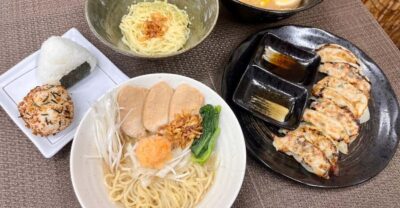
Japanese Washoku Bento Small Group Cooking Class
Read our review →
Japanese Traditional Sweets Making and Tea Ceremony
Read our review →
Kyoto Ramen and Gyoza Cooking Class with Professional Chefs
Read our review →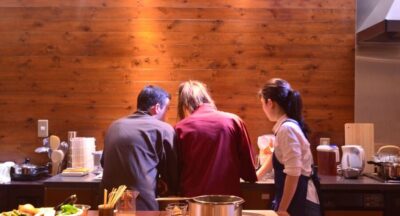
Also filed under