
Reviewed · ARTISAN CRAFT WORKSHOPS
Kyoto: Sumi Ink and Brush Calligraphy Experience
Grabbing ink and a brush is a small act, big on calm. This Kyoto workshop lets you grind sumi ink, then use it to practice brush techniques and draw bamboo on a shikisi board. I also like that you can finish by writing kanji characters yourself, not just watching the instructor. One possible drawback: it is only 50 minutes, so you will want to treat it like focused practice, not a long art session.
For planning, it is straightforward. You get the tools, you work indoors, and the group stays small (up to 6), so step-by-step guidance feels realistic. If you have mobility limits, pay close attention, because the info you get includes wheelchair accessibility but also says it is not suitable for wheelchair users.
In This Review
- Key things to know before you go
- Grinding sumi ink with an inkstone feels like the whole point
- Brush technique practice: soku-hitsu and choku-hitsu in one session
- Drawing bamboo on a shikisi board is surprisingly satisfying
- Writing kanji next to your bamboo turns practice into a souvenir
- What you take home and how to treat it when you leave
- Price and value: $49 for tools, instruction, and a take-home board
- Where to meet near Kani Doraku and how to prep for 50 minutes
- Who this workshop suits best, and who should think twice
- Should you book this sumi ink and bamboo calligraphy workshop?
- FAQ
- How long is the Kyoto sumi ink and calligraphy experience?
- How much does it cost?
- Where is the meeting point in Kyoto?
- Is there a small group size?
- What languages are the instructors?
- What is included in the price?
- Do I need to bring sumi ink or calligraphy supplies?
- What happens during the workshop?
- Can I write kanji of my choice?
- Is it indoors, and do I need prior experience?
- Can I take the artwork home?
Key things to know before you go
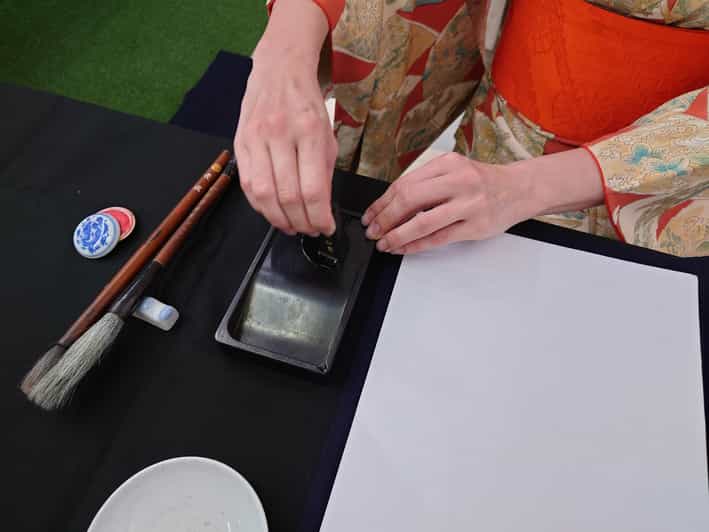
- Grind your own sumi ink with an inkstone, using water, and enjoy the fragrance and texture as it comes together
- Practice two brush styles: soku-hitsu (side of the brush) and choku-hitsu (brush held upright)
- Draw bamboo on a shikisi board, using the techniques you just learned
- Write your own characters beside your bamboo, with examples like 竹 (bamboo) and 和 (harmony)
- Take home the finished shikisi board, so the workshop becomes a real souvenir
Grinding sumi ink with an inkstone feels like the whole point
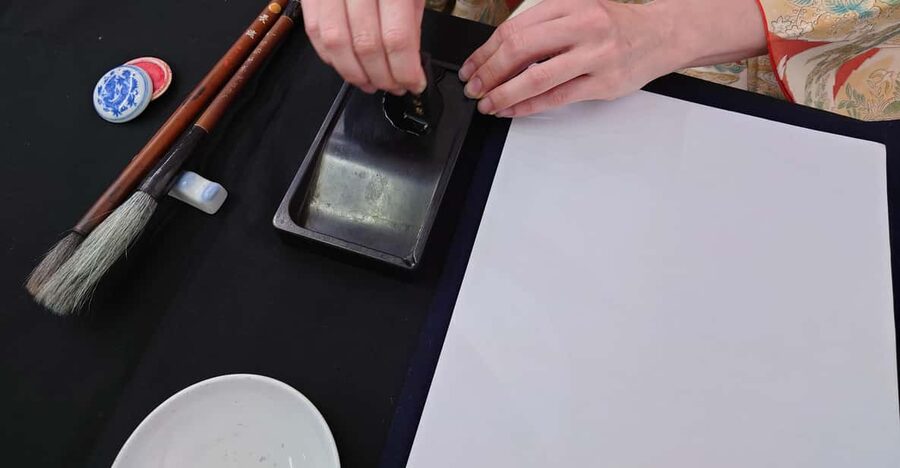
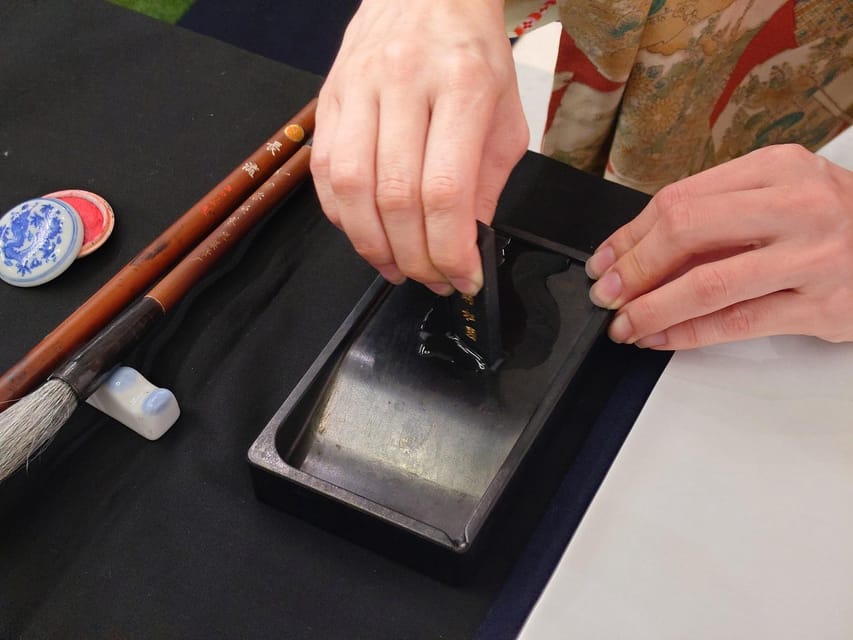
The experience starts with a process most workshops skip: grinding your own sumi ink. You do it with an inkstone (suzuri) and water, instead of using pre-made ink. That one choice changes the mood. It turns calligraphy into a tactile ritual, where your hands slow down and you learn what the materials feel like before you ever touch the brush.
I like how the workshop frames this part as more than a setup. You are encouraged to cherish the time, and you get to notice the fragrance and the shifting hues as you work. It is a good way to get over the fear of messing up, because early on, there is no pressure to create a masterpiece. You are just learning the basics of how the ink behaves.
Practical tip: because you are grinding ink, expect some mess potential around your workspace. The good news is that you get an apron lent to you so your clothes stay clean. Still, wear comfortable clothes you do not mind getting slightly ink-adjacent.
Brush technique practice: soku-hitsu and choku-hitsu in one session
Next comes brush technique, and this is where the workshop earns its value. You do not just get a bamboo tutorial. You practice two specific styles so your bamboo looks more intentional.
First is soku-hitsu, using the side of the brush. This helps you control broader strokes and understand how pressure and angle change the line. Then you move to choku-hitsu, holding the brush upright. That upright position tends to help with steadier, more controlled marks, especially for bamboo-like elements.
What I find helpful as a visitor is that the techniques are taught as “try this, then try that,” not as vague advice. The instructor walks you through practice, and you repeat enough that the brush starts to feel familiar. This is also where the small group matters. With a limit of 6 participants, you are less likely to be left behind if your first strokes are wobbly.
If you are the type who learns better by doing, this part will click fast. If you are the type who gets tense when drawing, the repetition helps you relax because you are doing it in a structured way.
Make something with a Kyoto craftsman
- Authentic knife making experience at a blacksmith in Kyoto
★ 4.8 · 350 reviews - Kyoto: Calligraphy class at Buddhist temple in city center
★ 5.0 · 167 reviews - Roketsu dyeing experience: M course Roketsu Dyeing Experience
★ 5.0 · 163 reviews - Kyoto: Japanese Calligraphy Class
★ 4.8 · 89 reviews
Drawing bamboo on a shikisi board is surprisingly satisfying
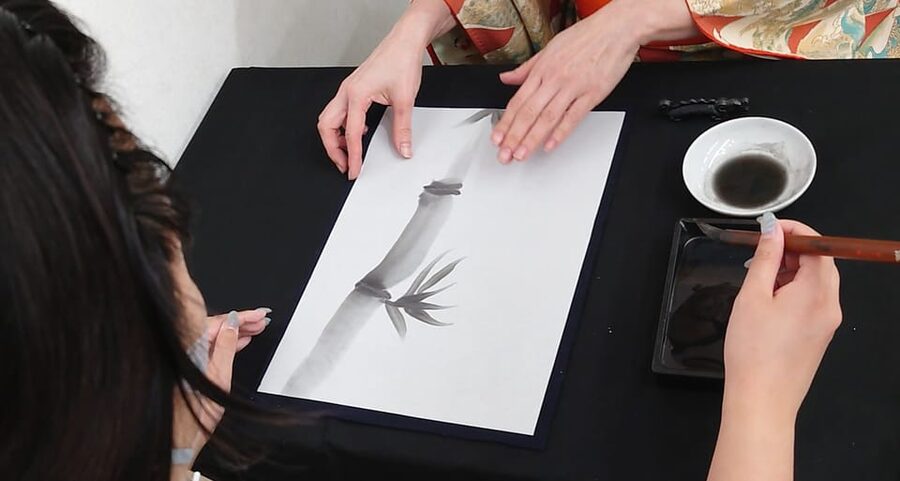
Once you have practiced with soku-hitsu and choku-hitsu, you shift from exercises to the main drawing: bamboo on a shikisi board. The board gives your art a defined space, and that helps beginners get results without staring at a blank page and panicking.
Bamboo is also a smart theme for a first-time calligraphy project. It rewards practice with form and rhythm. The workshop uses the techniques you practiced, so your bamboo does not feel random. It feels like your brush training turned into an actual image.
A subtle benefit: the shikisi board format makes your work look “finished” even if your brush lines are simple. You are not trying to create a complex illustration. You are creating an ink artwork with clear strokes, which is exactly the kind of result you can confidently take home.
Drawback to consider: you have limited time, and you are drawing in ink. If you want ultra-detailed bamboo, this workshop is not that. It is about getting a clean, personal result you can proudly display, not about producing an heirloom-quality masterpiece in 50 minutes.
Writing kanji next to your bamboo turns practice into a souvenir
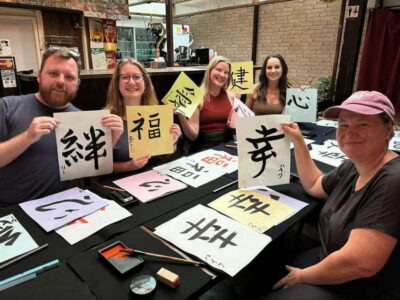
The final creative step is writing characters beside your bamboo. Here you get choice, which I really like for value. You are not stuck with only one message. The workshop includes kanji for 竹 (bamboo) and 和 (harmony), and if you want something else, you can tell the guide and they will write your requested characters for you.
That means two things for you. First, you get to personalize the artwork. Second, you are not forced to become a translation expert on the spot, because the guide supports the writing of your request. In a 50-minute session, that matters.
Also, this is a nice emotional finish. Bamboo gives you the visual and the texture of brushwork. Kanji gives you meaning. Together, they make the shikisi board feel less like an activity souvenir and more like a deliberate message from your Kyoto time.
What you take home and how to treat it when you leave
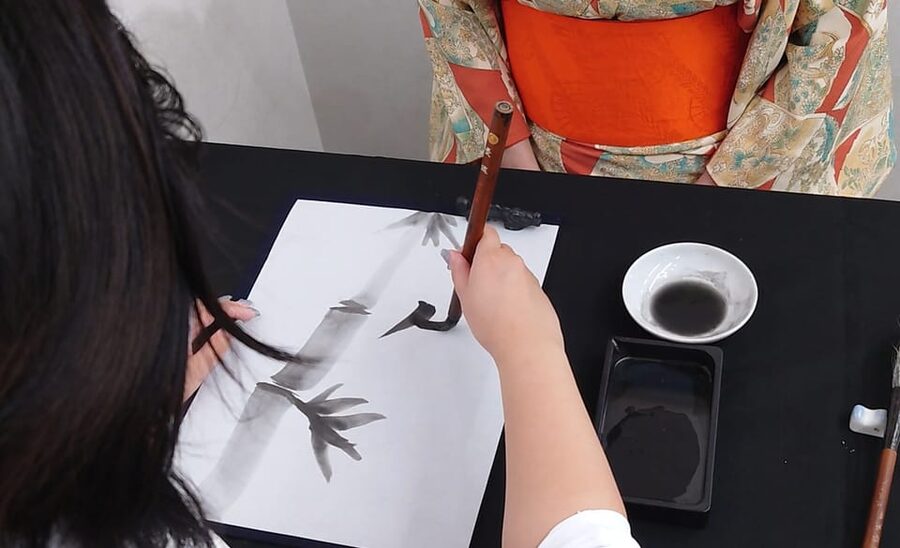
At the end, your finished shikisi board is yours to take home. That is one of the strongest reasons to book. Many short workshops give you a photo and a memory. This one gives you a physical piece you can display.
Since the session is indoors and focused, plan to transport the board carefully. It is a board, so protect it like you would a framed item, and keep it flat if possible. You are walking around Kyoto after, so think about how you will carry it before you start the workshop.
The workshop also lends an apron, but it does not replace the need to be mindful with clothing after. Ink can be stubborn in small ways, so bring a travel mindset: wear comfy clothes, and let the apron do its job.
Price and value: $49 for tools, instruction, and a take-home board
At $49 per person for 50 minutes, the price feels reasonable because the essentials are included. You get all necessary calligraphy tools. You also get the inkstone (suzuri) for grinding and the shikisi board for drawing. Guidance is part of the package, including instruction on brush techniques and bamboo drawing.
What you are really paying for is not just a lesson. You are paying for:
- the materials and setup (no need to hunt for supplies)
- guided practice until your strokes feel more confident
- a final piece you can bring home
If you compare that to buying a starter set and trying to figure out technique on your own, you get speed and correction in this workshop. It is especially good for people who want a “try it once” experience that still ends with a real output, not just a demo.
One caution on value: if you want a long session or a highly technical training course, this is short. Think “guided practice plus a souvenir,” not “serious study.”
A day of temples goes further with something to break it up.


Where to meet near Kani Doraku and how to prep for 50 minutes
You meet near the giant crab sculpture of Kani Doraku. That is a helpful landmark because Kyoto can be maze-like, and having something big and visible reduces stress.
Arrive on time. Since the activity runs 50 minutes indoors, being late cuts into instruction and practice time. I recommend giving yourself a little buffer so you can settle in without rushing.
What to bring is simple:
- Comfortable shoes
- Hat
- Sunscreen
- Water
- Comfortable clothes
Even though the workshop itself is indoors, Kyoto weather and walking time are real. A hat and sunscreen are smart if you are heading there during sunny hours. Water is always a good call, especially if you are stacking this workshop with temple visits.
Inside, you do not need prior calligraphy experience. You will start from scratch, with tools ready and guidance provided. The instructor teaches in English and Japanese, so you can follow along comfortably even if your Japanese is limited.
One more note for planning: the group is small, limited to 6 participants. That usually means you get more personal attention than you would in a large class.
Who this workshop suits best, and who should think twice
This is a strong fit if you want:
- a calm, hands-on activity in Kyoto
- beginner-friendly instruction with clear steps
- a meaningful souvenir you can display at home
- a short experience that does not eat your whole day
It also works well if you like structured practice. You are taught soku-hitsu, then choku-hitsu, then bamboo, then characters. That sequence helps you feel progress quickly.
Consider skipping or double-checking if you have mobility challenges. The info you get includes wheelchair accessibility, but it also lists that it is not suitable for wheelchair users and people with mobility impairments. Because that conflict is important for safety and comfort, I would contact the provider before booking and ask what the actual setup is like in the indoor space.
Should you book this sumi ink and bamboo calligraphy workshop?
Yes, if you want a short, rewarding Kyoto experience where your hands do the learning. The workshop earns its value by including the tools, teaching two brush techniques you can repeat later, and letting you take home a finished shikisi board with kanji you choose.
Skip it only if you need long-form instruction or you know your mobility needs may not match the setup. Otherwise, this is the kind of Kyoto activity that gives you a tangible souvenir and a skill you can keep practicing, even after you go back home.
FAQ
How long is the Kyoto sumi ink and calligraphy experience?
The experience runs for 50 minutes.
How much does it cost?
It is $49 per person.
Where is the meeting point in Kyoto?
You meet near the giant crab sculpture of Kani Doraku.
Is there a small group size?
Yes. It is a small group limited to 6 participants.
What languages are the instructors?
The instructor offers English and Japanese.
What is included in the price?
All necessary calligraphy tools are included, including an inkstone (suzuri) for grinding and a shikisi board for drawing, plus guidance on brush techniques and bamboo drawing.
Do I need to bring sumi ink or calligraphy supplies?
No. Pre-made sumi ink is not provided, because you grind sumi ink yourself during the activity. The necessary tools for calligraphy are prepared for you.
What happens during the workshop?
You grind sumi ink with an inkstone, practice brush techniques (soku-hitsu and choku-hitsu), draw bamboo on a shikisi board, and then write characters next to your bamboo.
Can I write kanji of my choice?
Yes. The workshop includes kanji for 竹 (bamboo) and 和 (harmony). If you request other characters, the guide can write them for you.
Is it indoors, and do I need prior experience?
It is conducted indoors, and no prior calligraphy experience is required.
Can I take the artwork home?
Yes. You can take home your finished shikisi board.
New This Season
- Koyasan Day Trip by Private Car from Kyoto
- Old Port Town and Ultimate Sake Tasting Private Tour From Kyoto
- Kyoto’s Timeless Charm: 3hr Exploration of History and Peace
- Kyoto: 5 Types of Sushi Making
- Sacred Peak & Ancient Paths: Kurama-Kibune Hiking Experience
- Kyoto: Exclusive ZEN practice at Manpukuji temple in Uji
- Kyoto: Private Seasonal Aroma Yoga Class
- Traversing Kyoto’s Scenic West – Arashiyama to Kinkakuji
Artisan Craft Workshops, compared.
Authentic knife making experience at a blacksmith in Kyoto
Read our review →
Calligraphy class at Buddhist temple in city center
Read our review →
Roketsu dyeing experience: M course Roketsu Dyeing Experience
Read our review →

Traditional Japanese Washi Papermaking- Kyoto morning
Read our review →
Also filed under