
Reviewed · ARTISAN CRAFT WORKSHOPS
Let’s make only one original onigawara in the world!!
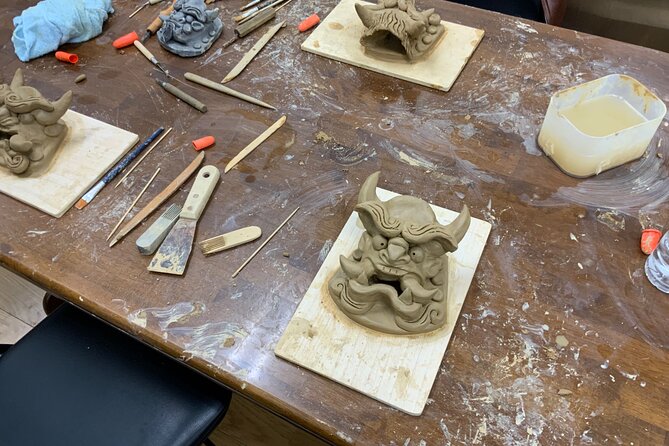
Your hands sculpt roof guardians in clay. In Kawarakoubouyouya’s workshop, Yuya teaches you how to create a kawara onigawara tile, inspired by the ogre and gargoyle faces that have protected Japanese roofs for centuries.
I love that the class is truly hands-on, from shaping the soil into a small guardian to assembling the final demon face with steady coaching. I also love the pacing of a small group format, so you get real attention while you work through each step.
One consideration: you’ll work with soil, so plan for clothes that can get dirty, and know your tile is fired and shipped later rather than finished on the spot.
In This Review
- Key Things You’ll Remember
- Where Kawara Tiles Meet a Hands-On Workshop
- Meeting the shop, getting oriented fast
- Making a Kawara-Style Onigawara Demon Face, Step by Step
- What you actually create
- Your clay station: slow work, steady guidance
- Soil on your clothes, so dress like you mean it
- From Fresh Clay to Fired Guardian: The Kiln Step
- What happens after class
- The silver color timeline: the fun waiting game
- Price and Value: What $90 Buys You
- How This Fits Your Day: Easy Timing, Real Cultural Focus
- Who This Workshop Is Perfect For
- Great for
- Maybe not ideal for
- Practical Tips Before You Go
- Wear what you can mess up
- Plan for the shipping payment
- Give yourself a little time to find the shop
- Should You Book Kawarakoubouyouya Onigawara Workshop?
- FAQ
- How long is the onigawara workshop?
- How much does it cost?
- Do I make the onigawara tile myself?
- Is the tile fired after the class?
- When will I receive the finished tile?
- Are there shipping fees?
- What languages does the host use?
- How big is the group?
- Can I cancel?
- Is the experience wheelchair accessible?
Key Things You’ll Remember
- You make a kawara-style onigawara by hand, not a pre-made craft project
- Yuya guides each step so your tile comes together even if your hands feel clumsy
- Kiln-firing happens at the factory, so you are not stuck with fragile fresh clay
- A traditional silver change takes 1 to 2 months, turning your guardian into the real look
- Small group size, up to 5, means more attention and less waiting
- Extra shipping is handled separately, and your finished onigawara arrives at home
Where Kawara Tiles Meet a Hands-On Workshop
If you like Japanese craft that comes with a story you can feel in your fingers, this onigawara experience is a great fit. You’re not just copying a design. You’re making a small roof-tile guardian that connects to a tradition said to stretch back about 1400 years.
In the workshop, you’ll work with soil to create a compact version of onigawara, the decorative roof ridge tiles famous for fearsome faces of ogres and gargoyles. The idea is simple and surprisingly powerful. These tiles were placed where the roof ridge ends, helping protect buildings from evil and from rain. When you shape the demon face yourself, it makes that protection feel less like legend and more like something your hands participate in.
This is also a “Kyoto mood” activity in a good way. If you’re visiting Japan for temples, shrines, and old neighborhoods, you’ll likely have noticed roof ornaments on the trip. This class gives you a close-up, human-sized connection to that same visual world, with a method that aims to make the craft doable for real people.
Meeting the shop, getting oriented fast
You meet at KAWARAKOUBOUYOUYA (my shop). Search on Google map for the exact spot, and plan to arrive a few minutes early so you can settle in. One small practical note: the GPS location can be a bit off, with reports that you may need to walk roughly 40 meters east to find the right spot. Not a dealbreaker, just a reason to give yourself a little buffer time.
The host and greeter support English and Japanese, and the group stays small, limited to 5 participants. That matters because clay work is not a sit-and-watch activity. You need time to fix tiny mistakes while they are still easy to correct.
Make something with a Kyoto craftsman
- Authentic knife making experience at a blacksmith in Kyoto
★ 4.8 · 350 reviews - Kyoto: Calligraphy class at Buddhist temple in city center
★ 5.0 · 167 reviews - Roketsu dyeing experience: M course Roketsu Dyeing Experience
★ 5.0 · 163 reviews - Kyoto: Japanese Calligraphy Class
★ 4.8 · 89 reviews
Making a Kawara-Style Onigawara Demon Face, Step by Step
The heart of the experience is shaping your onigawara tile by hand. Yuya guides you through the steps in a calm, structured way, and you’ll move from “this is a lump of soil” to “this has a face and a purpose.”
The workshop concept is meaningful. The instructions describe a slow “imparting” of a soul into the lump of soil. Even if you take that as poetic rather than literal, the message is practical: you are supposed to take your time, handle the material thoughtfully, and build the form deliberately. That’s how you end up with a recognizable guardian instead of an anonymous clay blob.
What you actually create
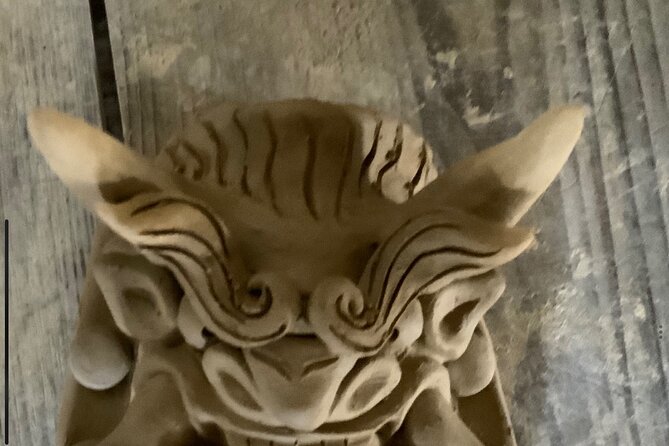
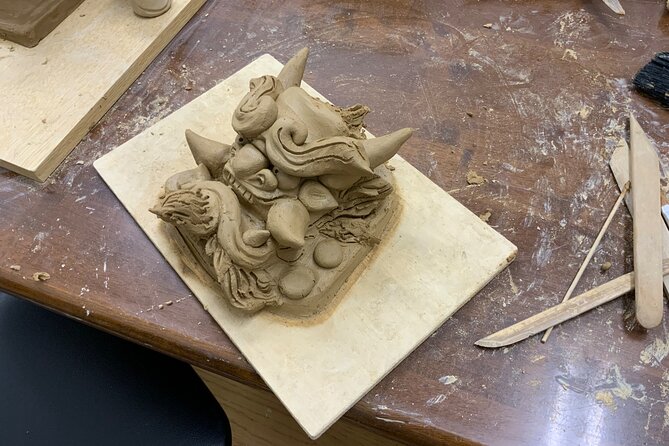
You’ll make a small, simple onigawara tile featuring a demon-face style design. The goal is not complicated sculpture. It’s a focused craft that teaches the core idea of kawara roof guardians: fearless expressions, strong shapes, and the satisfying feeling of building pieces into one solid character.
And yes, there’s a reassurance built into the approach. Onigawara is often described as difficult, but Yuya’s process is designed so that children and people with clumsy hands can still make one. That’s a big deal for a hands-on class, because many craft workshops assume you already know how to manipulate clay.
Your clay station: slow work, steady guidance
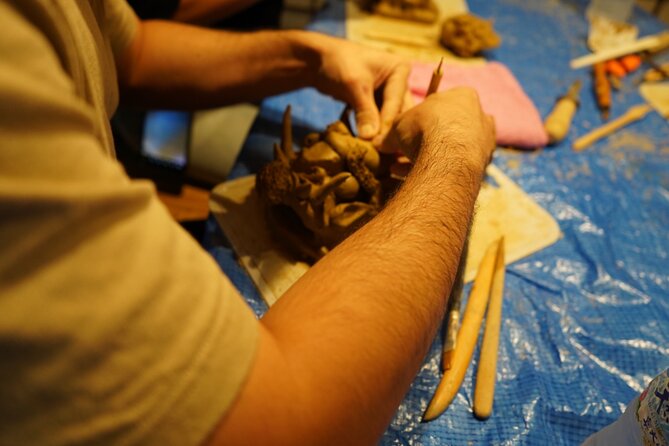
At your work station, you’ll shape and assemble the tile. You’ll learn how to manipulate the clay, how to create parts, and how to put them together step by step so the proportions look right. The best part is the rhythm. You’re not rushed, and the pacing is built around you actually learning, not just finishing something quickly.
I like that the class encourages careful construction. When you’re building the face, you can feel what works and what doesn’t. Too thin, and it feels fragile. Too thick, and details get lost. Little by little, you start making choices based on how the clay responds, not based on guesswork.
If you’re traveling with kids, this setup tends to work well. Clay crafts can be messy and chaotic, but the step-by-step structure gives everyone a clear next move. Adults benefit too, especially if you want a break from fast sightseeing and want a focused, quiet creative task.
Soil on your clothes, so dress like you mean it
This is the one “be ready” item. The experience uses soil, so wear clothes that may get dirty. In my view, that’s not a drawback, it’s part of the deal. Clay work is physical. If you dress carefully, you’ll enjoy it more, because you won’t spend the whole time worrying about the mess.
A day of temples goes further with something to break it up.


From Fresh Clay to Fired Guardian: The Kiln Step
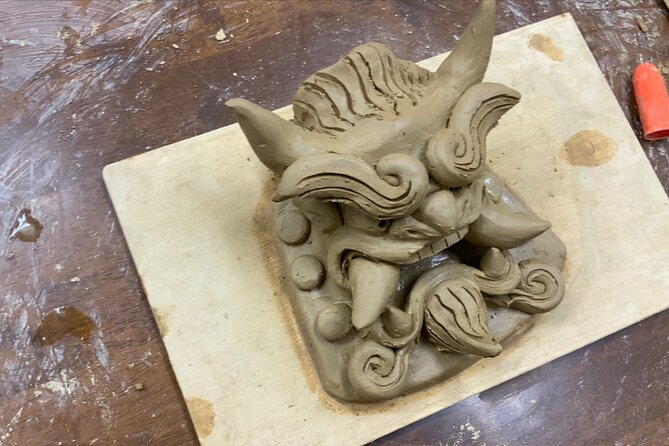
When you finish the sculpting part, the tile doesn’t become “ready to take home and forget.” You’ll have it fired later in a kiln at the factory. That matters for two reasons: durability and authenticity.
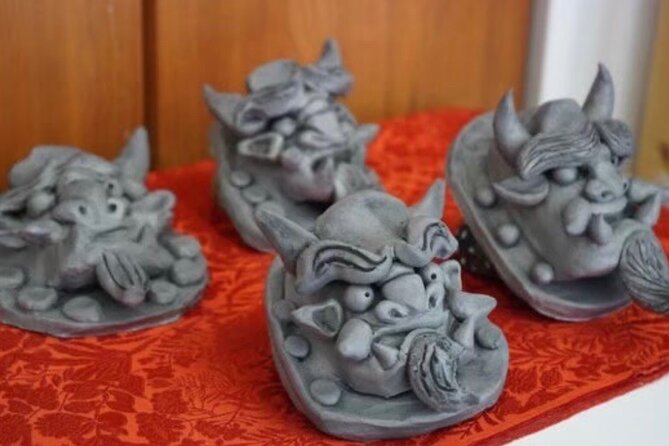
Kiln firing changes the material so it holds up as a real tile object. It also supports the traditional look you’re aiming for. In other words, the workshop gives you both the craft and the final transformation.
What happens after class
After your session, Yuya fires your onigawara tile at the factory. Then it’s shipped to your home. Shipping is not included in the base price, and the shipping fee is charged separately on the day.
So if you’re hoping to bring your finished guardian back to your hotel that same afternoon, plan your expectations. The experience is about making and sending. The payoff comes when your tile arrives later and the material has fully developed.
The silver color timeline: the fun waiting game
A key highlight here is that after 1 to 2 months, your tile changes to the traditional silver color. That detail is more than a cool fact. It turns the experience into a slow souvenir, something you keep waiting for after your trip ends.
It also means the class is not only about the act of making. It’s about watching the transformation over time, which feels oddly satisfying, like receiving proof that the craft process really happened.
Price and Value: What $90 Buys You
At $90 per person, this is not a bargain-basement souvenir. But it also isn’t priced like a luxury “watch someone else work” activity. You’re paying for a skilled instructor, a kiln-fired result, and the unique value of making a roof guardian that’s tied to a long-running Japanese roof tile tradition.
Here’s where the value becomes clearer:
- You get hands-on instruction while working with soil
- You make a one-of-a-kind onigawara design, even though it’s a guided template
- Your tile is kiln-fired rather than staying fragile and temporary
- You receive it later by shipping to your home (with shipping paid separately)
The one thing to watch is that shipping is not included. The process includes shipping afterward, but you still need to pay the shipping fee separately on the day. In practice, that means your final out-of-pocket cost will be a bit higher than $90, depending on where you live and how they quote it.
If you’re thinking purely financially, that might feel annoying. If you think in “experience cost plus durable, personalized craft delivered to me,” it starts to feel reasonable.
How This Fits Your Day: Easy Timing, Real Cultural Focus
This is a 2-hour experience. That’s a nice chunk of time because it’s long enough to learn real steps, but short enough that you can still plan a full day of sightseeing before or after.
I like it for travel days when you want something different from temples and photo stops. This gives you a moment of focus away from the usual rush, while still staying connected to Japan’s visual culture. The theme is roof tiles, but the takeaway is broader. You learn how craft traditions survive because people keep making them, teaching them, and using them.
Also, because it’s a small group of up to 5, it tends to feel less like a class you attend and more like a workshop you participate in. When the group is small, you can ask questions without waiting in line to speak up.
Who This Workshop Is Perfect For
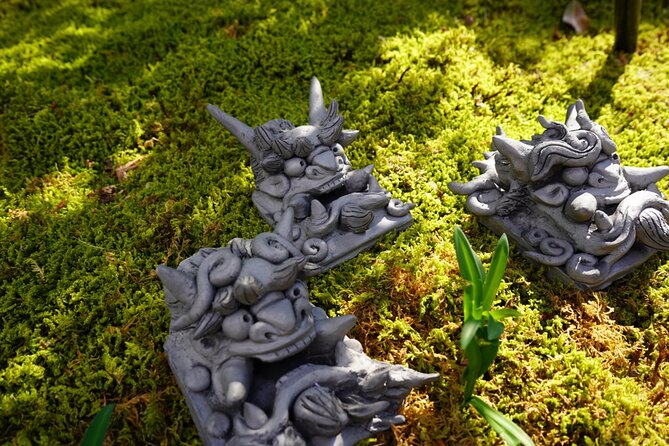
This is one of those activities that works across a wider range of travelers than you might expect.
Great for
- Families, because the approach is described as suitable for children and different hand-skill levels
- People who want a break from heavy sightseeing and want something hands-on and calming
- Travelers who enjoy cultural details, especially Japanese roof ornamentation and old building traditions
- Anyone who wants a meaningful souvenir that is more than a mass-produced trinket
Maybe not ideal for
If you dislike getting messy or hate the idea of waiting for a mailed item, you might find the process less fun. Since you make the tile during the class but receive it later, it’s not a quick, same-day keepsake.
Practical Tips Before You Go
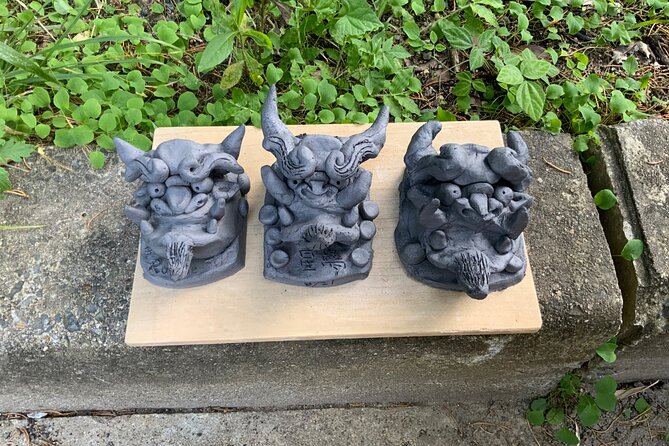
Here’s how to make the experience smoother from the moment you step in.
Wear what you can mess up
Wear clothes that can get dirty. You are working with soil. Comfortable shoes help too, since you may move around while working at your station.
Plan for the shipping payment
Shipping is arranged after firing and charged separately. That means you should set aside time and budget to handle that payment on the day, even though the class itself is $90 per person.
Give yourself a little time to find the shop
Use Google maps to locate KAWARAKOUBOUYOUYA, but if your directions look slightly off, don’t panic. Reports indicate you may need to walk about 40 meters east to get to the correct point.
Should You Book Kawarakoubouyouya Onigawara Workshop?
If you want a cultural craft that is practical, guided, and tied to a long Japanese tradition, I’d book this. The biggest strength is the way it teaches you, not just what you end up with. You get step-by-step coaching to build a demon-face onigawara tile, then you get the transformation result through kiln firing and the traditional silver change after 1 to 2 months.
It’s especially worth it if you like meaningful souvenirs, small-group instruction, and experiences that slow you down. You’re not trying to rush through photos. You’re making something that takes time, care, and attention.
The only reason to hesitate is logistics: your tile arrives later, and you’ll need to handle messy soil clothes plus shipping charges separately. If you’re okay with those trade-offs, this is one of the more memorable “hands-on Japan” workshops you can add to your trip.
FAQ
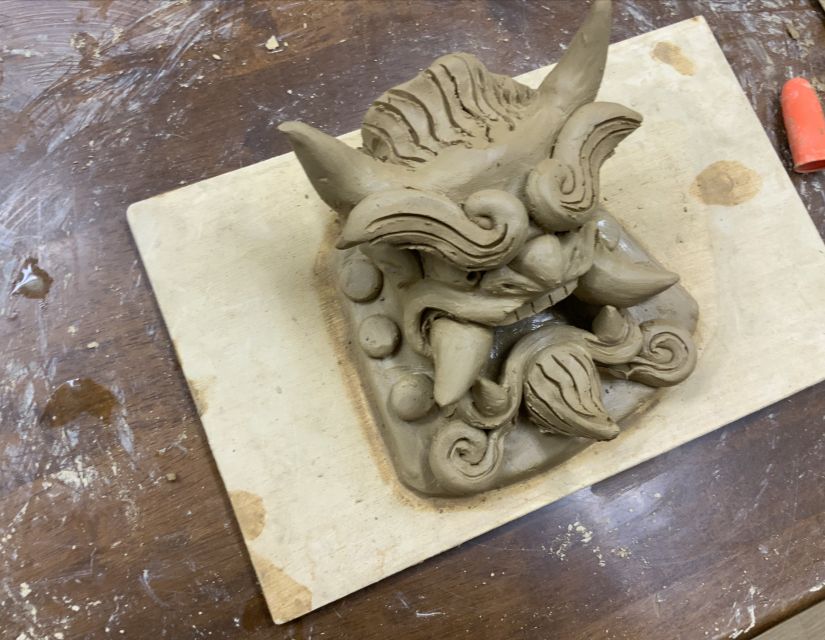
How long is the onigawara workshop?
The experience lasts 2 hours.
How much does it cost?
The price is $90 per person. Shipping is paid separately on the day.
Do I make the onigawara tile myself?
Yes. You make the onigawara by hand with guidance from the host.
Is the tile fired after the class?
Yes. After you make it, Yuya will fire the onigawara tile in a kiln at the factory.
When will I receive the finished tile?
After firing, it is sent to your home. The traditional silver color change is described as taking 1 to 2 months.
Are there shipping fees?
Yes. Shipping is not included, and the shipping fee is charged separately on the day.
What languages does the host use?
The host or greeter provides English and Japanese.
How big is the group?
The group is limited to 5 participants.
Can I cancel?
Yes. Free cancellation is available if you cancel up to 24 hours in advance for a full refund.
Is the experience wheelchair accessible?
Yes, it is described as wheelchair accessible.
New This Season
- Koyasan Day Trip by Private Car from Kyoto
- Old Port Town and Ultimate Sake Tasting Private Tour From Kyoto
- Kyoto’s Timeless Charm: 3hr Exploration of History and Peace
- Kyoto: 5 Types of Sushi Making
- Sacred Peak & Ancient Paths: Kurama-Kibune Hiking Experience
- Kyoto: Exclusive ZEN practice at Manpukuji temple in Uji
- Kyoto: Private Seasonal Aroma Yoga Class
- Traversing Kyoto’s Scenic West – Arashiyama to Kinkakuji
Artisan Craft Workshops, compared.
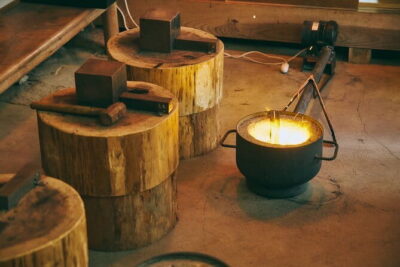
Authentic knife making experience at a blacksmith in Kyoto
Read our review →
Calligraphy class at Buddhist temple in city center
Read our review →
Roketsu dyeing experience: M course Roketsu Dyeing Experience
Read our review →

Traditional Japanese Washi Papermaking- Kyoto morning
Read our review →
Also filed under