
Reviewed · TEA CEREMONIES
Oboro | Mindful Tea Ceremony in a 100-Year-Old Kyoto Teahouse
A Kyoto tea ceremony feels like a pause button. In a 100-year-old teahouse with handmade candles, Oboro turns matcha into a calm, sensory ritual you can actually follow. It is also easier than you might expect because an English speaking guide helps you understand what is happening as it happens.
What I like most is the atmosphere, minimal and quiet enough that you notice details. The other big win is no language barriers thanks to your guide translating for you, so you can ask questions and not guess. One thing to consider: it is short, about 50 minutes, and you cannot join if you are more than 10 minutes late.
In This Review
- Key Things to Know Before You Go
- A Kyoto Tea Ceremony in a 100-Year-Old Teahouse, Lit by Handmade Candles
- The 50-Minute Flow: From Welcome Tea to the Final Candle Token
- What You Will Actually See: Matcha Preparation Without the Confusion
- Atmosphere and Etiquette: Shared Respect More Than Strict Formality
- Value Check: Is $45.98 Worth It in Kyoto?
- Who This Is For, and Who Might Skip It
- Practical Tips for Showing Up at 237 Nakaogawachō
- The Bottom Line: Should You Book Oboro?
- FAQ
- How long is the Oboro tea ceremony experience?
- How many people are in the group?
- Do I need to speak Japanese?
- Where do we meet for the tea ceremony?
- What is included in the price?
- What if I arrive late?
- Is free cancellation available?
Key Things to Know Before You Go
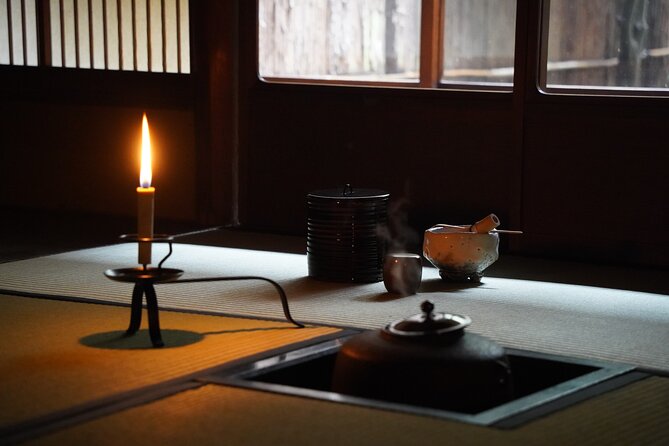
- Candlelit 100-year-old teahouse: handmade candles and a minimalist room make the ritual feel slower and more real.
- Small group, max 8 travelers: you get space to watch, breathe, and take in the steps without shoulder-to-shoulder crowds.
- English speaking translation: you follow along with matcha steps and cultural context instead of just watching motions.
- Rare organic green tea served one bowl at a time: the pacing matters, you drink when you are guided, not when you are ready.
- Includes welcome sweets and tea: you start gently, then move into the main bowl and tasting.
- A handmade candle token to take home: the session ends with a small physical reminder of the quiet.
A Kyoto Tea Ceremony in a 100-Year-Old Teahouse, Lit by Handmade Candles
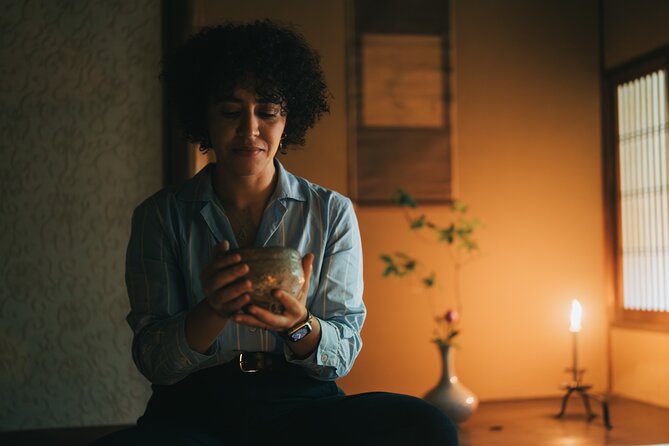
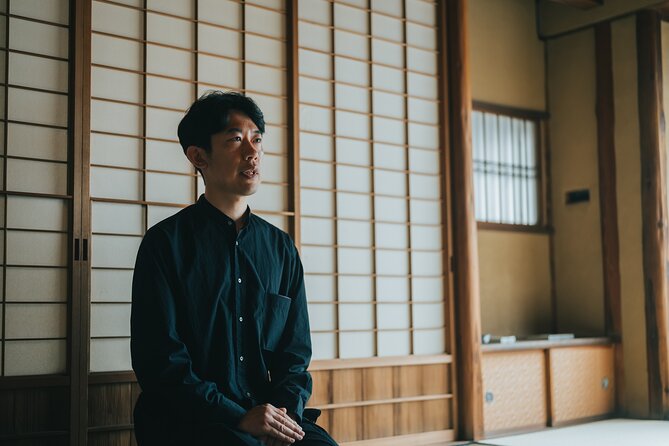
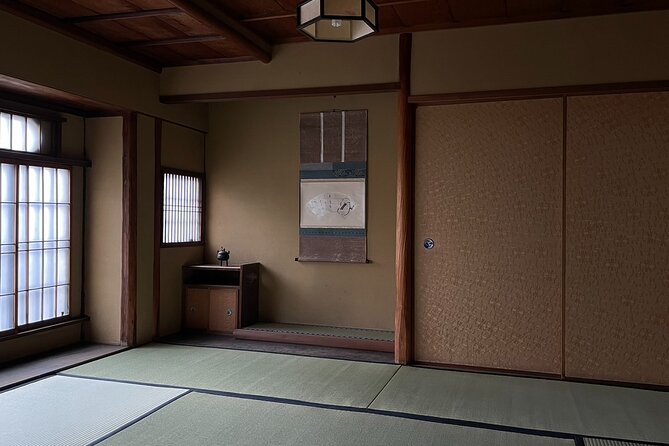
Kyoto can be loud, even when the streets look calm. Oboro does something smart: it trades sightseeing energy for stillness. The ceremony takes place in a teahouse set up to feel like a pocket of quiet, not a restaurant corner.
The standout is the setting. You are in a minimally decorated space where handmade candles set the mood. That candlelight is not just decoration. It changes how you notice time, steam from the bowl, the warmth of the tea, and how quickly (or slowly) you choose to sip.
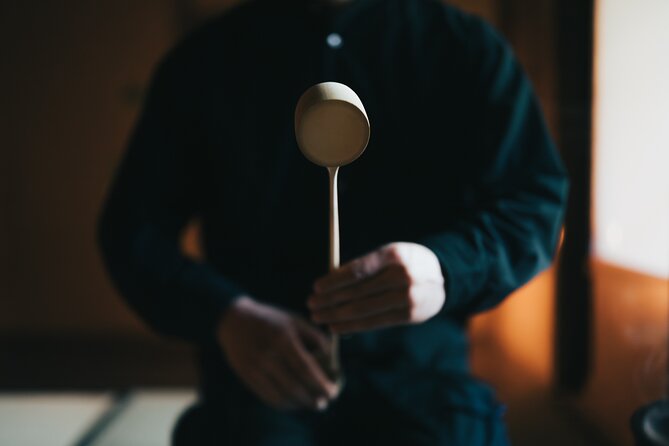
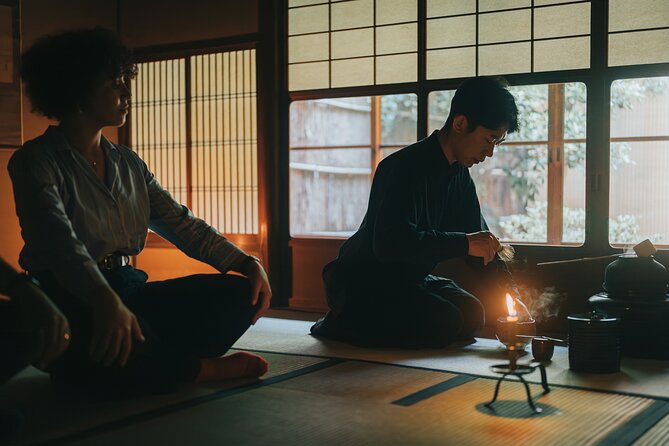
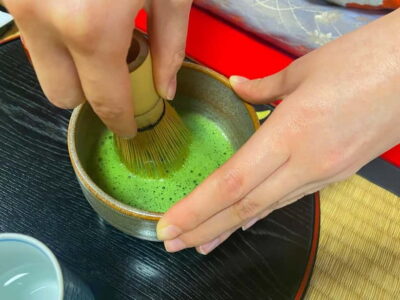
And yes, it is matcha focused. But the real point is the way matcha is treated like an art you can witness. You watch the host prepare the utensils, whisk the tea, and serve it in a calm rhythm that encourages attention.
The 50-Minute Flow: From Welcome Tea to the Final Candle Token
The experience is built like a short meditation with clear steps, about 50 minutes. You arrive and are guided into the softly lit room. Minimal decor and gentle sound help you switch gears fast, from walking around Kyoto to being present in the moment.
You start with welcome tea and sweets. This matters more than people think. Going straight to matcha preparation can be intense if you are still thinking about your next stop. The welcome tea creates a buffer. You settle in, then the main ceremony begins with better focus.
After that, you transition into the tearoom portion of the experience. The host cleans and prepares the utensils carefully before whisking the tea. The cleaning step might sound small, but it is part of the message: good attention starts before the tea even touches the bowl.
Then comes the main matcha serving. Your tea is made from a rare organic green tea, whisked by the host and served one bowl at a time. You taste slowly and are invited to notice the subtle flavors, the sensation of holding a warm bowl, and the grounding effect of the candlelight.
The ceremony ends with a small handmade candle token. It is a thoughtful touch because it gives the experience an aftertaste, literally and figuratively. You go home with something simple that reminds you to keep the pace you practiced.
More bowls, poured the traditional way
- Kyoto: Tea Ceremony in a Traditional Tea House in Kiyomizu
★ 4.9 · 3,519 reviews - Kyoto: Tea Ceremony Ju-An at Jotokuji Temple
★ 4.9 · 3,207 reviews - Kyoto: 45-Minute Tea Ceremony Lesson Experience
★ 4.3 · 2,378 reviews - Kyoto: Table-Style Tea Ceremony at a Kyo-Machiya
★ 4.9 · 1,211 reviews
What You Will Actually See: Matcha Preparation Without the Confusion
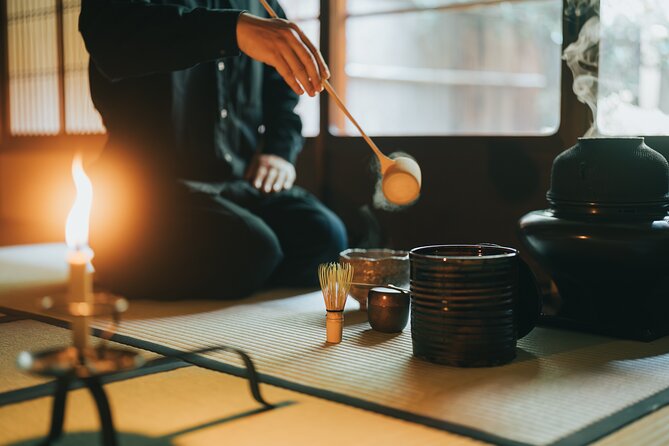
Lots of tea experiences are really just tasting. Oboro is more like watching a craft.
When the host cleans the utensils and moves into whisking, you are not left guessing. You can observe the tools, the sequence, and the way the host handles the process. That is where the “meditative” part becomes real. Instead of trying to meditate, you are given a task: watch, notice, then taste.
An English speaking guide translates for you throughout. This is a big deal for first-timers. You should not have to know Japanese tea terms to understand what is happening. The guide helps you connect each step with the feeling behind it, and you can ask questions instead of smiling politely.
One of my favorite details is the pacing. Matcha is served one bowl at a time. That means you do not feel rushed to drink just because other people finished. It also means you can taste with intention, not on autopilot.
If you want a ceremony where you learn what matters, this hits the mark. If you want to multitask or keep your eyes on your phone, it will feel like the wrong choice. This is a seated, focused ritual.
Atmosphere and Etiquette: Shared Respect More Than Strict Formality
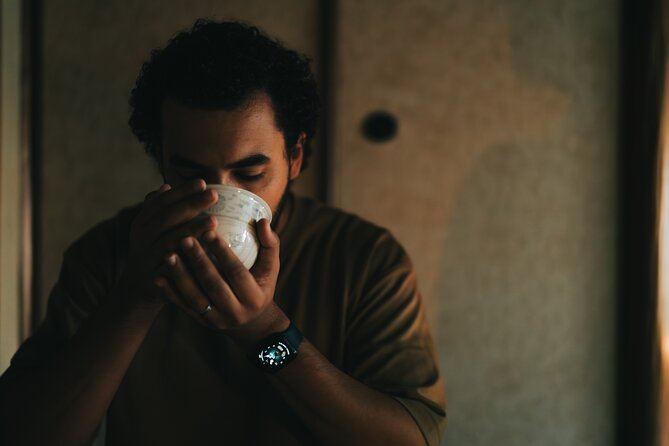
Oboro’s tone is calm, not stiff. The ceremony emphasizes shared respect and quiet wonder rather than extreme formality. That makes it easier to relax, especially if you are new to Japanese tea culture.
The room setup also nudges behavior. You will find yourself speaking more softly. You will likely slow down with your hands, too, because the rhythm of the host’s movements sets expectations.
From the experience design, you should expect a reflective vibe. It is the sort of activity that works well when you are tired from crowds, museum lines, or nonstop Kyoto walking.
A helpful consideration: if you are the type who likes high energy and constant motion, you might find the stillness challenging at first. The payoff is that the ritual does not rush you.
Value Check: Is $45.98 Worth It in Kyoto?
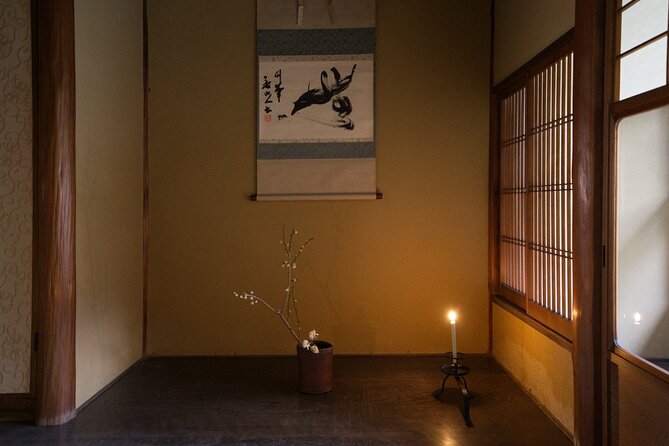
At $45.98 per person, this is not a cheap snack. But it also is not just “tea for sale.”
Here is what you are paying for, in practical terms:
- A candlelit ceremony in a 100-year-old Kyoto teahouse
- A small group (maximum 8), which changes the whole experience
- An English speaking guide that translates, so you understand what you are seeing
- Welcome tea and sweets, then matcha served in a guided sequence
- A handmade candle token to take home
If you compare it to tea in a café, you are basically comparing a drink versus a ritual. In a café, you might taste matcha, but you usually do not get the step-by-step preparation, the calm pacing, or the context. Oboro packages those things into one short session.
This also becomes good value because it saves you decision time. You do not have to figure out what to ask, what the tools mean, or which style you are seeing. The guide handles the meaning, and the setting handles the mood.
If you have only a couple nights in Kyoto, this is also a smart use of time. About 50 minutes can give you a totally different emotional tone than temples and markets.
Who This Is For, and Who Might Skip It
This fits well if:
- You are a first-timer for matcha and want to learn the process without pressure
- You want something quieter than Kyoto sightseeing
- You like cultural experiences that are sensory, not just visual
- You prefer small groups and attention rather than a lecture-style tour
- You want an English speaking guide so you are not lost
You might skip it if:
- You want a long event. This is about 50 minutes, not half a day.
- You tend to run late. There is a rule that if you pass the 10 minute mark from the start time, you cannot join.
- You dislike sitting quietly. The ritual asks for patience, even though the atmosphere is friendly.
A day of temples goes further with something to break it up.
Practical Tips for Showing Up at 237 Nakaogawachō
The meeting point is at 237 Nakaogawachō, Kamigyo Ward, Kyoto, 602-0053, Japan. The activity ends back at the meeting point.
A few practical things that will make your visit smoother:
- Plan to arrive early. The experience says you cannot participate if you are more than 10 minutes late.
- Use public transport. The location is near public transportation, which helps in a city where directions can change quickly.
- Expect a small setting. With a maximum of 8 travelers, you want your timing to be respectful, not casual.
You will also receive a mobile ticket. So have it ready on your phone when you show up.
The Bottom Line: Should You Book Oboro?
Yes, if you want a real Kyoto tea ceremony experience that is calm, guided, and easy to understand. Oboro is one of those activities that makes you feel like you stepped away from the noise, even if you are only away from it for 50 minutes.
Book it especially if:
- you are curious about matcha preparation,
- you want translation support,
- and you prefer small-group, candlelit atmosphere over a busy tasting room.
Skip it if you are expecting a casual, quick drink with no ritual pace. This is a ceremony, not a menu.
If you are looking for one Kyoto activity that is quiet, atmospheric, and genuinely different from the usual temple stop, this is a strong choice.
FAQ
How long is the Oboro tea ceremony experience?
The experience is approximately 50 minutes.
How many people are in the group?
The ceremony has a maximum of 8 travelers.
Do I need to speak Japanese?
No. There is an English speaking guide who translates for you, and you can follow along without language barriers.
Where do we meet for the tea ceremony?
Meet at 237 Nakaogawachō, Kamigyo Ward, Kyoto, 602-0053, Japan. The activity ends back at the meeting point.
What is included in the price?
The experience includes coffee and/or tea, plus an English speaking guide.
What if I arrive late?
If you are more than 10 minutes past the start time, you cannot participate.
Is free cancellation available?
Yes. You can cancel for a full refund up to 24 hours in advance. If the activity is canceled due to poor weather, you will be offered a different date or a full refund.
New This Season
- Koyasan Day Trip by Private Car from Kyoto
- Old Port Town and Ultimate Sake Tasting Private Tour From Kyoto
- Kyoto’s Timeless Charm: 3hr Exploration of History and Peace
- Kyoto: 5 Types of Sushi Making
- Sacred Peak & Ancient Paths: Kurama-Kibune Hiking Experience
- Kyoto: Exclusive ZEN practice at Manpukuji temple in Uji
- Kyoto: Private Seasonal Aroma Yoga Class
- Traversing Kyoto’s Scenic West – Arashiyama to Kinkakuji
Tea Ceremonies, compared.
Tea Ceremony in a Traditional Tea House in Kiyomizu
Read our review →
Kimono Tea Ceremony at Kyoto Maikoya, NISHIKI
Read our review →
Tea Ceremony in 100-year-old Kyo-Machiya Townhouse
Read our review →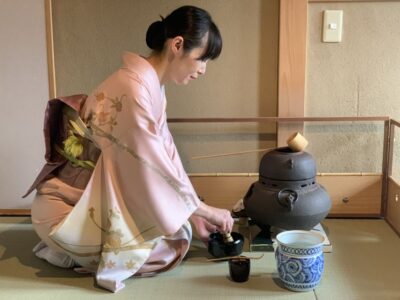
Also filed under