
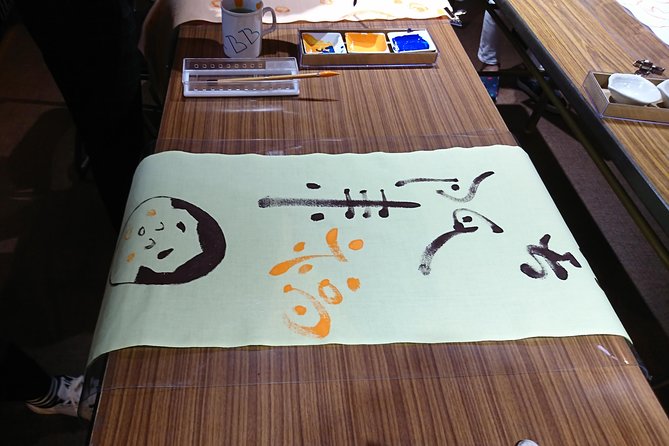
Reviewed · ARTISAN CRAFT WORKSHOPS
Painting Experience-Fun to Draw, Fun to Create-
Brush strokes on fabric, with zero pressure.
In Kyoto’s Kyomachiya studio, you get a short warm-up, then plenty of freedom to make art on heat-treated fabric souvenirs that you can use later.
I love how friendly and encouraging the staff are, with help that feels patient rather than rushed. I also like that you do more than just copy a sample, you can use shop sketches, mix colors freely, and end up with a usable keepsake.
One consideration: with about 1 hour total and heat processing at the end, this is a focused workshop, not a long guided cultural tour.
In This Review
- Key Highlights You Should Know Before You Go
- Entering The Kyoto Kyomachiya Workshop
- Your First 10 Minutes: Brush Basics and Quick Sketch Practice
- Name Calligraphy For Foreigners, Then Picking Your Fabric and Colors
- The Main Event: 40 Minutes of Free-Style Drawing
- Heat Treatment on the Spot, Then Take It Home Immediately
- What You Make Feels Useful, Not Just Decorative
- Price and Value: About $23.53 for an Hour of Actual Creative Output
- Who This Fits Best in Your Kyoto Day Plan
- Should You Book This Painting Class?
- FAQ
- Where is the meeting point for the painting experience?
- How long does the experience take?
- Is this a private activity?
- What will I be painting on?
- Do I have to come up with a design myself?
- Is name calligraphy included?
- Do they do heat treatment during the class?
- Can I wash what I make?
- Will I be able to communicate in English?
- Is free cancellation available?
Key Highlights You Should Know Before You Go
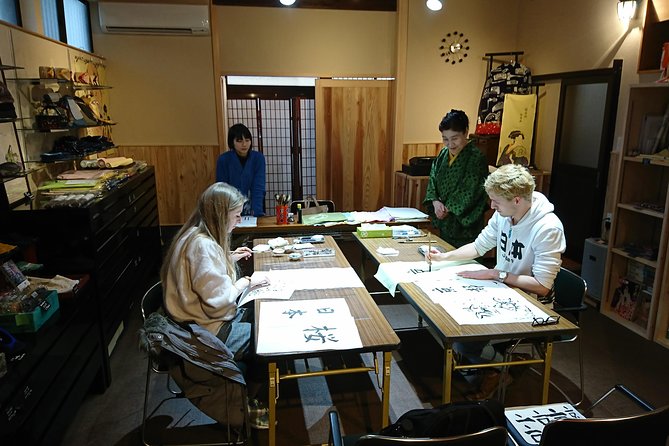
- Renovated Kyomachiya studio setting: You paint in a traditional Kyoto merchant house, so the whole experience feels more like making art in a real neighborhood space than in a classroom.
- A real warm-up, not just hand over the supplies: You get brush basics first, then paper sketching and practice so your first strokes feel doable.
- Three fabric items to decorate: You draw on multiple textiles, and the finished work is described as washable.
- Name calligraphy for foreigners: There’s a calligraphy moment where you write your name in Japanese, and you get to take that home too.
- Heat treatment on the spot: After you finish drawing, the staff apply heat processing so you can take your work right away.
- Small, private-group vibe: It’s designed for your group only, with a slower pace when there are only a few people.
Entering The Kyoto Kyomachiya Workshop
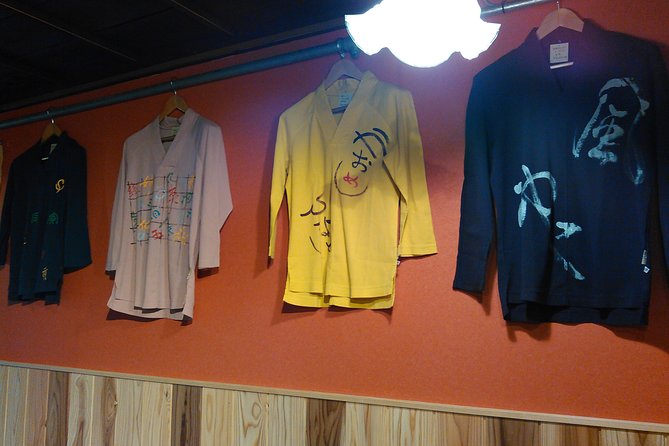
This class takes place in Kyoto at a renovated Kyomachiya shop space called 京町屋 Kiotto (Kyomachiyakiotto). The meeting point is listed at 9-10 Mibuhinokicho in Nakagyo Ward, and the activity ends right back there, so you do not need a map marathon afterward.
What makes the setting matter is the mood. Painting in a refurbished townhouse shifts you out of tourist mode and into maker mode. You’re also seated in chairs while you work, so you can focus on your design without having to stand in awkward positions for the whole session.
The other practical plus is that it’s close to public transportation, so it fits cleanly into a day of temple hopping and street-wandering. If you want a souvenir that does not feel mass-produced, this place is built for that.
Your First 10 Minutes: Brush Basics and Quick Sketch Practice
Before you touch the fabric, you get instruction on how to use the brush. It starts with a short explanation (about 5 minutes), then you move into paper sketching and practice for around 10 minutes.
This matters more than it sounds. For many people, the hardest part of fabric painting is learning how the brush lays paint and how much control you get. The short practice step helps you understand that you do not need perfect drawing skills, you need confident first strokes.
You also get the idea of using guides. The session mentions that you can draw using sketches from the shop, which is great if you’re nervous about starting from a blank page. Even if you plan to create your own original idea, this “practice then choose” setup keeps the class from feeling chaotic.
Make something with a Kyoto craftsman
- Authentic knife making experience at a blacksmith in Kyoto
★ 4.8 · 350 reviews - Kyoto: Calligraphy class at Buddhist temple in city center
★ 5.0 · 167 reviews - Roketsu dyeing experience: M course Roketsu Dyeing Experience
★ 5.0 · 163 reviews - Kyoto: Japanese Calligraphy Class
★ 4.8 · 89 reviews
Name Calligraphy For Foreigners, Then Picking Your Fabric and Colors
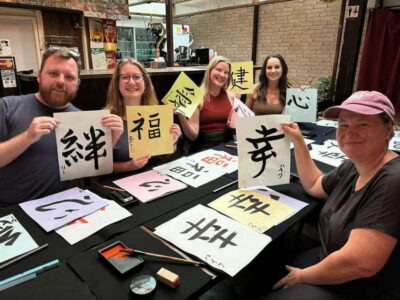
A unique part of this workshop is a calligraphy moment for foreigners. During the early flow, you write your name in Japanese, and you take that work home.
After that, the main painting segment begins: you draw on three fabrics and choose your favorite colors. The class framework gives you a long stretch for creating, about 40 minutes for the fabric artwork portion.
Here’s the practical way to think about it. The calligraphy piece gives you an immediate Kyoto-style outcome, even if you’re not a confident drawer. Then the fabric painting gives you control over your bigger artwork. Together, you end up with a set of souvenirs that feel personal, not just one decorative item.
Also pay attention to the teaching approach: they provide sketches you can use, but they also encourage original designs. That means you can choose your comfort level, copy a style you like, or go off script with something from your imagination.
The Main Event: 40 Minutes of Free-Style Drawing
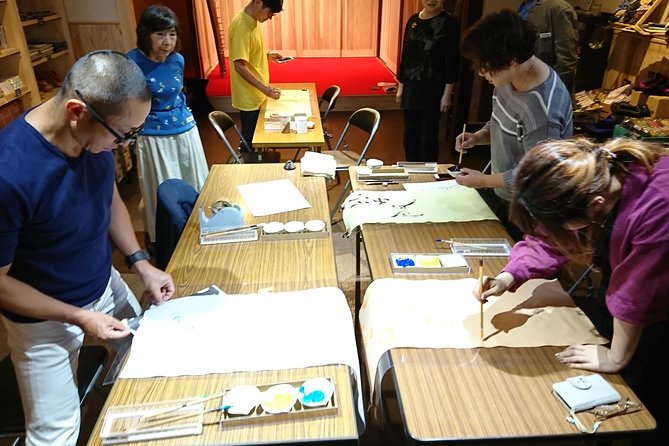
Once you start painting on the fabrics, there are no strict rules about how the final work has to look. You can make what you imagined, combine colors, and draw using sketches in the shop as inspiration. If you want help, staff will support you with suggestions like what kind of design might work well.
This is where the class earns its strong ratings. The reviews highlight staff who are welcoming, fun, and encouraging, with at least one instructor who spoke very good English. That kind of support can turn a shy moment into an “okay, I can do this” moment, especially when you’re working on fabric rather than paper.
One detail I’d plan around is design time. You have about 40 minutes to create your fabric pieces after the warm-up. If you show up with a very complex plan, you might feel pressure. If you keep your concept simpler, like a favorite character, a recognizable object, or an original motif, you’ll be happier with the result.
And yes, you can add a character or picture freely with your chosen colors. The session explicitly frames it as total enjoyment, with consultation available if you want it.
Heat Treatment on the Spot, Then Take It Home Immediately
After you finish drawing, there’s a heat treatment step, about 5 minutes. The goal is to set what you created so you can take it home right away.
This is an underrated part of the value. Many crafts leave you with either drying time that drags on or items that have to be processed later. Here, you get the heat treatment at the studio, so your souvenir is ready before you leave.
It’s also the reason the workshop works well as a single, self-contained stop. You can arrive, create, set the paint with heat, and walk away with something finished. Then you can go back to the rest of your Kyoto day with less worry.
What You Make Feels Useful, Not Just Decorative
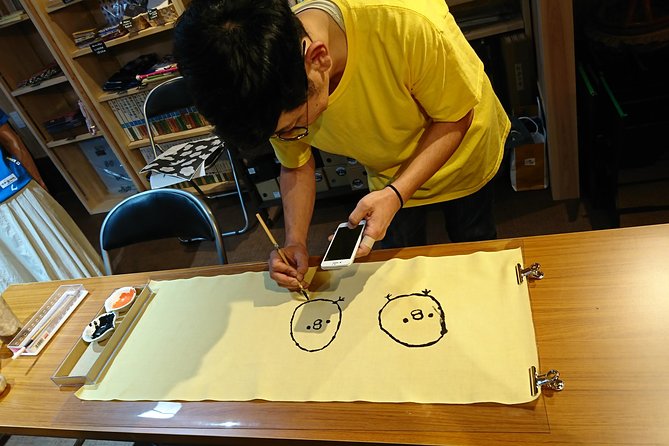
The session is built around the idea that your fabric art is washable, so it’s not only for display. The information even suggests practical use cases, like turning your piece into something you can wash and reuse as a towel or wear as an original shirt.
It helps to have realistic expectations. You’re not going to treat this like industrial textile printing. You’re working on fabric with brushes and pigment, then heat processing to set the design. Still, the workshop is clearly designed so your final output can be used in everyday life, not hidden in a drawer.
You’ll also see the logic behind painting on multiple fabrics. More items means more chances to try different color combinations. It’s also a better souvenir strategy if you’re buying for more than yourself, since you end up with several finished pieces rather than one single item.
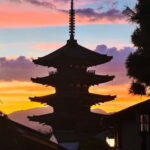
A day of temples goes further with something to break it up.
Price and Value: About $23.53 for an Hour of Actual Creative Output
The price is $23.53 per person, and the experience runs about 1 hour. For that, you’re paying for real instruction, access to materials, and the heat treatment that helps finalize your work.
Is it a bargain compared to grabbing a postcard? Sure, but it’s not trying to be. It’s closer to paying for a hands-on keepsake, inside a charming renovated townhouse, with help that reduces guesswork.
The best value signal here is the end result: you take home something you made, not just something you watched someone else make. The reviews also underline that the final art souvenir feels like a genuine payoff, with staff who make the class feel welcoming and fun.
If you’re the kind of traveler who likes “I did this” moments, this workshop is the type you’ll remember, even a year later.
Who This Fits Best in Your Kyoto Day Plan
This is a strong fit if you want a break from temples and big-ticket lines. It’s also ideal for people who enjoy tactile activities like drawing and painting, but do not want to commit to a long course.
It’s set up to work for most travelers, and it’s private, meaning it’s only your group. That matters if you want a calmer experience without strangers crowding the pace.
It also works well for couples or friends who want shared creative time. You can talk, choose colors together, and end up with matching souvenir energy without needing a shared artistic background.
One more reason I like it for Kyoto specifically: the workshop is inside a traditional-style shop space. Even if you spend only an hour there, you still get that feel of Kyoto’s older architecture around you.
Should You Book This Painting Class?
Book it if you want a hands-on Kyoto souvenir with real instruction, a welcoming vibe, and the convenience of heat treatment on the spot. You’ll probably enjoy it most if you’re okay keeping your design simple and letting the process guide you.
Skip it if you’re looking for a longer cultural deep dive or you want a high-control, technical art class where you can plan to perfection. This is about making something fun and personal within a tight time frame.
FAQ
Where is the meeting point for the painting experience?
The meeting point is Kyomachiyakiotto, 9-10 Mibuhinokicho, Nakagyo Ward, Kyoto, 604-8844, Japan.
How long does the experience take?
It takes about 1 hour.
Is this a private activity?
Yes. It is private, and only your group will participate.
What will I be painting on?
You will draw on three fabrics provided for the class.
Do I have to come up with a design myself?
No. You can use sketches in the shop, draw what you imagine, or create your own original picture. There are no rules for producing the work, and staff can offer consultation if you want ideas.
Is name calligraphy included?
Yes, there is a calligraphy element for foreigners where you write your name in Japanese, and you take it home.
Do they do heat treatment during the class?
Yes. After you finish drawing, there is heat treatment on the spot, about 5 minutes.
Can I wash what I make?
The work is described as washable, so it can be used beyond display.
Will I be able to communicate in English?
The information does not spell out languages, but reviews mention the instructors spoke English well and were helpful.
Is free cancellation available?
Yes, you can cancel for a full refund up to 24 hours in advance of the experience start time, and free cancellation is offered.
New This Season
- Koyasan Day Trip by Private Car from Kyoto
- Old Port Town and Ultimate Sake Tasting Private Tour From Kyoto
- Kyoto’s Timeless Charm: 3hr Exploration of History and Peace
- Kyoto: 5 Types of Sushi Making
- Sacred Peak & Ancient Paths: Kurama-Kibune Hiking Experience
- Kyoto: Exclusive ZEN practice at Manpukuji temple in Uji
- Kyoto: Private Seasonal Aroma Yoga Class
- Traversing Kyoto’s Scenic West – Arashiyama to Kinkakuji
Artisan Craft Workshops, compared.
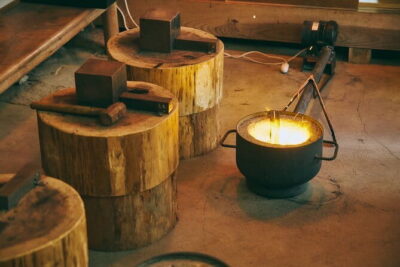
Authentic knife making experience at a blacksmith in Kyoto
Read our review →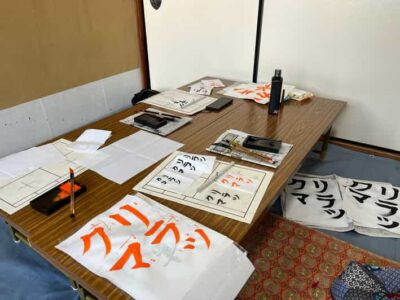
Calligraphy class at Buddhist temple in city center
Read our review →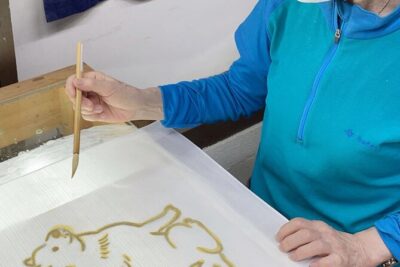
Roketsu dyeing experience: M course Roketsu Dyeing Experience
Read our review →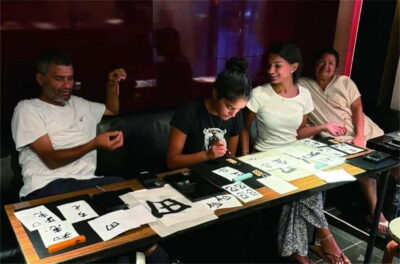
Traditional Japanese Washi Papermaking- Kyoto morning
Read our review →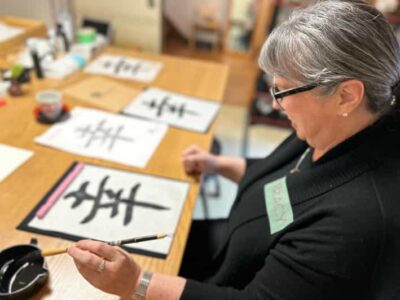
Also filed under