Reviewed · ARTISAN CRAFT WORKSHOPS
Private Pewter Sake Cup Experience with a Kyoto Artisan
One of Kyoto’s most hands-on crafts is this pewter cup workshop. You’ll make a personalized pewter sake cup in an intimate setting, guided step by step by the owner of Craft Gallery SALUK. I really like that it works for beginners, and I also like the warm, patient teaching style described by prior guests. The only real consideration is that the finishing step uses a rotary machine, so you will not do that part yourself.
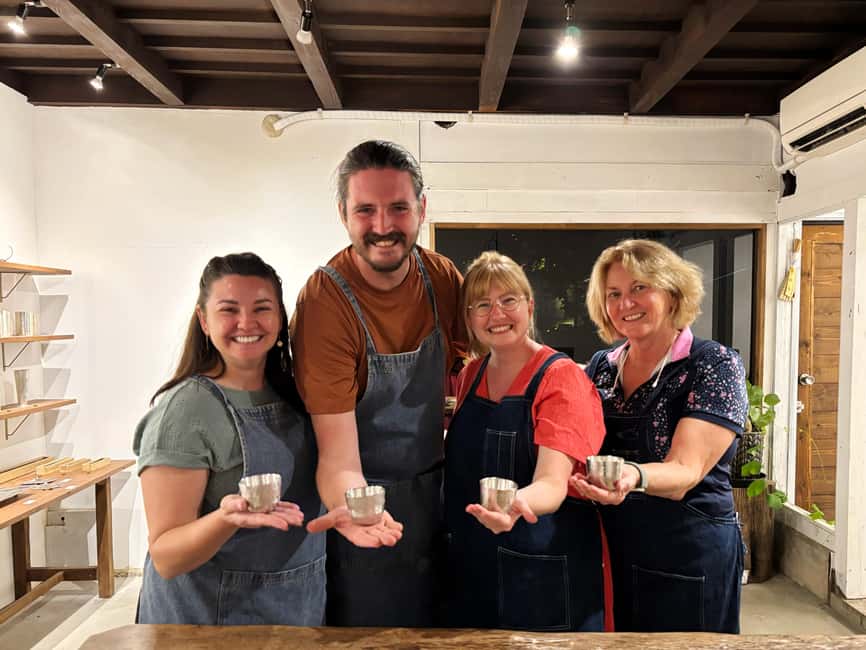
In practical terms, you get the full “how it’s made” experience, including optional engraving on the base and a look at the artisan’s workshop area that is usually closed. You’ll take home a finished cup in a traditional paulownia wood box, sized for sake, whiskey, or chilled green tea. If you want zero metal dust or totally hands-off crafting, you may find that the process is more active than you expected.
In This Review
- Key Things That Make This Pewter Workshop Worth Your Time
- Why Pewter Sake Cups Feel Special in Kyoto
- Find Craft Gallery SALUK and Settle In Near the Eizan Railway
- Step One: Emboss Your Pattern Using Your Own Hammer
- Shaping the Cup Body: Height Adjustments and a Comfortable Rim
- The Safety Step the Artisan Handles With a Rotary Machine
- See the Workshop Area and Appreciate the Craft Behind the Cup
- What You Take Home: A Pewter Cup in a Traditional Paulownia Box
- Price and Time: Is $148 Per Person Good Value?
- Who This Workshop Suits Best (And Who Might Want Something Else)
- Small Practical Tips Before You Go
- Should You Book This Private Pewter Sake Cup Experience?
- FAQ
- What is included in the pewter sake cup workshop?
- How many people are in a session?
- Do I need any prior experience to make the cup?
- How long does the workshop last?
- Can I personalize the cup with letters or a date?
- What happens with the cup finishing and polishing?
- What is the finished cup size and capacity?
- What should I wear?
- Where do I meet the artisan?
- Is this workshop suitable for children?
Key Things That Make This Pewter Workshop Worth Your Time
- Small group limit of up to 4, so you get real attention, not a crowd shuffle
- Hammer embossing with your own pattern, plus optional letters or a date
- Rim finishing that aims for comfortable drinking, with safety handled by the artisan
- You see the workshop side of craft making that is normally off-limits
- Take-home packaging in a paulownia wood box that feels gift-ready
Why Pewter Sake Cups Feel Special in Kyoto
Pewter is not just a pretty metal in Japan. Pewter has been part of Japanese culture since the 8th century, first used by nobles and temples, then spreading more widely for everyday utensils. By the 17th century, it was common for tools used with sake and tea, and many locals still claim sake tastes smoother from a pewter cup.
That tradition matters here because you are not only learning about pewter, you are shaping it. In a short session, you turn a blank piece of metal into something personal you can actually use. The workshop format also keeps the vibe calm. You are doing precise, satisfying work without feeling rushed.
This is also one of those Kyoto activities where the end result is easy to understand. You can see your pattern, feel the rim, and read the engraved base once it’s finished. And when you open that paulownia box later, you get the feeling you made something durable, not a quick souvenir.
Find Craft Gallery SALUK and Settle In Near the Eizan Railway
The meeting point is Craft Gallery SALUK, at 35-2 Shizuichinonakachō, Sakyo Ward, Kyoto. Plan on an easy arrival: it is an 8-minute walk from either Ichihara or Ninose Station on the Eizan Railway, and it is across from Cafe & Bar Ayahana.
If you are already using the Eizan Railway that day, getting off at Ninose Station is a smart move. That section is known for the Tunnel of Autumn Leaves between Ichihara and Ninose, so your transit can double as a small scenery break. You do not need a complicated route or timing, just get yourself there a little early so you can start relaxed.
Once you arrive, the session is designed to feel like a real workshop, not a performance. The artisan talks you through what you are doing, and the room is set up for careful metalwork. Since the group size is capped at 4, the pace stays human.
More cups to sample before dinner
- Kyoto Night Foodie Tour in Gion (9+ dishes + 6 Sake tastings)
★ 5.0 · 1,762 reviews - 3-Hour Kyoto Insider Sake Brewery Tour with Tastings & Pairings
★ 5.0 · 917 reviews - Arashiyama Bamboo, Temple, Monkeys, or Secret Sake Brewery
★ 4.8 · 886 reviews - Kyoto: Insider Sake Brewery Tour with Sake and Food Pairing
★ 5.0 · 704 reviews
Step One: Emboss Your Pattern Using Your Own Hammer
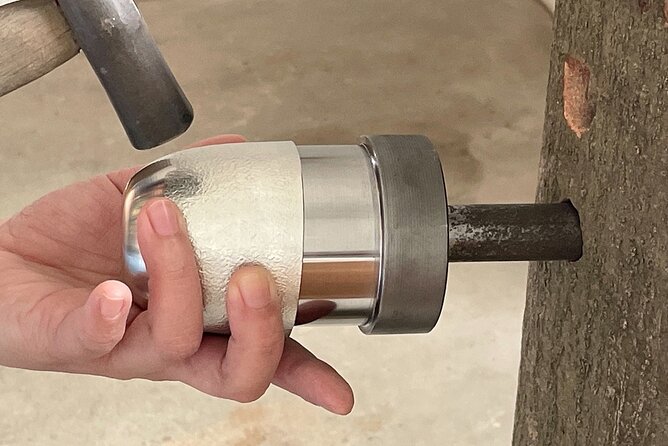
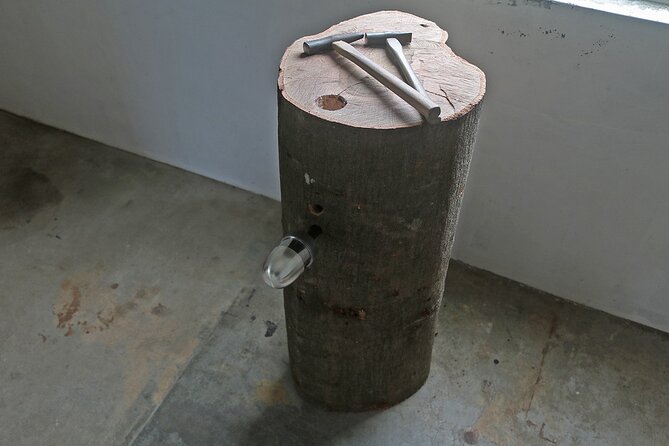
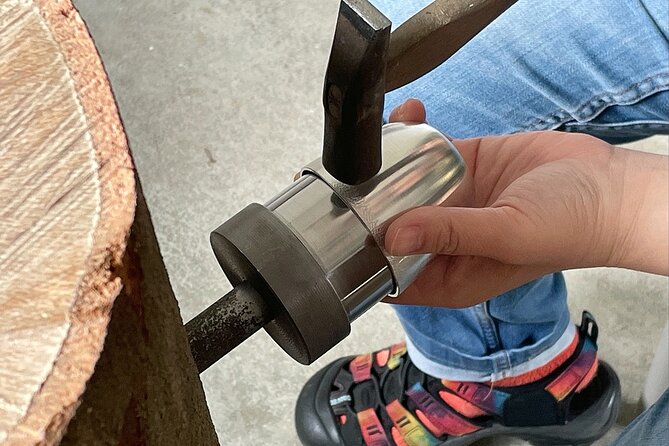
Your cup starts with a prepared pewter piece and a clear plan for what happens next. You begin by using your preferred hammer to emboss a pattern onto the metal. This is the fun, hands-on moment where you stop imagining the finished cup and start shaping it for real.
If you are worried about skill level, you can relax. The workshop is set up so no prior experience is needed, and guidance is provided so your first attempt still looks intentional. You do not need to be an artist to make something you will recognize as yours.
You also have an optional personalization step for free. If you want it, you can engrave letters, numbers, initials, or a date on the base. Think of this as the detail you can keep thinking about later, the part that makes the cup feel like a gift from you to you, or from you to someone else.
Shaping the Cup Body: Height Adjustments and a Comfortable Rim
After the embossing, the focus shifts from decoration to fit. You adjust the cup’s height using a file, then you work on the rim. Chamfering the rim is about more than looks. It is aimed at creating a smoother, more comfortable edge for drinking.
This is the stage where “craft skill” becomes “everyday quality.” A cup that feels good at the lip matters if you plan to actually use it, not just display it. The workshop’s method is practical: it helps you make a shape that you can imagine holding with your own hand.
You should also expect a little bit of metalworking mess, even with good instruction. Aprons are provided, but you will still want clothes you can wear if they get slightly dirty. Metalwork is hands-on, so plan to dress for activity, not for photos.
The Safety Step the Artisan Handles With a Rotary Machine
One part of the process is intentionally taken out of your hands for safety. For the final polishing step, the artisan uses a rotary machine, and that step is handled by the pewtersmith rather than by guests.
This is not a downside so much as smart risk management. Polishing is where small mistakes can happen quickly, and the workshop protects your experience. You still do the essential shaping and personal design, then the artisan completes the finish so your cup comes out clean and ready to enjoy.
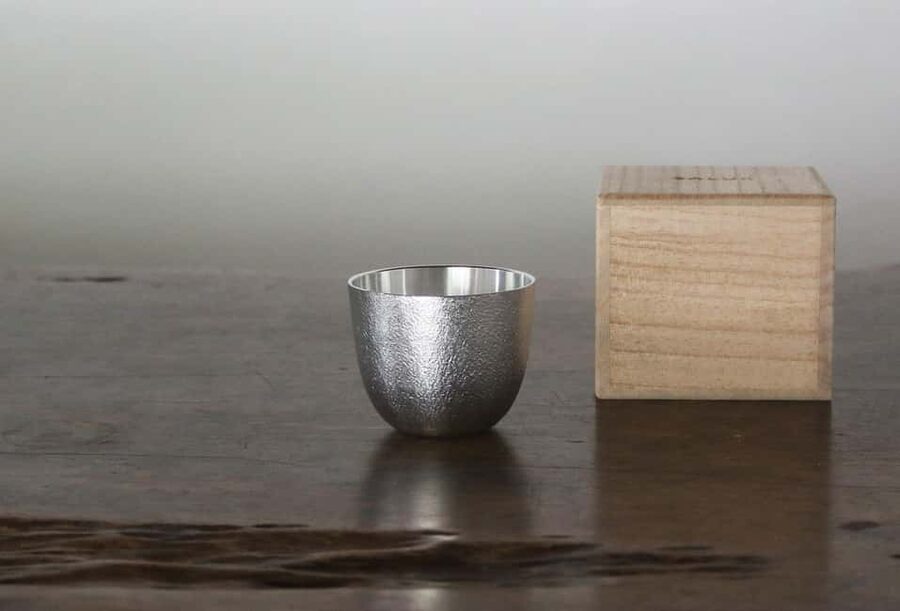
The final cup size is also worth knowing before you picture it at home. It measures about 64 mm in diameter and 53 mm in height, and it holds about 90 ml. It can hold up to around 115 ml to the rim, so it works well for smaller pours.
And yes, that matters if you like tea too. The workshop-created cup is suitable for sake, whiskey, or chilled green tea, so it is not limited to one specific use.
See the Workshop Area and Appreciate the Craft Behind the Cup
This experience is not only about the piece you make. You also get to see inside the pewter workshop area that is normally closed to the public. That change in access is a real value add, because it helps you understand what goes on after the steps you do during your session.
When you watch a craft space in action, you start noticing details you would otherwise miss. You see how artisans think about tools, process, and consistency. You also gain a deeper respect for the final finishing choices, including why some steps are done by the craftsman rather than by guests.
That “behind-the-scenes” look also makes the take-home cup feel more meaningful. You are not just collecting an object, you are carrying part of a working craft environment back with you.
Make something with a Kyoto craftsman

What You Take Home: A Pewter Cup in a Traditional Paulownia Box
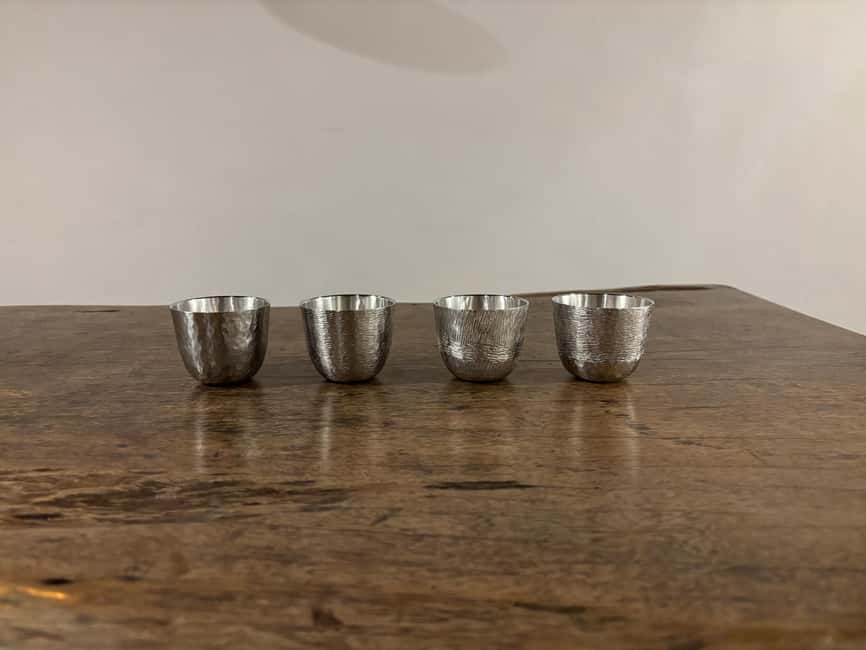
Your finished cup comes packaged in a traditional paulownia wood box. That is the kind of detail that turns the finished piece from a craft item into something you can store carefully or give as a gift without extra wrapping.
Paulownia boxes also make sense practically. They help protect the metal and keep the cup from getting scuffed in your luggage or on a shelf. If you plan to travel afterward, this packaging is helpful, not just pretty.
And the personalization options are built into what you take home. If you added letters, numbers, initials, or a date to the base, that detail becomes the focal point you see every time you use the cup.
Price and Time: Is $148 Per Person Good Value?
At $148 per person for about 150 minutes in a private group, this is not a cheap activity. But it is also not trying to compete with a mass-production souvenir. You are paying for a hands-on metalworking experience with a small group cap of 4, plus direct instruction from a skilled pewtersmith.
The value gets clearer when you compare the components. You receive the materials, tool rental, and instruction. You also get the final take-home result in a gift-ready paulownia box. And because the session is private, you are not working around other people’s learning curves.
For me, the best value angle is the combination of personalization plus craftsmanship. You can do your own pattern embossing, optionally engrave the base, then help shape the cup for comfort. Even with the safety polishing step done by the artisan, you still leave with a finished object that feels unmistakably yours.
If you are the type who buys experiences rather than things, this makes sense. If you are on a tight budget and only want passive sightseeing, you might prefer a lower-cost workshop or a free craft stop in the area. But if you want an activity that ends with something you will actually use, the price starts to feel fair.
Who This Workshop Suits Best (And Who Might Want Something Else)
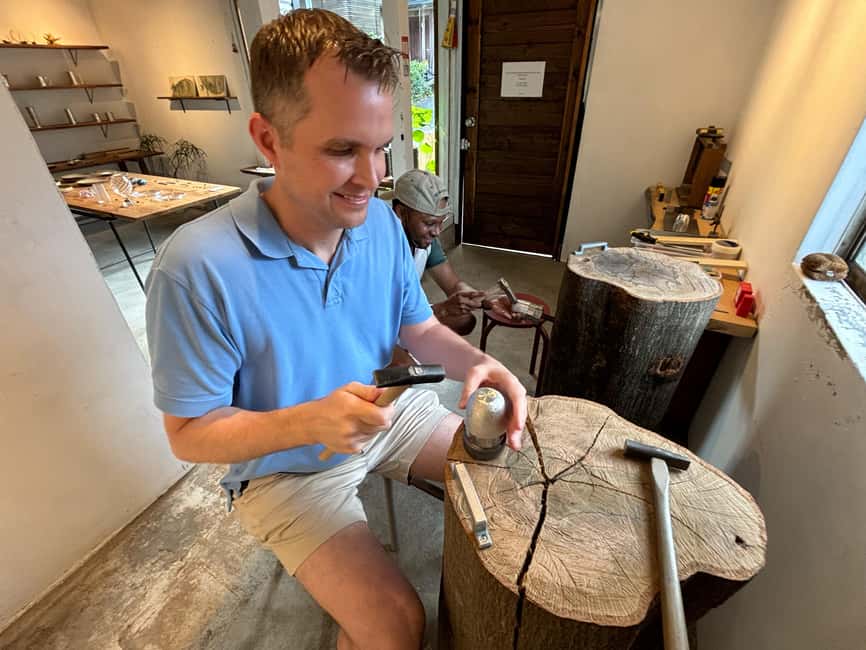
This workshop fits especially well if you want a calm, structured craft day. It is suitable for solo travelers, couples, and small groups. The session also seems friendly to different skill levels since guidance is provided and the pace is designed for first-timers.
It is also a good match if you care about cultural context, not just a craft technique. Pewter’s link to sake and tea utensils adds meaning to the process. You leave with an object that connects directly to a long Japanese tradition.
Not everyone will love it. You should skip it if you want an activity with no mess or minimal physical involvement, because you will be hammering and filing. Children under 6 years are not suitable, and the workshop also has rules around safety and participation. If you plan to visit after drinking heavily or after being under the influence of drugs, you will not be allowed to participate.
If your ideal Kyoto day is quiet strolling, this can still work, but plan your schedule so you can focus during the workshop. Metalwork rewards attention.
Small Practical Tips Before You Go
Here are a few things that will make your workshop experience smoother, based on how the session is run.
- Wear clothes you can handle if they get slightly dirty, aprons are provided but metalwork can still be messy
- If you are more than 10 minutes late, contact the workshop so they can plan safely
- Expect an English or Japanese instruction environment, with instruction tailored to help you succeed even as a beginner
Also, plan to eat and drink beforehand if you are doing it during a busy travel day. You will be concentrating for about 150 minutes, and it is easier if you start comfortable.
Should You Book This Private Pewter Sake Cup Experience?
Book it if you want a Kyoto activity that ends with a usable handcrafted object. The combination of personal embossing, optional base engraving, and a small-group pace makes it a craft session that feels personal, not scripted. The warm, kind teaching style also seems to be a consistent theme, and that matters when you want your first attempt to come out looking good.
Skip it if you only want passive culture time, or if you are uncomfortable with hands-on metalworking. Since you will hammer, file, and polish parts of the process through tools, this is for people who enjoy doing, not just watching.
If you are already thinking about bringing something home that has meaning, not just branding, this pewter cup workshop is an excellent choice. The paulownia box alone signals you are taking home a long-term keepsake, and the cup size makes it practical for real use.
FAQ
What is included in the pewter sake cup workshop?
You get a handmade pewter sake cup workshop, personalized instruction from a skilled pewter artisan, all necessary materials, tool rental, and a traditional paulownia wood box for your finished cup.
How many people are in a session?
Workshops are limited to a maximum of 4 guests per session.
Do I need any prior experience to make the cup?
No experience is required. Clear guidance is provided so beginners can take part.
How long does the workshop last?
The duration is 150 minutes.
Can I personalize the cup with letters or a date?
Yes. You can optionally engrave letters, numbers, initials, or a date on the base at no extra charge.
What happens with the cup finishing and polishing?
For the final polishing step, a rotary machine is used, and this step is carried out by the craftsman for safety.
What is the finished cup size and capacity?
The cup is approximately 64 mm in diameter and 53 mm in height, and it holds about 90 ml (up to 115 ml to the rim).
What should I wear?
Aprons are provided, but you should wear clothes you can wear even if they get a little dirty.
Where do I meet the artisan?
Meet at Craft Gallery SALUK, 35-2 Shizuichinonakachō, Sakyo Ward, Kyoto, 601-1122, Japan. It is an 8-minute walk from Ichihara or Ninose Station on the Eizan Railway, and it is across from Cafe & Bar Ayahana.
Is this workshop suitable for children?
It is not suitable for children under 6 years.
More Food & Drink in Kyoto


More Drinking Tours in Kyoto



New This Season
- Koyasan Day Trip by Private Car from Kyoto
- Old Port Town and Ultimate Sake Tasting Private Tour From Kyoto
- Kyoto’s Timeless Charm: 3hr Exploration of History and Peace
- Kyoto: 5 Types of Sushi Making
- Sacred Peak & Ancient Paths: Kurama-Kibune Hiking Experience
- Kyoto: Exclusive ZEN practice at Manpukuji temple in Uji
- Kyoto: Private Seasonal Aroma Yoga Class
- Traversing Kyoto’s Scenic West – Arashiyama to Kinkakuji
Artisan Craft Workshops, compared.
Authentic knife making experience at a blacksmith in Kyoto
Read our review →
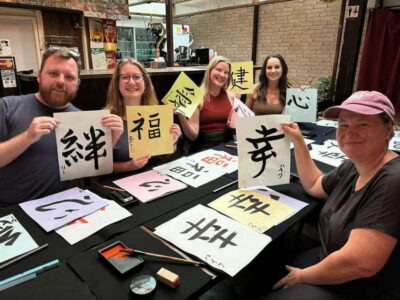
Calligraphy class at Buddhist temple in city center
Read our review →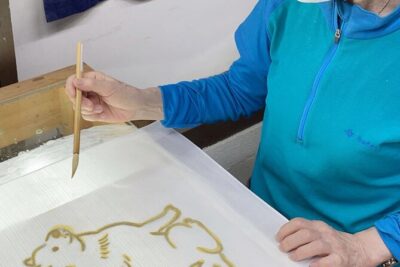
Roketsu dyeing experience: M course Roketsu Dyeing Experience
Read our review →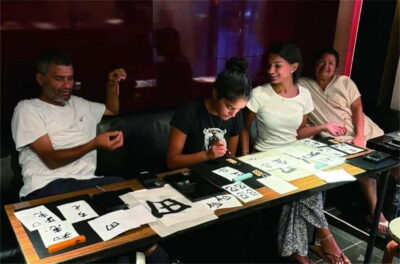

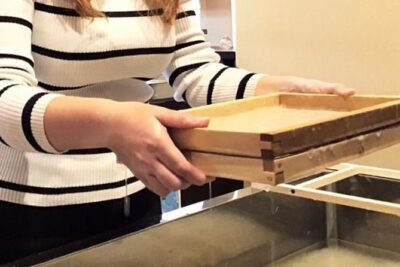
Traditional Japanese Washi Papermaking- Kyoto morning
Read our review →