
Reviewed · RAMEN TOURS
Ramen Broth Class by Michelin Guide Shop & Custom Chopsticks
Name-engraved chopsticks beat generic souvenirs. In this Kyoto Gion ramen broth class, you learn how to recreate a flavorful ramen soup at home, and you get personal chopsticks made during the workshop. The one thing to weigh is the price, $58 is solid value if you want the cooking skill and the keepsakes, but it is not a bargain meal.
I also like that the cooking team has real credibility behind the Musoshin ramen name, with Michelin recognition for four years. The class is taught in English and Japanese, and Shin-san is known for being patient while explaining the process. One more practical note: it is not suitable for wheelchair users, and children under 10 are asked not to join.
In This Review
- Key things to love about the experience
- Kyoto Gion ramen broth class with name-engraved chopsticks
- Your 90 minutes in the kitchen, from tenugui to hot bowl
- How the broth lesson helps you cook ramen at home
- Noodles and toppings you do not have to guess
- Chashu choices, including the one only served in this class
- Souvenir photo spot plus chopsticks and tenugui
- Dietary options that can include the broth
- Price and value at $58, what you get for a Michelin-recognized ramen name
- Who this experience suits, and who should skip
- Should you book this ramen broth class?
- FAQ
- Where does the ramen broth class take place?
- How long is the class?
- How much does it cost?
- What do I get as souvenirs?
- Is there a custom chopsticks engraving part?
- What food will I eat during the class?
- Do they offer dietary options like vegan or gluten-free?
- What ingredients are used for the toppings and noodles?
- Is the class suitable for children or wheelchair users?
- What languages are the instructors?
- What should I bring?
- Is there free cancellation?
Key things to love about the experience
- Broth-first cooking lesson: you focus on making ramen broth, then finish with noodles and toppings.
- Name-engraved chopsticks on the spot: you put your name into the process and take the finished pair home.
- Tenugui souvenir that matches the chef costume: you wear it during cooking, then it becomes your personal keepsake.
- Handmade toppings tied to the Musoshin Gion kitchen: chashu and finishing toppings come from nearby sources.
- Two chashu styles, one special to this spot: pork belly cooked for a full day, plus cartilage chashu pressure-cooked for two hours.
- Dietary options that can include the broth: gluten-free, vegetarian, and vegan options are available.
Kyoto Gion ramen broth class with name-engraved chopsticks
If you like food experiences where you actually learn something you can use later, this workshop fits the bill. The focus is not just eating ramen. You cook the broth, then assemble your own bowl with toppings and noodles prepared as part of the class experience.
What makes it feel different in Gion is how personal the souvenirs are. First you share your name, then the workshop engraves it onto a pair of chopsticks using a special machine. Those chopsticks arrive in a traditional Japanese box with added color, so it looks like a crafted keepsake, not a mass-produced souvenir.
I also like that the class is tied to a real ramen brand with Michelin recognition, including Musoshin Toronto being Michelin recognized for four years. That matters because ramen schools can be hit or miss. Here, the vibe is serious about ramen, while still keeping the mood welcoming and interactive.
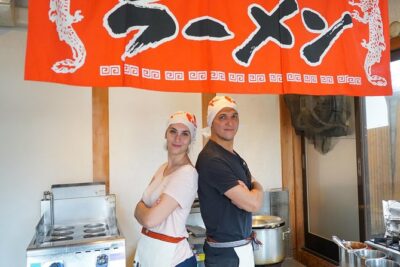
One more detail that shapes the whole experience: the workshop is designed for you to feel like a chef for a short window. You get a Musoshin tenugui to wear while cooking, plus an apron, and you jump into the process right after hands are washed. It is a small touch, but it helps you stay focused on what the chef is teaching.
Your 90 minutes in the kitchen, from tenugui to hot bowl
The class runs about 90 minutes, and the flow is pretty logical, so you are not stuck watching passively.
Here is how it typically goes, start to finish:
First, you meet your instructor and the team, and they ask for your name. Then you move into the custom chopsticks part. The chopsticks get engraved with your name, placed in a traditional Japanese box, colored, and presented to you as a one-of-a-kind souvenir.
Next comes the chef transformation. You receive a Musoshin tenugui and put it on your head, then you wear the apron. After that, you wash your hands thoroughly. Then the cooking begins in earnest.
A professional chef teaches you how to make ramen broth. The soup part takes about 40 minutes, and it is the core of the lesson. Once the broth is ready, you shift to assembling and cooking the rest.
This is where the class handles the hard-to-replicate parts for you. The noodles are fresh and homemade, made at a nearby Musoshin noodle factory. The toppings are handmade by the chefs and sourced from the nearby Musoshin Gion restaurant. You get a guided way to turn those ingredients into a finished bowl, instead of guessing at timing and technique.
Before you leave, you eat the ramen you made. The experience also includes a chef-prepared ramen to enjoy as part of the overall event, so you can compare your bowl to how the kitchen does it.
There is also an included, effects-themed photo spot, which is useful if you want a quick, fun photo without turning the whole workshop into a camera session.
More bowls worth the wait
- Ramen Cooking Class at Ramen Factory in Kyoto
★ 5.0 · 1,937 reviews - Kyoto: Ramen Cooking Class at a Ramen Factory with Souvenir
★ 4.9 · 532 reviews - Kyoto: Ramen, Gyoza, and Onigiri Cooking Class
★ 5.0 · 445 reviews - Kyoto Ramen and Gyoza Cooking Class with Professional Chefs
★ 5.0 · 282 reviews
How the broth lesson helps you cook ramen at home
Ramen broth is where most people get stuck. Even when you love a bowl of ramen, you cannot just buy a packet and call it ramen. The broth is flavor, body, and depth. Here, the workshop centers on teaching you the broth so you can recreate it later.
During the class, you learn the process with a professional chef guiding you through steps. Since the soup component takes about 40 minutes, you are not doing a quick gimmick broth. You work at the pace of actual cooking, including seasoning and timing that build the base flavor.
The practical benefit for you is simple: you leave with a method you can repeat. One review notes that they provide a recipe at the end, and that lines up with what you want if you are hoping to cook again at home instead of just taking photos and eating.
Also, the broth lesson connects directly to the ingredient and topping choices. You will cook noodles after the broth is ready, then you add toppings that match the soup. That makes the final bowl feel coherent, not like a random collection of components.
If you are the type who likes understanding the why, the broth portion is your best opportunity. You can taste the difference between your cooking stage and the final bowl, and you will start to recognize how seasoning and handling change the end result.
And because this is a ramen-focused workshop, not a general Japanese cooking class, you get ramen-specific guidance rather than broad cooking tips you might never use again.
Noodles and toppings you do not have to guess
A good ramen at home is not just about broth. It is also about the noodles and topping balance.
In this class, you get fresh, homemade noodles crafted at a nearby Musoshin noodle factory. That matters for two reasons. First, you do not have to hunt down the right noodles when you get home. Second, you learn how to time noodles in a broth context, instead of experimenting blindly.
Then there are the toppings, and this is where you can tell the workshop is connected to a functioning ramen kitchen.
The toppings are handmade by the chefs and sourced from the nearby Musoshin Gion restaurant. On your bowl you can expect classic finishing toppings like a seasoned soft-boiled egg, bamboo shoots, and green onions.
This approach is valuable because it teaches you the structure of ramen. Broth and noodles create the base. Toppings add texture, aroma, and saltiness. When those toppings are made in-house, you get flavors that match the broth instead of forcing mismatched supermarket substitutes to do the job.
One more thing I appreciate is that the class offers different chashu styles, so your bowl has variety, not a one-note template.
Chashu choices, including the one only served in this class
Chashu is ramen’s headline topping for a reason. You can tell a lot about a ramen shop based on how they handle pork.
Here, you are offered two types of chashu:
- Pork belly chashu, carefully prepared over one full day in the kitchen.
- Tender pork cartilage chashu, pressure-cooked for two hours and seasoned with a special sauce.
The pork cartilage chashu is described as something you can only enjoy here. That is a strong reason to do the class in person, because it is hard to replicate a pressure-cooked cartilage approach at home without specialist equipment and exact seasoning.
The pork belly option, prepared over a full day, also signals patience. Slow handling changes texture and fat behavior, which affects how chashu slices sit on top of ramen broth.
If you are picky about texture, this gives you a clear choice during the workshop. If you just want to eat something delicious, both options land well because they are designed to work with the broth and the fresh noodles.
Souvenir photo spot plus chopsticks and tenugui
A ramen class is still a memory factory. The souvenirs here are not random clutter, they are tied to what you do during the session.
You have two major take-home items:
First, the tenugui. You wrap the Musoshin tenugui around your head during the cooking portion, and it becomes your personal souvenir afterward. It is the kind of item you can keep in a drawer, hang up later, or use while cooking at home to remind you of the workshop pace.
Second, the custom chopsticks. You write your name, the team engraves it with a special machine, and you take home the finished pair. The chopsticks are provided in a traditional Japanese box with added color, so even if you do not use them every day, they feel special.
There is also an included, effects-themed photo spot. I like having this option because it gives you a quick, scenic moment without needing to leave the workshop area and hunt for another place in Kyoto.
If you are trying to build a small, meaningful collection of Japanese travel keepsakes, these two items do that job. They are linked to real activity, not just purchase-and-go shopping.
A quieter way to spend a day in Kyoto
Dietary options that can include the broth
This workshop is set up with dietary flexibility in mind. It is not limited to changing only one topping at the end.
Options for gluten-free, vegetarian, and vegan guests are available. The details matter here: the class indicates options can apply to toppings and the broth, not only to the finishing items.
That is important because broth flavor is the backbone of ramen. If your option only changes toppings, the soup still might not fit your diet. Having a broth option means you can build a complete bowl that tastes intentional, not like an adjustment.
If you are traveling with dietary needs, this is a major reason to book. Ramen is one of those dishes where substitutions are often clumsy at best. This workshop tries to solve the substitution problem at the recipe level.
For vegans and vegetarians, it can also reduce the awkwardness of asking for changes at the last minute. Instead, you choose your category up front and cook within that plan.
Price and value at $58, what you get for a Michelin-recognized ramen name
At $58 per person for about 90 minutes, you are paying for more than a meal. You are paying for instruction, time, and take-home items that are created during the experience.
Here is what you get that supports the price:
- You make ramen broth with a professional chef, including the core lesson.
- You use fresh noodles made at a nearby Musoshin noodle factory.
- Toppings are handmade and sourced from the nearby Musoshin Gion restaurant.
- You take home a tenugui that you wore during cooking.
- You take home engraved chopsticks with your name.
- You eat the ramen you made yourself.
Add in that Musoshin has Michelin recognition for four years, and the class is clearly tied to a real production system, not just a cooking demo.
So, is it a bargain? No. But it is also not overpriced if you value learning a real ramen skill and leaving with personalized souvenirs that connect to that skill.
If your goal is only to eat ramen quickly, you might be able to find cheaper bowls in Kyoto. But if your goal is to leave with a repeatable broth approach plus meaningful keepsakes, this price starts to make sense.
Who this experience suits, and who should skip
This class is especially suited to people who want a hands-on ramen lesson and enjoy food crafts like engraving a souvenir or putting on a chef apron before cooking.
It is taught in English and Japanese, so you should feel comfortable if you choose either language. The instruction includes a professional chef-led broth lesson, and it is designed to be interactive.
A few practical considerations:
- Children under 10 are asked not to participate.
- It is not suitable for wheelchair users.
If you are traveling with parents, this matters. If you are traveling with mobility needs, plan another activity instead.
If you are a solo traveler, it can also be a good fit because the custom chopsticks part makes your experience feel personal right away. If you are with friends, the photo spot can be a nice shared moment.
Finally, if you care about diet and want more than a basic swap, this workshop’s gluten-free, vegetarian, and vegan options are worth your attention.
Should you book this ramen broth class?
Book it if you want to learn ramen broth in a structured way, then build a bowl with fresh noodles and handmade toppings. I especially like the way the class gives you a repeatable skill plus personalized souvenirs, name-engraved chopsticks and a tenugui you used during cooking.
Skip it if you are simply trying to fit in a quick dinner and you do not care about learning the method. Also skip if you have mobility constraints that make the workshop space challenging, since it is not suitable for wheelchair users. And if you are traveling with kids under 10, this is not the right age fit.
If your ideal Kyoto moment is equal parts cooking and culture, in a ramen-focused setting, this one makes a lot of sense.
FAQ
Where does the ramen broth class take place?
It’s in Honshu, Japan, with the cooking experience described as being in Kyoto’s Gion district.
How long is the class?
The duration is 90 minutes.
How much does it cost?
The price is $58 per person.
What do I get as souvenirs?
You get a Musoshin tenugui that you used during noodle making, and chopsticks with your name written/engraved on them. The chopsticks are presented in a traditional Japanese box.
Is there a custom chopsticks engraving part?
Yes. You provide your name, and they engrave it onto a pair of chopsticks using a special machine.
What food will I eat during the class?
You can eat the ramen you made yourself, which includes homemade broth, noodles, and toppings. The experience also highlights that you can enjoy chef-prepared ramen.
Do they offer dietary options like vegan or gluten-free?
Yes. Options for gluten-free, vegetarian, and vegan guests are available.
What ingredients are used for the toppings and noodles?
The noodles are described as fresh, homemade noodles made at a nearby Musoshin noodle factory. Toppings are handmade by the chefs and sourced from the nearby Musoshin Gion restaurant.
Is the class suitable for children or wheelchair users?
Children under 10 years old are asked not to participate, and the class is not suitable for wheelchair users.
What languages are the instructors?
The instructor languages are English and Japanese.
What should I bring?
Bring a camera and comfortable clothes.
Is there free cancellation?
Yes, you can cancel up to 24 hours in advance for a full refund.
New This Season
- Koyasan Day Trip by Private Car from Kyoto
- Old Port Town and Ultimate Sake Tasting Private Tour From Kyoto
- Kyoto’s Timeless Charm: 3hr Exploration of History and Peace
- Kyoto: 5 Types of Sushi Making
- Sacred Peak & Ancient Paths: Kurama-Kibune Hiking Experience
- Kyoto: Exclusive ZEN practice at Manpukuji temple in Uji
- Kyoto: Private Seasonal Aroma Yoga Class
- Traversing Kyoto’s Scenic West – Arashiyama to Kinkakuji
Ramen Tours, compared.
Ramen Cooking Class at Ramen Factory in Kyoto
Read our review →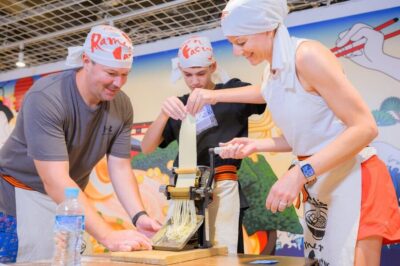
Ramen Cooking Class at a Ramen Factory with Souvenir
Read our review →
Kyoto Ramen and Gyoza Cooking Class with Professional Chefs
Read our review →
Home style Ramen and Homemade Gyoza in Kyoto
Read our review →
Kyoto Michelin Ramen Workshop or Painting Ramen Essentials
Read our review →Kyoto Ramen & Gyoza Cooking Class with Professional Chefs
Read our review →Also filed under