
Reviewed · COOKING CLASSES
Ramen Gyoza Onigiri Japanese Cooking Class in Kyoto
Ramen at home starts with broth mastery. In Kyoto, this cooking class with Chef Nori is a fast, hands-on way to learn ramen broth plus gyoza and onigiri, all in about 90 minutes. I love that the lesson is designed for real take-home results, not just watching someone cook, and that you work in a small group where questions actually land.
One thing to consider up front: the class focuses on the soup side of ramen. You will not make the noodles here. Also, diet options are limited, so if you need vegan, gluten-free, or other special diets, this may not be the right fit.
You start at Manryo Japanese Cooking Class in Kyoto, cook everything you make, and then eat as a group after. The payoff is simple: you leave with skills for ramen broth, gyoza wrapping, and rice ball shaping, plus a meal you made yourself.
In This Review
- Key Points to Know Before You Go
- Where You Cook in Kyoto: Manryo Class Location and Setup
- The 90-Minute Flow: Ramen Broth, Gyoza Wrapping, and Onigiri Shaping
- Chef Nori and the Team: How English Instruction Works in Real Life
- What You Actually Make and Eat: Two Ramen Broths, Gyoza, and Rice Balls
- Regular vs Vegetarian Menu: The Tofu Swap and Its Limits
- Price and Value in Kyoto: Is $92.47 Worth It?
- Logistics That Matter: Small Groups, Mobile Tickets, and Food Coma Timing
- Who This Class Suits Best (and Who Should Skip It)
- Should You Book This Kyoto Cooking Class?
- FAQ
- How long is the Ramen Gyoza Onigiri cooking class?
- What dishes do I learn to make?
- Is lunch included?
- Do they make the ramen noodles in the class?
- What vegetarian option is available?
- Can the class accommodate vegan, gluten-free, or other special diets?
Key Points to Know Before You Go
- Broth-first ramen training: you learn how to build the soup flavor, not how to cook noodles.
- Hands-on gyoza and onigiri practice: wrapping dumplings and shaping rice balls are the real skill here.
- Chef Nori’s small group format: maximum 8 travelers means more instructor access.
- Regular or vegetarian menu choice: tofu replaces pork only; other ingredients stay the same.
- Lunch included: you eat what you cook right after class.
Where You Cook in Kyoto: Manryo Class Location and Setup
This class meets at Manryo Japanese Cooking Class, 841 Life Building B1 in Kyoto. The location is near public transportation, which matters in Kyoto where getting around can be a time puzzle. You are not relying on private transport, so plan to arrive a bit early, especially if you are hopping between neighborhoods.
The session ends back at the meeting point, so you are not stuck figuring out how to get home while your stomach is already doing a victory lap. You also get a mobile ticket, which is straightforward, modern, and easy to handle on the day.
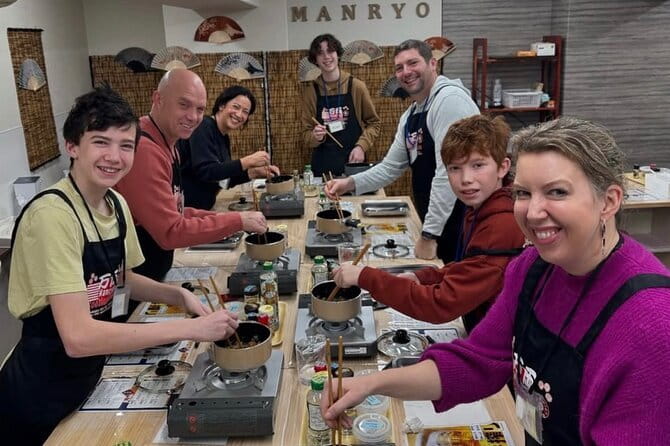
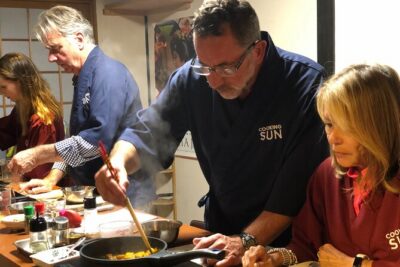
Inside, the setup is geared for active cooking. You are not standing on the sidelines. Expect clear step-by-step guidance, plus a workspace designed for groups who need room to cook without bumping elbows the whole time.
The 90-Minute Flow: Ramen Broth, Gyoza Wrapping, and Onigiri Shaping
The big promise here is doing a lot in a short window. The class runs about 1 hour 30 minutes, and the structure moves from broth technique to dumpling and rice ball skills.
First comes the ramen broth focus. The class is built around a core idea that many ramen tutorials skip: noodles are often easy to find near home, but the soup base is the hard part. Here, you learn how to prepare delicious Japanese-style ramen broth with ingredients and seasonings that are meant to be practical to recreate later.
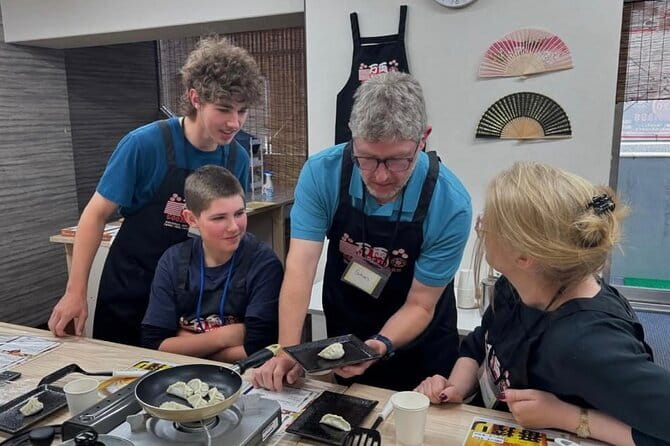
Then you shift to gyoza. The key lesson is the wrapping technique. You will practice how to form the dumplings properly so they cook up well, not just fold into something that looks kind of dumpling-ish. This is where you start feeling the satisfaction of learning a motion, then using it again.
Finally, you make onigiri, the classic Japanese rice balls. The shaping step is more than aesthetics. It is about getting the rice into a form that holds together and eats well. If you have ever tried onigiri at home and felt it turned into rice crumbs on contact, this is the session that helps you fix that.
One practical note: the class teaches ramen broth, but it does not make noodles. If you are coming in expecting a full ramen assembly with noodles cooked from scratch, temper that expectation and enjoy the broth mastery instead.
More bowls worth the wait
- Ramen Cooking Class at Ramen Factory in Kyoto
★ 5.0 · 1,937 reviews - Kyoto: Ramen Cooking Class at a Ramen Factory with Souvenir
★ 4.9 · 532 reviews - Kyoto: Ramen, Gyoza, and Onigiri Cooking Class
★ 5.0 · 445 reviews - Kyoto Ramen and Gyoza Cooking Class with Professional Chefs
★ 5.0 · 282 reviews
Chef Nori and the Team: How English Instruction Works in Real Life
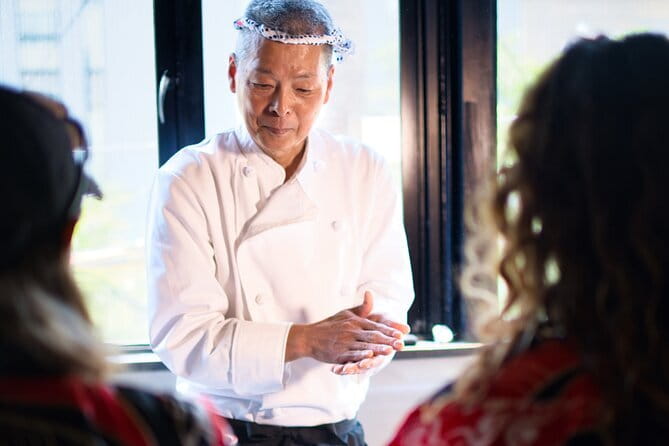
Chef Nori leads the class, and the teaching team supports him throughout. The instructors are English-speaking, and that makes a real difference when you are learning textures, timing, and technique, not just ingredients.
What stands out from how the class is described is the “do it yourself” style. You are not learning by memorizing a recipe card. You are learning by building, wrapping, shaping, then eating what you made. That approach tends to stick.
Also, the class has a friendly, upbeat tone. You will likely get instruction plus some humor from the team. The jokes are not the point, but they can help when you feel a little nervous about cooking technique in a foreign language setting. Either way, the key is that the instructions are clear enough that you can follow along without guessing.
And with a maximum of 8 travelers, the class is small enough that you can ask questions without waiting your turn for half the lesson.
What You Actually Make and Eat: Two Ramen Broths, Gyoza, and Rice Balls
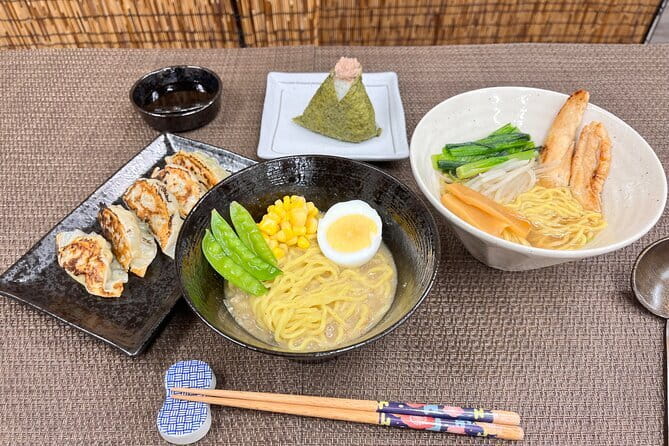
You are making a full trio of Japanese comfort foods in one session: ramen, gyoza, and onigiri. The ramen side is broth-based. The gyoza is dumplings you wrap yourself. The onigiri is rice balls you shape yourself.
The ramen portion focuses on the soup. The class is described as covering the ramen broth technique, and you will learn ingredients and seasonings that you can likely pick up and use at home. The goal is that when you crave ramen later, you are not just cooking noodles and hoping for the best. You are making the flavor foundation.
For gyoza, the key skill is wrapping. You learn the method to create dumplings that are well formed. That matters because the outside and inside ratio affects how the dumpling feels when you bite in, and good wrapping helps with cooking results.
For onigiri, the lesson centers on shaping. Again, this is a technique session. If you leave Kyoto able to shape onigiri cleanly and consistently, you have gained something you can use for lunches, picnics, or quick meals without needing a restaurant.
Then you eat what you make. Lunch is included, so you avoid the awkward part where a cooking class ends but you are still hungry and searching for food afterward.
Regular vs Vegetarian Menu: The Tofu Swap and Its Limits
You get two menu options: Regular Menu and Vegetarian Menu. The vegetarian option is straightforward: pork is replaced with tofu, while other ingredients remain the same.
This is a helpful option if you eat vegetarian sometimes but still want the class to run as designed. It also means you should not treat the vegetarian menu as a free-for-all. It is vegetarian by ingredient substitution, not a rework of the entire recipe.
If you follow more restrictive diets, pay attention to the exclusions. This class cannot accommodate vegan, pescatarian, gluten-free, halal, kosher, or other special diets listed by the provider. It also cannot accommodate anyone under 13 years old.
So the decision becomes simple. If your diet fits within Regular or Vegetarian Menu and you are comfortable with the specific tofu swap, you will likely enjoy this class. If you need a wider range of dietary adaptations, plan on a different cooking experience.
Price and Value in Kyoto: Is $92.47 Worth It?
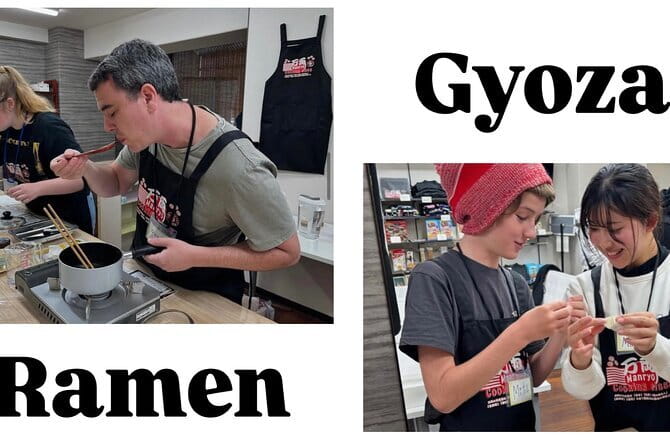
At $92.47 per person, this is not a budget meal. But you are not paying for a plate of food. You are paying for technique, instructor time, and ingredients plus lunch.
Here is the value logic I think is fair: you are learning three skills in one session.
1) ramen broth construction,
2) gyoza wrapping technique,
3) onigiri shaping.
That is a lot of practical kitchen capability for the price, especially because the class is structured to be doable at home. The ramen broth focus is also smart. Noodles are easy to source later. The difficult part is soup flavor, and that is what the class targets.
Also, small group size helps value. With a maximum of 8 people, you are more likely to get guidance tailored to what you are doing, not what you wish you were doing.
If you compare this to paying for several meals plus separate activities, it can start to look reasonable. You get a meal now, and you get the chance to recreate similar flavors after you return home. That combination is where cooking classes become travel money well spent.
A quieter way to spend a day in Kyoto
Logistics That Matter: Small Groups, Mobile Tickets, and Food Coma Timing
The class is designed to be efficient, and logistics are part of that. You have a fixed duration of about 1 hour 30 minutes. That means you should plan the rest of your day around it. Kyoto is easy to overbook, and a cooking class is not the kind of activity you want to rush.
The venue is near public transportation, and you return to the meeting point at the end. That keeps the day simple, especially if you are moving between sights afterward.
The group size cap at 8 travelers is a practical win. When you cook, you need space and you need someone to correct mistakes before they become food disasters. A smaller group generally means faster feedback, and that is the kind of thing that makes the difference between learning and just following steps.
Mobile ticket also helps. No printed voucher juggling. Just show it on your phone.
Who This Class Suits Best (and Who Should Skip It)
This experience is a strong match if you want hands-on Japanese cooking in a single, compact session. It is especially good for people who:
- love ramen flavors and want the soup technique,
- enjoy building skills you can repeat at home,
- want both comfort food and a real process lesson.
It is also a great fit for groups who want to do something different from temples and shopping, without it being an all-day commitment.
It may not suit you if:
- you want a full ramen noodle assembly, because noodles are not made in the class,
- you need vegan, gluten-free, pescatarian, halal, kosher, or other special dietary accommodations,
- you are traveling with children under 13.
And if you arrive expecting a quiet, sit-and-watch workshop, you might find it more active than you planned. This class is cooking, not theater.
Should You Book This Kyoto Cooking Class?
Book it if your goal is practical Japanese comfort food skills you can reuse. The broth-first approach is the best reason to choose this class. It trains the part of ramen most home cooks struggle with, and it does it while you are also learning gyoza wrapping and onigiri shaping.
I would skip it if your dietary needs are outside the Regular and Vegetarian Menu options, or if you specifically want noodles made from scratch. Also, treat it as a lunch experience, because you will end the session eating what you cooked.
If you are in Kyoto and want a high-impact activity that turns into real kitchen confidence after your trip, this one earns a yes.
FAQ
How long is the Ramen Gyoza Onigiri cooking class?
It runs for about 1 hour 30 minutes.
What dishes do I learn to make?
You learn to make ramen broth, gyoza, and onigiri.
Is lunch included?
Yes. After cooking, you enjoy what you made for lunch.
Do they make the ramen noodles in the class?
No. The class focuses on preparing ramen broth, and noodles are not made.
What vegetarian option is available?
You can choose a Vegetarian Menu. In that option, pork is replaced with tofu, while other ingredients remain the same.
Can the class accommodate vegan, gluten-free, or other special diets?
No. The class cannot accommodate vegan, pescatarian, gluten-free, halal, kosher, or other special diets, and it also cannot accommodate participants under 13 years old.
More Workshops in Kyoto
New This Season
- Koyasan Day Trip by Private Car from Kyoto
- Old Port Town and Ultimate Sake Tasting Private Tour From Kyoto
- Kyoto’s Timeless Charm: 3hr Exploration of History and Peace
- Kyoto: 5 Types of Sushi Making
- Sacred Peak & Ancient Paths: Kurama-Kibune Hiking Experience
- Kyoto: Exclusive ZEN practice at Manpukuji temple in Uji
- Kyoto: Private Seasonal Aroma Yoga Class
- Traversing Kyoto’s Scenic West – Arashiyama to Kinkakuji
Cooking Classes, compared.
Ramen Cooking Class at Ramen Factory in Kyoto
Read our review →
Ramen Cooking Class at a Ramen Factory with Souvenir
Read our review →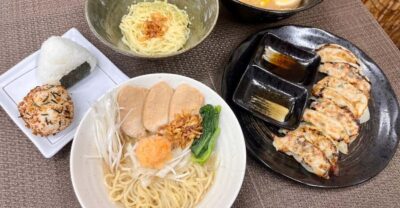
Japanese Washoku Bento Small Group Cooking Class
Read our review →
Japanese Traditional Sweets Making and Tea Ceremony
Read our review →
Kyoto Ramen and Gyoza Cooking Class with Professional Chefs
Read our review →
Also filed under