
Reviewed · TEA CEREMONIES
Tea ceremony by the tea master in Kyoto SHIUN AN
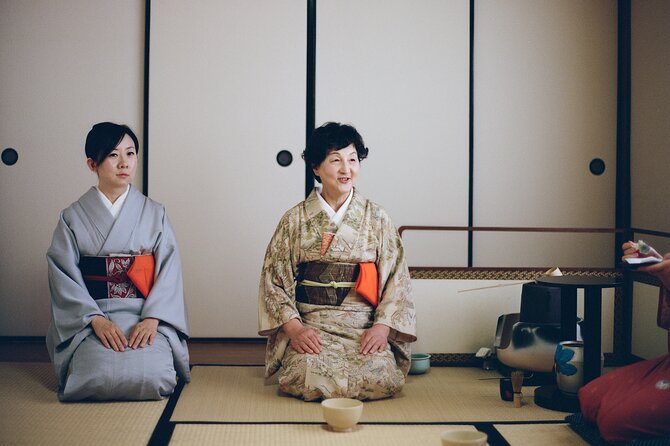
Kyoto slows you down for matcha. This is a small-group Kyoto tea ceremony near Daitoku-ji, with you learning the steps and then making your own hands-on matcha. It runs about 45 minutes, and each session is kept intimate so the tea master can guide you at an unhurried pace.
I especially like the way the host sets the room before any tea is made, with hanging scrolls and tea-room details like flower arrangements and the layout you are meant to notice. The one real catch is logistics, this experience is in a quieter residential area and can involve stairs, so plan ahead if stairs are an issue for you.
In This Review
- Key highlights to know before you go
- Kyoto Matcha in a Real Tea Room, Not a Tourist Stage
- Group size and timing: 45 minutes that actually teaches
- Getting to Shiun An: north Kyoto calm, plus a navigation challenge
- Step one inside the tea room: scrolls, flowers, and room layout
- Who teaches you: a tea master with a tea name
- Matcha and sweets: the pause that makes the ceremony feel human
- The main event: make your own matcha, then make it again
- Socks and tatami etiquette: the included details that matter
- Price and value: $33.03 for a hands-on craft session
- Who this is for, and who might want a different plan
- Should you book Shiun An?
- FAQ
- How long does the tea ceremony take?
- What is the group size like?
- Where does the tea ceremony take place?
- What will I be provided during the ceremony?
- Will I be able to make matcha myself?
- How many bowls of matcha and sweets are included?
- Is transportation or pickup included?
- Can I cancel and get a full refund?
- Are service animals allowed?
Key highlights to know before you go
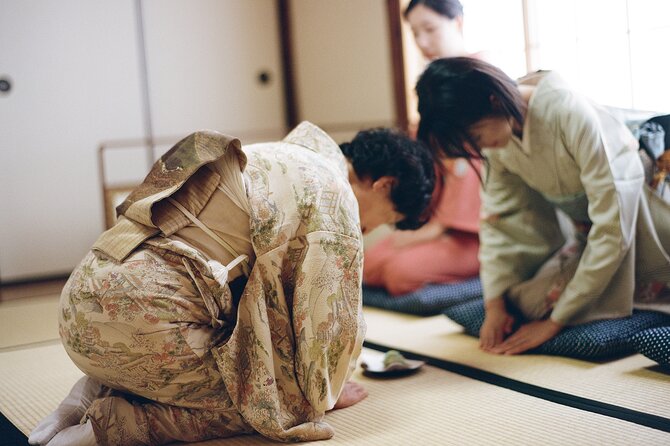
- Tea master credentialed with a tea name: the host is presented as a fully qualified tea professor, not a performer.
- Near Daitoku-ji and easy bus access to Kinkaku-ji: a great add-on if you are already planning north Kyoto.
- Two bowls of matcha plus two kinds of sweets: you do not just watch, you taste and practice.
- Utensils and tea tools provided: you get a tea container, tea bowl, scoops, and whisk, plus guidance on how each is used.
- Socks and a fold fan included: small extras that make the tatami-floor setting feel more authentic.
Kyoto Matcha in a Real Tea Room, Not a Tourist Stage
If you want Kyoto to feel like Kyoto, you need at least one slow, quiet activity. This tea ceremony sits near the Zen Buddhist monastery Daitoku-ji, and that matters. Daitoku-ji’s link to tea culture helped shape how Japanese tea is practiced, with emphasis on form, attention, and calm.
You also get a useful geography win. You are not far from Kinkaku-ji, the Golden Pavilion, and it is only four bus stops away. So you can pair these two without spending your whole day on transit. The best part is that the ceremony itself is not trying to compete with big temple crowds. It is meant to be a pause.
Group size and timing: 45 minutes that actually teaches
The ceremony is built for a small group. The maximum is 6 people per session, and during peak seasons it can go up to 8. That small size is more than a comfort perk. It usually means you get real instruction, not just a demonstration you admire from the back.
The timing is around 45 minutes, so it is not a long workshop. Think of it as a focused intro with hands-on practice. You’ll start with the tea room and etiquette basics, then move into making matcha with guidance, and end with you preparing your own bowl(s).
More bowls, poured the traditional way
- Kyoto: Tea Ceremony in a Traditional Tea House in Kiyomizu
★ 4.9 · 3,519 reviews - Kyoto: Tea Ceremony Ju-An at Jotokuji Temple
★ 4.9 · 3,207 reviews - Kyoto: 45-Minute Tea Ceremony Lesson Experience
★ 4.3 · 2,378 reviews - Kyoto: Table-Style Tea Ceremony at a Kyo-Machiya
★ 4.9 · 1,211 reviews
Getting to Shiun An: north Kyoto calm, plus a navigation challenge
The meeting point is at 955-1 Idachō, Kamigyo Ward, Kyoto (602-8302). The area is near public transportation, but multiple notes point out that the location can be tricky to find and it is not right in the usual tourist loop.
Here is how I’d plan it for less stress:
- Leave early so you are not sprinting uphill while trying to match building numbers.
- Use Google Maps for the exact address and give yourself buffer time.
- If you are coming from a train station, consider adding a short taxi or similar ride from a nearby transit point to save energy.
One more practical detail: the ceremony location involves stairs, and people have specifically called them out as difficult. If you have mobility concerns or trouble sitting on the floor, mention it ahead of time and plan to arrive with extra patience.
Step one inside the tea room: scrolls, flowers, and room layout
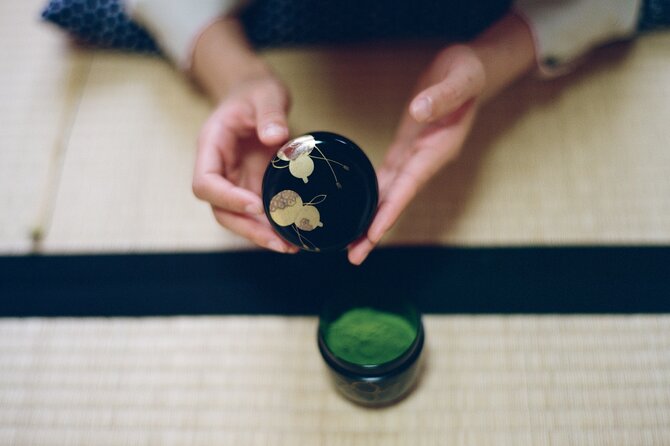
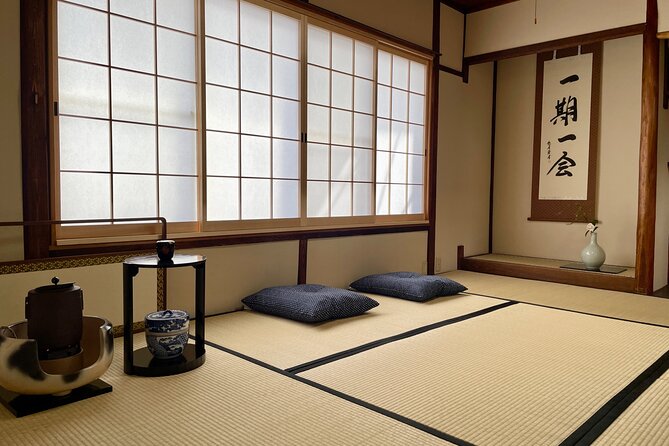
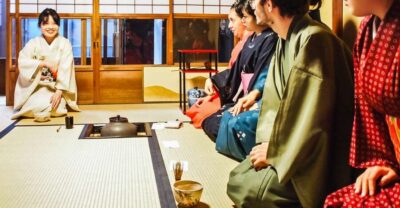
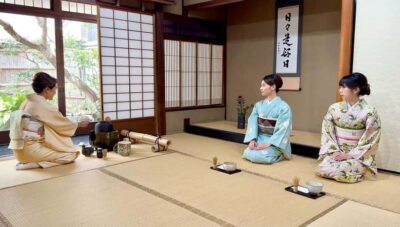
The host brings you into the tea room at the start. Before any whisking happens, you look at the hanging scrolls and the seasonal flower arrangements. This sounds simple, but it sets the tone fast: tea is not just taste. It is observation.
You’ll also get an explanation of how the room is arranged and why those visual elements matter. That is part of the discipline of the ceremony, and it is also how you avoid feeling like you are just following a ritual without meaning. When you understand what you are looking at, the tea experience becomes clearer and more personal.
Who teaches you: a tea master with a tea name
The description highlights that the tea masters have a tea name, presented as full professor qualification. In plain terms, this is why the experience feels careful rather than scripted. When a teacher is trained to that level, you tend to get the small, technical points that make matcha preparation feel like art and not like a kitchen shortcut.
You’ll see that in the way the host explains:
- the steps of the ceremony,
- the utensils and what each is for,
- and the sequence for serving.
And because it is a small group, you can usually ask questions without feeling like you are interrupting a factory line. Several people also noted that English interpretation makes the meaning easier to grasp, which is important when the gestures and pacing are the whole point.
Matcha and sweets: the pause that makes the ceremony feel human
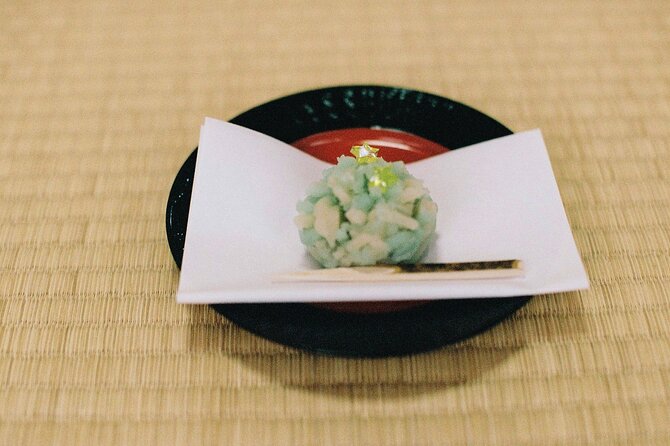
A key moment comes early, when you enjoy a seasonal sweet while watching the tea-serving process. In total, you get two bowls of matcha and two kinds of Japanese sweets.
That snack break is not filler. In a ceremony context, the sweet helps reset your palate so the matcha feels intentional, not harsh. It also gives you something to taste immediately while you are still learning the rhythm of the room.
If you have food allergies, make sure you let the provider know ahead of time. The experience specifically asks you to share allergies, and that is worth doing instead of guessing with ingredients.
A day of temples goes further with something to break it up.

The main event: make your own matcha, then make it again
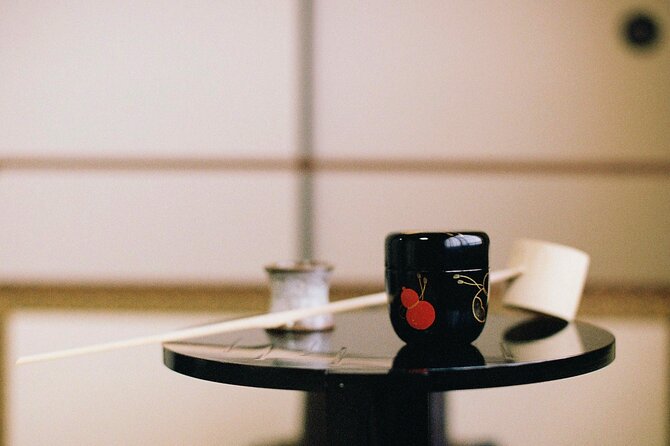
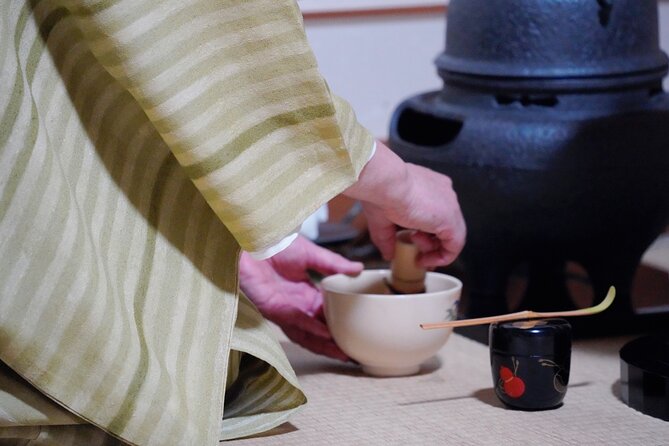
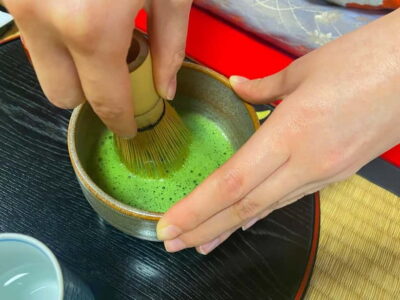
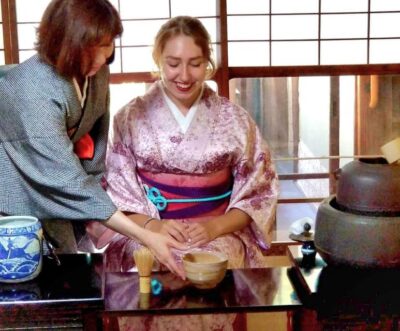
This is the part most people remember, because you are not just tasting. Each guest gets the opportunity to make their own bowl of matcha, mastering the basics of tea making.
You’ll be provided with the core tools:
- a tea container,
- a tea bowl,
- tea scoops,
- and tea whisks.
You’ll learn the sequence and technique step-by-step, then you’ll practice enough to understand what good matcha prep feels like. And since you enjoy two bowls of matcha total, you are not limited to one try. That makes it easier to see improvement and understand the difference small technique changes can create.
Socks and tatami etiquette: the included details that matter
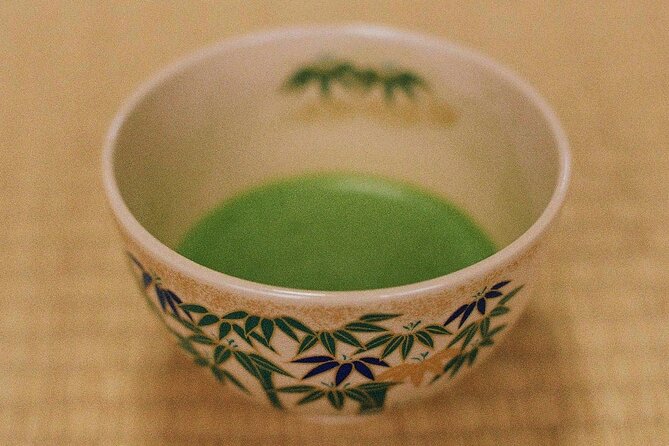
You receive white socks and a fold fan as part of the experience. That is not just a souvenir. Socks are part of how you handle the tatami-floor setting comfortably, and they help you feel like you belong in the space instead of hovering at the edges.
People have also commented on the setting being quiet and serene, even when the neighborhood feels residential. That calm is part of the value. You get away from the usual Kyoto sprint and into a place designed for stillness.
And yes, you’ll likely notice the tea master and assistants in traditional clothing. It adds to the atmosphere, but the real reason it works is that it signals you are entering a craft, not attending a show.
Price and value: $33.03 for a hands-on craft session
At $33.03 per person, this is priced like a short cultural workshop, but it includes more than many quick demonstrations. Your money covers:
- the utensils used during the lesson,
- matcha tea and sweets,
- and the hands-on portion where you actually make matcha,
- plus socks and a fold fan.
Not included: pickup and drop-offs. That matters because transportation is the one variable that can raise your real cost. Still, the trade-off is that the ceremony itself is small-group and hands-on, not a mass tourism stop.
For most visitors, the best value comes from the skill transfer. You leave with a better understanding of how matcha is prepared and why the ceremony pacing is structured the way it is. Even if you never copy the full ritual at home, you’ll at least know what techniques you enjoyed and what you want to taste again.
Who this is for, and who might want a different plan
This experience fits best if you:
- want an authentic-feeling Kyoto activity that is quieter than the busiest temple streets,
- like matcha and want more than a one-minute tasting,
- prefer a small group setting where you can actually learn and ask questions,
- enjoy cultural details like utensils, room arrangement, and seasonal sweets.
It may be less ideal if you:
- struggle with stairs or mobility limits, since access can involve difficult stairs,
- cannot comfortably participate in floor-based seating situations, though you should know the host has been accommodating to people who need seating adjustments when possible.
If you are unsure, contact the provider with your needs. The experience explicitly asks you to share food allergies, so communication is already part of the process.
Should you book Shiun An?
Yes, if you want a real taste of Kyoto tea culture that focuses on instruction and calm. The small group size, the credentialed tea master, the included sweets, and the hands-on matcha make it more than a quick photo stop.
Book it especially if you are already heading toward the north Kyoto area around Daitoku-ji or Kinkaku-ji. It is one of those activities that pairs well with sightseeing because it gives you a mental reset from the busy routes.
Just go in with two practical expectations: it can take extra time to find the location, and there can be stairs. If you handle those two points, you’re set up for a meaningful, peaceful matcha session.
FAQ
How long does the tea ceremony take?
It lasts about 45 minutes.
What is the group size like?
The maximum is 6 people per session, and during peak seasons it can increase to 8.
Where does the tea ceremony take place?
The meeting point is 955-1 Idachō, Kamigyo Ward, Kyoto 602-8302, Japan, and the activity ends back at the meeting point.
What will I be provided during the ceremony?
You’ll be provided with a tea container, tea bowl, tea scoops, and a tea whisk. You also get white socks and a fold fan, plus matcha tea and Japanese sweets.
Will I be able to make matcha myself?
Yes. The experience includes an opportunity for each guest to make their own bowl of matcha and practice the basics.
How many bowls of matcha and sweets are included?
You’ll enjoy two bowls of matcha and two kinds of Japanese sweets.
Is transportation or pickup included?
No. Pickups and drop-offs are not included.
Can I cancel and get a full refund?
Yes. You can cancel up to 24 hours in advance for a full refund.
Are service animals allowed?
Yes, service animals are allowed.
New This Season
- Koyasan Day Trip by Private Car from Kyoto
- Old Port Town and Ultimate Sake Tasting Private Tour From Kyoto
- Sacred Peak & Ancient Paths: Kurama-Kibune Hiking Experience
- Kyoto’s Timeless Charm: 3hr Exploration of History and Peace
- Kyoto: 5 Types of Sushi Making
- Kyoto: Exclusive ZEN practice at Manpukuji temple in Uji
- Kyoto: Private Seasonal Aroma Yoga Class
- Traversing Kyoto’s Scenic West – Arashiyama to Kinkakuji
Tea Ceremonies, compared.
Tea Ceremony in a Traditional Tea House in Kiyomizu
Read our review →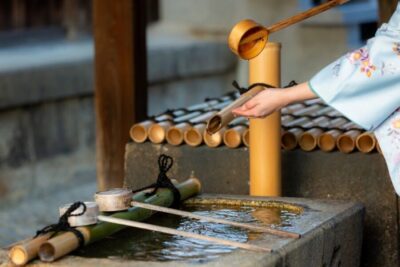
Kimono Tea Ceremony at Kyoto Maikoya, NISHIKI
Read our review →
Tea Ceremony in 100-year-old Kyo-Machiya Townhouse
Read our review →
Also filed under