
Reviewed · TEA CEREMONIES
Tea Ceremony in 150 Years Old Townhouse with Tables and Chairs
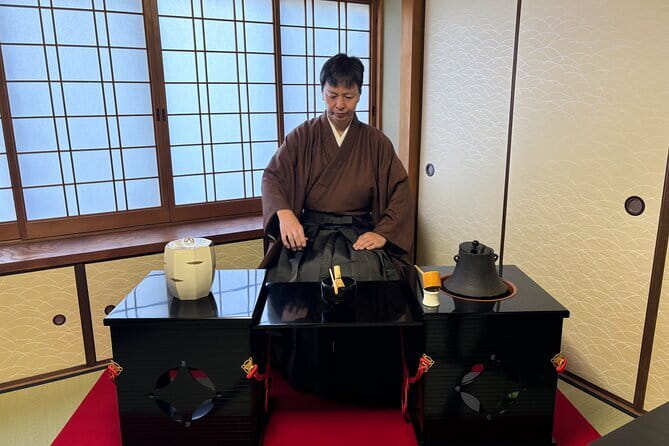
Matcha has manners, and Kyoto makes them beautiful. In a 150-year-old townhouse near Ninenzaka, you learn how a traditional tea ceremony works, step by step, in a calm small-group setting.
I especially like the hands-on matcha making, where you do the whisking and not just watch. I also like that the session pairs the tea with seasonal Japanese sweets, so you taste the culture instead of only hearing about it.
One possible drawback to keep in mind: this is a small-group experience (up to 15), so it is not private, and timing can feel off if the session before yours runs long.
In This Review
- Key things worth your attention
- A 150-Year-Old Tea Room in Ninenzaka: What the Setting Really Does
- Matcha Tea Etiquette: The Rules You’ll Notice Immediately
- 50 Minutes of Ceremony: How the Experience Flows
- The Matcha You Drink and Why Uji Matters Here
- Traditional Sweets: What You Taste Between Sips
- Price and Value: Is $28.90 a Fair Deal?
- Timing, Arrival Tips, and Simple Ways to Avoid Frustration
- Who Should Book This Matcha Ceremony, and Who Might Skip It
- Should You Book This Matcha Ceremony in Kyoto?
- FAQ
- How long is the tea ceremony experience?
- Where does the experience take place?
- Is the experience offered in English?
- What is included in the price?
- Do I need to rent a kimono?
- Are socks required?
- Can I record video during the ceremony?
- What if I have allergies?
Key things worth your attention
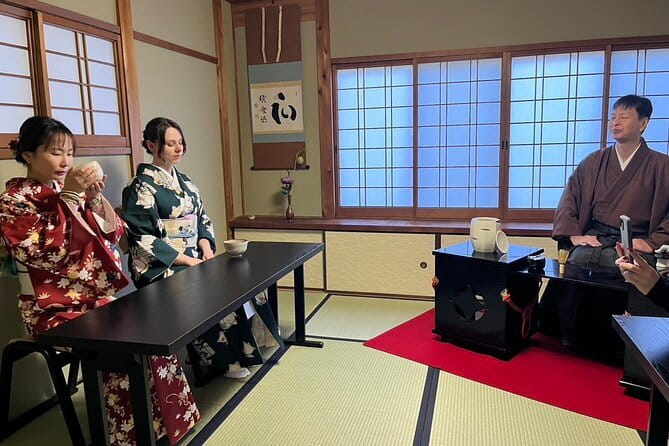
- 150-year-old townhouse setting in Ninenzaka: an intimate room where etiquette actually matters.
- You whisk your own matcha: not a demo only experience.
- Uji matcha is part of the cups you drink: the tea is a main event, not an afterthought.
- Seasonal sweets come with tea: two different kinds designed to pair well.
- Clear etiquette rules: socks, no perfume, modest clothing, and phone limits help keep the room focused.
- English-led instruction every day: guidance is built for visitors, with step-by-step explanations.
A 150-Year-Old Tea Room in Ninenzaka: What the Setting Really Does
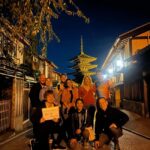
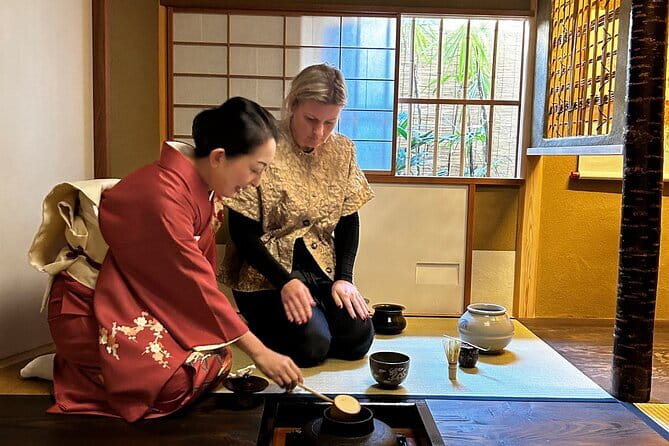
Kyoto’s matcha ceremonies can feel performative when they are done like a stage show. Here, the setting helps you slow down. You are in a traditional townhouse in the Ninenzaka and Sannenzaka area, where the atmosphere is quiet enough that the rituals make sense.
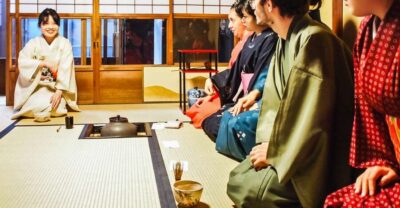
The small-group size is a big part of why this works. With a maximum of 15 people, you get enough attention to learn the movements, and the tea master can keep the room respectful. If you have ever wondered what tea etiquette looks like in practice, this is the kind of place where you can actually see it happen.
Practical note: the meeting point is Tea Ceremony & Cultural Experience Kangetsu Kyoto in Higashiyama Ward, near public transportation. You will likely want to arrive a few minutes early in this neighborhood, where lanes can be confusing when you are also looking for the right doorway.
Matcha Tea Etiquette: The Rules You’ll Notice Immediately
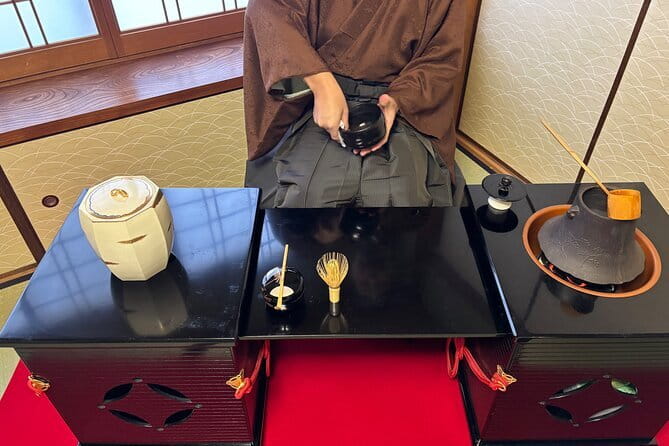
Tea ceremonies are more than taste. The rules shape the whole experience, and you will feel them as soon as you enter the tea space.
Here are the etiquette points you should plan for:
- Wear socks in the tea room. If you forget, you can purchase socks on site.
- Dress modestly. Clothing should not expose too much skin.
- No perfume. They explicitly prohibit it because scent interferes with the tea and incense in the room.
- Phones are limited. Only smart phones are allowed in the tea room. Video recording during the instructor’s demonstration is prohibited.
- Children under 7 are not allowed.
These rules might sound strict, but they make the session feel serious in a good way. You stop thinking about selfies and start paying attention to the tea, the utensils, and the rhythm of the ceremony.
If you have allergies, tell the team in advance. That matters because you will be eating traditional sweets as part of the session.
More bowls, poured the traditional way
- Kyoto: Tea Ceremony in a Traditional Tea House in Kiyomizu
★ 4.9 · 3,519 reviews - Kyoto: Tea Ceremony Ju-An at Jotokuji Temple
★ 4.9 · 3,207 reviews - Kyoto: 45-Minute Tea Ceremony Lesson Experience
★ 4.3 · 2,378 reviews - Kyoto: Table-Style Tea Ceremony at a Kyo-Machiya
★ 4.9 · 1,211 reviews
50 Minutes of Ceremony: How the Experience Flows
The session runs about 50 minutes, so the timing is tight but not rushed. You get a complete arc, from context to participation to a relaxed ending.
First, you get the explanation portion. The tea master teaches you what is going on and why each part matters. Based on what I learned from past visitors’ comments, they tend to explain both the history and the practical meaning behind the ritual, so it clicks even if you are brand new to matcha.
Next comes the sensory part. You taste high-quality matcha made in Uji, Kyoto, served in two cups during the ceremony. That is important because many tea tastings give you a tiny sip. Here, you actually get enough tea to notice texture, aroma, and flavor differences as you go.
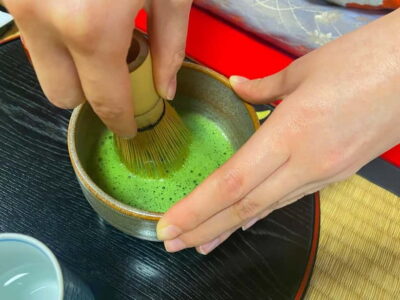
Then you move into the hands-on portion. You use the tools provided and learn how to prepare your own matcha. This is the part most people remember, because it turns matcha from a drink into an action. You will learn what to do, when to do it, and how to handle the utensils with care.
The session ends with a question-and-answer segment, followed by time to enjoy the sweets with your tea. If you are the kind of person who always has one extra question after a tour, this structure is built for you.
One small heads-up: if the group before you finishes late, you may wait. That is not unique to this place, but it is worth arriving early so you do not lose patience.
The Matcha You Drink and Why Uji Matters Here
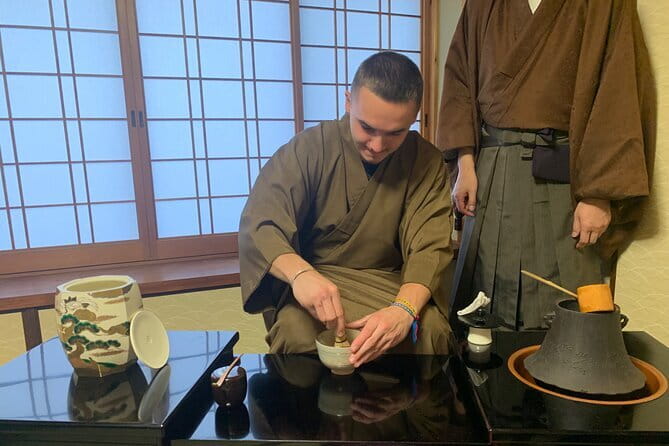
A good matcha ceremony should treat the tea like the star. This one does.
You will drink two cups of matcha made in Uji, Kyoto, and you also have the chance to learn what makes matcha special. Visitors often highlight that they leave understanding why the tea matters, not just how to whisk it.
Uji is famous for matcha for a reason, and tasting it during the ceremony is a practical way to connect that reputation to real flavor. Expect a tea that feels smooth and layered, not bitter in a harsh way. You should also pay attention to the aroma and the foam or consistency when it is prepared properly, because that is part of what you are learning to recreate during your own cup.
There is also a shop element worth knowing about. One featured comment notes that you can buy matcha of high quality right in the shop. If you want to bring home something you actually learned about, this is a convenient moment to do it, instead of hunting later when you are tired.
Traditional Sweets: What You Taste Between Sips
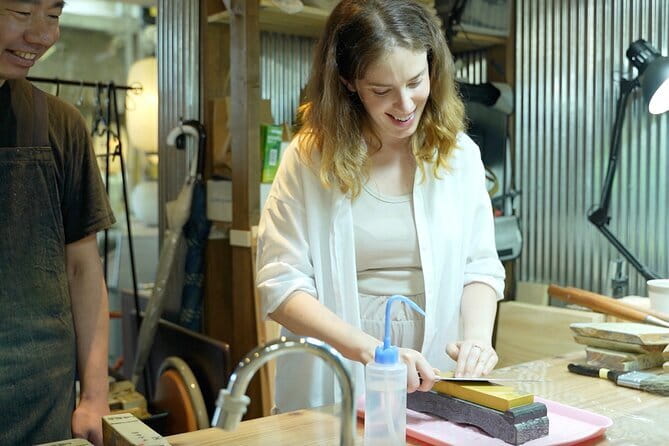
Tea ceremonies are paired experiences. Matcha is strong in flavor and aroma, so the sweets matter.
You get two different types of seasonal authentic Japanese sweets along with your tea. That seasonal detail is more than a nice touch. It means the sweetness, texture, and flavor profile can shift with what is happening in the season, so your cup of matcha feels balanced rather than repetitive.
For first-timers, this pairing is a fast way to understand how Japanese sweets are often designed to complement tea rather than overwhelm it. If you like tasting menus, you will probably enjoy the way this session makes you experience contrast: tea first, then sweets, then back to tea again.
If you have dietary needs beyond the simple allergy note, the data only asks you to inform them about allergies. So if you follow a specific diet, it is smart to check ahead rather than assume.
Price and Value: Is $28.90 a Fair Deal?
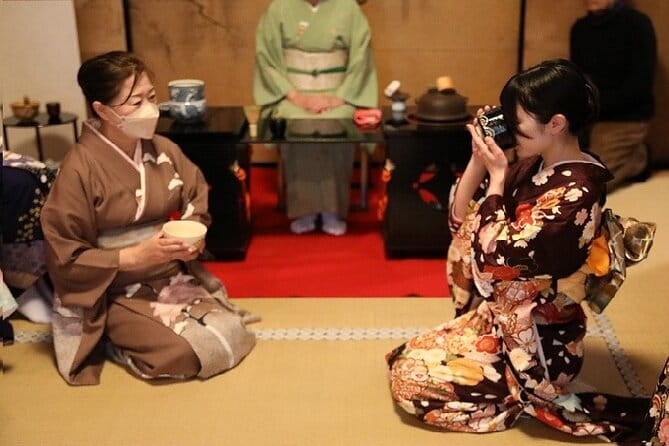
At $28.90 per person, this is not the cheapest activity in Kyoto, but it is also not trying to be a luxury splurge. The value comes from what is included for that time.
You get:
- Tools to make your own tea
- Two cups of high-quality matcha made in Uji
- Two types of seasonal Japanese sweets
So you are paying for a guided cultural lesson plus a real tasting plus participation. Many cheaper experiences turn into quick photo stops, or they let you “try” the ritual with little instruction. Here, the session is designed around learning how to prepare your cup properly, with English support every day.
There is also the option to add a kimono rental. Kimono is not included in the base price, but you can wear a two-piece kimono type for 1000 JPY. That is a nice upgrade if you want the full Kyoto look, but I would think of it as optional. The ceremony itself does not depend on wearing one.
If you like tea and you want a structured, respectful introduction that is actually hands-on, the cost makes sense.
A day of temples goes further with something to break it up.

Timing, Arrival Tips, and Simple Ways to Avoid Frustration
This experience is short, so your timing matters. You will start and end back at the meeting point, and the ceremony runs for about 50 minutes.
Do this to avoid stress:
- Plan to arrive early, especially if you are walking in the Ninenzaka and Sannenzaka area.
- Skip strong perfume before you go in. Even if you think it is subtle, the rule is firm for a reason.
- Wear socks. If you do not, you will need to buy them.
- Keep phone use respectful. Video recording during the instructor’s demonstration is prohibited.
One review also mentions that instructions for finding the location were helpful, including a text with directions. That is a good sign that you will not be left guessing for too long.
If you are sensitive to waiting, aim to start your day with a little buffer around this booking. A short ceremony can feel longer if you are standing around.
Who Should Book This Matcha Ceremony, and Who Might Skip It
This is a great choice if:
- You want a real introduction to Japanese tea etiquette.
- You like learning by doing, not just watching.
- You enjoy history and meaning, but you still want the experience to feel relaxing.
- You are in Kyoto for a short time and want one focused cultural activity that fits into a day.
It may not be your best pick if:
- You are expecting a private, one-to-one session. This is set up as a small-group experience with a max of 15.
- You want a casual, no-rules photo shoot. The etiquette rules are real, and the room expects quiet attention.
- You have kids under 7. The experience does not allow children below that age.
For couples, this kind of ceremony often lands well because the format is intimate and the pace is calm. For tea lovers, it is also a solid way to understand matcha beyond flavor.
Should You Book This Matcha Ceremony in Kyoto?
Yes, if you want a respectful, structured matcha lesson in the Ninenzaka area, this is a strong bet. You get what matters most: guided etiquette, a real tasting of Uji matcha, and the chance to make your own cup. The small-group size helps it feel personal, and the seasonal sweets keep the experience from being all ceremony and no pleasure.
Book it if you can follow the room rules, and if you are fine with group dynamics. If you want complete privacy or you plan to record freely, look for a different style of experience.
Also factor in weather. This experience requires good weather, and if it is canceled due to poor weather, you will be offered a different date or a full refund.
FAQ
How long is the tea ceremony experience?
It runs for about 50 minutes.
Where does the experience take place?
It is in Kyoto, in the Ninenzaka area, with the meeting point at Tea Ceremony & Cultural Experience Kangetsu Kyoto in Higashiyama Ward.
Is the experience offered in English?
Yes. Experiences in English are available every day.
What is included in the price?
Your ticket includes the fees and taxes, tools to make your own tea, two cups of high-quality matcha made in Uji (Kyoto), and two different types of seasonal Japanese sweets.
Do I need to rent a kimono?
Kimono is not included. You can wear a two-piece kimono type for 1000 JPY.
Are socks required?
Yes, socks are required in the tea room. If you forget them, you can purchase socks.
Can I record video during the ceremony?
Video recording during the instructor’s demonstration is prohibited. Only smart phones are allowed in the tea room.
What if I have allergies?
You should inform the team in advance if you have any allergies.
New This Season
- Koyasan Day Trip by Private Car from Kyoto
- Old Port Town and Ultimate Sake Tasting Private Tour From Kyoto
- Kyoto’s Timeless Charm: 3hr Exploration of History and Peace
- Kyoto: 5 Types of Sushi Making
- Sacred Peak & Ancient Paths: Kurama-Kibune Hiking Experience
- Kyoto: Exclusive ZEN practice at Manpukuji temple in Uji
- Kyoto: Private Seasonal Aroma Yoga Class
- Traversing Kyoto’s Scenic West – Arashiyama to Kinkakuji
Tea Ceremonies, compared.
Tea Ceremony in a Traditional Tea House in Kiyomizu
Read our review →
Kimono Tea Ceremony at Kyoto Maikoya, NISHIKI
Read our review →
Tea Ceremony in 100-year-old Kyo-Machiya Townhouse
Read our review →
Also filed under