
Reviewed · ARTISAN CRAFT WORKSHOPS
Traditional Craft Experience Copper Tray Making in Kyoto
Copper and hammers, right in Kyoto. This private copper tray making workshop turns traditional Japanese metalcraft into something you can actually do with your own hands. You’ll use multiple hammer types to shape a small tray, then finish it with options for raw copper or a darkened look.
I love that the making part is hands-on from start to finish, not a sit-and-watch demo. I also like that you get guided steps for the tricky finishes, while the safe, heated stages are handled by a metalsmith. One consideration: it’s not recommended if you have a metal allergy, since this is real metalwork throughout.
You’ll finish with a tray sized about 9.5 cm across (outer diameter) and 1.5 cm tall, packed in a paulownia box. In a 2-hour session, you leave with a souvenir that looks handmade because it is handmade.
In This Review
- Key things to know before you go
- Hammered Copper Tray Making in Kyoto: What You’re Really Signing Up For
- The Tray You Make: Size, Tools, and the Feel of Shaping Copper
- Choosing Your Look: Raw Copper Polish vs Blackened Copper Wax Finish
- A Typical 2-Hour Flow: From Meeting Point to Finished Tray
- What’s Included, and What You’ll Need to Bring (Spoiler: Not Much)
- Price and Value: Is $120.07 Worth It in Kyoto?
- Private Workshop With Akari: How the Experience Feels in Real Life
- Who Should Book This Copper Tray Workshop
- Getting There and Planning Your Timing in Kyoto
- Should You Book Copper Tray Making in Kyoto?
- FAQ
- How long is the Traditional Craft Experience Copper Tray Making in Kyoto?
- Where is the meeting point?
- What’s included in the price?
- Can I take the copper tray home the same day?
- What copper finish options are available?
- Is there free cancellation?
Key things to know before you go
- Hammer variety: you’ll use a hammer, a wooden hammer, and a rubber hammer to shape the tray
- Two finish styles: copper left as-is then polished, or copper blackened and then waxed
- Metalsmith handling for safety: blackening, wax coating, and heated steps are done by the craftsperson
- Take it home same day: your tray is ready to bring back the day of your workshop
- Compact keepsake: finished size is about 9.5 cm outer diameter and 1.5 cm height
Hammered Copper Tray Making in Kyoto: What You’re Really Signing Up For
This is the kind of Kyoto craft experience that feels practical. You’re not just paying for a finished object. You’re paying to learn how metal behaves under impact, and to get the right finishing touches so the tray looks sharp when you get home.
The workshop is private, so it’s just your group. That matters here because the work needs attention and the craftsperson can adjust their help to your pace. The session runs about 2 hours, which is long enough to feel the process from rough shaping to a finished tray.
Your base experience is traditional metalcraft with real tools. You’ll hammer copper into a tray form, learning how different hammers change texture and shape. Then you choose how you want the copper to look at the end.
The Tray You Make: Size, Tools, and the Feel of Shaping Copper
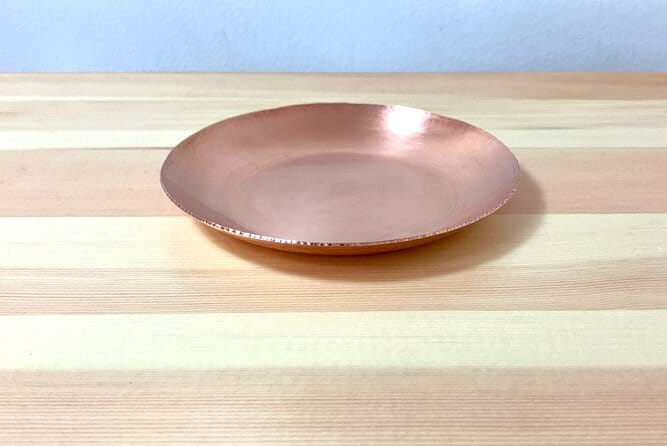
The finished tray is about 9.5 cm outer diameter and about 1.5 cm in height. It’s small, which is part of the charm. This size is perfect for a desk catchall, a tea-biscuit tray, or a place to set keys or small jewelry at home.
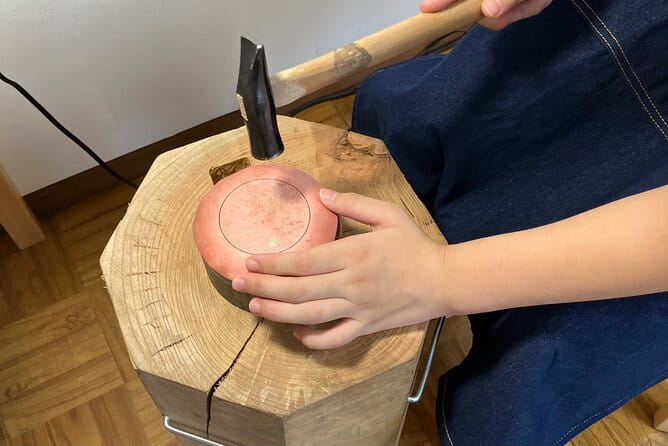
During the main making time, you’ll shape the tray by hitting copper. The workshop uses three kinds of tools: a hammer, a wooden hammer, and a rubber hammer. That’s a big deal for two reasons.
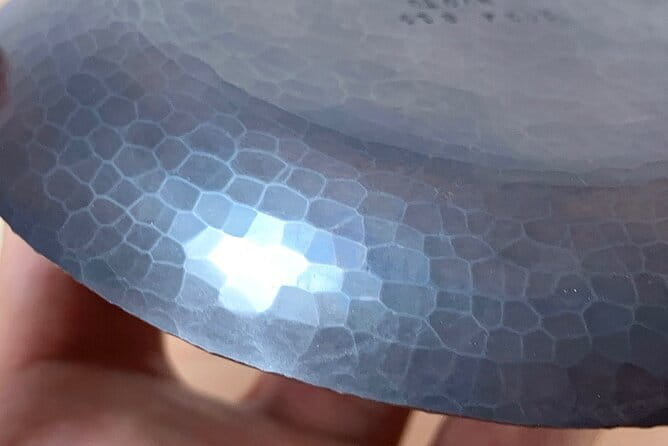
First, copper reacts differently depending on the contact surface. A harder strike can leave a stronger mark and more dramatic texture, while softer contact tends to control the forming a bit more gently. Second, you get a chance to notice how your technique changes the look of the metal. It’s not just repetition, it’s feedback.
A skilled craft worker assists you the whole way. So even if you’ve never hammered anything, you’re not left to guess how hard to hit or where to strike.
Make something with a Kyoto craftsman
- Authentic knife making experience at a blacksmith in Kyoto
★ 4.8 · 350 reviews - Kyoto: Calligraphy class at Buddhist temple in city center
★ 5.0 · 167 reviews - Roketsu dyeing experience: M course Roketsu Dyeing Experience
★ 5.0 · 163 reviews - Kyoto: Japanese Calligraphy Class
★ 4.8 · 89 reviews
Choosing Your Look: Raw Copper Polish vs Blackened Copper Wax Finish
You get to choose the copper color finish style. Option one is leaving the copper as-is, then polishing with an abrasive at the end. The payoff is a brighter, more coppery look, and you can watch it evolve over time. The workshop notes that you can enjoy the change of the expression of copper with each passing day, which is exactly what patina lovers enjoy.
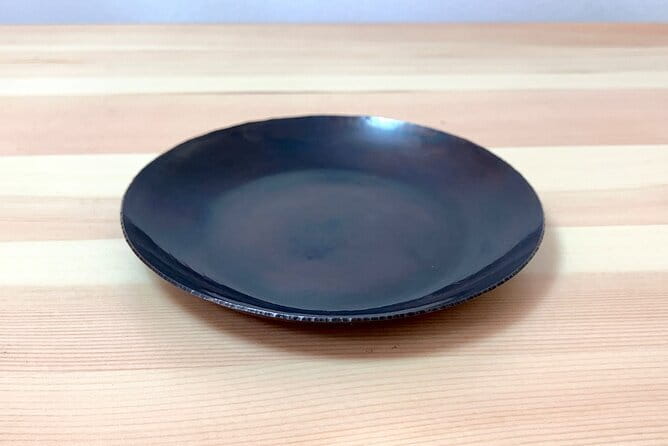
Option two is blackening the copper using ammonium sulfide diluted about 500 times with water. The workshop specifically says it has almost no effect on the human body, but it’s still done by a metalsmith. That’s practical guidance. Even if a solution is low-hazard, you still want the process handled by someone experienced with the material and the workflow.
After blackening, the tray is coated with wax and finished. The waxing is also done by the metalsmith for safety reason, because it requires heating the tray. This is one of those moments where you benefit from doing the craft yourself, while letting specialists handle the steps that need controlled heat and proper handling.
A Typical 2-Hour Flow: From Meeting Point to Finished Tray
You start at the workshop meeting point in Kyoto: 1-15 Shūgakuin Yamanohanachō, Sakyo Ward, Kyoto 606-8025, Japan. The activity ends back at the meeting point, so you’re not stuck figuring out where your day ends.
Because this is a private workshop, the group stays together and works through the steps as one unit. You’ll also get a mobile ticket, so plan to have your phone ready for check-in.
Here’s the practical rhythm of what you’ll do during the session:
- Get set up and start forming the tray: you begin hammering copper into a tray shape with the help of the craft worker.
- Use multiple hammer types: you’ll try the hammer, wooden hammer, and rubber hammer as you refine texture and form.
- Choose your finish direction: you pick raw copper polished finish or blackened finish.
- Finish stages handled by the metalsmith: blackening and waxing are completed by the metalsmith, including the wax coating that needs heating.
- Take home your tray the same day: your tray is packed in a paulownia box and you leave with it.
That last point is what makes this experience a strong value. Many craft classes end with something like you’ll mail it later. Here, you bring it back the day you make it.
What’s Included, and What You’ll Need to Bring (Spoiler: Not Much)
The price covers the essentials to do the craft. Included items are:
- Material (the copper you work on)
- Rental of tools
- Paulownia box for taking the finished tray home
Not included is private transportation, so you’ll want to use public transit or pre-arranged local transport to get to the address. The listing also notes it’s near public transportation, which helps if you’re already moving around Kyoto by bus or train.
You don’t need to bring your own hammers or abrasives. Tool rental is handled for you, which keeps the experience simple, and lets you focus on the technique.
One more important detail: it’s not recommended for people who are allergic to metals. If that’s you, treat this as a clear no. Even if the metalsmith does the chemical finish safely, you’d still be working with copper during the main workshop.
Price and Value: Is $120.07 Worth It in Kyoto?
At about $120.07 per person for roughly 2 hours, this is not a bargain-basement souvenir. But it’s also not overpriced for what you’re getting.
Here’s where the value comes from:
- You get a private workshop setting, not a crowded group line.
- You get hands-on copper forming using multiple hammer tools.
- You receive a real craft finish, with the safer chemical and heated steps handled by a metalsmith.
- You take home the finished item the same day, packed in a paulownia box.
A store-bought tray can be beautiful, but it doesn’t carry the learning and satisfaction of shaping the metal yourself. This class is paying for the experience of making, plus the craft know-how that turns a hammered blank into a tray that looks right.
If you like craft and hands-on work, you’ll likely feel good about the price because you’re not just buying something. You’re leaving with a personal project.
A day of temples goes further with something to break it up.



Private Workshop With Akari: How the Experience Feels in Real Life

The workshop is run by OKUMURA, and one review specifically highlights Akari for guiding the process. The vibe, based on that kind of feedback, is very much about enjoying the full sequence, from first hammer hits to the finished tray.
The review also calls out that the workshop felt fun and memorable, and that the person appreciated being able to bring home beautiful souvenirs made through the process itself. That lines up with how this craft class is designed: you do the shaping, and the finishing is handled with expert safety.
If you like craft work, this type of experience is especially satisfying because the results are tangible right away. You see the copper change from plain to polished or blackened. Then the waxed finish gives it a clean, complete look.
Who Should Book This Copper Tray Workshop

This fits best if you want:
- a hands-on Kyoto activity
- a small, take-home craft item that actually reflects your work
- guidance from a craftsperson with the ability to handle specialized finishing steps
It’s also a good choice if you’re a curious traveler who likes the idea of traditional Japanese metalcraft but doesn’t want to commit to a long course. The duration is around 2 hours, which keeps the experience from taking over your whole day.
It’s noted that most travelers can participate. Service animals are allowed too. And since it’s near public transportation, it’s easier to plug into a Kyoto schedule.
If you know you have a metal allergy, skip this one. The workshop involves direct metal contact and is not recommended for that reason.
Getting There and Planning Your Timing in Kyoto
Start time details aren’t listed here, but the key planning points are clear. You start at the address in Sakyo Ward and you end back at the same meeting point. That makes the schedule easy to build around because you’re not commuting twice to different places.
Because it’s near public transportation, you can plan your day around nearby transit stops rather than needing private transport. If you’re already sightseeing in Kyoto, you’ll likely find it convenient to fit in.
Plan to wear or bring clothing you’re comfortable working in. Hammering can be physical, and even though the tools and materials are provided, you’ll want to be ready for real craft time rather than a light demonstration.
Should You Book Copper Tray Making in Kyoto?
I think you should book this workshop if you want a Kyoto experience that is genuinely hands-on and still guided end-to-end. The biggest reason is the balance: you shape the copper yourself with multiple hammer types, then you get expert handling for the chemical and heated steps that affect the final finish.
It’s also a strong choice if you care about take-home value. You leave with a finished tray the same day, sized for real use, not just display. The paulownia box adds a nice touch too, and it makes the piece easier to transport.
Book it with confidence if you like craft, metalwork, or any activity where you can see the result of your effort right away. Skip it only if you have a metal allergy.
If that sounds like you, this is one of those Kyoto workshops that turns a rainy or busy day into a small, satisfying win.
FAQ
How long is the Traditional Craft Experience Copper Tray Making in Kyoto?
The experience lasts about 2 hours.
Where is the meeting point?
The meeting point is at 1-15 Shūgakuin Yamanohanachō, Sakyo Ward, Kyoto, 606-8025, Japan.
What’s included in the price?
The price includes the material, rental of tools, and a paulownia box.
Can I take the copper tray home the same day?
Yes. You can bring back the tray on the day.
What copper finish options are available?
You can choose copper as it is (then polish with an abrasive at the end), or choose a blackened copper finish.
Is there free cancellation?
Yes, free cancellation is offered. You must cancel up to 24 hours in advance of the experience start time for a full refund.
New This Season
- Koyasan Day Trip by Private Car from Kyoto
- Old Port Town and Ultimate Sake Tasting Private Tour From Kyoto
- Kyoto’s Timeless Charm: 3hr Exploration of History and Peace
- Kyoto: 5 Types of Sushi Making
- Sacred Peak & Ancient Paths: Kurama-Kibune Hiking Experience
- Kyoto: Exclusive ZEN practice at Manpukuji temple in Uji
- Kyoto: Private Seasonal Aroma Yoga Class
- Traversing Kyoto’s Scenic West – Arashiyama to Kinkakuji
Artisan Craft Workshops, compared.
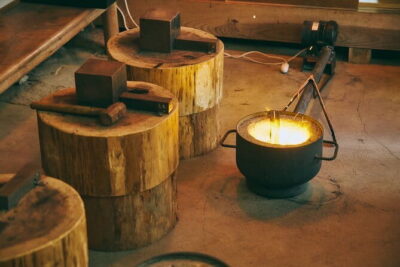
Authentic knife making experience at a blacksmith in Kyoto
Read our review →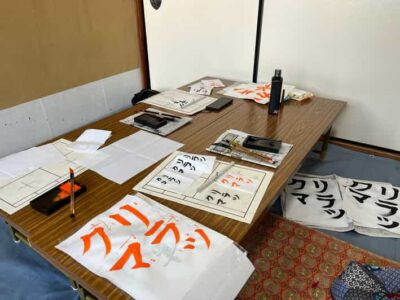
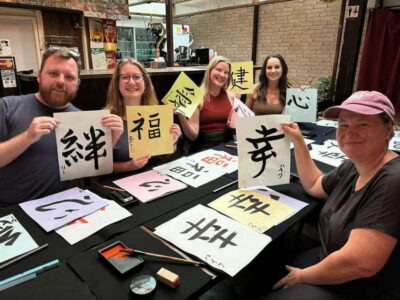
Calligraphy class at Buddhist temple in city center
Read our review →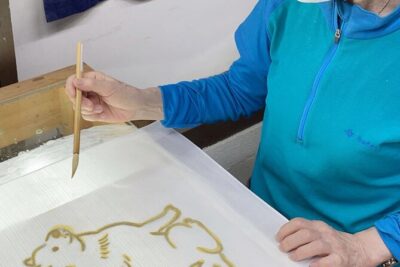
Roketsu dyeing experience: M course Roketsu Dyeing Experience
Read our review →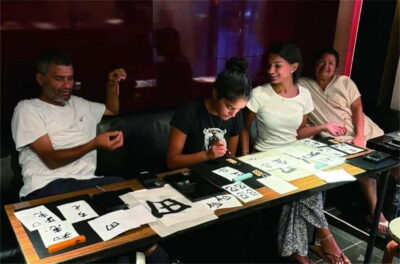

Traditional Japanese Washi Papermaking- Kyoto morning
Read our review →
Also filed under