
Reviewed · TEA CEREMONIES
Traditional Tea Ceremony Experience in Kyoto
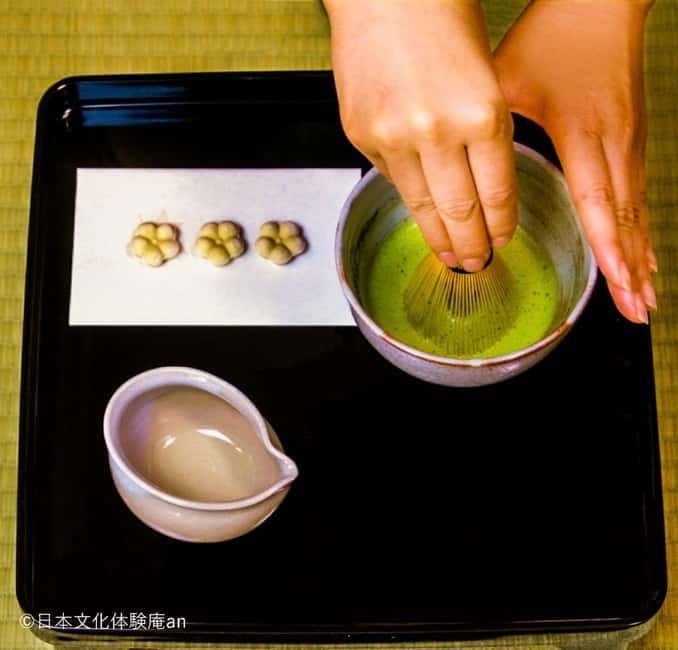
Matcha tastes better when you learn the ritual. This traditional-style Kyoto tea ceremony packs in a real OTE-MAE experience in just 30 minutes, including a single-origin matcha serving and OHIGASHI (Japanese dried sweets). I also like that the format is guided step-by-step, with you learning what each movement and utensil is for, not just watching from the sidelines. One possible drawback: it is short, and depending on the group and language support, you might not get the deeper, long-form history you’re hoping for.
I especially liked the comfort factor: you sit at tables and chairs, not on the floor. It’s also easy to reach, with the meeting spot a 1-minute walk from Exit 1 of Gojo Station on the Karasuma Line. The main thing to consider is that the building has no elevator and you’ll need stairs, so plan your route accordingly.
In This Review
- Key things to know before you go
- Kyoto tea ceremony in 30 minutes, with matcha and ohigashi
- Price and value: is $7 a good deal for Kyoto matcha?
- Where you meet near Gojo Station, and how to get there on time
- OTE-MAE at the table: what the tea master guides you through
- Single-origin matcha and OHIGASHI: what to look for in the cup
- How English support really works in this session
- Group size, crowding, and why “short and sweet” can be a feature
- Comfort and practical notes: stairs, no elevator, and staying on schedule
- Who should book this Kyoto matcha ceremony, and who should skip it
- Should you book this traditional tea ceremony in Kyoto?
- FAQ
- How long is the traditional tea ceremony experience?
- How much does it cost?
- Where do I meet for the ceremony?
- What is included in the experience?
- Is a completion certificate included?
- What languages are available during the ceremony?
- Is the ceremony wheelchair accessible?
- What are the operating hours?
- What if I arrive late or want to change my plans?
Key things to know before you go
- Single-origin matcha: you’ll get matcha made as part of the lesson, not just a generic tasting.
- OHIGASHI included: you’ll have the traditional dried sweet served with your tea.
- OTE-MAE experience: you’ll learn the steps and meaning of utensils and movements as you go.
- 30 minutes in a seated format: a short session that still feels like a proper mini ritual.
- Gojo Station area location: super convenient access near Gojo-dori.
- Language support varies: Japanese is the main language, with English help provided as much as possible.
Kyoto tea ceremony in 30 minutes, with matcha and ohigashi
Kyoto is where the tea culture took shape in Japan, so even a short session feels like a real taste of the tradition. Here, the focus is on doing the OTE-MAE flow in a hands-on way, while you learn what’s going on and why the movements matter. The experience is built around a single-origin matcha and a serving of OHIGASHI, which is a great combo for getting your mouth and mind aligned before you judge the tea.
I like that the tone is calm. Even though it’s an instruction session, the pace gives you time to actually pay attention. You’re not rushing between stops or juggling big logistics. You come in, you settle, you learn the ritual, and you leave.
Just keep your expectations realistic: 30 minutes is not the same as a full, multi-course ceremony that lasts much longer. If you want long explanations about who drank matcha historically and how the ceremony evolved over centuries, you might find this one feels basic.
Price and value: is $7 a good deal for Kyoto matcha?
At about $7 per person for a 30-minute guided tea ceremony, this is priced like a well-structured cultural add-on. The value is in three spots: you get single-origin matcha, you get OTE-MAE instruction, and you get OHIGASHI. Most cheap tastings are basically tea plus a quick explanation. This one is a full experience format.
Also, it’s in Kyoto, near a major transit hub. That matters because it reduces your time on commuting, which is often where “cheap” activities quietly become expensive. Here, the meeting point is close to Gojo Station, and the session time is short, so it can slot into a sightseeing day.
One more value note: there’s an optional completion certificate mentioned as extra (300 JPY). A certificate is not the point of the ritual, but if you like finishing souvenirs that are meaningful, it’s available. If you don’t care, skip it and just enjoy the tea and the lesson.
More bowls, poured the traditional way
- Kyoto: Tea Ceremony in a Traditional Tea House in Kiyomizu
★ 4.9 · 3,519 reviews - Kyoto: Tea Ceremony Ju-An at Jotokuji Temple
★ 4.9 · 3,207 reviews - Kyoto: 45-Minute Tea Ceremony Lesson Experience
★ 4.3 · 2,378 reviews - Kyoto: Table-Style Tea Ceremony at a Kyo-Machiya
★ 4.9 · 1,211 reviews
Where you meet near Gojo Station, and how to get there on time
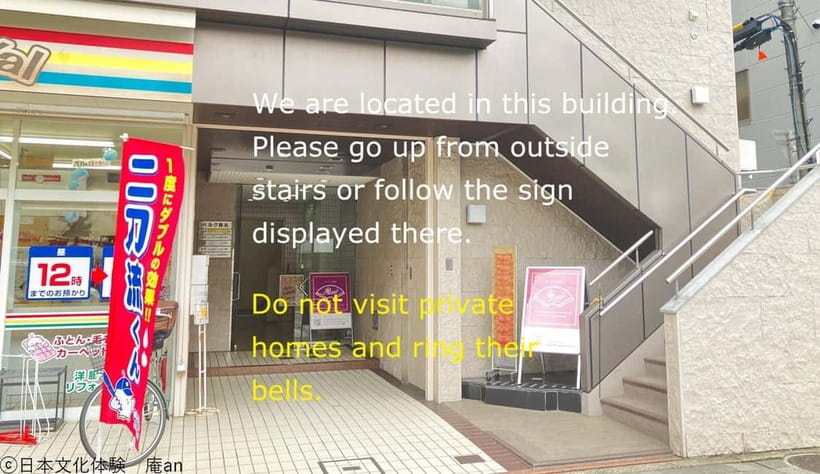
The meeting point is about a 1-minute walk from Exit 1 of Subway Karasuma Line Gojo Station. The store entrance faces Gojo-dori (the main street), so you should be able to spot it without a big scavenger hunt.
Bring two practical habits:
- Arrive a little early and get your bearings fast.
- Treat this like a set-time performance.
The event is not held to accommodate delays. That policy is common for small, timed experiences, but it matters here because the whole session is only 30 minutes. If you show up late, you may not get the full experience you paid for.
OTE-MAE at the table: what the tea master guides you through
This is labeled as an OTE-MAE (Japanese tea ceremony) experience, and that’s important. Instead of a passive show, the session is guided step-by-step, with an instructor showing you how the tea process works and explaining the significance of the movements and tools.
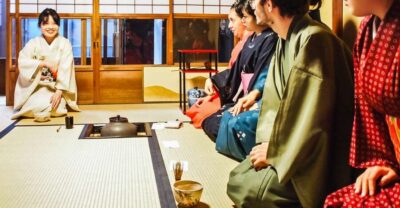
A key detail for modern travelers: you sit at tables and chairs. That means you can participate comfortably even if you’re not used to floor seating. It’s a useful option if you want the cultural experience without the physical challenge.
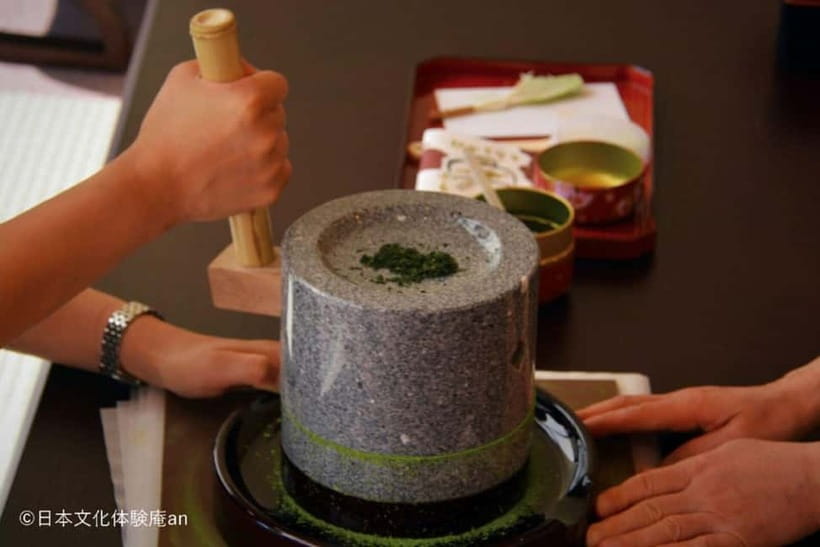
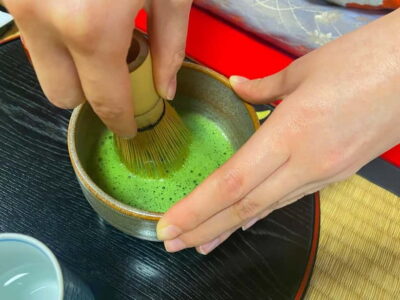
What you’ll do during the ceremony usually follows the flow of preparing and presenting matcha, then receiving and enjoying it, but the big difference here is that you’re taught the “why.” You’re not just mixing powder with hot water in a vacuum. The program includes a demonstration of how matcha is made into matcha tea, and you’ll learn what each step represents in the ritual.
One practical caution: if your goal is a heavy lecture, you might be disappointed. The short format means the guide has to cover a lot in a tight window. If English translation support is limited for your group that day, you may still appreciate the visuals, but you may miss some nuance.
Single-origin matcha and OHIGASHI: what to look for in the cup
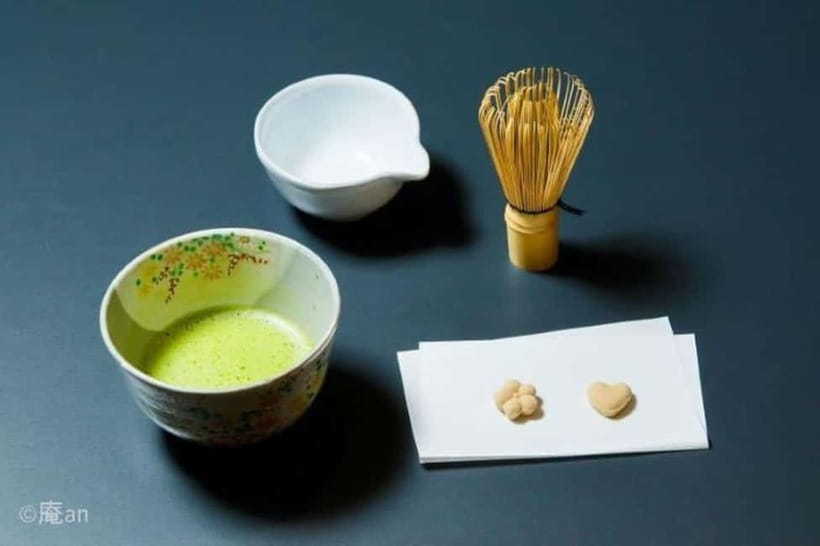
You’ll enjoy single-origin matcha, and you’ll be served OHIGASHI (Japanese dried sweets). Those two pieces work together. The sweet can soften the intensity of matcha, and it also gives you a traditional pairing that makes the tasting feel complete.
Here’s what you can focus on while you’re there:
- Matcha texture: notice how the tea looks after preparation. Even in a short session, they demonstrate the process of turning the powder into matcha tea.
- Bitterness and finish: matcha often has a green, earthy bite. The sweet helps you taste the tea more clearly.
- Utensil care and handling: watch how the tools are used. Even if you don’t catch every word, you’ll learn what you’re supposed to do.
One of the most praised parts of the experience is that it feels educational and calming. That combination is rare in group activities. You get enough structure to feel like you learned something real, but the ritual pace keeps the atmosphere relaxed.
A review detail that matters: some sessions include explanation in multiple languages. If your group includes Korean and English interpretation, or if the room is crowded, it may be harder to hear every point. So if you’re language sensitive, bring your best strategy: watch carefully, and treat the spoken portion as a bonus.
How English support really works in this session
The instruction language is Japanese. English translation is provided as much as possible, and you can request additional English support by contacting them.
That means your experience may vary depending on your group composition. One attendee noted that the session’s information was split across English and Korean, and the explanation portion felt shorter than they expected. Another person found the guide hard to hear in a crowded room.
So here’s my practical advice for you:
- Go in expecting Japanese as the main channel.
- Bring curiosity, not demands for a full lecture.
- If you care about English detail, message ahead and confirm translation support.
Even if you only catch parts of the explanation, the physical steps and the demonstration of matcha preparation give you enough to participate meaningfully.
A day of temples goes further with something to break it up.
Group size, crowding, and why “short and sweet” can be a feature
This is 30 minutes, and the space can get busy. A couple of reviews point out that the place was crowded and it was harder to hear the guide. That’s not unusual for popular cultural add-ons near major transit.
Instead of seeing crowding as a dealbreaker, use it as a planning signal:
- If you’re the type who needs quiet to learn, you might find the atmosphere less ideal.
- If you’re happy to focus on the experience rather than the lecture, it’s still a good fit.
Also, “short and sweet” can actually be part of the value. You’re in Kyoto, you have places to see, and you want something cultural that doesn’t steal your whole afternoon. This gives you a focused ritual moment.
And yes, you might hear people say it’s educational. That lines up with what the program is designed to do: you learn the meaning behind the steps, plus you get a matcha tasting and OHIGASHI pairing.
Comfort and practical notes: stairs, no elevator, and staying on schedule
A few logistics points can affect your day more than you’d think.
- No elevator: there is no elevator in the building, and you need stairs to reach each venue.
- Wheelchair accessible: the activity is listed as wheelchair accessible. Still, if your mobility needs involve stairs, you should double-check how the venue layout works for your chair and route.
- No late entry: they will not hold the event for delays.
The good news is that the session itself uses tables and chairs, so you’re not forced into uncomfortable positions. That’s a big plus if you’re doing multiple Kyoto stops in one day.
If you’re planning other sights nearby, treat this like a timed appointment, not a casual walk-in. Plan your route so you can arrive early and move smoothly through the stair steps.
Who should book this Kyoto matcha ceremony, and who should skip it
This tea ceremony suits you if:
- You want a Kyoto cultural experience that’s easy to fit into a sightseeing schedule.
- You like hands-on activities and enjoy learning by watching and doing.
- You want a guided matcha moment with single-origin matcha and OHIGASHI.
- You prefer seated participation with tables and chairs.
You might want to skip or choose something else if:
- You’re looking for a long, deep lecture on history and cultural evolution.
- You strongly need highly detailed English explanations throughout the entire session.
- You’re sensitive to noise and crowding and want a quieter classroom-style environment.
In short, it’s a good choice for first-timers and time-crunched visitors, especially if your goal is to taste matcha properly while learning the key ideas behind OTE-MAE.
Should you book this traditional tea ceremony in Kyoto?
I think it’s worth booking if you want a simple, structured introduction to Kyoto tea culture without committing to hours. The single-origin matcha, the OHIGASHI, and the fact that you learn OTE-MAE steps make it more than a quick drink-and-leave. The short 30-minute timing is a real advantage in Kyoto, where you’re often juggling transit and crowds anyway.
Just go in with the right expectation: this is not a full-day deep scholarship class. It’s a focused ritual you can actually finish on schedule. If you keep that in mind, you’ll likely leave with a better sense of how matcha ceremonies work and why the details matter.
FAQ
How long is the traditional tea ceremony experience?
The experience lasts about 30 minutes.
How much does it cost?
The price is $7 per person.
Where do I meet for the ceremony?
You’ll meet about a 1-minute walk from Exit 1 of Subway Karasuma Line Gojo Station. The entrance faces Gojo-dori.
What is included in the experience?
It includes the OTE-MAE (Japanese tea ceremony) experience and you’ll enjoy single-origin matcha tea with OHIGASHI (Japanese dried sweets).
Is a completion certificate included?
No. A completion certificate costs 300 JPY and is not included.
What languages are available during the ceremony?
The language is Japanese, and English translation is provided as much as possible. If you’d like to add English translation, you need to contact them.
Is the ceremony wheelchair accessible?
Yes, it is listed as wheelchair accessible. However, there is no elevator and you need stairs to reach each venue.
What are the operating hours?
Operation hours are from 10:00 to 17:00. Reservations received after 17:00 are processed next day.
What if I arrive late or want to change my plans?
The event will not be held to accommodate delays. If you make changes after a cancellation fee has been incurred, a specified fee will be charged, according to the cancellation policy details.
New This Season
- Koyasan Day Trip by Private Car from Kyoto
- Old Port Town and Ultimate Sake Tasting Private Tour From Kyoto
- Kyoto’s Timeless Charm: 3hr Exploration of History and Peace
- Kyoto: 5 Types of Sushi Making
- Sacred Peak & Ancient Paths: Kurama-Kibune Hiking Experience
- Kyoto: Exclusive ZEN practice at Manpukuji temple in Uji
- Kyoto: Private Seasonal Aroma Yoga Class
- Traversing Kyoto’s Scenic West – Arashiyama to Kinkakuji
Tea Ceremonies, compared.
Tea Ceremony in a Traditional Tea House in Kiyomizu
Read our review →
Kimono Tea Ceremony at Kyoto Maikoya, NISHIKI
Read our review →
Tea Ceremony in 100-year-old Kyo-Machiya Townhouse
Read our review →
Also filed under